
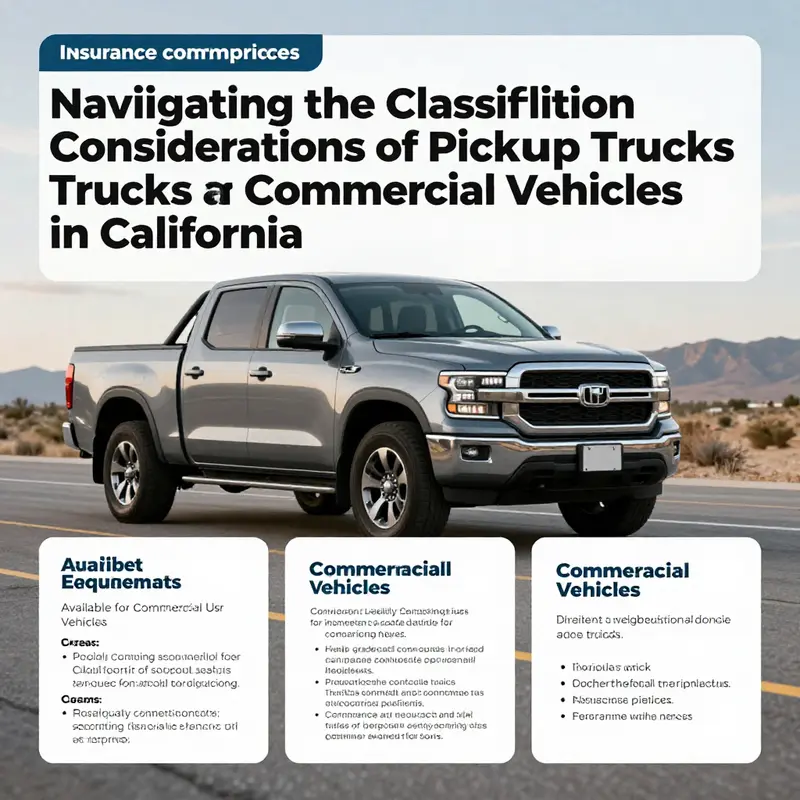
In California, the classification of pickup trucks as commercial vehicles hinges on their intended use rather than their type alone. This distinction holds significant implications for trucking company owners, fleet managers, procurement teams in the construction and mining sectors, and logistics and freight brokerage firms. Understanding this classification can dictate regulatory compliance, insurance requirements, and operational limitations. Each chapter of this article will delve into key factors, such as how commercial use is determined, the regulatory framework for commercial trucks, the impact of weight classifications, business use implications, and crucial insurance considerations. By grasping these elements, stakeholders can make informed decisions about their vehicles and operations.
Pinpointing Commercial Use: How California Determines When a Pickup Truck Counts as a Commercial Vehicle
In California, the question of whether a pickup truck is a commercial vehicle often surprises people who assume that the answer rests solely on how the vehicle looks or what it’s named. Practically speaking, the state’s approach centers on use, weight, and intent rather than on the badge or body style of the truck. This means a pickup that serves as a private vehicle for daily commuting and family tasks may be treated quite differently from the same model if it becomes a workhorse for a business. The result is a nuanced framework where the line between personal and commercial use is drawn by the way the vehicle operates and the role it plays in a person’s or a business’s economy, not merely by its chassis or its owner’s profession.
The primary use of the truck is the anchor around which California DMV classifications rotate. When a pickup’s day-to-day tasks are oriented toward profits—delivering goods to customers, transporting materials for a contractor, or moving equipment for a service crew—the vehicle begins to tilt toward commercial use. If the truck is used to haul cargo from job site to job site or to carry employees and tools for a business, this pattern signals an ongoing commercial purpose. California does not subscribe to a rigid, one-size-fits-all rule; instead, it assesses how the truck operates in real life—a totality of circumstances that weighs frequency, destination, and the nature of the work being performed.
Weight, too, plays a decisive role. A pickup with a gross vehicle weight rating (GVWR) over 10,000 pounds is generally treated as a commercial vehicle, regardless of whether its owner labels it private or business-related. This threshold is more than a number on a spec sheet; it reflects the vehicle’s capacity to bear heavy loads and sustain more rigorous operating demands typical of commercial fleets. In practice, this means that a seemingly ordinary pickup, if equipped to haul substantial loads or if its GVWR crosses that line, may automatically attract commercial regulatory considerations. The weight factor interacts with usage in a way that can push a truck into commercial classification even if the driver primarily uses it for personal errands on weekends.
Registration and license plates operate as a practical signal of how a vehicle is treated under California law. Commercial fleets often receive license plates or endorsements that reflect their business use, and when a pickup is registered under a commercial classification, it is usually an explicit acknowledgment that the vehicle will operate in a commercial context. This isn’t just paperwork; it informs how the vehicle will be regulated, inspected, and, in some cases, how it is taxed and insured. The registration status becomes a visible grain in the broader texture of evidence about a vehicle’s use, especially when a motorist faces questions from authorities or needs to navigate the complex matrix of compliance requirements that govern road transport.
Insurance is another pivotal strand in the tapestry of commercial use. Personal auto policies are designed around private, non-business use and may exclude coverage for activities that generate income or involve transporting goods for hire. When a pickup truck is driven to job sites, used to move company equipment, or deployed in a client-facing capacity, the risk profile shifts. Insurance providers respond to that shift by offering or requiring commercial auto insurance, which comes with different limits, endorsements, and requirements for reporting incidents. If the commercial use is significant enough to trigger a business-related risk, relying on a standard personal policy can lead to gaps in coverage. In practice, this means keeping clear records of how the truck is used, documenting business trips, and aligning insurance coverage with the vehicle’s primary function.
Tax considerations add another layer of complexity, though they can also offer clarity for those who keep careful accounts. The IRS looks at vehicle use to determine deductible expenses. If a pickup is used more than 50 percent of the time for business, owners may be eligible to claim a larger portion of operating costs—fuel, depreciation, maintenance—as business deductions. However, these deductions hinge on meticulous recordkeeping: logs that distinguish business miles from personal miles, receipts for business-related expenditures, and a clear understanding of how the vehicle supports income generation. The tax perspective reinforces the idea that commercial use is not simply a matter of labeling but of documenting the vehicle’s economic function.
All of these strands—primary use, weight, registration, insurance, and tax treatment—come together to shape a practical test that the DMV applies. California’s approach does not offer a single, rigid rule but instead relies on a holistic evaluation of how the pickup operates within the owner’s business or personal life. The result is a flexible framework that accommodates different kinds of work arrangements, from solo contractors who use a pickup to transport tools to small fleets that rely on pickups as work vehicles for a daily schedule of customer deliveries. The burden of proof, in many cases, rests on demonstrating the vehicle’s dominant use and the business or compensation-driven purpose behind that use.
For individuals who dip a toe into work-related tasks with their pickup—perhaps taking tools to one job site a week or helping a neighbor with a small move—the question can feel like a maze. Yet the DMV’s guidance emphasizes a straightforward principle: the assignment of commercial status hinges on whether the truck is primarily used for business purposes, with weight and registration acting as corroborating signals. If the use remains predominantly personal, most people will continue to encounter the vehicle as a passenger vehicle for registration and licensing purposes. But if the balance tips toward business use or if the vehicle’s role clearly supports income-generating activities, then commercial rules come into play, and the practical consequences follow—from licensing classifications to the type of insurance that should be carried.
This is not a call to overcomplicate ownership. Rather, it’s an invitation to align one’s records with reality. When a truck serves a business, good practice means keeping a consistent log of business-related trips, maintaining invoices or schedules that reveal the vehicle’s role in revenue generation, and confirming that insurance and registration reflect the actual use. In the long run, such alignment protects both the vehicle owner and the public by ensuring that safety standards, driver qualifications, and vehicle maintenance meet the demands of the use case. And in a landscape where compliance matters as much as capability, the consequences of misclassification—whether accidental or deliberate—can ripple through insurance coverage, tax reporting, and legal responsibilities.
For readers seeking a practical stepping stone into this nuance, consider reviewing how others in the field discuss vehicle use and classification in more accessible terms. The site’s discussions about the broader trucking landscape can offer relevant context on how use, ownership, and regulatory frameworks intersect in everyday practice. This broader perspective can help readers gauge where their own pickup fits within California’s regulatory mosaic and how to prepare for any regulatory questions that might arise over the life of a vehicle.
As with many regulatory questions, the best path forward is to start from the facts of the vehicle’s use and to document how that use evolves over time. If you find that your pickup’s daily routine is drenched in business tasks—whether it’s routine deliveries, site visits, or transporting personnel and equipment—expect that the state will view it through a commercial lens. If not, the vehicle will likely stay in the personal-use lane, with the related licensing, insurance, and tax implications following suit. In either case, the key is an honest, well-documented account of how the truck serves income as well as how it serves daily life.
To explore further nuances and to see how these considerations can translate into practical decisions for maintenance, registration, and coverage, you can consult the internal resources linked in related chapters and visit the broader discussion hub for a more generalized view on the topic. For readers who want to dive deeper into ongoing conversations about truck usage and market trends, the broader blog discussions provide a useful backdrop and continuing insight into how real-world usage shapes regulatory interpretations. the blog
External resource: California DMV Vehicle Use Classification.
Between Personal Use and Professional Fleet: California’s Regulatory Pathways for Pickup Trucks as Commercial Vehicles
California treats a pickup truck as a commercial vehicle not simply by its make or label, but by how it is used. The state’s approach focuses on the function behind the wheels. A truck that stays in the driveway for weekend projects and family road trips is generally a passenger vehicle for registration and licensing purposes. But the moment that same truck begins to haul goods for a business, transport people for a fee, or serve as part of a commercial operation, its status can shift toward commercial vehicle regulation. This distinction is more than a paperwork quirk; it triggers a series of obligations designed to protect road safety, limit environmental impact, and ensure fair competition among operators who share the state’s crowded highways.
The weight of the vehicle matters, but not in isolation. California uses the gross vehicle weight rating, or GVWR, as a practical threshold. Vehicles with a GVWR over 10,000 pounds are typically treated as commercial vehicles, regardless of how they are used. Most light pickup trucks do not exceed this weight in stock form, which means many pickups used in personal contexts remain classified as passenger vehicles. Yet the line blurs quickly once a truck begins to carry heavy loads as part of a business, or to transport people for hire. A contractor who uses a pickup to haul tools and materials to job sites, a courier service that relies on a pickup for deliveries, or a driver who uses a pickup for rides or shuttling customers, confronts a shift in regulatory exposure that can include licensing, insurance, and inspection requirements not ordinarily triggered by private use.
The purpose of use is the second major determinant. If a pickup is deployed in the course of a business, even if it looks like a standard consumer vehicle, it can fall under commercial classifications. Recruitment, compensation, or any form of income tied to the vehicle’s operation can be a red flag to regulators. This matters for fleet owners and sole proprietors alike. When the vehicle becomes a tool of the trade—delivering materials, transporting clients, or supporting a service that generates revenue—the state’s authorities expect a heightened level of compliance. The practical effect is that business use can trigger additional regulatory layers, from licensing to maintenance records, which in turn influence finance, insurance, and operational planning.
Two other factors complete the triad of typical determinants: weight and the presence of compensation. The weight threshold is strict enough to cover the largest light-duty trucks; the compensation criterion covers the recurring revenue model that turns a vehicle into a service asset. If you are paid to drive the truck or to use it to earn money—whether you are a sole operator, part of a small fleet, or connected with a larger commercial enterprise—the likelihood increases that the vehicle must navigate commercial vehicle rules. In practice, this means that even a familiar pickup can become a subject of regulation when its use aligns with business activity.
The regulatory implications of that shift are explicit and multi-faceted. First, commercial vehicle status can prompt the need for different licensing. While most private-use pickups do not require a commercial driver’s license unless they exceed certain weight or passenger-carrying thresholds, a vehicle used for business purposes—especially if it serves as a delivery vehicle, a taxi or rideshare asset, or a contractor’s workhorse—can bring CDL considerations into play. The liver of a business operation may be required to obtain specific driving credentials for drivers who operate under commercial classifications, with exceptions that hinge on vehicle weight, passenger capacity, and the nature of the cargo transported.
Second, commercial use raises insurance expectations. Commercial liability insurance is typically more robust than personal auto coverage. Insurers evaluate the risk profile of a business operation, factoring in vehicle usage, cargo type, frequency of trips, and the driver’s record. Higher coverage is not merely a financial buffer; it is a practical necessity that aligns with the heightened risk exposure associated with commercial operations. The premium structure can reflect the vehicle’s role in generating income, the value of the load, and potential liability in the event of an accident.
Third, inspection and maintenance regimes intensify. Commercial vehicles are subject to more formalized safety checks and ongoing recordkeeping. In California, this can include regular inspections and adherence to maintenance schedules designed to ensure that vehicles carrying cargo or passengers remain roadworthy. Documenting preventive maintenance, timely repairs, and compliance with safety standards becomes part of day-to-day operations. The aim is not to burden operators but to improve safety for drivers, other road users, and the communities in which these services operate.
A fourth pillar concerns emissions and environmental compliance. California’s regulatory environment has grown increasingly stringent about air quality, particularly for commercial transportation. For commercial light trucks sold or operated in the state, the California Air Resources Board (CARB) imposes requirements that can push toward zero-emission configurations or very low emission standards. Beginning with certain model years, new commercial light trucks—including pickups used for business purposes—face more demanding limits. The envisioned trajectory is toward cleaner propulsion or, at minimum, powertrain strategies designed to minimize pollutant outputs. The practical implication for business owners is a push to weigh the cost and feasibility of alternative drivetrains, incentives, and the long-term operating cost implications of transitioning a conventional pickup into a compliant fleet asset.
Driver qualifications round out the regulatory picture. If a pickup is employed to transport passengers for hire, or to move hazardous materials, the driver requirements can escalate beyond standard private-vehicle expectations. The possibility of CDL involvement exists where safety, cargo, or passenger transport demands meet regulatory thresholds. Even when a vehicle remains within the typical weight range for a light pickup, the commercial use case can create regulatory requirements for the driver’s credentials, which in turn affect hiring, training, and human resources planning.
In parallel with licensing and insurance, operating licenses and compliance obligations can surface for specific sectors. A pickup used in construction, logistics, or other regulated industries may need to secure permits tied to its regulatory context. When cross-border or interstate movement becomes part of the business model, operators must align with broader federal and state transport rules. The objective of these requirements is consistent with California’s broader regulatory philosophy: ensure safety, protect workers and the public, and promote fair competition in a growing and evolving mobility landscape.
Despite the layered nature of these rules, the practical message remains straightforward. If you use a pickup for personal, non-business reasons, you are comparatively likely to stay within the realm of passenger-vehicle classification and the corresponding regulatory expectations. If your use expands into conveying goods, services, or passengers for compensation, you should anticipate a shift in regulatory exposure. The shift is not a verdict on the vehicle itself but a reflection of the activity it supports. Owners and operators should consult the official channels as they navigate that transition. The California DMV provides clear guidance on how a vehicle is classified and what follows when commercial use is involved, including how weight and use intersect to determine the applicable regulatory regime.
To situate these requirements within the broader context of fleet strategy and compliance, consider how market dynamics intersect with regulation. Fleets adapting to stricter emissions standards, evolving insurance landscapes, and evolving safety mandates must continually reassess the value proposition of their pickups. In some cases, the cost calculus favors upgrading to newer, cleaner, or more capable assets. In others, it may prompt more careful management of when and how a pickup is deployed in a business role. This balancing act is a recurring theme for owners, fleet managers, and independent operators who rely on pickups as flexible workhorses, not just casual tools.
For readers who want to anchor these considerations in current industry trends, it helps to follow how the fleet market is evolving. As enterprises adjust to emissions mandates and regulatory expectations, they frequently examine the market for used pickups and light-commercial vehicles. Trends in procurement, resale values, and the availability of compliant powertrain options shape decisions about fleet composition and replacement cycles. Keeping a pulse on these trends supports more informed planning and budgeting when contemplating commercial use of a pickup in California.
For those seeking a definitive source on the regulatory framework, the California DMV’s Commercial Vehicle Information pages offer the most direct guidance. They explain how classification depends on use and weight, and they outline the steps operators should take when a pickup transitions from personal to commercial work. In addition to the DMV guidance, broader regulatory developments around emissions, inspections, and driver qualifications require ongoing attention as rules continue to evolve in California’s complex mobility ecosystem. As you map out how your pickup might function within a business, it is prudent to review the official resources and, when needed, consult legal or regulatory professionals to ensure ongoing compliance.
As a closing consideration, readers can explore related discussions on how market dynamics influence the adoption of new compliance strategies and equipment upgrades. The discussion about trends in used truck sales growth provides a lens into how fleet managers weigh the trade-offs of upgrading versus maintaining existing pickups within regulatory constraints. This broader perspective helps contextualize the practical steps required to align a pickup’s use with California’s regulatory expectations while preserving operational efficiency and safety. See the discussion on current trends in used truck sales growth for a broader market view.
External resource: For definitive confirmation on the regulatory framework, refer to the California DMV—Commercial Vehicle Information page. https://www.dmv.ca.gov/portal/dmv/detail/vin/commvhlinfo
From Personal Hauler to Commercial Vehicle: How California’s Weight Rules Decide the Status of Your Pickup
Are pickup trucks automatically commercial vehicles in California? The short answer is no. The longer answer sits at the intersection of weight and use, a place where a sturdy bed and a strong engine do not alone decide legality or licensing. California treats a pickup as a passenger vehicle in most everyday scenarios, but the moment business needs tilt the scales, the same truck can slip into commercial status. This distinction matters not only for what you call your vehicle on registration forms but for the licenses you must hold, the rules you must follow, and the insurance that protects you when the road tests your decision. The state makes clear that classification is use driven, not merely model driven. A pickup used strictly for personal, non-business purposes tends to stay within passenger vehicle rules. The moment the truck carries goods or people for compensation, or is employed in the conduct of a business, it can become subject to commercial vehicle regulations that carry different requirements, from weights and registrations to hours-of-service and inspections. That practical boundary is why a single vehicle can be a personal ride one week and a regulated workhorse the next, depending on how it is actually used and what it is rated to carry on its title and plate. The pivotal metric in this equation is the gross vehicle weight rating, or GVWR, which the state uses to decide whether a pickup is a light, standard, or heavier commercial vehicle. For most pickups that you see daily in neighborhoods or on construction sites, the GVWR sits below the 10,001-pound threshold. When a truck’s GVWR is under that line, and it is used for personal purposes, it remains a passenger vehicle for registration and licensing purposes. Yet the moment the same truck is loaded with cargo for business delivery or used to haul equipment for hire, its status can shift toward commercial. This is not a one-size-fits-all rule but a framework that reflects both the weight a vehicle is built to carry and how that vehicle is used in the real world. The California DMV and the FMCSA both emphasize that use is the deciding factor, and weight is the primary lever that triggers more stringent regulation. That means you can headline a pickup as yours for your weekend projects without stepping into the realm of commercial trucking, but a Monday-through-Friday delivery route or a contract job can cross that line. As you sort out your own situation, it helps to anchor your thinking in two concrete ideas: GVWR and use. The GVWR tag, usually found on a door jamb plate or in the owner’s manual, tells you the maximum weight the manufacturer has rated the vehicle to carry including payload and passengers. When it sits below 10,001 pounds, many pickups stay in the passenger vehicle category. If the GVWR climbs past that line, there is potential for commercial classification, but use still matters. A heavy pickup with a high GVWR that is used exclusively for personal reasons may not automatically be treated as a commercial vehicle. This nuance sits at the heart of why Californians often consult DMV guidance or FMCSA guidelines before assuming a change in status. The question quickly expands beyond weight to consider who is aboard and what is being moved. If you are hired to drive the truck, if you deliver goods for compensation, or if you haul materials for a contractor on a recurring basis, the practical effect is that the truck is operating as a commercial vehicle for regulatory purposes. In such cases, it is not merely about the truck’s labeling; it is about the responsibility to meet other standards, such as insurance coverage that aligns with commercial use, and compliance with safety and record-keeping requirements that accompany commercial operation. The interplay of use and weight grows even more nuanced when you step into the specifics of classifications that the federal and state regimes use to organize vehicles by their capabilities. Weight classifications in California translate into broad categories: Class B commercial vehicles, for GVWRs from 10,001 to 14,000 pounds, and Class A for GVWRs beyond 14,000 pounds. These categories matter because they map to the licensing landscape. A vehicle in Class B may require you to hold a Class B Commercial Driver’s License if the operation involves certain duties, such as transporting passengers or hazardous materials. A vehicle exceeding Class B’s upper limit—the heavyweight zone—may trigger Class A CDL requirements, reflecting the increased risk and responsibility of moving heavier loads or more passengers. Yet even within these bands, the actual regulatory status cannot be inferred by GVWR alone. The hours of operation, the nature of the cargo, and the way the truck is used on the job site all tilt the status toward or away from commercial regulation. For example, a pickup used for a small construction crew to move tools and materials for hire, with a predictable flow of business, is more likely to be treated as commercial than a personal vehicle used for weekend yard projects, even when the two trucks share a similar GVWR. This reality underscores an important point for owners and operators: weight matters, but use matters more. The practical consequences extend beyond licensing. Commercial vehicles in California must comply with federal and state safety standards, undergo periodic inspections, and maintain logs or other records as required by regulators. If the truck is used for transporting hazardous materials or passengers for hire, the threshold for CDL and related regulations tightens even further. The federal side of this equation, particularly the DOT regulations and hours-of-service rules, can apply if the vehicle is part of a commercial operation that crosses state lines or qualifies as a motor carrier operation. In California, the DMV provides the local interpretation, while federal guidelines govern the broader compliance framework. A vehicle’s classification also influences weight and axle limitations on California roads. The state imposes practical limits on maximum gross weights and axle weights to safeguard road surfaces and bridges. For a single axle, the maximum gross weight typically cannot exceed 20,000 pounds, and the ends of any axle are generally capped at 10,500 pounds per axle. These numbers may seem technical, but they have real-world consequences: overloading can trigger fines, vehicle impoundment, and increased liability in the event of an accident or road damage. The interplay between weight limits and vehicle use means a pickup with a high GVWR must still be operated within its rated capabilities and within the rules that apply to its use. For business operators, this means meticulous maintenance and planning. It also means maintaining accurate records if operating in a commercial capacity, and understanding that a misclassification can lead to penalties or elevated insurance costs. As a driver or fleet manager, you should treat the classification not as a label to memorize but as a living framework that influences how you work, what licenses you need, and how you manage risk. Practical steps help bring clarity: verify the exact GVWR from the title and door tag; document the vehicle’s primary use and any changes in use over time; consult the DMV and, where appropriate, the FMCSA guidance to confirm whether a particular operation triggers commercial status; and ensure insurance coverage aligns with the vehicle’s use. If the vehicle is employed on a routine business basis, or if you are paid to operate it in a way that generates revenue, you should prepare for the possibility of stricter regulatory oversight and the corresponding licensing, inspection, and documentation requirements. For readers exploring how this knowledge translates into decision-making, consider the broader context of market dynamics and business needs. The decision to use a pickup as a personal tool versus a commercial asset is not merely about regulatory compliance; it is also about risk management, cost of operation, and strategic planning. When a business relies on a pickup to move goods, to reach customers, or to support crew activities, the vehicle becomes part of a regulated system that emphasizes safety, accountability, and reliability. That is why many operators treat the classification as a foundation for budgeting, procurement, and compliance programs rather than a mere label on a registration form. For those seeking more insights on how these trends play out in practice, a closer look at current trends in used truck sales growth offers valuable context about how weight and use translate into value, risk, and market dynamics. Current trends in used truck sales growth. While the specifics of California classification can be nuanced, the core principle remains consistent: weight thresholds and actual business use drive the regulatory outcome, and staying aligned with official guidance is essential to avoid penalties and ensure smooth operation. In all cases, if there is any doubt, the authoritative touchstone remains the California DMV’s Commercial Vehicle Information portal, which outlines how classifications align with both weight and use. For more formal guidance, consult the official resource at the California DMV: https://www.dmv.ca.gov/portal/dmv/detail/vh/cv/ .
California’s Rules on Pickup Trucks: When Personal Use Becomes Commercial
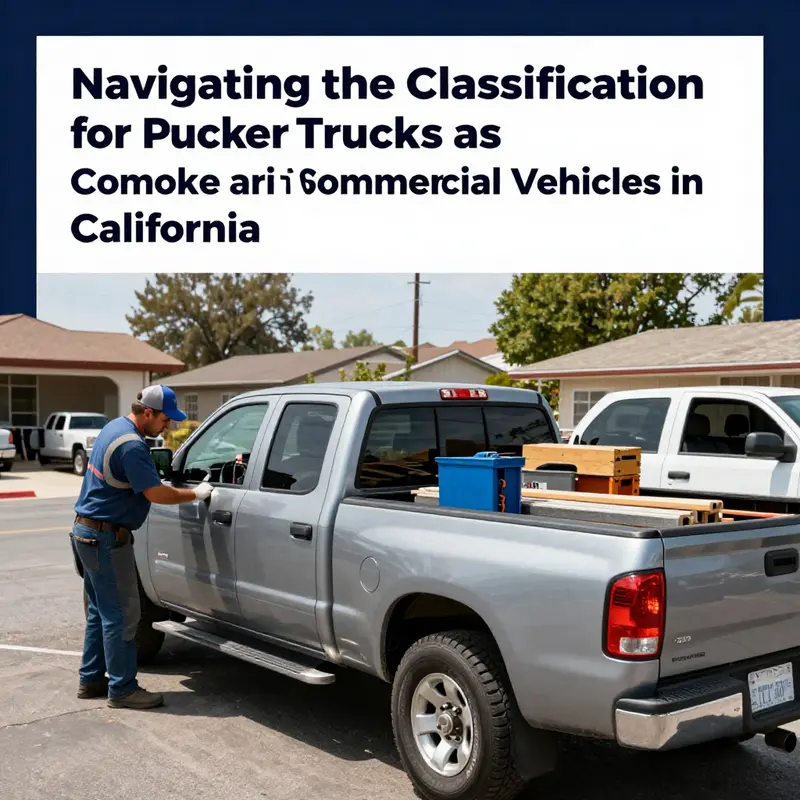
In California, a pickup truck is not automatically classified as a commercial vehicle based on its badge or bed length. The state focuses on how the vehicle is used and the weight it carries, which shapes registration, licensing, and daily operations. Practically, the question is not just whether you own a pickup, but what you use it for and how much payload it bears during typical trips.
The key trigger is use and weight. Vehicles with a gross vehicle weight rating (GVWR) over 10,000 pounds are generally treated as commercial regardless of use. Most light-duty pickups sit below this threshold, but a truck that regularly hauls heavy tools, equipment, or materials, or that serves a paid contracting operation, can cross into commercial classification through its loading and job responsibilities. Even trucks below the GVWR line can become commercial entities if they are used to deliver packages, provide paid services, or transport passengers for a fee.
Purpose of use matters as well. A contractor who shuttles tools between sites, moves materials for jobs, and accompanies crews throughout the day is operating a business asset. When compensation is involved—either paying the driver or billing for the service—the vehicle is likely treated as commercial for licensing, insurance, and regulatory compliance. Mixed-use scenarios are common, so careful usage tracking helps determine the appropriate category at any given time.
Licensing and safety obligations shift with use. A purely personal-use pickup follows standard consumer licensing and insurance rules. Once the vehicle enters commercial use, especially in larger fleets or formal operations, the regime becomes more complex. Commercial vehicles may require special licenses, endorsements, and hours-of-service considerations, with increased recordkeeping, inspections, and safety requirements.
The California DMV emphasizes use-based and weight-based classification. Guidance suggests that how the vehicle is deployed and the loads it carries drive the decision as much as any single feature like bed size or horsepower. If in doubt, consult DMV resources to determine the correct classification and to align registrations and insurance with actual use.
Environmental and market dynamics add another layer. State programs encouraging cleaner powertrains and zero-emission options influence fleet decisions, weighing payload and charging needs against incentives and infrastructure. Electric pickups may offer lower operating costs and regulatory benefits, but payload, charging, and reliability under field conditions must be weighed against practical constraints and business needs.
For businesses evaluating a pickup’s role, practical steps include assessing daily payload and towing needs, projecting total cost of ownership, and documenting the share of business versus personal use. Maintaining clear records helps ensure accurate classification over time and prepares the business for regulatory checks or audits.
null
null
Final thoughts
The classification of pickup trucks as commercial vehicles in California significantly impacts compliance, operational capabilities, and insurance needs for businesses. Understanding how use, weight, and the nature of business activities influence this classification equips trucking company owners, procurement teams, and logistics managers with the knowledge to navigate the complexities of the regulatory landscape. As these vehicles continue to play crucial roles across various sectors, maintaining comprehensive awareness and proactive management of their status is essential for successful operation.