Navigating the complexities of commercial truck insurance is vital for owners and managers aiming to safeguard their assets and optimize operational efficiency. With premiums influenced by diverse factors such as vehicle type, application, and geographical location, understanding these variables can lead to significant savings and informed insurance choices. This article dissects the underlying elements impacting commercial truck insurance costs, explores average pricing across various scenarios, examines regulatory influences, and highlights the significance of claims history. Each chapter will equip you with the knowledge needed to ensure effective insurance procurement that meets your business requirements.
The Price Equation Behind Commercial Truck Insurance: How Vehicle, Driver, and Route Shape Your Premium
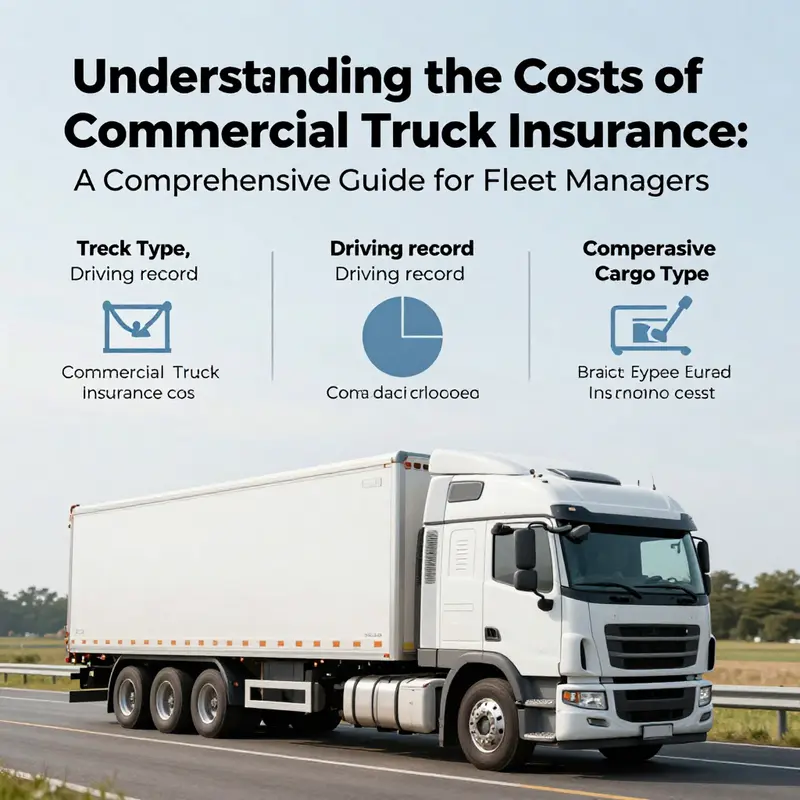
Insuring a commercial truck is not a single-price sale so much as a careful balancing act among risk factors that live inside every mile driven, every load carried, and every parking spot where a truck rests at night. If you measure insurance costs by listening only to base quotes, you will miss the most important truth: premiums rise and fall in response to a dynamic set of variables that reflect risk exposure as plainly as a dashboard lamp reflects engine trouble. In practical terms, the dollar figure you see on a quotation is the result of an intricate calculation that weighs the truck’s characteristics, the driver’s profile, the routes and modes of operation, the coverage breadth you select, and the insurer’s own underwriting posture. When you breathe through those elements in sequence, a clearer picture emerges of why a single vehicle can range from a few hundred dollars to well over ten thousand per year in premium, and why a small fleet can push past ordinary expectations when the risk is higher or when the business model places more stress on safety and compliance.
At the core, the vehicle itself is the most visible driver of cost. The type and size of the truck set the baseline of risk that an insurer must assume. Heavy-duty tractor-trailers, with their greater mass and kinetic energy, carry a higher probability of severe damage in a collision than lighter, non-dedicated delivery trucks. This relationship means that, all else equal, a larger vehicle with a correspondingly higher purchase price commands higher insurance costs because the financial exposure—the amount an insurer might have to pay for total loss or extensive damage—is larger. The age of the truck compounds this effect. Newer trucks, while often equipped with advanced safety features and modern crash-avoidance technology, represent higher replacement costs. The same predictive logic applies to the vehicle’s value: higher asset value translates to higher collision and comprehensive premiums, since the insurer must be prepared to cover more expensive repairs or replacement parts if an accident occurs.
But value and mass are not the only vehicle-related risk signals. The make and model can influence reliability and repair costs, which in turn shape premium calculations. Some configurations are easier to fix, and parts may be more readily available, which can modestly temper risk. Conversely, specialty or luxury-trim models, or commercial units with expensive aftermarket components, can push costs upward because the potential repair bill is larger. The intended use of the vehicle also matters greatly. A truck used to haul hazardous materials, high-value cargo, or time-sensitive freight represents a risk profile that insurers treat as more onerous than standard line-haul or local delivery work. In turn, the driver’s need to operate in challenging environments—industrial zones, congested ports, or densely populated corridors—affects the risk calculus and the price tag attached to coverage.
A second, equally important axis is the driver. The age and experience of the individual behind the wheel are the most reliable predictors of risk from a human perspective. Insurance underwriters prize a track record of steady, responsible driving; they are particularly wary of younger drivers or operators with recent incidents or violations. The driver mix matters too. A single vehicle with multiple licensed operators introduces more variability in behavior and risk, which can raise the premium unless mitigated by robust training, clear safety protocols, and disciplined scheduling. Conversely, a fleet that demonstrates a strong safety culture—formalized training programs, regular vehicle inspections, proactive fatigue management, and consistent on-road coaching—can secure more favorable pricing. Even the way drivers are deployed—local routes versus long-haul assignments, day work versus night shifts—feeds into risk. Night driving, for example, often increases the chance of fatigue-related incidents, which can budge insurance costs upward.
Geography and usage patterns provide a third leg of the cost stool. Where a truck operates shapes exposure in tangible ways. Urban routes, with dense traffic, frequent stops, and higher accident likelihood, typically yield higher premiums than rural itineraries that traverse open highways with fewer interactions. The length of trips matters as well: long-haul routes traverse a broader and more variable set of conditions, from weather to regional compliance challenges, each adding a layer of risk that insurers must consider. Parking arrangements—whether a vehicle is stored in a secure, well-lit facility with surveillance or left at an unsecured, isolated site—also enters the premium equation. Overnight security reduces the risk of theft, vandalism, and related costs, and insurers translate that lower risk into tangible premium relief. These geographic and operational patterns connect directly to regulatory realities too. Interstate carriers operate under federal mandates that require minimum liability limits, and this regulatory floor interacts with actuarial assessments to determine the base cost of coverage. The Federal Motor Carrier Safety Administration’s framework, which codifies minimums like the typical $1.5 million interstate liability ceiling, establishes a floor that influences pricing expectations, especially for smaller operators or new entrants. The practical upshot is that a company’s footprint—where it operates, how far it travels, and where it parks—can tilt the balance of what a cataclysmic loss might cost to resolve, and therefore how much a policy should cost up front.
Policy structure and coverage depth form the fourth axis of cost. The cost of insurance rises with the breadth of protection you purchase. A base liability policy, covering only the legally required protections, tends to be the least expensive option. But most operators ultimately layer on additional protections: physical damage coverage to address collision and comprehensive loss, cargo insurance to cover freight in transit, non-owned vehicle coverage when the business uses rented or borrowed trucks, and uninsured/underinsured motorist protection to offset gaps when other drivers cannot cover damages. Each layer adds a measurable premium, and the impact is cumulative. Policy limits and deductibles offer further levers: higher limits and lower deductibles translate into higher annual premiums because the insurer assumes more exposure and a greater likelihood of a payout after a claim. The cost calculus also reflects the insurer’s view of the operator’s claims history and safety record. A company with a long history of clean driving, minimal incidents, and a well-managed fleet can command favorable pricing, while a history of accidents or frequent violations can trigger a premium increase that compounds across coverage types.
The insurer’s own approach to underwriting also matters. Market dynamics, the level of competition, and the availability of favorable terms for fleets that invest in risk-reducing technologies—such as telematics, proactive maintenance programs, and driver training—can produce discounts that meaningfully reduce the per-vehicle cost. A large fleet with a demonstrated safety program may secure volume discounts and favorable ratchets that dilute the per-truck price. In contrast, a smaller operator with a handful of vehicles and a less formal safety apparatus may see a tighter pricing path, even if the basic risk looks similar on paper. These differences point to a practical reality: pricing is not a fixed property of a vehicle; it is a reflection of how the operator manages risk. A careful, proactive approach to safety can lower the price of protection as surely as neglecting maintenance can raise it.
For anyone mapping a budget around trucking operations, the numbers cited in industry analyses reinforce the central idea. A basic general liability policy for a single truck often falls within a modest band—roughly $500 to $2,000 per year—whereas a more comprehensive package, including physical damage, cargo liability, and non-owned vehicle liability, commonly runs in the range of $5,000 to $15,000 annually for a small fleet. A broader macro view, such as the Insurance Information Institute’s data, places a representative annual premium for a trucking company with one vehicle at about $7,800, acknowledging that underwriting criteria and claims history can push that figure higher or lower. These ranges underscore the fact that insurance costs are not merely a function of vehicle value; they are a composite measure of exposure, exposure management, and the financial appetite of the enterprise for risk. Because of this, the most reliable path to a precise quote remains a direct conversation with insurers who specialize in commercial trucking. Operators should be prepared to share a detailed portrait of the fleet, the routes, the cargoes, the safety programs, and the coverage structure they intend to pursue. This transparency helps underwriters calibrate risk more accurately and can yield more competitive terms.
The practical takeaway for someone evaluating insurance costs is to assemble information in a structured, comprehensive way before engaging providers. Build a profile that captures (1) the truck or fleet makeup—the number of vehicles, their ages, and their values; (2) the driver roster—ages, experience, driving history, and how many licensed operators are in the mix; (3) the operational footprint—typical routes, urban or rural emphasis, average miles per week, and typical cargo types; and (4) risk control measures—maintenance schedules, driver training programs, and telematics-and-safety investments. With that dossier, you can compare apples to apples across providers, asking for quotes at consistent coverage levels and with aligned deductibles and limits. It is also wise to consider how regulatory requirements shape the baseline. If you operate interstate, ensure any quotes reflect compliance with FMCSA minimums while clearly delineating what the policy covers beyond the minimum. The aim is not to chase the lowest price but to secure a balanced package that delivers reliable protection at a sustainable cost, especially in the face of potential loss events that could threaten cash flow, reputation, and ongoing operations.
As you work through the process, you may find it helpful to consult practical guidance from trusted sources that discuss coverage details, claims management, and the mechanics of evaluating quotes. For readers seeking an accessible entry point, a concise resource can be found on the broader trucking conversation hosted by the industry blog network. The link below points to a page that covers general ideas about staying informed and prepared when shopping for coverage, including how to articulate risk factors to underwriters and how to frame a safety program for maximum effect: blog.
In the end, the price you pay for commercial truck insurance reflects a disciplined blend of risk factors, not a single metric. It is driven by the vehicle’s inherent risk profile, the people who operate it, and the geographic and regulatory landscape in which the operation unfolds. A policy is most valuable when it aligns with a company’s risk management ethos: invest in well-maintained equipment, train drivers to sustain good safety habits, leverage data to monitor performance, and cultivate a transparent, well-documented safety program. When these elements are in place, price sensitivity tends to move in a constructive direction, with discounts and smoother underwriting outcomes that reward responsible stewardship of the fleet. The result is not merely a more affordable premium but a more resilient operating model that can weather the shocks of accidents, regulatory changes, and shifting freight markets. The journey from crude quotes to a tailored, value-driven protection plan is not a sprint; it is a process that rewards diligence, data, and a willingness to invest in risk management as a core business practice. And as the landscape evolves—with new technology, evolving cargo profiles, and a dynamic regulatory environment—the most resilient operators will continue to view insurance not as a fixed cost but as a strategic tool to stabilize cash flow, protect assets, and sustain growth across cycles.
External resource: https://www.iii.org/
Pricing the Road: Understanding What Drives Commercial Truck Insurance Costs and What You Can Do About It
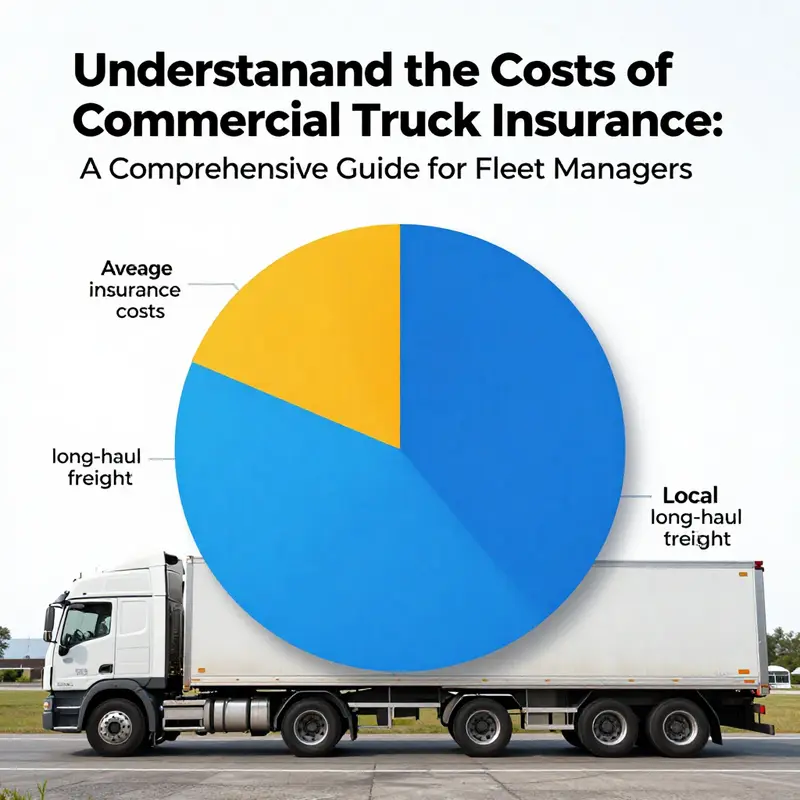
Insurance for a commercial truck is a variable cost tied to risk, coverage, and the specifics of the operation. Key factors include truck size and class (GVWR), intended use (local delivery vs. long-haul), the limits and types of coverage, and the driver history. Higher risk, heavier trucks, longer routes, and high-value cargo typically raise premiums, while telematics programs, rigorous maintenance, and safety training can lower them. Prices vary widely by fleet size and region, but a practical approach is to compare quotes side by side, ensure coverage aligns with actual risk, and invest in risk-reduction measures to improve underwriting over time.
null
null
Shadows on the Ledger: How Claims History Shapes the Price of Commercial Truck Insurance
In the realm of commercial trucking, a driver’s claims history is not simply a record of past missteps. It is a living signal to underwriters about how the next mile might unfold. Every claim added to a file becomes a data point that informs risk, and risk, in turn, directly influences pricing. Insurance, at its core, is a pricing model built on expected outcomes. The history books of a truck operation—accidents, cargo damage, even minor incidents—are the best predictors of what future losses may look like. For operators trying to understand why their premiums look the way they do, the story begins with those historical footprints. When a policy period closes, what has happened behind the wheel becomes a forecast tool for the next period. The more a driver or fleet shows a pattern of losses, the more an underwriter has to reserve against the chance those losses recur. And that reserve is priced into the premium you pay. This link between claims history and cost is not abstract. It is the practical anatomy of how premiums are built and how risk is managed in the trucking industry.
To appreciate the mechanism, it helps to separate the different kinds of claims that fleets accumulate and how they shape cost. Frequency and severity matter, but the type of claim can tilt the weight of the risk assessment in different ways. Property damage claims—those that involve a vehicle striking another object or infrastructure—signal mechanical or operational risk, especially if they cluster around certain routes, seasons, or vehicle types. Bodily injury claims touch on human risk and often carry long-tail costs, including medical expenses and potential liability judgments. Cargo liability claims dig into planning and handling processes: improper securing, mislabeling, or mishandling goods can lead to expensive loss events and even disputes over responsibility. Non-owned vehicle liability claims involve incidents where a fleet driver is operating a vehicle not owned by the carrier, which can introduce unfamiliar risk profiles and coverage gaps. Each category tells a slightly different story about how the operation behaves on the road, and underwriters listen closely to those stories when pricing.
Within that framework, a driver or fleet with a steady drumbeat of minor incidents may signal persistent, low-grade risk. A string of fender-benders, a few cargo-related slips, and the occasional at-fault accident can accumulate into a perception of unreliability in operations, even if each individual incident seems small on its own. Insurers translate that into higher premiums because the probability of future claims rises with the past claim count. Conversely, a clean driving record and a history of few or no claims over several policy periods often unlock reductions. Many insurers offer safe-driver discounts or programs that reward a history of claim-free operation with lower rates or more favorable terms. Those discounts are not just tokens; they represent a deliberate shift in the risk profile that underwriters are willing to finance at a lower cost to the insurer because the expected loss is lower.
The effect of claims history extends beyond the current policy term. Underwriters frequently look at the cumulative pattern across multiple periods. A single significant claim can reverberate through the pricing for several years, particularly if it reveals vulnerabilities in maintenance, supervision, or cargo handling practices. It is not unusual for an insurer to recalibrate a fleet’s price trajectory after a high-severity event, even if current operations appear disciplined. The long memory of risk means that once a costly incident has entered the ledger, it can elevate future quotes for a nontrivial stretch of time. Yet there is a counterbalance: a clean, claim-free history tends to become the basis for progressively favorable terms. The improvement is not instantaneous, but it is real. A period of consistent, safe operation creates a new baseline from which pricing can decline, provided other risk indicators—such as miles driven, geography, and cargo types—remain favorable.
Insurers are not just price-tickers chasing a single number. They deploy underwriting models that weigh multiple signals, often using scoring frameworks that allocate different weights to various claim types based on severity and frequency. A fleet that has seen cargo liability claims for high-value shipments may be considered differently than one with frequent but low-cost property damage incidents. The models recognize that not all claims bear the same risk in future years; a single cargo loss tied to high-value goods may indicate different exposure than a handful of minor prangs. This nuance matters because it helps explain why two carriers with similar general profiles can face markedly different premium trajectories after the same loss event, depending on the context and distribution of claims across the fleet.
The broader regulatory environment also interacts with claims history in shaping cost. Federal requirements establish minimum liability limits for interstate carriers, which act as a floor for the level of protection that must be carried. A history of frequent or expensive claims can push a carrier to seek higher limits to protect asset value or to align with risk management goals, which in turn raises the baseline premium. In some cases, insurers may even push to change the policy structure—adding or removing coverage lines, adjusting deductibles, or proposing endorsements—based on the history and the known exposure of the operation. The FMCSA framework provides a backdrop against which these underwriting decisions unfold. When a carrier operates with a clean history, there is more room to negotiate terms that optimize price without compromising compliance. When history reveals significant risk, insurers may respond with higher rates, more conservative terms, and a tighter appetite for high-risk operations.
Managing claims history is, in effect, an ongoing process of risk adjustment. It benefits an operator to treat every claim as feedback rather than merely a payment event. Quick and thorough incident response—investigating the cause, implementing corrective actions, and documenting changes—can help mitigate the odds of recurrence. This is where a culture of safety becomes a strategic asset, not just a compliance obligation. A robust safety program that includes driver coaching, fatigue management, cargo securement training, and proactive maintenance reduces the likelihood of future incidents and, over time, can soften the premium line. Telematics and data-driven insights add a practical edge here. Real-time or near-real-time feedback on braking patterns, idling times, hard accelerations, and lane deviations gives managers the chance to intervene before a claim arises. By turning lessons from past claims into concrete operational changes, fleets can gradually tilt the risk calculus in their favor.
From the perspective of the driver, a claims history is often interwoven with the driving record itself. A driver who accumulates multiple claims may be flagged for closer monitoring or required to participate in targeted training. In some markets, insurers may offer programs designed to improve drivers’ skills and reduce exposure, paired with premium adjustments that reflect the improved risk. The opposite—scattershot claims history alongside less rigorous training—can entrench a higher premium envelope. It is worth noting that the relationship is not purely punitive. Some insurers acknowledge the complexity underlying every incident, especially in mixed-operation fleets with diverse routes, cargo types, and equipment. In such cases, the underwriting approach may involve more nuanced segmentation, tailoring the price to reflect the specific risk profile of each subset of operations within a larger fleet.
The practical takeaway for fleet managers and owner-operators is straightforward but powerful: claims history is not something to ignore or treat as a once-in-a-career event. It should be integrated into a broader risk management strategy that aligns daily operations with long-term cost control. A proactive approach includes regular safety audits, incident root-cause analyses, and transparent reporting to insurers. It also means maintaining precise and accessible documentation of all incidents and corrective actions. When insurers can see a clear line from incident to remedy, they gain confidence in the operation’s ability to reduce future losses, which can translate into more favorable pricing over time.
If you are seeking a deeper, more structured dive into how claims history translates into premiums, there are industry guides that lay out the mechanics in more technical terms. These resources illuminate how different types of claims are weighted and how the timing of claims affects pricing. For readers who want to explore the topic further within a broader content ecosystem, you can visit the McGrath Trucks blog for discussions on risk management and pricing dynamics in trucking operations. McGrath Trucks blog.
All of this underscores a central reality: while premium quotes reflect a snapshot of risk at a given moment, the most meaningful reduction in cost comes from a sustained commitment to safety and reliability. A fleet that methodically reduces its exposure through better maintenance, smarter routing, and sharper driver training will not only lower the likelihood of costly events but also build a narrative of improved risk that insurance partners are willing to translate into lower prices over time. The weight of that narrative grows as claims are scrutinized across multiple policy periods, and as the operator demonstrates tangible, lasting improvements to operations.
In the end, claims history is both a mirror and a map. It reflects what has happened and points toward what may happen if patterns persist. For those evaluating insurance options, the message is clear: invest in safety, document improvements, and treat every claim as an opportunity to adjust the course. The protection that stems from that approach can be measured not only in the dollars saved on a premium but in the greater financial resilience that comes from reduced loss exposure, steadier cash flow, and a more predictable cost of doing business on the road.
External resource to expand on this topic and to see how major insurers frame the relationship between claims history and pricing can be found here: https://www.thehartford.com/commercial-insurance/truck-insurance/claims-history-and-premiums
Final thoughts
The financial implications of commercial truck insurance are significant, and understanding the various influencing factors allows fleet managers and trucking company owners to make informed decisions. By analyzing the intricacies of pricing structures, regulatory standards, and claims history, businesses can achieve more favorable insurance terms and ultimately enhance their operational resilience. A strategic approach to procurement can lead to reduced costs and improved safety standards, serving as a foundation for sustainable growth in the trucking industry.