Downtown Buffalo, NY, presents unique challenges and opportunities for commercial truck parking, critical for trucking company owners, fleet managers, and logistics teams. With increasing urbanization, finding adequate parking is essential for maintaining operations while adhering to local regulations. This article will explore the significant factors shaping truck parking in this area, covering local regulations, safety considerations, available amenities, economic factors, and community resources. Each chapter will build upon the previous to provide a comprehensive understanding of the landscape, ensuring that stakeholders can make informed decisions regarding their trucking operations in Buffalo.
Guided by Regulation: Navigating Where to Park a Commercial Truck in Downtown Buffalo, NY
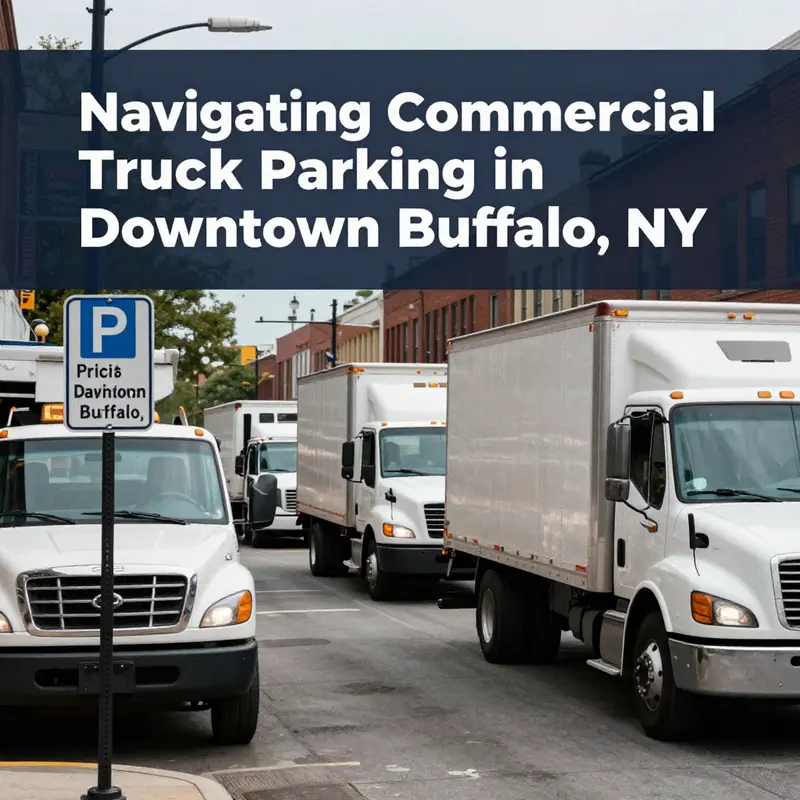
Downtown Buffalo sits at the crossroads of commerce, riverfront renewal, and dense urban streets. For fleet operators and owner-operators alike, moving goods through this core requires more than speed and efficiency; it demands an understanding of the local rules that shape where a truck can pause, overnight, or perform routine maintenance. The regulatory framework in Buffalo is designed to balance traffic flow, public safety, and the character of mixed-use districts. What that means for a driver is not a single list of convenient lots, but a disciplined approach to locating spaces that align with law and land use. In practice, the rules are not abstract constraints but real determinants of route planning, load windows, and the daily rhythm of a downtown operation. The city aims to encourage responsible parking while deterring practices that would disrupt residential zones or hinder emergency responses. Because the downtown environment blends commercial activity with nearby housing and civic spaces, the permitted places to stop are more carefully parceled than in open suburban lots. That careful parceling translates into a simple, albeit exacting, rule of thumb: park where the space is designated for commercial or industrial use, and avoid spaces within residential areas during restricted hours. The overarching effect is that freighters must think ahead about where to stage, where to repair, and where to wait for the next leg of a journey, all in ways that do not inconvenience neighbors or clog city streets. To do this well, a driver needs reliable sources of up-to-date information, and a locally grounded sense of what enforcement looks like on any given block at dusk or after midnight.
One of the clearest guidelines concerns where not to park when the sun goes down. In Buffalo, a substantial prohibition targets commercial trucks parked in residential areas between 7:00 PM and 7:00 AM. This rule is codified to reduce noise, avoid congestion, and lower the risk of nighttime hazards in neighborhoods designed for quiet living. The penalties are clear: violations can lead to fines and towing. For drivers, that means planning to avoid residential zones during the restricted window and identifying legitimate, non-residential spaces where overnight parking is sanctioned. Such spaces typically exist in designated commercial or industrial zones, in or near business districts that are prepared to accommodate fleet activity without impeding resident life or pedestrian safety. The practical implication is straightforward: a route plan must include one or more compliant stopping points where long-term parking is legal and logistically sensible rather than speculative or opportunistic.
Beyond where to park, Buffalo’s rules also address how to handle maintenance and repairs. Vehicle repairs are generally expected to occur off the street, except in true emergencies. This provision aligns with the city’s intent to keep travel lanes clear and to minimize disruptions to nearby residents and businesses. For a driver, that means scheduling routine maintenance in advance and identifying nearby facilities or yards that are designed for on-site service work or vehicle turnover without blocking arterial streets or curb lanes. If an unscheduled repair becomes necessary, the exception for emergencies should be invoked in a measured way, and the vehicle should be moved to a proper location promptly once the immediate issue is stabilized. A disciplined approach to repairs reduces the risk of tickets and ensures a faster return to an on-time delivery or pickup schedule, which in turn supports the integrity of the entire operation.
Parking lot regulations add another layer of accountability for operators and facility managers. The law prohibits parking lot or garage licensees from allowing any vehicle to be used for purposes other than its intended function while parked on their premises. In other words, a space intended for parking should not become a makeshift storage yard or a venue for unauthorized activities. This rule protects both the public right of way and the commercial interest of property owners who rely on predictable, law-abiding parking practices. For drivers, the takeaway is as crucial as it is simple: adhere to the stated purpose of any lot, park only in spaces authorized for that use, and avoid secondary uses such as temporary storage on a curbside or private facility that does not explicitly permit it. Misuse not only risks enforcement actions but can also complicate the city’s management of curb space, which is a finite and hotly contested resource in the downtown core.
A broader policy shift also shapes the long view of parking availability in Buffalo. The city has repealed minimum parking requirements citywide through a new zoning ordinance. This change aims to facilitate more flexible, mixed-use development and to promote transit-oriented design and alternative transportation options. In practical terms, the repeal can reduce the number of dedicated truck parking spaces stitched into new developments, creating a landscape where parking is more centralized or integrated into commerce-centric hubs rather than dispersed across multiple sites. For fleets, this shift can be a double-edged sword: it may free up space for other urban initiatives and encourage more efficient land use, yet it also presses operators to identify centralized, well-managed locations that can accommodate routine parking, maintenance, and wait times without undermining the downtown fabric. The result is a city that prizes smarter infrastructure and coordinated logistics, even as it requires greater planning from trucking firms that operate in tight urban corridors.
With these regulatory contours in mind, drivers and dispatchers should build decision-making processes that reflect both law and practicality. The first step is to map out compliant overnight options ahead of time, focusing on commercial or industrial zones that align with the vehicle’s needs and the delivery schedule. A second step is to establish a clear protocol for repairs, including identifying nearby service areas that can handle routine maintenance without impeding traffic or triggering a violation, and recognizing the emergency exception as a temporary, but strictly limited, allowance. A third step is to secure access to legitimate parking facilities and to confirm that any used space is licensed and appropriate for the intended use. In all cases, operators should verify that the space remains compliant with current regulations, as rules can evolve with zoning updates and enforcement priorities.
To stay grounded in the practical side of these rules, many fleets find it helpful to consult authoritative local resources. The City of Buffalo’s municipal code offers the statutory texture that underpins everyday parking decisions. For a concise, accessible reference, see the City of Buffalo Municipal Code. In addition, talking with the city’s public works office or the Buffalo Parking Authority can yield guidance on designated spaces and any temporary restrictions that might apply to special events or construction projects. Local trucking associations and experienced logisticians in the area can also provide context about how regulations are enforced on particular blocks and how best to coordinate with property owners to secure compliant, reliable parking. For broader industry perspectives and ongoing updates, consider visiting the McGrath Trc blog for commentary and case studies that illuminate how regulations intersect with fleet operations in urban settings. You can explore that resource here: McGrath Trucks Blog.
As the downtown environment continues to evolve, the central message for drivers remains consistent: legal, well-planned parking is not a fixed list of spots but a disciplined approach to choosing spaces that reflect the city’s rules, the needs of the surrounding community, and the realities of urban freight traffic. The repeal of minimum parking requirements signals a shift toward smarter, denser, more intentional development. It invites operators to view truck parking not as an afterthought but as a strategically integrated element of urban logistics. That shift also underscores the value of dedicated, centralized hubs where parking, maintenance, and waiting time can be managed with predictable costs and reliable access. In the end, compliance and planning are not obstacles but enablers of smooth, efficient operations in a downtown landscape that prizes safety, clarity, and stewardship of public space. For drivers who invest a few moments in planning, Buffalo’s rules can become a framework that makes downtown movement safer, quicker, and more sustainable over the long haul.
External resource: For direct access to the statutory text governing Buffalo’s parking and zoning framework, see the Buffalo Municipal Code on eCode360: https://www.eCode360.com/buffalo/
Safe Ground in the Core: Navigating Downtown Buffalo NY Truck Parking with Confidence
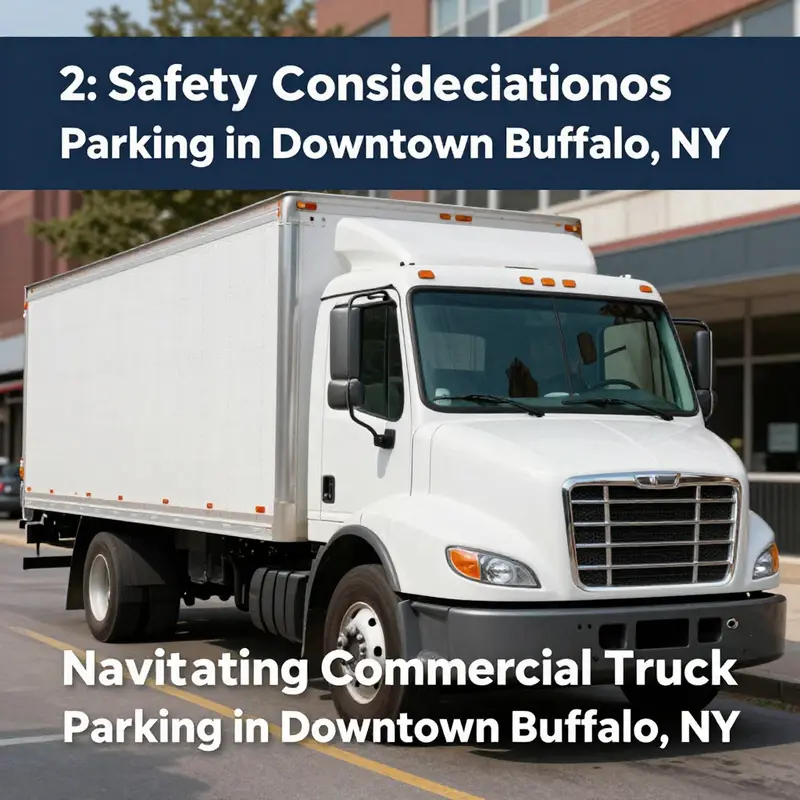
Parking a commercial truck in downtown Buffalo requires safety awareness, regulatory knowledge, and practical planning. The core urban landscape combines moving traffic, pedestrians, and public infrastructure, so the goal is to park in a location that minimizes risk and remains compliant. Safety begins before the truck enters the street and continues after it is parked, including how the vehicle is positioned, how the site is kept clear for pedestrians, and how the crew communicates during loading and unloading.
Key considerations include sidewalk clearance to keep the path free of dirt, snow, or debris; entrances and exits must remain unobstructed; hydrants and emergency routes must be accessible. Downtown Buffalo has both ample spaces and narrow streets, so choose spots fully within legal boundaries and avoid blocking hydrants, ramps, or exits. Temporary equipment should stay within the truck footprint and not spill into sidewalks.
Understanding local parking restrictions and enforcement helps prevent tow or ticketing. The Buffalo Parking Department provides information about tickets, suspensions, or impounded vehicles, and some zones may have height or weight limits. A quick pre-check—spot permit status, vehicle height and length, and allowable loading activities—reduces surprises at the curb.
Winter adds complexity: snow banks and slick sidewalks can reduce space and visibility. Park where sidewalks are cleared and avoid blocking pedestrian paths; be prepared to delay loading if snow removal is underway.
Smart parking starts with planning: map out multiple options, check hours and permissible windows, and choose spots with clear sightlines and room to maneuver. Real-time updates from GPS or fleet software help avoid restricted areas. Emphasize calm, methodical routines with clear communications among drivers and loading staff.
For ongoing guidance, consult official resources such as the City of Buffalo Parking page for current rules and procedures. This information helps ensure day-to-day curb decisions are informed and compliant.
Chapter 3: Practical Ground: Locating Safe Truck Parking and Nearby Amenities in Downtown Buffalo, NY
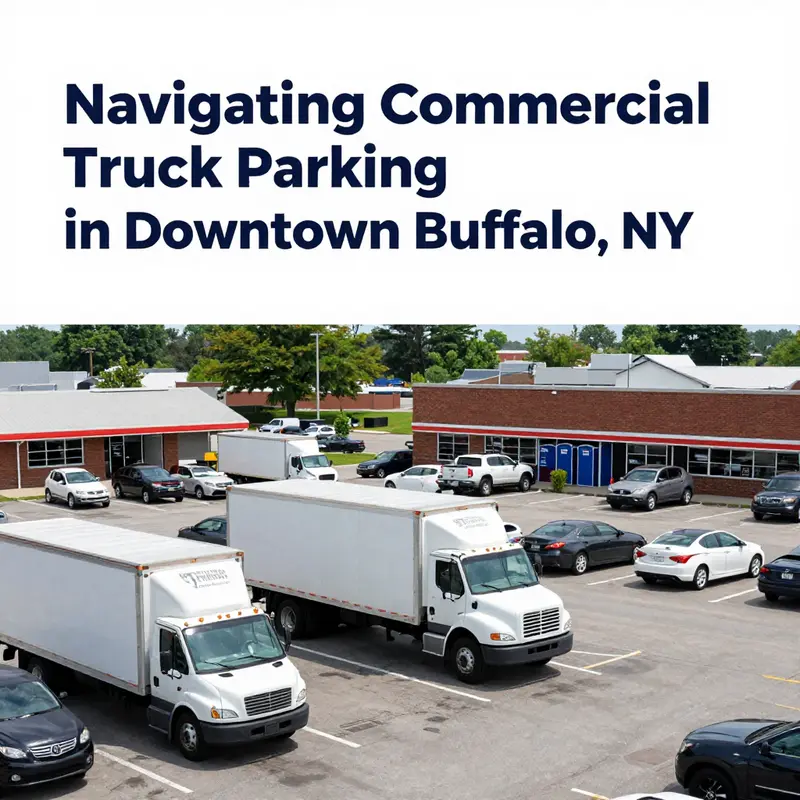
Downtown Buffalo sits at a crossroads of freight corridors and urban life, where a trucker’s choice of parking ripples beyond the moment of finding a space. The question of where to park is not merely about occupancy; it is about safety, compliance, and the ability to reset with dignity between legs of a long haul. In practice, drivers seeking downtown Buffalo parking engage a small ecosystem: a secured lot with clear ingress and egress, gentle lighting that keeps fatigue at bay, and a layout that accommodates the size and maneuvers of a commercial vehicle. The aim is to minimize the back-and-forth that can eat into rest time while maximizing access to the utilities a driver depends on—clean restrooms, nearby fuel, quick meals, and a straight path back to the highway that does not require a maze of city streets at odd hours. The best layovers occur when parking feels like a sensible node in a larger network, not a bottleneck you stumble into after a long cross-country drive. Two well-regarded options near the city core serve as anchor points for many drivers, located with direct, practical access to the interstate system and the downtown street grid, which matters when a truck has to shift from highway speed to city rhythms. Both sites emphasize reliability: secure perimeters, visible lighting, accessible entry and exit lanes, and clear guidance for oversized vehicles. The design philosophy is straightforward but crucial: wide drive aisles prevent the scuffle of mirrors and bumpers, ample stalls reduce the risk of encroachment on neighboring trucks, and controlled entry points deter casual trespass while ensuring that authorized vehicles can settle in quickly during the late shift. For drivers who plan ahead, a reserved space through a digital platform can remove the anxiety of hunting for parking after a delivery window or a cross-country leg, translating into a smoother start to the next shift and less circling. Proximity to lodging and essential services matters as much as the fence line, with downtown Buffalo offering accommodations and surrounding services within a short drive or modest walk, providing predictable access to dining, fuel, restrooms, and basic vehicle maintenance. This ecosystem supports drivers traveling with families or teammates by offering low-stress stops that preserve morale on demanding routes. To keep this chapter grounded in action, drivers can map potential lots before entering the city, noting gate hours, height restrictions, loading-zone constraints, overnight parking allowances, lighting levels, and any permit requirements to stay prepared. The overarching goal is a dependable framework that aligns with the day’s work window and rest obligations, enabling safe fatigue management and smoother routing in the Buffalo downtown context.
Chapter 4: The Price of Street Space: Economic Forces Shaping Downtown Buffalo’s Truck Parking
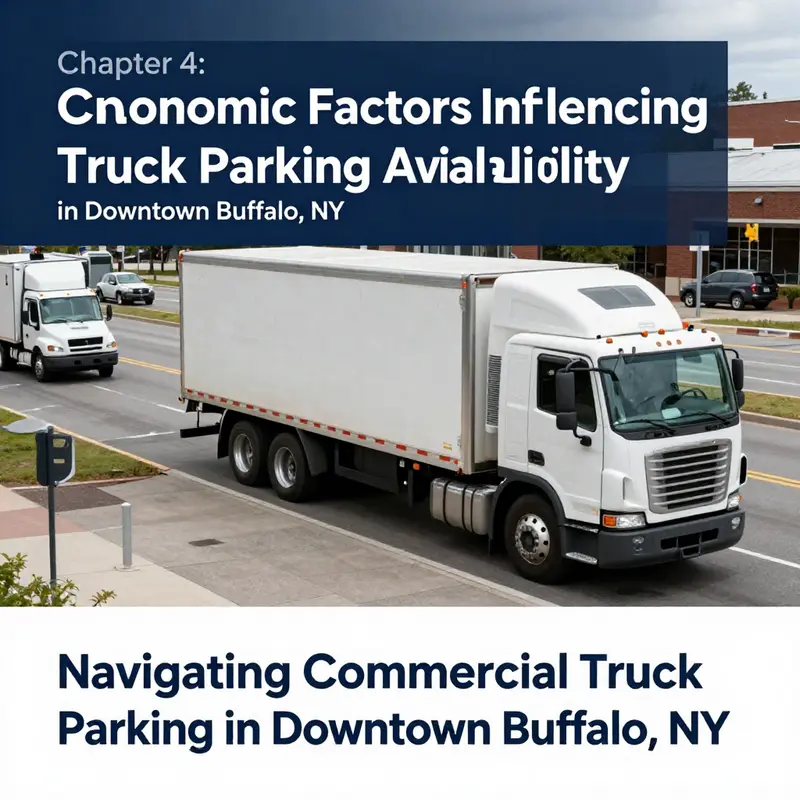
In downtown Buffalo, the question of where a commercial truck can park for any meaningful span is less a question of rote permissions and more a reflection of an urban economy in constant negotiation. Parking space for heavy vehicles sits at the intersection of land markets, development priorities, and the rhythms of freight that keep a regional economy moving. The chapter that follows treats parking not as a passive backdrop to city life but as a dynamic outcome of economic choices made across layers of public policy, private investment, and the volatile demand of delivery-driven commerce. When drivers look for a place to pause during a hectic urban shift, they are compelled to read the city’s economic pulse, reading signals about land value, infrastructure costs, and the evolving needs of freight operations in a metropolis that is simultaneously growing and changing its use of core space.
The most visible economic force shaping truck parking in downtown Buffalo is land value and the pressure of real estate development. Downtown districts across the country have become testing grounds for revitalization efforts that attract residents, enterprises, and amenities. In Buffalo, these pressures manifest as rising property values and intensified competition for prime city parcels. Parking for long-term truck storage requires land that is both sizable and affordable, a combination increasingly scarce as developers prefer uses with higher short- and long-term returns, such as residential towers, office space, or specialty retail. The opportunity cost of devoting scarce downtown acreage to parking becomes a deciding factor for both public sectors and private owners. When a parcel could host a high-rise with a steady revenue stream or a mixed-use complex that anchors a neighborhood, the calculus shifts in favor of uses with greater perceived economic payoff. The result is a constrained parking supply that cannot readily keep pace with the needs of trucking fleets, especially those with episodic or overnight requirements and the flexibility to detour to less congested outskirts or intermodal hubs.
This tension between land value and parking needs sits atop a more intricate cost structure that governs the feasibility of new or expanded parking facilities. Municipalities and private operators must contend with high fixed costs: acquiring land, building paved lots, installing lighting, fencing, and cameras, and ensuring reliable utilities and maintenance. These costs are compounded by ongoing expenses for snow removal, pavement rehabilitation, and security staffing. In Buffalo, where municipal budgets face competing demands and where private operators seek predictable returns, the financial case for large, durable parking facilities in the heart of downtown often looks marginal. The pricing that supports such facilities must recover capital costs over time while competing with other urban uses that can charge higher rents or yield faster returns. When demand fluctuates by season, day of week, or hour of the day, the risk of underutilization increases, dampening incentives to invest in new or expanded parking capacity. The result is a cautious approach to capital projects that leaves the downtown landscape more amply served by surface lots, curbside allowances, or short-term metered spaces rather than a network of purpose-built, truck-specific parking.
Beyond land costs and infrastructure economics, the socio-economic and demographic fabric of Buffalo shapes how freight moves through the downtown core and how parking demand emerges and evolves. The city’s shift toward e-commerce and just-in-time delivery models means more frequent, smaller shipments that press for flexible, short-term parking options close to prime delivery corridors. In practice, this translates to a demand for spaces that can be used for rapid staging, quick loading and unloading, or temporary overnight rests for drivers seeking proximity to trucks and routes. Yet these trends also inject greater competition for space, especially during peak delivery windows, when spaces near major distribution points become scarce and price signals rise. The consequences extend beyond price alone. Access constraints can disproportionately affect smaller carriers and independent operators who operate on thinner margins and must balance labor costs, uptime requirements, and fuel expenses against parking fees that can erode profitability if not carefully managed. A city that wants to sustain a diverse trucking community must acknowledge that parking needs are not purely a function of capacity but of price accessibility, geographic distribution, and predictable enforcement patterns that allow fleets to plan their day and week with confidence.
Policy and incentives further mediate the economics of downtown truck parking. Public-private collaborations, targeted tax incentives, and grants can tilt the cost-benefit equation toward creating or maintaining parking assets that serve freight mobility. At a national level, programs established under broader federal infrastructure and resilience initiatives offer potential funding to communities that design parking solutions with safety, efficiency, and resilience in mind. Local stakeholders—city agencies, economic development offices, and private developers—can leverage such programs to seed strategically placed parking hubs that align with major freight corridors, intermodal terminals, or near-important distribution points. The strategic value of these facilities accrues not only to trucking operations but to the surrounding economy: reduced curb congestion from random parking, improved safety and workflow near loading zones, and a more predictable freight environment that lowers the total landed cost of goods. When these investments are paired with thoughtful land-use planning, the result is a downtown that supports both urban vitality and freight resilience.
A further layer of complexity arises from demographic and social considerations that intersect with the economics of downtown parking. Buffalo’s urban core is home to a diverse population and a set of neighborhoods that experience varying degrees of access to transportation, employment opportunities, and city services. Freight activity—while essential to the functioning of local businesses and regional supply chains—can intensify congestion and curb usage in neighborhoods adjacent to the core if not managed with an integrated citywide strategy. Socio-economic dynamics influence who can afford parking, how long trucks stay, and where drivers choose to finish shifts. In a city where a portion of the freight activity is tied to last-mile delivery to apartment complexes, small businesses, and retailers, a balance must be struck between optimizing downtown turnover and preserving neighborhood livability. This is not only a logistics challenge but a social one, demanding collaboration among municipal planners, freight operators, and community groups to identify solutions that distribute the benefits and burdens of freight movement equitably.
Against this backdrop, economic incentives and policy interventions become increasingly important. Public-private partnerships can help distribute capital risk and pool resources to bring underutilized lots into a parking ecosystem that serves multiple stakeholders. Grants, tax abatements, and pilot programs can lower the barrier to entry for new parking facilities or for the conversion of vacant parcels into temporarily usable truck parking spaces during peak demand periods. National funding streams, such as those intended to improve freight mobility and safety, offer a pathway for Buffalo to expand its parking options without overburdening city budgets. The guiding principle should be to align parking capacity with the practical needs of the freight system, not merely with the highest and best use of the land in a vacuum. In Buffalo, that alignment would mean situating parking near key freight corridors, ensuring safe access routes for trucks, and coordinating with public transit and first-responder networks so that parking does not become a fragmentation point in the urban fabric. It also means embracing data-driven approaches to manage utilization, price signals, and enforcement in ways that are predictable for operators and fair for nearby residents.
These intersecting forces—land value, cost structures, demographic shifts, and policy levers—help explain why the downtown parking scene for trucks appears dense in some hours and nearly empty in others. They illuminate why a straightforward map of “where to park” is not sufficient. Instead, drivers, fleet managers, developers, and policymakers must work toward an integrated vision that treats parking as an urban service tied to the efficiency of the regional freight system. The goal is not merely to create more spots but to create smarter spots: locations that minimize deadheading, shorten dwell times, improve safety, and support the contingent economics of trucking in a dense urban environment. In the end, the practical question—where to park a commercial truck in downtown Buffalo—becomes a proxy for how well the city can translate economic insight into space, policy, and collaboration that keep freight moving while safeguarding urban livability.
For practitioners and researchers alike, the path forward is rooted in data, collaboration, and patient investment. The conversation should center on how to convert savings from improved parking efficiency into lower operating costs for fleets, how to structure pricing that reflects true land and maintenance costs without pricing out small operators, and how to design policies that encourage shared-use parking, temporary holding patterns, and flexible enforcement that respects both commerce and community. This requires a cadence of transparency and experimentation—from pilot programs that test dynamic pricing in specific blocks to shared-use agreements that bring together hospitals, universities, and logistics providers in a coordinated, neighborhood-centered parking strategy. As Buffalo continues to evolve, the downtown freight landscape will be a barometer of the city’s broader capacity to balance growth with practicality, turning the frustrational puzzle of parking into a capacity for enhanced resilience across the urban economy.
For deeper context, see the Downtown Buffalo Economic Impact Study, which outlines land-use pressures, transportation costs, and broader economic forces shaping freight and parking dynamics in the core (External resource): https://www.buffalosprings.org/reports/2023-downtown-buffalo-economic-impact-study.
Internal reference for further reading: Navigating Economic Uncertainties: Key Insights from the Canadian and U.S. Trucking Markets. This resource offers a complementary perspective on how economic volatility affects parking demand and pricing strategies for fleets operating across borders and regions.
Turning the Downtown Grid into a Safe Haven: Community Resources and Parking Solutions for Truck Drivers in Buffalo, NY
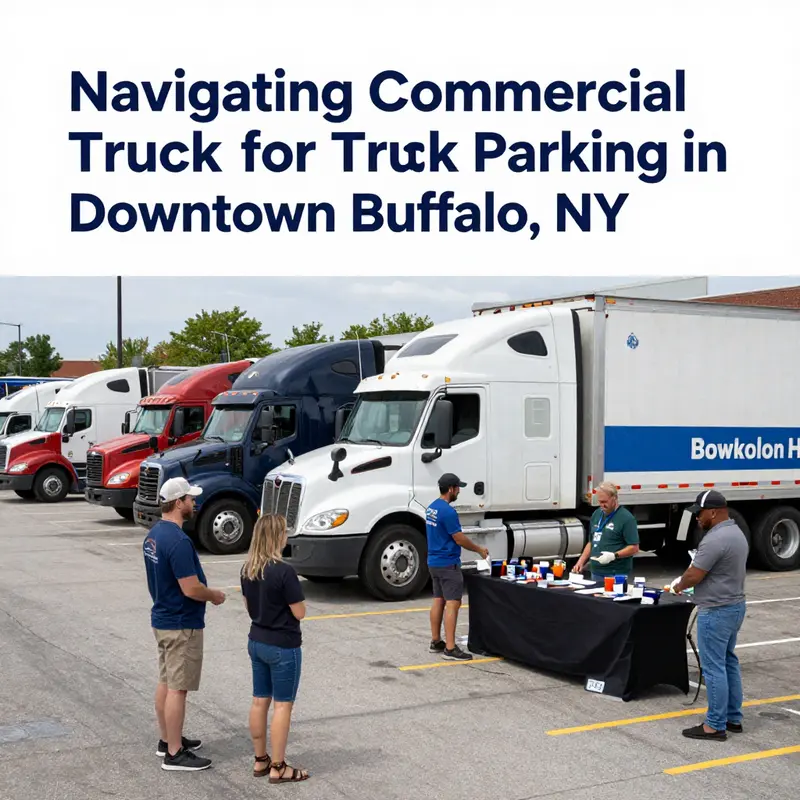
Buffalo’s downtown core sits at a crossroads of commerce, culture, and careful daily choreography. The streets are busy, the traffic can be tense, and space is at a premium. For long-haul and regional drivers alike, this creates a paradox: the demand to reach customers, suppliers, and service partners while navigating a grid designed for cars, bikes, and pedestrians. The search for legal, secure, and convenient truck parking during a downtown visit is not merely a logistical hurdle; it is a test of how a city’s infrastructure and its people come together to support a vital industry. In Buffalo, the answer rests not on a single fixed lot but on a network of practical options, coordinated through community resources and municipal and industry partnerships. This chapter follows that thread, tracing how drivers can move through the downtown area with less guesswork and more confidence, aligning their routes with a broader ecosystem built to sustain them while they conduct business—and, when time allows, enjoy a moment of local flavor.
A primary anchor in this network is the Buffalo Regional Transportation Center, known informally as a key hub for trucks seeking a secure, supervised space in an otherwise tight downtown environment. Located at 3400 Main Street, the BRTC provides more than a place to park. It offers a controlled environment where commercial vehicles can be stationary with a measure of safety that complements the surrounding streets’ busier rhythms. The center’s amenities—restrooms, reliable Wi‑Fi, and visible security measures—address common needs that often complicate downtown stays. For drivers on short breaks between deliveries or overnight holds before early morning departures, the BRTC represents a predictable, well-lit alternative to parking on-street options that may carry higher risk of fines or unsanctioned use.
Yet a single facility cannot shoulder all of downtown Buffalo’s parking complexities. This is where local associations step into the foreground, translating broad-city goals into practical guidance for truck operators. The Western New York Trucking Association plays a critical role beyond lobbying for better road conditions. It acts as a bridge—connecting drivers with local businesses that welcome trucks, sharing updated lists of approved parking locations, and translating city ordinances into actionable advice. In practice, that means a driver can benefit from a more accurate picture of where trucks are permitted to stage, which spaces require permits, and how certain zones change during peak business hours. The strength of this approach lies in its adaptability; drivers who stay informed through the association’s channels are less likely to encounter unexpected restrictions and more likely to discover legitimate options tucked away in otherwise ordinary commercial corridors.
Beyond the formal parking sites, Buffalo’s downtown also reveals a collaborative ethic that stretches into the neighborhood level. Little Italy, a district known for its compelling streetscape and its cannoli-filled traditions, hints at a broader cultural willingness to accommodate drivers who pause to refuel themselves and their teams. In practical terms, this means that nearby restaurants and cafés, sometimes with notable local appeal, may offer pathways to rest areas or access arrangements for commercial drivers who arrive during business hours. The idea is not to create a loophole but to foster a reciprocal, pedestrian-friendly flow that honors both the driver’s needs and the city’s livability goals. When a driver can pull into a safe lot, grab a meal, and then leave without lingering in a way that disrupts traffic patterns, the downtown experience becomes more sustainable for everyone involved.
Informal yet essential in this ecosystem is the use of digital tools designed to keep drivers oriented in real time. A driver-focused parking platform, without naming specific brands here, aggregates information from local authorities and user reports to show available spaces, time limits, and permit requirements. This kind of resource reduces the guesswork that often accompanies downtown parking, helping drivers avoid fines and minimize the time spent circling blocks. The value of such tools multiplies when they are complemented by the “local wisdom” generated through associations and municipal postings. A driver who cross-references official guidance with user-reported updates gains a more robust understanding of which routes are viable for a given hour, which lots are reserved for long-haul fleets, and where loading zones may be temporarily repurposed for truck use. In Buffalo’s context, that means a smoother cadence between turning onto Main Street, slipping into a nearby lot, and preparing to roll again without a protracted stop.
The practical choreography of parking downtown also hinges on zoning realities and city policies. Downtown Buffalo, like many dense urban cores, has zoning patterns that prioritize mixed-use development and pedestrian safety, sometimes at odds with the needs of large commercial vehicles. The reality is not a simple absence of space but a balancing act: creating spots that are accessible and safe while preserving the area’s vitality. For drivers, awareness of these constraints translates into a disciplined approach to planning. It means knowing where permitted truck staging areas exist, understanding peak-hour constraints, recognizing loading zones that allow overnight parking, and respecting times when on-street parking spaces are off-limits to heavy vehicles due to street cleaning schedules or special events. It also implies a willingness to consider nearby logistics corridors and medium-term parking options just beyond the most crowded blocks. The goal is to integrate a driver’s trip with the city’s urban rhythm, so that a downtown stop supports the broader supply chain rather than complicates it.
In this sense, the Buffalo ecosystem resembles a living system rather than a simple directory of parking lots. It relies on ongoing dialogue among drivers, associations, and city agencies to adapt to changing needs, whether those needs arise from a surge in deliveries to a downtown market, a festival that temporarily tightens space, or a shift in truck routing patterns as a consequence of infrastructure projects. Community resources become a form of collective insurance: by sharing information about viable parking nodes and by advocating for responsible infrastructure improvements, stakeholders reduce risk for individual drivers and contribute to a more predictable operating environment. The result is not a perfect fix but a dependable network that drivers can learn to trust. A driver who understands this network can move through Buffalo’s downtown with greater intention, using BRTC when appropriate, leaning on association guidance for updated parking directions, and taking advantage of nearby neighborhood assets where appropriate without compromising safety or compliance.
To readers who want to connect the dots between theory and practice, consider the value of guiding yourself with both official postings and community wisdom. A practical approach is to map out a downtown route that includes a primary parking anchor, such as the BRTC, plus a contingency plan that features a nearby commercial lot or a permitted loading area in a suitable neighborhood. This approach reduces the risk of arriving during a restricted window and helps ensure that drivers can rest, refuel, and regroup without unnecessary time loss. The suggestion to integrate a driver-focused information source into the planning phase—a habit many seasoned operators cultivate—applies here as well. The goal is not to depend on luck but to build a routine that prioritizes safety, legality, and efficiency, even when a downtown visit is brief.
For those seeking broader context and practical perspectives on how to approach these challenges, a useful touchstone is the broader trucking community voice found in industry-focused content spaces. See the McGrath Trucks Blog for thoughtful discussions on market conditions, regulatory changes, and practical dispatch strategies that align with the realities of urban parking. The link below provides a gateway to a wider conversation about how fleets navigate the modern landscape, which has implications for planning and local engagement in Buffalo and similar cities.
Internal link: McGrath Trucks Blog
As Buffalo continues to evolve, the story of downtown truck parking will keep unfolding through collaboration, shared knowledge, and a willingness to adapt. Drivers who embrace the networked approach—relying on a trusted combination of a secure central facility, association guidance, community partnerships, and real-time information—will find that the city’s challenges become opportunities. Opportunities to demonstrate professional discipline, to support local businesses, and to contribute to a city that values practical, shared solutions. In that spirit, the downtown Buffalo experience can transform from a source of friction into a model of coordinated support where a driver’s rest, a driver’s route, and a driver’s relationship with the place are all part of a larger, well-managed system.
External resource: https://www.buffalorct.org/parking/semi-truck-parking
Final thoughts
Understanding where commercial trucks can be parked in downtown Buffalo, NY, is vital for efficient logistics and operations. By addressing local regulations, enhancing safety measures, utilizing available amenities, recognizing economic influences, and engaging with community resources, stakeholders can ensure compliance and operational efficacy. As urban landscapes evolve, staying informed and proactive is essential for successful truck management in bustling city environments.