The classification of fire trucks generates significant discussion among trucking company owners, fleet managers, and logistics professionals. Understanding whether fire trucks are considered commercial vehicles is essential, particularly as it influences regulatory compliance, operational management, and resource allocation. In this analysis, we will delve into the regulatory frameworks surrounding vehicle classifications, the operational distinctions that set fire trucks apart, and the broader implications of these classifications on procurement and operational strategies. By examining these elements, readers will gain a comprehensive insight into the nature of fire trucks and their unique position within the transportation landscape.
At the Front Line of Regulation: Fire Trucks, Public Safety, and the Question of Commercial Vehicle Status
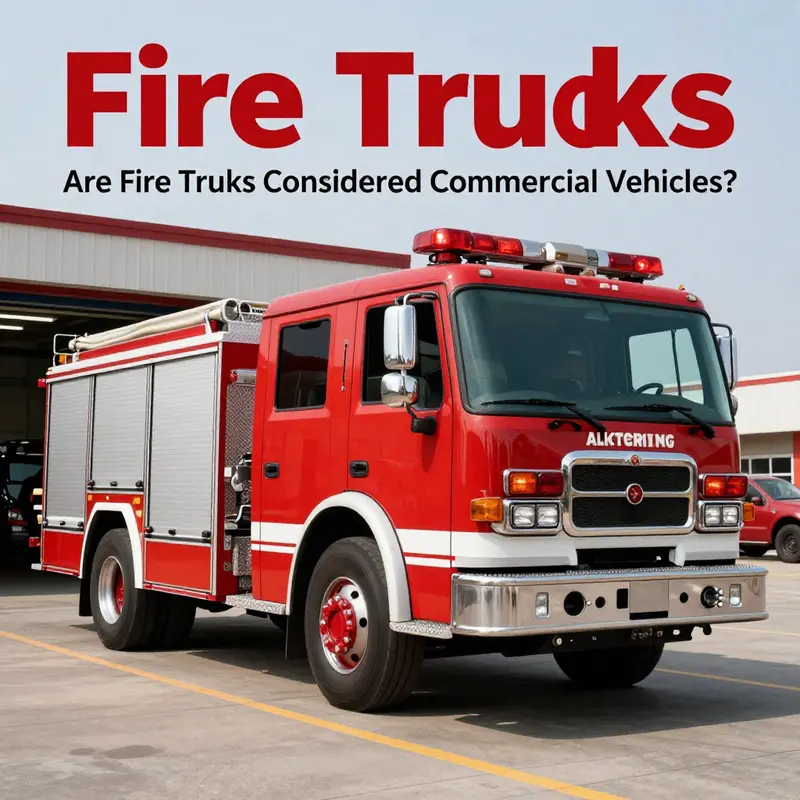
When people ask whether a fire truck counts as a commercial vehicle, they touch a seam where public safety priorities meet regulatory definitions. The answer is not a single yes or no, but a nuanced landscape shaped by how a vehicle is used, who operates it, and which rules are meant to govern it in a given place. In broad terms, fire apparatus are not classified as commercial vehicles under most standard transportation regulations. The core logic rests on purpose: commercial vehicles are defined by their use to transport people or property for compensation or hire. Fire trucks, owned and operated by government agencies for emergencies and public protection, labor in service of the public good rather than for profit. Their identity as emergency responders places them in a distinct category, often described as specialized emergency vehicles, whose maintenance, operation, and equipment are regulated by fire safety codes and standards rather than the general commercial vehicle laws that govern trucking, delivery, or passenger services for hire.
Yet this classification is not a universal shield from all regulations. Context matters. Depending on jurisdiction, a fire truck can encounter scenarios where its status shifts or where overlapping rules apply. If a fire apparatus is pressed into duties that resemble commercial activity—such as towing equipment for a private event, moving assets for a private company during a non-emergency operation, or being leased for a non-public-purpose—its regulatory footing can be reevaluated. In those moments, the line between emergency capability and commercial use becomes relevant to licensing, maintenance regimes, weight restrictions, and even liability. It is in these edge cases that the discussion moves from the binary of “emergency vehicle” versus “commercial vehicle” to a more granular assessment of function, context, and jurisdiction.
To grasp why the tariff of classification matters, one must start with the definitions that regulators emphasize. In the United States, the Federal Motor Carrier Safety Administration (FMCSA) sets out the concept of a commercial motor vehicle (CMV) through the lens of commerce. A CMV is typically defined as a vehicle used to transport goods or passengers for compensation or entitlement to hire. When the operation involves movement in the course of business that contributes to profit, the vehicle enters under these rules. While most fire departments carry out their missions without charging fees for response, the economic logic that drives CMV status rests on the transactional nature of the activity rather than on the size of the vehicle alone. Still, size and capability can influence regulatory expectations. Heavy platforms, specialized equipment, and the potential risk profile of fire apparatus naturally invite closer scrutiny from safety regulators, even when used for public street operations.
The practical implication of this regulatory framework is that fire services generally enjoy exemptions and allowances tailored to emergency needs. Emergency vehicles can be granted exemptions from certain requirements that would otherwise apply to routine commercial trucking. For example, the ability to respond to incidents rapidly is supported by regulatory relief in areas such as hours-of-service rules for drivers in genuine emergencies, prioritized right-of-way provisions, and exemptions from some routine inspections that would impede urgent response in a crisis. These provisions are designed to prioritize life-saving capability and not to erode safety. The calibers of this exemption vary by jurisdiction, and the specifics are compiled in state and federal guidance that governs emergency vehicle operations, response protocols, and equipment standards. The distinction remains clear: exemption is tethered to the emergency mission, not to the production of revenue.
That said, the real world is rarely so tidy as a regulatory manual. There are situations where the use of a fire truck can trigger considerations that resemble commercial use and therefore touch CMV guidelines. If a fire truck is deployed to perform a task outside its normal emergency mission—such as towing non-emergency equipment, moving heavy gear for a private enterprise, or participating in a paid public-safety event where the vehicle functions in a monetized capacity—the jurisdiction where that activity occurs could reclassify that specific use and bring it under commercial vehicle standards for that period. In such cases, checks around licensing, vehicle maintenance regimes, insurance requirements, and compliance with weight and size limitations become operationally relevant. The result is a practical truth: a single vehicle can live in multiple regulatory lanes, depending on the job it is asked to do and the purpose behind that task.
One of the most important consequences of this nuanced status is the matter of licensing and training. For commercial operations, drivers must often hold a commercial driver’s license (CDL) and comply with the rules that govern driver hours, vehicle inspection, and safety management. In the fire service, many apparatus operators are firefighters who receive route- and vehicle-specific training for emergency response, but the CDL requirement can vary across states and even across types of units within a department. Some jurisdictions require a CDL for the operation of certain heavy fire apparatus, especially if the vehicle meets or exceeds specific weight thresholds or if the vehicle shares road space with vehicles subject to CMV rules during interagency transfers or special operations. Other jurisdictions may rely on department-internal certification programs, coupled with state or local regulations, to ensure drivers maintain appropriate skills without invoking the full range of CMV driver requirements. This patchwork reflects a broader truth about the emergency services sector: safety, readiness, and rapid response often trump rigid classifications, but not without careful adherence to the letter of the law where it applies.
Beyond licensing, maintenance and inspection regimes offer another lens through which to view classification. CMVs, when regulated as such, are typically subject to periodic inspections, tire and brake standards, and equipment requirements that align with the responsibilities of transporting goods or people for hire. Fire apparatus, while they share some mechanical characteristics with large commercial trucks—heavy weight, complex braking systems, and specialized appendages—are overseen under fire service codes and national or regional standards aimed at ensuring reliability for emergency operations. These standards cover life-safety equipment like pumping capacity, lighting, and on-board communications, alongside structural and mechanical integrity. The regulatory vocabulary shifts here: rather than a focus on commercial transport, the emphasis is on readiness and resilience in service to the public.
Insurance, too, sits at an interesting intersection. When a vehicle’s use is clearly non-commercial, liability coverage is tied to public safety and government ownership. If a fire truck is involved in a non-emergency operation that appears functionally commercial, insurers may reassess the risk exposure by considering the task and the operator’s status. In some scenarios, the liability calculus can hinge on whether the commercial activity was ancillary or integral to a non-emergency task. The interplay between liability and regulatory status matters not just in accident investigations but also in how cities allocate risk management resources, fund fleet maintenance, and structure training programs for their personnel. It is a reminder that classification is not mere paperwork; it ripples through budgeting, risk allocation, and the expectations placed on departments by the communities they serve.
In the broader policy conversation, the distinction between fire apparatus and commercial vehicles carries implications for interoperability and funding. Public safety fleets rely on a mix of federal, state, and local funding streams, often designed with specific categories in mind. If a department operates a vehicle that strays toward a commercial use, it may encounter a maze of additional regulatory requirements or eligibility criteria for grants and reimbursements that are meant to support emergency readiness rather than commercial enterprise. The movement toward shared data standards, incident reporting, and fleet management analytics further reinforces the need to classify and document vehicle usage with precision. When policymakers discuss the future of emergency response—whether through enhanced training regimes, new safety equipment, or cross-border coordination—the clarity of vehicle classification becomes a practical element of operational coherence.
To bring this back to a more concrete plane, consider the function of fire trucks during a large-scale event that requires both emergency response and crowd management logistics. In such a setting, the fire department might deploy a squad of vehicles that perform dual roles: primary emergency function plus a supporting, event-related transport or equipment-shuttle role. If those secondary roles begin to resemble commercial activity—charging for parking shuttles, delivering gear to vendors, or transporting security personnel for hire—the regulatory lens may shift for those specific tasks. In those moments, departments must navigate licensing, insurance, and safety standards that reflect the dual nature of the operation. The central takeaway remains: the core mission of the vehicle matters most for classification, but the specific use case can tilt the balance toward or away from CMV regulatory treatment.
The chapter’s practical implications extend to the public as well. For residents and local businesses, understanding why a fire truck’s regulatory status matters can illuminate why certain fleet policies, inspections, and training programs exist. It explains why an apparatus may look like a big commercial truck—large, heavy, and capable of moving substantial payloads—yet not fall under the usual commercial vehicle rules. This insight helps demystify the bureaucratic texture of municipal operations and reinforces the broader principle that safety and public service are the governing priorities. It also underscores the value of transparent governance: when communities understand how and why fire departments are regulated differently, they gain greater confidence in the reliability and accountability of these essential services.
For readers seeking a broader landscape of how trucking markets intersect with policy and regulation, researchers often examine the economic and regulatory climate that shapes fleet decisions across borders. The topic of commercial vehicle status flows into conversations about market dynamics, asset utilization, and the cost structures that affect public and private fleets alike. As one navigates these discussions, a useful thread is to consider how emergency vehicles fit within a market that prizes efficiency and safety in equal measure. The balance between exemptions for life-saving operation and the discipline of regular compliance creates a durable framework for modern emergency response. While the specific classification of a given fire truck may differ by jurisdiction, the underlying theme is consistent: public safety prevails, and regulatory schemes adapt to preserve that core mission without compromising safety or accountability.
In the end, the fire truck’s identity as a specialized emergency vehicle is not a ceremonial label; it’s a functional positioning within a regulatory ecosystem designed to minimize delays in life-saving response while maintaining rigorous safety and reliability standards. The occasional overlap with commercial vehicle standards reflects the real-world complexities of how cities, states, and nations manage large, high-stakes fleets that operate at the intersection of public service and regulated mobility. For policymakers, fleet managers, and the public alike, the informed view is this: fire trucks are primarily governed by emergency-service requirements, not by the standard CMV regime, but the edge cases remind us that clear rules and thoughtful planning help keep both safety and public service uninterrupted when the line between emergencies and commercial activity blurs.
To explore related considerations about how trucking markets and regulation influence fleet policy and decision-making, readers may consult broader industry discussions such as the navigational resources on market uncertainties across Canadian and U.S. trucking environments. For more context, see the discussion on navigating economic uncertainties in Canadian and U.S. trucking markets.
External resource for further reading: https://www.fmcsa.dot.gov
On Call and On the Road: Decoding Fire Trucks Within the Regulatory Landscape of Commercial Vehicle Classification
The sight of a fire truck on city streets often raises questions about how it is regulated. Are these engines simply large vehicles in the same commercial class as trucks that move goods or passengers for profit? The answer is nuanced. Fire trucks are not typically classified as commercial vehicles in the sense used for for hire transport or the carriage of goods in commerce. Yet the regulatory world that governs them is layered, aimed at safety, readiness, and public service rather than profit.
The boundary is not a hard wall. Fire apparatus share many traits with commercial vehicles in size, weight, braking requirements, and operating technique. This overlap makes the regulatory conversation a hybrid, with emergency service rules blending with road safety standards and, in some places, environmental rules that apply to large municipal fleets. The practical effect is a requirement for high reliability and safety, but the governing rules are not a mirror of commercial vehicle law.
A cornerstone is the use of professional standards that drive procurement and safety. In the United States the National Fire Protection Association issues guidelines that shape design, construction, and equipment of fire apparatus. NFPA standards do not replace law; they guide municipalities when buying new units, upgrading fleets, and ensuring interoperability. They establish safety and capability expectations that echo commercial fleet quality, while remaining anchored in public safety objectives.
Regulators coordinate across local, state, and federal levels to ensure readiness, reliability, and safety compliance. Fire trucks operate under a framework that emphasizes preparedness for any hour, with inspections and maintenance aligned to performance benchmarks. Some jurisdictions also apply emissions or environmental requirements to public fleets as fleets modernize, balancing environmental goals with the need for readiness. Public ownership means procurement follows public rules and budget cycles rather than private market pricing, with emphasis on long term value and serviceability.
Insurance, driver training, and incident reporting for fire apparatus are framed by public safety risk management rather than private for hire models. The result is a hybrid regulatory landscape where classification as commercial is not the sole determinant of a vehicle’s regulatory burden. The vehicle exists to defend communities, not to generate revenue, but it still must meet rigorous safety and reliability standards.
For readers seeking more context on fleet regulation and procurement in non-emergency spheres, industry blogs and professional associations provide additional perspectives. The cross-pollination of ideas between public safety and commercial fleets helps illuminate shared goals of reliability and safety, even as regulatory paths diverge.
As this chapter shows, there is no simple yes or no answer. The question of whether fire trucks are commercial vehicles is better understood as a layered assessment of use, ownership, and the regulatory objectives that govern those vehicles. Public safety missions, NFPA standards, and procurement rules collectively place these vehicles in a space where excellence in performance, safety, and durability is non negotiable.
The road they travel is a conduit for protection, and the rules that govern that road exist to keep people safe when seconds matter.
Sirens, Service, and Standards: Defining the Boundary Between Fire Trucks and Commercial Vehicles
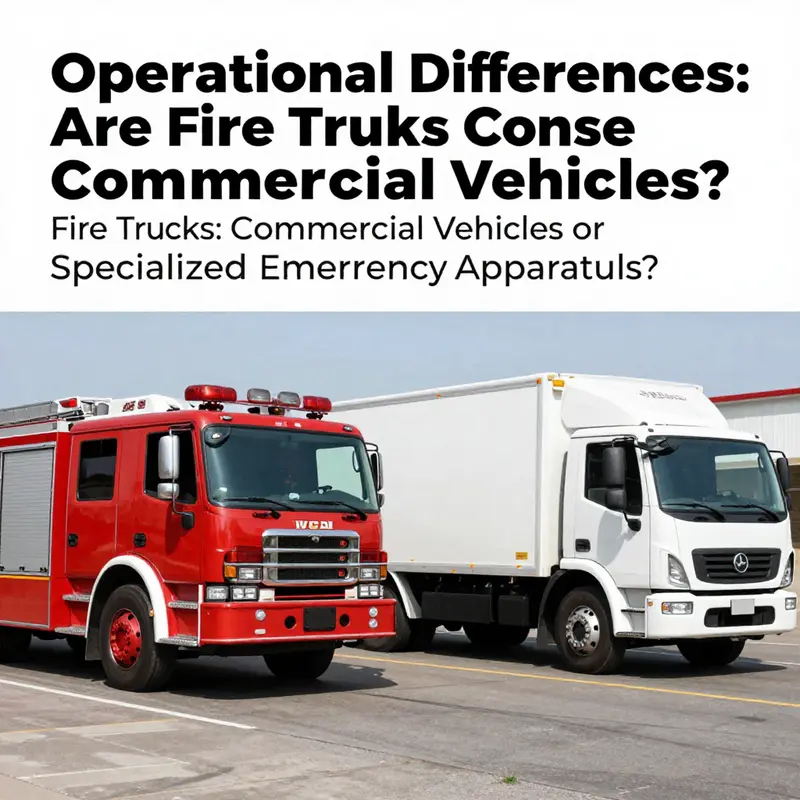
When people picture a fire truck, they often see a hulking vehicle with bright red paint, a tall ladder, and gleaming hoses coiled along the sides. The image is powerful, but the implications go beyond aesthetics. The question at the heart of this chapter—whether fire trucks are considered commercial vehicles—unfolds into a broader inquiry about purpose, ownership, and regulation. In the everyday frame of road use, a fire truck can resemble a commercial truck in size and capability. Yet the logic that determines its classification under the law hinges not on how it looks, but on what it does, who uses it, and under what rules those uses occur. If we follow the thread through the regulatory loom, the answer emerges as more nuanced than a simple label. Fire apparatus are not typically treated as commercial vehicles in the traditional sense, and this distinction becomes a useful lens for understanding how public safety fleets intersect with the broader world of road transport and commerce.
To appreciate why fire trucks occupy a distinct category, it helps to start with the core definition many regulatory regimes rely on. In the United States and in many other jurisdictions, a “commercial vehicle” is defined largely by its use for transporting goods or people for compensation or hire. This is not a mere tautology about business size or profit margins; it is a functional criterion. The vehicle’s purpose—whether it moves commodities, hauls passengers for paid service, or supports a business transaction—largely dictates the regulatory framework it falls under. From this vantage point, a fire truck’s mission looks strikingly different. The engine that powers a fire department is the engine of public service, not a revenue stream. The compensation model is inverted: government budgets, not billing cycles, support its operations. And the service offered to the public—emergency response, life safety, hazard mitigation—occurs under mandates that are about protection, not profit.
Even as fire engines share certain mechanical and logistical traits with commercial trucks—engine size, heavy-duty axles, robust pumps, and extended duty cycles—their operational lifeworld sits apart. Public safety agencies own and operate these vehicles, and the decision to deploy them is driven by incident response rather than logistics planning or consumer demand forecasting. The cadence of use is unpredictable and reactive: a siren announces a call, the crew responds, and the vehicle becomes a mobile tool for saving lives and protecting property. In contrast, commercial fleets plan routes, optimize loads, schedule maintenance around predicted wear, and pursue efficiencies tied to cost per mile or per delivery. The daily rhythm of a fire department’s fleet is not a schedule; it is a readiness posture calibrated to the possibility of emergency.
This divergence in purpose immediately filters through the regulatory lens. Fire apparatus are subject to standards and inspections that reflect their mission: high-priority vehicle safety, reliability under extreme conditions, and readiness for life-saving work. They operate under public safety codes and department-specific regulations that emphasize equipment such as pumps, ladders, water tanks, and rescue tools. Fire trucks are not exempt from general vehicle safety standards, but those standards are often harmonized with specialized requirements that recognize the different aims of emergency response. For example, while both commercial trucks and fire engines must meet structural integrity and braking performance, the fire vehicle’s equipment complement—pumps, hoses, high-lift devices, and rescue gear—receives scrutiny under standards crafted to ensure that a vehicle can deploy critical tools effectively in a crisis. The regulatory posture thus rewards readiness and specialization rather than commercial efficiency alone.
Ownership and governance provide another axis of distinction. Commercial vehicles are typically owned by private entities or corporate fleets that provide transportation or service as a business. Fire trucks, by contrast, sit within municipal, county, or state government portfolios. Their procurement, maintenance, and retirement are organized around public budgets, budget cycles, and policy priorities rather than quarterly earnings or private return on investment. The identity of the owner—public vs private—shapes every downstream detail: the procurement process, the maintenance ecosystem, the training regimen, and even the risk pool that underwrites insurance costs. In the public realm, decisions about replacing aging apparatus or upgrading fleets are anchored in accountability to taxpayers and to the communities served, with a view that the primary objective is safety and service rather than market competitiveness.
The operational consequences of this ownership model extend into the realm of licensing and training. Commercial drivers typically require licenses and endorsements that authorize the operation of specific categories of vehicles and the transportation of particular loads. A fire apparatus operator, while often possessing a commercial driver’s license in some jurisdictions, usually trains under different standards and qualifications tailored to emergency response. The interplay between licensing, authorization to operate with lights and sirens, and the authority to exceed typical speed or traffic control norms is a delicate balance. The use of warning equipment—sirens, flashing lights, and cross-traffic preemption—enters a regulatory space that is unique to emergency services. Traffic laws that apply to ordinary motor vehicles sometimes yield to the exigencies of public safety, with trained professionals making judgments in real time about when it is prudent to move through congested traffic or to navigate complex intersections under emergency conditions. These allowances, while essential for rapid response, are not a general feature of commercial vehicle operation and thus reinforce the idea that fire trucks occupy a separate category.
Design and equipment underscore the functional split even more clearly. The chassis and drivetrain of a fire truck are chosen to deliver high power, reliability, and the capacity to haul heavy equipment, but the use case is a drama of a different type. A modern fire apparatus is a mobile workshop: a platform that can carry pumps capable of delivering thousands of gallons per minute, rescue tools for forcible entry, ladders that extend to reach elevated hazards, and compartments filled with medical supplies, extinguishing agents, and hazardous materials kits. All of this is intentionally specialized. It is not simply about moving people from point A to point B in a manner that meets consumer expectations; it is about delivering a suite of capabilities on a single platform that can be deployed in a chaotic, dangerous environment. The result is a vehicle that, in form, evokes the look of a heavy-duty cargo or passenger truck, but in function operates with the singular aim of enabling a swift, coordinated, and technically sophisticated emergency response.
This distinction also animates how fire departments interact with broader safety and environmental standards. Emissions expectations, durability under nonstop operation, and the economic calculus of maintenance are all crucial in the lifecycle of any heavy fleet. Yet, the regulatory calculus often treats emergency vehicles with a separate rubric. Emissions considerations may be relevant, but they are weighed against the imperative of reliability and availability during crises. Spare parts inventories, preventive maintenance schedules, and specialized training cycles align with a public service model that prioritizes readiness and resilience. In this sense, the environmental profile of a fire truck is important, but not the sole determinant of its classification. The vehicle is a tool for safeguarding lives, and the regulatory framework is designed to ensure that it can perform that function with the necessary speed, precision, and reliability, even if that means accepting higher maintenance costs or lower utilization efficiency than a purely commercial counterpart.
A useful way to think about this boundary is to consider the role of pricing and market incentives. Commercial fleets—whether they are delivery vans, long-haul tractors, or passenger shuttles—operate within a market logic. They optimize routes, minimize downtime, and seek cost reductions that can translate into competitive pricing or higher margins. Fire departments operate outside that logic. Their success is measured in incidents prevented, lives saved, and communities protected, not in miles driven per hour or loads delivered per shift. The revenue stream in a market sense is absent; instead, the budgetary constraints reflect public policy goals. The consequence of this is that the same physical vehicle, when deployed in a private sector setting, would be designed, maintained, and operated differently, with different metrics of success and different regulatory expectations. In the public sphere, a vehicle’s worth is judged by readiness and community impact rather than by profit margins. This fundamental difference in aims is one of the strongest arguments for treating fire apparatus as a distinct category of vehicle.
Nevertheless, it would be an oversimplification to suggest that fire trucks exist in a regulatory vacuum. They still share the road with commercial traffic, are subject to general road safety laws, and require regular registration, inspection, and compliance with motor vehicle standards. The interplay between broad road rules and specialized emergency provisions creates a layered regulatory environment. In practice, jurisdictions craft a hybrid approach: they impose universal safety and maintenance requirements while preserving the emergency privileges that apply to public safety operations. This hybrid approach reflects a thoughtful calibration of competing priorities—on one hand, the need to ensure that any vehicle on public roads is safe and reliable; on the other, the necessity for emergency responders to perform duties with maximum speed and minimum delay when lives are on the line.
What, then, is the net effect of all this on the everyday reader trying to classify a fire truck? The answer, anchored in the most widely accepted understanding, is that fire trucks are not commercial vehicles in the traditional sense. They sit in a category that is more accurately described as specialized emergency vehicles. This label does not exist to confine them to a bureaucratic riddle; it exists to protect the public by ensuring that these machines are equipped, maintained, and operated in a manner that supports life-safety outcomes. The classification reflects a recognition that the mission—public service, rapid emergency response, hazard control—demands a distinct regulatory framework. It acknowledges that a fire department’s fleet is not primarily a business asset but a public asset. The life-and-death stakes of its work justify a system that emphasizes preparedness, standardization for emergency operations, and accountability to the communities served.
For scholars and practitioners curious about the broader implications of vehicle classification, a helpful context is how the trucking industry navigates regulatory frameworks across borders and markets. The broader discussion of commercial vehicle definitions in policy, finance, and logistics reveals that the boundary lines around what counts as “commercial” are often drawn where function, ownership, and public interest intersect. This is not merely a legal tagging exercise. It shapes funding choices, insurance regimes, training standards, and the design priorities of fleets that serve diverse purposes. In that larger landscape, fire trucks stand as a particularly instructive case study in how a vehicle can be physically similar to a commercial workhorse while being functionally and legally oriented toward public service rather than private gain. They remind us that classification systems exist to match the real-world tasks vehicles perform with the rules that govern them, and that those systems must be capable of recognizing when a vehicle’s role transcends the simple dichotomy of commercial versus non-commercial.
The practical takeaway for readers and policymakers is straightforward. If the question is framed around the typical use case—do these vehicles operate to move goods or people for compensation?—the answer is clear: fire apparatus do not fit the standard commercial vehicle mold. If the question shifts to what kind of regulatory environment best supports the mission of emergency response, then the discussion becomes about how best to harmonize universal road-safety standards with the specialized demands of public safety. And if the conversation includes the public’s perception of road use and safety, the distinction becomes a conversation about transparency, trust, and the efficient allocation of scarce emergency-response resources. The public benefits when such vehicles are designed with the explicit purpose of enabling rapid, reliable intervention in crises, and public oversight ensures that those designs, along with the training and maintenance systems that support them, remain aligned with community needs.
As with many policy questions, there is no single universal prescription. The classification of fire trucks as non-commercial vehicles for regulatory purposes is not a claim that they are exempt from road rules; it is a recognition that the governing priorities differ. It is a reminder that a vehicle’s form and its function are inseparable in shaping how it is treated on the road and in the workshop. In the end, the category most faithful to reality is not a tidy label but a living framework that accommodates the urgency of emergencies, the accountability of public institutions, and the complex technical demands of modern firefighting. The result is a system that treats fire apparatus not as ordinary transport but as specialized emergency equipment—vehicles built to serve the public when danger is at its worst, and to do so with a readiness that mirrors the gravity of their mission.
For readers seeking a broader, up-to-date context on how regulations shape the transport landscape, the chapter on the regulatory dynamics of trucking markets offers valuable perspective. It discusses how market forces, safety standards, and cross-border policy interplay influence how vehicles are categorized and used. You can explore further through the resource titled navigating economic uncertainties: key insights from the Canadian and US trucking markets. This linked discussion provides a broader sense of how regulatory definitions and market realities interact across jurisdictions, underscoring that the boundary between commercial and non-commercial vehicles is not merely a legal line but a reflection of broader public policy aims. navigating-economic-uncertainties-key-insights-from-the-canadian-and-us-trucking-markets
External reference: https://www.thefreedictionary.com/fire+truck
Public Service, Private Rules: Reassessing Fire Trucks Within the Commercial Vehicle Framework
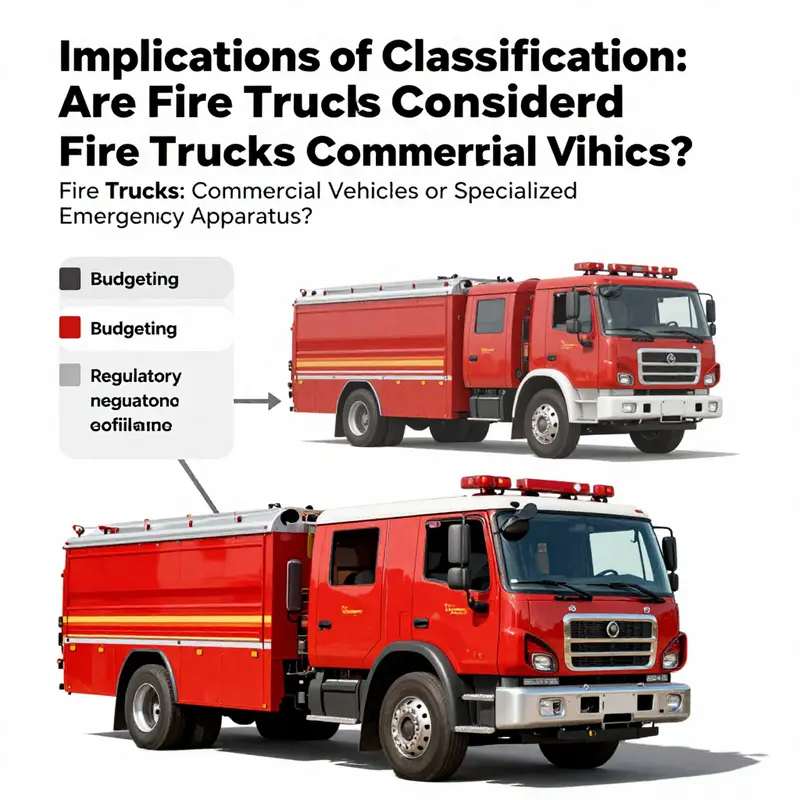
When people first consider a fire truck, they picture a vehicle designed for emergency response, not a vehicle built to move goods for a price. This leads to the central question: are fire trucks commercial vehicles? The answer is context dependent. In many regulatory frameworks, a commercial vehicle is defined by use, function, or compensation. By that standard, fire apparatus owned by a government agency and used primarily for public safety is not a commercial vehicle. Yet, if a department uses a vehicle for fee-for-service training, outreach, or private events, certain regulatory touchpoints may apply, such as driver licensing, inspections, or insurance requirements. Ownership and contracting add complexity: emergency vehicles are funded publicly, but their maintenance and support often involve private vendors and commercial contracts. Regulators may distinguish between the public service mission and revenue-generating activities, leading to a mixed-use classification for parts of the operation. Jurisdiction matters: some states apply commercial vehicle standards to revenue-generating activities regardless of the primary mission, while others use proportional or use-based criteria. The practical implication is that classification is dynamic, not fixed. Departments should consult local regulations before expanding non-emergency uses. The takeaway: a fire truck’s commercial status depends on how it is used, paid for, and regulated at the moment of operation, with the default position often remaining non-commercial when used strictly for emergency responses. For authoritative guidance, refer to official regulatory resources such as the U.S. Department of Transportation at https://www.transportation.gov, and consult local guidance for non-emergency services. This approach helps agencies balance public safety, fiscal responsibility, and compliance as fleet needs evolve.
Final thoughts
The discourse surrounding the classification of fire trucks reinforces their distinct role as specialized emergency apparatus, separate from commercial vehicles. This distinction has profound implications for regulatory compliance, operational strategies, and procurement processes for those involved in emergency services and logistics. As we have explored, understanding these differences is essential for ensuring effective resource allocation and maintaining mission readiness. Thus, the classification of fire trucks as non-commercial vehicles not only emphasizes their purpose-driven design but also guides operational frameworks for those who rely on them.