As the transportation industry evolves, understanding regulatory frameworks becomes pivotal for trucking company owners, fleet managers, and logistics providers. In Pennsylvania, commercial trucks are allowed on parkways, but this access comes with a set of regulations, permits, and safety considerations. By navigating through the intricacies of parkway travel, businesses can ensure compliance while maximizing efficiency. The subsequent chapters will delve into pertinent regulations, required permits for over-dimensional vehicles, and vital safety considerations for smooth operations on Pennsylvania parkways.
Parkways, Weight, and Permits: How Pennsylvania Manages Truck Access
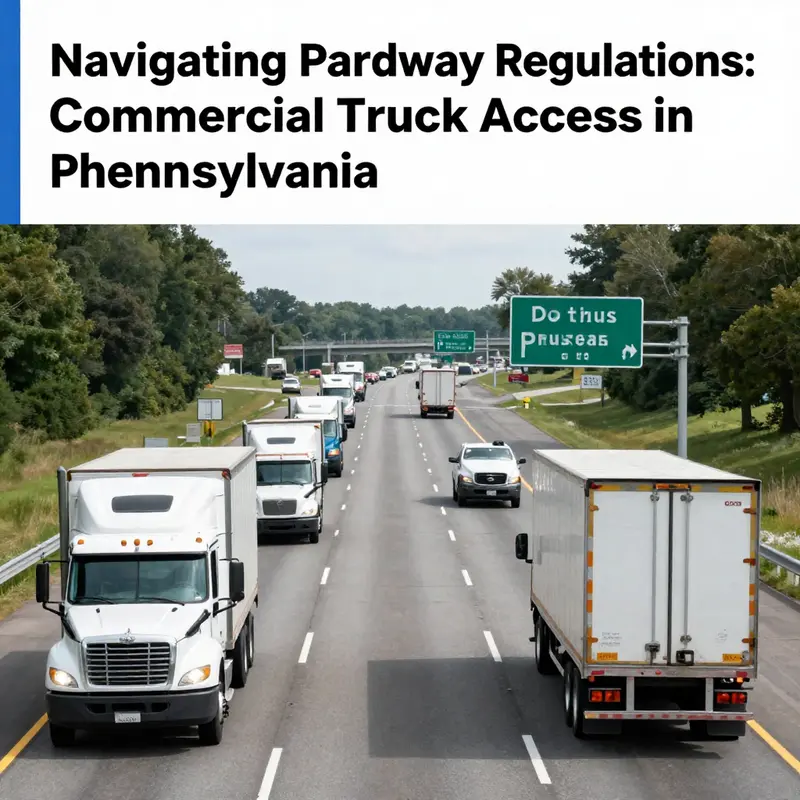
This chapter explains when commercial trucks may travel on Pennsylvania parkways and how weight, length, and permits shape access. In Pennsylvania, parkways operated by the Pennsylvania Turnpike Commission and related PennDOT infrastructure are not open to every heavy vehicle. Vehicles must meet weight limits and comply with trailer length rules that vary by segment. A common constraint is a maximum trailer length of 40 feet for single trailers and up to 53 feet for certain double configurations, with exceptions depending on the route. Oversize or overweight moves require formal permits obtained in advance and coordinated with state authorities and turnpike officials. Travel restrictions on the Turnpike may apply during peak periods, adverse weather, or incidents, so carriers should plan ahead using real time postings and permit schedules. PennDOT regulations provide the practical framework for loading, routing, and timing, and operators are encouraged to build preplanned routes with contingencies for restrictions and detours. Industry guidance and official resources help translate policy into day-to-day operations, supporting safe, reliable service while protecting all road users. In short, trucks can travel parkways in Pennsylvania, but only within prescribed weight and length limits, with appropriate permits for nonstandard moves, and with careful planning to respect time-based restrictions and safety requirements.
The Gatekeeper’s Permit: Navigating Commercial Truck Access on Pennsylvania Parkways
The long, curving ribbons of parkways in Pennsylvania have long carried a different weight of expectation for freight movement than their faster, more direct counterparts. Parkways are often perceived as scenic, controlled-access corridors designed to balance efficient travel with safety, environmental stewardship, and the comfort of everyday drivers who share the road with heavy vehicles. In this setting, commercial trucks do travel on parkways, but not without careful attention to regulations, limits, and the precise permission structure that governs operations there. Understanding what makes a truck eligible for parkway travel and how a carrier secures authorization is essential for sustainable logistics planning. It is not a mere administrative checkpoint; it is a concrete mechanism that reflects the state’s commitment to road preservation, safe vehicle handling, and predictable infrastructure funding. For operators, this means a disciplined approach to measurement, documentation, and timing, all of which translate into smoother routes, fewer delays, and lower risk of penalties that can ripple through the supply chain.
At the heart of the regulatory framework is a simple idea that carries significant consequences: parkways must be protected from loads and configurations that exceed what the road is designed to safely carry. Commercial trucks may traverse these routes, yet only when their dimensions and weight align with what the corridor can accommodate without compromising pavement life, traffic safety, or the viewing experience that parkways are intended to provide. The Pennsylvania Turnpike Commission (PTC) serves as the primary steward of access rules for the parkways and the Turnpike. Its guidelines outline not only the basic thresholds that trigger permit requirements but also the procedural steps carriers must follow to obtain those permits and to operate within the law. In practical terms, this means that a carrier cannot assume automatic access; instead, it must verify its vehicle profile against the regulated limits and, if necessary, secure a permit before traveling on parkways loaded to or near those limits.
Two numerical thresholds stand out in the permit calculus. The first relates to length: if a vehicle’s length exceeds 85 feet, a permit is required. This criterion captures concerns about maneuvering space, sightlines, and the safe sharing of lanes with passenger vehicles and other heavy trucks. The second threshold concerns weight: when a vehicle weighs more than 100,000 pounds, a permit becomes mandatory. These figures are not arbitrary; they reflect a balancing act between the operational needs of heavy-haul transport and the structural and safety considerations that parkways were designed to protect. They also remind operators to check not only the weight of the trailer and cab but the total combination if multiple trailers or specialized equipment alter overall length and weight. It is a reminder that precise vehicle measurements matter as much as miles traveled.
The permit framework also incorporates a fee structure that ties financial responsibility to the degree of weight carried on the road. While a permit itself becomes a necessity only above the 100,000-pound threshold, the per-ton-mile economics of heavier loads are captured through a calculation based on the weight that exceeds 80,000 pounds. This design means that even before a formal permit is triggered, there is a cost signal in the equation—gas, maintenance, and pavement wear—the heavier the truck, the greater the share of infrastructure costs the operator contributes. In effect, the system tries to ensure that the most demanding loads contribute proportionally more while also offering a clear incentive for weight-management strategies and route optimization that minimize wear and risk.
To the uninitiated, these numbers may appear dry and theoretical. Yet they unfold as a practical guide for planning and compliance. Carriers of all sizes must consider a few core questions before setting a route on a Pennsylvania parkway. Does the load configuration push the vehicle beyond 85 feet in length? If so, a permit is nonnegotiable. Is the weight, including all axles and attachments, pushing past 100,000 pounds? If that is the case, the permit must be in hand before the wheels meet the pavement on any parkway segment. The interplay of these thresholds means there are scenarios where a truck operates on parkways without a permit—such as conventional loads under the length and weight caps—yet even those trips demand rigorous attention to the rest of the regulatory framework, including safety equipment, tire limits, and axle configurations that comply with the state’s overall truck size and weight rules.
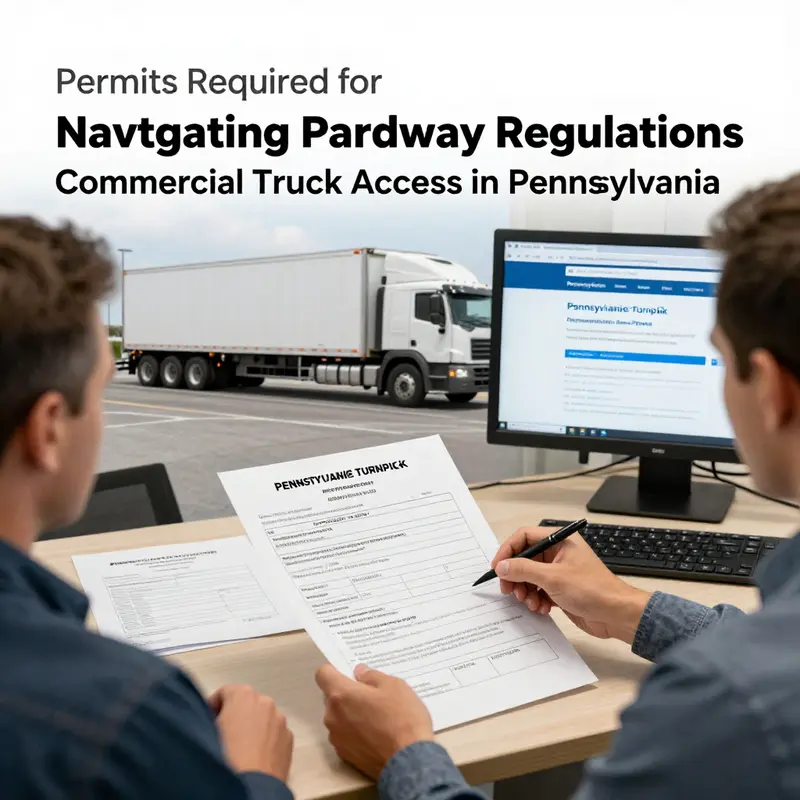
The application process for permits is a practical exercise in thorough documentation and clear route planning. While the exact steps and forms are best reviewed on the official Pennsylvania Turnpike Commission pages, the general flow is intuitive. Operators and their compliance teams prepare a vehicle profile that includes precise measurements: overall length, wheelbase, total weight, axle weights, and the towing or hauling configuration. They also map out the proposed routing on parkways, including entry and exit points, interchanges, and alternate legs in case of restrictions or incidents. The permit is issued for specific vehicles and routes, with defined effective dates, times when travel is allowed, and conditions that may apply during seasonal variations or edge-case scenarios like maintenance outages. The emphasis on route-specific permits creates a robust framework for accountability. If a carrier changes the route or alters the configuration of the vehicle—such as adding or removing trailers—the permit typically must be updated to reflect the new reality on the road. This requirement ensures that the state can enforce the conditions that match the actual travel plan and vehicle capabilities at any given moment.
One of the more nuanced aspects of the permit landscape is the relationship between weight, axle configuration, and the operational realities of parkway travel. The pavement design and structural capacity of a parkway depend heavily on factors like axle spacing, the total number of axles, and the distribution of weight across those axles. This means that not all heavy loads are treated equally; a cargo configuration with weight concentrated on a few axles may present different risks than a more evenly distributed load. The permit process, therefore, often requires detailed data about axle weights and spacing to determine whether the vehicle meets the state’s safe-limit criteria. In some cases, carriers may need to adjust their packaging, staging, or even their shipment configuration to achieve compliance, or they may need to seek a specialized permit that accounts for over-dimensional or overweight conditions. The emphasis on axle details reinforces a broader industry principle: the safest and most efficient freight movement often begins with thoughtful vehicle design and route optimization, not just a large, weight-laden truck barreling down the road.
Beyond the technical thresholds, the timing of travel on parkways can be subject to restrictions designed to protect peak traffic flows and safety in challenging conditions. The general principle is that certain times of day may have restrictions to reduce interaction risk with other motorists or to accommodate maintenance work scheduled during off-peak windows. These restrictions are not arbitrary or transient; they reflect ongoing efforts to strike a balance between freight mobility and the safety and experience of parkway users. For operators, this means that a permit might include time-of-day limitations or windows during which travel is permissible. It also means that if weather or road conditions deteriorate, the ability to travel on a given parkway segment could be constrained. As such, the permit becomes not just a stamp of approval but a living document that guides drivers on when, where, and how they can travel without compromising safety or the integrity of the road.
For carriers, the decision to seek a permit is both strategic and financial. The permit process imposes administrative costs—time, personnel, and potential delays in departure. Yet it also yields benefits. A permit clarifies where a truck can operate and reduces the risk of penalties arising from violations that could harm a company’s compliance record or its ability to secure future access. In highly regulated corridors like Pennsylvania’s parkways, having the right permit reduces the likelihood of unexpected stoppages at an inspection point or a violation citation that could trigger fines or mandatory route changes. The permit, then, is a doorway to predictable operations, a way to plan a trip with confidence, and a signal to customers that the carrier adheres to the highest standards of road safety and regulatory compliance.
In practice, many operators draw a straight line from permit compliance to route efficiency. A well-planned tripwide that respects the length and weight thresholds, accounts for per-ton-mile costs, and anticipates time-based restrictions often results in fewer stops, less congestion risk, and shorter overall transit times. Late deliveries, last-minute detours, and remediation costs are minimized when a carrier can present a clear, permit-backed plan at the outset of a job. This is where the internal knowledge from industry peers, such as those sharing lessons on logistics strategy, becomes valuable. A resource that gathers practical experience about the regulatory landscape—such as industry blogs that discuss regulatory shifts, permit considerations, and the economics of heavy transport—can offer carriers a broader view of how these rules play out in real-world operations. See the McGrath Trucks blog for a perspective on how carriers navigate regulatory change and cost management in today’s market. (https://mcgrathtrucks.com/blog/)
The official gatekeeper remains the Pennsylvania Turnpike Commission, and its commercial permits page is the definitive source for those who need the exact steps, forms, and current rules for commercial access to parkways. While this chapter has walked through the general principles and practical implications, the precise application requirements, fee schedules, and any recent updates are best retrieved directly from the PTC’s guidelines. The importance of verification cannot be overstated. Regulations can evolve, and what held true even a season ago may change with maintenance regimes, infrastructure investments, or legislative updates. Carriers benefit from establishing a routine to check the official channels before initiating a trip, particularly when planning long-haul legs that include parkway segments.
To recap the operational reality: commercial trucks can travel on Pennsylvania parkways, but only when their dimensions and weight align with the thresholds described above and when appropriate permits are obtained for configurations that exceed those thresholds. The thresholds are designed to protect road quality and safety while enabling freight movement that is essential to commerce. The process requires precise measurement, documentation, and careful route planning. The costs associated with heavier loads are reflected in per-ton-mile considerations that ensure heavier vehicles contribute appropriately to the burden they place on the road network. And finally, timing and restrictions can influence when travel takes place, reinforcing the idea that permit compliance is a gateway to a smoother, safer journey rather than a bureaucratic obstacle.
For those developing or refining a parkway travel plan, the practical takeaway is straightforward. First, verify whether your truck configuration triggers any permit requirements based on length and weight. If it does, initiate the permit application with care, supplying accurate vehicle metrics, route details, and any required supporting information about axle configurations. Second, model the trip with an eye toward time windows and potential restrictions, especially during peak periods or adverse weather. Third, prepare for the financial aspects—permit costs that reflect weight beyond baseline thresholds, along with any per-ton-mile charges that may apply. Fourth, build a contingency plan in case route changes or maintenance closures require an alternate corridor for parkway movement. In short, a proactive, detail-oriented approach to permit management translates directly into more reliable service and fewer unplanned disruptions.
The introduction of a formal permit system for parkway travel also has a broader, long-term benefit for the state’s transportation ecosystem. It creates a predictable funding mechanism that aligns with the wear and tear imposed by heavy traffic. It supports road preservation efforts and allows for better planning of maintenance work. It also creates a framework for safety audits and compliance monitoring, helping agencies identify trends and address risk factors associated with heavy vehicles on parkways. For carriers, understanding these dynamics offers a strategic lens on fleet optimization, vehicle configuration, and scheduling—factors that collectively influence the bottom line and the reliability of service to customers who depend on timely deliveries and consistent supply chains.
In this landscape of rules, thresholds, and fees, the overarching message remains clear: traveling on Pennsylvania parkways as a commercial carrier is entirely possible, provided the operator respects the permit regime, adheres to weight and size limits, and remains vigilant about restrictions and updates. This is not a static set of rules but a living framework that reflects the state’s commitment to safe, sustainable, and economically viable freight movement. The chapter has laid out the core principles with the understanding that the official guidance—ever-evolving and specific to each permit and route—should always be consulted as the final authority. For readers seeking to dive deeper into the official procedures and current fee structures, the primary resource is the Pennsylvania Turnpike Commission’s commercial permits portal. External resources offer context and insights into how such regulatory frameworks shape planning and operations, while the internal link to industry commentary provides a practical, day-to-day perspective on the challenges and opportunities that come with parkway travel in Pennsylvania.
External resource: https://www.paturnpike.com/for-businesses/commercial-permits
Safe Passage on Pennsylvania Parkways: Permits, Planning, and the Realities of Truck Travel
Traveling commercial trucks on Pennsylvania parkways is a question that invites a careful, detailed answer. It is possible in many cases, but the path from origin to destination is shaped as much by precise rules as by the geography of the roads themselves. The parkways and toll roads of Pennsylvania, including the well-known Turnpike system, sit at the intersection of high-speed traffic, diverse urban corridors, and roadways that often feature challenging interchanges, variable grades, and limited shoulder space. The result is a transportation landscape where safety, compliance, and meticulous planning are not optional add-ons but essential prerequisites for any truck operation. In this chapter, we explore what makes travel on Pennsylvania parkways workable for commercial fleets, and what constraints must be respected to keep everybody—from the drivers to the motorists on adjacent lanes—safe and moving. The story is not simply about whether trucks can roll onto the parkways; it is about how they can do so with clear permits, documented routes, and disciplined operations that reflect the scale and speed of these corridors.
At the heart of the question is the requirement for permits when trucks carry weight or dimensional loads that exceed standard configurations. Overweight and over-dimensional vehicles, by definition, pose greater demands on a road’s pavement, bridges, and structures, and they interact with traffic patterns in ways that shorter, smaller vehicles do not. Pennsylvania’s regulatory framework recognizes this difference and provides a permit system designed to manage risk. A permit acts as a formal acknowledgment by the administering authority that the vehicle, its load, and its selected route have been reviewed for suitability. It is not a mere formality. It involves a careful assessment of the vehicle’s weight and dimensions, the route topology, bridge clearances, curb and lane widths, and the presence of any temporary restrictions. For fleets operating in or through Pennsylvania, obtaining the correct permit is a prerequisite for legal travel on parkways and other high-capacity corridors. Without it, drivers face not only regulatory penalties but also the potential for enforcement actions that could disrupt a shipment and jeopardize safety on busy roadways.
In practice, the permit process is as much about planning as about paperwork. Dispatchers and drivers must map out a route that accommodates the vehicle’s characteristics while avoiding segments where the load would exceed limits or where structures cannot sustain the stress. The permit application itself often requests route-by-route details, including travel times, staging areas for loading and unloading, and alternate paths that could be used if conditions change. A high-level document becomes a precise, line-by-line plan that must be followed with discipline on the road. This is where the concept of route planning becomes an operating discipline rather than a one-time compliance task. The driver’s pre-trip review, the carrier’s safety management system, and the overseeing authority’s permit stipulations converge to form a single, actionable plan. The emphasis is not solely on compliance but on reducing the chance of an incident that could escalate into a road hazard or an extended closure.
The idea that a truck can enter a parkway system under any condition can be misleading. Significant portions of the parkway network are designed with speeds and traffic densities in mind that create both opportunities and constraints. On safe days and for loads that fit within standard limits, the journey can be straightforward. Yet, even then, the route may be rebalanced by temporary restrictions that aim to preserve safety during peak periods, maintenance windows, or adverse weather. The Pennsylvania Turnpike Commission, which administers a substantial portion of the parkway system, maintains a framework of rules that address these variations. They publish schedule-based restrictions, maintenance advisories, and ongoing updates that may alter permissible travel windows or require additional precautions. The net effect is that drivers must stay informed and ready to adjust plans in response to real-time conditions, not simply follow a static route plan from days or weeks prior. The need for up-to-date knowledge highlights the value of official guidance, which anchors safe practice in current data rather than outdated assumptions. This is not an impediment to travel; it is a safeguard for travel.
Safety considerations on Pennsylvania parkways extend beyond permit optics. They encompass how a vehicle is loaded, secured, and operated within the constraints of high-speed, multi-lane traffic. The vehicle’s dynamics—weight distribution, axle configuration, tire condition, and braking efficiency—interact with road geometry in ways that can magnify risk if mishandled. Operators typically emphasize pre-trip inspections that cover traction control, braking systems, lighting, signal devices, and cargo securement. In the context of parkways, where lane widths can be relatively tight and where traffic volumes can be heavy, ensuring predictable vehicle behavior is essential. The need to maintain a safe following distance increases when a heavy load is involved, and the potential consequences of a surge in momentum are magnified on grades common to some parkway segments. In practice, the safest approach is a combination of mechanical reliability, disciplined driving practices, and strict adherence to permitted routes and loads. This is why permit compliance and route planning are inseparable from operational safety rather than separate concerns.
A practical consequence of these safety requirements is that truck operations on Pennsylvania parkways demand ongoing coordination among shippers, carriers, and the regulatory authorities. This coordination begins with the decision to haul a given load on a parkway route. The shipper’s specifications, the carrier’s safety program, and the regulatory constraints create a triad of considerations that must align before a shipment is dispatched. Where a load qualifies for a standard route and falls within ordinary weight and dimension limits, the operation may proceed with routine scheduling and no extraordinary permit needs. But for overweight or over-dimensional configurations, a permit becomes a precondition for travel. The permit not only authorizes the trip but also provides the framework for risk management on the route. It may specify arrival windows, speed restrictions, and restrictions on times of day for travel, particularly on corridors where congestion or structural constraints require mitigation. This is where the concept of time-bound restrictions enters the picture. Certain segments or connections may impose travel restrictions during specific hours to reduce conflict points with commuter traffic or to accommodate maintenance operations. These restrictions are not arbitrary; they are calibrated to minimize risk and preserve system integrity. They are also dynamic, subject to weather, incidents, and the maintenance schedule of road authorities. Consequently, drivers and fleet managers must treat time windows as hard constraints, not optional preferences.
When time-of-day restrictions exist, they are often paired with other constraints that can influence a shipment’s overall feasibility. For example, a corridor that includes a narrow bridge or a section with tight curves may be restricted to daylight operations or limited to specific vehicle configurations at certain hours. The practical upshot is that a trip that looks viable on a map can require a different schedule once these constraints are considered. The decision to route a truck on a particular parkway is rarely a matter of a single factor; it is the synthesis of weight, length, height, route geometry, elevation changes, traffic patterns, weather forecasts, and the expected service schedule of the planned destination. The operator who understands this synthesis gains an advantage: the ability to anticipate delays, to adjust the staging or pickup times to minimize idle time, and to communicate clearly with dispatchers and customers about realistic delivery windows. The effective navigation of Pennsylvania parkways is thus less about finding a permissive path and more about aligning a precise, permitted path with the operational realities of the shipment.
The need for careful planning is echoed in practical terms on the road. For a driver, the moment of decision—whether to accept a route that includes a parkway segment—becomes a decision about risk versus reward. A permit confirms that the route is considered safe for the vehicle under the given conditions. But the present realities of road work, incidents, and weather mean that even well-planned trips can encounter unexpected constraints. This is where the daily craft of trucking becomes evident: the ability to adapt, to reroute efficiently, and to maintain compliance while preserving on-time performance. The driver’s cockpit becomes a small theater of risk management, where visibility, communication, and situational awareness are the primary tools. The discipline of pre-plan, in-route verification, and post-trip reconciliation helps prevent a minor issue from becoming a system-wide disruption.
In keeping with the broader duty of care that governs commercial operations, some parkway routes or segments are explicitly designated as truck-restricted during certain conditions. The motivation behind these restrictions is practical. A route with narrow lanes or a steep grade can be a pinch point for large vehicles, especially during periods of heavy traffic. In Pennsylvania, several routes—often the most direct connectors between major corridors—exhibit these characteristics. A widely cited example is the combination of U.S. routes and interstates that intersect with the parkway network. In these corridors, the presence of a high-volume traffic equilibrium means even small deviations can produce cascading effects, such as sudden braking, lane changes, and reduced reaction time for following traffic. The effect on safety is not limited to trucks alone; it tangibly affects other motorists who rely on predictable and stable traffic flow. Accordingly, authorities implement truck restrictions not as punitive measures but as protective mechanisms that aim to reduce the likelihood of multi-vehicle crashes and to keep emergency services unimpeded in the event of an incident.
The consequences for planning are clear. Drivers and fleet managers must approach parkway travel as a collaborative process with regulatory bodies. They must study official guidelines and keep abreast of any amendments, temporary restrictions, or rerouting advisories that could change the feasibility of a given shipment. The Pennsylvania Turnpike Commission’s site, paturnpike.com, serves as the central hub for this information, offering the most up-to-date guidance on permits, restrictions, and route-specific advisories. It is not sufficient to rely on old memos or word-of-mouth knowledge; real-time updates matter because the system’s safety and efficiency depend on timely, accurate information. For those seeking to deepen their understanding of how these dynamics play out in practice, industry commentary and case studies published by logistics groups and trucking-focused outlets often echo the same lessons: permits enable safe access; route restrictions guard against risk; and meticulous planning underpins reliable service.
To connect this practical understanding with a wider professional conversation, consider the broader context in which these decisions are made. The trucking industry continually balances speed, reliability, and safety, with cost and regulatory compliance acting as constant pressures. In an environment where demand for efficient freight movement remains robust, operators seek routes that minimize exposure to risk while maximizing predictable performance. The parkway system of Pennsylvania embodies that tension. It rewards careful, well-justified travel with smoother operations, but it punishes haste and improvisation when loads exceed permitted limits or when conditions demand a conservative approach. In this sense, the question of whether commercial trucks can travel on parkways is answered by a framework rather than a single rule: trucks can travel, but only with the right permits, the right route, and the discipline to operate within those constraints.
From the perspective of safety culture, the onus falls on every stakeholder in the logistics chain. Dispatchers bear the responsibility of securing the correct permits for each load and communicating any conditional requirements to the driver before departure. The driver carries the frontline duty of executing the plan with vigilance, maintaining distance, checking for signage, and adapting to changing conditions at the street level. Fleet managers oversee compliance programs, training, and incident reporting to ensure that the organization’s operations consistently reflect the expectations of both the law and the traveling public. The regulatory framework supports this culture by providing a transparent mechanism to evaluate risk prior to travel, and by offering real-time information when conditions on the ground change.
In practice, the process to travel on a parkway begins long before the wheels turn. It begins with a careful carbon copy of the route from the permit application, a plan that translates into a step-by-step navigation for the driver. It continues with a prudent loading plan that respects axle loads, height clearances, and the specific constraints of the route, including the geometry of interchanges and the behaviour of other vehicles in peak periods. It ends with the driver and the carrier maintaining a live dialogue with the regulatory authority, particularly when weather or incidents necessitate a deviation from the originally approved path. This is the daily craft of safe and compliant parkway travel in Pennsylvania: a blend of permit discipline, route intelligence, and steady, safety-first execution on the road.
For those who want a compact, practical reference as they plan a trip or prepare a shipment for a parkway route, the official guidance remains the most trustworthy source. The Pennsylvania Turnpike Commission website provides the current rules, permit procedures, and any route-by-route restrictions that may apply. It is also a place where carriers can sign up for alerts and reminders about changes to the system. In addition to official channels, many fleets rely on industry resources and practitioner commentary to stay current on best practices and emerging trends in how parkways are used by commercial traffic. One such practical reference is the broader trucking community’s coverage that you can find on diverse industry platforms, including the long-standing accounts and analysis published on the McGrath Trucks Blog, which offers perspectives on fleet management and market dynamics that influence how carriers think about permits and route selection. To connect with that broader industry conversation, see the McGrath Trucks Blog. McGrath Trucks Blog
As this discussion closes in on a core takeaway, it is important to emphasize a point that sustains safe, predictable operations. The combination of permit access and route restrictions reflects an operating philosophy rather than a hurdle course. It recognizes that Pennsylvania’s parkway system serves a large mix of traffic types, including commuters, commercial haulers, and regional freight flows that are critical to the economy. When a carrier respects the permit framework, plans for the known constraints, and remains flexible to changing conditions, parkway travel becomes a measurable, controllable part of the supply chain rather than a source of uncertainty. That is the underlying message for fleets—whether they are moving consumer goods, industrial equipment, or agricultural products—that travel on Pennsylvania parkways is feasible and safe when grounded in permits, route-specific knowledge, and disciplined operational practices. For anyone seeking to translate these principles into day-to-day procedures, the essential steps remain consistent: obtain the proper overweight or over-dimensional permit as required; map the route in line with the permit’s limitations; stay alert to time-of-day restrictions and lane closures; and maintain a continuous line of communication with regulatory authorities and with the shipping partner about any deviations that might arise on short notice.
In sum, commercial trucks can indeed travel on Pennsylvania parkways and the Turnpike system, but the privilege comes wrapped in a framework of safety-forward requirements. Permits for overweight and over-dimensional configurations are the gatekeepers for access. Time-bound restrictions and route-specific limitations act as road-level safeguards that preserve the integrity of critical infrastructure while managing traffic risks. The onus falls on the carrier and driver to translate these rules into a robust, real-time operating plan—one that anticipates constraints and preserves the public safety priority that underpins all high-speed, multi-lane highway travel. When this translation happens well, the journey on Pennsylvania parkways can be as efficient as the road design allows, and as safe as the measures put in place to protect drivers, cargo, and communities permit.
Final thoughts
Understanding the regulatory landscape for commercial trucks on parkways in Pennsylvania is crucial for compliance and operational success. By obtaining the necessary permits, adhering to regulations, and prioritizing safety, trucking companies can enhance their operational efficiency while maintaining safety on the roads. This diligence not only safeguards the interests of their businesses but also promotes a safer travel experience for all users of Pennsylvania’s parkways.