The landscape of truck purchasing is undergoing a seismic shift, influenced significantly by the recent announcement from former President Donald Trump regarding truck tariffs. Starting November 1, a hefty 25% duty on heavy and medium-duty trucks from outside the United States will come into play. This decision, aimed at protecting American truck manufacturers, not only reshapes the competitive dynamics of the market but also raises critical questions for consumers and businesses alike.
The implications of such tariffs extend far beyond mere pricing adjustments; they echo concerns about national security and the strength of the truck manufacturing industry. As the truck buying market grapples with these new realities, understanding the context and potential impact of these tariffs is essential for making informed purchasing decisions. For those considering a truck purchase, now is the time to explore the nuances of these developments and their significance in shaping the market landscape.
Advantages and Disadvantages of Truck Tariffs
Truck tariffs have their pros and cons. Understanding these can help buyers, manufacturers, and the economy navigate the new market landscape.
Advantages
- Protection for Domestic Manufacturers: Tariffs help U.S. truck manufacturers by giving them a competitive edge over foreign-made vehicles. The 25% tariff on imported heavy and medium-duty trucks means American companies do not have to face these extra costs, helping them stay viable and grow their profits.
- Job Creation: When domestic manufacturers do better because of reduced foreign competition, new jobs may be created. This growth is especially significant in areas where truck production is prevalent.
- Boost to Local Economies: More investment in U.S. manufacturing can lead to positive effects on local communities, creating more jobs and stimulating local economies.
Disadvantages
- Higher Prices for Consumers: Consumers will likely face higher prices when purchasing trucks, as manufacturers typically pass increased costs onto buyers.
- Reduced Variety of Options: Tariffs might limit the variety of truck models available, as foreign companies may produce fewer vehicles for the U.S. market.
- Risk of Retaliation: Other countries may respond by implementing their own tariffs, which could disrupt international trade and lead to trade conflicts, making the market more unstable.
In conclusion, while truck tariffs aim to strengthen American manufacturing, they also create challenges that could significantly impact buyers and the market as a whole. It is important to be aware of these factors when considering truck purchases in this new landscape.
| Truck Type | Price Before Tariff | Price After Tariff | Notable Reactions |
|---|---|---|---|
| Heavy-Duty Trucks | $150,000 | $158,000 | Concerns about reduced fleet purchasing power; potential delays in upgrades. |
| Medium-Duty Trucks | $75,000 | $78,500 | Warnings from manufacturers about slowed replacement cycles. |
Notable Sources:
- Trucking Info: Trump’s Tariffs on Steel and Aluminum Drive Up Truck Prices
- ACT Research: Impact of Tariffs on Commercial Truck Prices
- Wall Street Journal: Trucking Industry Braces for Higher Costs From Tariffs
- Commercial Carrier Journal: How Tariffs Are Affecting Truck Manufacturing and Pricing
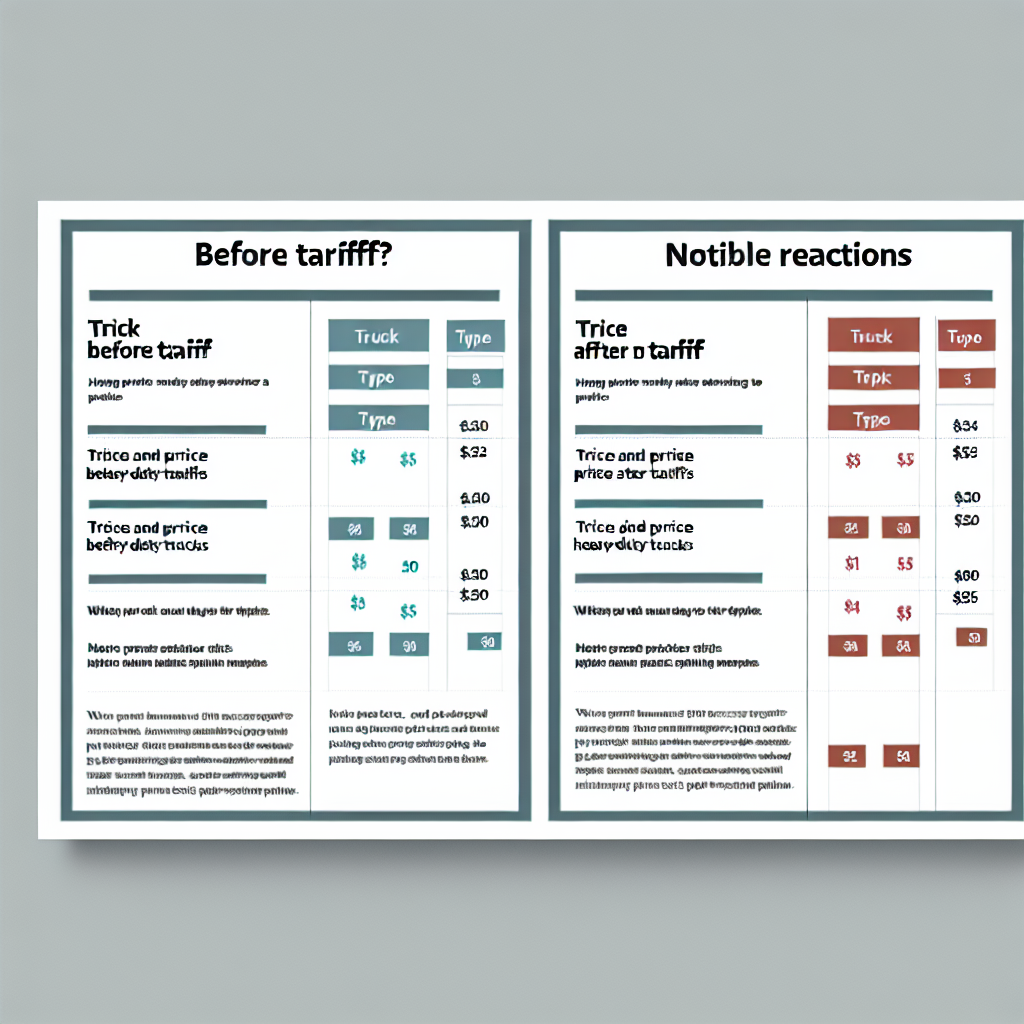
Image showing a comparison of truck prices before and after tariffs.
U.S. Truck Manufacturing Sales Statistics Summary
The last few years have marked significant fluctuations in truck sales, influenced heavily by trade policies and economic conditions in the U.S. truck manufacturing industry. In 2022, the industry faced unprecedented challenges, with sales dropping by 32.33% due to the pandemic’s lingering effects and increasing oil prices. However, a turnaround was evident in 2025, where heavy truck sales surged, reaching 101,000 units in November, marking a staggering 47% year-over-year increase, largely fueled by government incentives like the old-for-new vehicle replacement program.
This rebound is part of a broader shift toward stronger international demand for U.S. truck manufacturing. Truck exports saw a significant uptick in early 2025, registering a 26% increase year-over-year, as manufacturers capitalized on favorable market conditions abroad. This suggests a clear pivot toward global markets amidst fluctuating domestic environments.
Recent trade policies, particularly the introduction of a 25% tariff on foreign-manufactured trucks, are expected to change the competitive landscape. While these tariffs protect domestic U.S. truck manufacturing from overseas competition, they are likely to increase prices for consumers. Industry expert Mark Carney noted, “High tariffs are meant to protect domestic interests, but they can also hamper the purchasing power of consumers.”
Trade analyst Dominic LeBlanc echoed these sentiments, emphasizing the necessity for balance in the market: “A healthy balance is necessary to ensure robust competition and quality for consumers.” As trade policies evolve, the truck sales landscape is set to remain dynamic, necessitating careful navigation by both buyers and manufacturers to adapt to these new realities.
Overall, understanding the interplay of tariffs and the U.S. truck manufacturing dynamics is essential for stakeholders aiming to thrive in this changing environment.
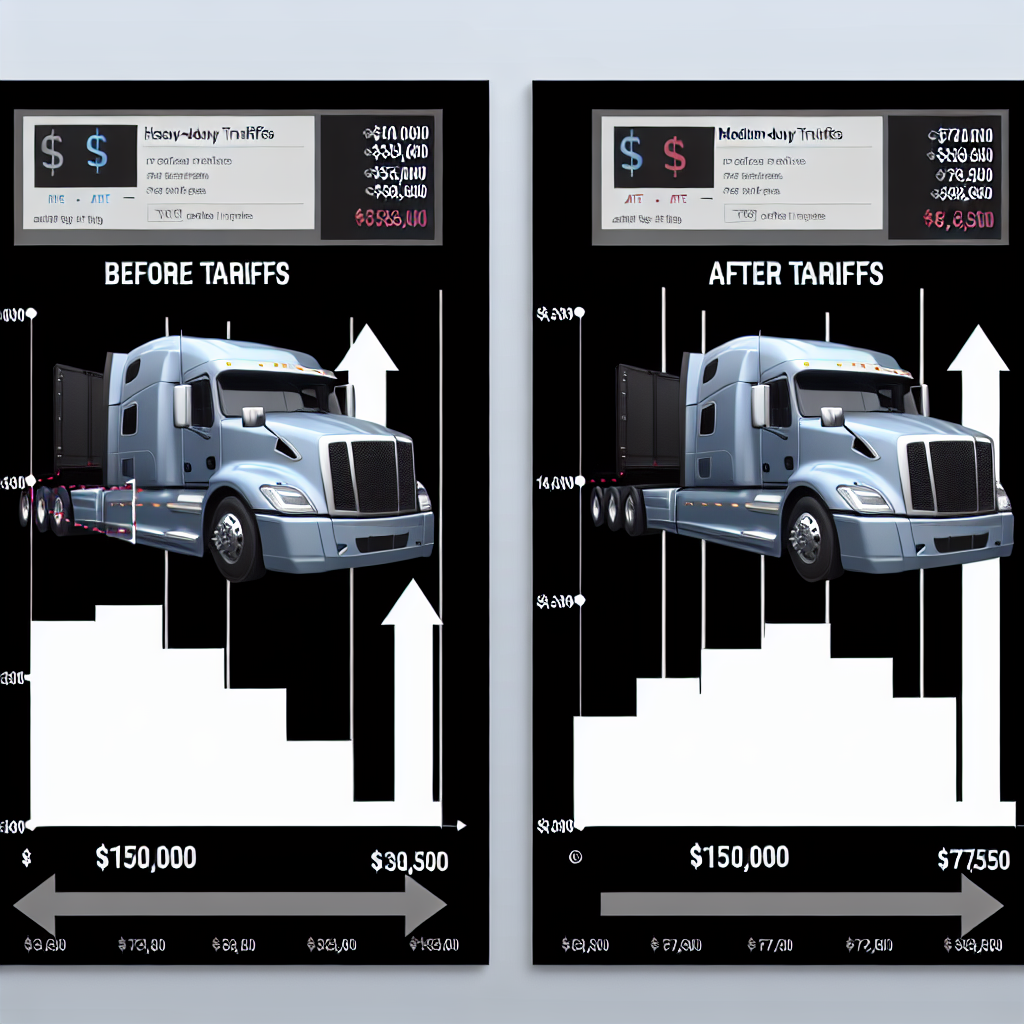
Visual representation of truck price changes due to tariffs.
The U.S.-Mexico-Canada Agreement and Its Impact on Truck Buying
The U.S.-Mexico-Canada Agreement (USMCA) is pivotal in the current truck buying landscape, particularly concerning the new tariffs imposed on imported trucks. Under the agreement, trucks that are made with at least 64% North American content, including parts and materials sourced from the U.S., Canada, and Mexico, can cross borders tariff-free. This exemption is critical, as it enables manufacturers based in Mexico and Canada, which often include a significant amount of U.S.-sourced components in their vehicles, to maintain competitive pricing against trucks from countries outside of North America.
For consumers and businesses looking to purchase trucks, the implications of the USMCA are significant. In an environment where a 25% tariff on heavy and medium-duty trucks imported from outside the U.S. is on the horizon, the ability to buy compliant trucks without additional tariffs presents a compelling option. This ensures a wider variety of truck models remain available at more competitive prices, effectively shielding buyers from the high costs associated with tariffs on foreign-made vehicles.
Additionally, manufacturers such as Daimler Truck and TRATON are increasingly leveraging the USMCA to optimize their supply chain strategies, focusing production in North America to benefit from these tariff exemptions. By doing so, they are attempting to mitigate the cost pressures introduced by tariffs on materials like steel and aluminum, which have already begun to affect production costs.
In conclusion, the USMCA serves not only as a framework for trade but also as a vital mechanism that protects certain trucks from tariffs. For potential buyers, understanding this aspect of the agreement is essential for navigating the complexities of the current truck purchasing environment. As the landscape continues to evolve, staying informed about the distinctions between compliant and non-compliant trucks will be crucial for making smart buying decisions.
User Testimonials from Truck Buyers
The recent tariff announcements have sparked significant discourse among truck buyers, from fleet managers to owner-operators. Here are some enriched testimonials reflecting their personal stories and challenges in response to these regulatory changes:
- Fleet Manager Insight: A fleet procurement specialist expressed frustration: “We’re stuck between buying now before potential tariffs or waiting to see what happens. Our budget planning has been turned upside down, and every delay adds up. The lack of clarity around pricing availability is as damaging as the tariffs themselves.”
- Owner-Operator Perspective: An independent truck driver stated: “With maintenance costs rising due to tariffs on parts, I’ve been forced to hold onto my truck longer than I’d like. I was looking to upgrade, but now I worry about being able to afford a new rig. Every day, it feels like a game of financial chess just to keep my business running; the unknowns are overwhelming.”
- Concerns from Small Fleet Owners: A Texas-based trucking company owner voiced their anxiety: “Operating on thin margins makes this tariff situation even worse for my business. A 25% increase would cripple our ability to replace aging equipment. I was already delaying purchases because of price hikes, but this could be the nail in the coffin for us small businesses.”
- Mixed Reactions: An industry logistics director remarked: “While I support American manufacturing, the immediate effect of tariffs will be devastating for our procurement budgets. We’d have to delay fleet upgrades indefinitely, which affects our efficiency. We all want to be good stewards of the industry, but these financial barriers make it tough.”
- Insights from Farmers: A farmer shared, “The tariffs have made a significant dent in our budget; it added over $8,500 to the cost of my new heavy-duty truck. Instead of investing in a new model that could help modernize my operations, I’m stuck prolonging the life of my current vehicle. The ongoing burden of these costs shouldn’t be the reality as we seek to grow.”
- Adapting Purchasing Strategies: A construction company owner noted, “We’ve pivoted to fixing our trucks instead of replacing them. With tariffs raising prices significantly, we can’t absorb these increases, so our operational efficiency is suffering. The math just doesn’t work out with these new pricing structures.”
- Personal Stories: Another truck buyer shared, “I had my eye on a reliable model to replace my aging 2010 truck, but the tariffs shifted my perspective. Now, I am considering used options instead of new models. Not only is it about budgets, but it’s also about the long-term sustainability of my business.”
These testimonials illuminate the myriad of challenges and shifting strategies that truck buyers are facing as they adapt to the new reality introduced by tariff announcements.
Supporting Research
For further reading on the impact of truck tariffs, consider the following reports:
In conclusion, the changing landscape of truck purchasing, driven by the new 25% tariffs on foreign-made heavy and medium-duty trucks, presents both opportunities and challenges for buyers and manufacturers alike. These tariffs are designed to protect American truck manufacturers, potentially stabilizing the domestic market while increasing the costs for consumers.
Furthermore, the U.S.-Mexico-Canada Agreement plays a crucial role in mitigating some of these impacts, allowing trucks made with a significant amount of North American content to bypass these duties. For potential truck buyers, staying informed about these regulatory changes is paramount.
As the market continues to evolve, aligning purchasing strategies with the shifting dynamics of tariffs and trade agreements will be essential. Whether you are a fleet manager or an owner-operator, understanding these developments can help you make better-informed decisions in this turbulent truck buying environment, ensuring your investments are both financially sound and strategically advantageous.
Share Your Thoughts!
We would love to hear your experiences regarding truck tariffs. How have they influenced your buying decisions? Please share your thoughts in the comments below!
Image representing the impact of steel and aluminum tariffs on truck manufacturing, highlighting rising costs of materials and their effect on truck prices.
Connecting Two Topics: Tariffs and the USMCA
Before diving deeper into the U.S.-Mexico-Canada Agreement, it’s imperative to recognize how it impacts the current truck purchasing environment marked by the new tariffs. As heavy and medium-duty trucks face a 25% duty starting November, the USMCA serves as a crucial counterbalance. By allowing tariff-free importation of trucks that meet specific North American content requirements, the USMCA provides an avenue for consumers and businesses to access competitively priced trucks, thus mitigating some of the financial strain caused by the tariffs. Understanding this synergy between tariffs and the USMCA will better inform truck buyers about their options in this regulatory era.