
The choice of drivetrain in commercial trucks significantly influences operational efficiency, cost, and performance. Among the prevailing options, two-wheel drive (2WD) systems—frequently employed in configurations like 4×2 and 6×2—have emerged as a popular choice for many fleets. This article encapsulates the myriad reasons why trucking company owners, fleet managers, construction and mining procurement teams, and logistics firms should consider 2WD. Each chapter provides focused insights, examining cost efficiency, fuel economy benefits, weight considerations, and performance limitations. Together, these components reinforce the practical advantages of 2WD systems for commercial trucks in diverse operational landscapes.
Two-Wheel Drive, Big Savings: The Economic Case for 2WD Commercial Trucks
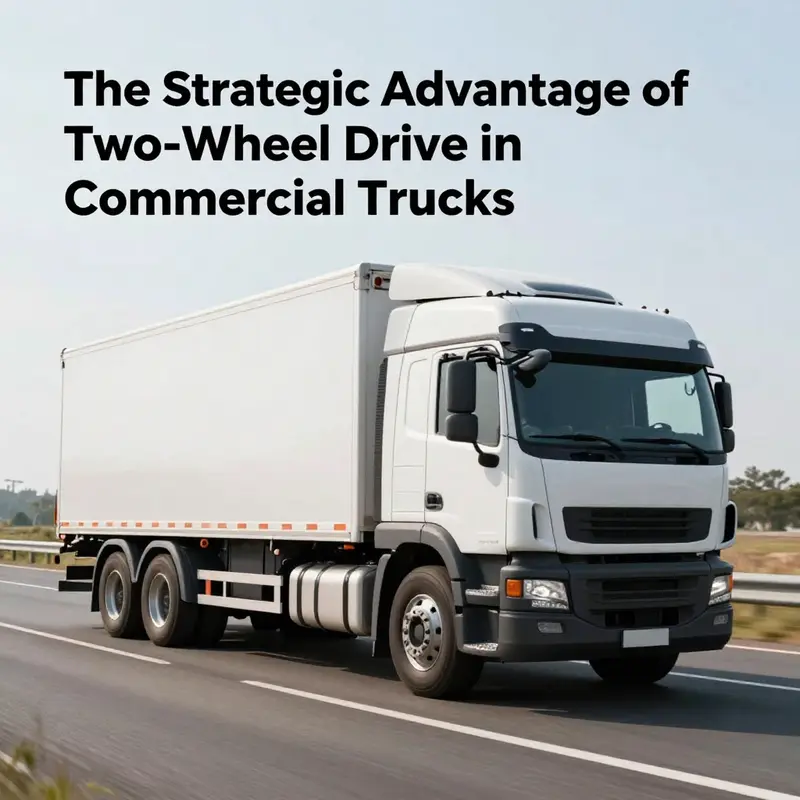
Across the fleets that move goods from port to storefront and back, cost controls shape every strategic decision. In this landscape, two-wheel drive (2WD) trucks—configured as 4×2 or 6×2 variants—emerge not as a compromise, but as a carefully calibrated balance of capability, reliability, and total cost of ownership. The lure of 2WD lies not in a single feature but in a coherent package: lower upfront prices, lighter weight, simpler maintenance, and a form of efficiency that scales with distance and volume. For many operators, the math adds up in favor of 2WD precisely because the daily demands of paved-road logistics seldom require the full traction arsenal of four-wheel drive. The result is a fleet that does not chase maximum capability but optimizes predictable performance over time, where costs are predictable and controllable rather than speculative and variable.
The most immediate economic argument for 2WD is the initial purchase price. Drivetrain complexity has a price tag. A 2WD architecture eschews the transfer case, dual differentials, and extra driveshafts that multiply parts and service intervals in 4WD or all-wheel-drive configurations. Fewer components mean lower manufacturing costs and, crucially, lower exposure to component wear over the vehicle’s life cycle. For a segment of the market that relies on long, predictable duty cycles—primarily highway hauling and urban distribution—this translates to a meaningful difference in upfront capital expenditure and the associated depreciation timeline. In practical terms, many fleets can allocate capital more efficiently when their trucks are purpose-built for standard road conditions rather than off-road versatility. The decision is about aligning the asset’s design with the actual working environment rather than pursuing a theoretical maximum capability.
Fuel economy is the second leg of the 2WD advantage. With one driven axle, rolling resistance and mechanical drag are reduced compared with multi-axle, all-wheel-drive configurations. In long-haul and linehaul operations, where fuel purchases dominate total operating costs, this difference compounds over thousands of kilometers each month. The literature and industry observations converge on a simple truth: the lighter the drivetrain, the lower the fuel burn, all else equal. A widely cited scenario involves a 6x2R configuration where a lift or tag axle can be raised when the truck is empty. In those cases, the vehicle sheds not only the extra weight but the frictional drag of the lifted axle, producing a tangible fuel saving—often quantified in industry reports as up to roughly 2–3 liters per 100 kilometers. That is not a marginal gain; it compounds across a fleet’s annual mileage and can translate into tens of thousands of liters saved over the life of the asset.
Weight savings also play a direct role in payload economics. By removing the necessity for a second driven axle and its heavy components, 2WD trucks stay lighter. They can carry more payload within legal weight limits or improve efficiency by distributing the permissible mass more effectively across the wheelbase. This is not just about the metric of kilograms; it is about revenue-earning capacity per trip. A lighter truck that can legally haul more freight without triggering overweight penalties or the need for multiple trips directly improves payload utilization and reduces the number of trips required to move the same volume of goods. In distribution networks, where time and reliability are currency, even modest gains in payload efficiency translate into lower per-ton-mile costs and, ultimately, better margins.
Maintenance costs also tilt in favor of 2WD. Fewer drivetrain components mean fewer potential failure points and simpler maintenance scheduling. There is less complexity in the shop, fewer spare parts to stock, and a reduced likelihood of unscheduled downtime tied to drivetrain issues. For fleet managers, the implication is clear: a predictable maintenance profile lowers risk and stabilizes maintenance budgets over the vehicle’s lifecycle. This reliability is particularly valuable in markets with tight delivery windows, where even minor mechanical issues can ripple into missed slots and penalties. The lifecycle cost picture—purchase price, fuel, maintenance, and resale value—favors 2WD when the operating plan does not rely on extreme off-road capability.
Yet a chapter on cost efficiency must acknowledge the trade-offs. 2WD is inherently tuned for conditions where traction demands are moderate. On dry, paved highways and well-maintained urban corridors, the rear-driven architecture often delivers the required traction with surprising reliability. The moment terrain becomes slippery, uneven, or off-pavement, limitations emerge. Snow-packed streets, mud, or ice can expose the Achilles’ heel of a single driven axle: power concentration on one end increases the risk of wheel spin and traction loss. In such environments, a 4WD or a 6×4 configuration—where torque is distributed across multiple driven axles—offers improved stability and safer acceleration through challenging conditions. The decision rarely hinges on a single factor. It rests on a clear assessment of route patterns, seasonal conditions, and the consistency of road surfaces across the fleet’s typical geography. For fleets whose operations predominantly feature highways, rural highways with good maintenance, and urban corridors, the practical advantages of 2WD are compelling and well substantiated by operating experience.
From a design and procurement standpoint, the focus is on matching the drive system to actual duty cycles. Leading manufacturers in the truck segment embed efficiency-oriented engineering—engine technologies tuned for fuel economy, aerodynamic design to reduce drag, and lightweight materials to enhance payload capacity. These design choices compound the benefits of 2WD. When a truck’s core mission is straightforward freight movement on reliable surfaces, every kilogram saved and every liter withheld from the tank compounds into lower total cost of ownership. The strategic value of 2WD emerges not from a single feature but from the synergy of simpler construction, lighter weight, efficient powertrains, and predictable service costs that together minimize financial risk over years of operation.
A practical way to view the economics is to imagine a fleet manager weighing two nearly identical tractor-trailers for a long-haul operation. One is 2WD, the other features a more complex four-wheel-drive system. The 2WD model starts with a lower sticker price and fewer maintenance events in the early years. It travels farther on the same fuel budget because of its lighter weight and reduced rolling resistance. As the fleet accumulates mileage, the differential grows not from a sudden spike in costs but from steady savings in fuel and maintenance, steadily compressing the total cost of ownership. In this context, the 2WD option aligns with a philosophy of budget discipline—spend less upfront, spend less to operate, and distribute capital toward core competencies like route planning, asset utilization, and driver productivity.
What about resale and lifecycle planning? The fact remains that 2WD trucks often retain value because they are cheaper to replace and easier to maintain. In markets where used-vehicle depreciation and resale demand are sensitive to maintenance history and total cost of ownership, a well-maintained 2WD asset can attract steady demand. Fleet operators who track total cost per mile or per ton-mile find that 2WD configurations deliver consistent, predictable numbers that feed into robust budgeting and scenario planning. The evidence from industry practice—though sometimes anecdotal—supports a disciplined approach: if the operating profile aligns with highway and urban freight rather than off-road, the 2WD option represents a disciplined, economical choice that reduces risk while maintaining service quality.
For those steering procurement and lifecycle strategies, the conversation is not about selecting a single best drivetrain in every scenario. It is about recognizing the situations where 2WD delivers the greatest return and designing networks that exploit its strengths. When a fleet’s routes are dominated by well-maintained surfaces, and reliability and cost predictability trump off-road versatility, 2WD is not merely acceptable; it is the prudent default. In practice, the best outcomes arise when operators pair 2WD with intelligent route planning, driver training focused on maximizing payload efficiency and fuel economy, and a maintenance program that emphasizes preventative care rather than reactive fixes. This approach creates a virtuous circle: simpler systems require less expertise to maintain, which reduces downtime, which in turn improves asset utilization and reduces operational risk.
The logistics landscape benefits from a pragmatic gaze at what is truly needed on the road. Advanced engine technology, aerodynamic bodywork, and efficient transmissions all contribute to reducing life-cycle costs. When these elements are combined with a drivetrain that matches real-world operating conditions, the fleet gains a durable advantage. In many cases, the cost-to-benefit equation of 2WD stacks up more favorably than a higher-traction option, particularly when the business model centers on maximized uptime and stable operating budgets rather than exploratory off-road capability. The cadence of maintenance, fuel pricing, and utilization rates interact to shape a compelling case for 2WD as a mainstream choice in commercial trucking.
In sum, the economic case for two-wheel drive in many commercial contexts rests on a simple but powerful premise: design the vehicle to meet the work, not the wilderness. Lower upfront costs, lighter weight, reduced maintenance, and the prospect of meaningful fuel savings, especially in long-haul operations, combine to deliver a lower total cost of ownership. This is not a universal prescription for every fleet, but it is a well-supported, pragmatic strategy for those whose routes are dominated by paved, well-maintained surfaces. The 2WD configuration embodies a disciplined, cost-conscious approach to fleet composition that prioritizes reliability, efficiency, and profitability over the lure of all-terrain capability. It is a case built from actual operating conditions, tempered by a clear-eyed view of the trade-offs, and aimed at sustaining service levels against a backdrop of fluctuating fuel prices and tight margins.
For procurement guidance and practical decision-making, fleet managers can turn to resources that discuss buying and selling trucks with efficiency in mind. For example, one practical reference focuses on how to navigate the purchase and resale of heavy-duty equipment in a way that aligns with lifecycle cost goals. This resource emphasizes thoughtful asset selection, maintenance discipline, and market timing as levers to maximize return on investment over the vehicle’s life. As you evaluate whether 2WD matches your routes, consider how such procurement insights integrate with route design and maintenance planning to optimize your total cost of ownership. Buy-Sell Trucks Campers Efficiently can serve as a practical starting point for teams seeking to translate these cost principles into tangible purchasing and resale strategies.
On the decision front, the balance between cost and capability is often most pronounced in regions with predictable road quality and steady speeds. In these contexts, a 2WD truck does not force a concession on reliability; it simply channels engineering and design into what the work requires. Fleet operators who map their routes across kilometers of highway and well-maintained arterial roads typically report lower operating costs and more straightforward maintenance. They cite predictable performance, stable driver feedback, and a lower total cost of ownership as the core advantages of 2WD configurations. In contrast, operations that regularly contend with snow, ice, mud, or rough terrain may justify the extra expense and complexity of four-wheel drive or heavy-duty drivetrains designed for high traction. The decision, then, is not about a universal truth but about a calibrated fit—where the asset is aligned with the work and where the trade-offs are transparent and manageable.
The broader takeaway is clear: 2WD is not a stopgap or a compromise for most highway-focused freight tasks. It is an intentional, economically sound choice that reduces capital risk, trims fuel and maintenance costs, and sustains payload efficiency without sacrificing reliability on routes that are consistently well maintained. This alignment between vehicle capability and work demands yields tangible payoffs in daily operations and long-term budgets. It is a reminder that smart fleet design begins with a clear map of routes, surface conditions, and duty cycles, and ends with a drivetrain choice that honors those realities. The result is a fleet that can compete on efficiency and reliability in markets where margins hinge on predictable costs and steady asset utilization.
External resource: 2WD trucks overview
The Quiet Fuel Saver: Why Two-Wheel Drive Makes Economic Sense for Commercial Trucks
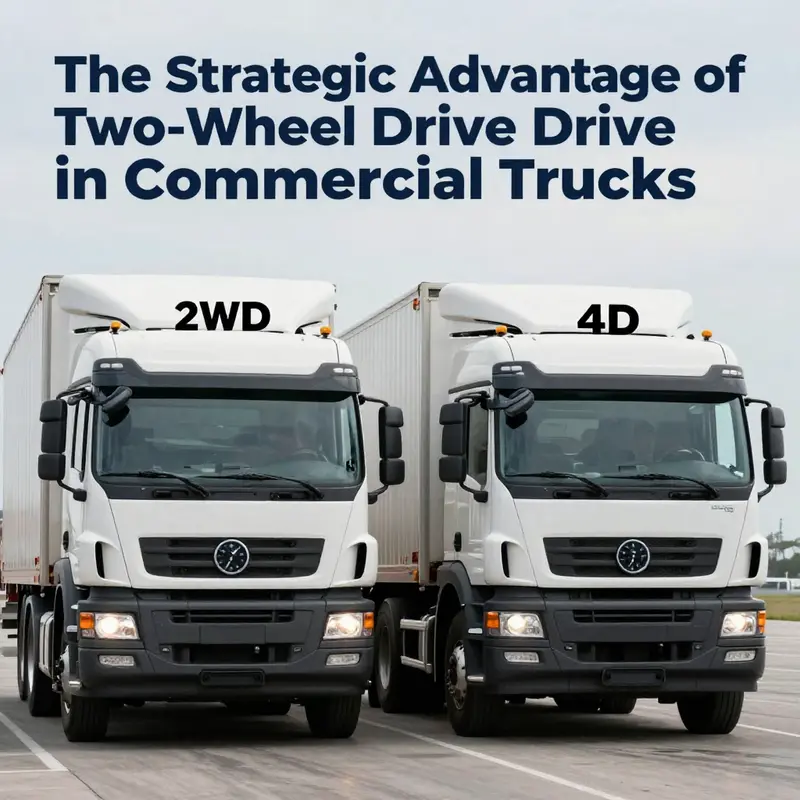
Two-wheel drive is not a spectacle on the highway, but it is a steady workhorse in commercial trucking. The question of why fleets often choose 2WD configurations—such as the standard two driven wheels in a 4×2 or the nuanced arrangement of a 6×2 with a lift axle—centers on a straightforward equation: simplicity and efficiency add up to real savings over time. In the long haul, where trucks spend most of their life cruising on paved interstates and long, repeatable routes, the economics of the drivetrain begin to tilt decisively toward the pared-down, two-wheel-driven setup. The argument rests not on novelty but on a careful balance of cost, weight, maintenance, and fuel consumption. When a fleet studies total cost of ownership, 2WD often emerges as the practical choice for operators who prioritize predictable performance on well-kept roads and a lean operating expense ratio. For those seeking a concise gateway into fleet-level decisions, the premise is simple: fewer moving parts, less energy lost to drivetrain resistance, and a lighter vehicle that can carry more payload within legal limits, all of which converge to lower per-mile costs over the life of the vehicle.
At the heart of the fuel economy advantage is mechanical simplicity. A 2WD system powers only two wheels, which means fewer gears, shafts, and differential components in motion. Each additional driven axle introduces another point of friction and another set of gearing losses. Those losses, while small in isolation, compound across thousands of miles and days of operation. When the truck’s engine drives fewer components, less energy is squandered as heat and drag within the drivetrain. The resulting reduction in parasitic losses translates directly into more of the engine’s energy reaching the wheels with less internal waste. In practical terms, the engine can accomplish the same or greater work with a bit less fuel—a distinction that becomes meaningful when multiplied across an entire fleet, especially in long-haul networks where fuel costs dominate operating expenses.
The lighter drivetrain of a 2WD truck also contributes to a tangible payload and efficiency advantage. By eliminating the need for a second driven axle and its heavy counterpart components, a 2WD configuration carries more of the useful load elsewhere in the vehicle. In an industry where payload per trip translates into revenue, this weight savings can improve profitability without infringing on gross vehicle weight limits. While the difference might seem incremental on a single vehicle, it compounds across a fleet, improving average payload utilization and reducing the number of trips required to move the same amount of cargo. It is this cumulative effect—reduced weight, lower fuel use, and higher usable load—that reinforces 2WD as a prudent default in many environments. The concept is particularly clear when considering configurations like the 6x2R, which uses a lifted rear axle to optimize weight and performance. When the lift axle is raised during empty runs, tire wear and rolling resistance from that axle are essentially nullified, and fuel savings become more pronounced. Industry observations have noted fuel savings in the range of up to 2–3 liters per 100 kilometers in such scenarios, a gain that compounds with distance and time on the road. For fleet operators aiming to minimize fuel burn while maintaining predictable highway performance, this lift-axle strategy demonstrates how a 2WD platform can flex to weight management without sacrificing core capability on primary routes.
To appreciate the practical implications, it helps to picture the day-to-day operations of a long-haul fleet. A typical route involves sustained highway speeds, steady elevations, and a rhythm of loading and unloading that tends to keep road surfaces predictable and climate impacts manageable. In this context, the rear axle’s primary job is to bear the load and deliver driving torque with reliability. The result is a powertrain that is intentionally lean, less prone to the creeping maintenance demands of more complex systems, and easier to service in a way that minimizes downtime. Maintenance costs tend to be lower for 2WD configurations because there are fewer moving parts to inspect, replace, or fine-tune. Fewer axles and driveline components also translate to lower parts inventories and simpler scheduled maintenance. The net effect is a fleet that can stay on the road longer between services, with less risk of unexpected downtime eroding margins. A simple, robust drivetrain, paired with an efficient engine or powertrain calibration, creates a stable platform for predictable fuel economy and reliability over the long haul. In a sector where uptime and fuel efficiency are among the top levers of profitability, the 2WD approach aligns with operational priorities that emphasize consistency and cost control.
The economic logic, however, is not about denying capability. In dry pavement and non-extreme conditions, a 2WD system provides adequate traction and confidence for standard cargo transport. The two-wheel-driven axle is designed to carry the payload and deliver propulsion efficiently, which is precisely where most freight tasks occur most of the time. In practice, the majority of routes rely on stable asphalt or concrete surfaces, predictable weather, and controlled loading circumstances. Under these conditions, the 2WD arrangement delivers sufficient traction, good steering feel, and reliable braking through the same channels that power other highway operations. The appeal lies in how the benefits accumulate: less drag means less fuel consumed per mile, lighter weight means more cargo flexibility, and simpler maintenance means fewer interruptions in service. When this trio—lower fuel burn, more payload, and reduced maintenance—persists across thousands of miles, the cumulative economic impact becomes clear and meaningful for fleets that must balance competing pressures such as driver wages, insurance, and capital expenditure for newer equipment.
Of course, the narrative of 2WD is not a universal one. It is framed by the reality that some operating environments demand more traction, stability, and control than a two-wheel-driven setup can reliably provide. In low-traction environments—mud, snow, or ice—the single driven axle can struggle to put power to the ground, and wheel spin becomes a real constraint. In those cases, a 4WD configuration, often in the form of a 6×4 or similar, distributes torque across multiple driven axles to maximize grip and control. The trade-off is straightforward: added complexity, higher initial costs, greater drivetrain weight, and typically higher fuel consumption when both axles are engaged. For fleets that encounter such challenging conditions with regular frequency, the cost-benefit calculus shifts toward a more capable, albeit heavier, traction system. The decision then becomes a question of route geometry, climate patterns, and service commitments. A fleet that operates primarily on well-kept highways with occasional service calls in urban or suburban corridors may find 2WD remarkably well suited to the mission, while one that routinely confronts off-road, mud, or ice will sooner or later need the traction advantages of a more capable drivetrain.
In doing the math, fleets also weigh acquisition costs and maintenance scoping. The 2WD architecture, by virtue of its relative simplicity, often comes with a lower sticker price and a lower expected maintenance bill. This is especially true in regions where skilled technician availability favors standard, time-tested drivetrains and where downtime costs—lost revenue per hour of vehicle inactivity—are a constant concern. While 4WD systems have their own strengths, the incremental cost and weight penalties can translate into fewer trips per day or less cargo per mile under the same route conditions. For operators who run consistent, long-haul legs on predictable infrastructure, those penalties may outweigh the added traction benefits of all-wheel drive. As with any fleet decision, the key is to align the drive configuration with the actual operating profile: the road surfaces, climate, typical load factors, and the expected mix of empty vs loaded miles. In that alignment, 2WD becomes not just a matter of preference but a disciplined response to a measured economical reality.
Within the broader discourse on fleet efficiency, it is valuable to acknowledge the practical resource that underpins these assessments. A wealth of industry analyses emphasizes how reduced drivetrain complexity translates into measurable fuel savings and lower total cost of ownership. For readers seeking a broader perspective on this topic, the McGrath Trucks Blog offers a gateway to practical insights and fleet strategies that echo these findings. This internal resource provides context on how operators balance cost, efficiency, and service quality in real-world scenarios. McGrath Trucks Blog
As the discussion unfolds, the question becomes how to translate these principles into tangible policies and routines within a fleet. The 2WD choice is most effective when combined with careful route planning, driver training, and proactive maintenance. Route planning benefits from knowing that, on average, the vehicle will encounter predictable conditions and sustained highway operation. That predictability supports consistent fuel-saving strategies, such as maintaining optimal cruising speeds, minimizing unnecessary idling, and aligning maintenance cycles with performance indicators derived from telematics and on-board diagnostics. Telematics packages can reveal patterns in fuel usage, enabling fleet managers to distinguish between baseline efficiency gains from the drivetrain and those achieved through driver behavior or route optimization. When fleets monitor these variables, the 2WD advantage becomes a living metric, not a theoretical point on a spec sheet. The insights gained can guide decisions about when to apply lift-axle techniques, how to plan empty returns to maximize efficiency, and where to allocate maintenance resources to keep the system operating in its leanest, most reliable state.
The conversation around 2WD is, ultimately, a conversation about aligning design with purpose. If a fleet’s mission is to deliver long-haul loads along well-maintained corridors with high fuel price sensitivity, a 2WD platform with a lift-axle strategy, simplified driveline, and weight-conscious design offers a durable, economical solution. If the terrain shifts toward off-road challenges, seasonally extreme weather, or dense, slippery urban streets where grip and stability are paramount, the calculus changes and so might the configuration. Yet even in those contexts, the fundamental takeaway remains relevant: the default, simple, and efficient option often outperforms its more complex counterpart on the metrics that matter most—fuel cost per mile, payload flexibility, and maintenance stability. The value proposition of 2WD is not a universal endorsement but a disciplined recommendation grounded in typical operating patterns and a clear picture of where the savings accumulate over time.
From the perspective of the broader industry, the appeal of 2WD is reinforced by ongoing conversations about emissions, maintenance resilience, and total ownership costs. While certain segments of the market explore alternatives and advancements in propulsion and drivetrain technology, the practicality of two-wheel drive continues to resonate where roads are reliable and the mission calls for steady, predictable performance rather than maximum off-road capability. In those contexts, the 2WD formula remains a reliable compass for fleet operators seeking to optimize efficiency without compromising core service levels. For readers who want to explore related topics and extend their understanding of how fleets manage the economics of trucks, the linked resource above provides additional angles on strategy and market dynamics. Finally, the larger takeaway is straightforward: in commercial trucking, the best choice is the one that aligns with the route, the payload, and the fuel bill—the 2WD configuration often checks all three boxes with a quiet, durable efficiency that compounds across the fleet over years of operation.
External resource for broader context: https://www.linkedin.com/pulse/advantages-2-wheel-drive-2wd-vehicles-tom-davis
Weighing the Bottom Line: How Weight Shapes Two-Wheel-Drive Commercial Truck Design
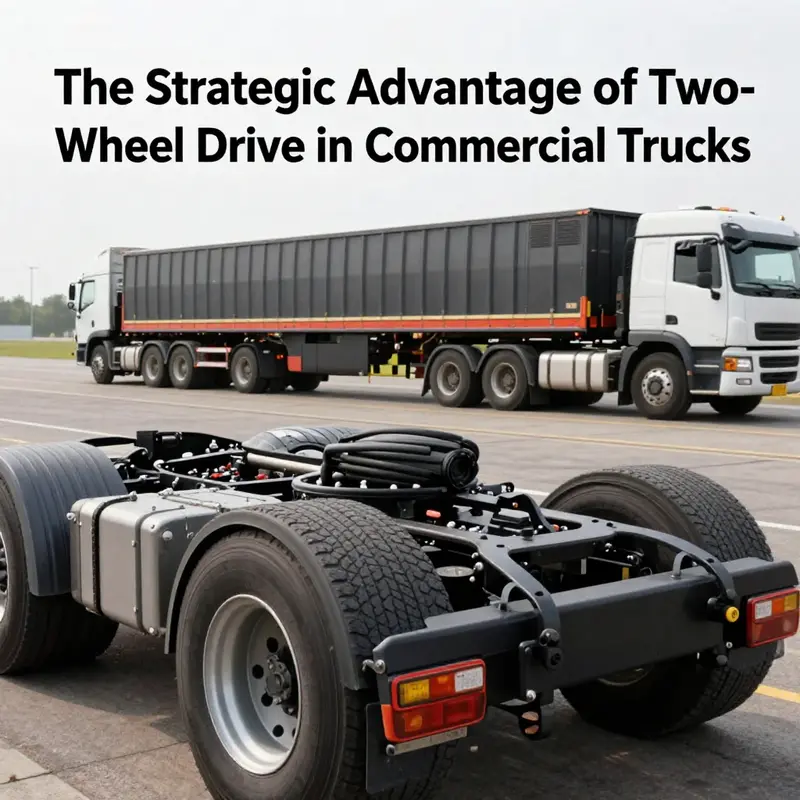
Weight is more than a number on a datasheet when engineers shape the backbone of a two-wheel-drive commercial truck. In 2WD configurations, the drive is confined to a single axle, typically the rear, while the front axle remains non-driven. That fundamental distinction starts a chain reaction through every other system in the vehicle. By removing the need for a second driven axle, a 2WD truck sheds substantial mass. The loss isn’t only about the axle itself; it cascades into associated components—extra driveshafts, a second differential, additional gearing and mounting hardware, and sometimes even a bulkier transfer mechanism in all-wheel-drive models. The cumulative effect is a leaner, more economical platform that can stretch payload or improve efficiency in ways that matter to fleets. The weight savings are not merely about tallying kilograms; they translate into tangible advantages on the road and in the shop, especially when the operating context values consistency over capability in extreme conditions.
That lean profile matters most when the route and duty cycle are dominated by long distances on well-maintained highways, urban corridors, and regional freight lanes where roads stay dry, traffic patterns are predictable, and the need for extraordinary traction is infrequent. In such environments, the weight reductions enabled by 2WD directly enhance payload capacity without pushing gross vehicle weight into punishment zones. A lighter truck carries more useful cargo within legal limits, which translates to higher revenue per trip and a better overall return on investment. The payload advantage is not just about the cargo itself; it also reduces stress on suspension components and tires, which are charged with supporting the combined mass of vehicle and freight. In practical terms, every kilogram shaved from the vehicle structure means a more efficient use of the same legal weight limit, a factor that fleets monitor closely when structuring routes, pallets, cartons, and loading patterns.
If you peel back the layers, the weight story is also a story about manufacturing and maintenance. Fewer driven axles and fewer drivetrain components mean simpler assemblies, fewer potential failure points, and lower maintenance costs. A 2WD drivetrain typically requires less fabrication, fewer fasteners, and reduced complexity in the assembly line. For fleets prioritizing uptime, this translates into shorter service intervals, faster turnaround times, and less shop time per mile. The economics of maintenance ripple outward into operating budgets. Lower ongoing costs for parts, fluids, and labor can tilt the balance in favor of 2WD for operations that don’t routinely confront slick or uneven terrain. This combination of lower initial mass, simpler construction, and lower maintenance burden is central to the appeal of 2WD in a wide range of commercial applications, from urban delivery to regional distribution.
The weight advantage also dovetails with tire and fuel considerations in meaningful ways. A lighter vehicle exerts less stress on tires, which can extend tread life and reduce replacement frequency. In turn, that lightness contributes to reduced rolling resistance, especially when the driven axle is the sole source of propulsion. During steady-state highway cruising, the energy required to move the vehicle scales with weight, so a lighter baseline means less work for the engine and fewer revolutions on the drivetrain. In practical fleet terms, this can translate into predictable, smaller fuel price sensitivity across annual budgets, which is a meaningful lever when fuel constitutes a large portion of total operating costs. The absence of a second driven axle also means less drivetrain parasitic loss—less mass to accelerate in start-stop cycles and less energy wasted in turning a heavier assembly through corners and potholes.
Yet weight cannot be viewed in isolation from payload and performance requirements. The same lightness that makes 2WD attractive also imposes constraints. When a truck is fully loaded and faces steep grades, heavy crosswinds, or slick conditions, the concentrated power on a single driven axle can challenge traction and stability more than a multi-axle driven configuration would. This is where thoughtful chassis and axle design come into play. In some 2WD lineups, operators can opt for configurations that pair weight savings with strategic traction options, such as a liftable or tag axle in a 6x2R arrangement. The lift axle is designed to engage only when the vehicle is heavily loaded, distributing load and improving traction when it matters, while allowing the operator to reduce rolling resistance and tire wear when the vehicle is lighter. When the lift axle is raised, drag and friction from that axle are minimized, and fuel economy can improve by a notable margin—often quoted in industry discussions as a couple of liters per 100 kilometers in favorable conditions. This nuanced capability shows how weight and drivetrain planning can be synchronized to maximize efficiency without sacrificing necessary load-handling capacity.
To appreciate how weight interfaces with real-world duty, it helps to picture the everyday lifeworld of a two-wheel-drive fleet. Short-haul distribution within a single metro area, grocery or parcel routes, and municipal service work are archetypal scenarios where a 2WD chassis shines. In these contexts, the vehicle’s weight is a tool rather than a burden. With the right limits on acceleration demands and predictable road surfaces, a lighter truck can maintain consistent performance while carrying substantial freight. The design emphasis becomes an optimization problem: how to keep mass low enough to preserve payload and efficiency while retaining essential power, steering, and braking performance. The objective is not to maximize power or off-road capability; it is to maximize the usable payload and the timeliness of deliveries, all within the constraints of road conditions and regulatory weight limits.
The decision calculus—weight, cost, fuel, and payload—grows more intricate when fleets consider the full spectrum of operating environments. Where a portion of the route could include hilly terrain, uneven pavement, or inclement weather, some operators may prefer a heavier, more traction-capable drive configuration for certain runs. Yet the overarching pattern in many markets remains consistent: 2WD trucks deliver a favorable balance of lightness, cost efficiency, and practical payload, which sustains their popularity in core trucking verticals.
For fleets contemplating the trade-offs, the question often centers on lifecycle economics rather than upfront price alone. A lighter truck that costs less to purchase and maintain, yet can consistently haul near-maximum legal payload, will frequently outperform a heavier, more complex alternative on total cost of ownership. It is a matter of calibrating weight to route structure, demand cycles, and service level expectations. The analysis is not merely about grams in the chassis; it is about how those grams affect every mile, every stop, and every decision to deploy a given asset. When managers review maintenance histories, tire wear patterns, and fuel consumption across thousands of miles, the weight-driven advantages of 2WD start to look less like an abstract engineering feature and more like a practical, bottom-line driver.
In this light, a simple link to ongoing industry conversations can be illuminating. Explore how practitioners weigh these factors in real-world fleets by visiting the McGrath Trucks blog, which aggregates practical perspectives on balancing upfront cost with lifecycle cost in commercial trucking. McGrath Trucks blog.
As a closing reflection on weight and design, the case for two-wheel-drive trucks is not a single equation but a dynamic interplay of mass, load, efficiency, and duty cycle. The lean, purpose-built architecture of 2WD offers a compelling value proposition when the operating environment aligns with light-to-moderate traction needs, stable road conditions, and a steady rhythm of long-haul or urban deliveries. In those cases, every kilogram saved is a lever pulled toward higher payload, lower fuel use, and cleaner economics over the vehicle’s life. Yet the same conversation remains a practical reminder: weight is a design choice that must be tuned to the job. When a route profile shifts toward hills, mud, snow, or frequent abrupt starts, the math can tilt toward configurations that distribute traction more broadly, even if that means accepting a higher baseline mass. The strength of two-wheel-drive designs lies in their ability to deliver efficiency and payload when the job fits, with the flexibility to adapt through thoughtful configurations like lift axles where appropriate. This is the core reason why weight considerations are not a peripheral concern but a central axis around which the value proposition of 2WD is built.
External resource: https://www.truckequipment.com/2wd-vs-4wd-trucks-what-to-consider-for-your-business
Performance Boundaries and Practical Trade-offs for Two-Wheel-Drive Commercial Trucks
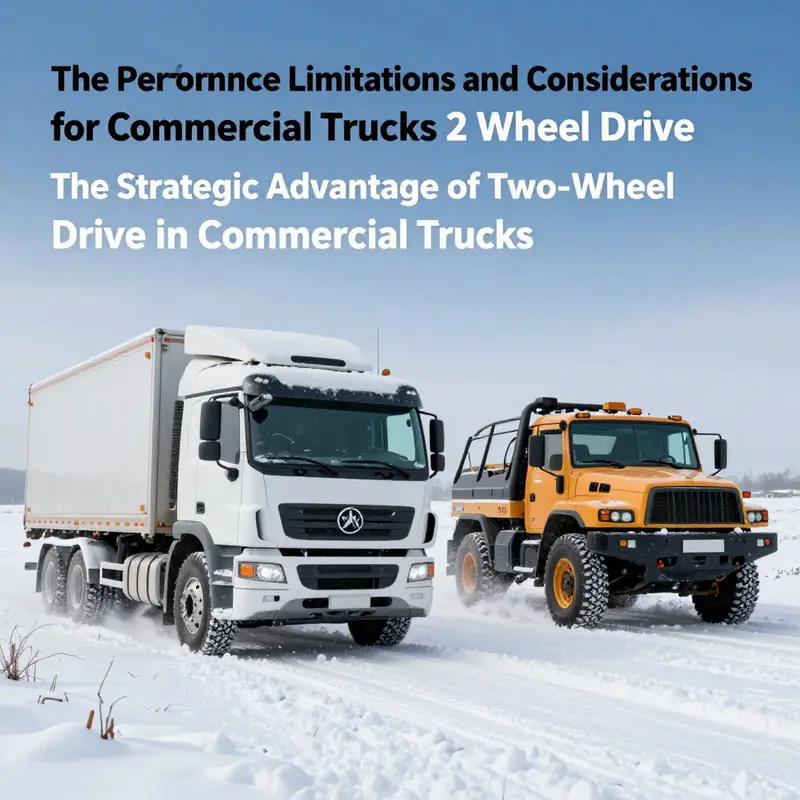
Two-wheel-drive (2WD) configurations remain a common choice in commercial trucking, a pragmatic decision driven by the familiar calculus of cost, simplicity, and road reality. Yet as fleets press for lower operating costs and higher efficiency, the performance boundaries of 2WD deserve careful examination. This chapter weaves together core engineering realities with operational pragmatism, showing where 2WD shines, where it stumbles, and how fleet managers can navigate the line between economy and capability. The narrative draws on recent findings about transmission efficiency, heat management, and aerodynamics, translating technical nuance into concrete decision points for today’s highway-heavy hauling. It also anchors the discussion in real-world metrics—payload, traction, and fuel—without losing sight of the conditions that tilt the advantage toward or away from two driven wheels.
At the heart of 2WD’s appeal is transmission efficiency. When engine power is delivered to only two wheels, typically the rear axle, the drivetrain has fewer rotating parts to synchronize, fewer drivetrains to lubricate, and less mechanical resistance to overcome. On dry, flat, well-maintained highways, this simplicity translates into a leaner power path. Frictional losses are reduced compared to multi-axle, all-wheel-drive setups, so more of the fuel energy becomes useful forward motion. The result is a favorable fuel economy signal, especially in long-haul operations where repeated starts and climbs are minimized and the vehicle spends substantial time cruising. In this respect, the 2WD architecture appears almost tailor-made for the normal route structure that many fleets navigate every day: steady speeds, predictable grades, and consistent tire contact with the pavement.
But the same physics that favor 2WD on a highway can become a liability when the surface gripping becomes marginal. Traction is the core boundary condition for any driven-wheel system, and with 2WD the traction envelope is concentrated on a single driven axle. In light drizzle, wet pavement, or particularly slick surfaces—snow, ice, or mud—the loss of grip on the driven axle can rapid-fire into wheel spin. The absence of a second driven axle means there is less torque distribution to share load and maintain forward momentum, which translates into longer stopping distances, gentler acceleration, and more frequent wheel slip when the tires are not gripping. In practical terms, 2WD trucks may struggle to maintain steady progress on a steep grade after a traffic stop or during a load-heavy start on a slippery ramp. This is not merely a matter of performance; it is a safety and controllability concern that drivers and fleet operators must weigh when planning routes, seasonal operations, or weather contingencies.
The topic of heat management introduces another decisive boundary. When a vehicle relies on a single driven axle, most of the drivetrain’s inertial and frictional heat focuses on that axle’s tires, brakes, and wheel hubs. Under hard use—such as long descents, frequent braking on mountain roads, or continuous high-load climbs—the rate at which heat accumulates can surpass the capacity of standard cooling and heat-dissipation paths. The problem compounds when the wheel and brake assemblies operate at elevated temperature for extended periods, accelerating tire wear and increasing the risk of brake fade. The literature on wheel design highlights a practical consequence: certain hub configurations, such as split-rim designs, can complicate heat transfer because their multi-part structures may impede rapid heat conduction away from the tire and braking surfaces. While these designs offer installation conveniences, they demand careful thermal management to prevent cumulative thermal damage. For fleets running high-mileage, high-load profiles, this becomes a real-life attrition factor that can erode tire life or shorten brake service intervals if not monitored and mitigated.
Alongside heat, aerodynamics and wheel geometry subtly shape the 2WD efficiency story, particularly at highway speeds where air resistance becomes a meaningful portion of energy use. The bare structure of a 2WD truck—lighter, with fewer moving parts on the driven axle—certainly offers a weight advantage that helps with payload capacity and fuel burn at cruising speed. Yet the way the wheel hub, the gap between wheel and body, and any wheel covers or fairings interact with the airflow can alter the drag coefficient enough to matter at scale. The research notes that wheel hub configurations, including whether a liftable or tag axle is deployed, influence the vehicle’s effective aerodynamic signature. Even small drag benefits garnered from refined hub shapes and prudent placement of aerodynamic features can translate into measurable fuel savings over long distances. In short, the engineering effort to streamline air flow around a 2WD chassis matches the broader trend toward efficiency, but it remains a balance: the simpler the drivetrain, the more attention is often required to optimize the small, drag-related details that accumulate across thousands of kilometers.
The lift-axle concept, especially in configurations like a 6x2R where a tag axle can be raised when empty, illustrates a practical pathway through some performance trade-offs. When the lift axle is off the ground, rolling resistance and tire wear decrease, which yields meaningful fuel savings—figures cited in industry analyses on the order of a few liters per 100 kilometers. This is not a magical shortcut but a tactical tool: it unlocks a dynamic weight management ability that helps push payload efficiency higher while preserving the benefits of 2WD on the rest of the trip. The ability to deactivate a portion of the drivetrain’s drag during lighter-duty segments helps explain why 2WD configurations can outperform more complex drivetrains on certain routes and duty cycles. It also highlights a crucial operational discipline: accurate load planning and axle management can swing the economic balance between 2WD and more complex systems, depending on the mix of empty miles, loaded miles, and grade challenges.
Yet even with lift-axle versatility, not all routes are created equal. In deep snow, thick mud, or uneven off-road terrains, the risk of wheel spin climbs as the tires’ grip becomes the limiting factor. The decisive factor is not merely the number of driven axles but the distribution of traction across those axles under real-world conditions. A four-wheel-drive (4WD) or all-wheel-drive (AWD) arrangement, with torque distributed to multiple wheels, can maintain traction where a single driven axle would falter. For fleet operators facing a spectrum of climates and road surfaces, the question then becomes one of duty-cycle optimization: will the majority of miles be on dry pavement and well-maintained highway sections, or will many miles require confident performance in adverse traction conditions? For many operations, the answer leans toward 2WD for its cost efficiency and payload advantages, provided the fleet can tolerate the limitations in traction and heat and can implement appropriate driver training, tire selection, and maintenance planning.
The structural and maintenance implications deserve close attention as well. Two-wheel-drive trucks simplify the maintenance footprint, which is a direct cost benefit. Fewer components mean fewer potential failure points and typically lower upfront cost and ongoing maintenance expense. However, the simplification does not absolve operators from vigilance. The concentrated heat and wear on the driven axle components, along with the potential for uneven tire wear if load and traction are not managed evenly, can necessitate more frequent tire checks and alignment maintenance, especially in fleets operating high-mileage schedules. This reality underscores the idea that 2WD is not a one-size-fits-all solution but a choice that harmonizes with specific operating patterns. The long-haul operator who runs well-maintained highways may realize the most compelling lifecycle economics, particularly when paired with a well-considered tire program and disciplined maintenance protocol. Meanwhile, a regional fleet that encounters frequent mixed surface conditions must weigh the variable traction risk against the 2WD savings and the logistical feasibility of deploying occasional 4WD variants or winter chains and traction aids.
To connect these engineering and operational threads back to daily decision-making, it helps to consider a simple, practical framework: assess the route profile, evaluate the expected weight distribution, and quantify the cost impact of traction losses and heat management needs. On routes dominated by dry asphalt and consistent grades, 2WD can deliver robust fuel economy with a lighter frame and more payload per trip. When weather and terrain introduce slip hazards, the loss of torque-sharing and the higher risk of wheel spin become a real driver of performance penalties. In those moments, operators may choose to activate auxiliary measures—tire choices optimized for grip in colder or wetter conditions, enhanced thermal management considerations for the driven axle, or a calculated deployment of a lift-axle configuration to balance payload and drag.
This decision framework finds practical resonance in fleet data and market narratives. Fleet managers who track lifecycle costs and the incidence of axle-related maintenance often discover that the most economical choice aligns with the duty cycle rather than with a doctrinaire preference for 2WD or 4WD. The evolution of used-truck markets also reflects how buyer expectations shift with duty-circle realities, and it is worth staying attuned to these trends. For readers exploring the current landscape, it can be enlightening to review evolving patterns in used-truck availability and price, such as the Current trends in used truck sales growth. This resource provides a lens on how the market is pricing and valuing configurations that match specific route requirements, helping operators calibrate their 2WD choices against real-world depreciation, resale risk, and total-cost-of-ownership considerations. Current trends in used truck sales growth.
Of course, the decision calculus for 2WD cannot be abstracted away from the broader aerodynamics conversation. Even with a lighter, simpler drivetrain, attention to wheel geometry, hub design, and fairings around the wheels can yield incremental fuel savings. The aerodynamic drag associated with wheel wells and exposed components is not negligible at highway speeds, and small design improvements in wheel housings or hub shape can contribute to meaningful reductions in the drag coefficient. This is not about chasing exotic, expensive aerodynamic tweaks, but about applying sensible engineering hygiene: clean, well-integrated wheel designs, appropriate spoilers or fairings where permissible, and judicious use of wheel covers to smooth the transition from the tire to the body. In the full lifecycle view, these optimizations align with the core advantage of 2WD—lower baseline weight and fewer moving parts—while addressing the subtler drag sources that accumulate across long-haul journeys.
Ultimately, the performance boundaries of 2WD commercial trucks hinge on a careful synthesis of traction reality, thermal behavior, aerodynamic nuance, and operational discipline. The 2WD proposition remains robust for fleets with a highway-heavy profile, disciplined maintenance, and a strategic stance toward load planning. It is equally important to recognize where 2WD is not enough: when terrains regularly demand high-torque distribution across multiple axles, or when extended, extreme driving conditions heighten the risk of heat buildup and traction failure, a more capable propulsion arrangement may prove not only beneficial but necessary for safety, reliability, and uptime.
This integrated outlook—balancing the economy of two-wheel drive with the realities of traction, heat, and aerodynamics—frames the chapter’s core message. Two-wheel-drive commercial trucks can be exceptionally economical, but the savings are not automatic. They emerge from deliberate alignment between duty cycle, maintenance vigor, and an informed approach to route planning and equipment configuration. Fleet operators who pull those levers effectively often discover that the 2WD choice yields superior lifecycle profitability on routes that stay on the blacktop, with predictable weather and manageable payloads. Yet when the road conditions become uncertain, or when the required uptime is absolute, it pays to revisit the fundamentals: torque distribution, heat management, and aerodynamics are not abstract concerns but everyday performance determinants that shape fuel use, tire life, and the safe handling of heavy loads. The practical takeaway is not a narrow prescription but an adaptable mindset—one that uses data, terrain, and duty cycle as the compass for choosing between 2WD and more complex drivetrains, and that recognizes the lift-axle option as a strategic lever rather than a cure-all. In this sense, the two-wheel-drive paradigm remains a viable, economical backbone for many operations, provided it is supported by thoughtful design choices, proactive maintenance, and a clear understanding of the performance boundaries described above.
For readers seeking to situate these technical insights within the broader market and cost context, consider exploring the linked discussion on used-truck market trends. It offers a practical lens on how real-world purchase price, depreciation, and lifecycle costs align with route needs and drivetrain choices, helping fleets optimize their balance between 2WD simplicity and any additional capabilities that might be warranted by the operation. Current trends in used truck sales growth. And for a deeper dive into the fundamental physics behind wheel-drive configurations and traction, see an external resource that explains all-wheel-drive concepts and their impact on vehicle behavior across surfaces: https://en.wikipedia.org/wiki/All-wheel_drive.
Final thoughts
In conclusion, the advantages of two-wheel drive systems in commercial trucks are multifaceted and compelling. From substantial cost savings and enhanced fuel efficiency to improved payload capacity, 2WD provides a balanced solution for fleet operations focused on profitability and operational readiness. While performance limitations exist in extreme conditions, the reliability and simplicity of these systems make them a preferred choice for most operators. Companies aiming for operational efficiency should carefully evaluate these benefits as they make decisions on fleet composition and management.