Understanding the ownership of Commercial Truck Trader is crucial for trucking company owners, fleet managers, and procurement teams. This digital marketplace not only serves as a crucial resource for buying and selling commercial trucks, but its ownership structure can significantly impact the services and regulations governing the industry. Chapter one delves into the ownership details of Commercial Truck Trader, providing clarity on the entities behind the platform. Chapter two explores its historical development, shedding light on how the company evolved to meet the needs of its users. The third chapter examines its current market position, including its main competitors, providing insights into how it stands out. Finally, the fourth chapter discusses the implications of its ownership structure on industry dynamics, revealing how these factors influence market trends and service delivery.
Ownership in the Market: Tracing the Hands Behind the Online Truck Trading Platform
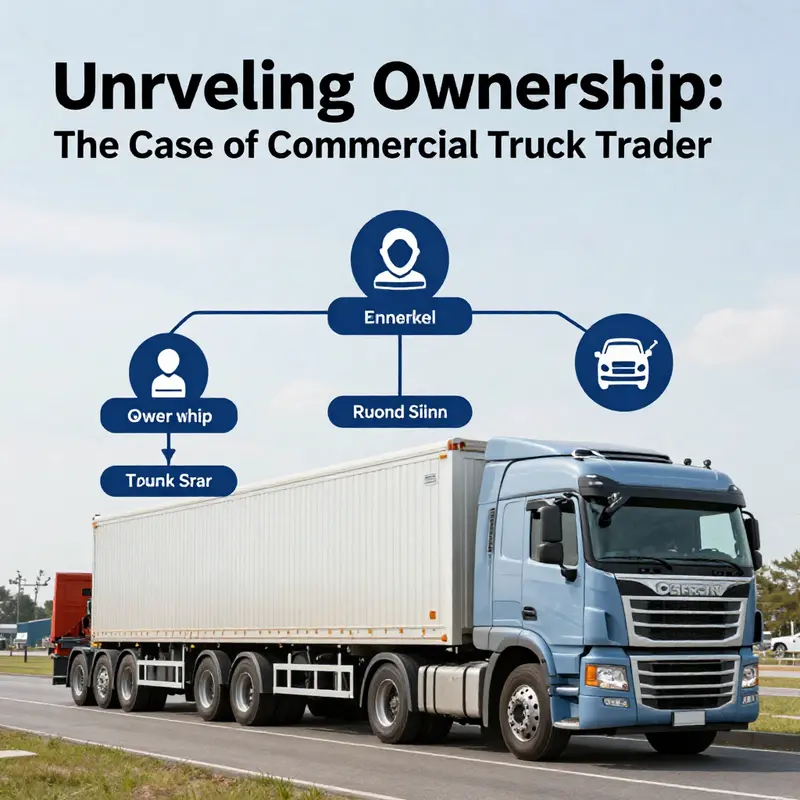
In the sprawling ecosystem of online vehicle marketplaces, ownership is more than a corporate footnote. It is a hinge that can influence trust, user experience, data practices, and even the way listings are presented to buyers and fleets. The platform that anchors many buyers and sellers in the heavy-truck segment operates under a governance structure that situates it within a broader network rather than as a stand-alone storefront. This arrangement matters because the imprint of ownership often shapes decisions about product scope, technology investments, and the kinds of relationships cultivated with dealers, lenders, and service providers. When readers ask who owns a major truck-trading platform, the answer is seldom a single line in a corporate filing; it is a reflection of a parent company’s portfolio, strategy, and appetite for scale. In this particular case, the platform is owned by Trader Interactive, LLC, a parent entity that positions it as a division within a family of vehicle and equipment listings sites. This ownership arrangement provides a lens to understand how the platform operates, why certain features exist, and how the business aims to serve two large, sometimes competing audiences: professional dealers and individual buyers seeking transparency and efficiency.
The core truth about this ownership setup lies in the relationship between the platform and Trader Interactive, LLC itself. Trader Interactive operates as the umbrella under which a network of websites share technology, data, and advertising capabilities. The platform in question is not a solitary entity but a carved-out division designed to specialize in the market for trucks, trailers, and related equipment. This positioning within Trader Interactive’s portfolio means that the platform benefits from shared infrastructure—search algorithms, ad delivery systems, and cross-site data capabilities—that other sites in the same network can leverage. The benefits are practical: dealers who list across multiple sites can move more quickly to reach broad audiences, while buyers encounter a familiar set of search and filtering tools, even when they navigate different sites within the same ecosystem. The result is a more cohesive buyers’ journey and a more scalable model for sellers who operate fleets or run multiple branches. It is a model anchored in scale, yet it remains attentive to the specifics of the heavy-truck market, with inventory breadth and reliability features built to meet the expectations of professional buyers.
From a governance perspective, ownership by Trader Interactive, LLC signals an emphasis on consistency across a family of platforms rather than a bespoke, stand-alone strategy. This is not a random assortment of listings; it is part of a curated approach to vehicle and equipment commerce that aligns with a shared vision for how buyers discover, compare, and acquire assets. The platform’s listings, ad formats, and user interfaces are influenced by centralized guidelines and best practices that originate far from any single dealership’s showroom. Dealers who partner with the platform gain access to a distributed network that can extend their reach across multiple brands and product categories within the same corporate family. For buyers, this translates into a more uniform experience: similar navigation flows, consistent trust signals, standardized vehicle histories, and uniform payment and financing prompts across related sites. The upshot is a marketplace where ownership by Trader Interactive, LLC helps reduce friction for participants who value speed and reliability as much as they value price.
The business model that accompanies this ownership structure further clarifies why the platform looks and acts the way it does. In essence, the network is designed to monetize lead generation and advertising tied to listings. Dealers pay for listing placement, enhanced exposure, and targeted advertising bundles, while buyers encounter a blend of free search experiences and paid-integrated offers that help sellers convert inquiries into transactions. The ownership by a larger parent company means that there is likely a shared emphasis on data-driven optimization. Traffic patterns, search queries, and listing engagement metrics can be analyzed in a unified framework, enabling cross-site insights that inform product development, user experience improvements, and pricing strategies around advertising packages. For readers and practitioners who want to understand how market dynamics are shaped by corporate structure, this is a reminder that the platform’s features—such as advanced search filters, vehicle history integration, and dealer credibility signals—are not just technical choices. They are extensions of a strategy designed to maximize visibility and efficiency while maintaining a credible, scalable marketplace.
One notable implication of such ownership is consistency in how trust is built and maintained. Trust signals—dealer verification, transparent pricing cues, and accessible contact options—are crucial in an environment where buyers evaluate large, capital-intensive assets. By housing the platform within a network that prioritizes standardized practices, the parent company can steer the ecosystem toward uniform credibility markers. This matters in a segment where a misrepresented listing or a mispriced unit can have outsized financial repercussions. It also matters for how data privacy and compliance are managed. A centralized approach allows for more coherent privacy policies, terms of use, and data handling practices across related sites. For buyers, this can translate into a perception of stability and accountability, particularly when large fleets or procurement teams rely on multiple listings platforms to source assets. For dealers, it can mean that the effort to maintain a credible inventory across several sites is rewarded with consistent lead quality and shared best practices, rather than a patchwork of independent platforms with divergent standards.
The ownership structure also informs the content ecosystem surrounding the platform. Within Trader Interactive’s network, content strategies can be harmonized so that information about asset history, maintenance considerations, and operational trends is accessible across a family of sites. This has tangible implications for readers who are evaluating the total cost of ownership, resale value, or lifecycle considerations for heavy equipment. It enables cross-pollination of knowledge: a dealer’s best practices in listing optimization, a fleet manager’s notes on total cost of ownership, and an analyst’s market observations can coalesce into a more informative, reliable marketplace. Industry observers often turn to external commentary to contextualize these shifts. For a broader perspective on how ownership structures shape market dynamics in the trucking and vehicle space, consider the insights shared on the McGrath Trucks blog, which traces how ownership footprints influence market behavior and listing strategies. McGrath Trucks blog.
Because ownership is visible in corporate filings and public disclosures, it also invites a practical approach to due diligence. In markets as large and opaque as online vehicle advertising, buyers and sellers benefit from understanding who sits behind the listing platform. Even when a private company governs the network, there are typically parent-level announcements, press releases, and regulatory filings that shed light on corporate strategy, capital investments, and governance practices. Those who want to corroborate ownership information can consult corporate profiles and the parent company’s public communications. The dynamic is not about a single transaction at the moment of purchase; it is about the ongoing stewardship of a marketplace trusted by thousands of dealers and individual buyers every day. The ownership frame helps explain why certain features exist, why certain categories receive emphasis, and how platform reliability is upheld across thousands of daily interactions.
As readers move from theory to practical implications, the topic touches on something more immediate: the user experience. Owners who invest in a networked approach tend to prioritize interoperability, speed, and scale. The platform’s search capabilities are crafted to handle the complexity of industrial assets—units with varied engines, payload capacities, and maintenance histories—while preserving a straightforward path from discovery to inquiry. Dealers benefit from a broader audience and the reassurance that leads generated across a trusted family of sites are more likely to convert. Buyers benefit from standardized listing details, consistent policy guidance, and a predictable path to financing or inspection. The ownership reality—rooted in Trader Interactive, LLC—thus becomes a quiet engine behind the visible interface, shaping not only what is offered but how it is offered and how buyers interpret the information they encounter.
For readers who want to situate this ownership within the broader industry, consider how dealer ecosystems, procurement strategies, and asset lifecycles intersect with platform governance. The platform’s reach across multiple categories means that investments in technology, data analytics, and compliance translate into cross-category advantages. When a dealer updates a listing or a fleet manager reviews a batch of prospects, the underlying systems—built on the shared infrastructure of the parent network—facilitate speed and consistency. In markets where competition is intense and procurement cycles are measured in weeks rather than days, such a framework can be decisive. It is not merely about who shows up with the cheapest unit; it is about trust, reliability, and the confidence that a seller’s inventory is presented accurately and transparently to the buyer’s team. Ownership by a larger, diversified platform thus helps align incentives and ensures that the marketplace remains robust under varying market conditions.
For practitioners who are actively buying, selling, or managing fleets, the ownership context is a reminder to look beyond a single listing. It prompts questions about data sources, listing standards, and the strategic priorities that shape how assets are exposed to the market. It also informs expectations regarding updates, feature rollouts, and cross-site consistency. The broader ecosystem that the platform sits within provides both benefits and considerations: benefits in terms of reach, scale, and standardized processes; considerations in terms of maintaining differentiation in a crowded field and ensuring that the platform remains responsive to the unique needs of buyers and sellers across diverse segments. The narrative of ownership—anchored in Trader Interactive, LLC—helps explain why the platform can deliver a unified experience across a landscape littered with independent marketplaces, each with its own quirks and strengths. In other words, ownership becomes the backbone for a marketplace that aims to be both comprehensive in scope and precise in execution.
In closing, the question of who owns the online truck trading platform is not a mere trivia point; it is a lens through which to understand how the marketplace functions, evolves, and sustains credibility in a demanding industry. The parent company’s integrated approach—pooling resources, aligning standards, and leveraging a shared technology stack—shapes everything from listing quality to user trust and from data practices to pricing strategies. For readers seeking a concise articulation of ownership, the official disclosures point toward Trader Interactive, LLC as the responsible owner, with the platform serving as a division within that broader corporate framework. This arrangement helps explain the platform’s ability to scale, maintain reliability, and nurture a marketplace where buyers and dealers can transact with confidence across a broad spectrum of heavy equipment and commercial assets. It also offers a practical reminder to readers that behind every listing is a web of decisions made at a corporate level, designed to harmonize the diverse needs of a large, professional market. External reference: https://www.commercialtrucktrader.com
Who Controls the Leading Online Marketplace for Commercial Trucks: Historical Background and Development
The question of who controls the leading online marketplace for commercial trucks touches a deeper narrative about how digital marketplaces are built, scaled, and sustained. It is not merely about who sits at the helm of a single site, but about a corporate structure that channels resources, data, and brand trust into a network of specialized platforms. In this sense, ownership is both a legal arrangement and a strategic philosophy. The platform that dominates North American listings for commercial vehicles sits under a parent company that operates a family of niche marketplaces. This structure reflects a deliberate strategy: create high-traffic, purpose-built spaces where buyers and sellers can move with confidence, then connect those spaces through a unified operating model. The result is more than a collection of listings; it is a cohesive ecosystem designed to reduce friction in a market that can be fragmented, opaque, and time consuming for participants who often rely on critical equipment for daily operations.
From the historical vantage point, the founding impulse was simple yet ambitious. Industry buyers and sellers faced a landscape of scattered catalogs, inconsistent inventory quality, and limited transparency. A centralized online marketplace for commercial trucks emerged as a solution to aggregate demand and supply, standardize the user experience, and shine a light on pricing signals that had previously been buried in regional networks. The transformation did not occur overnight. It unfolded as a combination of disciplined product design, data-enabled search capabilities, and a steady accumulation of dealer and seller inventories. A core feature of the evolution was the realization that a single portal could host better data than a dozen isolated catalogs if governed by a consistent set of rules and a disciplined approach to quality signals. This is the essence of ownership in such a market: the capacity to align incentives across a vast and diverse set of participants while maintaining a reliable user experience that both sides of the market rely upon.
At the heart of the ownership story is a parent organization that operates a portfolio of specialized marketplaces. This parent company is built to support growth through shared technology, common compliance workflows, and a broad data strategy that benefits all its brands. The strategic logic is not to sell a single product but to offer a family of products that speak to different subsets of buyers and sellers. In the realm of commercial vehicles, a central platform can be complemented by distinct marketplaces tailored to other vehicle classes or business needs, all under a single governance and development framework. This arrangement allows for scale economies in technology, marketing, and risk management, while preserving the autonomy necessary for each niche to address its own particular concerns, from verification of dealer credibility to the specifics of financing and insurance options that buyers may seek. The ownership structure thus becomes a practical instrument for balancing specialization with the efficiency of a common backbone.
The historical development of the platform mirrors broader shifts in how buyers search for, compare, and transact with heavy equipment. In its early years, the marketplace served as a connective tissue—pulling together thousands of listings from diverse sources and presenting them through a unified interface. It was a period when the value proposition centered on convenience: a single search across multiple inventories, richer listing details, and a more predictable path to contact sellers. As the user base expanded, so did the expectations for transparency and reliability. The platform evolved to emphasize trust signals, such as verified dealer profiles, standardized listing data, and better pricing visibility. These elements are not incidental; they are an expression of ownership that prioritizes the long-term health of the marketplace. When buyers encounter consistent quality signals, the perceived risk of transaction drops, and the marketplace becomes a more efficient channel for moving significant, capital-intensive assets.
From a strategic perspective, the development of this marketplace reflects a deliberate preference for niche specialization rather than broad, generic e-commerce. The logic is straightforward: in markets with high information asymmetry, buyers benefit from platforms that curate inventory in meaningful ways, offer industry-specific search filters, and provide content that helps buyers evaluate asset condition, uptime potential, and total cost of ownership. The owner’s vision extends beyond listing traffic. It encompasses the orchestration of a complete lifecycle for the asset in question—from initial inquiry to deal closure—by integrating tools that support valuation, financing, and logistics. In practice, this means a user experience that offers clear, objective data about the asset, a trusted dealer network, and predictable processes for arranging inspections, transport, and payment terms. The result is a marketplace that feels both comprehensive and dependable, a combination that strengthens the owner’s control over the market’s quality and pace.
A core advantage of the ownership model is the ability to standardize data and processes across a suite of related platforms. When the same data model underpins multiple brands, the system can offer consistent reporting, faster site improvements, and more effective marketing across channels. This coherence benefits buyers who compare options on different platforms yet expect a similar level of accuracy and support. It benefits sellers too, who gain from a scalable set of audience touchpoints and a clearer pathway to closing transactions with institutional buyers, regional fleets, and independent operators alike. The ownership structure thus becomes a lever for market efficiency. It reduces redundancy, shortens the path to a sale, and lowers the friction associated with complex acquisitions where multiple stakeholders or fleets are involved. In turn, the marketplace gains resilience; the better the signals and workflows, the more trust accumulates, and trust is the currency of sustained activity in high-value transactions.
Looking at the population of buyers, the metric of monthly active users—surpassing a million in this context—offers a window into the scale and velocity of the market under ownership. A large, engaged audience helps sellers reach the most relevant buyers quickly, while buyers enjoy the confidence of a broad, representative pool of options. Yet, ownership is not merely about volume. It is about the quality of engagement. A well-structured marketplace under a responsible owner can foster more thoughtful inquiries, better-prepared buyers, and more transparent negotiations. The owner’s role here expands beyond hosting listings to curating an environment where information, reliability, and responsiveness are expected norms. In such a setting, the platform can steadily raise the bar for what constitutes a credible listing, what constitutes a fair price, and what standards govern the behavior of dealers and private sellers alike. The cumulative effect benefits the entire ecosystem by reducing the cost of due diligence and accelerating the tempo of deals without sacrificing confidence.
The ownership narrative also intersects with broader industry dynamics, including regulatory developments, market cycles, and the shifting economics of truck fleets. When owners steer a network of niche marketplaces, they can react to these external forces with agility. They can adjust policy, refine risk controls, and adapt feature sets to align with evolving compliance requirements and financing arrangements. This adaptability matters because commercial vehicle transactions hinge on long lead times, maintenance histories, and the reliability of service networks. A single organizational vision helps harmonize these elements across geographies and customer segments, creating a consistent baseline of quality even as local conditions vary. The outcome is not a static monopoly but a dynamic, accountable platform that continually evolves to retain trust and relevance among buyers, sellers, and service providers.
The ownership story, then, is both historical and forward-looking. Historically, it marks a transition from fragmented catalogs to a unified, data-driven marketplace built on a shared backbone. Forward-looking, it contemplates how such an owner can continue to optimize for speed, accuracy, and predictability in a market where capital-intensive assets change hands less frequently but with more at stake per transaction. In this sense, the owner is not just a custodian of listings; it is a steward of the market’s integrity. The strategic choices—how to allocate capital for technology, how to calibrate the balance between automation and human expertise, how to nurture a dealer ecosystem that values transparency—become the levers that determine whether the platform remains the default channel for commercial vehicle transactions or cedes ground to new entrants who promise lower friction or more novel pricing structures.
As with any large, outcome-driven platform, there is a dialogue between control and openness. Ownership does not imply closed gates but rather the discipline to maintain quality while inviting continuous participation. The firm understands that trust compounds when a broad and diverse set of sellers and buyers can rely on consistent data, fair processes, and predictable outcomes. This is why the governance model emphasizes compliance, performance standards, and a feedback loop that channels user insights into ongoing product enhancements. The historical arc is thus not only about the ascent of a single platform but also about the creation of a durable mechanism for market shaping—one that other players may imitate, but seldom replicate with the same degree of consistency and scale.
For readers evaluating the market, the ownership structure offers important implications. It explains why certain features appear prominently across related platforms, why search results tend to reflect a curated inventory, and why the same quality signals recur in multiple listings. It also clarifies why buyers and sellers often perceive a single point of reference for due diligence and deal closure when dealing with commercial assets. The maturity of the platform under responsible ownership translates into a stable venue where fleets and independent operators alike can navigate the procurement process with confidence, even when market conditions shift or new regulatory considerations come into play. In an industry defined by asset longevity, reliability, and uptime, the governance behind the marketplace is as crucial as the assets listed within it.
From an analytic perspective, understanding ownership also invites a closer look at data integration and platform economics. The owner’s approach to standardization enables more robust analytics across the portfolio. That means better insights into demand cycles, inventory turnover, and pricing strategies, which in turn informs how the platform presents options to buyers. It also clarifies how sellers price their assets in a market where visibility and accessibility can determine a sale’s timeline. When data quality improves across listings, the marketplace becomes a more efficient broker of information, lowering the cost of search for buyers and the cost of inventory management for sellers. The net effect is a healthier market where participants can allocate capital with greater confidence and where the platform earns its keep by delivering measurable value to all sides of the transaction.
To illustrate how these dynamics play out in practice, consider the small, steady shifts that shape used-truck markets: better digital verification reduces misrepresentation, more transparent ownership histories lower uncertainty, and clearer maintenance records shorten the time from inquiry to inspection. Each of these improvements stems from an ownership framework that prioritizes standardized data, credible listings, and consistent service levels. In turn, the platform can sustain higher levels of activity, which benefits dealers with wide inventories and buyers seeking breadth of choice. The interplay between ownership and user experience becomes a virtuous circle: the more reliable the marketplace, the more trust participants place in it, and the more robust the listing activity becomes. Such reinforcing dynamics are precisely what a well-structured ownership model aims to achieve over time.
As the market continues to evolve, the importance of a clear ownership narrative grows. Buyers and sellers want assurance that the platform will remain a reliable intermediary, that data will stay accurate, and that the ecosystem will adapt to external pressures without compromising the user experience. This requires ongoing investment in technology, governance, and partner relationships. It also requires a steady hand at the helm, capable of balancing growth with quality. The ownership story, therefore, is not a footnote to industry dynamics; it is a central thread that explains why the platform remains a focal point for commercial vehicle transactions and why participants return again and again to a marketplace that they trust to handle the complexities of these high-value purchases.
For readers seeking to connect the historical arc with current practice, the lineage of ownership helps clarify why certain market signals feel predictable even when macro conditions are volatile. The operating model, grounded in a parent company’s strategic oversight, tends to smooth over short-term disturbances by preserving core processes and standards. That stability, in turn, encourages continued participation from incumbents and new entrants alike, who see a credible path to listing, marketing, and closing deals within a trusted framework. The result is a marketplace that does not merely reflect the scale of volume but embodies a disciplined approach to market integrity. It is this combination of historical development and present-day governance that explains how ownership matters in shaping the user experience, the quality of data, and the velocity of transactions in the commercial truck sector.
Internal link reference: As market dynamics evolve, readers may explore related discussions on how shifts in used truck prices influence dealer and owner strategies by visiting related industry insights. current trends in used truck sales growth.
External resource: For broader context on the platform discussed here, additional information from its official site can be reviewed at https://www.commercialtrucktrader.com.
Ownership, Influence, and the Road Ahead: Mapping Control of the North American Commercial Truck Marketplace
In the sprawling ecosystem of online marketplaces for commercial vehicles, ownership matters as much as inventory depth or search capabilities. The platform that dominates awareness and lead generation in this space sits under Trader Interactive, LLC, a parent company with a portfolio of digital marketplaces focused on vehicles and related equipment. This ownership matters because it influences data strategy, advertising products, and how buyers and sellers engage across portals. When a single owner steers multiple portals that cater to dealers, independent owners, and fleet managers, cross-portfolio learning and data sharing become possible, raising velocity while also inviting questions about market concentration and the health of the buyer experience.\n\nFrom a practical standpoint, this platform is designed to be more than a simple listing board. It aims to be a focused digital marketplace for light, medium, and heavy trucks and trailers, with tools that guide a listing from creation to buyer outreach and closing the sale. Specialization matters because vehicle specifications, maintenance histories, and uptime expectations drive decisions; a focused platform can tailor search filters, lead capture forms, and advertising campaigns to the audience.\n\nOwnership by a company with a portfolio enables cross-portal marketing, dealer onboarding programs, and data-driven lead scoring—benefits that may not be as readily available to more fragmented competitors. The net effect is a marketplace that can be efficient for dealers seeking high-quality leads, independent owners monetizing aging assets, and fleet managers procuring reliably sourced equipment.\n\nAs of 2026, the platform holds a prominent position in the North American market for commercial vehicles. Its branding as a focused marketplace helps it stand out amid a crowded field, where other portals compete on inventory breadth, user interface, and marketing reach. Leadership has cultivated a reputation for robust inventory depth and a suite of tools to streamline advertising and sales, plus a strong mobile presence that keeps the platform accessible from yards, shops, or offices. The result is a marketplace that can be navigated from a tablet in a shop bay as easily as from a laptop in a corporate office, which matters when decisions are time-sensitive.\n\nYet ownership and market position do not occur in a vacuum. Feedback over the years has surfaced concerns around operational aspects, particularly in technology and support responsiveness. Earlier VIN-level decoding issues in the 2020s occasionally produced misclassifications, requiring manual intervention to correct. While not a cosmetic nuisance, such friction can erode buyer confidence and slow decision making when critical details are buried behind delays. The industry has pushed to improve backend automation, data validation, and user experience to minimize human intervention, a trend that underpins reliability in data and speed of issue resolution.\n\nThe competitive landscape can be described in archetypes rather than brand names: a long-standing portal with exhaustive listings and precise search filters; a platform that blends listing functionality with a trucking community; a broad automotive portal offering high visibility; and a specialized cross-section focused on industrial and service-sector equipment. Ownership groups with scale can deploy cross-portal marketing, data warehousing, and advertising products that raise velocity and efficiency of asset sales across markets. The platform under discussion benefits from a broad digital footprint, enabling more strategic ad placements and a more integrated lead management pipeline than a stand-alone portal might offer, while consolidation can sharpen competitive pressure on lead quality, data integrity, and customer satisfaction.\n\nFrom a buyer’s perspective, the pros include a cohesive experience across related platforms and similar data standards. For sellers, cross-platform exposure can translate into quicker deals, especially when inventories span multiple vehicle classes and usage profiles. But the same model can raise concerns about market concentration and competitive pricing. The market’s health rests on a balance: leveraging scale while maintaining robust user support, transparent practices, and continuous product refinement that keeps experiences nimble and responsive.\n\nLooking ahead, the road ahead will likely hinge on data quality, automation, and user support. VIN decoding accuracy, vehicle classification, and photo standards will stay high priorities. The industry’s confidence in digital marketplaces depends on transparency and fast resolution when misclassifications or missing information occur. Strategically, the owner may explore deeper integrations with dealers’ inventory management systems and fleet telematics data to enrich listing details and provide dynamic pricing signals. Partnerships with OEMs and service providers could broaden the value proposition by connecting buyers with maintenance networks and financing options. The most successful platforms may become end-to-end procurement ecosystems that move buyers from discovery to delivery with minimal friction.\n\nAs a practical reminder, ownership matters for strategic alignment, but the user experience and the quality of interactions at the point of sale decide long-run trust. The platform’s trajectory will be judged by its ability to marry scale with specificity, ensure reliability through data governance and responsive support, and deliver measurable value to dealers, independent sellers, and fleet buyers.\n\nA note for readers seeking additional industry perspectives can be found in industry discussions like the McGrath Trucks blog, which shares selling strategies and market insights from real-world experience: https://mcgrathtrucks.com/blog/.
Ownership Engines: How Trader Interactive Shapes the Commercial Truck Trader Ecosystem
Ownership questions sit at the crossroads of market design and organizational strategy, especially in a space where buyers and sellers converge across dozens of regional markets. When we ask who owns Commercial Truck Trader, we are not simply identifying a corporate label; we are tracing the incentives, governance, and capital flows that influence how listings are surfaced, how trust is built, and how swiftly new capabilities move from idea to user experience. The central claim, grounded in the most complete publicly available material, is that Commercial Truck Trader operates as part of Trader Interactive, LLC, a diversified digital marketplace group with a portfolio of vehicle and equipment platforms. This linkage matters because ownership structure does not exist in a vacuum. It sits atop a network of shared technology, uniform service standards, and an integrated data environment that supports scale, speed, and strategic coherence across a family of brands. Understanding this architecture helps explain why the platform feels so consistent for users regardless of the vehicle category they are exploring, and it clarifies how the platform can respond to shifting market conditions with greater agility than a stand-alone site might manage.
From a macro perspective, the value of being owned by a larger digital marketplace group is not merely financial. It is structural. Centralized technical infrastructure, common software development resources, and a unified approach to customer support translate into a smoother, more reliable user experience. Listings benefit from shared search algorithms, standardized listing fields, and cross-platform exposure that a single-brand site would struggle to achieve on its own. Dealers and private sellers gain from increased reach: a single listing may appear not only on Commercial Truck Trader but also across other platforms within the same ownership ecosystem, extending visibility without duplicating effort. Buyers, meanwhile, encounter a more consistent set of expectations around listing quality, verification processes, and post-listing assistance. This alignment reduces the cognitive load on buyers who are evaluating multiple trucks or fleets, thereby lowering barriers to engagement and increasing the likelihood of legitimate inquiries becoming transactions.
The economic logic of scale under this ownership model cannot be overstated. When a diversified group operates several marketplaces under one umbrella, it can spread fixed costs—such as platform security, data centers, and analytics tooling—across more revenue streams. The consequence for Commercial Truck Trader is both practical and strategic: faster product iterations, more robust uptime, and the ability to invest in features that improve the transaction experience. A platform with reliable performance and continuous feature upgrades tends to command greater trust from buyers and sellers, which in turn fuels more listings, more inquiries, and ultimately more completed deals. This virtuous cycle, driven by an ownership structure designed for scale, helps explain why the platform’s market position can endure through periods of volatility in used-truck pricing or broader economic uncertainty.
The architecture of such a networked ownership model also shapes competitive dynamics in the online vehicle-advertising space. The presence of a parent company with multiple brands enables strategic cross-pollination. Cross-promotional opportunities can help draw attention from a broader cohort of buyers, including those who begin their search for one category and end up exploring adjacent categories within the same ecosystem. This kind of cross-market synergy is not merely a marketing convenience; it can accrue material value in terms of user acquisition costs and lifetime value. In markets where information asymmetries are pronounced, having a shared data backbone across platforms can improve the accuracy of price guidance, the trust signals displayed on listings, and the speed with which buyers can compare like-for-like options. The cumulative effect is an ecosystem where the whole is greater than the sum of its parts, with ownership enabling the alignment of product strategy across a family of brands rather than a series of isolated product roadmaps.
Yet, with centralized power comes centralized risk. The health of Commercial Truck Trader, its innovation cadence, and its service quality become more tightly coupled to the financial and strategic trajectory of Trader Interactive, LLC. When a parent company tightens capital allocation or re-prioritizes product bets, the downstream platform may experience changes in development velocity or in the emphasis placed on certain features. This is not inherently negative; it reflects disciplined governance and a coherent strategy. But it does mean that users should watch for shifts in platform investment, especially during periods of market stress when a diversified group must balance competing priorities across multiple brands. In practical terms, this could translate into longer timelines for feature rollouts, more standardized workflows across listings, or a renewed emphasis on core reliability over flashy new capabilities. The important point is that ownership ties the day-to-day experience of a single platform to a broader corporate strategy, and that connection can be felt in both the cadence of updates and the prioritization of user needs.
The ownership structure also has meaningful implications for data and trust. A unified data architecture across multiple brands can accelerate learning about what drives listing quality, what factors most strongly influence inquiry-to-sale conversion, and how buyers evaluate depreciation and total cost of ownership in this space. When data are pooled and analyzed at scale, the platform can deliver more precise search relevance, better fraud detection, and more proactive safety features. The trade-off, of course, is the concentration of data control. A single group that aggregates huge volumes of buyer and seller interactions gains the capacity to offer more sophisticated analytics to itself and to trusted partners, but it can also raise concerns about data privacy and competitive balance. The governance frameworks surrounding how data are used, who has access, and how beneficiaries are defined become critical concerns for regulators, industry observers, and the users who rely on the platform to evaluate vehicles accurately. In this sense, ownership does not merely determine who profits; it determines what kinds of data-driven capabilities become baseline expectations for a platform in this space.
Against this backdrop, the operational dynamics of the platform are shaped by the ownership group’s ability to harmonize product strategy with compliance, customer service, and risk management across a broad portfolio. A diversified digital marketplace group can standardize listing guidelines, verification protocols, and dispute resolution mechanisms, resulting in a more predictable experience for dealers who list inventory across multiple markets. Uniform service levels become a selling point as the ecosystem matures; a dealer increasingly comes to rely on a single, familiar set of rules and support structures, even when listing on different regional sites. This reduces the friction associated with multi-market participation and lowers the transaction costs of moving inventory through the channel. From a buyer’s perspective, the outcome is cleaner, more consistent results, fewer misrepresentations, and greater confidence in the legitimacy of a listing. These outcomes—precision in search results, trust in the accuracy of descriptions, and reliability of the platform’s support—are the practical manifestations of ownership-driven governance in action.
The strategic implications extend to how the platform integrates with other parts of the Trader Interactive family. A centralized ownership model fosters a more seamless user journey when a buyer transitions from discovery to inquiry to purchase, even if the vehicle category changes along the way. The potential for cross-platform referrals, bundled financing options, or combined logistics solutions can emerge when platforms share capabilities and align incentives. These possibilities do not emerge by accident; they are enabled by the ownership structure that coordinates product teams, data science, and partner relationships across the entire ecosystem. For users who value efficiency and predictability, this means a more coherent experience, a faster pace of improvement, and the sense that the platform is learning from a broad array of interactions rather than a single brand’s isolated experiments.
From a community and market-structure perspective, the ownership question also touches on how the platform positions itself relative to independent or smaller-scale marketplaces. In many regions, independent players fill important niches and offer tailored services, but scale can be an asymmetry in online vehicle markets. A parent organization enables smaller platforms under its umbrella to benefit from shared infrastructure, while still preserving local market knowledge and dealer relationships. The result can be a more robust national footprint for the ecosystem as a whole, with the caveat that the market power of a larger parent may influence pricing, feature development, and strategic priorities at a pace dictated by corporate governance. For stakeholders who care about competition and diversity of choice, this is a key tension: scale brings efficiency and reach, but it also concentrates influence. The chapter’s moral, if one chooses to infer one, is that ownership structure will always shape the balance between broad reach and local specialization.
To readers seeking actionable insight about how these dynamics affect day-to-day decisions, a practical takeaway emerges from the interplay of ownership, platform capabilities, and market trends. Because the platform inherits a shared technology stack, dealers who participate across multiple listings within the Trader Interactive family can optimize their workflow with fewer system frictions. This can translate into faster listing creation, more uniform photo and description standards, and more consistent responses to buyer inquiries. Buyers, in turn, benefit from improved search relevance and more dependable information, which reduces the time spent evaluating options and increases the likelihood of a confident purchase decision. The heightened efficiency also has implications for pricing transparency. When a single ownership group can surface comparable listings with consistent details across a network of brands, it becomes easier for buyers to compare apples to apples, which helps anchor expectations and reduce guesswork—an outcome that benefits the market as a whole by lowering the information asymmetry that often drives price volatility.
The narrative above does not pretend to resolve every debate about platform ownership in the used-truck ecosystem. It does, however, illuminate how a defined ownership structure can act as a catalyst for innovation and reliability, while also imprinting the platform with a certain degree of strategic continuity. For practitioners—dealers, brokers, and buyers—the practical implication is to view the platform not only as a venue for listing vehicles but as an ecosystem whose governance, data practices, and service standards are shaped by the priorities of a parent organization. This awareness can inform listing strategies, expectations about feature updates, and decisions about how to engage with support channels. It can also guide conversations about trust and safety, because a longer view of ownership often implies more mature risk management processes, clearer accountability, and a more durable commitment to user protection.
For readers who want to connect the ownership discussion to broader market signals, consider how ownership structure interacts with evolving trends in the trucking and logistics sectors. The industry’s health often translates into listing volumes, price stability, and the rate at which buyers are willing to engage with online platforms. In the current climate, where fleets adjust to shifting demand, regulatory changes, and evolving emission standards, a platform anchored in a diversified parent company may be better positioned to adapt by reallocating resources toward strategic capabilities—such as enhanced analytics, safer transaction flows, or more robust dealer support—to keep pace with the market’s needs. The dynamics at play underscore a fundamental point: ownership does not only determine who profits; it influences the speed at which the market learns, adapts, and eventually reallocates capital toward the investments buyers and sellers value most.
As this examination closes, it is worth reflecting on the practical importance of provenance for users who navigate the Commercial Truck Trader platform. The brand’s association with a parent group that operates multiple vehicle- and equipment-focused marketplaces offers tangible benefits: scale, reliability, and a concerted effort to streamline the buyer-seller experience. It also carries responsibilities—data stewardship, governance alignment, and consistent service levels—that accompany a broader corporate umbrella. For researchers, industry watchers, and participants in the space, the ownership narrative provides a lens through which to interpret changes in platform performance, policy shifts, and the cadence of feature introductions. While the precise contours of ownership may evolve, the underlying truth remains clear: in a landscape where digital marketplaces increasingly define how heavy equipment and commercial trucks find new homes, the architecture of ownership shapes both the opportunities available to users and the risks they must navigate. For readers seeking more authoritative detail on the platform’s operational framework and ownership, the official site provides direct insight into how the brand presents itself and how it positions its place within the broader Trader Interactive family.
To explore related market dynamics, you can read about current trends in used-truck sales growth, which offers context for how ownership-driven platforms respond to shifting demand and inventory cycles. current trends in used-truck sales growth.
External resource for further context: https://www.commercialtrucktrader.com
Final thoughts
In summary, understanding who owns Commercial Truck Trader provides vital insights into the operational landscape of the trucking industry. The ownership not only shapes service offerings and market competition but also influences the overall strategic direction of the platform. For stakeholders such as trucking company owners, fleet managers, and procurement teams, awareness of ownership implications can lead to more informed decisions regarding their purchasing and operational strategies. By considering both the historical context and current market dynamics, these stakeholders can leverage insights to enhance their operational efficiency and competitive advantage.