Owning a commercial truck opens a myriad of opportunities beyond conventional freight hauling. For trucking company owners, fleet managers, construction and mining procurement teams, and logistics brokers, understanding how to harness this asset effectively can lead to increased revenue streams and enhanced service offerings. This article delves into four pivotal areas: On-Demand Logistics and Delivery Services, Mobile Retail Opportunities, Specialized Services, and Freelance Transport and Niche Business Integration. By exploring these areas, stakeholders can gain insights into innovative strategies that target prevailing market demands and elevate business operations.
Turning Your Fleet into a Flexible On-Demand Delivery Engine: Practical Ways to Make Your Own Commercial Trucks Work Harder
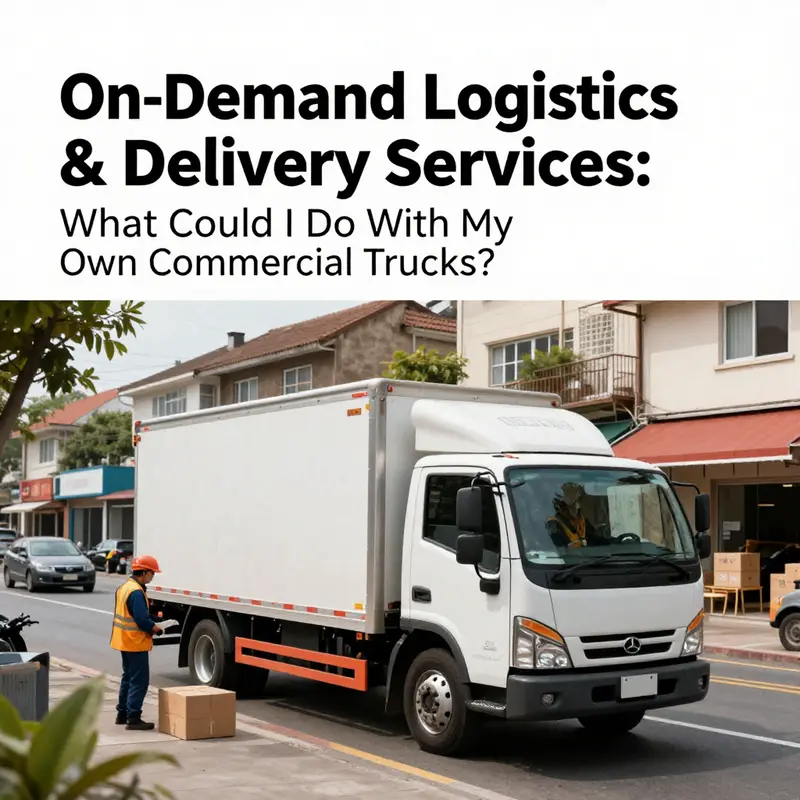
A truck is more than a vehicle with a hitch and a engine; it is a moving asset that can be tuned into a flexible, customer-centric delivery engine. When you own your own commercial trucks, you possess a rare combination of mobility, reliability, and capacity that modern logistics increasingly treats as a service rather than a simple transport. On-demand logistics and delivery services invite you to think differently about how you deploy that asset. The market doesn’t just want goods moved from point A to B anymore; it wants time windows respected, deliveries precise, and the experience predictable. In this light, your fleet becomes a customizable service platform. You set the terms, you shape the experience, and you align your operations with the rhythms of your customers’ lives. The upshot is not only more predictable income but also a deeper, steadier relationship with the communities you serve. The shift from “haul” to “deliver with value” is not a gimmick. It’s a practical evolution of the way people buy, receive, and rely on goods in a world that increasingly prizes speed, transparency, and convenience.
What makes on-demand delivery especially compelling for a vehicle you already own is the degree of control you can exercise without abandoning the core strengths of trucking. Real-time demand signals let you fill empty capacity with purpose rather than let it drift. Imagine your fleet as a network of responsive nodes rather than a rigid chain of scheduled trips. With the right platforms and tools, you can book and manage deliveries dynamically, align them with peak demand times, and still preserve margins that reflect the true value of your time and space. This is not only about moving boxes faster; it’s about shaping the customer journey. When a customer can choose a delivery window, authorize a neighbor pickup, or receive instant text updates about arrival times, the service feels reliable and personal. These capabilities do more than improve satisfaction. They reduce failed deliveries, increase repeat business, and free you to deploy every mile toward revenue rather than toward wasted capacity.
To begin, you don’t have to overhaul your entire operation at once. Start with what you already own—a set of trucks, a few capable drivers, and a willingness to experiment. The first step is to align your fleet with the demand patterns you already see in your market. If you operate near dense urban centers or retail corridors, there is value in offering flexible delivery slots that fit into a customer’s workday or shopping routine. If your routes are more regional and include medical or hospitality clients, there is almost always a need for dependable, time-bound deliveries—think temperature-controlled packages or critical spare parts that must arrive on schedule. The point is not to chase every possible service at once but to identify a few high-value opportunities that complement your existing relationships and capabilities.
Integrating with on-demand platforms unlocks a layer of efficiency and reach that is difficult to replicate in-house. These platforms function as a dynamic marketplace where demand signals, routing algorithms, and customer communication run in real time. Your role shifts from pure driver to fleet operator who orchestrates capacity and service quality. Real-time tracking and communication tools, similar to those used by major express couriers, enable you to give customers the control they crave. They can select delivery windows, authorize keeps-with-neighbor instructions, or receive updates through email, SMS, or push notifications. The benefit is twofold: customers experience unprecedented transparency, and you gain a predictable flow of shipments that can be staged and scaled with confidence. The result is higher utilization of your trucks and more reliable revenue streams, even in markets that swing with seasonality or economic cycles.
A critical advantage of this approach is the ability to offer white-label delivery services. By operating under your own brand while delivering for e-commerce businesses or other companies, you create a revenue channel that leverages your fleet without eroding your professional identity. White-label work allows you to build a client base that values your reliability, your communication standards, and your dispatch discipline. It also positions you as more than a provider of “someone who moves things.” You become a trusted partner who handles the customer experience, not just the back-end transport. When you combine white-label capabilities with robust delivery options—time slots, exact delivery instructions, and discreet handling for sensitive items—you create a differentiated service that stands out in crowded markets.
From an operational perspective, the key is to view your fleet as an ecosystem that can be optimized through technology. On-demand platforms don’t just book you a job; they connect it to an intelligent dispatch network. You can integrate order management software or an ERP system to automate dispatch, route planning, and capacity allocation. For instance, you could automatically assign deliveries to your nearest available truck when orders come in, or you could reserve a chunk of capacity for high-demand periods in anticipation of seasonal spikes. The automation reduces manual juggling for you and your drivers, enabling steadier cash flow and lower administrative overhead. It also gives you a platform to measure performance—on-time delivery rates, dwell times at loading docks, dwell times at customer premises, and customer feedback. Those metrics then feed back into your pricing, service design, and driver training. In other words, you’re building a data-informed business model that improves with every shipment rather than a collection of ad hoc gigs.
For the delivery experience to feel polished, you need to articulate clear delivery preferences and service levels. Allow customers to specify not just a window but also delivery instructions that matter in their context. Should the driver call 15 minutes before arrival? Can they place a package in a specific location if no one is at home? Can you leave a package with a building manager or at a reception desk? The more you codify these preferences in your digital interface, the more consistent your service becomes. Consistency is what people pay for in logistics. If customers know what to expect and get it reliably, they are less tempted to switch to a competitor or default to slower, lower-cost options. And for you, consistency translates into predictable routes, smoother loading and unloading processes, and less time lost to miscommunication or misplacement.
As you expand, you will discover the value of developing a few anchor clients that rely on your on-demand delivery capabilities on a regular basis. These relationships provide a dependable baseline of revenue while you test and refine your operational model. You might start with a handful of e-commerce businesses that need evening or weekend delivery, or with local retailers seeking a more flexible fulfillment option for peak hours. The beauty of owning your own trucks is that you can tailor your service not just to commercial demands but to the rhythms of the neighborhoods you serve. A driver who knows a corridor and its repeated delivery patterns can offer a level of service that generic courier networks struggle to match. That familiarity becomes a competitive advantage, especially in markets where small businesses and residential customers expect friendly, responsive service as part of the package.
If you’re curious about how to translate these capabilities into practical steps, consider the following frame as a guide rather than a rigid blueprint. First, audit your current capacity: how many trucks can you realistically scale up with in peak hours, and what are the constraints—driver availability, maintenance cycles, or fuel costs? Second, pilot a small on-demand program with a trusted local partner or two. Choose partners whose business needs align with your strengths, whether that means same-day grocery delivery, medical supply logistics, or last-mile furniture placement. Third, formalize your service standards and communication templates. Create a consistent, professional brand voice in your driver app, customer emails, and delivery notices. Fourth, invest in visibility tools that enhance the customer experience—real-time tracking, proactive ETA updates, and easy rescheduling options. Finally, measure, learn, and iterate. Track utilization rates, average dwell time at customer premises, on-time delivery percentages, and customer satisfaction scores. Use these insights to optimize route planning, staffing, and pricing strategies.
The potential rewards extend beyond immediate revenue. A well-run on-demand operation can stabilize finances by smoothing out the variable rhythm of freight cycles. It can also open doors to other value-added services that leverage your mobile asset. For example, you could pair mobile storage or on-site pickup and drop-off services with moving or installation projects. Your truck becomes a platform for a broader array of customer-centered services rather than a single function in a supply chain. When you think about it this way, the real asset isn’t the cargo you carry; it’s your ability to orchestrate time, location, and care in a way that customers feel in control of their own logistics.
If you’d like a practical reference point on how these concepts translate into on-demand delivery, you can explore further insight and real-world examples on the McGrath Trucks blog, which covers evolving trucking strategies and fleet optimization in accessible terms. McGrath Trucks blog. The discussion there complements the ideas in this chapter by grounding them in fleet realities and market dynamics, helping you translate theory into action in your own business.
As you deepen your practice, you’ll also encounter the broader ecosystem of on-demand logistics that makes this model scalable. On-demand platforms enable you to capitalize on dynamic demand without surrendering your brand or your margins. They also provide a way to diversify your revenue streams by offering capacity to third parties during times when your own customers don’t fully fill your planned routes. The ability to monetize excess capacity is a persistent theme in modern trucking economics, and it becomes particularly potent when your fleet is nimble and your systems are integrated. When you couple this with a transparent customer experience, your trucks do more than deliver; they become ambassadors for reliability in an era where time is increasingly valuable and trust is earned through predictable performance.
The practical takeaways are straightforward. Start with a clear picture of what your current assets can support in a pilot phase. Build partnerships with local businesses that align with your strengths, whether that means home delivery for retailers, temperature-controlled shipments for clinics, or last-mile services for e-commerce. Invest in the tools that make this work—tracking, communication, and dispatch automation—and formalize the service standards that will differentiate you from purely price-driven options. Then, scale deliberately, maintaining discipline in utilization, customer satisfaction, and cost controls. The more you treat your fleet as a service platform rather than a fleet of isolated vehicles, the more you unlock value across the board: steadier revenue, stronger customer relationships, and a business that can evolve as market needs shift.
External resources can help you map your path from pilot to scale. A practical gateway to the on-demand model is to explore how major logistics providers optimize delivery windows and notifications for customers. These patterns are not about imitation; they’re about learning how to layer smart technology on top of solid driver performance and reliable hardware. If you want to dig into the practical mechanics of on-demand services and how they can be integrated with your existing trucking operations, you can review the broader service framework and platform capabilities at the external resource linked here: https://www.dhl.com/us-en/home/services/express-on-demand-delivery.html
In sum, turning your own commercial trucks into a flexible on-demand delivery engine is less about reinventing your business and more about extending its value proposition. It’s about redefining what your fleet can do for customers who want speed, predictability, and simplicity. It’s about using the immediate assets you already own to meet real, measurable needs in your community. And it’s about recognizing that, in today’s logistics landscape, the most successful operators are those who treat delivery as a craft—a craft of timing, communication, and consistency—rather than a single-step function in a sprawling supply chain.
Mobile Retail and the Mobility Advantage: Reimagining What Your Truck Can Do in a Modern Economy
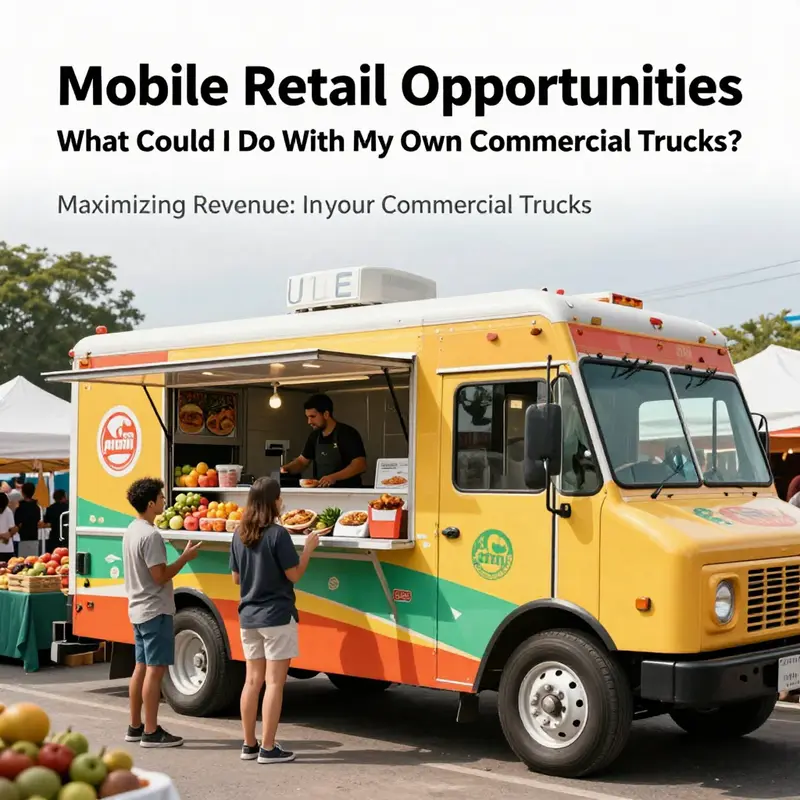
Owning a commercial truck changes the math of entrepreneurship. A vehicle with power, storage, and mobility becomes a business asset that can earn in ways freight alone never could. The core idea is to use what moves to move new kinds of value, turning the truck into a portable storefront, a mobile workshop, a temporary vault, and a rolling billboard.
Beyond traditional freight, mobile retail offers opportunities in last-mile delivery, pop-up experiences, and on-site services. The model emphasizes a curated product or service mix, reliable operations, and a frictionless customer experience.
Regulatory and operational discipline including permits, health and safety practices for perishables, insurance, and routine maintenance are prerequisites that protect your brand and customers.
Start small, pilot one or two ideas, measure performance, and scale what works. The truck becomes a platform that can support multiple revenue streams over time.
Specialized Services: Turning a Truck into a Local Powerhouse of Profit
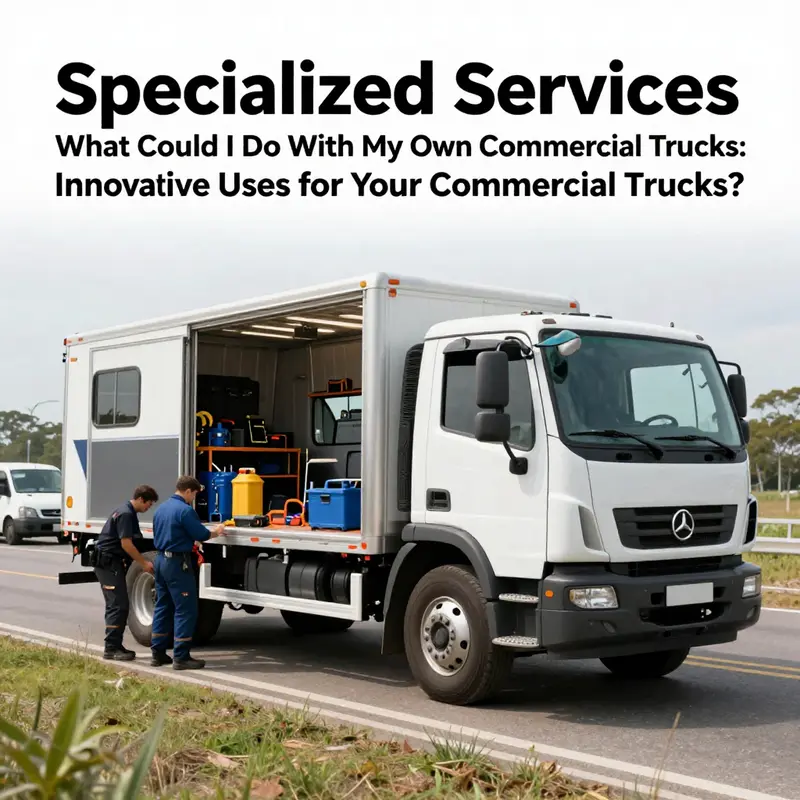
Owning a commercial truck already signals mobility and independence. When you pursue specialized value, the truck becomes more than a tool for transport; it becomes a rolling platform of services. The core advantage remains capacity tied to proximity, but the way you deploy it matters as much as the asset itself. In many communities, small businesses and residents experience gaps in on-site expertise, timely help, or reliable last-mile support. Your truck can fill those gaps in ways that feel urgent, practical, and scalable.
Towing and roadside assistance illustrate a natural first branch of specialization. People break down, lock themselves out, or find themselves stranded far from a workshop, and the quickest relief often comes from a nearby driver with recovery equipment and a fast response habit. A local towing or roadside service is most effective when it emphasizes speed, reliability, and transparent pricing. It is not merely about hauling a car from A to B—though that remains essential—but about the peace of mind you provide in moments when timing matters. Your truck’s reach and versatility enables you to handle scenarios from rural driveways to highway shoulders. Build a reputation for dependable service and fair pricing, and you become the trusted go-to option.
On-site mobile repair expands capability beyond transport. A mobile maintenance unit is a portable toolkit that meets diverse needs on the client’s site. Imagine a small business that relies on equipment to operate and needs quick fixes so a line of work stays on schedule. Your truck, stocked with tools, parts, and diagnostic capability, becomes a mobile service center that reduces downtime. The value is in minimizing disruption—refrigeration failing in a restaurant, air conditioning tripping in a workshop, or a plumbing leak threatening a job—by arriving, diagnosing, and resolving efficiently. The on-site repair narrative is about reliability and speed, not just convenience.
Specialized hauling is another natural extension, focusing on cargo that requires careful handling, timing, or equipment. Refrigerated transport serves perishable goods with strict temperature control. Oversize loads and heavy equipment require planning, securing methods, and permits, but reward with higher margins and recurring customers who value a trusted carrier for complex shipments. By targeting sectors like agriculture, hospitality, construction, or medical supply, you can differentiate from price-only competition.
Last-mile delivery can be a specialized capability rather than a routine task. In urban and suburban areas the demand for efficient delivery continues to rise with e-commerce. A refrigerated truck with smart routing can service local restaurants, grocers, and clinics that require timely, temperature-controlled deliveries. The value is preserving product quality and delivering within agreed windows, building trust through consistent performance. The challenge is balancing speed with handling requirements and traffic realities, but with disciplined operations you can create a reputation for dependable service.
Waste and recycling collection for small businesses or communities is another path. A truck equipped for compacting or rolling containers can serve clients who generate steady volumes of waste or recyclables. The economics can be favorable with recurring routes and the ease of compliance in many locales. Local relationships with property managers and commercial districts can yield a reliable pipeline of work. Listen to neighbors and design service packages around their cycles and seasonal needs.
Strategic execution matters. Start with one core service that aligns with your skills or a clear local need. Develop a repeatable process for delivery—standard checks, transparent pricing, time estimates, and an escalation path. Then add modest upgrades: tools or equipment that enable related services, partnerships that generate repeat business, and a communication plan that keeps customers informed. The goal is enduring relationships, not a one-off job. Differentiation comes from reliability, proximity, and a well-constructed service map.
Finally, treat your truck as a flexible platform that can evolve with customer needs. You may begin with tow-and-respond, then add mobile repair, or a refrigerated last-mile option, or even a dedicated waste-collection route. The incremental path reduces upfront risk while you prove capability and reliability. As you grow, a portfolio of recurring engagements helps stabilize cash flow and expands your market footprint.
For readers exploring this topic within the broader idea of building a personal fleet business, structural signals from the market matter. Look for asset utilization trends, drive times, and demand patterns in your region to guide upgrades and new service lines. Consider how used-truck market indicators shift as demand changes, and whether a particular specialization aligns with local industry clusters. Use these signals to plan a sustainable path from a single truck to a small, resilient services portfolio.
That is the essence: a truck can be a durable, income-generating platform when you focus on reliable delivery, targeted services, and steady relationships. Start small, stay disciplined, and let client needs shape your service map, pricing, and growth pace.
From Freelance Transport to Niche Ventures: Maximizing Profit and Purpose with Your Own Commercial Truck
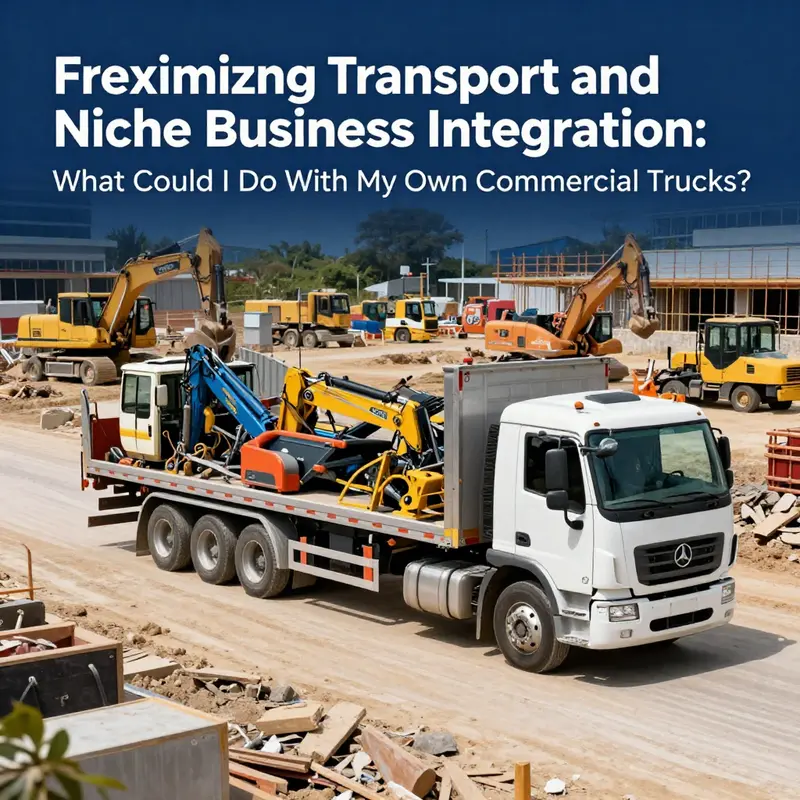
Owning a commercial truck offers more than a single, fixed job. It’s a mobile platform for entrepreneurship, capable of bending with demand, seasonality, and your own evolving interests. When you frame the vehicle as a moving asset rather than a one-way tool for freight, a wide spectrum of avenues opens up. The core idea is simple: identify a practical, recurring need in your community or a niche audience, then tailor a service around that need so your truck becomes a portable solution rather than a static instrument. In practice, this means blending freelance transport work with specialized services and a bold brand narrative that communicates mobility, reliability, and value. The result can be a steady income that scales as you refine routes, services, and relationships with customers and partners.
A mobile retail presence is one of the most tangible manifestations of this mindset. Imagine converting a truck into a rolling storefront that can stock and sell items with freshness and immediacy. A mobile retail van can focus on niche products—organic produce, handmade goods, or local specialties—delivering to markets, events, or high-traffic neighborhoods. The beauty of this model is not just the revenue it generates, but the experiential value you offer customers. People stop by not just for what you sell, but for the novelty of a moving shop and the ease of connecting with a familiar, local source. This approach leverages the truck’s mobility in a way that fixed storefronts often cannot, turning your vehicle into an experiential anchor in the community.
Beyond selling goods, there is a practical, service-oriented path that aligns closely with the needs of other businesses and drivers. Customized logistics services can be built around last-mile delivery for small but high-demand niches. Instead of competing head-to-head with large carriers, you can position yourself as a flexible, reliable partner for specific industries—perhaps small-batch coffee roasters, boutique bakeries, or high-end floral studios. These are customers who require dependable delivery windows, careful handling, and personalized service to protect product quality and customer experience. Your truck becomes the fulcrum of a lean, responsive supply chain, capable of dynamic pricing, flexible scheduling, and intimate knowledge of local routes. This model also invites ongoing collaboration, ceremonies of trust, and a sense of partnership that larger incumbents sometimes struggle to provide.
A strong brand around mobility—not just moving goods, but delivering on-time, on-price, and on-brand—can further differentiate your venture. Brand development through digital storytelling helps customers connect with your mission and the value you bring. A compelling narrative about “mobile services”—such as a city-wide delivery ethos or a discreet, premium mobile concierge for time-sensitive shipments—can attract attention in crowded markets. The branding isn’t only about aesthetics; it translates into how you communicate, price, and package your offerings. In the most successful cases, branding becomes a promise you can fulfill consistently: a seamless experience from order to delivery, with transparent communication and reliable follow-through. It’s the difference between a one-off job and a repeat engagement built on trust.
Technology is the accelerator that makes all these visions scalable. GPS tracking, real-time order management, and customer feedback loops transform a single vehicle into a data-driven operation. Real-time visibility helps customers plan around delivery windows, while analytics illuminate opportunities to optimize routes, reduce empty miles, and improve service levels. The beauty of technology in this context is that it doesn’t require a portfolio of complex, expensive tools all at once. Start with the essentials: a reliable dispatch routine, a simple order log, and a clear method for confirming pickup and delivery times. As you grow, you can layer in more advanced routing software, telematics, and customer-facing dashboards. The payoff isn’t only operational efficiency; it’s stronger customer loyalty, fewer missed deliveries, and the confidence to take on more ambitious contracts.
Integrating niche capabilities with freelance transport also opens doors to collaborations that are not obvious at first glance. A chef who wants to test a mobile catering concept can leverage a truck to transport equipment, perishable ingredients, and ready-to-serve foods while maintaining quality control and food-safety standards. A landscaper or gardener can use the truck to move tools, soil, plants, and mulch between job sites, with the flexibility to respond quickly to urgent work orders. In these scenarios, the truck is an enabler of a broader professional identity—a mobile extension of a skill set rather than a single service. This fusion of transport with a specialized trade creates a blended business where revenue streams cross-pollinate, helping to smooth out seasonal fluctuations and market dips.
One practical implication of this approach is strategic asset management. If you own multiple trucks, you can tailor each vehicle to a different niche while maintaining centralized oversight. A mobile retail van, a dedicated delivery unit for local partners, and a flexible on-demand service vehicle can coexist under one brand umbrella. This bundling can improve bargaining power with suppliers, enable bundled pricing for clients who need multiple services, and reduce downtime by matching trucks to the most profitable or urgent opportunities. It also helps with risk management. Diversifying the use cases for your fleet means a downturn in one segment does not automatically derail your entire operation. Instead, you can reallocate capacity quickly, shift emphasis to different clients, or pilot new offerings with minimal incremental risk.
Of course, moving from theory to practice requires thoughtful planning. Start by mapping out your core competencies and the specific pain points you can alleviate for local customers. Is there a demand for last-mile delivery in a particular neighborhood or industry cluster? Are there events or markets where a mobile retail presence would attract foot traffic? Is there a niche service—mobile repairs, on-site storage, or a portable display for exhibitors—that aligns with your skills and interests? Your answers help you determine a practical blueprint: which truck to repurpose, what equipment to stock, how to price services, and which licenses or insurance requirements apply. The goal is to craft a cohesive, repeatable model rather than a collection of unrelated gigs.
Then there’s the matter of regulatory and insurance considerations. A mobile business that carries goods for sale or provides on-site services often intersects with local health, safety, and business regulations. You’ll need to clarify what permits are required for street vending, what insurance covers for on-site service work, and how to manage compliance when operating in multiple jurisdictions. Draft a simple operating playbook that covers pickups, handoffs, customer communication, and contingency plans for delays or weather. A clear process reduces friction for customers and helps you maintain a professional image across all ventures conducted from the same vehicle. As you formalize your operations, you’ll likely want to invest in modular, easily cleanable interiors for the truck, secure storage for equipment, and flexible shelving or compartments that can be reconfigured for different tasks without extensive downtime.
The pricing strategy for a flexible, multi-use fleet hinges on value, reliability, and relationship-building. In many cases, you’ll find that clients pay a premium for predictability and care—attributes that smaller operators can deliver more consistently than larger, impersonal fleets. Dynamic pricing may be appropriate, especially for on-demand routes with fluctuating demand. However, the long-term advantage often comes from structured partnerships: long-term delivery windows for a set number of days per week, retainer-style arrangements for recurring events, or bundled packages that combine transportation with on-site services. These agreements create revenue visibility and help you plan capacity and maintenance more effectively. Your cost structure will reflect this blend of services. You’ll incur fuel, maintenance, insurance, and labor, of course, but you’ll also want to account for the cost of branding, marketing, and technology investments that support a seamless customer experience.
The literature on mobile and flexible trucking, including recent market reflections, underscores a trend toward asset-light, service-focused models built on a core vehicle. As the market evolves, owners who can credibly promise reliability and responsiveness tend to win not just one-off jobs but ongoing partnerships. This is where the experiential value of a mobile storefront, a reliable last-mile provider, and a well-branded mobile service show up in customer word-of-mouth and repeat business. It’s not merely about delivering goods; it’s about delivering a dependable, recognizable experience where the truck is the visible sign of a trusted capability. This is how a single asset becomes a platform for multiple revenue streams and a springboard for entrepreneurial growth.
If you’re contemplating whether to pursue this direction, consider a staged approach. Begin with a single, focused operation—perhaps a mobile retail pilot during a weekly market or festival season—while maintaining your core freelance transport work. Use this period to gather customer feedback, refine your logistics, and quantify the incremental profit generated by the new model. Gradually fold in additional services as you confirm demand and establish partnerships. Each stage should reinforce your brand promise: reliability, mobility, and value delivered at the right place and time. As you accumulate case studies and testimonials, you’ll gain the confidence to expand, attract more clients, and justify investments in technology to support scale.
In the end, the beauty of leveraging a commercial truck for freelance transport and niche ventures is autonomy. You decide where to go, whom to serve, and what to offer. You can adapt to changing economic conditions, shifting customer preferences, and new markets with a degree of agility that larger, fixed infrastructure cannot match. The vehicle becomes not just a source of income, but a portable business platform that travels with you, expanding your capabilities and widening your professional horizon. For those willing to experiment, plan carefully, and invest in the right blend of brand, technology, and service design, the payoff can be meaningful—both financially and personally.
If you’re considering hardware investments alongside service design, it’s useful to stay informed about market dynamics that influence truck decisions. For instance, keeping an eye on current trends in used truck sales growth can help you time purchases, assess depreciation, and plan upgrades in a way that aligns with cash flow and tax considerations. This context supports smarter capital allocation and reduces the risk of overpaying for aging equipment when you’re deploying trucks in versatile, revenue-generating roles. [current trends in used truck sales growth] provides a useful baseline as you map out a staged rollout and decide when a second vehicle makes strategic sense.
As you build toward a full-fledged, mobile, niche-focused enterprise, you’ll also encounter opportunities to partner with other fleet operators, vendors, and community organizations. These relationships can yield referrals, co-marketing opportunities, and shared logistics that improve efficiency and extend your reach. The long arc is simple: a truck that can carry goods, equipment, and brand presence becomes an instrument of multiple value streams. Your creative problem-solving, your attention to customer experience, and your willingness to experiment determine how far you can push this model. The chapter in your own business story begins with that decision to see the truck as more than a vehicle and ends with a portfolio of repeat clients, loyal partners, and a reputation for dependable mobility.
External resource for broader perspective on mobile business concepts, practical setup, and market strategies can be found here: How to Start a Mobile Business with a Delivery Van (2026 Guide): https://www.entrepreneur.com/article/389147
Final thoughts
The versatility of commercial trucks presents unique opportunities that extend well beyond traditional logistics. By transitioning into on-demand delivery services, mobile retail, specialized services, and niche business integrations, stakeholders have the potential to tap into lucrative markets and increase their operational efficiency. Investing in these diverse business models can lead to sustainable growth and profitability for trucking company owners and fleet managers. The future of trucking lies in adaptability and creativity in leveraging your resources.