Commercial truck tires are pivotal for the logistics and transportation sector, supporting heavy-duty vehicles tasked with moving freight across vast distances. Understanding these specialized tires’ characteristics, types, maintenance requirements, and their profound impact on fleet efficiency is crucial for trucking company owners, fleet managers, and procurement teams in construction and mining. This comprehensive exploration will clarify how strategic tire management not only enhances safety and durability but also optimizes costs and operational efficiency.
Tires That Carry the Load: Understanding Commercial Truck Tires and Their Critical Role in Freight Operations
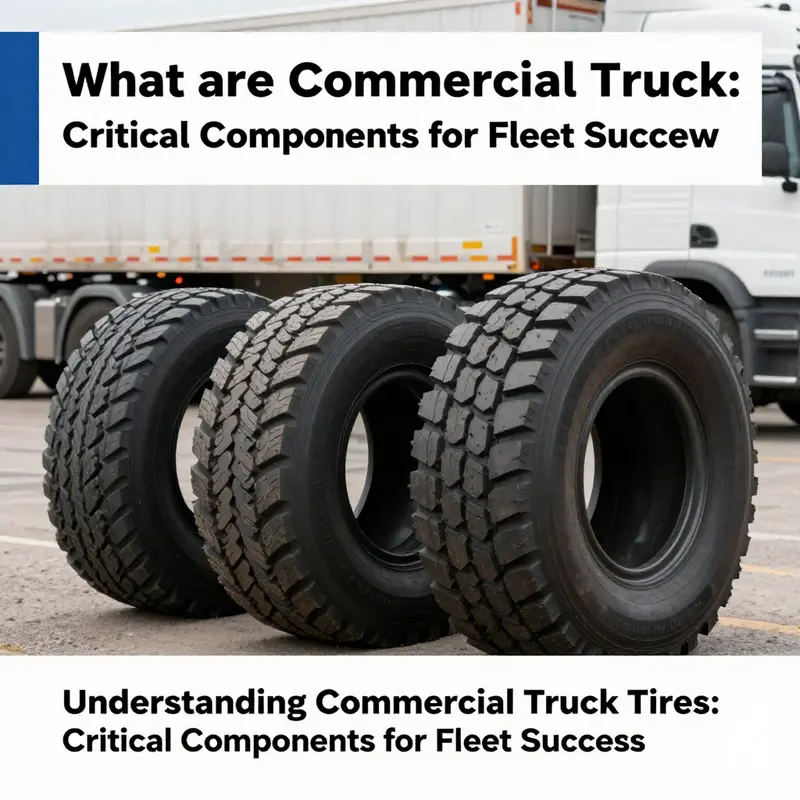
Tires serve as the quiet workhorses of the fleet, absorbing road punishment, distributing weight, and connecting a heavy truck to the pavement with a confident grip. When people ask what commercial truck tires are, the answer is simple in outline and complex in practice. They are specially engineered rubber compounds mounted on wheels to shoulder the brutal realities of daily freight movement. These tires are not ordinary car tires resized for a larger vehicle; they are purpose-built components designed to endure extreme loads, long hours on the road, varied climates, and the constant heat generated by heavy cargo and high speeds. In a freight operation, the tires become more than a line item on a maintenance checklist; they are a primary driver of safety, reliability, and cost efficiency.
The definition begins with scale. Commercial truck tires are crafted to withstand long-haul and heavy-duty operations that routinely push machinery and operators toward limits most passenger vehicles never encounter. On a semi-truck, for example, the tires must support multiple thousands of pounds of cargo, maintain traction across wet or icy surfaces, resist heat buildup from sustained highway speeds, and preserve structural integrity under flexible axle configurations. This is why the data on construction matters more than glossy marketing. The materials—rubber compounds, fabric plies, steel cords, and internal belts—are selected for endurance. The outer tread is engineered to provide grip while shedding wear and heat. The sidewalls are reinforced so they resist bulges, cuts, and impact from road debris at highway velocities. The result is not just a tire but a robust system that forms the foundation of a safe, efficient, and predictable fleet operation.
The way these tires perform under stress is intimately linked to the environments fleets encounter. Long-haul routes with varied climates test tires with alternating cycles of heat and cold, acidic or alkaline de-icing agents, and patchwork road surfaces. Regional and urban fleets face a different set of stresses: frequent stops and starts, parking tightness, curb impacts, and variable weights. In every case, the tire’s design aims to maximize the distance between maintenance events while preserving grip, stability, and even wear. A tire that can maintain traction on a rain-slick highway, shed heat during a long climb, and resist the micro-damage caused by road debris will outperform a tire that prioritizes softness or low rolling resistance at the expense of durability. The emphasis on durability does not imply a lack of efficiency; rather, it reflects the reality that freight networks depend on tires to deliver steadiness, not just speed.
The cohesion of design and operation becomes clear when considering fleet performance as a whole. If the engine is the beating heart of the truck and the telematics system its brain, then the tires are the legs that literally carry the mission forward. A tire that fails to grip properly can endanger the crew, disrupt schedules, and drive up costs through unscheduled downtime. Conversely, tires that wear evenly and maintain proper inflation contribute to safer handling, better braking, and improved fuel economy. The connection between tire condition and fuel efficiency is not abstract. Underinflated tires increase rolling resistance, which forces the engine to work harder and burn more fuel. Worn tread reduces traction, raising the likelihood of slip and speed variability, which again translates into wasted energy. In a fleet context, even small gains in rolling efficiency compound into meaningful savings over months and years. These dynamics illustrate why tire service programs are not optional extras but strategic investments that support reliability, safety, and the bottom line.
The materials and construction of commercial truck tires also reflect an ongoing adaptation to the realities of freight work. Durable compounds withstand heat buildup that accompanies sustained highway operation. The internal architecture—multiple plies and belts—provides resilience against punctures and sidewall failures that can occur in harsh environments or on imperfect roads. The tread patterns are not arbitrary; they are engineered to optimize grip across a spectrum of surfaces: dry asphalt, wet pavement, slush, and light snow. Some tread designs emphasize wear resistance for long miles, while others prioritize traction in variable weather. The availability of different tire families allows fleets to tailor choices to their hauling profile—heavy loads on smooth interstates, mixed-route operations through urban corridors, or regional runs with frequent acceleration and braking demands. The result is a spectrum of tires that share a common purpose: to preserve uptime, safety, and performance while withstanding the rigors of continuous service.
Because tires sit at the interface between the truck and the road, their proper care is non-negotiable. Maintenance programs that emphasize inspection, correct inflation, rotation, and alignment are the most cost-effective way to extend tire life and improve total vehicle efficiency. Inspections identify signs of abnormal wear, cuts, or bulges before a failure occurs. Proper inflation is perhaps the single most powerful lever fleets have to control wear, heat, and fuel consumption. Underinflated tires heat up more quickly, degrade the belt structure, and wear the tread unevenly. Overinflation, while reducing rolling resistance, makes the tire more susceptible to damage from road hazards and can lead to harsh ride quality and unpredictable handling. Regular rotation ensures that tread wear remains even across all tires, preserving grip and extending usable life. Alignment adjustments, particularly on vehicles with complex steering geometries or a mix of steer and trailer axles, help prevent feathered wear and ensure smooth tracking. Each of these steps reduces downtime, minimizes the risk of failures, and supports a consistent, safe driving experience for operators.
From the procurement perspective, tire selection becomes a strategic decision rather than a routine purchase. Operational reliability is the prime criterion: tires must perform consistently under the demands of a fleet’s routes, weight profiles, and climate exposure. Technical capability matters, too. Fleets often operate in different hauling scenarios—hazardous materials, refrigerated loads, or high-speed heavy freight—that may require specialized tires with higher heat resistance or enhanced cut resistance. Transactional transparency cannot be ignored; fleets benefit from clear, timely communication with suppliers about tire availability, delivery timelines, and warranty terms. And customization flexibility matters, because no two fleets are identical. The ability to tailor tire specifications to specific routes, regional climates, and seasonal needs can prevent unnecessary swaps and maintain a predictable maintenance calendar. In this sense, the tire becomes a modular element of a broader fleet strategy, aligned with procurement goals, service levels, and performance targets.
The maintenance program itself should feel less like a checklist and more like a disciplined practice. A well-structured tire program starts with a plan for regular inspections, ideally integrated into the broader maintenance schedule. It will specify inspection intervals, tread depth thresholds, and criteria for when a tire must be removed from service. It will designate inflation targets based on load, speed, and ambient temperature, and it will provide guidance on the correct inflation methodology, including the preferred equipment and time of day for checks. A rotation schedule is critical, particularly for multi-axle configurations where wear tends to be uneven across the drive, trailer, and steering tires. Alignments should be performed when wear patterns indicate misalignment or after significant impacts, such as hitting a pothole or curb. Tire repairs and retread opportunities deserve a clear policy as well, balancing safety expectations with cost considerations. Fleet managers who embed tire care into everyday operations observe lower downtime, fewer roadside emergencies, and steadier maintenance budgets. The importance of this discipline cannot be overstated in a system where every component is connected to the next—tires influence braking responses, steering accuracy, and even the available payload capacity.
In practical terms, fleets weigh the tradeoffs between different tire families and patterns according to their routes. For example, a tire with a deeper tread may yield better wear resistance and predictable traction on long hauls, but it might carry a higher upfront price and some tradeoffs in rolling resistance. A tire designed for wet traction could improve safety in rain-prone markets while delivering consistent wear under a heavy load. It is not unusual for a single fleet to maintain multiple tire specifications, matched to the demands of each line of business. The best choices come from a procurement process that captures real-world performance data and uses it to refine specifications over time. In the midst of this, fleets should not overlook the often-underappreciated service ecosystem that surrounds tires. Regular tire rotations, timely replacements, retreading programs, and the availability of replacement tires at regional hubs all contribute to a resilient tire program that minimizes downtime and keeps freight moving.
For readers seeking a broader context on how tire choice fits into overall fleet strategy, the broader industry conversation often highlights how tires interact with other major systems. The engine remains the heart, the telematics the brain, but the tires connect the two to the road. A well-tuned tire program translates into fewer unexpected stops, smoother driver experiences, and lower total cost of ownership. It also means better predictability in delivery times, which is invaluable in a market where reliability is a competitive differentiator. In practice, this means thinking about tires not just as wear items but as a component that shapes the cadence of daily operations. It requires coordination across procurement, maintenance, and operations, ensuring that tire life, deployment, and replacement cycles align with driver schedules, route planning, and service level commitments. When done well, tire management becomes a quiet engine of improvement across the entire fleet, one that strengthens safety margins, reduces risk, and supports the continuous movement of goods.
If a reader wants a concise, external reference to deepen technical understanding, the external guide from an established marketplace offers detailed specifications, testing insights, and best-practice recommendations for commercial truck tires: https://www.ebay.com/gds/A-Guide-to-Commercial-Truck-Tires-/10000000013725694.html. This resource supplements the practical guidance discussed here by presenting a structured overview of tire classifications, construction features, and performance indicators that fleets commonly monitor during procurement and maintenance processes. While it does not replace hands-on experience and supplier consultations, it provides a solid baseline for fleets building a durable, transparent, and adaptable tire program.
For readers who want to connect broader fleet perspectives with practical guidance, the McGrath Trucks blog offers ongoing insights into how maintenance, procurement, and operations intersect in the trucking world. Exploring that resource can help translate tire considerations into a broader plan for sustaining a reliable, efficient fleet. McGrath Trucks blog (https://mcgrathtrucks.com/blog/) provides a regularly updated vantage point on the realities of moving freight, from market trends to maintenance strategies, and can be a useful companion as fleets refine their tire programs over time.
The central takeaway is straightforward: commercial truck tires are more than a contact patch with the road. They are a carefully engineered, heavily loaded, and highly monitored component whose condition and performance ripple outward to every corner of fleet operations. Understanding their role—definition, construction, and lifecycle management—helps carriers design maintenance programs that keep drivers safe, schedules on track, and costs under control. In a landscape where uptime is the competitive edge, tires stand as a practical, measurable anchor of reliability.
External resources and internal perspectives together shape a holistic view of how these critical components fit into the broader story of freight movement. When fleets invest thoughtfully in tire selection, inspection, and service, they reaffirm a simple but powerful truth: the road rewards discipline. Tires carry the load, and in return, they deserve the attention and respect of a disciplined maintenance culture. This is not just about avoiding failure; it is about creating a dependable platform for every mile of the journey, every load, and every customer promise that accompanies the long road ahead.
Rolling Forward: The Anatomy, Choices, and Fleet Impact of Commercial Truck Tires
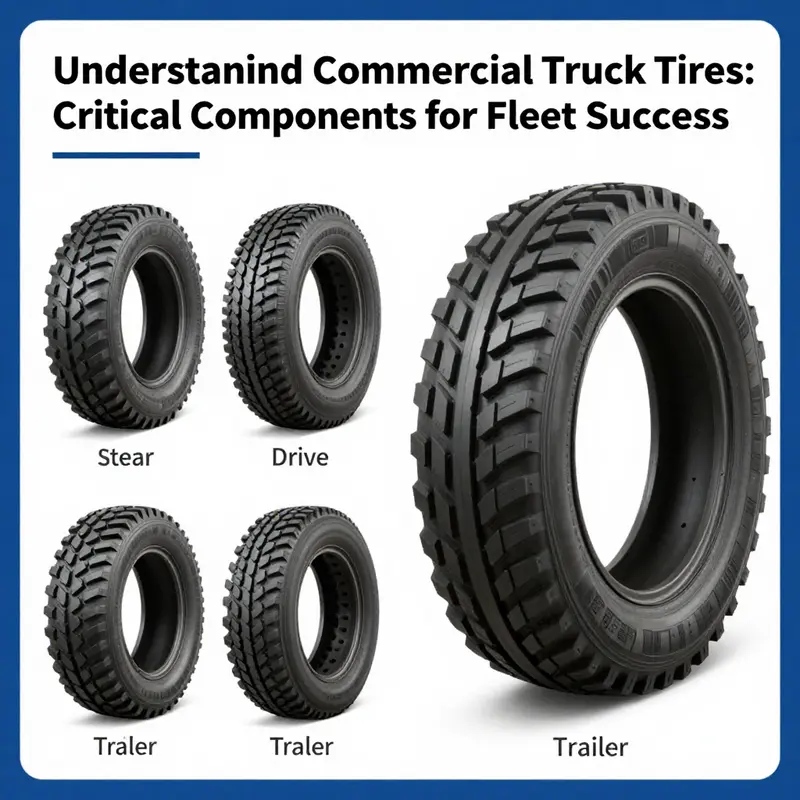
Tires are more than rubber and tread; they are the quiet propulsion system that translates weight, speed, and weather into performance on the road. In the world of commercial trucking, tires act as the fleet’s most immediate and visible link to safety, fuel efficiency, and uptime. They carry exceptional loads over long distances, absorb the irregularities of urban streets, and must perform reliably across seasons and varied climates. When fleets think about tire care, they are not simply choosing a grip pattern for a season—they are shaping a chain of outcomes that influence driver safety, maintenance cycles, and total cost of ownership. In this sense, tires function as the legs of the vehicle, supporting every mile driven with resilience and predictability. The best tire programs start with a clear understanding of what these components are, how they differ, and why the right choice matters for the bottom line as much as for the balance sheet of safety and service reliability.
Commercial truck tires come in a few fundamental families, each engineered for particular service profiles. The most common modern choice is the radial tire, a construction that balances fuel efficiency, tread life, heat resistance, and handling as weights climb and miles accumulate. Radial tires use body plies that run from bead to bead at right angles to the direction of travel, a design that reduces internal heat buildup and improves contact with the road over vast distances. For long-haul operations, radial tires are typically the default because they deliver lower rolling resistance and more even wear. Yet there are circumstances where bias-ply tires persist. These tires—built with diagonally oriented plies and robust sidewalls—still appear in some heavy-duty or off-road environments where sidewall deformation resistance is valuable. They tend to have higher rolling resistance and shorter tread life in typical highway use, which is why they’re chosen selectively for specific vocational tasks or harsh terrains.
Retread tires, the recapped tires that reapply a fresh tread to a worn casing, occupy an important niche in fleets aiming to stretch dollars without sacrificing performance. A properly managed retread program can yield meaningful savings, especially when the original casing has demonstrated durability, but it requires a disciplined approach to inspection, repair, and tread matching. Fleets that deploy retread tires typically emphasize meticulous maintenance to ensure that the casing remains sound, that the new tread is evenly applied, and that rotation and pressure management are consistent across the fleet. Retreads are not a one-size-fits-all solution; their suitability depends on the vehicle type, duty cycle, and the terrain most commonly encountered by the fleet.
Specialty tires expand the conversation beyond the highway. Severe-service tires are designed to handle snow and ice, heavy mud, and rugged environments encountered by vocational fleets operating in mining, construction, or municipal maintenance. These tires often feature aggressive tread patterns, enhanced siping for wet and icy traction, and compounds optimized for grip in challenging conditions. Low-rolling-resistance variants exist as a distinct family aimed at maximizing fuel economy without compromising safety or durability. While these tire types are not interchangeable for every vehicle or route, they illustrate how market demand has driven tire developers to tailor compounds, tread designs, and sidewall constructions to the realities of specific duties. The key for fleets is to match the tire’s profile to the daily operation—loads, speeds, weather, and road surfaces—so that safety and performance are reinforced rather than compromised by a mismatch.
Beyond the broad families, the language of tires is also driven by specifications that tell you what a tire is capable of handling. Tire sizing is a standardized code that encodes size, load capacity, and speed rating, translating mechanical capability into familiar numbers and letters. Take, for example, the 11R22.5 and 12R22.5 configurations, which are widely used on tractor-trailers and other heavy-duty platforms. Here, the “R” signals radial construction, the numbers reveal the tire’s approximate section width and rim diameter, and the combination ensures that the tire fits correctly with the vehicle’s suspension and drivetrain. Then there are larger, high-capacity choices like 295/80R22.5 or 315/80R22.5. The first numerical pair conveys width in millimeters, the aspect ratio indicates the sidewall height as a percentage of width, and the “R22.5” again confirms radial construction and rim size. These expressions may sound like a foreign language to new entrants, but they are essential to achieving proper fitment, maintaining load ratings, and ensuring compatibility with the vehicle’s geometry and operating envelope.
Smaller fleets and light-weight commercial applications reinforce the same logic with different numbers, such as 145/70R13 or 155/65R13—indicating narrower tires on smaller or urban delivery platforms. Although these sizes may appear modest, they are critical when choosing tires for vans and light trucks that routinely encounter stop-and-go traffic, curb hazards, and frequent speed changes in city environments. And while a single fleet will encounter a spectrum of tire sizes, the principle holds: correct sizing aligns with load demands, vehicle clearance, and the interplay with wheels, housings, and suspensions. In practice, this means that tire selection is never purely about tread pattern; it is about a holistic fit that respects the vehicle’s design, the mission profile, and the economic calculus of tread life, fuel usage, and downtime.
The talk of load and speed ratings is not just academic. Each tire carries a stamped load index and speed rating that communicates the maximum safe payload and the maximum safe operating speed under load. In many fleets, the subtlety of these numbers becomes a matter of operational discipline. A tire with an unexpectedly low load index or an insufficient speed rating for a route can become a bottleneck or a risk factor once cornering, braking, and acceleration stresses accumulate. The care with which fleets specify tires—matching size, load, and rating to the actual duty cycle—translates directly into safer miles and better predictability on delivery windows. This is especially true when coupled with real-time data from telematics and tire-pressure monitoring systems, which the most efficient operations weave into daily routines rather than treating as optional luxuries.
Inevitably, discussions about tires drift toward maintenance. Inflation is a recurring theme because underinflation elevates rolling resistance, increases heat buildup, and accelerates tread and sidewall wear. Overinflation, on the other hand, can reduce contact with the road, impair traction, and lead to a harsher ride plus heightened risk of tire damage from road hazards. The sweet spot is a targeted, traceable inflation regime, guided by vehicle manufacturers’ guidelines, tire load, and ambient conditions. Rotate tires to promote even wear across axles and positions, preserve traction, and extend the effective life of the tread. Alignments should be checked to guard against uneven wear caused by misaligned wheels or suspension components. Regular inspections—driver-embedded checks, pre-trip routines, and scheduled shop visits—become the backbone of a healthy tire program. In a well-run operation, a tire care routine is less about reacting to flats and more about preventing them through proactive service, careful inspection, and timely adjustments.
The economic calculus of tires is not simply the price of a given tire or the frequency of replacements. It extends to the total cost of ownership, which encompasses fuel consumption, maintenance labor, downtime, and the reliability of deliveries. High-performance tires that optimize rolling resistance and tread life can yield measurable fuel savings over the life of a typical vehicle and fuel cycle. Conversely, tires chosen chiefly on upfront price without regard to duty fit and mileage expectations often produce higher long-run costs through earlier replacements or increased maintenance demands. The conversation about tires, then, merges engineering, operations, and finance. It requires clear criteria for evaluation—load, speed, expected miles, road conditions, climate, and the potential for retreading—and a disciplined approach to procurement that aligns with fleet-wide goals.
A well-structured tire service program helps fleets translate these concepts into measurable outcomes. Regular inspections catch early wear, embedded objects, or sidewall damage before they produce tire failure. Consistent inflation checks and a documented rotation schedule reduce uneven wear and extend tread life. Properly timed alignments prevent steering drift and abnormal tire wear that would otherwise sap fuel efficiency and driver confidence. Training drivers to identify abnormal wear patterns, to monitor air pressure, and to report punctures promptly creates a feedback loop that keeps tires in their optimal operating window. When maintenance becomes a shared responsibility—between drivers, shop teams, and suppliers—tire life and fleet uptime improve in a virtuous loop. In practice, the most successful fleets treat tires as a critical asset with a lifecycle that benefits from data, discipline, and a culture of regular care.
As fleets consider sourcing strategies, the emphasis often turns to supplier reliability and service delivery. A tire program does not live in a vacuum; it depends on the ability of tire partners to deliver the right sizes, at the right times, with the right mounting and balancing support across diverse routes and weather. The reliability of on-time deliveries, the quality of retread options, and the responsiveness of service teams shape the maintenance window and the predictability of maintenance costs. In this context, what matters most is not a single purchase but a continuous, data-driven relationship that helps fleets plan maintenance around miles, loads, and routes. It is the difference between a tire program that merely keeps trucks moving and one that optimizes fleet uptime, safety, and cost efficiency day after day. For readers seeking practical guidance on turning these principles into everyday practice, the company blog offers actionable insights and case studies that translate theory into field-tested steps. the company blog
The relationship between tire choice and fleet performance also depends on how conditions are anticipated and managed. Sequences of weather, road surfaces, and duty cycles create a mosaic of scenarios in which tires must perform. In urban delivery, tires must endure frequent stopping and starting, tight turning radii, and curb hazards. In intercity hauling, long stretches of highway place a premium on tread durability, heat management, and fuel economy. In severe-service environments, traction and resistance to damage take center stage, even if that means sacrificing some rolling efficiency. The strategic question for managers is not simply which tire to buy, but how to design a tire program that matches the operation’s rhythm. This includes selecting tires that complement the vehicle’s suspension and axle configuration, ensuring the wheel wells offer enough clearance for mounting and inflation, and accommodating seasonal changes with appropriate tire choices and pressure targets.
With all these considerations in mind, the job of tire management becomes a continuous optimization exercise. Fleet leaders who prioritize tire health typically implement scheduling that aligns maintenance windows with vehicle availability, minimize disruption to delivery routes, and leverage data to forecast when tread depth will reach the point of concern. They track metrics that matter for safety and productivity—tread wear rates per axle, puncture incidence by geography, inflation variance across routes, and downtime attributable to tire issues. The goal is to convert tire performance from a passive risk into a measurable lever of reliability and cost control. The chapters that follow will build on this foundation, connecting tire specifications to real-world outcomes and offering practical approaches to evaluate tire options in the context of fleet goals. In the meantime, readers are encouraged to explore the resources cited here and consider how a structured tire program could transform their own operations. For deeper discussion on ongoing fleet management strategies, the company blog can serve as a resource, offering guidance rooted in industry experience and practical application. the company blog
Ultimately, the tire is the vehicle’s most intimate interface with the road, and as such it deserves as much attention as any other critical system on the truck. It is not merely a component to be replaced; it is a dynamic asset whose condition, fit, and maintenance cadence influence safety, efficiency, and profitability. By embracing the spectrum of tire types—from radial and bias-ply to retreads and specialty variants—fleets can tailor their approach to the realities of their routes, climate, and load profiles. The specification language—size, width, aspect ratio, radial construction, load index, and speed rating—becomes a practical vocabulary that helps teams reason about compatibility and performance. Equally important is cultivating disciplined maintenance habits: regular pressure checks, rotation, alignment, inspections, and timely interventions when wear patterns or curb impacts appear. These practices, when embedded in daily routines and reinforced by data, translate into longer tire life, fewer unplanned downtime events, and safer miles on every leg of the journey.
The careful orchestration of tire selection, maintenance, and procurement ultimately supports the larger aim of fleet reliability and efficiency. Tires stop being a curiosity and become a pivotal driver of safety, fuel economy, and service levels. As the industry evolves, the push toward more sophisticated retread programs, low-rolling-resistance options, and severe-service specialties will continue to shape how fleets approach the road ahead. The chapter thus closes on a reminder: the tires you choose and how you care for them are a direct reflection of your operation’s discipline, its foresight, and its commitment to serving customers with consistency and responsibility. For readers seeking to deepen their understanding of tire sizing, safety standards, and regulatory guidance, authoritative information is available from public resources that detail the standards governing commercial vehicle tires. For a detailed overview of tire sizing and safety standards, see NHTSA’s tire information. NHTSA tire information
Tire Care That Keeps Fleets Rolling: Maintenance Strategies and Lifespan Insights for Commercial Truck Tires
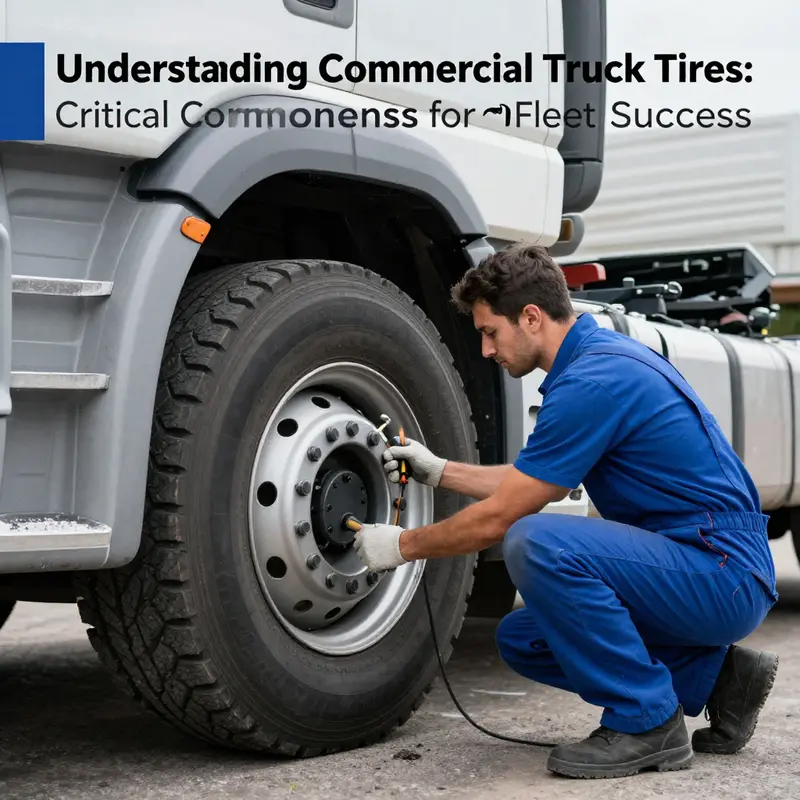
Tire Care That Keeps Fleets Rolling
Commercial truck tires are the working foundation of any freight operation. They carry heavy loads, absorb road shocks, and influence fuel consumption. Their condition shapes safety, uptime, and the total cost of ownership. Maintaining them is not an optional chore. It is a strategic discipline that determines whether a vehicle completes its run on schedule or becomes an unexpected expense.
Every decision about tires starts with the basic fact that they wear. Wear is inevitable, but how fast tires wear depends on dozens of controlled variables. Load weight, inflation pressure, alignment, road surface, driving style, and maintenance cadence all add up. A fleet that understands these drivers can stretch tire life, cut replacement costs, and reduce service interruptions.
The single most impactful habit is regular, disciplined inspection. Inspections reveal tread depth, visible damage, and early signs of uneven wear. They catch slow leaks before they become punctures. They identify sidewall cuts and embedded debris. Inspections should follow a consistent checklist and be performed both in the yard and at scheduled stops. A quick visual check before each run complements a more thorough walkaround during service intervals.
Inflation pressure is the lever with the highest return on effort. Underinflation increases the tire’s flexing, warms the casing, and accelerates wear across the shoulders. Overinflation concentrates pressure toward the center, thinning tread and reducing grip. Both extremes raise the risk of failure. Modern fleets often find that maintaining the manufacturer’s recommended pressure, adjusted for load and ambient temperature, reduces replacement frequency and lowers fuel burn. In practical terms, correct pressure can extend useful tire life by around ten percent, a significant cost saving across a fleet.
Alignment and suspension geometry determine whether tires wear evenly. Misaligned steer axles produce feathered or scalloped tread, while drive axles out of square create one-sided wear. These patterns signal mechanical issues that will shorten tire life. Routine alignment checks should be part of scheduled service, especially after suspension repairs. Alignment is also tightly linked to fuel economy; when wheels track properly, rolling resistance drops.
Rotation is another simple, high-impact habit. Rotating tires moves higher-wear positions to lower-stress locations. For mixed-axle fleets or vehicles that carry heavy rear loads, regular rotation equalizes wear across steer, drive, and trailer positions. This practice not only extends overall service life but also preserves the value of casings that might be retreaded.
Prompt repair of minor damage prevents major problems. Small punctures in the tread area are often repairable if found early. Repairs must follow industry-accepted techniques and be limited to safe zones. Sidewall damage is harder to repair and typically mandates replacement. A repair philosophy that favors timely, proper fixes avoids emergency replacements and keeps vehicles on the road.
Driver behavior directly affects tire longevity. Harsh braking, abrupt acceleration, and aggressive cornering all increase wear. Educating drivers on smooth driving and consistent speed control reduces heat buildup in tires. Route planning that limits exposure to rough surfaces and heavy crosswinds also helps. Incentivizing good driving through measurable KPIs encourages consistent practices across the fleet.
Tire selection plays a role too. All-position tires, for instance, are engineered to perform on steer, drive, and trailer axles. They offer versatile tread patterns that promote even wear and better heat dissipation. That versatility makes them a cost-effective choice for mixed-use fleets. However, they are not ideal for every terrain; specialized off-road or severe-service tires will outperform all-position types in rugged conditions. Choosing the right tire for the application reduces unnecessary wear and improves safety.
Beyond day-to-day care, fleets increasingly rely on data-driven monitoring to manage tires. Real-time tire pressure monitoring systems (TPMS) alert operators to underinflation and sudden pressure loss. Telemetry can log temperature, pressure, and slow leaks. These tools reduce manual checks and catch issues sooner. Integrating tire data with fleet management platforms helps prioritize repairs and schedule rotations when downtime already exists for other services.
A proactive maintenance strategy blends routine hands-on checks with remote monitoring. It defines regular intervals for inspections, pressure checks, rotations, and alignments. It sets rules for repair versus replace. It tracks metrics like cost per mile, tread depth at replacement, casing retention, and time in service. By measuring these indicators, fleet managers can compare tire choices and adjust maintenance frequency to optimize life-cycle cost.
Retreading extends the usable life of high-quality casings. When the casing remains structurally sound, retreading offers substantial savings. Proper care throughout the tire’s first life increases the likelihood of a successful retread. That means maintaining pressure, preventing tread cuts, and controlling heat through correct inflation and speed. Retread programs also depend on consistent inspection protocols to identify casings suitable for renewed service.
Environmental and seasonal variables matter. Cold weather lowers tire pressure and can reveal slow leaks. Heat increases pressure and accelerates wear. Wet conditions demand more tread depth for safe traction. In regions with severe winter conditions, dedicated winter compounds or deeper tread patterns may be necessary. Seasonal adjustments and awareness reduce the risk of weather-related failures.
Operational planning affects how long tires last. Route decisions that reduce empty miles reduce wear. Consistent loading practices avoid sudden overloading, which stresses tires. Where practical, distributing heavy loads across more axles lowers per-tire stress and slows wear. These operational choices tie directly into procurement and resale strategies, making tires a factor in vehicle lifecycle planning. For fleets buying and selling equipment, understanding how tire condition affects vehicle value is critical; see guidance on how to buy and sell trucks and campers efficiently.
Supplier relationships and service networks are part of the maintenance picture. Reliable suppliers deliver tires on time and supply accurate spec sheets. A responsive service network reduces downtime through prompt repairs and scheduled rotations. Evaluating supplier performance by delivery consistency and service availability helps ensure tires are managed across the entire fleet lifecycle.
Measuring success requires clear KPIs. Typical metrics include miles per 32nd of tread, cost per mile, casing retention percentage, and number of roadside failures. Monitoring these metrics lets managers spot trends early. A drop in miles per 32nd suggests a change in route stress or a maintenance lapse. An uptick in roadside failures indicates inspection gaps or tire selection problems.
Cost analysis must go beyond upfront price. Total cost of ownership includes purchase, installation, repair, retreading, and fuel impact due to rolling resistance. Lower-cost tires that wear faster can increase total expense. Conversely, higher-quality tires with better heat resistance and stable carcass structures may lower long-term costs. Comparing options using life-cycle models reveals the most economical choices for each application.
Training and process discipline make maintenance plans work. Technicians must learn to read wear patterns and validate pressure settings for actual load and temperature conditions. Drivers must perform consistent pre-trip inspections and report issues promptly. Service schedules require enforcement and regular audits. A disciplined program turns maintenance plans into measurable improvements.
Finally, integrate tire care with broader fleet management. Tires influence braking distances, handling, and fuel use. Align maintenance calendars for tires, brakes, and suspensions to minimize vehicle downtime. Use data from multiple systems to forecast replacements and schedule retreads when service bays are available. A coordinated approach delivers the strongest returns in uptime and cost savings.
For fleets, the message is simple: maintenance extends life and reduces total cost. A program that blends regular inspections, correct inflation, alignment, rotation, timely repairs, driver training, and data monitoring maximizes tire life. It reduces unexpected downtime and improves safety. It also supports operational goals like fuel efficiency and predictable maintenance budgets.
For a deeper set of best practices and industry guidance on maintaining truck tires, consult this detailed resource on tire maintenance best practices: https://www.truckequipment.com/truck-tire-maintenance-best-practices
Under the Load: The Critical Role of Commercial Truck Tires in Fleet Performance, Safety, and Cost
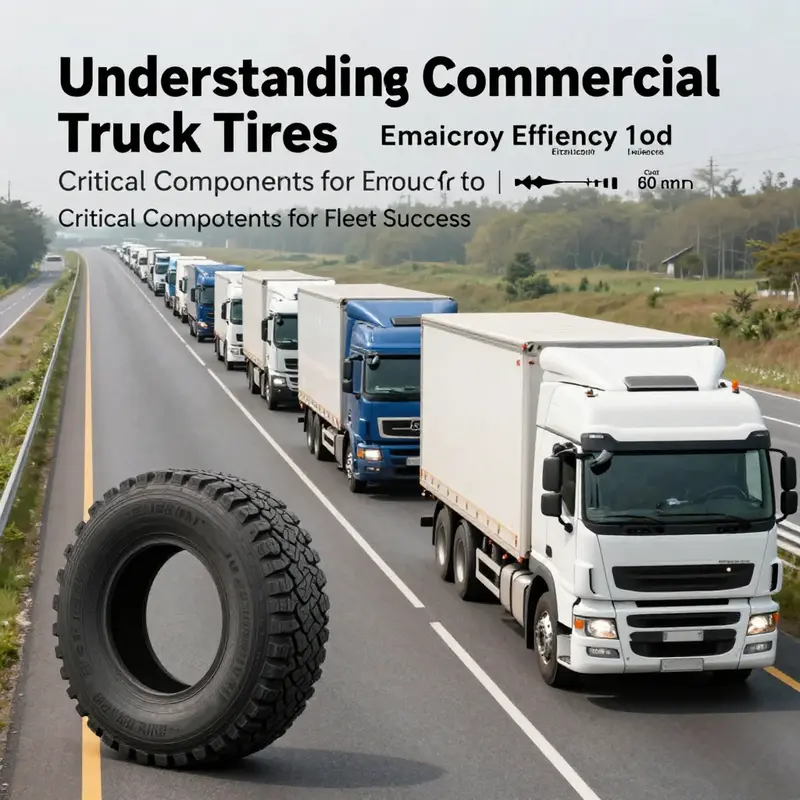
Tires are not merely accessories on a commercial freight vehicle; they are the primary interface between a heavy machine and the road, the quiet force that keeps a fleet moving through rain, heat, cold, and fatigue. In the world of freight and logistics, where every mile carries a price and every delay ripples through supply chains, the truth about tires is surprisingly simple and profoundly consequential: the quality, construction, and ongoing care of commercial truck tires determine how efficiently a fleet travels, how safely it operates, and how predictable its costs will be over the long haul. Like the legs of a marathon runner, tires bear the weight of the load, absorb the irregularities of pavement, and push energy forward with every rotation. A well designed tire set can convert fuel, road damping, traction, and wear resistance into a single, measurable advantage for the operation. The converse is also true: neglect or misjudgment around tires creates a cascade of avoidable expenses, from unexpected downtime to safety incidents and regulatory misalignment. Seeing tires as a strategic asset rather than a routine maintenance line item reframes the approach to fleet performance, reliability, and cost control.
Fuel efficiency stands out as a central lever linked to tire choice and maintenance. Modern tires engineered for low rolling resistance reduce the energy required to roll the vehicle, which translates into tangible fuel savings over the hundreds of thousands of miles that commercial fleets accumulate in a year. The relationship between tire design and fuel use is not merely a matter of a few percentage points; it compounds across long-haul routes and dense urban deliveries alike. When a fleet adopts tires with improved tread compounds, optimized sidewall geometry, and carefully engineered footprint distribution, every gallon saved on the road compounds into meaningful reductions in operating expenses. This effect is amplified by disciplined maintenance practices that keep tires at the manufacturer’s intended operating condition. Proper inflation, for instance, is not a once in a while check but a scheduled discipline, because underinflation increases rolling resistance, causes uneven wear, and raises the risk of heat buildup that can threaten the internal structure of a tire. That heat is not a mere byproduct; it is a driver of premature wear and, in worst cases, failures that halt a route and siphon maintenance dollars from more productive uses.
Beyond the economics of fuel, tires are the most visible safety system on a truck. The tread pattern, tire compounds, and internal reinforcements are all designed to deliver predictable behavior under load, in wet or icy conditions, and at the high speeds and braking demands common to freight corridors. When tires deliver consistent traction and stable handling, drivers can anticipate steering response and braking performance, which reduces the chance of skidding, hydroplaning, and blowouts. Substandard or mismatched tires, by contrast, can magnify a range of hazards. Worn tread reduces grip and increases stopping distances; mismatched tires on the same axle can create asymmetric response that destabilizes steering, while aging or damaged sidewalls elevate the risk of sudden failure. A fleet that treats tire maintenance as a core safety practice tends to experience fewer unscheduled repairs, less downtime, and a lower overall risk profile. In practical terms, that translates into higher asset utilization and greater service reliability for customers who rely on on-time delivery and consistent service windows.
The procurement and supplier landscape for commercial truck tires adds another layer of complexity to fleet performance. For fleet managers faced with scale, selecting a dependable supplier is not a casual decision; it is a critical risk management exercise. The global supply chain for tires is concentrated in regions with dense industrial clusters that bring together rubber processing, cord and belt materials, tread compounds, and molding technologies into tightly integrated ecosystems. A significant portion of the world’s tire production has roots in large exporting regions, which means that procurement decisions can have downstream effects on lead times, price stability, and the ability to respond to market disruptions. The idea that a tire is simply a consumable is replaced by a more nuanced view: it is a component whose origin, quality certification, production consistency, and delivery reliability all shape fleet uptime and budget predictability. In discussions with fleet leaders, the strongest suppliers are those who can demonstrate steady performance across batches, maintain strict compliance with safety and quality standards, and keep delivery promises even as demand fluctuates. These attributes directly influence the total cost of ownership by reducing waste, rework, and the costs associated with emergency tire replacements.
A sharper focus on supplier evaluation yields tangible benefits. Product quality certifications—covering standards such as safety, environmental, and regulatory compliance—help ensure that tires meet established benchmarks for performance and reliability. Consistency of performance across production runs is important because fleets that rotate tires in a cycle cannot afford the mismatch of a batch that wears differently or promotes uneven wear. Regulatory compliance extends beyond the country of origin; it covers global safety norms, testing requirements, and import/export controls. Delivery reliability, measured by on-time delivery rates and responsiveness to urgent requests, becomes especially critical for fleets that operate on just-in-time schedules. When a fleet partners with a vetted, high-performing supplier, the effect is not just improved tire quality but a broader improvement in planning accuracy, inventory management, and maintenance scheduling. The downstream payoff is visible in better fleet utilization, lower downtime, and a more predictable maintenance budget, all of which contribute to a stronger competitive position in a market where margins are compressing and customer expectations are rising.
The accounting of tire management within the fleet’s broader service program is also worth noting. A proactive tire service program—one that tracks tread depth, inflation levels, rotation schedules, and alignment checks—transforms tires from a reactive cost into a measurable driver of efficiency. Regular inspections catch issues before they escalate into expensive events, while proper inflation and rotation extend tread life and balance wear anatomy across all tires. The goal is a harmonized set of tires that wear evenly, maintain proper contact with the road, and function as a cohesive part of the vehicle’s overall performance system. In practice, this means establishing a routine that blends on-road data with fleet maintenance records, so that tire condition informs decisions about tire replacement timing, procurement priorities, and route planning. It also means treating tires as partners in the broader strategy to optimize fuel economy, safety outcomes, and customer service levels. The payoff is multi-faceted: reduced tire-related downtime, lower fuel consumption, steadier maintenance costs, and a more resilient operation that can absorb occasional supply chain shocks without compromising service.
From the perspective of real-world operations, the strategic importance of tire management extends into the details of how tires are matched to vehicles, routes, and loads. Industry insights emphasize that the performance characteristics of tires—such as tread wear resistance, heat dissipation, and the ability to maintain stable contact under varying loads—are deeply connected to how fleets assign tires to specific routes and weight distributions. A fleet that optimizes tire choice by considering typical route profiles, climate conditions, and payloads can realize lasting gains in both safety and economy. Such optimization does not require exotic technologies; it requires disciplined analysis of mission profiles, a clear understanding of tire performance metrics, and a commitment to aligning tire programs with the total operating plan. In this light, tires become a strategic lever in the broader effort to increase asset utilization and guarantee reliable service for customers who depend on a predictable supply chain.
On the procurement side, the discussion often returns to the balance between cost, quality, and delivery reliability. The reality is that lower upfront price may come at the cost of higher long-term expenses if it compromises durability or complicates maintenance. Conversely, premium offerings may reduce total cost of ownership when they translate into fewer replacements, lower downtime, and better fuel efficiency. For fleets that must manage large volumes, it is the supplier’s ability to provide consistent products, ensure timely deliveries, and offer flexible support that becomes the differentiator. A strong supplier network helps fleets weather demand spikes, material shortages, and geopolitical developments that can influence tire availability. In the broader market narrative, this dynamic mirrors the structural realities highlighted by industry analyses of global tire trade, including the prominence of certain export regions and the need for resilient, transparent supply chains. The implication for fleet managers is straightforward: cultivate relationships with reliable partners, insist on rigorous quality assurances, and build redundancy into the sourcing strategy to keep operations running when markets shift.
For readers seeking practical guidance on translating these principles into daily practice, a stepwise approach to tire program maturity can be useful. Start with a baseline assessment of current tire conditions and maintenance habits across the fleet. Map out a replacement strategy that aligns with the average lifecycles of tires under typical loads and climates. Develop a dashboard that highlights key indicators such as rolling resistance estimates, tread depth distribution, inflation variance, and downtime attributable to tire events. Use that data to calibrate procurement decisions, ensuring that supplier selection weighs not only price but the reliability and stability of supply. Create a maintenance calendar that synchronizes tire checks with other scheduled maintenance tasks to minimize the labor and downtime required to service tires. And finally, integrate tire metrics into the broader performance conversation with drivers, maintenance teams, and procurement professionals. When the entire organization understands how tire performance affects fuel use, safety, and cost, tire management becomes a shared responsibility and a visible driver of value creation for the fleet.
As readers continue to explore the practicalities of tire strategy, a helpful companion resource is a broad industry perspective that situates these considerations within the wider context of fleet operations. For a practical view of ongoing fleet tire programs and related topics, see the McGrath Trucks blog. This reference offers contextual discussions that translate the high-level concepts discussed here into actionable practices for day-to-day management. McGrath Trucks blog
The interconnectedness of tire performance, maintenance discipline, procurement strategy, and fleet economics means that tires occupy a central position in the overall efficiency and reliability of freight operations. A robust tire program does more than extend tread life; it stabilizes fuel spend, reduces downtime, and mitigates safety and regulatory risk. It also helps fleets adapt to shifts in global supply chains, price volatility, and evolving safety standards. In a market where customers increasingly demand punctual deliveries and transparent performance metrics, tires that perform consistently across seasons and routes become a quiet, constant enabler of value. When managed with rigor and integrated into the fleet’s broader optimization framework, tires contribute to a durable competitive advantage, not merely a cost line item. The end result is a fleet that can meet the demands of modern logistics with confidence, knowing that the tire backbone is reliable, well maintained, and aligned with the organization’s broader goals for safety, efficiency, and cost discipline.
External reference for broader context: https://www.reuters.com/business/industry-reports/china-commercial-tire-export-dominance-shandong-2025-11-26/
Final thoughts
In conclusion, commercial truck tires are more than just rubber; they are integral to the safety, performance, and economic efficiency of trucking operations. Their diverse types tailor to specific vehicle needs, while regular maintenance and strategic management can significantly extend their lifespan and reduce operational costs. Understanding and prioritizing these aspects can lead to improved truck reliability and efficiency, ultimately contributing to the success of your fleet.