Understanding whether a truck with a ladder rack is considered commercial is essential for trucking company owners, fleet managers, and contractors. The presence of a ladder rack, often associated with commercial activity, raises questions about vehicle classification based on purpose rather than appearance. This article examines the nuances of commercial and non-commercial classification, focusing on the primary uses of vehicles equipped with ladder racks. Each chapter will delve into important themes, such as the distinction between commercial and personal usage, the functional impacts of ladder racks, illustrative case studies, and regulatory guidelines that help define commercial vehicles. By the conclusion, readers will gain a comprehensive perspective on the criteria used to classify trucks and better understand how these classifications apply to their operations.
Between Personal Hauls and Job Sites: Decoding the Commercial Identity of a Ladder-Rack Truck
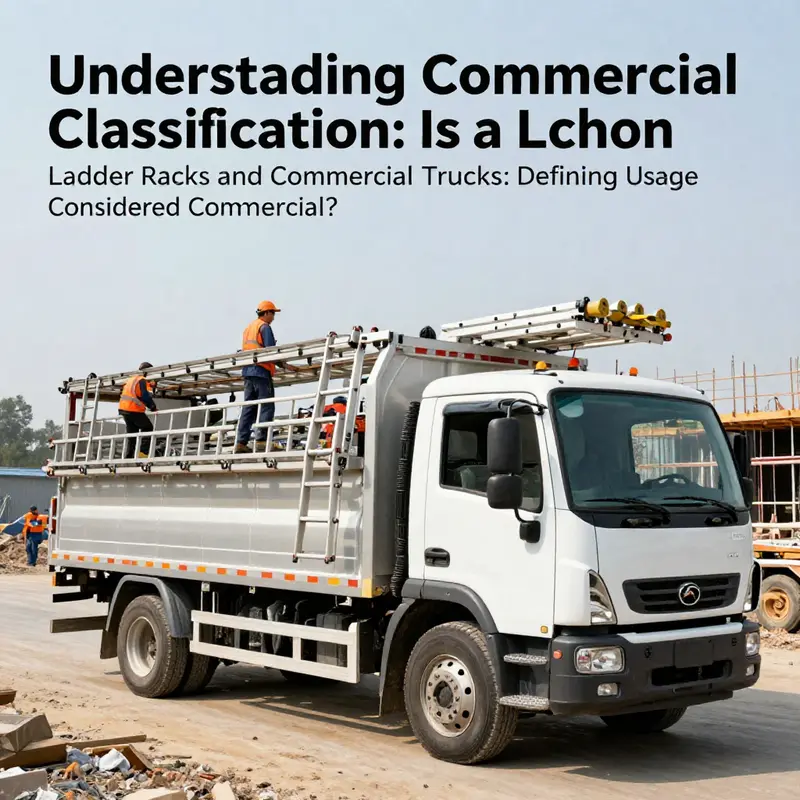
Every morning, a row of work trucks lines a yard, their exteriors gleaming under the sun and their beds crowned with ladder racks. The rack is more than a convenience; it signals a workflow, a pattern of labor that stretches beyond casual use. Yet the mere presence of a ladder rack does not automatically stamp a vehicle with a commercial seal. The real question is not what the rack looks like, but what the truck does day after day, week after week. In practical terms, the line between personal and commercial use is drawn by purpose and frequency, not by a feature you can bolt onto the bed. A ladder rack can be a pragmatic aid for a homeowner tackling a weekend project, just as it can be essential gear for a contractor delivering services across multiple job sites. The distinction rests in how the vehicle is used, how often, and to what end.
Regulatory perspectives reinforce this practical intuition. The federal framework emphasizes use patterns more than accessory kits. The Federal Motor Carrier Safety Administration, along with state motor vehicle authorities, tends to classify a vehicle as commercial when its primary use revolves around service delivery, profit, or business operations. In other words, a truck with a ladder rack becomes commercial not because the rack exists, but because the rack supports a business activity that is routine, ongoing, and revenue-generating. This nuance also surfaces in how insurers price risk, how taxes and depreciation are claimed, and how licensing and registration are handled in real-world practice. The vehicle’s business purpose matters more than the rack’s visual cue.
To see the practical implications, imagine two vehicles that share a ladder rack on the same model and year. One owner uses the truck to haul ladders for occasional home repairs, sometimes transporting tools for a neighbor’s deck project. The other owner uses the same configuration daily, driving to client sites, delivering materials, and carrying heavy equipment needed for a scheduled service. Even if both trucks carry ladders, the second is operating in a commercial mode by virtue of its regular service to paying customers. The first, though equipped identically, remains a personal vehicle with occasional work-related trips. This is why classification hinges on the pattern of use and revenue generation rather than on the mere presence of the rack.
Insurance practices illustrate the same logic in everyday terms. When a vehicle is used primarily for personal transportation, insurers tailor policies around personal limits and coverage. If the vehicle becomes a rolling tool of the trade—carrying ladders, mounting long poles, and transporting tools to multiple client sites—insurance providers commonly shift it toward a business policy. That transition is not automatic the moment a ladder rack is installed; it is triggered by the sustained, work-driven use that aligns with business risk. Businesses may benefit from commercial coverage that accounts for higher payloads, frequent loading and unloading, and the potential for job-site accidents. Individuals who keep the rack for sporadic projects might still be best served by personal coverage, but as soon as the routine becomes job-oriented, the risk profile changes and so should the policy.
Tax considerations and depreciation rules add another layer to the equation. In many tax regimes, the benefit from business-use depreciation arises when a vehicle is employed predominantly for earning income. The ladder rack itself is a tool that enables business use, but it does not authorize the tax treatment on its own. The key is documentation: mileage logs, job-site visits, client invoices, and the proportion of business versus personal use. When these records demonstrate that the vehicle exists to support revenue-generating activities—such as weekly trips to client sites, tool transport for project-based work, and scheduled maintenance runs—the vehicle becomes a bona fide business asset in the eyes of the tax code. This is where the rack’s presence translates into financial strategy, shaping deductions, depreciation rates, and even eligibility for certain incentives tied to equipment upgrades.
Market dynamics also respond to the practical realities of work-ready configurations. The used-truck market has shown continued interest in ladder-rack-equipped platforms because they minimize downtime on job sites. A rack reduces the need to improvise solutions for transporting long items, lowers the risk of material damage, and enhances on-site efficiency. For buyers, these attributes translate into higher resale value when the vehicle’s business use history supports a track record of reliability and productivity. The broader trend toward work-ready configurations—combining payload capacity, safety features, and modular accessory systems—has become a measurable driver in used-truck pricing and availability. This is not merely about aesthetics; it is about capability and the predictable performance those capabilities guarantee in a service economy that relies on rapid, client-facing execution.
In discussing the commercial classification, it helps to anchor the conversation in real-world usage patterns. A homeowner who occasionally borrows a ladder to fix gutters or paint a fence does not become a commercial operator simply because a rack is attached. The daily rhythm of that vehicle remains centered on personal life, even if the rack is occasionally used for a small outside job. Conversely, a roofing technician who relies on a ladder rack as part of daily operations embodies a business model. The rack becomes a practical extension of service delivery—an enabler for consistent client-facing work. The vehicle’s role in generating income is the decisive factor, not the accessory itself. This distinction is why formal guidance from official bodies is often framed in terms of use-case, mileage, and employment of the vehicle in business operations.
The practical path for anyone navigating these questions is to start with your intended use. If your truck is a tool for earning a living, expect the classification to lean toward commercial in most regulatory and insurance contexts. If your life with the truck remains primarily personal, with occasional help for small tasks, the classification may stay non-commercial. When doubt arises, a few straightforward steps can bring clarity. Keep records that demonstrate business activity: client names, job-site addresses, dates, and miles driven for work purposes. Check with your local DMV about how weight classes, registration options, and any commercial-use indicators apply to your profile. Speak with an insurance professional who understands how commercial use affects premiums, coverage limits, and deductibles. And consider how tax treatment might respond to your use pattern; the tax code often rewards business use with favorable depreciation and deduction possibilities, but those benefits hinge on substantiated, consistent business activity rather than the rack itself.
This discussion would be incomplete without acknowledging how the marketplace reflects and reinforces these distinctions. The presence of a ladder rack is a recognizable cue to a work-oriented operation, which helps explain why many buyers and sellers in the used-truck market prize such configurations. For readers watching the market closely, it is informative to follow how demand for ladder-rack-equipped trucks tracks with broader shifts in trades and services. See the current trends in used truck sales growth for context on how trade buyers value work-ready features and how this influences pricing, availability, and financing options. Current trends in used truck sales growth.
As the conversation closes in on the practical, the clear takeaway emerges: the ladder rack is a signal of capability and readiness, not a license. It communicates that a vehicle is equipped to perform work efficiently and safely, but the official label of commercial or non-commercial rests with how the vehicle is used over time. If the pattern shows that the truck serves as a core asset in a business—transporting tools and materials, visiting client sites, and enabling hourly or project-based revenue—the commercial status follows with greater legitimacy in regulatory, insurance, and tax terms. If usage remains largely personal, sporadic, and non-revenue producing, the rack’s presence does not automatically convert the vehicle into a commercial asset. The slim line between personal and commercial is defined by daily purpose, frequency, and the business outcome rather than by any single accessory.
For those seeking definitive guidance, the official safety and regulatory framework remains the north star. The U.S. Department of Transportation and state DMVs provide precise criteria, and they emphasize consistency between use and classification. When doubt persists, align your registration, insurance, and accounting with the documented realities of how the vehicle operates on a typical week. In the end, the ladder rack stands as a practical, functional feature—one that elevates a truck’s utility for trades and services—while the commercial label rests on the ongoing story of work the vehicle carries to the job sites and back home again. External reference: U.S. Department of Transportation – Commercial Vehicle Safety (https://www.fmcsa.dot.gov/).
Rack as Assignment: Decoding Commercial Status by How a Truck Is Used
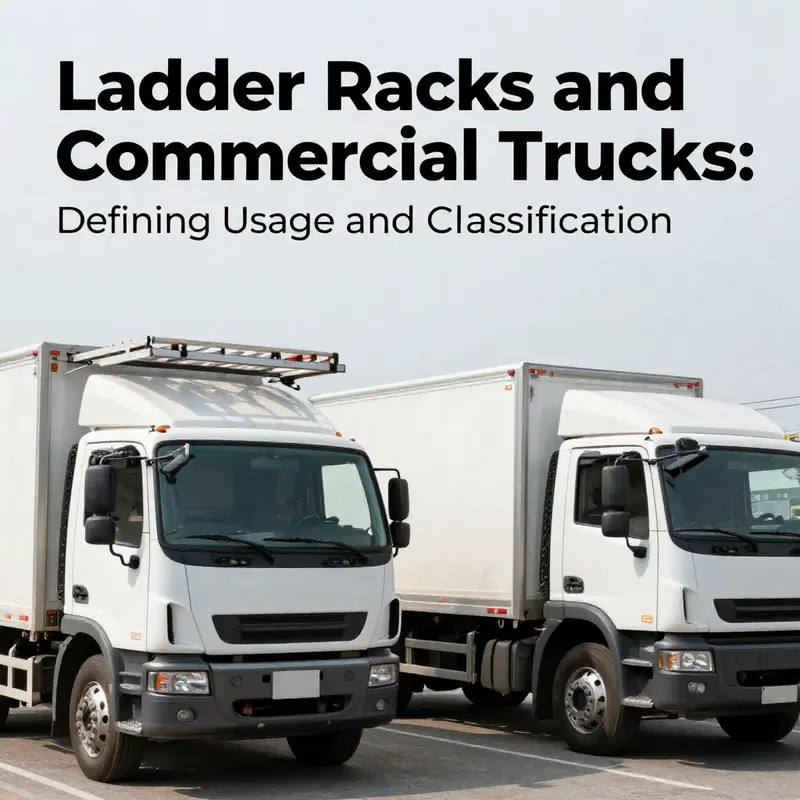
A ladder rack on a pickup or a service vehicle instantly suggests work, but it does not, on its own, decide whether the vehicle qualifies as commercial. This chapter explores the nuanced boundary between commercial and personal use, showing how the rack functions as a tool that reveals intent and pattern of use rather than delivering a categorical label. The ladder rack is more than a cargo carrier; it is a signifier of how a vehicle travels through the day, the kinds of tasks it enables, and the regulatory and insurance considerations that follow those choices. In many fleets and workshop settings, the rack accompanies a daily routine of moving tools, materials, and equipment between client sites or job sites. In others, it merely carries a ladder to a home improvement project on the weekend. The outcome—commercial or non-commercial—depends less on the presence of the rack and more on the purpose and frequency of the truck’s use. The distinction matters because it influences everything from load security standards and inspection routines to insurance coverage and compliance with road-safety rules. If the primary use is professional service, route-to-job-site travel, and load-handling that supports business operations, the vehicle leans toward commercial classification. If the vehicle serves personal errands and occasional home projects, even with a heavy-duty rack strapped to the bed, the use pattern is personal. This perspective aligns with a simple, practical rule: the ladder rack is an accessory that supports a given use, not a verdict on how the vehicle must be treated by regulators or insurers.
The logic is straightforward but rarely intuitive in everyday life. A ladder rack, designed to carry ladders, pipes, or long materials, is built to endure the demands of work-related transport. For commercial use, the design tends to emphasize high-load capacity, robust materials, and secure attachment methods. Heavy-duty steel or reinforced aluminum frames are common, chosen not for aesthetics but to withstand repeated loading and the harsher conditions of daily job-site travel. Commercial racks must keep cargo stable across longer hauls and through various weather conditions, from early morning rain to late-afternoon sun that bakes metal and testy straps. This durability is not merely a matter of equipment longevity; it is an operational requirement. In a contractor’s or electrician’s fleet, where the same rack moves between sites day after day, reliability becomes a core part of productivity. A rack that loosens a bolt mid-ride or fails to secure a bundle of lumber can halt a schedule, erode margins, and invite safety concerns. Therefore, in commercial applications, the attachment system—how the rack fastens to the vehicle and how it anchors the load—is as critical as the rack’s capacity. Locking brackets, integrated tie-down points, and compatibility with standardized roof rack systems are common, practical features that reflect this reality. These elements resonate with the laws and standards that govern professional transportation: not because they are mandated by a specific brand or model, but because they are necessary to maintain control over heavy, bulky cargo in motion. The aim is to prevent shifting, deter theft, and ensure that loads can be secured efficiently, even at pace. For a professional team, time is money, and security is a low-cost safeguard against losses and incidents.
In contrast, personal use tends to emphasize simplicity and ease. A household project might involve a ladder or two and a straightforward crossbar, or a J-cradle that makes installation quick and reversible. The emphasis shifts from continuous daily exposure to the road to occasional, lighter-duty transport. Personal racks often prioritize portability, ease of removal, and noninvasive mounting that minimizes potential marks on the vehicle’s exterior. They may still offer important safety features, such as padded contact points to protect ladder finishes and quick-adjust mechanisms to accommodate varying ladder sizes. Yet the level of industrial rigor—the need to endure frequent use, long-distance hauling, and exposure to the elements—often relaxes. The end result is a system that supports occasional DIY tasks rather than a fleet-wide workflow. Even with such a setup, the underlying safety guidelines remain critical: proper weight distribution to preserve vehicle handling, secure straps to prevent movement during transit, and awareness of the vehicle’s roof or bed load limits. These precautions, while universal, carry different implications depending on whether the use is personal or commercial. A homeowner who reinforces a ladder atop a pickup one weekend should follow the same basic safety rules as a tradesperson, but the regulatory and insurance dimensions tend to be more straightforward in non-commercial scenarios. The distinction is not about a rack’s quality or capability; it is about how the rack enables or accompanies a specific pattern of activity.
To understand why this matters, consider the way the government and insurers view vehicle use. The official guidance the industry often cites emphasizes purpose and frequency of operation. A vehicle used to transport tools, parts, and crew between client sites is very likely functioning as a commercial vehicle by virtue of its operational pattern, not merely because a rack is installed. This operational pattern is what triggers certain documentation, inspections, and safety practices. It also influences insurance terms—coverage that accounts for the higher likelihood of on-road cargo handling and the risk profile associated with daily work commutes equipped with heavy or bulky loads. Conversely, a vehicle used to haul a ladder for a weekend home project presents a very different risk picture. The same ladder rack, with its secure attachment and safety features, is then part of a personal-use scenario with correspondingly different expectations in terms of liability and coverage. The practical takeaway is simple: choose and configure ladder racks with an eye toward the use case’s continuity and intensity. A rack that is built to withstand daily commercial use may be overengineered for a few weekend projects, but that is often a prudent investment if there is any chance the vehicle could cross into work use later on.
The design implications of these two use cases extend into material choice and load-handling features. For commercial applications, the preferred materials typically bring superior durability. Heavy-duty steel offers high strength and long service life under repetitive loading, while reinforced aluminum can provide a lighter option without sacrificing rigidity. The choice often hinges on the balance between payload capacity and fuel efficiency, as well as the logistical realities of a fleet that trades off maintenance costs against uptime. In all cases, the attachment mechanism is not a cosmetic detail but a field-critical component. A commercial rack is expected to endure vibrations, shocks, and weather exposure in varied climates, so the securing method must resist loosening and detachment. Locking brackets, anti-theft features, and redundancy in tie-down points are not mere conveniences; they are essential tools that support compliance with safety regulations and protect cargo worth across multiple trips and seasons. The rack’s compatibility with standardized roof rack systems ensures that a broad ecosystem of accessories—tie-down straps, cargo nets, and modular attachments—can be used to tailor the system to specific trades. Such compatibility reduces the time spent on securing a load and minimizes the likelihood that a user improvises with improvised solutions that might fail in transit.
If the vehicle is used primarily for personal reasons, the ladder rack still serves a meaningful function. It enables homeowners to carry ladders, long pipes, or bulky materials for home improvement tasks. Yet the critical difference remains in how intensively the rack is used, how methodically loads are secured, and how often the vehicle travels with a heavy cargo in transit. While the engineering standards for personal-use racks may be less stringent, basic safety principles stay constant. Distributing weight evenly across the roof or bed rails, avoiding overloading the vehicle’s structural limits, and ensuring that cargo remains in place through every mile of travel are universal safeguards. The presence of a ladder rack, therefore, does not negate the need for these precautions. It simply reframes them within a context of less frequent use and potentially lighter loads.
The practical implications for decision-makers—fleet managers, small-business owners, and individuals budgeting for tools and transport—center on clarity and foresight. Product selection should reflect the expected use case. A commercial operation should prioritize racks with robust load ratings, secure mounting, and proven reliability under daily wear and tear. Insurance considerations should align with the probability of frequent cargo transport and potential cross-site travel, even if the rack is part of a relatively small fleet. For a personal user, the calculation may tilt toward ease of installation, straightforward maintenance, and a reasonable safety margin for occasional larger loads. In both contexts, the ladder rack becomes a lens through which to view planning: how often the vehicle is on the road, what type of cargo is carried, and how cargo security is maintained in real-world conditions.
Across these considerations, a practical approach emerges. Begin by mapping out a typical week: how many trips, what loads, what distances, and what weather conditions are anticipated. Use that map to determine a rack’s required capacity, attachment reliability, and compatibility with existing equipment. Evaluate the added maintenance overhead, including inspection cadence and potential need for lock lubrication or component replacements. Consider insurance and liability implications, ensuring that the use pattern is clearly documented and communicated to both carriers and insurers when necessary. In this way, the ladder rack becomes not just a piece of hardware, but a tool that clarifies and supports the vehicle’s role in business operations. It helps to view the rack as part of a broader fleet strategy, where equipment and use patterns align with safety standards, regulatory expectations, and financial planning. If you are documenting your use for regulatory or insurance purposes, the emphasis should be on the cadence of trips, the nature of cargo, and the security measures in place. A rack that is maintained, secured, and used consistently to support daily services is a feature of a commercial workflow, even if the vehicle is a single-unit operation. On the other hand, a rack used sporadically for home projects remains a functional accessory rather than a commercial asset, regardless of its heft or the sophistication of its mounting.
For readers who want to broaden their understanding of how the market perceives trucks with add-ons like ladder racks, the broader conversation on fleet equipment and classification is worth exploring in-depth. The internal landscape of fleet management often intersects with policy and practice in ways that are instructive for individuals evaluating whether their own vehicle is commercial by use. To gain a broader sense of industry dialogue and practical considerations, you can visit the McGrath Trucks blog, which aggregates discussions on buying, selling, and outfitting trucks in ways that illuminate how equipment choices align with use cases and regulatory environments. McGrath Trucks Blog.
As this chapter bridges the gap between accessory and application, the path forward for any reader is straightforward: assess how a ladder rack is used, not merely whether it is present. If the job sites are regular, the cargo is professional, and the operations occur across multiple locations or with teams involved, the vehicle’s use patterns align with commercial practice. If the ladder rack exists to support occasional home projects, the daily routine does not reflect a professional service model, and the use remains personal. The distinction matters for compliance, insurance, and the day-to-day reliability of the transport system that carries tools, materials, and memories of work accomplished. In both cases, the rack should be chosen with an eye toward safe operation, durability commensurate with use, and a mounting system that preserves the vehicle’s integrity while delivering the utility needed to complete tasks efficiently. The ladder rack, in short, is less a label and more a compass that points toward how the vehicle is actually used, guiding decisions that affect safety, cost, and performance across the journey from job site to job site.
External resource: Official guidance on ladder racks and vehicle equipment can be found at https://www.britishcoastguard.gov.uk/transport-and-vehicles/vehicle-equipment/ladder-racks.
Ladder Racks and the Line Between Personal and Commercial: How Function Shapes Classification
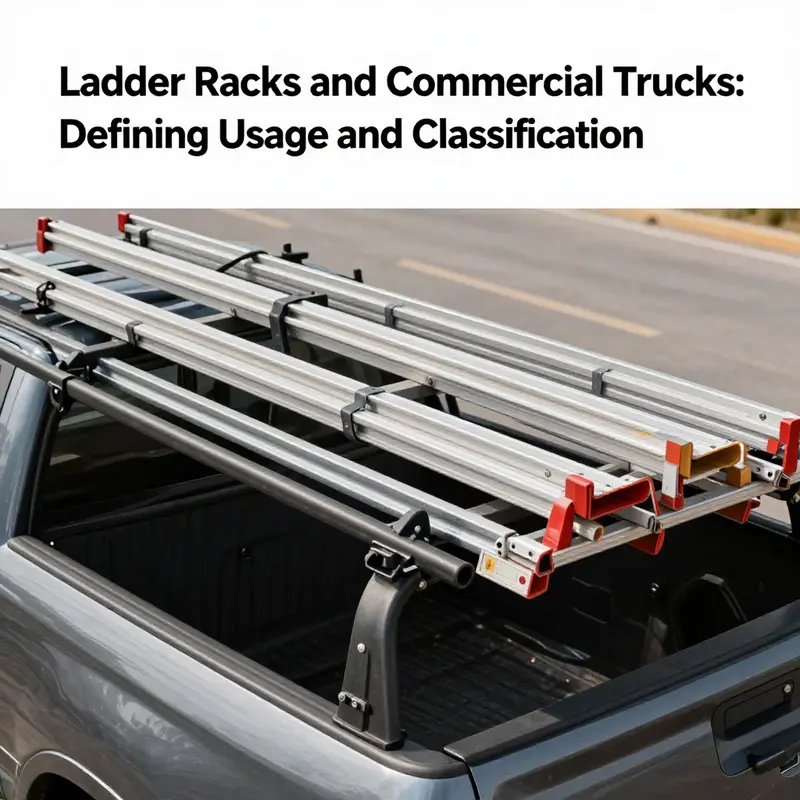
A ladder rack on a pickup or small work truck signals a shift toward professional use, but it does not alone decide whether a truck is commercial. The rack is a practical tool that expands exterior carrying capacity and helps protect the vehicle and its cargo. Yet the key question is use and frequency of use: is the vehicle primarily used to earn revenue and deliver services, or primarily for personal mobility? This distinction matters for fleets, insurers, and regulators as much as for owner-operators who need a phone-ready job site and a reliable ride home. A ladder rack becomes a visible cue of work activity: ladders and long materials secured to the exterior create a workflow centered on service delivery rather than weekend leisure. Still, a vehicle is categorized as commercial because of its predominant use, not because of any single accessory.
From a functional standpoint, ladder racks offer tangible benefits aligned with commercial operations. The most immediate is space optimization: placing ladders and long tools outside frees bed space for smaller tools and materials. This reduces clutter and speeds on-site moves. The rack also protects the bed from damage caused by ladders shifting during transit. For fleets that travel to multiple client sites daily, preserving finish and resale value matters for cost planning. Thus, ladder racks can be seen as safeguards for a fleet’s capital and for the professional image the fleet conveys to customers.
Beyond organization, racks enable safer, more efficient workflows: securing long items on the exterior helps drivers access the cab quickly and reduces manual repositioning on tight jobsites. Rack design (permanent, bolted-on vs removable or roll-up) offers a spectrum to match duty cycle and seasonal demand; each design has trade-offs in maintenance and durability.
However, there are trade-offs: some rack configurations reduce bed space; installation adds upfront costs and potential impact on handling; ground clearance and mounting rigidity must be considered. Fleet managers may mix configurations across a fleet to balance frequency of use and flexibility. Regulations and guidance focus on use, not form. If a truck primarily transports goods or provides services for profit, it is commercial; if used for personal transport, it remains non-commercial, even with racks. Official sources from transportation agencies provide frameworks to confirm classification.
Practical implications: commercial status affects tax treatment, depreciation, insurance, and compliance. In cost-benefit terms, a robust rack can reduce downtime and protect resale value, but upfront costs and ongoing maintenance must be weighed. The broader market context also influences used-truck pricing and demand for work-ready configurations. See current trends in used-truck sales growth for context: https://mcgrathtrucks.com/current-trends-in-used-truck-sales-growth/
Ultimately, a ladder rack should be considered a tool that supports a service-based workflow rather than a determinant of classification. It is a cue of professional use, while precise categorization depends on how the vehicle is used day after day. As businesses plan maintenance budgets, insurance coverage, and regulatory compliance, they should align rack choices with the vehicle’s role in the service model and the broader fleet strategy.
null

null
Purpose Over Apparatus: Why a Ladder Rack Won’t Determine a Truck’s Commercial Status
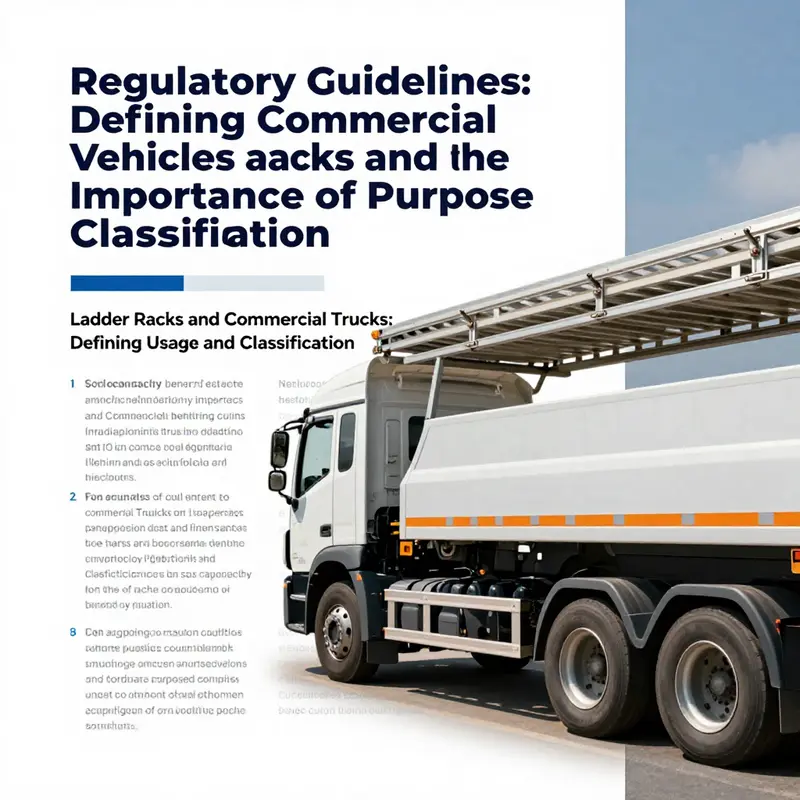
A ladder rack on a truck often signals a life in motion for work. It hints at toolkits, ladders, pipes, and the rhythm of job sites rather than everyday errands. Yet a rack by itself does not decide the vehicle’s classification. The question—whether a pickup or any light truck with a ladder rack is a commercial vehicle—stays rooted in purpose, not appearance. Regulatory guidelines make that distinction clear: a vehicle is deemed commercial when its primary use is to move people or property for compensation, or when it is designed to carry more than a certain number of passengers. The lane between personal use and commercial use is not the lane of what you carry, but why and how often you use it. A ladder rack can serve as a reliable clue that a vehicle might belong to a business operation, but it is the ongoing mission of the vehicle that determines its legal status in the eyes of regulators, insurers, and fleets alike.
At the core of the discussion sits a simple, fundamental principle: purpose governs classification. The Department of Transportation, through its regulatory arms, emphasizes that commercial designation is tied to use. If a truck is employed as a carrier for pay or for delivering goods and services as part of business operations, it falls under commercial use. If, on the other hand, a similar vehicle—equipped with a ladder rack or not—is reserved for personal travel, family trips, or weekend repairs at one’s own home, it remains non-commercial. This nuance matters because it shapes everything from licensing and insurance to maintenance routines and safety inspections. In other words, the rack is a tool, not a badge. It speaks to what the vehicle does, not to what the vehicle is defined as in a regulatory register.
To understand how that distinction translates into daily practice, consider two parallel scenarios that begin with the same hardware: a pickup with a ladder rack. In the first scenario, the vehicle is operated by an individual who runs a small roofing, electrical, or facilities service business. The driver heads to multiple client sites each week, carrying ladders, long poles, and assorted equipment necessary to complete work orders. The truck’s schedule is regular, its routes are computed around client appointments, and its performance contributes directly to revenue. In this case, the primary use is business-oriented, and the cargo the vehicle transports—and in some days the people it serves—reflects commerce. The ladder rack becomes part of a broadly utilized fleet asset, not merely a consumer convenience. In this context, the vehicle is clearly commercial, with all that status entails: potential compliance with stricter maintenance standards, periodic inspections, and possibly specialized licensing or operator requirements depending on payload and operation.
In the second scenario, the same ladder rack-equipped pickup is owned by a homeowner who uses it to haul ladders to a couple of home improvement projects on weekends, with occasional trips to buy supplies. The rack is functional, even practical, but the vehicle’s weekly use never centers on providing services to clients or moving goods for remuneration. This is personal use, even if the line items in a tax return or a license plate may suggest otherwise in some jurisdictions. In such cases, the presence of a ladder rack is ancillary to the vehicle’s primary motive, which remains personal transport. The crucial point is that the activity that generates revenue or supports business operations—not just the equipment installed—determines whether the vehicle earns a commercial designation.
The regulatory framework makes a point of clarity about what counts as commercial use. There is a broader context that many operators must navigate: commercial status can influence safety standards, maintenance frequency, and regulatory obligations. Vehicles classified as commercial often face stricter maintenance schedules to ensure reliability and safety on busy roadways. They may be subject to more frequent inspections and, in some circumstances, require specialized operator certifications such as a Commercial Driver’s License (CDL) for certain classes or duties. These requirements are rooted in public safety concerns; larger or more frequent payloads and the prospect of transporting others amplify risk. The ladder rack, while a practical tool, does not elevate a single-vehicle owner into a completely new regulatory category by itself. Instead, the ongoing, revenue-generating mission of the vehicle is what triggers closer oversight.
This is not a debate about the value of ladders on a job site. It is a conversation about the alignment between device and duty. A ladder rack can be part of a professional toolkit that supports service delivery, project execution, and on-site efficiency. It can streamline access to far-flung work areas, reduce time spent loading and unloading, and enhance safety by providing a stable method to transport long items. Yet the presence of the rack does not automatically convert a personal-use vehicle into a commercial one from a regulatory perspective. The difference rests in frequency and intent: are you driving this truck to a scheduled series of customer sites as a core business activity, or is it a reliable, flexible vehicle for personal or occasional work use?
From a policy standpoint, the emphasis on purpose helps keep the system fair and predictable. If every ladder rack on a private vehicle instantly triggered commercial classification, the resulting patchwork of state and federal rules would create confusion and inconsistency. For fleet managers and individual operators, the practical takeaway is straightforward: assess the vehicle by its typical use pattern rather than by any single accessory. Consistency across the year matters more than a single trip. If the vehicle is used to haul equipment for a business on a daily or near-daily basis, it carries business risk and responsibilities that should be reflected in insurance coverage, registration as applicable, and safety program adherence. If the vehicle is used sporadically for personal projects, the insurance and regulatory picture remains aligned with personal transport.
Within this framework, the role of documentation becomes important. Operators can benefit from maintaining clear records of how a vehicle is used. Logs showing daily routes, job sites, and the extent to which the truck supports business operations can help clarify its designation if ever questioned by a regulator or insurer. The situation is rarely black-and-white. A ladder rack is more than decoration; it is evidence of what the vehicle is doing in the world. But evidence alone does not decide the classification; the regularity and purpose of the use do.
For readers seeking a broader context on how these classifications interact with day-to-day operations, practical guidance can be found in professional discussions that translate regulatory nuance into business continuity. The idea is not to overstate the importance of any single feature, but to recognize how the total pattern of usage informs safety, compliance, and risk management. If you want to explore these nuances further, the capable, practical tone of industry commentary such as the McGrath Trucks Blog offers perspective on how owners and operators navigate the line between personal and commercial use in daily life. This conversation is seldom about legal labels alone; it is about ensuring that the vehicle, its equipment, and its operator are prepared for the realities of road safety, site access, and customer expectations.
As this discussion unfolds, the core message remains solid: purpose is the determinant factor. The ladder rack is a facilitator, not a verdict. It signals a readiness for work, but the yardstick for classification lies in how that work is carried out over time. When a truck serves as a reliable mobile workspace, ferrying employees or clients to sites and transporting tools, materials, and equipment in a manner consistent with business operations, the commercial designation becomes a natural fit for regulatory alignment. In contrast, if the rack accompanies a vehicle whose primary mission is personal mobility and occasional tasks, it stays in the non-commercial lane, with corresponding implications for tax treatment, insurance, and licensing that reflect personal, not business, use.
The practical implications of this understanding extend beyond regulatory labels. Fleet managers benefit from treating ladder racks as functional gear that contributes to safety and productivity. Regular inspection of the rack, the bed mounting points, and any attachments is part of a broader safety discipline that protects drivers, pedestrians, and cargo. Maintenance readiness for the vehicle as a whole goes hand in hand with the notion that the vehicle operates within a commercial context when its use is business-centric. In many cases, the best approach is to align maintenance cycles with the vehicle’s actual use pattern, scheduling inspections and component checks at intervals that reflect on-the-job wear and the higher duty cycles typical of commercial service.
Ultimately, the question of whether a truck with a ladder rack is considered commercial does not hinge on the rack alone. It hinges on how, how often, and for whom the vehicle operates. It hinges on the rhythm of work it enables and the risks it assumes as part of delivering services or goods. The ladder rack is an enabling technology, a visible marker of trade and service, but it is not a license to bypass the framework that governs commercial transportation. By focusing on purpose and frequency, operators can navigate classification with clarity, reduce ambiguity in regulatory dialogues, and design safer, more predictable operations for themselves and their clients. The dialogue between accessory and aim remains at the heart of this issue, and the work to interpret it is ongoing in the broader context of road safety, insurance stewardship, and responsible fleet management. For readers who want to engage with this topic further, a broader discussion of how purpose and use shape vehicle classification can be explored in industry conversations and official resources that consistently return to the same central premise: use drives classification, not adornment.
External resource: For authoritative details, refer to the official FMCSA resource on commercial vehicle safety at https://www.fmcsa.dot.gov.
Final thoughts
The classification of trucks, particularly those equipped with ladder racks, hinges not merely on the physical attributes of the vehicle but on the primary intent behind its use. Whether these trucks are employed in personal errands or in support of business activities greatly influences their commercial status. As explored throughout this article, understanding these nuances is crucial for effective fleet management and compliance with regulatory standards, ensuring that businesses can optimize their operations while adhering to the legal framework governing commercial vehicles.