
Registering a commercial truck in Rhode Island involves a series of intricate steps, each essential for compliance and successful operation. Understanding these steps is vital for trucking company owners, fleet managers, and logistics firms aiming to navigate the legal landscape efficiently. This guide delves into the process of obtaining a Commercial Driver’s License (CDL), registering your vehicle with the DMV, securing a business license and federal EIN, and ensuring compliance with motor carrier permitting requirements. Each chapter builds a critical foundation on the necessary actions and requirements to help you operate your business legally and effectively. Equip yourself with the knowledge you need to streamline your operations and comply with state regulations.
From Road to Registry: A Practical Journey to Registering a Commercial Truck in Rhode Island
Registering a commercial truck in Rhode Island is more than a checklist; it is a carefully choreographed sequence that links driver qualifications, corporate structure, vehicle specifics, and operating intentions into one legally compliant operation. The aim is simple on the surface—put a large, work-ready vehicle on Rhode Island roads—but the path to that goal is braided with state and federal requirements designed to ensure safety, accountability, and tax compliance. In practical terms, the process starts with the person behind the wheel and extends through the paperwork that proves ownership, insurance, and an authorized business presence. When approached with a steady cadence and a clear map of the steps, this journey becomes less about sprinting through forms and more about building a compliant foundation for a transportation operation that may grow, adapt, or even scale into a multi-truck fleet. The following narrative stitches together the core milestones into a cohesive, navigable route that keeps pace with real-world demands, including the need to show up with documentation, consent, and certainty at every touchpoint with the Rhode Island Division of Motor Vehicles (DMV) and the Rhode Island Department of Transportation (RIDOT).
At the heart of the process lies the Commercial Driver’s License, or CDL. Before a vehicle can be registered for commercial use, the operator must hold a valid CDL appropriate to the class of vehicle being operated. In Rhode Island, a Class B license typically covers large straight trucks, while higher classes unlock more complex vehicle configurations. The CDL is not merely a credential; it is evidence that the driver has the knowledge and skill to operate a vehicle that imposes higher risks on the road and that federal medical standards are being met. That medical standard manifests as a Medical Examiner’s Certificate, a document that must be current and carried when you operate. The requirement is straightforward, yet it carries practical implications: you must be legally eligible to work in the United States to hold a CDL. A green card or valid work visa is often a prerequisite, and it is prudent to verify eligibility in advance to avoid delays that stall the entire registration process.
With a CDL in hand, the next phase hinges on the vehicle’s registration with the state. Rhode Island treats the truck as a business asset, and the registration process reflects this status. The journey starts with gathering the right documents. You will need proof of ownership, which could be the title or a bill of sale showing a clean chain of title. If a lien is involved, you’ll need current lien information so that the DMV can reflect the correct security interest. The vehicle insurance policy must meet Rhode Island’s minimum liability coverage requirements for commercial vehicles, ensuring that coverage is adequate for the risks associated with freight and delivery operations. The official Application for Registration, often referred to by its form designation, must be completed in full. If the truck is used for freight or delivery services, a Motor Carrier Permit from RIDOT becomes an additional imperative. The permit is a signal to the state that your operation will be a legitimate carrier of goods and not merely a private-use vehicle wearing commercial livery.
Many operators overlook the practical logistics of in-person filing and the financial components that accompany it. The DMV requires a personal visit to a branch to submit documents and complete the registration process. During this visit you will pay a set of fees—registration fees that scale with weight and vehicle type, and any applicable sales tax that may not have been collected at the point of sale. Emissions inspections may also be required depending on the age and type of the vehicle, so it is wise to check whether your truck will need such an inspection before you go to the counter. If the truck has an out-of-state history, there is a transfer requirement that cannot be bypassed: title and registration must be transferred to Rhode Island before you complete the RI registration. This ensures the vehicle’s record reflects Rhode Island as its home jurisdiction and prevents gaps in compliance.
For any business that intends to operate commercially, legality is inseparable from structure. The next layer of the process is a formal business setup and tax identification. If you are registering as a business, you will typically need to ensure the business name is properly registered with the Rhode Island Secretary of State. This step creates a recognized legal identity that can be tied to the vehicle, to the insurance certificate, and to future licensing activities. Parallel to this is the application for an Employer Identification Number, or EIN, through the Internal Revenue Service. The EIN is not a state tax form but a federal identifier that enables tax reporting, payroll and with it, the ability to open a business bank account and manage payroll if you employ drivers. The local municipality often requires a Rhode Island business license for the entity’s physical operations—whether you run from a yard, a warehouse, or a logistics hub. Taken together, these steps connect the truck to a legitimate business entity, a precaution that protects owners from personal liability while enabling corporate banking, insurance, and regulatory reporting.
As the pieces come together, a crucial regulatory instrument emerges for trucks engaged in for-hire transport: the Motor Carrier Permit from RIDOT. This permit formalizes the truck’s role in carrying goods for hire and becomes a marker of compliance with both state and federal expectations for motor carriers. The RIDOT process is accessible via their Motor Carrier Services portal, where you submit the necessary documentation for review. Required materials typically include the business license, an insurance certificate that meets required limits, CDL and driver qualification files, and the vehicle registration and inspection records. Alongside the application you will pay an annual permit fee, which sustains RIDOT’s oversight and helps maintain a safe operating environment for commercial vehicles on Rhode Island roads. The permit is not merely a formality; it is a license to operate commercially in a framework that emphasizes accountability, road safety, and the predictability that shippers and fleets rely upon. Acknowledging the permit’s importance helps prevent last-minute scrambles; many carriers plan for renewal well in advance of expiration, knowing that lapses can disrupt schedules, freight commitments, and driver availability.
The chain of requirements may feel like a lot of paperwork, especially for new entrants. There is, however, a coherent logic that keeps the process navigable. The CDL ensures a capable operator; the RI registration binds the vehicle to the state’s regulatory frame; the business license and EIN link the operation to a legal entity; and the Motor Carrier Permit formalizes the carriage-for-hire activity in RIDOT’s oversight architecture. When a truck travels across state lines, additional permits and registrations come into play, including interstate operating authority from the Federal Motor Carrier Safety Administration. This is where interstate commerce considerations intersect with Rhode Island requirements. Even if your operation’s primary base remains Rhode Island, planning for cross-border transport—whether occasional or frequent—helps prevent surprises that can derail a shipment or trigger penalties for noncompliance.
The practical rhythms of compliance become clearer when you picture the lifecycle of a commercial truck in the field. A vehicle is not merely a mode of transport; it is a rolling business asset that must satisfy the predictable expectations of insurers, customers, lenders, and regulators. Insurance is more than a policy; it is a statement about risk management, and the liability limits you choose can influence everything from premium cost to eligibility for certain contracts. The insurance certificate you present to RI DMV and RIDOT must be current and must reflect the correct insured party, the truck’s identification numbers, and the appropriate coverage aimed at commercial operations. The driver, too, must be prepared to supply or confirm documentation about how the operation will be staffed: whether one driver or multiple, whether driver qualifications and medical cards are in order, and whether any driver is subject to random testing under federal rules. These are the threads that connect a vehicle’s legal status to its real-world performance on the road.
As you proceed, consider the value of a centralized, organized approach. Maintain a file that includes copies of the title, current registration, proof of insurance, and any bills of sale or lien documents. Create a folder for your CDL and any medical certificates, as well as a separate file for business registrations—Secretary of State filings, EIN confirmation, and municipal licenses. A single, organized repository can streamline renewals, audits, and inquiries from insurers or customers. It also helps when you need to respond quickly to regulatory changes or to verify that all elements of the compliance chain are current. The discipline of keeping documents up to date reduces friction in the day-to-day operation of a trucking business and helps you avoid the scramble that comes with last-minute renewal deadlines or compliance audits.
For operators who want to see how this all fits within the broader ecosystem of trucking and logistics, the practical insights found in industry-focused discussions can be a valuable complement to the regulatory path. A reputable resource that covers broader operational considerations, fleet management, and market dynamics is the McGrath Trucks blog. It serves as a forum for sharing practical experiences and industry perspectives that can illuminate how regulatory requirements intersect with real-world operations. You can explore that context here: https://mcgrathtrucks.com/blog/.
Still, the backbone of Rhode Island’s framework remains the official channels. The Rhode Island DMV site is the authoritative source for registration requirements, forms, fees, and procedural guidance specific to Rhode Island. RIDOT’s Motor Carrier portal is the gateway to the required permit for for-hire trucking, and it provides the details on eligibility, documentation, and annual fees. When timelines tighten—as you may experience during large procurement cycles or seasonal peaks—relying on these official resources helps prevent costly missteps. The combination of careful preparation, accurate documentation, and a clear understanding of the sequence of steps is what makes the journey practical rather than overwhelming.
In the step-by-step rhythm of getting a commercial truck on the road in Rhode Island, timing matters as much as accuracy. Begin with the CDL, secure your medical qualification, and ensure your employment eligibility is documented. Next, assemble your ownership proof, insurance, and the Government-entity paperwork for the truck, then submit them to the RI DMV to obtain the registration. Don’t overlook the Motor Carrier Permit if you intend to serve customers by moving goods for hire. Finally, align your business structure with the public and fiscal authorities by completing the Secretary of State filings and obtaining an EIN, followed by any local business license that applies to your operations. If crossing state lines is a regular part of your service, map out the additional permits and registrations you may need and factor them into your planning timeline.
The choreography of these elements—driver qualification, vehicle ownership, business identity, and carrier-permit compliance—creates a professional foundation that not only meets Rhode Island’s standards but also supports sustainable operation. A well-ordered approach reduces delays, enhances safety, and reinforces reliability for customers who rely on your fleet to move critical goods. The objective is straightforward: enable lawful operation with confidence, backed by documentation that stands up to regulatory scrutiny. In doing so, you can focus on the practical realities of moving freight, meeting schedules, and growing through repeat business, rather than being interrupted by compliance questions.
External resource: RIDOT Motor Carrier Permits page for detailed application requirements, documentation, and fees: https://www.dor.ri.gov/motor-carrier/
Road Toward Compliance: A Cohesive Path to Registering a Commercial Truck in Rhode Island
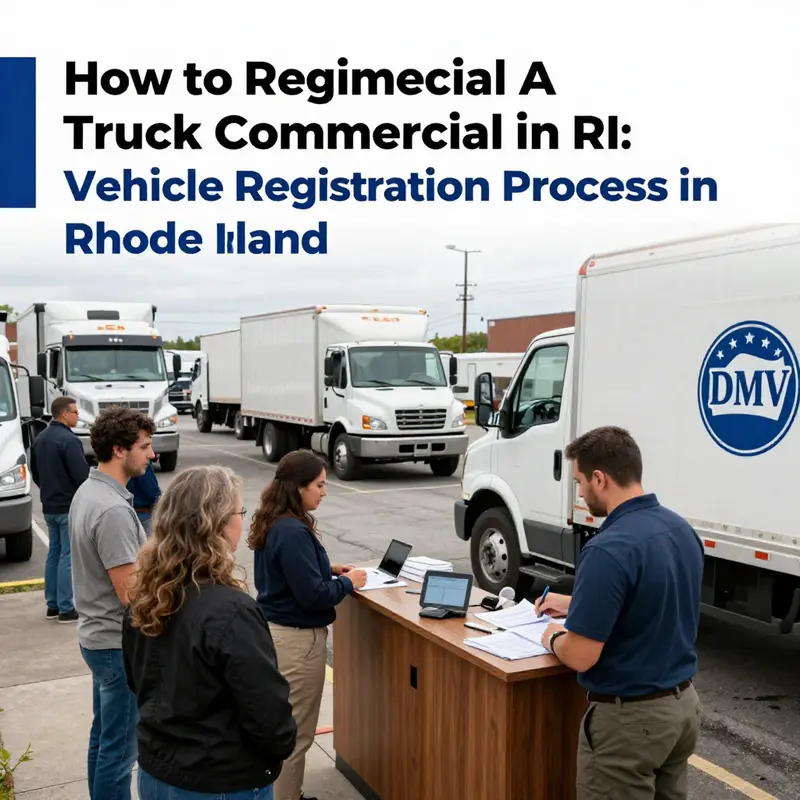
Registering a commercial truck in Rhode Island is a process that ties together the vehicle’s technical readiness with the business framework that operates it. It is not merely about possessing a vehicle title or paying a fee; it is about aligning a truck, its operator, and its business with state and federal rules designed to ensure safety, accountability, and fair commerce. The journey begins long before the truck hits the road and continues long after registration is complete, because ongoing compliance—driver qualifications, insurance standards, and proper permits—shapes every mile you drive in the Ocean State and beyond. When approached with clarity and a stepwise mindset, the path from acquisition to operation becomes less a maze and more a sequence of interconnected checks that support a reliable trucking operation.
At the heart of the process is the driver’s qualification. A commercial truck in Rhode Island typically requires a valid commercial driver’s license (CDL) appropriate to the vehicle class you intend to operate. Most large trucks fall into Class B or higher, and obtaining a CDL is the foundational step before any registration paperwork can be fully completed. A CDL is not merely a credential; it is a gateway to compliance with safety standards that protect the driver, the public, and the customer base you serve. In Rhode Island, as in other states, the CDL begins with holding a valid state license, passing a knowledge test that covers commercial driving rules, and then succeeding in a skills test tailored to the vehicle class. The process also requires meeting federal medical standards through a Medical Examiner’s Certificate, which ensures that a driver’s health is adequate for the demanding tasks of commercial operation. Some may assume the CDL is purely a personal credential, but it has direct implications for fleet readiness and insurance considerations. The moment a driver lacks the proper credential, the registration path can stall. It is a reminder that compliance is a shared responsibility between the driver and the business entity that employs or contracts the driver. If your operation relies on new hires or subcontractors, ensure every operator in the fleet holds the appropriate CDL and is legally eligible to work in the United States.
With the driver credential secured, attention turns to registering the vehicle itself through the Rhode Island Division of Motor Vehicles (DMV). The RI DMV handles vehicle registration, title transfers, and related fees, but commercial registrations come with specifics that reflect the vehicle’s intended use and the business structure behind it. You will need to assemble a set of documents that prove ownership, financial responsibility, and a legitimate business purpose. The standard package includes proof of ownership such as a title or bill of sale, and if there is a lien, current lien information. A commercial policy that meets Rhode Island’s minimum liability coverage requirements must be on file to demonstrate that the vehicle is appropriately insured for its duty cycle. The application for registration, commonly referred to in state forms as an R-1 or its equivalents, should be completed with care to ensure that the business name, address, and vehicle details align with the documents presented to the DMV. If the truck is used for freight or delivery services, you may also need a Motor Carrier Permit from RIDOT, the Rhode Island Department of Transportation, to authorize the vehicle’s commercial use on public roads.
The in-person visit to a RI DMV location requires preparation. Bring the documents, be ready to present proof of insurance that satisfies RI’s requirements, and be prepared to pay the registration fees which are typically a function of the vehicle’s weight and type. Rhode Island also imposes sales tax on certain registrations if not already collected by the seller, and an emissions inspection may be required depending on the age and type of vehicle. The process emphasizes local accountability; it is not a one-size-fits-all formality, but a careful review of the truck’s status, its ownership chain, and the business purpose behind its use. For operators with out-of-state plates, the requirement to transfer title and registration to Rhode Island before completing the RI DMV registration is a crucial bridge that cannot be skipped. The step-by-step nature of this sequence ensures that a commercial vehicle entering Rhode Island’s road network is properly documented and financially aligned with state revenue streams and regulatory expectations.
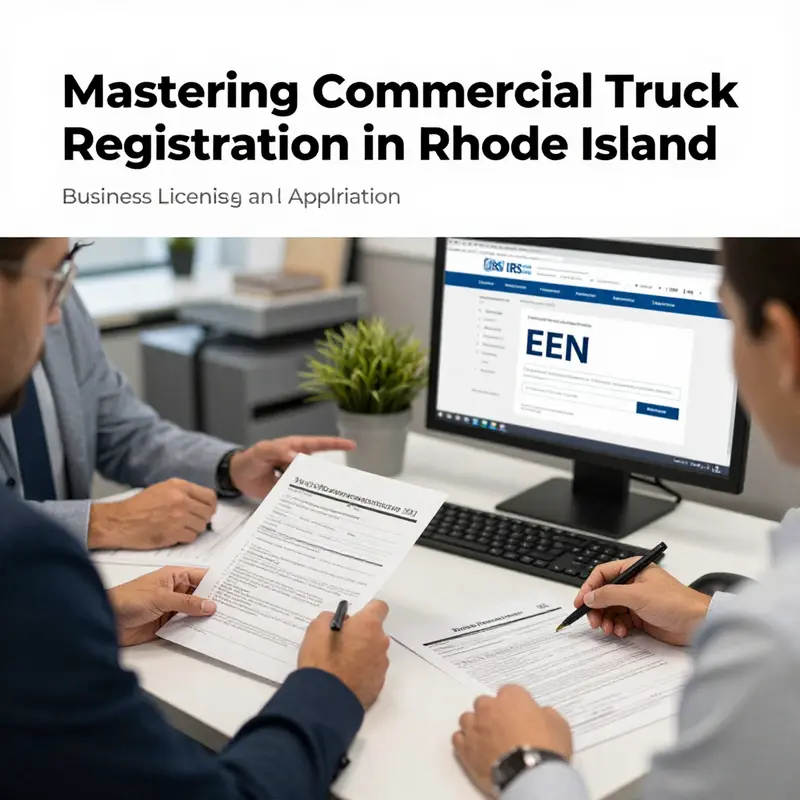
Beyond the vehicle and the driver lies the business framework that legitimizes the operation. If you pursue trucking as a business entity, you will find that obtaining a business license and an Employer Identification Number (EIN) anchors financial and regulatory responsibilities to a formal structure. The Rhode Island Secretary of State serves as the first stop for business name registration if you have not already established a business identity. An EIN, obtained through the IRS, becomes essential for tax reporting and for opening a business bank account that keeps personal and corporate finances separate. The municipal business license, obtained from the local jurisdiction where the business operates, helps ensure local regulatory compliance, including tax obligations and any city-specific operational rules. The interplay between the DMV registration and the business license ecosystem underscores a core principle: a commercial truck is a moving asset that is part of a larger business enterprise, and its registration reflects both asset ownership and business responsibility.
In Rhode Island, another layer of compliance that often accompanies commercial trucking is the Motor Carrier Permit, administered by RIDOT. This permit recognizes that the truck is used for transporting goods for hire and, as such, is subject to additional oversight. The application process for the Motor Carrier Permit is increasingly digitized and can be initiated through RIDOT’s motor carrier services portal. Applicants should prepare documentation that shows the business license status, the insurance certificate, and the driver qualification files associated with the fleet. Vehicle registration and inspection records commonly accompany the permit packet, providing RIDOT with a complete picture of the operation’s compliance landscape. Paying the annual permit fee closes this loop, but the ongoing obligations do not end there. A Motor Carrier Permit implies a continuing duty to maintain insurance, to keep driver qualifications current, and to report changes in fleet size or operation that could affect eligibility. For businesses with fleets that extend into other states, interstate considerations begin to emerge. The federal system, through the FMCSA, offers what is known as Interstate Operating Authority, a requirement for operations that cross state boundaries. Even if the Rhode Island base primarily serves intrastate work, awareness of federal requirements is prudent. The presence of multiple regulatory layers—state registration, state carrier permits, and potential federal authority—reflects the reality of modern trucking: it is a regulated industry, and the regulatory footprint grows with the scale of operations.
What emerges from this integrated view is a sense that the Rhode Island registration journey is neither a single form nor a single fee. It is an ecosystem in which the truck, the driver, the business entity, and the public interest converge. The DMV registration is the anchor—the point at which ownership, use, and compliance are officially codified. The Motor Carrier Permit from RIDOT sits alongside that anchor, signaling the vehicle’s commercial function. The business registration and the EIN secure the financial and organizational scaffold that supports ongoing compliance, tax reporting, and license management. Intermittent obligations such as emissions inspections and insurance renewals keep the registration current and the operation responsible on Rhode Island’s roadways. The overall effect is cumulative rather than transactional: each step reduces risk, builds credibility with customers, and aligns the operation with a regulatory environment designed to ensure safe and predictable trucking.
To keep the chain intact, it can be helpful to view the process as a sequence of touchpoints rather than a single hurdle. Start with the driver’s credentialing, ensuring that every operator has a valid CDL and meets medical and legal work eligibility. Move to the vehicle registration, bringing the ownership documents, insurance, and the registration application to the RI DMV. If your business is more than a private truck and you operate commercially, pursue the business licensing track in parallel: register the business name if needed, obtain an EIN, and secure the local business license from the municipality. Then, for operations that involve for-hire transport, apply for RIDOT’s Motor Carrier Permit and compile the driver qualification files, insurance certificates, and vehicle inspection records that RIDOT requires. Finally, stay mindful of interstate considerations if your routes cross borders, because federal authority can become a prerequisite for certain operations. This integrated approach helps ensure that nothing falls through the cracks—the kind of oversight that can save a fleet from regulatory hiccups that disrupt service, erode trust, or invite penalties.
As you navigate these steps, it can be useful to anchor the journey with a practical reference point that speaks to the broader trucking community. For operators seeking context beyond the Rhode Island specifics, a wide range of industry insights can be found in the broader trucking knowledge ecosystem. For practical context and updates on trucking policy and industry shifts, see the McGrath Trucks blog. The blog offers perspectives on fleet management, regulatory changes, and operational realities that can illuminate how RI requirements fit into a national picture. The link below is provided as a convenient, context-setting resource:
With all this in mind, the core message for anyone preparing to register a commercial truck in Rhode Island is to adopt a disciplined, documents-first approach. Gather ownership and lien information, secure a compliant insurance policy, and prepare a complete registration packet for the DMV. At the same time, align your business structure with a compliant framework: confirm business name status with the Secretary of State, obtain an EIN, and secure a local business license. Then anticipate RIDOT’s Motor Carrier Permit if your vehicle is used for hire. If your operation spans state lines, establish a basic understanding of FMCSA authority and interstate requirements. The routine may feel extensive, but it is designed to safeguard all participants in the supply chain—from the driver delivering goods to the customer waiting for those goods. When the pieces are assembled logically and arranged in time, the process becomes a sequence of verifications rather than a single moment of paperwork; it becomes part of building a responsible, trustworthy, and sustainable commercial trucking operation in Rhode Island.
For the operator who wants to ensure ongoing compliance beyond the registration day, the advice is simple and practical. Keep a calendar for annual renewals and inspections. Maintain a current insurance certificate that matches the vehicle’s use, keep driver qualifications up to date, and monitor whether any changes in business structure or fleet size require updated permits or registrations. If a truck is temporarily taken out of service or if a motor carrier permit is suspended or amended, address the changes promptly to avoid gaps in operation. Rural lanes and urban corridors alike benefit from such discipline, as it reduces the risk of enforcement actions and interruptions that can ripple through service levels and customer satisfaction. The Rhode Island regulatory environment rewards preparedness, transparency, and consistency. When a fleet demonstrates these traits, it not only navigates the letter of the law but also earns the confidence of clients, insurers, and regulators alike.
The final thread in this tapestry is the awareness that the landscape can evolve. Regulations change, forms are updated, and portal processes shift as state agencies modernize. What remains constant is the requirement to align a truck’s technical readiness with a business’s legal and financial scaffolding. By treating the registration and licensing journey as an ongoing program rather than a one-off hurdle, operators can respond to changes with agility and avoid the disruptions that can accompany regulatory drift. The Rhode Island path to commercial vehicle operation is not a dry checklist; it is a dynamic framework that supports safe traffic, reliable service, and a robust business foundation. In that sense, the act of registering a truck becomes not only a legal obligation but also a strategic investment in the resilience and credibility of a trucking enterprise operating within Rhode Island and, potentially, across state lines. This integrated view helps ensure that each mile traveled is backed by compliance that lasts as long as the vehicle does.
External resource: https://www.dmv.ri.gov
null
null
Rhode Island Roadmap: A Cohesive Path to Commercial Truck Registration, Permits, and Compliance
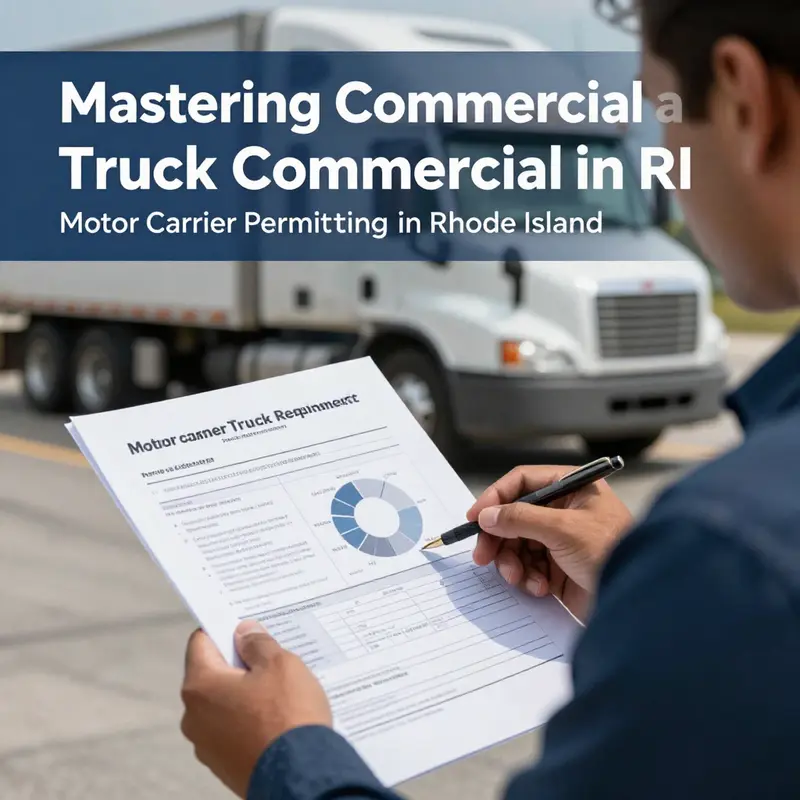
Building a commercial trucking operation in Rhode Island starts long before a license plate goes on the bumper. It begins with a clear understanding that registration, licensing, and regulatory compliance are not one-and-done tasks but an ongoing process that aligns business intentions with state and federal rules. In Rhode Island, the journey from driver to compliant commercial carrier weaves together a chain of steps that touch the DMV, RIDOT, and, if the business stretches beyond state lines, the federal motor carrier regulators. The result is a legally sound foundation that not only keeps a fleet legally on the road but also builds credibility with customers, insurers, and lenders. The path can feel intricate at first, but when viewed as a sequence of interconnected milestones, the process becomes navigable, practical, and ultimately empowering for a business owner who wants to move goods efficiently and with peace of mind. The following narrative threads together the essential touchpoints—the driver’s credentials, the vehicle’s official records, the business’s licenses, and the carrier permits that certify you for regulated activity—so you can approach registration as a coherent, repeatable workflow rather than a single leap of faith.
The doorway into this system is the Commercial Driver’s License (CDL). Even before the truck becomes a registered asset, the person who will operate it must demonstrate both knowledge and skill appropriate to the vehicle class and the cargo that will move. Rhode Island requires a valid Rhode Island driver’s license as the starting point, followed by a written knowledge test that covers commercial driving rules. The next hurdle is a skills test, which is tailored to the class of vehicle you intend to operate—most commonly Class B for large straight trucks, but larger or more specialized outfits can fall into higher classes. A successful performance on the skills test validates the driver’s ability to handle the truck safely. Federal medical requirements come into play as well; the Medical Examiner’s Certificate is a gatekeeper that ensures drivers meet health standards essential to safe operation on long hauls, stop-and-go delivery routes, and those often demanding hours. In practice, obtaining the CDL is the foundational credential that unlocks eligibility to register a commercial vehicle in Rhode Island and to begin the process of building a compliant carrier operation. It also serves as a baseline for the financial and operational planning that follows, because lenders and insurers frequently look at CDL status as part of risk assessment and credit decisions.
With the CDL in hand, the next major stride is registering the vehicle itself with the Rhode Island Division of Motor Vehicles (DMV). This step is not just about stamping ownership; it’s about establishing the vehicle as a business asset that is properly tracked, insured, and taxable within the state framework. The RI DMV’s process asks for a well-organized set of documents that proves ownership, tracks lien status if applicable, verifies insurance coverage that meets the state’s minimum liability requirements for commercial vehicles, and confirms the vehicle’s identity and condition through registration paperwork. The Application for Registration (Form R-1) is the typical centerpiece of the package submitted in person at a local DMV branch. In addition to forms and fees tied to the vehicle’s weight and type, the owner should anticipate taxes and emissions considerations that might apply based on the vehicle’s age and classification. An often overlooked but important detail is the potential need for a Motor Carrier Permit from RIDOT if the truck is used for freight or delivery services. This permit is the practical recognition that the vehicle will operate in a commercial capacity beyond private use, and it carries responsibilities such as compliance with weight limits, route planning, and reporting requirements that help Rhode Island manage road safety and infrastructure needs.
The document collection may feel onerous at the outset, but organization pays off. Proof of ownership could be the title or a bill of sale, and if there is a lien on the vehicle, current lien information must be provided. A current insurance policy meeting RI’s minimum liability coverage for commercial use is non-negotiable. The in-person visit to the DMV isn’t merely a formality; it’s an opportunity to confirm that all pieces fit together—ownership, insurance, and the business’s regulatory posture. If the truck originates outside Rhode Island, a title and registration transfer to Rhode Island is a prerequisite before any RI registration can proceed. This transfer ensures that the vehicle’s state-of-record aligns with RI’s tax and regulatory environment, which in turn supports accurate registration costs and the correct application of fees and taxes.
Beyond the vehicle’s registration, the business itself must be in good standing in Rhode Island. If you intend to operate the truck as part of a registered business entity, you’ll need to establish or confirm several business credentials. Registering the business name with the Rhode Island Secretary of State is the foundational step that gives your enterprise a legal identity separate from the owner. An Employer Identification Number (EIN) from the Internal Revenue Service is typically required for tax administration, payroll, and business banking. Opening a business bank account often hinges on having an EIN and a state business license, so securing these credentials early supports smoother financial management. Finally, obtaining a Rhode Island business license from the local municipality where the business operates ensures compliance with local zoning and business operation rules. The practical upshot is that while the DMV handles vehicle coverage, the business licensing chain is what legitimates your enterprise as a formal, taxable actor within the Rhode Island economy. A cohesive approach—register the vehicle, then align the business with state and local licensing—helps prevent mismatches that can slow down renewal cycles or create compliance gaps down the road.
If the truck will be used to haul goods for hire, the journey grows still longer, because a Motor Carrier Permit (MCP) from RIDOT becomes the regulatory badge that confirms your right to engage in commercial transport on Rhode Island’s roadways. This permit reflects the state’s interest in road safety and transportation efficiency and is a practical signal to customers, insurers, and regulators that the carrier has met specific administrative and safety criteria. The RIDOT portal serves as the central node for applying for the MCP, and the submission packet typically demands documentation that mirrors the DMV’s due diligence, plus several motor carrier-specific items. You should be prepared to provide your business license, proof of insurance, CDL and driver qualification files, and the vehicle registration and inspection records. The annual permit fee is part of the ongoing operating costs of a commercial carrier in Rhode Island, so budgeting for this expense is essential. The permit isn’t just a bureaucratic formality; it’s a functional instrument that ensures carriers meet the state’s expectations for on-road safety, compliance audits, and accountability in reporting. What this means in practice is that a carrier’s paperwork trails—from the driver’s CDL to the MCP—must be cohesive, consistently updated, and aligned across all regulatory touchpoints to avoid penalties, late renewals, or gaps in coverage when a vehicle is on the road.
The path often extends beyond Rhode Island’s borders if the business intends to haul across state lines. In those cases, interstate operating authority becomes a live consideration. While Rhode Island-specific permits are vital for within-state operation, you’ll also need to respect federal requirements that govern cross-state transportation. The FMCSA oversees interstate trucking, and carriers that move goods between states must understand whether they require operating authority and how to maintain the associated approvals. Engaging with FMCSA’s framework helps ensure that motor carriers are prepared for audits, compliant with driver qualifications, and aligned with federal safety regulations. This dimension adds another layer of diligence, because it validates that your Rhode Island registrations and permits are harmonized with national standards and reporting obligations. Even for a Rhode Island-based carrier that occasionally crosses borders, the interlocking nature of state and federal rules means a well-documented, consistent compliance program becomes the backbone of sustainable operations.
As with any regulated activity, the practical rhythm of registration is reinforced by careful planning and ongoing maintenance. The CDL remains the constant through driver staffing and fleet operations; the vehicle registration record must stay current with insurance, ownership changes, or lien status; the business credentials must be kept up to date to support payroll, tax reporting, and licensing obligations; and the Motor Carrier Permit requires renewal, readiness for inspections, and adherence to safety and insurance standards. A practical mindset is to build a calendar that tracks renewal dates for the MCP, the DMV registration, and the business licenses, and then to cross-check with insurance renewals and the CDL’s medical certification window. Such a cadence reduces the risk of gaps that disrupt service or trigger penalties, and it reinforces a culture of compliance that can translate into smoother operations, favorable insurer terms, and greater confidence from customers who depend on reliable, documented performance.
In the broader sense, the Rhode Island registration journey is about translating business activity into codified records that the state can recognize, audit, and support through standard processes. It’s not merely about obtaining a plate number; it’s about building a defensible, auditable trail that confirms the vehicle’s legitimacy, the driver’s qualifications, and the enterprise’s governance. The best way to approach this is not through a single, frantic rush at the deadline but through a staged, integrated flow where each step feeds the next. The CDL opens the door to vehicle operation; the DMV registration anchors the truck to state records; the business licenses and EIN provide the corporate identity and financial framework; and the RIDOT MCP, when applicable, provides the operating authorization that makes the business viable on local roads and urban corridors where delivery time windows and service commitments often hinge on regulatory certainty. When all these elements align, the operation gains not only regulatory clearance but also practical resilience—an ability to adapt to regulatory updates, to respond to inspections with well-organized documentation, and to present customers with the confidence of a compliant, accountable partner in the movement of goods.
For practitioners who want more practical pointers and ongoing perspectives on trucking operations, the broader industry insights available through the MCGrathTrucks blog can be a helpful companion. It offers reflections on how fleets navigate regulatory changes, market dynamics, and operational strategies in a way that complements the formal requirements described here. You can explore practical tips and narrative examples at the MCGrathTrucks blog.
As a capstone reminder, you should always verify requirements directly with official sources, since regulations can change over time. The Rhode Island DMV and RIDOT maintain current guidance online, and federal authorities provide complementary standards for interstate activity. Keeping a lined-up set of documents, renewals, and contact points—plus a readiness to update when rules shift—will help ensure the registration process is not a one-off hurdle but a dependable foundation for a compliant, scalable trucking operation. The interplay between state and federal expectations can seem intricate at first glance, but it becomes a coherent framework when viewed as a system designed to keep people safe, goods moving, and businesses thriving across Rhode Island’s roads and beyond.
External resources and governing authorities provide additional context for those who want to explore the landscape more deeply. For a federal perspective on registration and operating authority, see the Federal Motor Carrier Safety Administration’s registration resources: https://www.fmcsa.dot.gov/registration
Final thoughts
Successfully navigating the registration of a commercial truck in Rhode Island encompasses understanding and executing the myriad of required steps. From obtaining a Commercial Driver’s License to securing your motor carrier permit, each process is crucial for operational legality and efficiency. By adhering to the guidelines laid out in this comprehensive guide, trucking company owners, fleet managers, and logistics firms can streamline operations, ensuring compliance while focusing on productivity and profitability. Your diligence in these preliminary steps lays the groundwork for a thriving and compliant trucking operation.