The classification of pickup trucks as commercial vehicles is essential for trucking company owners, fleet managers, construction procurement teams, and logistics firms. Understanding how these vehicles fit into regulatory frameworks and their practical applications in business operations lays the foundation for making informed decisions about fleet investments. This article delves into the criteria for determining if a pickup truck is classified as a commercial vehicle, explores its commercial uses in diverse sectors, analyzes the associated economic benefits, examines technological features tailored for commercial needs, and discusses societal views on these versatile vehicles. Each chapter will provide valuable insights tailored to professionals who rely on pickup trucks for core business functions.
When a Pickup Becomes a Commercial Asset: Navigating Regulations, Use, and the Practical Realities
A pickup truck is often the quiet workhorse behind a small business, a farmer’s day-to-day operations, or a contractor’s fleet of one. Yet its status as a commercial vehicle isn’t fixed the moment you roll off the lot. It shifts with how you use it, where you operate, and the rules that govern your region. In the United States, the distinction hinges on a combination of weight, purpose, and regulatory context. The governing idea is simple in practice but intricate in application: a pickup can be a commercial vehicle if it is used primarily to support business operations, and certain regulatory thresholds are crossed either by the vehicle’s specifications or by the ways it is deployed. This is where the conversation moves beyond the cab and bed and into the realm of compliance, risk, and operational strategy that every fleet manager or sole proprietor must understand.
At the heart of the matter is the Federal Motor Carrier Safety Administration (FMCSA) framework. The FMCSA defines a commercial motor vehicle (CMV) with criteria designed to capture both size and function. One of the most widely cited benchmarks is a gross vehicle weight rating (GVWR) of 10,001 pounds or more. This threshold means a pickup with a GVWR surpassing that limit will automatically fall under CMV considerations, regardless of its appearance or the marketing of the model. But GVWR is not the only pathway into commercial status. A pickup designed to transport 16 or more passengers, including the driver, also triggers CMV classification, and so does any vehicle used to transport hazardous materials. Taken together, these criteria remind us that the line between personal use and business use is not drawn by the badge on the tailgate but by how the vehicle is used in day-to-day operations.
This framework helps explain a simple, often overlooked truth: many pickups that seem like ordinary personal vehicles can become commercial assets when used regularly to move goods, tools, or equipment for a business. A contractor who uses a midsize pickup to haul ladders, power tools, and small loads to job sites is operating in a commercial context, even if the vehicle’s GVWR remains technically under the 10,001-pound threshold. The critical factor is not the truck’s original design but the reality of its utilization—how often, how far, and for what purpose it is used to support revenue-generating activities. In practical terms, insurance premiums, licensing requirements, maintenance schedules, and safety inspections tend to become more stringent when a pickup is treated as a commercial asset.
The regulatory nuance does not end with weight. States can interpret and apply FMCSA guidance in ways that reflect local traffic, road funding, and industrial activity. Some jurisdictions may impose additional requirements for vehicles used in commerce, such as specific registrations, fleet identification mandates, or reporting obligations for commercial operations. The decision to classify a pickup as commercial one way or another can ripple through every corner of a business—from how you insure the vehicle to whether you need a commercial driver’s license (CDL) for the person behind the wheel.
It is worth emphasizing a practical rule of thumb that often helps small-business owners. If your pickup is used primarily to transport goods for hire, deliver products, or support routine business activities rather than personal weekend projects, you should assume a commercial lens applies. The same rule applies in reverse: if the truck is kept mostly for private use and only occasionally serves business needs, it is less likely to be treated as a CMV for regulatory purposes. That distinction matters because it affects licensing, risk management, and financial planning. A driver who operates a CMV under the FMCSA framework may need a Commercial Driver’s License (CDL) if the GVWR crosses the relevant thresholds or if state rules require it for the type of operation involved. The general guidance remains that a CDL is typically required for heavy vehicles with GVWR above 26,001 pounds, or for those designed to haul 16 or more passengers, or for vehicles transporting hazardous materials. However, commercial operation may trigger additional licensing considerations even when the GVWR sits below the classic CDL threshold, depending on state law and the specifics of how the vehicle is used in commerce.
For readers charting a clear map of responsibility, it helps to connect how weight and use intersect with fleet management realities. Weight thresholds determine the formal regulatory classification, but use patterns govern practical processes. A pickup that regularly carries heavy loads, negotiates urban streets with frequent stops, or serves as the backbone of a service operation must contend with higher maintenance standards, more frequent safety inspections, and stricter insurance terms. These are not just bureaucratic hurdles; they are operational realities that influence uptime, total cost of ownership, and the reliability of service delivery. When a small business grows and begins using a pickup to service multiple sites, the change may be incremental but meaningful: more trips, heavier payloads, more wear, and a corresponding shift in risk exposure.
This nuanced landscape makes it essential to distinguish between a vehicle’s physical characteristics and its operational profile. A pickup that would be considered a light-duty personal vehicle at first glance can become, for regulatory and practical purposes, a commercial vehicle if used to regularly haul equipment or deliver goods for compensation. Conversely, a heavy-duty pickup that remains largely a private-use vehicle—driven only on weekends for family trips or light errands—may maintain personal-vehicle status despite its heft. The rule of thumb echoes across professional practice: classification hinges on how the vehicle is used to generate revenue, not simply on the vehicle’s badge or its payload capacity alone.
As a matter of practice, the classification has tangible consequences. Insurance products tailored for commercial fleets differ markedly from standard consumer policies. The premiums reflect the higher risk profile associated with commercial operations, where a vehicle may accumulate more road time, higher payloads, and greater exposure to incidents on behalf of a business. Licensing and registration often align with the broader risk calculus, with fleets requiring more formal documentation and inspections. Maintenance standards intensify with commercial use because the cost of downtime is higher for a business than for a personal owner who might tolerate longer repair windows. Safety programs, driver training, and compliance audits become critical components of daily management. These interlinked factors collectively shape how a business assigns resources, negotiates with insurers, and plans growth.
To bring this back to everyday decision-making, consider the scenario of a small delivery operation that relies on a pickup truck to move packages between a home base and multiple customers. If this operation uses the vehicle to transport goods for hire on a near-daily basis, and the payload routinely approaches the upper limits of the truck’s capacity, the business is operating in a commercial context. The same truck, if kept for occasional personal use, would not. The distinction matters not only for regulatory compliance but for how the business manages risk, schedules maintenance, and structures pricing. The shift from personal to commercial can also influence financing approaches. Leasing or financing terms tailored for commercial fleets often come with different resale values, depreciation schedules, and after-sales support agreements than consumer lines. The financial planning implications ripple through cash flow, tax planning, and even marketing strategy as a business projects its capacity to fulfill orders reliably.
An often overlooked but practical element is the driver’s role in classification. A commercial operation may require a driver to adhere to professional standards, including hours-of-service considerations, trip documentation, and safety protocols. In some cases, the same person who drives a pickup for a family trip might operate it on behalf of a business with responsibilities that go beyond personal safety, such as maintaining a log of trips, reporting fuel usage, and ensuring load securement. The act of driving within a commercial framework thus becomes part of the vehicle’s regulatory identity. The interplay between driver behavior and vehicle classification underscores why many businesses invest in driver training and fleet-management practices that align with regulatory expectations.
For readers seeking a more concise guide to classifications that can influence choices about vehicle purchases, the broader literature and industry guidance offer distilled insights. A practical takeaway is to document how the vehicle is actually used. Track mileage, payloads, and the frequency of business-related trips. If the operation edges toward routine commercial use, consult the appropriate authorities or a qualified advisor to assess whether the vehicle should be registered as a commercial asset, whether a CDL is necessary for the driver, and what insurance adjustments should be anticipated. Documentation matters as well. Inventory the vehicle’s GVWR, payload capacity, and any modifications that might alter weight ratings. This isn’t about gaming the system; it’s about ensuring that the vehicle’s operational profile aligns with the regulatory framework and the business’s risk tolerance.
In the larger arc of vehicle strategy, recognizing when a pickup becomes a commercial asset also shapes how a business negotiates with suppliers and customers. Fleet planning becomes a matter of balancing cost, reliability, and service levels. A commercial-oriented pickup can be a nimble solution for last-mile delivery in dense urban areas, a tool for tradespeople who need to transport heavy equipment to site, or a dependable workhorse for regional distribution where access to larger trucks is limited by geography or infrastructure. The key is to approach the vehicle not as a fixed category but as a dynamic element of a broader operational system. The same truck that ferries pallets and toolboxes can also factor into risk management, procurement strategy, and even the environmental footprint of the business, depending on how it is operated and maintained.
For further practical guidance on the nuances of commercial-versus-personal classification, many readers find value in exploring fleet-management resources that summarize weight thresholds, usage patterns, and regional variations. A credible, widely cited resource presents a structured overview of what constitutes a commercial pickup and what to watch for when aligning a vehicle with business operations. It offers a clear lens on the interplay between GVWR, use, and regulatory expectations, helping fleet managers and owner-operators navigate the terrain with confidence. If you’re looking for more context on how these decisions translate into market realities and ownership costs, the following resource provides a useful backdrop: mcgrathtrucks.com/blog/
In sum, a pickup truck’s status as a commercial vehicle is not written in the metal at the dealer. It is written in the daily story of how the vehicle carries goods, supports service work, and participates in revenue-generating activities. Weight thresholds, passenger-carrying design, and hazardous-materials considerations are the formal lines that regulators draw. But the actual line you cross, and the consequences that follow, are defined by the business you run and the way you use your truck to move people, parts, and possibilities across a region. Understanding this distinction gives business owners a clearer path to compliance, insurance, and operational efficiency. It also invites a more thoughtful approach to vehicle acquisition, maintenance planning, and driver training—one that keeps the vehicle aligned with the company’s mission while staying within the boundaries of the regulatory environment.
External resource: https://www.carinterior.com/commercial-pickup-trucks-guide-what-classifies-as-commercial/
Steering the Commercial Edge: How Pickup Trucks Drive Small-Business Operations
A pickup truck sits at the quiet intersection of personal utility and business reliability. Its reputation as a versatile workhorse is earned not only by rugged chassis and a generous payload but by how easily it folds into the everyday life of a small business. In many jurisdictions, whether a pickup is counted as a commercial vehicle comes down less to its size and more to how it is used. A truck deployed to haul tools to a job site, deliver parts to clients, or move crops between fields may be classified for regulatory purposes as a commercial vehicle. That classification triggers a chain of considerations—licensing, insurance, and even tax treatment—that stay in motion as long as the vehicle serves a business function. The nuance matters because it affects how a company plans its fleet, budgets maintenance, and designs workflows. When a business relies on a pickup not just for errands but as a primary transport tool for goods, materials, and even on-site services, the truck becomes a mobile extension of the operation, capable of absorbing the rhythms of a day that swings between field work, shop floor logistics, and on-site service calls.
The core clarity rests on purpose and use. In regulatory terms, a vehicle is commercial if it is used primarily for business operations, regardless of its physical size. Light-duty pickups often occupy a gray zone; they are small enough to maneuver in crowded urban cores or on narrow rural lanes yet stout enough to carry a toolbox, seasonal inventory, or a trailer. This hybrid role explains why many small businesses choose pickups as the backbone of their fleets. They can shuttle materials between sites, support delivery runs in dense neighborhoods, and still double as a personal vehicle during off-hours. The practical takeaway is that the world of commercial vehicles is not a fixed category defined by vehicle class alone; it is a context that expands or contracts with how a single vehicle is used day by day, week by week. For businesses weighing this classification, the key is to map use cases—hauling capacity, frequent trips, and the need to access varied sites—and then align them with the regulatory framework that governs commercial operations in their jurisdiction.
From an industrial perspective, pickups excel precisely because they do more than one thing well. In sectors such as agriculture, construction, logistics, and service industries, these trucks function as portable tools. The open cargo bed accommodates bulky or irregularly shaped loads that might not fit neatly into a boxy van; the bed’s geometry makes loading and unloading flexible, reducing the time spent arranging every item. Their robust towing and hauling capabilities enable the movement of heavy gear, trailers, and equipment that would otherwise require a larger fleet or specialized machinery. This adaptability is not a mere convenience; it is a strategic advantage. A small business can deploy a single vehicle across multiple tasks—transporting crops from field to storage, carrying ladders and power tools to a job site, and then returning home with a pack of supplies after a service call. Such versatility translates into fewer trips, lower scheduling complexity, and a smoother workflow that keeps teams productive from dawn until dusk.
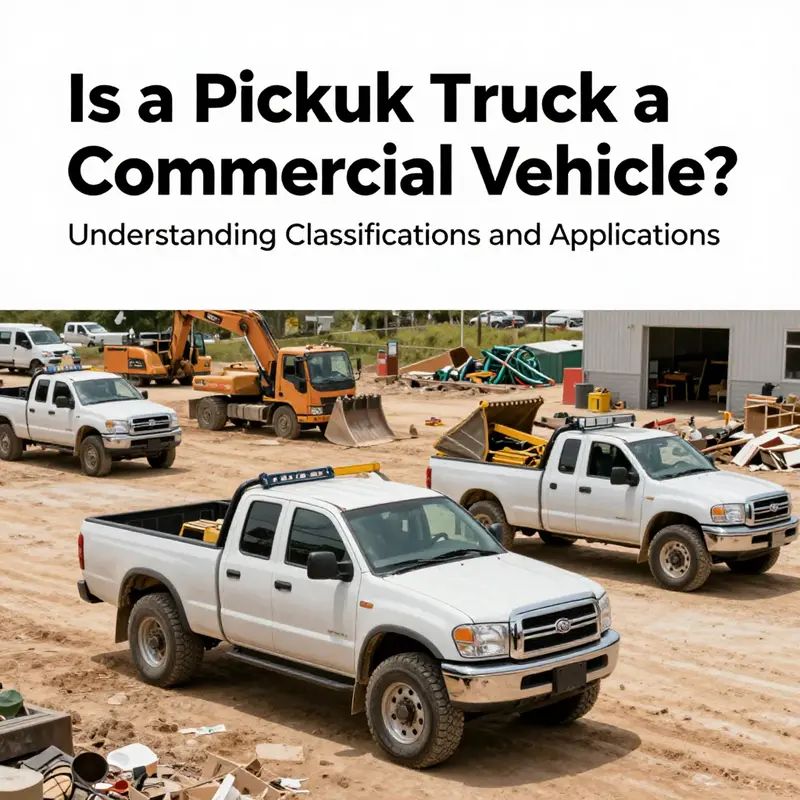
Agriculture, construction, and logistics illustrate the breadth of applications without becoming a laundry list. Farmers use pickups to ferry hay bales, irrigation equipment, or seed and fertilizer across uneven terrain where larger trucks would struggle. Contractors rely on the same platform to carry hand and power tools, timber, piping, or other materials to active job sites. In urban logistics, where space is at a premium and maneuverability matters, pickups shine by squeezing into tight loading zones and navigating streets where larger trucks cannot safely operate. Service industries convert pickup platforms into mobile workstations—compact vans that bring technicians, spare parts, and diagnostic tools directly to customers. The cargo bed and the cab together create a compact, all-in-one workspace: a seat for the crew, a rack of tools, a bank of storage, and a place to stage materials for repairs or installations.
The functional advantages of pickup trucks extend beyond cargo capacity. Towing and hauling are central to their commercial value. The ability to tow trailers, whether for moving equipment to a site or transporting a modular load to a client, unlocks a wider range of services without requiring a separate trailer fleet. Hauling capacity means bulky items—beams, bulk bags, or palletized goods—can travel with fewer handling steps. The open bed design supports flexible loading patterns: items can be oriented and secured in ways that adapt to the current job, whether that means stacking long pipes along the bed rails or laying a pallet flat across the bed floor. These capabilities contribute to operational efficiency, reduce labor time on-site, and lower the friction that often accompanies logistics in constrained spaces.
Yet the conversation around pickups as commercial vehicles is incomplete without acknowledging the balance between capability and cost. The interior volume, payload, and towing ratings must align with the business’s load profiles. A truck with ample bed space and a tall payload may still be a mismatch if the job requires frequent long-distance hauls or heavy trailers. Conversely, a compact configuration with insufficient payload can force awkward workarounds, increasing risk and reducing efficiency. Fuel economy also matters when a pickup becomes a day-to-day business tool. The goal is to optimize the trade-offs between performance, reliability, and operating expenses, recognizing that a pickup is not just a car with a bigger bed but a small, dedicated work platform that must stay on the job longer, with fewer interruptions, and at a predictable cost.
As businesses increasingly rely on these vehicles across varied roles, the adaptability of pickups becomes a design principle for small fleets. The chassis and engine power offer a sturdy backbone for specialized applications without sacrificing the ability to serve as a general-purpose transport. The spacious interior supports the storage of tools, parts, documentation, and even digital devices that field teams need for on-site work, while the payload and bed dimensions give managers the confidence to load what is necessary for daily operations. This dual capability—serving both as a personal vehicle and a professional tool—helps reduce fleet complexity and can yield meaningful savings in total cost of ownership when planned with care. In this sense, the pickup truck becomes a pragmatic answer to the recurring question faced by many small businesses: how to maximize utility while keeping procurement and maintenance manageable.
For practical approaches to integrating pickups into business workflows, see Buy-Sell-Trucks-Campers-Efficiently. The idea behind such resources is not to prescribe a single solution but to offer a framework for evaluating how a pickup can support a company’s unique workflow, route structure, and service commitments. By examining factors like load patterns, frequency of trips, and the demand for on-site service capabilities, managers can align vehicle selection with core operational needs. A well-chosen pickup can reduce downtime on the road, streamline inventory handling, and improve job-site readiness, making the vehicle an extension of the team rather than a separate asset.
In parallel with these practical considerations, organizations should consult authoritative references that address the performance characteristics and regulatory classifications that accompany commercial use. The industrial guidance that discusses pickup platforms in the context of heavy-duty tasks and durable design helps frame expectations for maintenance cycles, service intervals, and long-term reliability. The literature emphasizes how routine maintenance—brake checks, transmission service, tire condition, and payload balance—preserves the vehicle’s ability to perform across a broad set of tasks. It is not merely about keeping the vehicle on the road; it is about keeping the operation on schedule, ensuring that deliveries, site visits, and service calls occur with consistency and predictability. As fleets grow and routes become more complex, the role of the pickup in stabilizing the service cadence becomes increasingly evident, reinforcing why many small businesses rely on a single platform to cover multiple operational needs.
External insight can deepen this understanding. For instance, a comprehensive guide on the performance and properties of pickup trucks used in industrial applications provides a useful reference for engineers, shop managers, and business owners alike. Such resources illuminate how chassis rigidity, engine torque curves, and payload distribution influence real-world outcomes on varied terrains and job sites. They also remind us that the regulatory landscape is not static; it evolves with changes in mileage-based regulations, emissions standards, and safety requirements. Businesses that stay informed about these shifts can adjust fleet usage and compliance strategies accordingly, reducing risk and aligning financial planning with legal obligations. In practice, this means building a responsive procurement and maintenance plan that anticipates regulatory changes while preserving the operational flexibility that makes pickups attractive.
To reinforce the broader context, consider the external reference material that examines industrial applications and performance: https://www.madisonhill.com/rhd-pickup-truck-guide. This resource offers a thorough lens on how pickup platforms are configured for practical tasks in real-world environments, from rural operations to urban service routes. By integrating such insights with the day-to-day experience of running a small fleet, managers can craft better procurement criteria, smarter maintenance schedules, and clearer expectations for the role of the pickup in the business.
In sum, the commercial utility of pickup trucks rests on a simple premise and a layered reality. They are capable, adaptable tools that can fit into a broad spectrum of business models, from light-duty service calls to on-site material movement. Their open cargo beds, durable chassis, and towing potential make them uniquely suited to the needs of small businesses that require mobility and versatility without the overhead of larger fleets. The regulatory context, cost considerations, and practical deployment all converge to create a compelling case for pickups as legitimate commercial vehicles when used in the service of business operations. The chapter that follows will build on this foundation, shifting the focus from broad utility to the specific patterns and decisions that shape how fleets select, deploy, and manage pickup-based operations in a world that increasingly prizes efficiency, resilience, and adaptability.
Rugged Logistics: The Economic Engine of Pickup Trucks in Commercial Activity
Across the working landscape, pickup trucks have grown from personal conveniences into indispensable instruments of commerce. They are not merely vehicles; they are modular tools that adapt to shifting workloads, weathered sites, and evolving customer demands. In many regions, the line between personal transportation and business mobility is porous enough that a pickup’s true value reveals itself in the way it accelerates day-to-day operations, lowers friction in the supply chain, and unlocks opportunities for smaller players to compete with larger fleets. When a business needs a reliable means to move tools, materials, or finished products, a pickup truck often serves as the most flexible option, balancing cargo capacity with maneuverability and cost. The economics of that choice ripple through the broader economy, shaping employment, productivity, and regional vitality in ways that are easy to overlook but essential to understand.
From a market perspective, the economic footprint of commercial pickup trucks is substantial. In the United States alone, the market for commercial pickup trucks is valued at over fifty billion dollars each year. This figure reflects not only the sale of vehicles but also the ongoing ecosystem that sustains it: maintenance services, parts and accessory supply, fuel distribution, and the indelible work of dealerships and financing networks. The number signals more than a line item in a balance sheet; it signals a distributed network of livelihoods, from technicians who tune engines to the small-business owners who use these trucks to keep their doors open. The flow of activity surrounding these vehicles reverberates through manufacturing campuses, regional service centers, and aftermarkets that specialize in everything from bed liners to towing kits. In that sense, the pickup truck commercial niche acts as a multiplier, vibrating through employment and ancillary industries just by virtue of sustained demand and ongoing utilization.
Operational efficiency sits at the heart of why pickup trucks end up in commercial hands. They enable work to happen on the go, reducing downtime that often erodes margins in field operations. A technician can prepare a job in a shop, head to a site with all necessary tools already loaded, and dispatch from there to the next location without returning to a central depot. This fluidity translates into more effective routes, shorter cycle times, and fewer idle periods when projects hinge on timely deliveries or on-site service windows. The same logic extends to delivery services and trades that require frequent loading and unloading of varied cargo. The cargo bed and payload capacity of a pickup provide a practical sweet spot: enough space to carry essential equipment or a moderate quantity of goods, while still delivering the nimbleness and lower running costs that heavier commercial vehicles cannot match. In this context, the pickup becomes a low-friction asset, a sensible starting point for operations that prioritize adaptability and speed without the capital heft of larger fleets.
For small and medium-sized enterprises, the commercial pickup is a particular kind of enabler. SMEs often face barriers when entering or expanding into services that demand reliable transportation—barriers that include upfront capital, ongoing maintenance, and the risk of underutilized capacity. A midsize or light-duty pickup represents a cost-effective mobility solution that aligns with the scale of many local businesses. The balance of cargo capacity, off-road capability, and fuel efficiency makes pickups well-suited for last-mile deliveries, field service operations, and on-site project work. Compared with larger vans or trucks, pickups can offer lower total cost of ownership, easier access to tight urban spaces, and the flexibility to switch between multiple roles as a business evolves. In markets where credit, insurance, and maintenance ecosystems are accessible, an SME can bootstrap operations with a relatively modest investment and expand gradually as demand grows. That incremental adaptability matters because it lowers entry barriers, encouraging entrepreneurship and experimentation, and thereby contributing to more dynamic, resilient local economies.
An entire ecosystem has grown up around the pickup’s commercial role, and the scale of this ecosystem is itself a source of economic value. The aftermarket sector—encompassing modifications, accessories, and specialized equipment—sustains thousands of businesses that cater to fleets and independent operators. This layer ranges from protective bed coatings and shelving to heavy-duty towing attachments and weatherproof storage solutions. The revenue generated here does not merely reflect accessory sales; it sustains jobs, drives technical service demand, and stimulates regional distribution networks. The aftermarket also acts as a buffer against obsolescence, allowing aging fleets to stay productive longer through targeted upgrades that improve payload, storage, or fuel efficiency. In this way, the pickup’s commercial use catalyzes continuous investment in both core vehicle technology and peripheral services, reinforcing a cycle of demand that benefits manufacturers, distributors, and maintenance providers alike.
On a global scale, demand dynamics for commercial pickup trucks are shaped by urbanization, the expansion of e-commerce, and infrastructure development in emerging economies. Cities increasingly rely on versatile, smaller-footprint vehicles to support last-mile logistics, trade, and service delivery in dense environments where large fleets are impractical. The capability to perform multiple functions—haul light cargo, transport tools, and adapt to varying job sites—makes pickups attractive in regions transitioning toward more agile, on-demand business models. As payload and towing performance continue to improve, while engines tighten fuel economy and emissions standards, manufacturers are investing to enhance the value proposition of pickups for commercial use. The result is a broader, more integrated mobility solution for businesses that require reliable transport without overcommitting capital to oversized equipment. Even in a mature market, the continued refinement of these vehicles—calibrated to the needs of tradespeople and delivery professionals—helps sustain employment, drive productivity, and support regional economic growth by enabling quicker, cheaper, more flexible work arrangements.
The economic impact of this dynamic goes beyond the sheer sale of vehicles. A widely cited multiplier effect from national accounts underscores the chain reaction triggered by spending on commercial pickups. For every dollar spent on these vehicles and their associated services, roughly one and a half to nearly two dollars of additional economic activity can ripple through supply chains, maintenance networks, and related services. In other words, the investment in a pickup is not a single transaction; it is a seed for broader activity—manufacturing jobs, parts distribution, logistics support, and the labor that keeps roads, warehouses, and service centers functioning. This multiplier effect helps explain why policymakers and business leaders pay attention to the role of versatile work vehicles in regional economic strategy. They recognize that reliable mobility lowers operating risk, expands the geographic reach of small firms, and contributes to a more resilient local economy—especially in sectors like construction, agriculture, utilities, and on-demand services where scheduling is tight and delays can compound costs.
A practical dimension of their impact lies in how pickup trucks sustain employment across many sectors. Technicians, installers, maintenance crews, and field supervisors rely on these vehicles to reach job sites, collect materials, and coordinate activities across a network of clients and suppliers. Fleets comprised of pickups—whether owned outright by a single contractor or deployed as part of a small fleet—tend to be easier to manage, insure, and scale than larger commercial vehicles. This accessibility matters for job creation and stability, particularly in regions where alternatives to private ownership or centralized fleets are limited. The resulting employment effects extend through the service economy: insurance brokers, fuel suppliers, equipment rental firms, and retail parts outlets all benefit when commercial pickups remain a steady, productive tool for everyday business. In turn, the health of these ecosystems feeds back into the core business community, supporting entrepreneurship and enabling local markets to respond quickly to demand shifts.
Regulatory frames also shape the commercial value of pickup trucks. Across multiple jurisdictions, a vehicle is often classified as commercial if its primary use is for business operations, regardless of size. This classification has practical implications for licensing, insurance, eligibility for fleet programs, and access to certain tax or incentive structures. While the specifics vary by country or region, the underlying principle remains: the intended use of the vehicle, not merely its form, is what anchors its commercial status. That clarity helps business owners, contractors, and logistics operators align their asset base with regulatory expectations and funding opportunities. It also encourages operators to design and optimize their workflows around the strengths of pickups—their cargo capacity, adaptability, and cost profile—rather than forcing a trade-off between city-friendly maneuverability and business utility.
The narrative of pickup trucks as commercial vehicles is not purely about efficiency; it is also about resilience and opportunity. In an era of rapid digital transformation, where last-mile delivery, on-site services, and field-based work proliferate, the pickup’s ability to support flexible, responsive operations becomes a competitive differentiator. SMEs can respond to sudden demand spikes, adjust routes to minimize travel time, and reconfigure their work plans with greater agility than would be possible with heavier, less maneuverable options. This adaptability nurtures a culture of innovation among small teams, encouraging experimentation with new service models, scheduling approaches, and customer engagement strategies. The synergy between mobility, cost control, and service reliability strengthens business resilience and expands the potential for market participation among enterprises that might otherwise be sidelined by larger fleet requirements.
For readers seeking a grounded sense of how these trends play out in the market, recent analyses of used-truck sales growth illuminate the ongoing lifecycle of commercial pickups. They show a robust, dynamic market that supports resale value, parts availability, and second-life uses, all of which contribute to the overall economic ecosystem around these vehicles. Current trends in used truck sales growth provides a lens into how demand and pricing stability sustain confidence for small operators and fleet managers alike. As a practical matter, this means more accessible options for entry into commercial mobility and a more stable basis for planning maintenance, upgrades, and retirement of aging units.
Ultimately, the narrative of pickups as commercial vehicles is inseparable from the broader economic fabric. The blend of market scale, operational efficiency, SME affordability, aftermarket activity, global demand, and regulatory clarity creates a powerful engine for productivity and employment. The fifty-billion-dollar annual footprint is both a signal and a multiplier: it signals where business activity concentrates and grows, and it multiplies opportunity by enabling faster, more reliable service across a spectrum of industries. As policymakers, business leaders, and fleet operators look to the future, the pickup’s role as a flexible, resilient, and cost-effective workhorse will continue to shape how work gets done, how markets respond to demand, and how communities build out their economic foundations. For those who study the flow of goods, the movement of people, and the daily grind of field work, the pickup truck remains a compact yet potent reminder that mobility, when designed and deployed well, amplifies human effort and fuels economic progress.
External reference for broader context on productivity and employment implications: https://www.bls.gov/opub/ted/2023/ted_20230426.htm
From Bed to Boardroom: How Modern Pickup Trucks Are Redefining Commercial Efficiency and Safety
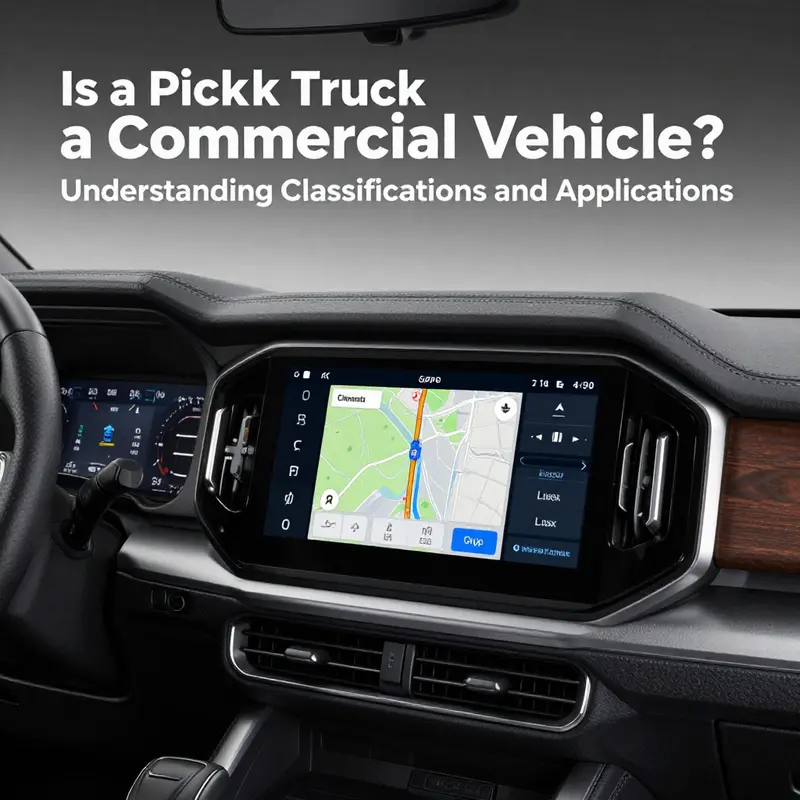
Pickup trucks have long carried a reputation for rugged reliability and pragmatic utility. Yet today’s commercial landscape demands more than a strong frame and a big cargo bed. It requires a vehicle that can shuttle tools, parts, and personnel with the same ease that it handles lumber, pipes, or pallets. The shift is not about replacing fleets with luxury autos; it is about elevating a familiar workhorse into a smarter, safer, and more connected platform for business operations. When the vehicle used for business becomes a partner in planning and execution, a pickup truck ceases to be merely a mode of transport and becomes a strategic asset. This transformation is visible across small service outfits, regional delivery teams, and construction crews alike. The bed remains essential, but the technology around it is what turns daily tasks into efficient workflows and predictable outcomes.
At the core of this evolution are Advanced Driver-Assistance Systems, or ADAS, that help drivers navigate long days and complex job sites with greater confidence. Adaptive Cruise Control keeps a safe distance from the vehicle ahead, which matters when contracts hinge on timely arrivals and tight schedules. Lane-Keeping Assist adds a safety net in busy traffic corridors or winding suburban routes, helping keep the vehicle centered and reducing the chance of small lane deviations turning into costly delays. Automatic Emergency Braking serves as a proactive safeguard, detecting potential collisions and intervening when a driver’s reaction time may be stretched thin by fatigue, distractions, or multiple tasks. In practical terms, these features translate to fewer near-misses, less stress behind the wheel, and more attention available for planning the next job, estimating fuel, or coordinating a remote team. The effect is not to replace human judgment but to complement it, letting drivers maintain focus where it truly matters—on the work at hand and on meeting customer commitments.
Connectivity, too, has moved from optional luxury to baseline expectation. Modern commercial pickups offer premium connectivity options and enhanced infotainment systems that go well beyond streaming music or navigation. The real value lies in real-time data access and intuitive interfaces that empower drivers to manage routes, communicate with dispatch, and access critical information without taking their eyes off the road. For fleets, the connected vehicle is a rolling node in a larger network. Smartphone integration and remote diagnostics enable maintenance teams to monitor health metrics, track vehicle location, and receive proactive alerts about wear or impending service needs. This means fewer roadside surprises and more predictable maintenance windows, which translates into lower downtime and steadier output for the business. In a world where every hour counts, knowing the exact health of the vehicle and the closest service option is a competitive edge rather than a mere convenience.
The discussion of technology would be incomplete without considering fleet-management capabilities that are increasingly integrated into the standard offerings of new pickup models. Vehicle tracking provides real-time location data that helps route planners optimize deliveries, service calls, and on-site jobs. Maintenance alerts can be configured to alert drivers and managers of upcoming tire rotations, brake inspections, or software updates, ensuring the fleet stays in peak condition. Version after version of these systems are designed to be user-friendly, so technicians in the field can troubleshoot issues quickly, and managers can interpret data without requiring a degree in data science. The result is a smoother, more transparent operation where decisions are grounded in live information rather than anecdotal impressions. This data-driven approach also supports better budgeting and forecasting. When maintenance needs are anticipated, capital can be allocated more efficiently, replacing costly emergencies with planned capital expenditures that keep the operation moving.
A broader regulatory framework underpins this shift toward smarter commercial pickups. In many jurisdictions, the line between a personal-use vehicle and a commercial vehicle is drawn not by the size of the truck but by how it is used. A pickup engaged primarily in business operations—whether delivering goods, transporting tools to a job site, or supporting field technicians—meets the criteria for commercial classification in ways that are practical and enforceable. In the United States, and in many other regions, formal guidance from regulatory bodies such as the FMCSA helps clarify vehicle classification and commercial use, ensuring that operators understand when commercial requirements apply and what compliance looks like in daily practice. This regulatory clarity matters because it aligns incentives. When a vehicle is treated as part of a business operation, investments in safety, connectivity, and maintenance can be justified by measurable improvements in uptime, safety outcomes, and compliance.
The economic logic behind equipping pickups with ADAS, connectivity, and fleet-management features is grounded in tangible returns. Modern trucks can carry substantial payloads yet remain efficient in fuel consumption when paired with engines designed for sustained work cycles. The payload capacity, the efficiency of the drivetrain, and the reliability of the powertrain all influence the total cost of ownership. But beyond raw numbers, the reliability of a smart truck manifests as predictable service delivery. Downtime due to mechanical failures or unscheduled maintenance erodes margins and disrupts customer schedules. Predictive maintenance, enabled by on-board diagnostics and cloud-based monitoring, turns maintenance from reactive repairs into planned optimization. And as fleets mature, the ability to monitor vehicle health from the office or the field becomes a strategic advantage. Dispatch teams can align vehicle readiness with customer windows, reducing idle time and ensuring deliveries or service calls occur within promised timeframes.
The practical implications for small businesses are profound. Consider a contractor who relies on a single pickup to transport tools, spare parts, and personnel to multiple jobs in a day. With ADAS, the driver gains a layer of safety during congested commutes or narrow site approaches. With enhanced connectivity, the driver can reroute on the fly if traffic heats up on the planned path, while the fleet manager can see where each truck is and how its health status is evolving. In urban deliveries, the ability to track vehicles and adjust routes in real time minimizes fuel burn and reduces wear and tear on tires and brakes. In regional operations, the promise of maintenance alerts and remote diagnostics translates into fewer emergency service calls and more consistent service level agreements with customers. The bottom line is straightforward: technology does not replace the human element in these operations; it amplifies it, turning a workhorse into a reliable, data-informed partner for every job.
The narrative around commercial pickups also points toward a broader trend that blends utility with sustainability. The integration of intelligent systems sits alongside evolving propulsion options and improved energy efficiency. For many fleets, electrification is increasingly compatible with the same logistical demands that once defined gasoline-powered work trucks. The emphasis remains on payload, range, reliability, and infrastructure compatibility. In this context, the pickup truck is reshaping not just daily workloads but the expectations of what a commercial vehicle should deliver. It is no longer assumed that a heavy-duty work vehicle must sacrifice maneuverability or cost efficiency; instead, the modern pickup promises a blend of strong hauling capability, lower operating costs through smarter fuel management or alternative propulsion, and the digital tools that connect vehicle, driver, and dispatcher into a cohesive workflow.
To the reader seeking a forward-looking snapshot, the message is clear: these technologies are becoming standard in new commercial pickup models rather than optional add-ons. The vehicle is no longer a stubborn work tool but a mobile platform that integrates with the office, the dispatch center, and the job site. For business owners and operators, the implication is to evaluate arriving models not only by their torque and bed size but by the maturity of their systems. The immediacy of real-time diagnostics, route optimization, and automatic safety features can translate into measurable improvements in safety records, on-time performance, and customer satisfaction. In practice, this means adopting a vehicle that supports planned maintenance, reliable connectivity, and responsive telematics without creating a maze of subscriptions or complicated integrations. The future of commercial pickups lies in a balanced equation: robust capacity, enduring reliability, and a digital backbone that keeps the wheels turning and the jobs progressing.
Within this evolving landscape, one resource worth a closer look is the broader narrative around electrification and connected technology in commercial pickups. For readers curious about how these trends are unfolding in North American markets, a deeper dive into the electrification dimension can be enlightening. Electric Trucks Revolutionize the Canadian Market offers a perspective on how electric propulsion intersects with fleet needs, urban regulations, and the logistical realities of real-world work. The discussion is not limited to propulsion alone; it also touches on how telematics, safety systems, and fleet-management platforms harmonize with a shift toward cleaner, more efficient operations. While not every business will move to electrified trucks immediately, the framing highlights a future in which electric powertrains, smarter software, and automated safety features become standard components of the commercial pickup.
As the chain of development continues, the narrative becomes increasingly integrated: a pickup truck used for business is not just a vehicle but a connected workspace on wheels. The vehicle’s bed and chassis remain critical for carrying gear and goods, but the surrounding digital ecosystem is what unlocks maximum efficiency and reliability. The practical effect is more predictable scheduling, safer operations, and better utilization of every mile driven. The shift is not a marginal improvement but a fundamental redefinition of what a pickup can do in a commercial context. Businesses of all sizes can benefit from adopting models that blend strong payload capabilities with ADAS, robust connectivity, and fleet-management features that deliver real value in terms of uptime and customer satisfaction. In this sense, the pickup remains a workhorse, yet it carries a new set of responsibilities and capabilities that reflect the realities of modern logistics and service delivery.
For readers seeking broader context on the evolving role of pickup trucks in commercial settings, several industry conversations underscore the direction this chapter has traced. The synergy between safety, efficiency, and connectivity is not a single upgrade but a coherent trajectory toward smarter work vehicles. As fleets grow more complex and customer expectations rise, the pickup’s ability to adapt—through data, connectivity, and intelligent safety—will continue to determine competitive advantage. The discussion connects practical on-site needs with strategic fleet planning, showing how a simple bed can become the focal point of a data-informed, safety-conscious, and cost-efficient business model. The result is a vehicle that supports not only the day’s tasks but also the long-term health of the enterprise.
In closing, the modern commercial pickup is best understood as a platform for operational excellence rather than a single-function tool. Its value emerges from the integration of safety, connectivity, and fleet-management capabilities with the fundamental reliability of the chassis and drivetrain. When a business treats a pickup as a strategic asset, it gains a multiplier effect: safer drivers, more reliable service, and clearer, data-driven insights that guide scheduling, maintenance, and growth. This is the new baseline for the commercial pickup, and it points toward a future in which every mile traveled is informed, intentional, and aligned with the business’s broader goals. For professionals across trades and service industries, that future is already arriving in the form of smarter, more capable pickups that can be counted on to perform when it matters most. And as the dialogue around this transformation continues, it invites ongoing evaluation of technology, safety standards, and regulatory frameworks to ensure that the benefits are maximized while risks are kept in check. A practical takeaway is to look for equipment that offers a balanced package: dependable hardware, meaningful safety features, and a software stack that can scale with the business while remaining easy to deploy and maintain. The vehicle becomes less a purchase and more a long-term investment in reliability, efficiency, and continued growth. For further exploration of related trends and perspectives, see the broader conversation around how pickup trucks are evolving in commercial contexts, including external discussions on the role of these vehicles in a shifting transportation landscape.
Moving Between Worksites and Main Streets: Rethinking the Pickup as a 21st-Century Commercial Vehicle
A pickup truck sits at a curious cultural hinge, neither merely a utilitarian tool nor solely a personal vehicle, but something in between that adapts to the demands of work, family, and local landscapes. Its enduring appeal rests on a simple paradox: it can be stubbornly rugged on a job site and surprisingly adaptable on city streets or winding rural byways. This dual utility—carrying capacity and everyday versatility—has long defined its commercial potential, yet the social meaning surrounding the vehicle is shifting just as rapidly as its technical capabilities. In many places, whether a pickup is treated as a commercial vehicle depends less on its physical size or engine than on how it is used. If a job requires transporting goods, tools, or equipment for hire or for business operations, the vehicle steps into a commercial role. When the same vehicle is pressed into weekend camping trips, family outings, or personal errands, it can be perceived as a personal or leisure asset. This fluid boundary makes the pickup a compelling case study for how societies value mobility differently: as a practical asset within a local economy and as a symbol of flexibility in a world that prizes both efficiency and resilience.
The regulatory frame around what counts as a commercial vehicle mirrors that complexity. In jurisdictions around the world, classification often hinges on use rather than a vehicle’s physical footprint. A midsize or light-duty pickup can be a commercial vehicle if it is employed primarily for business operations—think transporting goods for hire, supporting construction or service tasks, or delivering products in a trade environment. This emphasis on use helps explain why fleets vary so much in composition: a single vehicle can blur lines between a contractor’s workhorse and a small business courier, depending on daily needs and regulatory interpretation. In many places, official guidance emphasizes whether the vehicle is engaged in business activity, whether it transports equipment or cargo for hire, and whether the operator is subject to commercial driver requirements. The actual classifications often sit at the intersection of policy, industry practice, and the local economy, with regulatory agencies providing broad frameworks rather than one-size-fits-all prescriptions. For researchers and practitioners, this means that the same pickup could be treated differently across borders or even across towns, underscoring the importance of local regulatory awareness when planning fleet use or tax considerations.
From a policy perspective, the conversation around pickups as commercial assets intersects with environmental goals, urban logistics, and the evolving needs of small businesses. The global automotive industry is undergoing a broad shift toward more sustainable propulsion, and this shift is filtering into the everyday reality of commercial fleets. In regional markets that prize efficiency and lower operating costs, owners are increasingly attracted to pickups that can shoulder heavy loads while delivering better fuel economy or reduced emissions. The rise of electric propulsion in commercial segments signals a foundational change in how these vehicles are perceived. Electric pickups promise to lower not only tailpipe emissions but also the total cost of ownership when fleets operate in dense urban corridors or in regions with strict air quality standards. The potential for quieter operation and smoother torque delivery can improve productivity on job sites and in delivery networks, where reliability and uptime are paramount. As governments promote cleaner fleets through policies, incentives, and infrastructure, the practical appeal of pickups for business use expands while the stigma of a rugged, gas-powered workhorse gives way to a broader narrative about multifunctional mobility.
This reframing is evident in regional shifts that blend work with recreation and local culture. In some European contexts, the pickup’s primary role remains commercial—carrying materials to construction sites, transporting farm goods, or supporting mobile services. Yet there is a notable tilt toward leisure-time utility: campers, off-road enthusiasts, and family-oriented buyers increasingly see a pickup as a platform capable of squarely handling both the job site and the weekend. The result is a more diverse ownership profile, with buyers who value the bed’s practicality for cargo and the cab’s comfort for extended trips. The social image of the pickup broadens from “the tool of rugged labor” to “the adaptable platform for daily life,” reinforcing the vehicle’s appeal across different demographic cohorts. In South American markets, for instance, the vehicle continues to be prized for its durability and reliability in challenging climates, but the social narrative often layers in a sense of resilience, adaptability, and economic necessity. The pickup becomes not only a conveyance but a dependable companion in dealing with varied terrain and weather, a critical asset in sustaining small-scale commerce and family livelihoods alike.
Technology and environmental transformation are accelerating this evolution. The broader industry is racing toward new energy commercial vehicles, including electric pickup trucks, a development that carries both practical and symbolic weight. Electrification promises meaningful reductions in emissions and operating costs over the long run, which matters to fleet managers who must balance productivity, compliance, and budget constraints. For communities and policymakers, the shift toward electric options signals a commitment to cleaner air, quieter streets, and more sustainable urban logistics. The conversation about where and how to deploy these vehicles is part of a larger evaluation of fleets as living systems that must navigate traffic, regulations, charging infrastructure, and the pace of technological change. The potential benefits for commercial uses are tangible: instant torque can improve performance in towing or hauling short distances, regenerative braking helps manage energy in mixed-use routes, and predictive maintenance becomes more feasible with connected systems. At the same time, the social and economic narratives around electric pickups are not one-dimensional. They intersect with concerns about charging availability in rural areas, the upfront cost of new technology, the need for skilled maintenance, and the right sizing of fleets to specific business models.
Amid these technical and policy shifts, the cultural lens through which we view pickups continues to evolve. European and Latin American communities, traditionally oriented toward practical utility, are increasingly embracing the vehicle’s potential for lifestyle integration. In many urban areas, where parking and space constraints shape consumer choices, the pickup’s bed capabilities and versatility for both goods and people can translate into a form of everyday practicality rather than a mere worksite tool. This shift signals a broader social credential: the vehicle is seen as a platform that enables flexible work arrangements, supports micro-entrepreneurial activity, and accommodates family life without forcing a stark separation between business and leisure. The rising interest in new energy options within commercial fleets adds another layer to this cultural metamorphosis. As governments implement policies to encourage clean energy adoption and as battery technology improves, the ability of a pickup to perform demanding tasks with lower environmental impact makes the vehicle appealing to a wider audience, including those who prioritize sustainability as a core value in their purchasing decisions. In the context of business, this means more small enterprises and regional operators considering a pickup not just for its cargo capacity but also for its potential to participate in cleaner, quieter, and more efficient service models.
The narrative around pickups as commercial vehicles is also shaped by the broader discourse on mobility, logistics, and resilience. In a world where last-mile delivery and intermediate transport require agile and reliable tools, the pickup offers a practical blend of payload capability and on-road nimbleness. For small businesses that must balance cost with reliability, the pickup can be a strategic asset, replacing or supplementing larger, less versatile vehicles. The social value of this asset lies not only in the capacity to move goods but in the flexibility it affords to respond to fluctuating demand, weather disruptions, or local market dynamics. This adaptability, in turn, influences how communities think about work, entrepreneurship, and the daily choreography of transportation. The moral of the story is not simply that pickups are useful in business; it is that their aging image as stubborn laborers is being reimagined. They are increasingly viewed as modern, multifunctional platforms that connect the practical world of commerce with the human need for mobility, accessibility, and opportunity.
To those who plan fleets, manage logistics, or navigate policy, the pickup’s evolving identity offers both a caution and a cue. Caution in the sense of understanding the regulatory landscape and ensuring compliance with classification, licensing, and safety standards across different jurisdictions. The cue, however, is a reminder that the vehicle can serve as a bridge between small-scale enterprise and broader social goals—reducing emissions, enabling efficient deliveries, and supporting regional economies without sacrificing the everyday value many households expect from their own transport. This perspective invites a more nuanced assessment of ownership, usage patterns, and total cost of ownership. It also suggests that future vehicle choices will increasingly hinge on the fit between a pickup’s payload capabilities, its technological sophistication, and the environment in which it operates. The story is less about a single category of vehicle and more about the space where work, home, and community intersect, with the pickup truck serving as a practical ambassador in that crossroad.
For readers seeking to explore the electrification angle more deeply, the industry narrative is increasingly captured in broader analyses of how fleets adapt to new energy technologies. The move toward electric and other low-emission propulsion within commercial segments is not merely a technical transition; it is a social one that reshapes who uses pickups, where they operate, and how communities perceive their value. In this evolving landscape, the pickup remains a central instrument—one that can be tuned to local needs, regulated in nuanced ways, and imagined as a catalyst for cleaner, more efficient movement of goods and people alike. As with any vehicle whose role straddles work and life, the question is less about rigid classification and more about the practical realities on the ground: how a single truck, chosen wisely, can keep a business humming while also enabling a flexible, mobile lifestyle for its operators and families. In this sense, the pickup is less a relic of a past era than a living, adaptable platform that continues to renegotiate the boundaries between commerce, community, and personal mobility.
Internal link: The shift toward electrified fleets is further explored in industry discussions such as Electric trucks revolutionize the Canadian market. This resource highlights how electric propulsion is reshaping fleet planning, performance expectations, and total cost of ownership for commercial use, providing a practical lens on how the landscape may unfold in markets beyond the immediate region discussed here. Electric trucks revolutionize the Canadian market
External resource for further reading: As societies expand the conversation around new energy commercial vehicles, researchers note the momentum of electrification and the changing urban landscape. For additional context on these global trends, see the ICCT analysis of leading cities for new energy commercial vehicles in China: https://www.theicct.org/publications/leading-cities-for-new-energy-commercial-vehicles-in-china
Final thoughts
In summary, pickup trucks serve as essential vehicles in various commercial settings, shaped by regulatory definitions, practical applications, economic impacts, and technological features that enhance their utility. By acknowledging their role as commercial vehicles, businesses can better strategize their fleet management and procurement decisions. The societal perspective further emphasizes the importance of these vehicles, making them integral to the transportation and logistics sectors. As industries evolve, embracing the multifaceted capabilities of pickup trucks will drive operational efficiency and foster growth.