
The classification of pickup trucks as commercial vehicles hinges not merely on their design but significantly on their operational usage. For trucking company owners, fleet managers, and procurement teams in construction and mining, understanding this distinction is crucial. This article will dissect personal versus commercial use of pickup trucks, highlight the legal ramifications of these classifications, examine the insurance and tax considerations involved, and present practical applications that reflect their commercial status. Each chapter will build a comprehensive understanding on how these vehicles intersect with business policies and operational demands, ensuring informed decisions in managing fleet logistics and resource allocation.
When Wheels Meet Work: Decoding How a Pickup Becomes a Commercial Vehicle
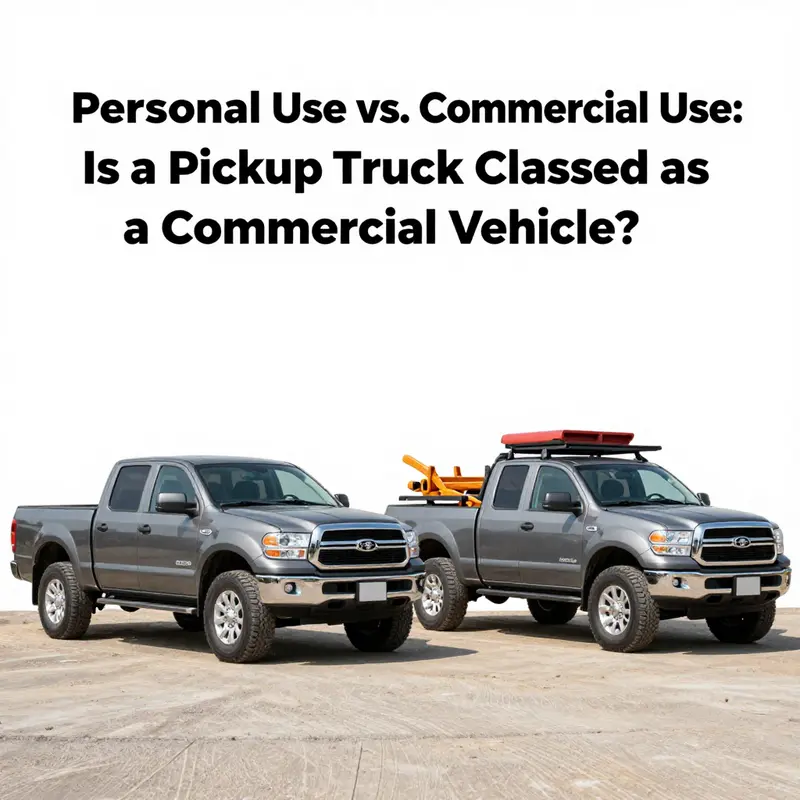
The question at the heart of this chapter is simple: is a pickup truck a commercial vehicle? The easy answer might hinge on design, an open cargo bed, and the image of steady work on job sites. But the real decision point lies in how the vehicle is used. A pickup can serve daily drives to school, weekly grocery runs, and weekend hauls for a family project, or it can be pressed into service moving tools, delivering materials, or supporting a business operation. The border between personal and commercial use is not painted in the color of the truck’s body, but in the ink of its calendar and the footprint of its daily routine. Within that nuance lies the practical truth that many people discover only when they venture into the weeds of insurance forms, licensing rules, and registration options. The same vehicle can ride as a personal conveyance one week and a commercial ally the next, depending on how it earns its keep and for whom.
The distinction matters because it touches the everyday costs and responsibilities that accompany vehicle ownership. Insurance premiums can shift when a truck takes on a commercial assignment, reflecting the higher perceived risk of use in business operations. Registration can change, with some jurisdictions requiring commercial plates or special classifications that signal to authorities that the vehicle is a business instrument rather than a private means of transport. And then there are licensing rules, which may require a different class of driver’s license if the vehicle is used to move goods for hire or if it surpasses certain weight or seating thresholds. The logic is not about the beauty of the pickup’s design or the size of its bed alone; it is about the story the vehicle lives day to day, about the miles logged on the job, and about the expectations that come with that use.
The core principle guiding classification is straightforward yet easily overlooked: use dictates status. A pickup truck with a short bed that is primarily used to shuttle kids to soccer practice and to carry a weekly load of groceries is in the realm of personal use. Its weight, its features, and its general capability do not automatically convert it into a commercial device. Conversely, a pickup that routinely carries heavy tools to construction sites, transports farm produce to markets, or supports a service based business by delivering parts and equipment is operating as a work vehicle. In these instances, classification as a commercial vehicle is typically the norm, with implications that ripple through every layer of administration—insurance, tax treatment, and regulatory compliance.
This line between personal and commercial use is not a theoretical boundary; it is a practical one that changes as responsibilities shift. In some regions, the same pickup may carry commercial plates one year and private plates the next, depending on the vehicle’s primary use during the registration period. Some jurisdictions allow owners to declare their intended use or to switch classifications as the vehicle’s employment changes. There are also scenarios where the classification is not a simple yes or no but a spectrum defined by weight, cargo capacity, or passenger limits. A pickup’s bed, its towing capacity, and its engine power may remain constant, but the way those capabilities are deployed alters who bears the regulatory burden and who must meet the accompanying requirements.
The conversation around classification touches more than just the paperwork. It influences how a vehicle is insured, how it is inspected, and how it is taxed. Commercial use can trigger higher liability coverage or require different policy terms to reflect the vehicle’s exposure on the job. It can affect whether the vehicle qualifies for certain tax deductions or whether it is eligible for commercial depreciation schedules. It can also determine whether a driver needs a broader license, what kinds of endorsements might be required, and how the vehicle is treated in the event of an accident or a claim for damage. Each of these outcomes flows from a simple truth: business use carries different risks, responsibilities, and costs than personal use. The truck’s bed may remain open to the sky, but the road to compliance is paved with forms, registrations, and regulated expectations.
There is a practical, everyday way to approach this without becoming lost in regulatory fine print. Start with a clear eyed assessment of primary use. If the pickup is your work tool in a business that delivers, transports, or services customers, it is reasonable to expect a commercial classification. If the vehicle’s daily life is anchored in private errands, family duties, and personal mobility, its designation as a personal use vehicle is the more natural fit. This assessment should consider not just a moment’s use but the vehicle’s typical pattern over a meaningful period—weeks or months, not just occasional trips. Documentation matters here. Keeping a simple record of typical activities—delivery runs, on site service days, quantities moved, or distance traveled for business tasks—can help confirm the vehicle’s primary use when it comes time to register or insure. It is not a perfect blueprint, but it is a practical compass that helps owners navigate a landscape where the rules differ by jurisdiction and by the public agencies that enforce them.
In practice, many people discover the classification boundary only after attempting to insure the truck, register it, or obtain a license for business operation. The process often reveals that the key question is not whether a pickup is built to haul cargo, but whether it is used to haul cargo for pay or business purposes. Even if a truck looks like a generic workhorse, the moment it is employed to move goods from client A to job site B or to deliver equipment to a customer becomes a signal of commercial use. The same logic applies in reverse: a private owner may occasionally transport building materials or farm produce with a pickup, yet if those activities are incidental and do not define the vehicle’s primary function, the classification may lean toward personal use. This is where clarity, not conjecture, becomes essential. The responsible path is to align classification with real world use and to consult the relevant authorities to confirm what documentation or declarations are required. The DMV or its equivalent is the rightful place to seek guidance, and the official guidance often clarifies how to report a change in use or how to maintain records that justify the chosen classification over time.
To underscore the practical nature of these considerations, it helps to remember that the same pickup can be a personal vehicle in one context and a commercial asset in another. A farmer using a pickup to transport produce to the local market, for example, is engaged in business activity, while the same vehicle parked at home on weekends, used for family trips, is a personal vehicle. The hinge is daily routine and business purpose rather than a mere physical attribute. This means that the lines are not drawn by the truck’s appearance but by the rhythm of its tasks. In some places, it may be possible to register the vehicle under a general class with a declaration of business use, while in others, you may be required to pursue a separate commercial registration. The best practice is to anticipate these possibilities before a change of use occurs, so that neither the owner nor the insurer is caught off guard.
For readers who want to explore this topic more broadly, the narrative of classification is not a one off decision but part of a larger conversation about how vehicles fit into personal finances, business operations, and regulatory ecosystems. The question remains relevant whether you are a self employed craftsman, a small farmer, or someone who runs a neighborhood delivery service. It is about balancing practicality with compliance, cost with coverage, and flexibility with responsibility. When a pickup begins to serve a business model, whether it carries tools to sites, transports products to customers, or supports service work it ceases to be merely a vehicle and becomes a component of a workflow. In that moment, the classification follows the function, and the paperwork naturally follows the classification.
As you navigate these decisions, it can be helpful to tap into community resources and keep an open line to the information channels that govern vehicle use in your area. For those who want to dig deeper into the broader conversation about vehicle use, regulations, and industry trends, a good starting point is the shared knowledge found in industry blogs and guidance hubs. See the McGrath Trucks Blog for ongoing discussions and practical perspectives on how vehicles are used in real world contexts. This resource can illuminate how people reconcile personal and commercial needs in daily life, while also pointing readers toward official regulatory references when a more formal determination is required.
Ultimately, the right classification rests on a straightforward premise: what you do with the truck matters more than what the truck looks like. The law, insurers, and tax authorities respond to use, and the best way to approach the issue is with honesty about typical activity, careful documentation, and a willingness to engage the proper authorities when changes occur. If you are unsure, a proactive visit to the local motor vehicle authority or a consultation with your insurer can clarify what is needed to keep both your business and your personal finances on solid ground. The distinction between personal and commercial use is not a luxury of precision; it is a practical safeguard that helps you plan for insurance coverage, licensing requirements, and the financial implications of your vehicle’s life on the road.
For those who want to verify regulatory expectations across jurisdictions, the general principle remains consistent: use drives classification. In some places, that means a formal declaration that the vehicle is used for business, with corresponding registration changes and potentially different tax treatment. In others, it means maintaining a consistent personal-use record unless business activity becomes the dominant pattern. The overarching goal is clear: to align the vehicle’s status with its daily function, so that the driver, the insurer, and the regulator all share an accurate map of what the truck does each day. This alignment protects the owner from unexpected coverage gaps, legal ambiguities, and financial surprises while preserving the capacity to adapt if the business needs shift again in the future.
As you close this exploration, keep in mind that the precise rules can vary widely by country, state, or province. If you are seeking authoritative, up to date guidance tailored to your location, consult the official vehicle classification resources provided by your government. An external resource that offers a broad overview of how vehicle classifications are handled in official policy discussions is available at https://www.gov.uk/vehicle-classification-vehicles-and-motorcycles. The key takeaway remains consistent: the interplay between a pickup’s use, its regulatory treatment, and the costs that follow is not a static judgment but a dynamic practice shaped by everyday decisions, business needs, and ongoing compliance. By grounding decisions in actual use and maintaining clear records, owners can navigate the classification landscape with confidence, ensuring that their vehicle serves the right role without unnecessary friction or expense.
The Measure of Utility: When a Pickup Becomes a Commercial Vehicle
Pickup trucks sit at a peculiar crossroads in the world of transportation. Their open cargo beds and rugged chassis invite both weekend projects and long-haul deliveries, personal errands and professional tasks. The critical point, though, rests not in the truck’s design but in how it is used. A vehicle that is primarily a conduit for family grocery trips and occasional yard work remains a personal vehicle, even if the tailgate bears the scars of a few rough weekends. In contrast, a pickup that regularly transports tools to job sites, hauls contractor equipment, or moves produce from fields to markets becomes, for purposes of law and policy, a commercial asset. This distinction matters because it triggers a cascade of legal, financial, and operational obligations that can shift a driver’s daily routine from one of personal mobility to a regime of commercial compliance.
To understand this, it helps to start with the practical demarcation points. In many jurisdictions, the line is drawn around how the vehicle is used rather than the vehicle’s appearance or its original design. OSHA-like safety expectations, tax codes, and insurance underwriting all respond to the vehicle’s use. A truck owned by a sole proprietor who uses it to deliver countertops to clients, or by a farmer who ferries produce to market, can abruptly cross into commercial territory. The key threshold cited in many discussions is the gross vehicle weight rating (GVWR)—the European-tinged equivalent found in U.S. regulations as a standard reference point. When a vehicle crosses a GVWR boundary, the implications multiply. In the United States, for instance, a pickup that tips the scales past 26,001 pounds GVWR can trigger a need for a commercial driver’s license (CDL) depending on other factors like vehicle type and operation, even if it remains a pickup in form.
This interplay between use and regulatory response is not merely a theoretical exercise. It governs registration and licensing, insurance costs, and the kinds of records a business must maintain. If a pickup is branded and used as part of a business operation, the insurer will typically view it as carrying greater risk—more frequent travel, longer hours behind the wheel, and more potential exposure to liability. Then comes the administrative overhead: hours-of-service rules for interstate work, mandatory maintenance logs, regular vehicle inspections, and sometimes stricter maintenance standards. These are not petty formalities; they shape day-to-day operations, from scheduling to dispatch to risk management. The same vehicle can, with a different use pattern, become a liability in the eyes of underwriters who price for commercial exposure rather than personal risk.
The broader regulatory framework reinforces this central point. Federal guidance on what constitutes a commercial motor vehicle (CMV) emphasizes use in commerce and vehicle capability to transport people or property under certain thresholds. The Federal Motor Carrier Safety Administration (FMCSA) provides the backbone of this framework, outlining the criteria that elevate a vehicle’s status from a private conveyance to a CMV. The operative idea is that a vehicle’s role in facilitating business commerce—not merely its size or its bed—drives the classification. This has concrete consequences: commercial classifications often bring higher registration fees, potential CDL requirements, and more stringent compliance expectations. The distinction can feel technical, but it translates into tangible costs and responsibilities for both individuals and businesses.
Within this landscape, the consequences of misclassification can be sharp. Authorities can reclassify a vehicle if they determine that the truck is used predominantly for business purposes. Even absent formal business registration, consistent work-related use can trigger reclassification, which in turn can reset the tax treatment, licensing requirements, and permissible activities with the vehicle. For a person who uses a pickup to run occasional errands but also to haul equipment for a weekend remodel, the line can appear blurred. Yet the practical impact remains real: higher insurance premiums, different tax treatment, and, in some cases, the obligation to obtain a CDL if the vehicle’s GVWR or its operating profile meets the applicable thresholds.
The legal and regulatory environment further emphasizes that the classification hinges on the intersection of use, weight, and operation. In jurisdictions where the line is clear-cut, a business that repeatedly uses a pickup to carry tools and materials to multiple sites will be treated as operating a commercial vehicle, potentially with added oversight. In others, the distinction is more nuanced, requiring a careful audit of typical use patterns and the vehicle’s role within the broader business model. This is not simply a matter of paperwork; it is a practical assessment of risk, liability, and economic impact. The FMCSA’s framework offers guidance, but it is ultimately up to state authorities and, in some cases, private insurers to interpret and apply the rules in light of a vehicle’s daily function.
For readers navigating this terrain, the implications extend beyond the obvious concerns of licensing and insurance. They touch on how a business plans capital expenditures, how it budgets for compliance, and how it negotiates with customers who require proof of insurance or certain operating standards. A contractor may opt to classify the truck as a commercial asset to access business deductions or to satisfy client requirements, even when the vehicle’s use fluctuates. A farmer may incur higher registration costs in exchange for greater flexibility in transporting seasonal yields. The practical takeaway is that classification is not merely about the bed or the cab; it is about the rhythm of work, the frequency of trips, and the predictability of risk.
The shifting economics of the trucking and logistics landscape also illuminate this issue. In markets where demand for flexible, on-demand services continues to rise, owners and fleets leaning on pickups for commercial tasks increasingly contend with the realities of commercial classification. The way these vehicles are deployed—how often they travel across state lines, how many hours they operate in a given week, and how much payload they regularly carry—becomes a proxy for risk assessment by insurers and a barometer for regulatory exposure. As data on the broader used-truck ecosystem emerge, patterns show that operators who integrate pickups into sustained business operations are more sensitive to the regulatory frame surrounding commercial vehicles. This trend echoes in the market’s pricing signals and in the decisions buyers make about whether to register a vehicle as commercial or keep it under personal use thresholds until workflow demands justify reclassification. For readers exploring current market conditions, this dynamic is not just a regulatory curiosity; it is a practical lens through which to view vehicle ownership, insurance planning, and long-range business strategy. See how these shifts are reflected in recent market analyses under the banner of current trends in used truck sales growth, which highlight the ongoing evolution of how pickups are used in business contexts. current trends in used truck sales growth.
As one moves through this terrain, the role of documentation becomes apparent. Even when a vehicle’s use seems modest, keeping meticulous records—such as trip logs, maintenance histories, fuel use, and mileage—can support or contest a reclassification decision. For interstate operations, hours-of-service compliance becomes a daily discipline, ensuring that the vehicle’s operation remains within legal bounds and that a business avoids penalties tied to overextended duty periods. The practical utility of these records is twofold: they support legitimate business operations and provide a defense against audits and non-compliance actions that could undermine insurance claims or result in fines.
It is essential to recognize that these dynamics are not about demonizing pickup trucks as inherently risky or dangerous. Rather, they reflect the reality that the same vehicle can serve vastly different purposes across different contexts. A pickup used to haul a family’s gear to a weekend campsite poses a very different risk profile than a pickup used to deliver materials to multiple job sites every day. This difference in risk translates into obligations. It also invites careful consideration by owners who wish to optimize their operations. The optimal path often involves a thoughtful assessment of use patterns, a clear decision about how to classify the vehicle from the outset, and a proactive plan for compliance, insurance, and budgeting.
In the end, the question, “Is a pickup truck a commercial vehicle?” resolves itself not in a single rule but in an ongoing calibration between what the truck does and how the system around it expects it to behave. The open bed remains a compelling symbol of utility, but the regulatory garment it wears is worn according to its job. For readers who need to align practice with policy, the backbone of guidance lies in the federal standard that recognizes a vehicle as commercial whenever its role in commerce and its operational profile meet certain thresholds. The nuance—often the most challenging part—comes from translating those thresholds into everyday decisions: how to register, how to insure, and how to schedule work in a way that minimizes risk while maximizing efficiency.
For those who want to explore how these principles manifest in real-world fleets and the broader market, the current discourse on used-truck trends provides a useful barometer. It helps illuminate how owners balance personal use and business needs, how they price insurance, and how they prepare for potential reclassification in response to changing work patterns. It also underscores the value of proactive planning—assessing GVWR, anticipated payload, and typical trip profiles before purchase or conversion. Informed buyers and operators may find it helpful to consult the FMCSA framework and then translate that framework into practical steps tailored to their local context. To access authoritative federal guidance, refer to FMCSA Regulations.
In sum, the pickup’s destiny as personal or commercial is not etched in metal at the factory. It is authored by the user’s day-to-day decisions, reinforced by the regulatory and insurance scaffolding that supports and constrains those decisions. This is the core reality for anyone contemplating the ownership and operation of a pickup in a business context: the same vehicle that ferries family groceries can also ferry risk and responsibility, and that duality is at the heart of understanding why a pickup truck might be treated as a commercial vehicle in some circumstances and not in others.
null
null
Beyond the Bed: How Operational Use Determines a Pickup Truck’s Commercial Status
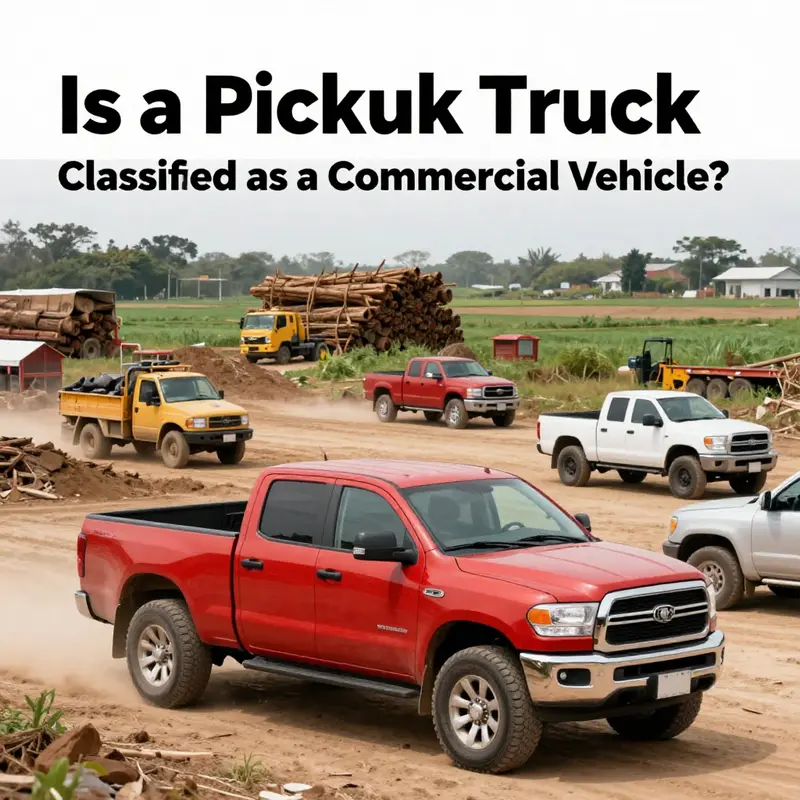
A pickup truck sits at a curious intersection of utility and identity. Its open cargo bed hints at weekend projects and family road trips, yet the same chassis, suspension, and payload capacity can power a fleet that keeps jobs sites supplied, farms fed, and last-mile deliveries moving. The contradiction is not a paradox but a practical truth: whether a pickup is classified as a commercial vehicle hinges less on its design and more on how it is used. In many places, the same vehicle can wear different regulatory labels depending on whether its everyday life is personal or professional. This use-based distinction is the thread that ties together insurance requirements, licensing, taxation, and registration. It also explains why fleets, small businesses, and individual contractors alike gravitate toward pickups as multipurpose tools rather than mere personal transport.
To understand the commercial status of a pickup, it helps to start with the premise that “commercial” is an operational designation as much as a physical one. A truck’s business orientation is revealed in the tasks it performs, the customers it serves, and the dollars it helps generate. If the vehicle primarily carries groceries for a weekend errand, a pickup can stay within the realm of personal use. But when the same truck is routinely loaded with tools, equipment, or goods for a business purpose—whether it’s hauling lumber to a construction site, transporting produce from a field, or supporting a service team on a multi-stop route—the vehicle crosses into the commercial category in the eyes of many regulators and insurers. This distinction is not mere paperwork. It shapes which licenses may be required, what kind of insurance coverage is necessary, and how taxation and registration are applied. It also frames the expectations of fleet managers who compete on reliability, efficiency, and total cost of ownership.
The law and policy around vehicle use vary by jurisdiction, but a common thread runs through most systems: the decision rests on activity, not appearance. In the United States, for example, commercial use can trigger requirements for a commercial driver’s license (CDL) if a vehicle meets certain weight or usage thresholds. Those thresholds are intended to reflect the added risk and responsibility of operating vehicles that move substantial loads or passengers on behalf of a business. Yet even where a CDL is not required, commercial classification can influence how a vehicle is insured, which forms must be filed for tax purposes, and how the vehicle is registered. The practical upshot is simple: the operational life of a pickup—what it does day to day—powers its regulatory and financial treatment more than any single design feature such as bed length, towing capacity, or cab style. A farmer with a single pickup transporting produce to a farmers market and a small contractor delivering power tools to a job site may both own similar vehicles, yet their regulatory statuses and insurance plans can diverge based on how the trucks are used.
This use-based perspective helps illuminate why fleets lean toward pickups as a scalable, flexible asset. The same model that can serve as a personal haul vehicle in off-hours can, with the right organizational approach and equipment, perform as a reliable workhorse during business hours. The practical applications across sectors underscore the truck’s adaptability. In construction, a pickup is less about the luxury of a dedicated box truck and more about the ability to ferry heavy materials, tools, and crew gear to uneven job sites. The payload and durability—often framed in terms of light- versus heavy-duty capabilities—translate directly to real-world productivity. A compact or midsize pickup may thrive in urban sites where maneuverability and fuel economy matter, while full-size versions offer the extra towing and cargo capacity that large-scale hauling tasks demand. The extended cab and crew cab configurations—paired with durable bed protection, tie-downs, and secure storage solutions—give service teams room for personnel along with their specialized gear. In the hands of electricians, plumbers, or HVAC technicians, the vehicle becomes a mobile workshop, enabling rapid response times and on-site problem solving without requiring a separate service van.
Agriculture presents another facet of this truth. In farm operations, pickups routinely shuttle crops, feed, and equipment across sprawling fields and rural driveways. The ability to navigate rough access routes, carry bulky items, and quickly relocate between plots makes the pickup an economical, dependable solution. The line between personal and agricultural use is especially nuanced here because daily farm routines blur the boundaries. Yet the business nature of the task remains clear: the vehicle serves the enterprise’s operational needs, not just a trip to the market. The classification follows accordingly in many regulatory and tax frameworks, which can influence depreciation methods and fleet budgeting decisions.
In logistics and delivery, the picture becomes even more dynamic. Urban environments demand vehicles that can squeeze through tight streets, find parking, and optimize route efficiency. Here, compact and midsize pickups are frequently repurposed for last-mile work, especially when continuous access to a warehouse or distribution hub is at stake. Their maneuverability, paired with sufficient payload, makes them attractive for smaller parcels and faster turnover. The vehicle is not just transport; it is a modular platform that can be configured with rooftop racks, secure tool boxes, and weatherproof cargo systems to suit a spectrum of delivery or service needs. When fleets scale this approach, they often find that the same vehicle type used for a dozen discrete tasks can cover a broad set of duties, minimizing the diversity of equipment and the complexity of maintenance. The overarching advantage is a streamlined fleet where a single chassis family handles multiple jobs, reducing total ownership costs while preserving operational flexibility.
The service sector—plumbers, electricians, HVAC technicians—illustrates how the interior layout can be as decisive as the exterior. Extended cab and crew cab models deliver space for crews, plus storage systems for specialized gear. This makes a pickup a true mobile workshop rather than a mere conveyance. The ability to store tools, spare parts, and digital diagnostics equipment inside the cab, while keeping heavy loads secure in the bed, translates to faster response times, safer job sites, and more predictable scheduling. The upshot is a practical truth: a well-equipped pickup can do the work of a more commoditized service vehicle while delivering better efficiency for smaller operators who value agility over sheer volume.
To appreciate the broader trend, consider the emerging market dynamics that shape how fleets acquire and deploy pickups. The rise of cost-effective options from various global manufacturers broadens access to sturdy, dependable vehicles for small businesses and contractors. Companies are increasingly standardizing their fleets around a single vehicle family to simplify maintenance, parts availability, and driver training. In this context, an item as simple as a bed liner, a locking tool box, or a weatherproof canopy becomes part of a larger strategic toolkit. The practical effect is a more predictable maintenance schedule, lower downtime, and clearer budgeting, all of which strengthen the case for treating certain pickups as core commercial assets rather than occasional personal-use vehicles. The trend toward standardization is not just about price; it reflects the reality that a versatile pickup can be the backbone of a lean, responsive business operation.
Market dynamics also intersect with regulatory expectations in ways that influence the perceived value of a pickup as a commercial asset. As businesses pursue efficiency, capitalization, and risk management, they evaluate how a vehicle’s use aligns with insurance frameworks and regulatory compliance. The classification as a commercial vehicle affects what kinds of insurance coverage are required and at what premium levels, how fleets are licensed, and how vehicles are taxed or depreciated for accounting purposes. These influences are not brute force constraints; they are guardrails that help ensure that the vehicle remains fit for purpose and that the business maintains appropriate protection against risk.
In this environment, information access becomes a strategic advantage. Operators who understand that the critical factor is use, not just make or model, can tailor purchases, configurations, and operating practices to maximize safety, efficiency, and profitability. For instance, a small contractor who shares a pickup with personal use on weekends can still design a work-centric workflow that keeps the truck aligned with business needs during the workweek, while maintaining compliance with relevant rules during heavy-use periods. This kind of planning acknowledges that the same vehicle can carry two different identities depending on the calendar and the task at hand. It is precisely this duality that makes pickups such a compelling case study for how a practical asset can be both a personal vehicle and a commercial tool, with the line between the two traced by daily usage patterns.
Readers seeking a broader perspective on how market conditions influence fleet decisions can explore resources that discuss the broader trucking ecosystem and its variances across borders. For instance, navigating economic uncertainties—Key insights from the Canadian and US trucking markets—offers a useful backdrop to how operators think about risk, cost management, and asset allocation in a cross-border context. Navigating Economic Uncertainties: Key Insights from the Canadian and US Trucking Markets provides a concise frame for understanding how commercial needs shape the procurement and use of pickup trucks within a broader commercial strategy. This kind of context reinforces the central point of this chapter: the commercial status of a pickup is less a function of its bones and more a function of its life in the field. The job it is asked to do, the routes it travels, the loads it carries, and the business outcomes it helps generate—these define its place in the commercial world.
The conversation about use and classification is not decadently theoretical. It informs practical decisions about how to equip, license, and insure a pickup. It shapes how a business negotiates maintenance plans, how a fleet manager budgets depreciation, and how a driver understands the responsibilities of operating a vehicle in a business context. It also invites a measured appreciation for the ways in which the design and engineering of pickups support a spectrum of commercial tasks, from the rough-and-tumble realities of a construction site to the precise, time-bound demands of a service call. In the end, the story of the pickup as a commercial asset is a story of versatility married to responsibility. A vehicle designed for openness and adaptability becomes truly commercial when its daily routine reflects the needs, risks, and rhythm of a business operation. The bed may expose the cargo; the cab may hold passengers or crew; but it is the use that defines its commercial identity, guiding decisions about licensing, insurance, taxation, and registration, and shaping the practical realities of running a lean, capable fleet.
External resource: For broader technical context on how pickup trucks function as engineering platforms and how their capabilities translate into practical use across industries, see https://www.engineering.com/.
Final thoughts
In summary, the classification of pickup trucks as commercial vehicles is profoundly influenced by their intended use, with significant legal, insurance, and tax implications for businesses. For trucking company owners, fleet managers, and those involved in logistics, recognizing and leveraging this classification can optimize operations and regulatory compliance. Understanding the distinct nuances between personal and commercial applications, along with the relevant legal frameworks and practical uses, equips stakeholders to make informed decisions that enhance their business efficiency and fleet management.