Understanding the costs associated with non-commercial truck tags in Ohio is essential for businesses in the transportation, construction, and logistics sectors. Trucking company owners, fleet managers, and procurement teams must navigate a complex landscape of registration fees, which vary according to vehicle weight, type, and other factors. This article delves into the various aspects of tag costs, including the state’s tiered fee structure, additional charges, and the impact of local regulations. Each chapter will contribute to a holistic understanding, empowering organizations to effectively plan for these necessary expenses and abide by state laws.
Counting the Weight, Counting the Cost: A Deep Dive into Ohio’s Non-Commercial Truck Tag Fees and What It Means for Operators
When a fleet owner, independent operator, or a business owner in Ohio goes to renew or register a non-commercial truck, the process often feels like a careful budgeting exercise wrapped in a regulatory handout. The numbers don’t come out of thin air. They reflect a structured approach that links the vehicle’s heft to the price of keeping it legally on the road. In Ohio, as of 2026, registration costs for non-commercial trucks are built around a tiered base fee system that uses gross vehicle weight (GVW) as the key driver. The result is a clean but sometimes surprising equation: heavier trucks pay more, even if they are used for non-commercial purposes. The logic behind the tiers is straightforward on the surface, but the total price the owner pays is never a single number. It is a sum that can include a title fee, potential plate and specialty plate charges, and county or local fees that vary by location. Understanding this mix helps keep budgeting realistic and helps prevent sticker shock when the renewal comes due or when a truck moves from one use to another that might change its classification.
To appreciate how these costs come together, start with the base fee structure, which is expressly tied to GVW. For trucks weighing 10,000 pounds or less, the base registration fee is $35. This base reflects the standard license plate fee bundled into the tier. It is a modest entry point that makes Ohio’s system predictable for lighter, typical personal-use pickups, small service trucks, and other light-duty non-commercial vehicles. If the vehicle falls into the next tier, the costs climb in a stepwise fashion: a truck over 10,000 pounds up to 14,999 pounds carries a $50 base fee; 15,000 pounds up to 19,999 pounds is $75; 20,000 pounds up to 29,999 pounds sits at $100; and for trucks over 30,000 pounds, the base fee reaches $125. This tiered approach creates a straightforward ladder for budgeting, and it mirrors a common-sense idea: heavier machines require more infrastructure to support their use, and the registration system seeks to reflect that reality in a measurable way.
But the base fee is only the starting point. The actual price you pay to keep a non-commercial truck licensed for the roads includes several possible add-ons that can alter the bottom line. One fixed, unavoidable element is the title fee. Ohio charges a one-time $15 title fee when a title is issued. This is a standard, non-recurring cost that accompanies new registrations or situations where the title is transferred or issued anew. It is separate from the annual or multi-year registration fee and can catch some owners by surprise if they are not prepared for the one-time nature of the charge. It’s easy to overlook the $15 in the moment, but over the lifecycle of a truck’s ownership, it is a predictable, recurring reminder that the title is part of the vehicle’s legal identity on Ohio roads.
Then there are plate-related considerations. The base registration fee includes the standard license plate, but there are additional plate fees that may apply if an owner opts for specialty or vanity plates. Specialty plates, whether they are designed to reflect a particular theme, a farm operation, a university affiliation, or another designation, come with their own pricing. These additional plate charges can add a modest premium to the annual or renewal cost, and for some fleets with multiple trucks, the impact can accumulate quickly. It is a reminder that the registration system in Ohio is designed to accommodate personalization and identification beyond the default plate, while also ensuring that those extras are paid for separately.
Local and county influences can also shape the final bill in meaningful ways. Ohio counties are empowered to levy local fees that can vary from one jurisdiction to another. Because localities can layer on their own charges, the same GVW truck might incur different totals depending on where it is registered or where its plates are renewed. This regional variability matters for operators who manage multiple trucks across different counties or who relocate a vehicle to a new base of operations. The practical takeaway is simple: while the base fee provides a predictable baseline, the total cost of registration can diverge based on local policies. It pays to verify the exact total with the local county auditor’s office or the Ohio Bureau of Motor Vehicles (BMV) to ensure the most accurate figure for a given truck and its registered location.
The pricing framework holds steady in the sense that the GVW-based tier remains the foundation. Yet the real-world numbers shift with use and circumstance. A truck that remains under 10,000 pounds in GVW will stay at the $35 base, which can be a modest routine cost for a light-duty non-commercial vehicle that handles occasional hauling around a small business. Move up in weight, and the base increases in predictable steps, but the total cost becomes a blend of fixed and variable components. The title fee is fixed at $15, but the plate fees are subject to choice, and local fees fluctuate with geography. For owners who are weighing the cost implications of upgrading a truck—say, moving from a lighter, perhaps more fuel-efficient hauler to a heavier chassis capable of larger payloads—the calculus extends beyond purchase price and fuel economy. It must include registration cost implications over the vehicle’s life, including potential shifts in GVW classification if a truck’s configuration or use changes enough to cross a regulatory threshold.
This is where the practical, real-world budgeting lens comes into play. Non-commercial registration is not a mere line item; it is a barometer of the vehicle’s scale in the fleet and the regulatory environment in which it operates. For operators who own or manage a small fleet, the tiered structure creates an easy-to-communicate framework for forecasting expenses. It also provides a rational basis for decisions about asset replacement, vehicle swaps, or changes in usage. If a heavier truck delivers a larger payload and reduces trips to the loading dock, it can be economically sensible to consider whether the incremental base fee at the higher GVW tier will be offset by other operational efficiencies, such as improved fuel usage, maintenance costs, or reduced downtime. The answer will differ from one operation to the next, but the framework remains consistent: heavier weight means higher base costs, with the potential for additional charges to complicate the final tally.
Beyond the arithmetic, there are practical steps operators can take to manage these costs without compromising compliance. First, maintain accurate records of GVW and keep a clear sense of the truck’s intended use. If a vehicle’s role changes, review whether a reclassification or new registration category is warranted, and consult the BMV to confirm how such changes would affect fees. Misclassification can lead to mismatched charges, delays, or even penalties, especially if a vehicle is used in a way that triggers a need for a different tag type. Second, plan for the one-time title fee by factoring it into the initial registration or renewal budgets. While $15 is a relatively small line item individually, it can become a steady drag when registering multiple vehicles in a growing fleet. Third, anticipate the plate choices you may want in advance. If a district or operation benefits from vanity or specialty plates, account for those additional costs as part of a broader branding or identification strategy. Finally, speak with the local county office ahead of time to understand any local charges that may apply. Even a modest local fee can tip the total in a meaningful way when multiple vehicles cross the same threshold.
To give this subject a broader sense of context, it helps to consider how the market and regulatory environment intertwine. The economics of trucking—beyond just registration—are shaped by vehicle weight, payload, fuel efficiency, maintenance costs, and market demand for capacity. A heavier truck might deliver more payload per trip, potentially lowering per-ton costs even if the registration bill rises. Conversely, a lighter truck with lower GVW could keep the base registration quite low, but if its use is intense and it accumulates more miles, the annual maintenance and operating costs could tilt the overall economics in a different direction. These realities underscore why understanding the registration charges is essential, but it is only one piece of the larger financial picture that defines day-to-day decision-making in trucking operations.
As owners seek more precise guidance, the most reliable path for up-to-date numbers remains the official channel. The Ohio Bureau of Motor Vehicles (BMV) maintains the authoritative figures, including any adjustments to the weight tiers, title fees, and the scope of local charges. While the general framework described here captures the essence of the costs, the exact total for any given vehicle at any moment should be confirmed with the BMV or a local office. Because rates can change and local surcharges may be introduced or revised, a quick check before any renewal is a prudent step. For practitioners who need a broader sense of how these costs fit within the wider landscape of trucking costs, a look at market-focused analyses can offer additional context. For instance, those following trends in used-truck pricing and fleet composition can benefit from articles exploring current dynamics in the industry, such as how market shifts influence asset strategy and capacity planning. A discussion of market trends helps frame why a particular GVW choice might be attractive not only from a regulatory standpoint but also in terms of overall lifecycle costs and strategic flexibility. See the article on current trends in used truck sales growth to connect how cost structures interact with market realities.
The path to clarity on Ohio’s non-commercial truck tag costs ultimately comes down to a clear, disciplined approach: know the GVW tier, anticipate the fixed and variable add-ons, and verify the local context. The tiered base fees provide a predictable scaffold, while the title fee and any plate or local charges fill in the remaining pieces of the final invoice. In practice, the calculation is not just arithmetic; it is a budgeting discipline that aligns regulatory requirements with operational needs. For operators who manage vehicles across a spectrum of weights and duties, this discipline pays off in smoother renewals, fewer surprises at the counter, and better alignment between fleet strategy and the realities of the road.
As a practical next step, when planning a renewal, gather the truck’s GVW from the vehicle’s documentation, note whether you are renewing or transferring the title, and consider any local fees that might apply to the vehicle’s registered location. Then, consult the BMV’s current schedule to confirm the exact figures. If you are evaluating whether to purchase a heavier truck for increased payload capacity, run a simple cost comparison that includes the base GVW-based fee, the potential increase in local charges, and the impact of any title or specialty plate options. This approach makes the road ahead clearer and helps preserve margins for the business. For readers who want to explore related topics while keeping the focus on practical budgeting, a related exploration of market dynamics in used trucks can provide valuable context on how asset selection interacts with cost of ownership. See the internal link to the article on current trends in used truck sales growth for a broader view of how market conditions shape fleet decisions.
For authoritative, up-to-date information, refer to the official Ohio BMV resources. They provide the most current fee schedules and guidance on how to calculate the exact total for a given vehicle, including any recent updates to weight thresholds or local charges. As the regulatory environment evolves, keeping a line of sight to the BMV’s published tables ensures that budgeting remains accurate and that compliance is straightforward. External resources, including the Ohio BMV’s pages, can serve as the definitive reference during renewal season and when evaluating changes to a vehicle’s use or classification.
External resource: https://www.bmv.ohio.gov
Internal link example for broader context: current trends in used truck sales growth
Ohio Non-Commercial Truck Tags: Weight, Age, and Locality Cost Drivers
Ohio non-commercial truck registration costs are driven by weight, plus a few recurring and local charges. The base fee is tiered by gross vehicle weight (GVW): up to 10,000 lb costs $35; 10,001 to 14,999 lb costs $50; 15,000 to 19,999 lb costs $75; 20,000 to 29,999 lb costs $100; and 30,000 lb and above costs $125. In addition, there is a one-time title fee of $15 and plate fees that vary by plate type and design. Local county and municipal fees can add further cost, and these vary by jurisdiction. The vehicle age does not directly change the base weight tier but can influence transfers, inspections, and renewal steps that affect total costs. Registration location matters because Ohio uses a county-based framework; different counties can levy different local charges. For accurate budgeting, consult the Ohio BMV fee schedule and online calculators. In short, the final tag cost equals base weight tier plus the title fee, plate choices, and local charges, with potential year-to-year or county-to-county variation.
Weight on the Wallet: Navigating Ohio’s Non-Commercial Truck Tag Costs Across GVW Classes
Across Ohio, the price of a non-commercial truck tag is not a single fixed number. It is a layered calculation tied to how much the vehicle weighs, the type of registration being processed (new vs. renewal), and the occasional local flavor added by counties and municipalities. For truck owners, fleet managers, and independent operators alike, understanding how those weight-based tiers translate into dollars can mean more precise budgeting, fewer surprises at the counter, and a clearer view of how decisions about a vehicle’s weight actually ripple into annual costs. As of 2026, Ohio uses a tiered base registration fee that scales with gross vehicle weight (GVW). This structure sets the stage for what is paid each year for keeping a truck properly registered, while other small but persistent line items can nudge the total up or down depending on a few choices and local rules. The core message is straightforward: heavier trucks ride a higher price tag. But the path from GVW class to total cost includes a handful of extras that every owner should anticipate before locking in a tag renewal or a title for a new vehicle.
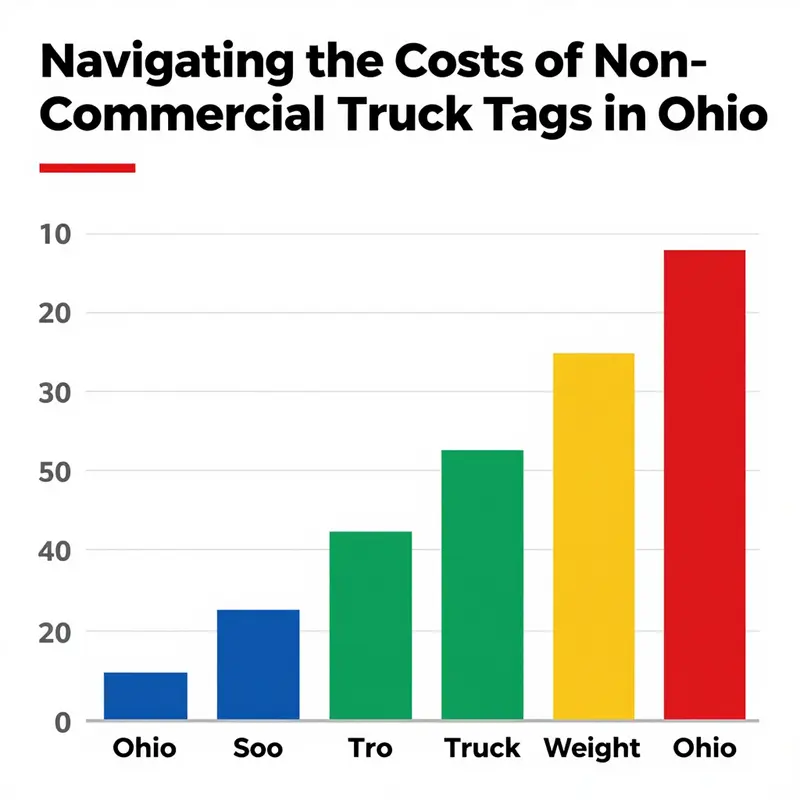
To map out the landscape, it helps to anchor the discussion in the actual base rates. The base registration fee for non-commercial trucks in Ohio follows five weight brackets. For vehicles weighing 10,000 pounds or less, the base fee is 35 dollars. If the GVW sits above 10,000 pounds but does not exceed 14,999 pounds, the base goes up to 50 dollars. For vehicles in the 15,000 to 19,999-pound range, the base is 75 dollars. The next tier covers 20,000 to 29,999 pounds, with a base of 100 dollars. And for anything over 30,000 pounds, the base fee tops out at 125 dollars. This tiered base is the backbone of the registration cost and is the number most owners will reference first when budgeting for a tag. It is a simple, scalable framework designed to reflect the utilitarian difference between a lighter pickup and a heavy-haul workhorse.
But the base fee is not the entire story. Several additional charges can affect the final price. First, there is the Title Fee—the one-time charge that accompanies the issuance of a title for a new vehicle or when a title is transferred. This fee is set at 15 dollars. It is important to note that the title fee is not charged again at each renewal; it only applies when a title is issued or reissued, such as when a vehicle is newly purchased or when ownership documents are updated. In other words, if you are simply renewing registration on a vehicle you already own and the title remains the same, you will not incur the title fee again during that renewal. The renewal itself, however, still interacts with the base rate tied to GVW, so the annual cost can rise or fall with weight class even if you are not changing ownership documents.
Beyond the base and the title, plate-related costs add another subtle layer. The standard license plate fee is typically encompassed within the base registration amount for a normal plate. Yet there are occasions when an owner might opt for a specialty plate—such as vanity plates or other specialized designs. In those cases, the price tag on the plate is higher, and the difference is added to the overall registration cost for the year. For many operators, the standard plate suffices; but for a business with branding or a fleet that wants a distinctive look, the extra plate fee is a noticeable, though optional, increment.
Local fees complete the picture. Ohio counties and municipalities have some leeway to add local charges or adjustments to the base registration. These local fees can vary from place to place and may be modest in some counties while more substantial in others. The effect is that two trucks with the same GVW could see slightly different totals simply because they are registered in different counties. The local component is one of those variables that makes a straight apples-to-apples comparison across the state a bit more nuanced. For operators with multiple vehicles, this means cross-county strategy can matter when planning renewals or initial registrations, especially if one vehicle is assigned to a different county for work or storage.
Putting the pieces together, the practical takeaway for anyone looking at non-commercial truck tags in Ohio is that the total annual cost is the sum of a few parts: the tiered base fee determined by GVW, the one-time title fee when applicable, any specialty plate add-ons, and county or local fees. The weight-based base creates a predictable ladder, while the other components introduce optional or location-based variability. The overall effect is that a light truck in the lowest tier may still incur more than a minimal amount if it requires a title issuance or if it resides in a county with higher local charges. Conversely, a heavier truck will pay more in base fees, but may not face a large cumulative increase if it simply renews without a title transfer and stays within a county with modest local costs.
Consider how this plays out in concrete terms. For a truck weighing 8,500 pounds, the base fee sits at 35 dollars. If this is a new registration requiring a new title, the total would start at 50 dollars before any local charges or specialty plate choices. Now, move up to a truck weighing 12,5 hundred pounds. The base jumps to 50 dollars. If the vehicle is newly titled, the total begins at 65 dollars. A mid-weight truck in the 18,000-pound band carries a 75-dollar base, and a new title would take the subtotal to 90 dollars before any local adjustments or plate choices. A heavy work truck at 22,000 pounds lands in the 100-dollar base category; with a new title, the starting point becomes 115 dollars. And for the titanic-weights over 30,000 pounds, the base is 125 dollars, with a new title lifting the starting figure to 140 dollars. The scale is intentionally simple, but the differences between these brackets matter because they cascade into each vehicle’s annual budgeting.
In practice, most non-commercial operators will face the same core calculations whenever they register a truck in Ohio. If you are renewing a tag for an existing truck after a year of service, you should anticipate the base fee corresponding to your GVW and account for any local fees that might apply in your county. If you are registering a vehicle for the first time, the title fee adds a one-time 15 dollars to the base—unless the vehicle already holds a title in your name or you are transferring ownership that involves a title transfer, in which case the fee structure still centers on the same base tier and the same one-time title charge, unless there are special circumstances that alter the issuance of the title.
To help bring these numbers into how they affect day-to-day decisions, it is useful to pair them with the realities of a typical operating year. Small, light-service trucks that primarily circulate within a single county with modest local charges will tend to have the lowest effective annual costs. Heavier trucks, or vehicles that operate across counties with higher local fees, will see more pronounced total costs. The dynamic is easy to miss if you only glance at the base rates, but it becomes apparent once you consider how a given GVW class can be paired with a title status and a local fee profile. In that sense, the cost of a tag in Ohio resembles a layered recipe where the main ingredient is the GVW-based base, and the seasonings are title status, plate choices, and local levies.
When planning ahead, many operators find it helpful to run a quick, paper-based forecast for the year. Start with the GVW category of each truck. Note the annual base fee that applies to that class. Add the title fee only for vehicles that will require issuing a title this year, and then add any potential charges for specialty plates if an alternate plate is desired. Finally, check the county or local area where the vehicle is registered to account for any additional charges. The result is a closer approximation of the year-to-year cost and a clearer basis for budgeting across a fleet or a single truck. The process is straightforward, but it benefits from a bit of careful planning, especially if a company operates a mixed fleet with weights spanning multiple categories.
Beyond the arithmetic, broader market context can inform how owners think about these costs. Trends in the trucking sector, the overall pace of vehicle turnover, and the mix of equipment in a fleet all influence the relevance of weight-based pricing. For instance, a business evaluating ownership versus leasing or a decision to upweight vehicles to accommodate higher payloads can weigh the long-term implications of the weight tier structure. When a fleet contemplates replacing or upgrading trucks, the weight category chosen for a new vehicle becomes more than a performance or capacity decision; it also sets the annual registration baseline that will recur across years. This is one reason why even small shifts in GVW, aligned with expected duties, can have meaningful implications for operating budgets. A broader view of market signals—such as trends in used-truck prices, total cost of ownership, and regional demand—can provide useful context for decisions about weight class, ownership models, and maintenance planning. To explore those macro trends in the trucking market, you can read about current dynamics and their implications for pricing and demand in related industry discussions, including analyses of how market conditions influence truck fleets and pricing across the United States and Canada. For a broader perspective on market dynamics, see the discussion on navigating economic uncertainties in trucking markets.
As you review the Ohio-specific numbers, remember that the official source for the most accurate and up-to-date figures is the Ohio Bureau of Motor Vehicles. Policies can change, and counties may adjust local fees, so it pays to verify the latest details before locking in a plan for a renewal or a first-time registration. The base rates described here are the framework, but the exact total your operation will pay may shift with a few clicks or a quick visit to the appropriate county office. When in doubt, a quick check of the state’s published rate table and your local fee schedule provides the reliable anchor you need.
Internal link reminder: for broader market context that affects budgeting decisions in trucking and vehicle ownership, consider how industry trends relate to the costs described here. A concise look at broader market dynamics can be found in resources discussing current trends in used-truck sales growth and overall market resilience. Navigating economic uncertainties in trucking markets offers a useful backdrop to pairing state-specific costs with larger economic conditions.
In sum, Ohio’s non-commercial truck tag costs are a function of weight, ownership status, and local rules. The tiered base ensures heavier vehicles pay more, while the one-time title fee and potential plate or local charges add optional or location-based variation. The structure rewards straightforward budgeting: identify GVW, confirm whether a title is issued in the upcoming registration, consider any specialty plate choices, and check local fees for the exact total. With those steps, you can estimate a year’s registration outlay with a clear sense of how changes in payload, vehicle weight, or county assignment will influence the annual cost. And because regulations shift and local practices differ, the most reliable practice is to confirm the latest figures through official channels before proceeding. External resources, such as the Ohio BMV, provide the definitive current numbers and any updates to the fee schedule that could affect future registrations.
External resource: For official, up-to-date figures on Ohio’s registration and title fees, consult the Ohio Bureau of Motor Vehicles: https://www.bmv.ohio.gov/.
Beyond the Base Fee: Demystifying Ohio Non-Commercial Truck Tags
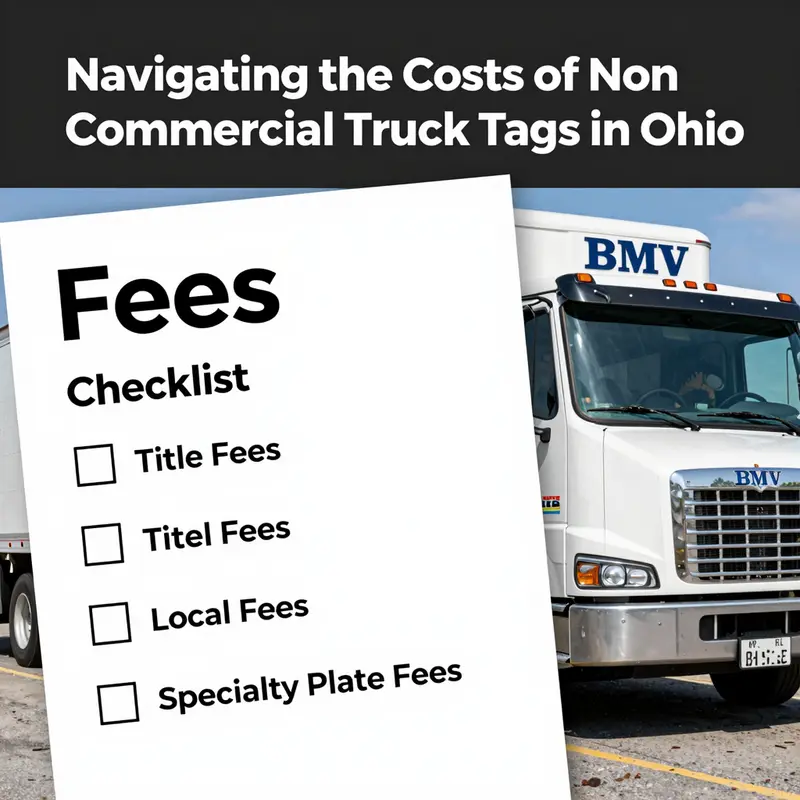
Registering a non-commercial truck in Ohio involves more than the base registration fee. The official schedule is weight-based: up to 10,000 pounds GVW costs $35; 10,001 to 14,999 pounds costs $50; 15,000 to 19,999 pounds costs $75; 20,000 to 29,999 pounds costs $100; and 30,000 pounds and above costs $125. These figures reflect the core registration charges as of 2026 and serve as the foundation for the total due.
In addition to the base registration, there is a one-time Title Fee of $15 at initial registration or upon a title transfer. Plate fees may apply if a specialty or vanity plate is chosen, which can raise the total beyond the standard plate price. Local county or municipal surcharges can also add to the bill, and these amounts vary by location.
Other line items may include licensing fees tied to new registrations or transfers, and sales tax on the vehicle purchase or value. For private-party purchases, the sales tax is paid when titling and registering. Emissions testing may be required in some counties for certain ages or models, adding another potential cost. Local requirements can shift the total payable at renewal or title transfer.
To estimate the total, start with the GVW-based base fee, add the $15 title fee, consider any plate costs if you want a specialty plate, and include local surcharges. Treat the total as a sum of smaller items rather than a single number, since the exact amounts depend on county and plate type. Reclassification from non-commercial to commercial status triggers higher fees and additional regulatory costs, so ensure your intended use matches the designation.
For precise numbers, consult the official Ohio BMV resources or visit your local BMV office, as local levies and plate prices can change. A current estimate will help you budget for renewal cycles, transfers, and any potential reclassification.
Final thoughts
In summary, comprehending the costs linked to non-commercial truck tags in Ohio is vital for trucking companies and logistics teams. The tiered registration fee system, along with additional potential costs, necessitates strategic planning to ensure compliance without overspending. By staying informed about the various rates and localized fees, businesses can effectively manage their vehicle registration expenses while remaining viable in an ever-evolving transportation landscape. Adequate preparation will ultimately facilitate smoother operations and adherence to all necessary regulations.