Insuring a commercial truck for personal use raises pertinent questions for fleet managers and procurement teams within trucking, logistics, and construction sectors. This article explores essential aspects of such insurance practices, delving into the conditions required, the distinctions between commercial and personal insurance classifications, crucial documentation for compliance, the associated risks of uninsured use, and the relevance of consulting with knowledgeable insurance providers. Through comprehensive insights across the following chapters, readers will be equipped with the knowledge necessary to make informed decisions regarding the transition of commercial trucks to personal use.
From Fleet to Everyday Roads: Navigating the Rules to Insure a Commercial Truck for Personal Use
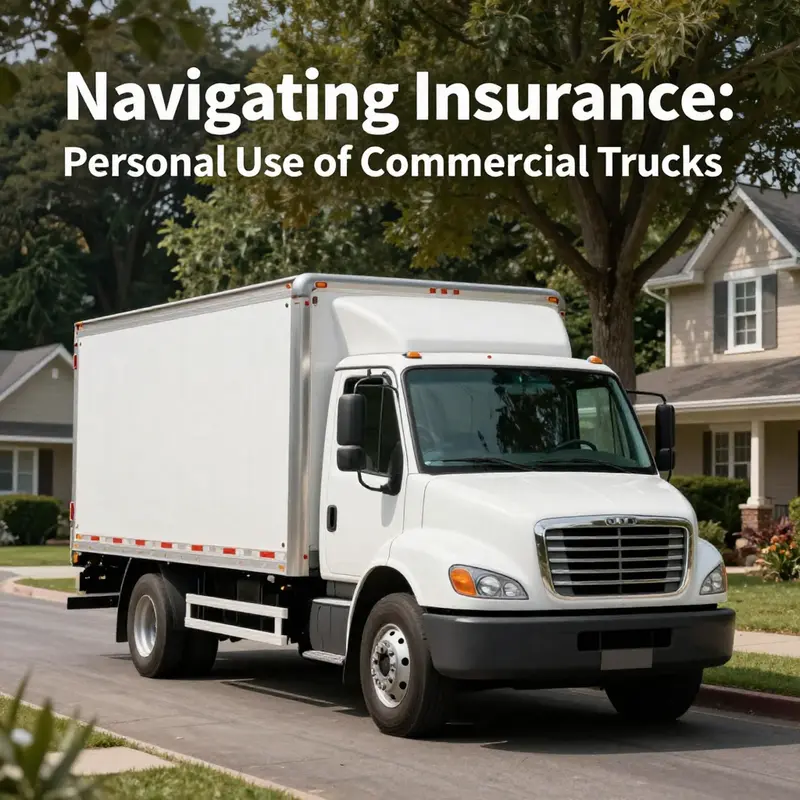
When a truck that once served a fleet or a business suddenly sits in a driveway as a personal vehicle, the question becomes not just what the truck can do for your daily life, but how to align it with insurance that is appropriate for private use. The path is more than a paperwork shuffle; it is a careful recalibration of risk, usage, and compliance. For readers pursuing this mix of practicality and legality, the topic sits squarely at the intersection of fleet asset management and personal financial planning. The guidance that follows reflects the realities of insuring a commercial truck for private use, a scenario that MarketWatch and other industry observers consistently describe as possible but conditional, requiring tangible changes in how the vehicle is classified, titled, and operated. The core message is straightforward but exacting: a truck can become a personal vehicle, but only if its new identity—its use, its weight profile, its documentation—clearly marks it as no longer a business tool.
The first gate is retirement from commercial operation. Practical retirement means the truck is no longer used to haul, deliver, or participate in any business route on a regular basis. It is a nuanced step because many fleets keep vehicles in a transitional role or still feature them on maintenance schedules even after the day’s invoices have stopped piling up. The decisive move is to produce credible evidence that the vehicle has ceased commercial duties. A retirement affidavit, a formal letter from the business confirming the end of commercial use, or a DMV-recorded deregistration can satisfy insurer requirements. The key is that the documentation must be unambiguous: the vehicle’s day-to-day operation is no longer tied to the bottom line of a business and is now part of personal mobility. Without this retirement, insurers may treat the truck as a business asset by default, jeopardizing any private-use coverage.
A second essential criterion is weight classification. Trucks carry a weight profile that is not merely a number on a spec sheet but a signal to insurers about who bears the risk when the vehicle travels on public roads. Gross Vehicle Weight Rating, or GVWR, often determines eligibility for a personal auto policy. In many jurisdictions, heavy commercial trucks exceed a GVWR threshold that precludes private coverage unless the vehicle is reclassified. This is not simply a matter of changing labels; it can involve a formal evaluation of the truck’s capabilities, its payload capacity, and its intended use. If the GVWR places the truck squarely in a heavy-duty, commercial-only category, private coverage becomes unlikely unless reclassification is achieved through the proper channels. In other words, the policy changes may require a different risk assessment, and possibly a lighter duty classification, so the vehicle can be insured like a typical personal automobile.
Registration and classification form the third pillar. Insurance carriers want the vehicle’s title and registration to reflect its new life as a personal-use machine. This often means reclassifying the vehicle with the DMV or equivalent authority, a step that ties directly to weight, intended use, and safety compliance. Some jurisdictions allow a straightforward reclassification when the vehicle meets the personal-use criteria, while others impose additional criteria or checks. The process can entail submitting the retirement documentation, a new classification form, and perhaps updated inspection or safety certifications. The practical effect is a clear, official signal that the truck’s primary function has shifted away from commerce toward daily life and personal projects. It is not unusual for this stage to require coordination among the owner, the insurer, and the licensing authority to ensure all records align.
Documentation required is not a minor appendage to the process; it is the formal backbone that sustains the reclassification. A certificate of retirement from commercial use is common, but many carriers also want a formal reclassification application that specifies the new use case and weight classification. Additional documents may include proof of non-operational business use, updated title information, a current vehicle inspection, and, in some cases, a sworn affidavit from the owner or business entity. The more comprehensive the paperwork, the smoother the underwriting process tends to be. Carriers frequently request evidence that the vehicle will not be used for business shipments or service calls, and that any private-use tasks will fall within the limits of a private auto policy. Streamlining this documentation in advance reduces gaps and the risk that a claim is challenged on the basis of misclassification.
The consequences of non-compliance can be severe. The misclassification of a vehicle as private when it still serves a commercial function can lead to denied claims, cancelled policies, or more serious regulatory scrutiny. The financial risk extends beyond the immediate insurance premium; it can affect loan terms, depreciation considerations, and liability exposure in the event of an accident. Insurers rely on accurate classification to price risk and to determine appropriate coverage levels. If the vehicle’s use diverges from what the policy documents allow, any claim could become a dispute rather than a straightforward coverage event. This reality underscores why this transition must be done with explicit, documented changes in use, weight status, and registration. It also explains why many practitioners advocate for working with a broker who specializes in both commercial and personal lines—someone who can translate fleet terminology into private-use policy language and ensure that the risk is aligned with actual use patterns.
Beyond the mechanics of retirement and reclassification, there is a practical, day-to-day calculus to consider. The decision to convert a commercial truck to private use is rarely a one-time transaction. It involves ongoing compliance with both insurance requirements and regulatory standards. For instance, policymakers and regulators in various regions may evolve guidelines on how such vehicles are defined and taxed, which can affect insurance eligibility down the line. The prudent path, then, is to view this as a negotiated arrangement rather than a single stamp of approval. The insurer’s job is to model risk based on current use, the driver’s profile, and the vehicle’s condition, while the owner’s job is to maintain documentation and to keep the use consistent with the declared private purpose. In practice, this means periodic reviews, especially if the vehicle’s role in the household changes—from daily commuting to occasional hauling of personal equipment or recreational use.
For readers seeking additional context on how these classifications play out in real markets, it is useful to recognize that some regions emphasize the alignment of vehicle classification with official records and safety standards. A broader industry perspective notes that the path from commercial asset to private vehicle hinges on a clear shift in function, a weight reclassification if required, and a documented separation from business activity. The narrative is not about renaming a vehicle; it is about creating verifiable evidence that the vehicle’s purpose has changed, and that the risk profile now matches private-use coverage. At heart, the process asks one simple question: does this truck still operate as part of a business, or is it now a personal transport solution for you and your family? The answer then shapes the documentation you gather, the forms you file, and the policy you ultimately secure. For readers who want a broader integration of policy considerations and market dynamics, the McGrath Trucks Blog offers accessible commentary and practical perspectives on how trucks migrate between commercial and private roles. McGrath Trucks Blog
It is also worth noting that jurisdictional variance means you should consult official resources as you navigate this transition. While the general framework described here is widely applicable, local rules can add specific requirements or exceptions. The aim is to minimize ambiguity and ensure that the vehicle’s new status is reflected across all relevant records, from the title and registration to the insurance policy itself. When in doubt, seek a professional who can guide you through the nuanced steps of retirement documentation, reclassification, and policy selection, so you avoid gaps in coverage or misinterpretations of what constitutes personal use. The emphasis remains on accuracy, transparency, and alignment with the vehicle’s actual use.
In closing, the journey from fleet asset to personal vehicle is feasible but precise. It requires deliberate steps: retire the vehicle from commercial operations, verify or adjust its weight classification, pursue proper registration reclassification, assemble comprehensive documentation, and engage an insurance professional who understands how to bridge commercial and personal policy concepts. If you manage these steps with care, a former workhorse can continue to serve you on daily commutes, weekend projects, and family excursions, all while staying within the protections of private-use coverage. The end result is not merely a legal compliance checklist but a practical framework that protects you, your vehicle, and your household as you move through the miles of everyday life.
External resource: https://www.mot.gov.cn/
From Fleet to Family Vehicle: Navigating Insurance Classifications When a Commercial Truck Becomes Personal
The question at the heart of this chapter asks a practical question with real consequences: can a commercial truck be insured for personal use without compromising protection or inviting a wait of legal trouble? The short answer is yes, but it hinges on a precise and documented shift in how the vehicle is used, how it is classified, and how the policy is written. In the world of trucking insurance, the distinction between commercial and personal use is not a bureaucratic label. It is a map that guides what risks are covered, what premiums are paid, and what regulations must be followed. When a truck that once served a business now sits in a driveway or takes on non-business tasks, the policy must reflect that change. Otherwise, a claim could be denied, or worse, authorities could question the coverage you believed would protect you. This alignment between use, documentation, and policy terms is essential for anyone hoping to repurpose a commercial vehicle for personal duties—whether it’s weekend hauling for a family project, moving households, or simply using the truck as a dependable ride in daily life.
The core division in truck insurance rests on use. Commercial truck insurance is designed for vehicles that generate income or support business operations. It covers the unique liabilities that arise when a truck moves goods, services a project site, or participates in daily commerce. This kind of policy takes into account cargo exposure, third-party liability, physical damage to the truck, and compliance with a constellation of federal and state regulations that govern commercial carriers. The coverage is tailored to a business context, where the vehicle is a tool of commerce and a business asset. Market realities and regulatory demands often require insurers to maintain specialized coverage that reflects the operational risks of moving freight, complying with hours-of-service rules, and maintaining precise vehicle classifications.
On the other hand, personal truck insurance applies when the vehicle is used strictly for non-business purposes—from daily commuting to weekend hauling for family tasks. The distinction matters because personal policies are not designed to address the cargo risks or commercial exposure that come with business use. A vehicle classified for personal use may not automatically receive protection for business-related liability, cargo, or regulatory noncompliance if it is later used in a way that crosses into commerce. MarketWatch reinforces this boundary by noting that a commercial truck cannot be legally insured for personal use unless it meets specific criteria. Those criteria typically involve either retirement from commercial service or a weight classification that allows operation under a standard personal auto policy. In other words, the vehicle must either no longer be a tool of commerce, or be light enough or configured in a way that a personal policy can legally and practically cover it.
This is where documentation becomes the fulcrum of the entire process. When a truck ceases to be a commercial asset, owners must prove the change in status. A signed affidavit of retirement or an official change in vehicle classification are common instruments that insurers and regulators recognize. Without this documentary foundation, attempting to use a commercial vehicle under a personal policy risks gaps in coverage. Insurers may deny claims not only because the use has shifted, but also because the vehicle’s history still indicates a commercial purpose. The consequences of misclassification extend beyond denied claims. They can include fines, penalties, and potential legal exposure if an incident occurs while the vehicle is carrying out business-like functions under a policy stamped for personal use.
For truck owners who are contemplating this transition, the path is navigable with careful preparation. The first step is a candid assessment of how the vehicle is used today and how it will be used going forward. If the plan is to retire the truck from commercial duties, the owner should secure a retirement affidavit or an equivalent document that clearly signals to insurers and regulators that the vehicle’s use has ceased to be business-oriented. If, instead, the truck remains a viable carrier but falls under a weight or configuration that personal policies can accommodate, the owner must verify those specifics with a knowledgeable insurer. This is not a DIY reclassification exercise; it requires guidance from providers who specialize in both commercial and personal vehicle policies and who understand how to interpret FMCSA rules and state requirements.
In practice, many owners find themselves working with specialists who balance regulatory compliance with practical coverage. A trusted provider in this space will help translate the intended use into an appropriate policy framework. They will explain which coverages remain essential—such as liability and physical damage—and which may be altered when personal use becomes the primary aim. For example, cargo or freight liability may no longer apply in the same way if the truck no longer hauls goods for profit. Conversely, standard personal auto coverages might need endorsements or adjustments to address the vehicle’s history, weight class, and non-commercial tasks. The conversation with an insurer can also illuminate the requirements for keeping the vehicle in a condition suitable for personal use, including maintenance records and documentation demonstrating the absence of active business operations tied to the truck.
The practical impact of this classification shift extends beyond the policy itself. It influences how the vehicle is maintained, where it is parked, and how often it is used for non-business tasks. Insurers will consider factors such as the truck’s role in daily life, the typical miles driven, and whether a trailer or related equipment remains tied to commercial activities. Those factors feed into the underwriting process, and they can determine whether a personal policy with a commercial backstop is feasible, or whether a more specialized arrangement is necessary. It is not a matter of simply swapping a few policy forms. It is about ensuring that the risk profile the insurer sees aligns with the actual and anticipated use of the truck.
For truck owners who want to explore these options without getting lost in a maze of regulations, there is real value in turning to specialists who understand both sides of the coin. A provider with deep experience in commercial trucking and personal auto coverage can help identify the best route: whether that is a formal retirement of the vehicle from commercial service, a reclassification to a lighter weight category, or a hybrid approach that preserves certain protections while enabling personal use. This is where a solid, transparent dialogue matters. The right expert will walk the owner through the documentation requirements, the implications for premium cost, and the ongoing responsibilities of maintaining compliant coverage as the vehicle’s use evolves.
As part of the broader ecosystem of knowledge, it is helpful to consider the literature and guidance that discuss compliance and insurance for trucking fleets. A reputable source notes how fleets manage regulatory risk and how insurers partner with compliance specialists to keep operations aligned with FMCSA standards. This perspective is especially relevant for owners who anticipate future changes in how they use their trucks and want to ensure that any transition does not destabilize protection. If you want a sense of how industry readers approach these questions, the following context from industry commentary provides a helpful lens: a company focused on commercial trucking insurance highlights the importance of aligning coverage with regulatory compliance and fleet operations, while also recognizing that individuals moving from commercial to personal use need precise documentation and informed underwriting. In practice, that means working with a provider who understands both commercial and personal lines and can bridge the gap between business risk and personal liability.
For readers seeking practical steps, begin by documenting the current use and the intended use, then consult with a policy professional who can translate that use into the correct classification and coverage. If retirement is the chosen path, prepare an affidavit and gather any registration or fleet records that demonstrate cessation of business operations tied to the truck. If a weight-based personal policy is the goal, obtain the insurer’s guidance on whether the vehicle qualifies and what endorsements, if any, are required. Throughout, keep a paper trail: maintenance logs, proof of non-business use, and any communications with the insurer. This meticulous approach minimizes the risk of coverage gaps and ensures that the peace of mind that comes with insurance remains intact as the vehicle begins a new chapter in its life.
Those who want to dig deeper into industry-specific considerations may find it useful to explore a broader resource on trucking policy and compliance. For readers seeking additional guidance tied to this topic, see the McGrath Trucks blog for related discussions on vehicle classification and market dynamics. McGrath Trucks Blog.
In summary, the path from commercial to personal use for a truck hinges on clear use, proper documentation, and an alignment of policy terms with actual operation. When the use changes, the coverage must follow, not the other way around. With the right guidance, turning a commercial truck into a family or personal vehicle is not a risk-laden leap but a carefully choreographed step that preserves protection while honoring the realities of how the vehicle will be used. For those who want to understand the regulatory and practical contours more deeply, professional counsel and a trusted insurer can illuminate the precise requirements and the best path forward. The result is coverage that travels with you into everyday life without leaving you exposed to uncovered liabilities or denied claims.
External reference for regulatory background: https://www.fmcsa.dot.gov/.
Turning a Work Truck Into a Personal Ride: Documentation and Compliance for Personal-Use Insurance
Can you insure a commercial truck for personal use? The short answer is yes in many cases, but it hinges on what the policy will consider as personal use and how the vehicle is classified, streamed through the interplay of retirement from commercial operations and weight or usage thresholds that allow a standard private auto policy to cover it. The idea of simply swapping the coverage at the counter can be appealing, but the truth rests on documentation, disclosure, and the legal boundaries that separate a work vehicle from a personal vehicle. Insurers will want proof that the truck’s primary function has shifted away from commercial tasks, or, alternatively, that it now operates under weight or use conditions that accept it into a personal policy while still some business use is allowed under a narrow endorsement. Without the correct coverage, a driver risks a denied claim, a policy cancellation, or worse, an exposure to liability claims that aren’t covered in a loss scenario. The process, while not described as a universal checklist, is anchored in a narrative of proper disclosure and accurate recordkeeping, because the policy you choose should reflect how the truck moves through space and time: from job site to grocery run, from highway to home driveway, and back again, without bringing the baggage of a commercial vehicle designation into a situation that demands personal coverage. The documentary trail begins with basic ownership and vehicle identity but extends into the more nuanced realm of intended use, future plans, and the practical realities of insurance product design, which assumes certain risk profiles based on the primary function of the vehicle. In practice, most insurers require proof that the vehicle is no longer used or predominantly used for business purposes, and that documentation accompanies a formal reclassification of the truck, whether into a retired status or a simplified status that aligns with private auto policy terms. This is where the practical guidance often turns on two pivot points: documentation of retirement from commercial operations, and recognition of weight or usage thresholds that permit private auto coverage, both of which can be the deciding factor in whether personal use is affordable and protected or whether it triggers invalid claims and policy disputes. The weighing of these factors is not a mere formality; it is the hinge on which the legality and the financial safety of using a work truck for personal errands, weekend projects, or family logistics rests, and the decision will be shaped by the insurer’s underwriting language, the state’s regulatory framework, and the vehicle’s own history on the road. The documentary requirements themselves, in turn, hinge on providing the right signals to the insurer about how the truck will be used. There are no universal, one-size-fits-all documents mandated by all providers, but you can anticipate a core bundle of items designed to establish ownership, identity, and the intended shift in usage. Expect to present proof of ownership, such as a title or registration, to confirm you are the rightful owner and to establish the legal basis for the policy. A valid driver’s license from the insured individual is essential, because personal-use coverage relies on personal responsibility and the ability to legally operate the vehicle on public roads. Vehicle details will be required in the application, including make, model, year, and the VIN, because underwriting typically hinges on the vehicle’s size, weight, and mechanical characteristics that influence risk. Although the field has become more nuanced, there remains a practical expectation that you provide information about the vehicle’s weight class and its current function, since these figures often determine whether the truck can ride under a standard personal auto policy or needs a specialized approach. Beyond this baseline, disclosure of use becomes the ethical and contractual center of gravity. You must tell the insurer if the truck will be used for errands, weekend projects, or occasional transport that is not tied to a business contract, even if the job requires traveling to a remote site on occasion. The risk for the insurer rises when use is misrepresented or hidden because standard commercial policies are designed around ongoing business activities with regular routes, customers, or cargo duties; personal-use scenarios are different in scale, frequency, and casualty exposures. Failure to disclose personal use can lead to denied claims or policy cancellations when a loss occurs, and the results can cascade into higher premiums or a forced shift to a policy type that does not align with your reality. In navigating this space, the best approach is to talk openly with an insurer who specializes in both commercial and personal vehicle policies, one who can map the path from your current classification to the correct coverage. Some insurers offer endorsements that extend limited personal use under a commercial framework, such as occasional use endorsements, which may allow you to run personal errands without surrendering the truck’s business classification entirely; others may encourage a switch to a private auto policy if personal use becomes frequent or if the risk profile changes in a way that a commercial policy cannot support at a reasonable premium. The decision to pursue an endorsement versus a policy switch will depend on several factors, including how often the truck is used for personal tasks, the route patterns you drive, the types of loads or accessories you carry in personal use, and the liability limits and deductibles you require for peace of mind. If personal use becomes a more common pattern, a private auto policy may be more efficient, but it will also come with a different premium structure and coverage calculus. In either path, the documentation you gather at the outset acts as the compass for the underwriter. Gather proof of ownership, a current registration, and the VIN; secure a copy of the insured’s driver’s license; collect any documentation about planned changes to the vehicle’s use or classification, including a retirement affidavit or a letter from a fleet manager or dealership showing the vehicle’s new status; and prepare a concise but thorough narrative about how often and for what purposes the truck will be used personally. This is not merely bureaucratic busywork; it is about ensuring that when a claim arises, the policy will respond as intended, and that the insured understands the scope and limits of coverage. The process is further aided by a direct conversation with the insurer, where questions about what qualifies as occasional use versus frequent personal use can be clarified against real-world behavior. In some cases, the insurer may suggest a two-step approach: first retire the vehicle from commercial service or reclassify it so that it can be insured under a private policy for personal use, and second, maintain documentation that the vehicle remains available for limited business tasks under strict conditions, if allowed by a particular endorsement. The end goal is simple in concept but complex in execution: secure coverage that reflects how the vehicle actually moves between paid work and personal life, while safeguarding the owner from unforeseen gaps in protection. To support your decisions, consult reputable sources on insurance regulation and consumer protections, such as the state or national bodies that regulate this space, and consider visiting the National Association of Insurance Commissioners for a broad overview of how these rules are designed to protect consumers and ensure transparency in policy terms. For further context on the broader trucking environment, readers can explore resources discussing market dynamics and the broader conditions shaping how trucks are used and insured in today’s economy, such as Navigating Economic Uncertainties in the Trucking Markets. This context helps frame the practical steps needed to align coverage with actual use and emphasizes the importance of choosing a policy pathway that matches both the truck’s classification and the person behind the wheel. When you take these measures seriously, the route from a commercial designation to a personal-use reality becomes less of a leap and more of a deliberate, well-documented transition, guided by transparent disclosures and supported by a policy structure that makes sense for your daily life. As you move through this process, remember that the key to success lies in honesty, preparation, and ongoing dialogue with your insurer, so that you can enjoy the flexibility of personal use without stepping outside the lines of coverage or leaving yourself exposed to gaps when missteps occur. The difference between insurance that protects a vehicle configured for business and insurance that protects a vehicle used primarily for personal needs rests on a single thread: documentation that proves the intended use is different from the historical or assumed use. Keep that thread intact, and you will be better prepared to navigate the transition with confidence. For readers seeking understanding of market and regulatory contexts, turn to official resources that illuminate consumer protections and road rules, such as the NAIC’s site, which offers broad coverage of the framework governing these policies and a reminder that personal and commercial insurance policies are designed with distinct risk profiles in mind. They highlight the importance of accuracy, disclosure, and appropriate policy selection, and they provide a solid anchor for those who want to keep their personal-use transition within legal and financial safe harbor. The practical steps outlined here thus form a coherent path through a landscape that can seem opaque until the details are laid bare, showing that with careful preparation, a once-business truck can be safely integrated into a personal life without compromising coverage, claims handling, or liability protection. In this light, the road ahead is not a detour but a carefully managed route that aligns with both the letter of the policy and the reality of everyday use, supported by clear documentation, thoughtful endorsements when needed, and a commitment to ongoing communication with the insurer. The broader point remains that while a commercial truck can be insured for personal use, doing so correctly depends on truthful disclosure, proper reclassification, and selecting a policy structure that matches actual use, and that the process is both a legal safeguard and a practical means of keeping you covered when the unexpected occurs.
From Workhorse to Personal Ride: Navigating Insurance Realities When a Commercial Truck Is Used for Personal Use
The question of whether a commercial truck can be insured for personal use sits at the intersection of risk, regulation, and careful documentation. The short answer is yes, but not by simply flipping a switch. The vehicle’s actual use must be reflected in the policy, and the path from business-focused coverage to private-use protection requires deliberate steps, clear records, and guidance from someone who understands both sides of the insurance ledger. When a truck that once hauled cargo, served a fleet, or supported a business is pressed into daily family errands, weekend road trips, or private hauling, the risk calculations change. The insurer must see that the risk profile has shifted and that the coverage will address the new, lower or differently shaped exposure. Without that alignment, the very act of using a commercial vehicle for personal purposes can transform a routine insurance claim into a contested, expensive affair or a legal dispute that leaves the driver with substantial out-of-pocket exposure. This is not merely a matter of policy wording; it is a decision that touches compliance, claims handling, and the financial viability of using the vehicle at all in a non-commercial context.
At the heart of the matter lies a simple, but sometimes overlooked, principle: insurance must match the actual use of the vehicle. A commercial policy is built around higher mileage, longer operating hours, heavier cargo, and increased risk from business-related routes. When the same truck is used for private reasons, those risk drivers may soften in some respects but can shift in others, such as personal liability exposure if an accident occurs on a family trip or a private roadside emergency that involves the vehicle’s mass and braking demands. Consequently, a policy that covers commercial use may not automatically cover personal use, and a private auto policy may not be equipped to absorb the jobs that corporate or fleet endorsements assumed. The mismatch can be subtle but consequential, and it’s a primary reason why many insurers require a formal change in classification, or a formal affidavit of retirement from business use, before any personal-use coverage is offered.
Implementation follows principle with practical steps. The first step is to establish whether the truck has effectively left commercial service. This is not just about turning off the engine in a shop and changing the title; it involves rendering the vehicle in a way that signals non-commercial use to authorities and insurers. One common path is a signed affidavit of retirement or a formal change in vehicle classification with the department of motor vehicles or the relevant registering body. Documentation might also include proof that the truck is no longer part of a lease, fleet, or business operation, and evidence that the vehicle is primarily used by a private individual or family. In some cases, the vehicle’s weight, or gross vehicle weight rating (GVWR), dictates whether it can be insured under a standard personal auto policy, or whether it requires a specialized form or endorsement to accommodate the private-use scenario. Insurers will review these details with care because the risk landscape changes when the vehicle stops hauling commercially and begins serving private needs.
Another layer to consider is the precise use case. Personal law typically expects lower annual mileage on a private vehicle than on a fleet, but a heavy truck used occasionally for private hauling still carries a substantial risk profile. The weight of the vehicle, the frequency and manner of use, the driver roster, and the nature of any private cargo all influence pricing and eligibility. Some policies include endorsements or riders that allow limited personal use, or that provide a bridge between a pure commercial policy and a standard personal policy. The key is transparency: the insurer must know how the vehicle will be used so that the policy’s declarations align with reality. Misrepresentation or opaque use can trigger coverage gaps, even in situations that appear straightforward. When in doubt, a broker or insurer that specializes in both commercial and personal vehicle policies can provide a bridge that respects the vehicle’s history while accommodating its new role on the road.
From a legal and contractual standpoint, changing the vehicle’s use is not optional. Most commercial policies contain exclusions for personal use or restrictions that explicitly prohibit non-commercial activities. Violating these terms can amount to a breach of contract, which often results in claims denial and the potential loss of coverage for damages, injuries, and third-party losses. The consequences extend beyond the deductible. If a driver is found to be operating a vehicle outside the policy’s approved use, a court could determine that the driver bears greater liability for any ensuing harm. This is more than a theoretical risk; it translates into real-world financial exposure that can eclipse the value of typical repairs or medical bills. The alignment between declared use and actual use is not just a matter of policy compliance, but of ensuring a driver’s protection and peace of mind when the vehicle is on private roads rather than commercial routes.
For those considering this transition, there are tangible steps to safeguard the process. Begin with a candid assessment of how the truck will be used in private life. Gather documentation that supports retirement from commercial service, including an affidavit or equivalent documentation, and prepare to discuss the change in vehicle classification with both the licensing authority and the insurer. Reach out to an insurance professional who understands both commercial and personal vehicle policies. A knowledgeable agent can illuminate whether the truck qualifies for a standard personal auto policy given its weight and non-commercial use, or whether a specialized rider or a different policy structure is required. Expect to provide detailed information about typical usage patterns, average annual mileage, typical routes, and any private cargo the vehicle might carry. The insurer will likely request updates to licensing and registration details to reflect private operation and may require a declaration that the vehicle will no longer be used for business purposes.
Documentation also plays a practical role in ongoing compliance. It is wise to maintain logs of the vehicle’s use, demonstrate how frequently it is used for private activities, and ensure that private use does not exceed the policy’s stated scope. This diligence helps avoid the scenario where a large accident leads to an unexpected denial based on an improper classification. It also reduces the risk of disputes with repair shops, lenders, or other parties who rely on the accuracy of the vehicle’s use designation. In practice, this means keeping clear records, updating registrations as required, and ensuring drivers are aware of the policy’s terms. The goal is not merely to satisfy a regulator or an insurer but to preserve the integrity of the vehicle’s coverage so that personal use does not become an unanticipated financial trap.
Within the broader context of industry knowledge, this topic sits at the confluence of risk management, regulatory compliance, and practical risk transfer. For readers seeking a broader lens on policy evolution and market perspectives, the general conversations you’ll find in the industry blog space offer useful context and real-world experiences. See the discussion and broader insights in the McGrath Trucks Blog, which explores how changes in vehicle use influence policy decisions and industry practices.
Beyond the internal checks and balances, consider the value of keeping the vehicle aligned with the intended use long term. If personal use becomes the norm, the driver and owner should keep a clear line of communication with their insurer and broker. Regular reviews help ensure coverage remains appropriate as circumstances evolve. If the vehicle’s role shifts again—for example, the truck returns to light commercial use—or if the owner expands personal use, a reassessment is warranted. A proactive approach, rather than a reactive scramble after an incident, is the hallmark of sound risk management. It also supports smoother claims handling and reduces the likelihood of denial when a claim truly matches the policy’s purpose.
In short, insuring a commercial truck for personal use is not a punitive or purely bureaucratic exercise. It is a deliberate, rightsizing move that protects the owner’s financial interests and supports legal compliance. The process hinges on clearly defined use, appropriate documentation, and a policy that reflects how the vehicle actually operates. The more precisely the insurer can anchor coverage to the truck’s private function, the more reliable and predictable the protection will be when the road turns private rather than commercial. And as a practical matter, staying aligned with the vehicle’s use helps preserve the vehicle’s value, the safety of its occupants, and the integrity of the wider responsibilities that come with owning a vehicle that once served a business purpose.
Internal link: For broader context on industry and policy shifts, see the McGrath Trucks Blog.
External resource: For a broader regulatory and consumer information perspective on commercial vehicle insurance, see the National Association of Insurance Commissioners at https://www.naic.org.
From Fleet to Family Roadways: Insuring a Commercial Truck for Personal Use

Choosing to use a commercial truck for personal needs can feel straightforward at first glance. After all, a sturdy vehicle with ample payload and power seems like it should be a simple matter of switching policies and hitting the road. Yet the binding rules that govern personal auto insurance and commercial auto policies are designed around how a vehicle is used, not just what it can do. The difference between insuring a vehicle for business and insuring it for private use isn’t cosmetic; it shapes liability, coverage limits, and even the likelihood that a claim will be paid when trouble arises. The practical path to personal use is paved not by wishful thinking but by careful alignment of use, documentation, and the policy language that binds a carrier to your specific plan. In a market where fleet decisions ripple through depreciation, utilization, and risk, the insurance question becomes less about pedal power and more about accurate classification and documented intent. For readers pursuing this alignment, the journey begins with a clear picture of how personal and commercial auto coverage diverge—and how to bridge the gap without leaving yourself exposed to gaps in protection or legal trouble. See how external factors—like evolving market conditions and broader trucking dynamics—can influence these choices in the broader landscape of the industry: navigating economic uncertainties in the trucking market. navigating economic uncertainties in the trucking market.
Personal auto insurance is designed for private use. It typically covers everyday activities—commuting to a desk job, running errands, family trips, and vacations. The language of a personal policy assumes the vehicle is not a tool of the trade or a primary means of generating revenue. A commercial auto policy, by contrast, is crafted around business risk. It anticipates stricter exposures: higher liability limits, cargo coverage in some cases, and endorsements that address the particular hazards of transporting goods, operating in work zones, or crossing state lines. The hinge point for insurability is not only who uses the truck but how and for what purpose. If a vehicle labeled as commercial is used primarily for personal trips, or if a personal vehicle is used to perform business tasks, the lines can blur in ways that may invalidate coverage. The key is to align the use with the policy’s defined purpose and to keep documentation that supports that alignment accessible and current.
The most common scenarios for a commercial truck used personally involve either a formal retirement from business operations or a reclassification that permits private driving under a standard personal policy. The first route, retirement from commercial operation, is straightforward in theory: the truck no longer serves the commercial enterprise, and testimony or documentation can support this shift. Carriers and state authorities may require an affidavit of retirement, a signed statement that the vehicle will not be used for business purposes, or a formal change in how the vehicle is classified in the insurer’s system. The second route hinges on weight and design. Some trucks, while clearly built for heavy-duty work, can fall within the weight thresholds that allow operation under a standard personal auto policy. When that threshold is met, the vehicle’s risk profile shifts in the eyes of many carriers, potentially enabling coverage that mirrors a private car or light truck rather than a commercial fleet vehicle. In practice, this is not a universal pass; it depends on the specific vehicle, its configuration, and how the insurer interprets the policy language. The practical effect is that a vehicle’s listed use begins to matter as much as its horsepower or bed length. The path you choose hinges on accurate representation of use and on obtaining the proper documents to back it up, because misrepresentation—even inadvertent—can create serious problems after an incident.
When personal use is more of a hybrid arrangement—occasional personal trips, mixed-use days, or a truck that still routinely serves a business function—insurance providers usually require more careful scrutiny. In many cases, any use for business tasks triggers commercial coverage or at least a broader endorsement package designed to cover business risks. This matters not only for premium calculations but also for the scope of coverage: liability limits, medical payments, uninsured/underinsured motorist protections, and even physical damage coverage can vary between personal and commercial policies. A claim filed under a misaligned policy can be denied, or worse, the carrier may seek to cancel coverage retroactively if the misrepresentation is discovered. The stakes are not hypothetical: policy terms are legal contracts, and the language within can determine whether a claim is paid and under what conditions, especially in the event of a collision or a cargo-related incident. The regulations extend beyond the policy to state law, with most states requiring drivers to have some form of auto insurance and Federal rules governing commercial operations that cross state lines. In this sense, the practical decision about whether to insure a commercial truck for personal use becomes a compliance issue as much as a financial one.
To move toward a compliant solution, the process begins with a deliberate assessment of how the truck is used. If the truck is retained for private use only, a policy review with a licensed insurer that handles both commercial and personal lines is essential. The insurer will want to know whether you intend to use the truck for occasional business tasks, how frequently you make such trips, and whether any cargo or materials are involved. You should prepare documentation that clarifies intent: the vehicle’s current classification, any changes you’ve made to its title or registration, and, if applicable, a signed affidavit of retirement from commercial duties. If you determine that the truck meets weight-related criteria for personal coverage, you may still need to provide evidence of the weight and configuration that qualify it for a personal policy, as well as proof that it’s not routinely employed in business operations. In practice, this often means a careful, documented transition supported by the insurer. The underwriting process will examine use-case scenarios and adjust premiums, deductibles, and coverage limits accordingly. A truck that is truly used only for private purposes could warrant a lower premium under a personal policy, reflecting the reduced exposure compared with business use. Yet the opposite can also be true: if there is any chance the vehicle could be used for business on a regular basis, the insurer may insist on commercial coverage or require an endorsement that bridges personal and commercial risk.
Another layer to consider is the potential impact on legal responsibility and claims handling. When a commercial vehicle is used for personal reasons without appropriate coverage, a claim can be denied and the policy may be deemed invalid for some or all of the incident. In some cases, the driver could face penalties for failing to carry the correct form of insurance, depending on state law. The moral of the story is lucid: coverage must reflect actual use, not merely assumed intent. It’s not about rigidity for its own sake; it’s about ensuring that protections align with the realities of who is behind the wheel, what the vehicle is carrying, and the places it travels. This is especially relevant for people juggling family needs and intermittent home projects that might occasionally resemble light commercial tasks, such as moving equipment for a small home renovation crew or transporting gear on weekends. In such scenarios, a single misstep—driving under a misaligned policy for even a single trip—can complicate a claim or trigger policy exclusions.
For those navigating this terrain, the most constructive approach is to engage directly with licensed insurance providers who handle both sides of the equation. They can help you map out a use-case profile, determine whether the truck qualifies for personal coverage based on weight or retirement status, and outline the steps needed to convert the vehicle’s coverage without creating gaps. A candid discussion about your actual usage can also reveal whether an endorsement or a revised liability framework better suits your circumstances. It’s also important to understand how changing the usage of the vehicle affects premiums and coverage limits. A truck used exclusively for personal trips might qualify for a lower premium, but if it is ever used for business—even occasionally—the policy may need to reflect the higher risk and adjust accordingly. In this context, the guidance of a skilled insurance professional becomes not only a practical step but a safeguard against unexpected claim outcomes.
The broader lesson, reinforced by industry guidance, is clear: insurance must align with actual use. Misrepresenting the purpose of a vehicle can lead to denied claims and legal consequences. Always verify your policy terms, keep documentation up to date, and consult with a professional before making a decision about your truck’s coverage. The careful practitioner’s path involves a truthful accounting of how the vehicle is used, what risks it incurs, and how the policy language translates those factors into real protection on the road. As the trucking landscape evolves, staying informed about the boundaries between personal and commercial coverage remains essential for any owner who wants to protect both family and livelihood. External resources that spell out the legal distinctions and best practices for commercial auto insurance provide a reliable anchor for this work: https://www.iii.org/article/commercial-auto-insurance
Final thoughts
Insuring a commercial truck for personal use requires understanding specific conditions, insurance classifications, and essential documentation to avoid potential risks. As outlined, the distinction between commercial and personal coverage is vital, alongside the recognition of the consequences of uninsured operation. By consulting specialized insurance providers, individuals and organizations can confidently navigate the complexities involving their trucks’ insurance needs. Whether transitioning a retired fleet vehicle to personal use or ensuring compliant operation of a heavy-duty vehicle, the insights presented throughout this article collectively serve to fortify informed decision-making in fleet operations and individual use.