
Understanding toll rates for commercial trucks on the Indiana Toll Road is crucial for trucking company owners, fleet managers, and logistics firms. Current pricing structures are set to evolve, with potential increases raising concerns within the industry. This article delves into the existing toll rates, examines the implications of proposed hikes, outlines payment methods, and explores future trends in toll rates. Each chapter builds a comprehensive overview, helping industry stakeholders make informed decisions and budget effectively for their operations.
Riding the Indiana Toll Road: Projected Rate Hikes, Fleet Costs, and the Balance of Infrastructure Funding
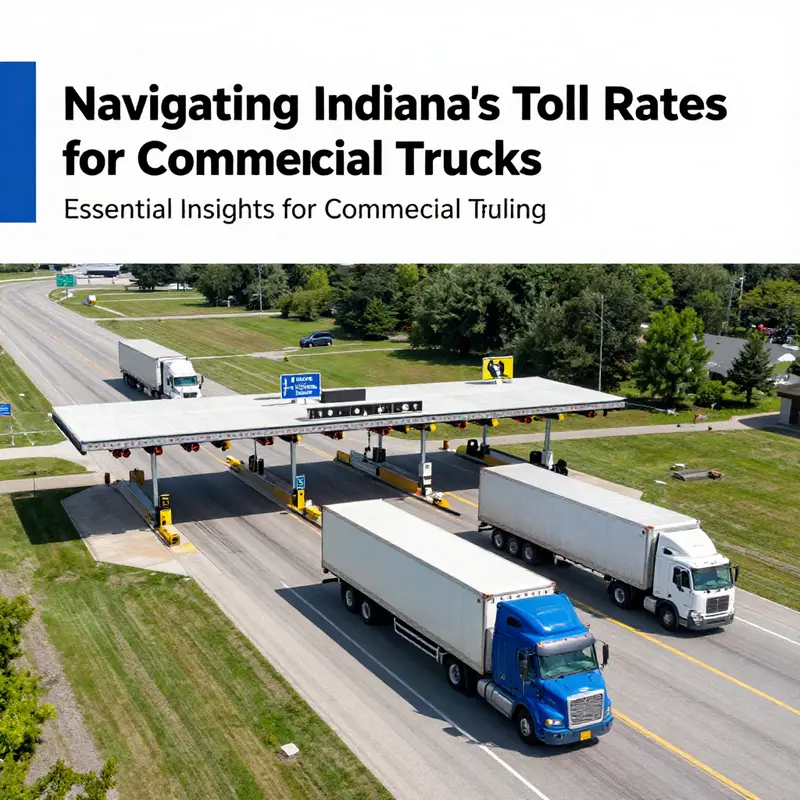
The Indiana Toll Road threads a broad swath of the Midwest, running 157 miles from the Illinois state line near Gary to the Ohio state line near South Bend. For fleets that depend on steady, predictable routing, this corridor is more than a convenience; it is a backbone of distribution, cross-docking, and regional supply chains. Tolls, in this context, are not just line items on a bill but indicators of how a state prioritizes maintenance, modernization, and the ability to move goods efficiently across state lines. In recent months, those tolls have become a focal point of debate. As of the latest information available, commercial truck tolls on this road could rise significantly if a new contract receives approval from the Indiana Finance Authority. A report published on February 25, 2026, flagging a potential 35 percent increase, has put fleets on notice that the economics of moving freight through Indiana may tilt toward higher variable costs in the near term. This potential shift is framed as part of broader efforts to fund infrastructure improvements aligned with state priorities, yet it also raises questions about long-run transportation planning, the fairness of tolling strategies, and how carriers should adjust pricing, routing, and budgeting in response.
At the heart of these developments are the mechanics of how tolls are calculated along the toll road. The official framework factors in vehicle class, distance traveled, and the payment method chosen by the driver or fleet. For many fleets, the Indiana Toll Road is not just a single toll plaza at a gate but a lattice of charges that accumulate across a route segment, with different rates applied for different class designations. The current landscape presents a practical tension: while the road needs recurring revenue to fund maintenance, replacement, and safety projects, those same revenues influence the cost structure of freight that depends on a predictable cost of movement. For heavy-duty trucks, the most common lens is the Class 8 designation, which is widely used to categorize the heaviest vehicles in commercial fleets.
Numbers circulating in early 2026 reflect this tension with a stark clarity. The base toll for a Class 8 truck traveling the full length of the Indiana Toll Road is cited as roughly $45 to $50 under existing terms. That figure represents a per-trip charge that accounts for the distance traveled on this specific 157-mile segment, the vehicle’s weight class, and the accepted payment modality. In the event the proposed contract is approved and the anticipated 35 percent increase is enacted, the same full-length trip could rise to about $60 to $68. Within these numbers lies a broader conversation about the economics of trucking. If a significant portion of toll revenue is directed toward funding new capacity, safety upgrades, and resilience projects, fleets may find a per-mile cost closer to the lower end of some published ranges when measured against other corridors. Yet the Indiana Toll Road’s own rate framework emphasizes the distance component in a way that makes longer trips algebraically more expensive, even before any potential upcharges are applied.
Beyond the base per-trip figure, many industry observers cite published ranges that suggest per-mile considerations can yield higher numbers in other contexts. Some references indicate that tolls for heavy trucks may be described in a per-mile bracket—roughly between $1.75 and $4.50 per mile, depending on the route class, vehicle designation, and the payment method used. The juxtaposition of these numbers with the Indiana Toll Road’s stated full-length base toll demonstrates that reimbursement models in tolling can vary significantly from road to road and from one contract framework to another. What matters most for carriers is the reliability of the rate card and the timing of any changes. If a statewide contract adds surcharges or gradually phases in higher rates, the incremental cost of a single, full-length trip could shift steadily toward the upper end of the spectrum. For fleets, the practical implication is straightforward: time is money, and every mile on a tolled corridor carries a calculable, sometimes escalating, cost.
The policy context behind any toll rate adjustment is equally consequential. Indiana’s decision to consider a contract overhaul is described as part of a broader strategy to fund infrastructure improvements that align with the governor’s transportation priorities. In this case, the push is positioned as a means to accelerate maintenance and modernization projects that can improve safety, reduce congestion, and support long-term reliability for commercial traffic. Yet the policy conversation quickly moves beyond the mechanics of the rate card to questions of sequencing, accountability, and the balance between road user charges and public investment. Critics argue that rapid revenue increases without a transparent, long-range plan risk creating volatility in freight pricing and in the regional economy. Proponents, on the other hand, emphasize the necessity of sustainable funding to address deferred maintenance and to enable resilience against weather events and other disruptions.
For fleets, the implications extend beyond the sticker price on a single trip. A 35 percent increase, if enacted, ripples through budgeting, freight quotes, and rate negotiations with customers. When considering a typical full-length Class 8 trip, a carrier that ticked along near the $50 base could see a cost nearer to the mid-to-upper sixties on a per-trip basis. The math is not merely arithmetic; it’s strategic planning. Fleets will need to factor toll exposure into their route optimization decisions, especially for operations that rely on back-to-back trips through the corridor. This is where real-time information becomes as essential as the timetable and the route map. For a fleet manager, the challenge is to translate a potential policy shift into a predictable budgeting tool—an exercise in risk management that weighs toll exposure against fuel efficiency, driver hours, and on-time delivery commitments.
The Indiana Finance Authority’s anticipated decision hinges on negotiated terms within the new contract, but the practical effect on day-to-day operations is likely to be felt before the ink dries. The chain reaction begins with procurement and planning teams recalibrating cost models. Then, freight brokers and shippers may adjust freight rates to protect margins, or they may seek more precise each-mile costing that isolates toll segments from other expenses. In such environments, the most resilient fleets cultivate comprehensive visibility into toll exposure. They track not only total trip costs but also the distribution of those costs across different origin-destination pairs. They analyze whether certain corridors, including the Indiana Toll Road, disproportionately contribute to the variability of a given lane in a multimodal network. And they consider whether alternative routing options—even if longer in distance—could, in aggregate, reduce toll exposure without sacrificing service levels.
From a practical standpoint, there are several steps fleets can take as they prepare for potential toll increases. First, maintain up-to-date information on the official toll calculations. The Indiana Toll Road’s own site remains the authoritative source for exact tolls by vehicle class, distance, and payment method. Because these figures can change with new contracts, the ability to fetch real-time data matters more than ever. Second, leverage electronic payment methods where possible. Systems that prepay or automatically charge tolls tend to avoid delays at toll plazas and can yield more predictable per-trip costs than cash-based modes. Third, incorporate toll exposure into pricing models and bid calculations. A shipper’s willingness to pay more for reliability can differ from a broker’s risk appetite, but a consistent approach to toll accounting improves negotiation outcomes.
An additional layer of context comes from considering broader market dynamics that shape how tolls are perceived and absorbed. For fleets navigating ongoing economic shifts, analyses that synthesize conditions across North American trucking markets provide useful signals. In particular, industry discussions about how to manage cost volatility, supply chain disruption, and shifting demand can illuminate why toll policy sometimes becomes a focal point in state-level transportation planning. For fleets facing a period of potential toll increases, these wider insights help frame the tolls not as isolated charges but as part of a system of cost inputs that includes driver wages, maintenance, insurance, fuel, and capital costs tied to equipment amortization. As part of a broader fiber of industry commentary, it is worth exploring perspectives that compare Canadian and U.S. trucking markets and what those comparisons reveal about cost management under uncertainty. See discussions like the one titled Navigating economic uncertainties: key insights from the Canadian and US trucking markets for a broader sense of how shippers and carriers adapt to changing cost landscapes.
The contractual and policy dimensions of tolling also intersect with questions about long-range planning. If toll revenues fund prioritized projects aligned with Governor Holcomb’s transportation agenda, the case for stable funding strengthens. Yet this alignment depends on the public’s willingness to bear higher charges in exchange for safer roads and faster corridors over the long term. Fleets that operate on tight margins must reckon with the possibility that tolls may rise again in the future, potentially in a series of incremental steps rather than a single spike. In this light, tolls become part of a broader risk management strategy. The discipline of scenario planning—modeling multiple futures, from modest cost increases to steeper surcharges—helps carriers prepare for different policy outcomes and maintain service levels even as costs shift.
What does this mean on the ground for a typical commercial operator moving through Indiana? It means more than careful accounting. It means cultivating a disciplined approach to route selection, timing, and mode mix. It means evaluating whether a given trip that travels the full length of the toll road is still the most cost-efficient option when tolls, fuel, and driver time are aggregated. It may push some fleets to negotiate longer-term contracts that incorporate toll hedges or to deploy more telematics-driven route optimization so that drivers can be steered toward trips that minimize toll exposure during peak periods or heavy traffic. It also means recognizing that toll policy is not merely a cost center; it is a lever that can influence how the freight network is shaped across a region and how quickly goods reach their destinations.
The broader takeaway for readers is this: tolls on the Indiana Toll Road are not static numbers etched in stone. They are dynamic variables tied to policy, funding needs, and the practical realities of operating a heavy vehicle on a long corridor. For fleets, the art lies in turning that dynamic into a predictable operational discipline. The road’s 157 miles are more than a measurement of distance; they represent a segment of the supply chain where policy, planning, and performance intersect. As Indiana weighs a new contract and a potential 35 percent uplift, the best response for freight operators is to stay informed, optimize routing, and integrate toll exposure into every level of commercial planning. In doing so, trucking organizations can protect margins, maintain reliability, and contribute to a constructive dialogue about how best to balance immediate revenue needs with long-term transportation strategy.
For readers seeking further context on how trucking markets adapt to economic shifts, resources that synthesize cross-border and cross-market insights can be valuable. See the analysis on Navigating economic uncertainties: key insights from the Canadian and US trucking markets for perspective on how carriers manage risk in a changing cost landscape. And for those seeking official, real-time toll information and exact calculations, the Indiana Toll Road’s own site remains the definitive reference point: https://www.indianatollroad.com
null

null
Tolls in Transit: Decoding Indiana’s Commercial Truck Charges and What It Means for Fleets
Across the sprawling network of Indiana’s highways, a toll is more than a price tag on a bridge. It sits at the intersection of infrastructure policy, fleet budgeting, and the daily calculus that keeps a truck rolling on time. For operators who move goods through the state’s toll facilities, understanding how charges are calculated, what payment paths exist, and how policy shifts can alter the bottom line is essential. The Indiana Toll Road and other state maintained toll facilities have long relied on an electronic toll collection framework that prioritizes speed and efficiency. In practice this means most fleets work with a transponder based system that debits charges automatically as their vehicles pass toll plazas. The advantage is clear: fewer delays at booths, smoother lanes, and a predictable process for accounting. Yet the backbone of this system is numbers and classifications that determine how much is owed, not just for the distance traveled but for the vehicle’s footprint on the road. While cash remains available at select locations, it is increasingly treated as a last resort for commercial operations. Cash lanes invite slower processing, higher handling costs, and the potential for traffic bottlenecks at busy corridors. Fleet managers who aim to minimize dwell time at toll points prefer the electronic path because it translates into more reliable schedule adherence and better utilization of driver hours. This has a ripple effect on overall storage, dispatch decisions, and customer service. When carriers plan multi state routes that weave through Indiana, the need for consistent, low friction toll processing becomes part of route design. The reluctance to rely on cash is not merely a preference; it is a strategic choice rooted in efficiency and predictability for each mile that a truck travels on a constrained corridor of a busy freight geography. The system that governs these charges is layered. Toll rates are not a single flat figure but a matrix built from vehicle class, distance, and the way a toll is paid. The most common approach treats the cost of a ride as a function of axle count, weight category, and the specific roadway segment traversed. In Indiana, this means that a two axle tractor may bear a base rate that is distinctly different from the charges assessed on a six axle heavy haul. The logic behind this structure is straightforward in its aim: heavier or more axled vehicles impart more wear and tear, require longer braking distances, and occupy vulnerable road surfaces for greater durations. The classification scheme is designed to reflect those realities, and it often becomes a driver’s first briefing once they begin planning a trip that crosses Indiana’s toll points. The policy landscape surrounding these charges is not static. As recent reporting indicates, there is ongoing consideration of new contracts that could alter the price path for commercial users. A proposed adjustment reported in late February 2026 suggested the possibility of a significant rate increase if a new contract is approved by the state’s governing authorities. The figure cited in that update was notable—a potential rise of roughly a third in toll rates for trucks under certain conditions. The goal behind such an adjustment was framed in terms of funding priorities tied to state led plans and governance agendas. The debate, as often happens with transportation finance, centers on a balance between generating essential revenue for long term transportation planning and maintaining a predictable environment for fleets that must manage cost per mile and per trip across a wide geography. For any operator, the practical implication is clear: the moment a contract changes, the price blueprint changes as well. This is why debriefing with the state’s official toll resource is a routine part of quarterly budgeting and annual route optimization. For current pricing detail, fleets are advised to consult the official toll road portal, which breaks down the charges by route, axle configuration, and payment method. While the public facing figures provide a helpful baseline, the exact rate that applies to a given trip can hinge on the precise combination of segment, route, and lane choice, which invites operators to run route level toll projections for planned movements. The same source also emphasizes the need to stay informed about any new contracts or policy shifts because tolls at this scale are as much about governance as they are about meters and numbers. The tension between revenue generation and long term planning is a familiar theme in modern toll policy, and Indiana sits squarely in that conversation. For fleets, this means that three pillars should guide planning: accurate rate awareness, flexible routing that minimizes exposure to high toll segments, and robust accounting for potential policy changes that could alter the price of movement across the corridor. The practical steps begin with obtaining a clear view of the per mile costs in the current configuration. Industry summaries and the best available estimates from early 2026 align to a range that heavy duty trucks commonly encounter across the Indiana Toll Road and connected toll facilities. In broad terms, the cost can vary by route and vehicle class, but a typical ballpark cited for heavy trucks is somewhere in the neighborhood of a low to mid single digit per mile figure, with the possibility of higher charges on more complex or longer segments. When multiplied over long hauls that span thousands of miles, even a small adjustment in per mile cost can deliver a noticeable swing in fuel plus toll economics. It is also important to remember that the per mile charges are not uniform across the system. Some segments are priced more aggressively due to the physical wear they impose or the operational demands they create. Other segments may be relatively gentler, offering a more favorable toll profile for certain heavy load configurations. This complexity is precisely why route planning tools that can model tolls by axle class and by distance are valuable. They allow dispatchers to compare alternatives on a like for like basis, factoring in the toll load alongside fuel, driver hours, and potential delays. In practice, the combined cost picture guides lane selection, time of day considerations, and even decisions about whether to split a shipment into multiple shorter legs to avoid a particularly costly stretch. The role of payment method in the toll equation is not incidental. The electronic transponder based system is designed to keep accounts current, prevent lapses in coverage, and preserve the flow of traffic at toll plazas. For fleets, setting up a prepaid account connected to a central billing system simplifies reconciliation and uprates the certainty around month to month cash flow. The preference for a non cash approach ties back to operational efficiency and the realities of high duty day cycles. It reduces the friction of toll collection while promoting consistent data streams for fleet accounting. In the broader context of Indiana’s toll policy, the fiscal environment is shaped by state decisions to fund capital projects and modernize infrastructure. The proposed rate adjustments and the associated debates reflect a wider conversation about how transportation networks should be funded in the coming years. These dynamics matter not only to the budgets of trucking firms, but also to the cost structure of goods that rely on time sensitive delivery schedules. From a corridor perspective, the Indiana Toll Road remains a critical artery for freight movement. It is not only about the miles traveled but about the reliability of those miles. For drivers who must adhere to tight schedules, even incremental changes in toll exposure can have ripple effects on service levels. This is why planning that integrates toll awareness into route design becomes a form of risk management, ensuring that a carrier can maintain service commitments even in the face of policy volatility. To stay ahead, fleets frequently consult the state department of transportation led resources that publish rate schedules, classification rules, and any amendments tied to new contracts. The official site aggregates the essential pieces—vehicle classifications, route specific pricing, and payment method logic—into a single reference point. For a practical sense of how these elements come together in a real trip, consider a corridor that traverses several segments with a mix of axle configurations. A two axle light heavy vehicle may encounter a different base rate than a six axle configuration that carries a heavy load and possibly an oversized cargo package. The per mile charges, when multiplied by the distance, create a toll subtotal that fleets factor into their overall trip cost. Then add into that subtotal any potential surcharges tied to time of day or special events on the road, and the cost picture becomes more nuanced. The ability to forecast toll cost with a degree of confidence strengthens the planning process. It also sharpens negotiates around freight lanes and service level commitments that carriers offer to their customers. In many respects, tolls operate as a microcosm of broader transport economics. They reflect infrastructure investment, policy choices, and the practical realities of moving goods on a time sensitive schedule. The charges are not merely a number on a billing sheet; they are a signal of the road’s capacity to carry freight efficiently and the governance choice to balance public finance with freight competitiveness. For readers seeking to ground their approach in a broader industry context, a wider discussion of trucking market dynamics can offer insights into how tolls interact with other cost drivers. A useful reference point is the ongoing work that examines how fleets navigate economic uncertainties across the North American trucking landscape. This resource highlights the patterns operators use to compare costs, evaluate route choices, and maintain service levels amid shifting fuel prices, regulatory costs, and infrastructural charges. For a quick entry point that connects the highway toll discussion to wider fleet strategy, the following internal link provides a thoughtful overview of how trucking markets adapt during periods of economic flux: Navigating economic uncertainties in trucking markets. This connection helps readers see toll decisions as part of a larger planning horizon rather than as isolated line items in a budget. At the end of the day, staying current with Indiana toll rates means more than opening a rate card. It means maintaining an integrated approach to route planning, payment readiness, and cost forecasting. That approach hinges on three practical habits: regularly review the official rate schedules and classifications, run scenario analyses for proposed contract changes, and build toll exposures into the standard cost model used for dispatch decisions. The official toll road portal remains the most reliable source for current pricing by route and axle class, and it is the touchstone for accurate budgeting and compliance. Given the likelihood of policy shifts tied to funding priorities, proactive updates to route plans and budget assumptions are prudent habits for any fleet that relies on this corridor. For external validation of the pricing context, consult the state’s toll infrastructure resources, which provide authoritative information on the mechanisms behind toll charges and their current application. External resource: https://www.indianatollroad.com It is worth noting that while prices can move, the fundamental principle endures: tolls are a cost of access to critical freight infrastructure. For operators, the discipline of monitoring charges and preparing for rate changes translates into steadier service levels, more predictable schedules, and better alignment with customer expectations. In the end, the road that carries freight through Indiana is also a road that carries cost information, and that information is best managed through a disciplined, proactive approach to toll planning. The next chapter will further explore how fleets can design routes that minimize toll exposure without compromising delivery commitments, including methods to quantify the tradeoffs between tolls, fuel, and time on the clock.
Rising Tolls and the Tech Road Ahead: Indiana’s Commercial Truckers and the Road Map of Future Pricing
Indiana’s toll landscape for commercial trucking sits at a turning point. The most recent data make clear that toll rates on the Indiana Toll Road are not static; they are candidates for change as a new contract works its way through the approval process. In February of 2026, observers noted a potential 35 percent uplift in tolls for heavy-duty vehicles if the Indiana Finance Authority authorizes a new framework. This proposed adjustment is framed as a way to fund infrastructure priorities that lawmakers argue will secure long-term economic gains. Yet this same leverage has sparked debates about whether such pricing moves prioritize immediate revenue over the longer arc of transportation planning, maintenance, and reliability. For fleet operators, these conversations translate into concrete budgeting questions, route evaluations, and the timing of capital projects that could alter the cost of moving goods across the state’s arterials. The practical takeaway is that the tolls Indiana commercial drivers encounter on a typical trip are likely to shift in the coming years, even as the general principles of tolling—pay for use, allocate funds for endurance and expansion—remain intact.
Beyond the headline numbers, the pricing structure on the Indiana Toll Road remains a study in complexity. Current estimates for heavy-duty trucks suggest a per-mile range from roughly $1.75 to $4.50, a spread that reflects route specificity, vehicle classification, and distance traveled. These figures are tied to a broader policy environment in which tolling is used not simply as a revenue stream but as a lever for targeted infrastructure investments and traffic management. Importantly, drivers may see these rates vary with the route, the segment of road used, and the distance between the point of entry and exit. Payment methods add another layer of nuance. While many corridors now support automated toll collection and cash as a traditional option, the exact mix of payment modalities and their associated handling costs can influence effective tolls, especially for fleets with mixed driver practices and varied access to transponders or other electronic means. As of early 2026, the official tolling sources emphasize checking the latest figures directly for route- and vehicle-specific calculations, underscoring the dynamic nature of toll economics on this corridor.
What makes the near-term pricing picture particularly intriguing is the interplay between revenue goals and long-term transportation planning. The contract under consideration is designed, in part, to channel tolls into funded initiatives aligned with governance priorities. From a fleet management perspective, this suggests a future in which tolls may be adjusted not only for routine wear and capital needs but also to support strategic projects whose benefits may accrue over years or even decades. That perspective invites carriers to think not just in terms of today’s fuel and toll costs, but in terms of forecasts—how much tolls could rise over the next few cycles, which routes will be most affected, and how these costs will factor into pricing strategies, service levels, and competitive positioning. In practice, this means proactive cost modeling, scenario planning, and a willingness to adjust operating plans as new contracts and pricing rules take shape.
One of the most consequential shifts on the horizon is the role of technology in toll operations. Industry analyses point to a future where automated toll collection systems, real-time data analytics, and deeper integration with GPS and fleet management software redefine how tolls are assessed, billed, and optimized. The shift toward automation promises to streamline the tolling process, reduce bottlenecks at toll plazas, and deliver more predictable experiences for drivers who once faced delays at cash lanes or through inconsistent handling of toll transactions. Real-time analytics can illuminate traffic flow patterns, enabling toll authorities to adjust pricing or enforcement strategies in response to congestion, incidents, or unusual demand spikes. When combined with GPS data, this technology unlocks a level of precision in routing and pricing that could translate into smarter decisions at the fleet level.
For truck operators, such advances hold several practical benefits. First, automation and analytics can reduce the time trucks spend in tolling environments, improving the reliability of delivery schedules and reducing the indirect costs associated with idling and queuing. Second, dynamic or demand-responsive pricing models become more feasible when the system can closely track actual road usage by segment and vehicle class. Rather than paying a fixed toll for a fixed route, fleets could see pricing that reflects the momentary supply-demand balance on a given corridor, helping shippers and carriers align costs with capacity and service commitments. Third, the integration with fleet management software opens the door to more transparent and precise budgeting. When a carrier can feed toll data directly into its cost-per-mile calculations, it can separate congestion-related expenses from maintenance and depreciation, creating a clearer picture of profitability by lane and route. In effect, the toll road becomes a living data source that informs not just revenue collection but strategic planning across a fleet’s operations.
With these technological capabilities come benefits that extend beyond efficiency gains. A smarter tolling environment can, in theory, reduce congestion by smoothing flow and spreading demand more evenly across time and space. If pricing becomes more granular and dynamic, motorists and carriers may alter departure times or select alternative routes to minimize costs, which can alleviate peak-period stress on key segments. In turn, this can lead to smoother throughput on the Indiana Toll Road, better on-time performance, and a more predictable lane balance for downstream logistics networks. The crucial caveat is that the success of such technology-driven improvements depends on thoughtful implementation, robust data governance, and careful consideration of equity across operators of different sizes and across geographies. Small fleets and regional haulers, in particular, may face sharper relative shifts if pricing becomes too sensitive to short-term demand fluctuations or if access to real-time pricing data lags for those with less sophisticated telematics setups. The human element—how drivers, dispatchers, and fleet managers adapt to a rapidly evolving pricing and technology landscape—remains central to realizing the promised gains.
The practical implications of these trends ripple through the economics of trucking in Indiana. For carriers, a potential 35 percent toll uplift compounds existing cost pressures from fuel, labor, maintenance, and the depreciation of capital equipment. A fleet manager must consider not only the immediate impact of higher tolls on per-mile costs but also the longer-term implications for route selection, service level commitments, and customer pricing models. The math is not simply additive; tolls interact with other cost drivers in complex ways. For some routes, small percentage increases may be absorbed through efficiency gains if the toll system’s modernization yields time savings and higher throughput. For others, toll-driven premiums could erode margins unless offset by higher freight rates or improved load optimization. To navigate this landscape, operators may lean more heavily on data-driven planning, using historical toll patterns alongside traffic forecasts and fleet utilization metrics to determine which lanes and times offer the best balance of cost and reliability.
In this evolving calculus, the notion of compensation and risk becomes important. Tolling are typically collected per use, but the value of reliability and predictability is also a form of economic currency for shippers and carriers. A toll increase that reduces variability and eliminates gridlock can translate into more predictable delivery windows, fewer late penalties, and improved customer satisfaction. Conversely, if price increases occur in a way that outpaces efficiency gains, carriers may need to recoup costs through rate adjustments, which in turn affects downstream pricing conversations with customers. This chain of effects underscores why the public policy and regulatory dimensions of tolling matter to operators almost as much as the numbers themselves. The governance framework that negotiates toll concessions, project financing, and performance obligations effectively becomes part of the operating environment for every fleet that uses the corridor.
To ground these considerations in broader context, readers may explore perspectives on how macroeconomic shifts shape trucking costs and the strategic responses of fleets facing uncertainty in cross-border and domestic markets. For broader context on macroeconomic shifts shaping freight costs, see Navigating economic uncertainties: key insights from the Canadian and US trucking markets. This link is offered to illuminate how fleets adapt when fuel prices, labor markets, regulatory changes, and currency dynamics interact with fuel efficiency programs and tolling. It is not a substitute for state-specific pricing information, but it helps frame the larger picture of how tolls fit into the economic puzzle for commercial trucking across North America.
What does this mean for planning at the level of a mid-sized carrier or a regional operator that relies on Indiana corridors for regional distribution? It means adopting a more anticipatory stance toward pricing and capacity. Fleet planners may increasingly build toll projections into annual budgets and contract renewals, much as they do for fuel hedging or maintenance cycles. They may also invest more in telematics and route optimization to ensure that vehicle utilization aligns with the most favorable tolling windows and corridor segments. The technology narrative supports this shift: with better data, operators can forecast toll exposure along multiple routing options, comparing not only distance and time but the total cost of movement under different regulatory and contractual scenarios. In practical terms, this could translate into more stable service levels, clearer cost-to-serve analyses, and more resilient procurement strategies for shippers who depend on Indiana’s inland corridors to connect manufacturing hubs with distribution centers.
The road ahead is not a straight line. Policymakers must balance the imperative to fund critical infrastructure with the need to maintain a competitive and predictable environment for freight transport. The anticipated 35 percent toll increase, if realized, will have a defined impact on marginal costs but will also act as a signal that tolling is increasingly integrated with broader state priorities—some of which involve modernization and data-enabled governance. For carriers, the immediate response is to stay attuned to official price announcements and to prepare for multiple pricing scenarios in planning models. The longer-term response invites a more deliberate embrace of technology-enabled optimization. Automation in toll collection, real-time pricing signals, and routes that leverage GPS-enabled logistics platforms can help fleets absorb some of the cost pressures by reducing dwell time, improving route fidelity, and enabling more precise cost accounting. The synergy between policy design and technological capability should lead to a tolling ecosystem that not only charges fairly but also rewards efficiency and reliability across the network.
In the end, the Indiana Toll Road represents more than a series of payment checkpoints. It embodies a delicate interface between public investment, regulatory design, and private sector optimization. The future, as suggested by current analyses, leans toward a smarter tolling environment where automated systems, data-driven pricing, and seamless integration with fleet systems coexist with careful attention to equity and feasibility. For truckers and fleet operators, that future offers both opportunity and risk: the opportunity to run more efficiently and with greater predictability, and the risk that costs rise faster than expected if pricing changes outpace the operational gains of technology and optimization. The best path forward blends disciplined financial forecasting, proactive route and schedule planning, and a careful watch on governance developments. It also invites ongoing dialogue between policymakers, toll-road authorities, and industry stakeholders to ensure that pricing remains transparent, justified, and aligned with the broader aims of safe, reliable, and efficient freight movement across Indiana.
External link for further context on the technological dimensions of tolling: For further insight into these emerging technologies and their impact on toll operations, refer to this comprehensive analysis: https://doi.org/10.21275/sr24401233211.
Final thoughts
The toll landscape in Indiana is significant for the trucking industry, influencing cost structures and operational budgets. As toll rates evolve, understanding the current pricing, potential increases, payment options, and future trends will be vital for stakeholders in transportation and logistics. Active engagement in discussions surrounding proposed changes and keen awareness of policies will ensure that trucking companies can navigate these challenges effectively.