Converting a truck from commercial to non-commercial status can streamline operations, reduce costs, and align vehicle use with your business objectives. As trucking company owners, fleet managers, procurement teams in construction and mining, and logistics firms face evolving regulations and operational demands, understanding the nuanced steps involved in this transformation is essential. This article delves into the critical steps that must be followed to ensure a smooth transition and compliance with local vehicle registration authorities. Each chapter meticulously covers necessary actions—from clearing violations to securing required documentation—ultimately guiding you through the entire conversion process for effective fleet management.
Clearing Violations and Liens: The Essential First Step in Reclassifying a Commercial Truck for Private Use
Turning a truck from commercial to non-commercial is not a single action but a sequence that begins in the same place as any lawful reclassification: with a clean ledger. Before you can even think about changing use, the vehicle must be free of outstanding violations and unfulfilled liens. This is more than paperwork; it is the legal ballast that keeps the rest of the process steady. Violations hang around like shadows in the DMV database, and liens linger like a note of debt that can stall title transfers. The goal is to reach the point where the truck is seen by the registry as unencumbered, ready for a different designation, and eligible for private use only. In practice, that means adopting a methodical approach to two quiet but consequential realities: violations and liens. Once these are resolved, the road toward reclassification becomes smoother, more predictable, and less prone to the kind of delays that push a project from plan to frustration.
The first reality to face is the status of traffic violations. A truck with unpaid fines or unresolved points on the driver’s record introduces risk at every subsequent step. The DMV’s online portals and official channels exist precisely to surface these issues before a change of status is approved. A calm, deliberate check of the vehicle’s violation history is a prerequisite to any other action. If you discover pending infractions, there is no shortcut. You must address them through the appropriate channels, which typically means paying fines, potentially completing required actions, and waiting for official updates to clear. In states that provide online dashboards, you can verify the current status of infractions for the vehicle and the owner, and you can often pay fines directly through those portals. In California, for instance, the DMV portal is a practical way to confirm whether any violations remain tied to the vehicle. If there are unresolved items, resolve them promptly; otherwise, the path forward can stall at the earliest hurdle. The discipline of clearing violations is not merely to placate bureaucracy. It protects you from the risk of denial, prevents later penalties for misclassification, and preserves the integrity of the vehicle’s record for years to come.
Liens, however, are a different kind of obstacle. A financed truck may still carry a lien from the lender, a reality that can complicate a simple change of use. The key here is to confirm that the lien has been fully satisfied and that a lien release document is on file. The lender will provide a certificate of satisfaction or a lien release once the loan is paid in full or the financing agreement is otherwise resolved. This release is more than a formality; it is the proof the DMV needs to reassign ownership and to reclassify the vehicle’s use. Without that proof, the title cannot be freely transferred, and the new non-commercial status cannot be officially recorded. Different states may handle the release in slightly different ways, but the principle remains the same: a clear title requires a cleared lien. When you visit the DMV with a lien release in hand, you signal that the debt has been settled and the vehicle is free of encumbrances that would impede an honest reclassification.
The practical sequence is straightforward: verify violation status through the DMV or its official portals, clear any outstanding infractions by paying fines and addressing points if applicable, and then obtain and present a lien release from the lender if a lien exists. Collect the remaining core documents—valid identification, the original vehicle title, the current registration, proof of insurance, and any state-specific forms required for changing vehicle use. In California, for example, you would prepare ownership documents and complete the required form associated with changing vehicle use. Once violations are cleared and liens released, you proceed to the next stage with a substantially lowered risk of pushback from the registry. As an ongoing precaution, consider keeping a file with digital and physical copies of all payments, notices, and releases. This habit reduces the chance that a minor administrative error will disrupt the conversion later and makes it easier to demonstrate a clean record if questions arise during the review.
With the ledger clean, you enter a phase that often feels procedural but is essential to the legitimacy of the reclassification. You gather the necessary documents—title, registration, proof of insurance showing private use, and identification—and you fill out the application intended for changing vehicle use. The exact form name and number can vary by jurisdiction, but the intent is consistent: you are asking the DMV to reclassify the vehicle from a commercial operation to private, non-commercial use. In some places, there may be an additional requirement for a smog check or a safety inspection, and you may also need a fresh inspection to confirm that the truck is not configured for commercial tasks. For trucks that have been outfitted with specialized equipment or signage for commercial operations, the state may require that such features are removed or deactivated before the vehicle qualifies as non-commercial. The act of removing commercial licensing, if applicable, often goes hand in hand with this step. If the truck previously held a commercial operating permit or a USDOT number, you must formally cancel it through the proper regulatory authority. This cancellation is not just a bureaucratic formality—it is part of ensuring that the vehicle’s record aligns with its intended private use and that you are not unwittingly maintaining a regime that allows commercial activity that your current insurance and registration do not support.
The path then leads to the DMV submission itself. A trip to the local DMV or equivalent registry office marks the moment when all the preparatory work pays off. You submit the documented proof of clear violations and lien releases, along with the necessary application forms and any supporting documentation. You may be asked to provide proof of non-commercial use, which sometimes translates into an inspection or a declaration that the vehicle will no longer be used for for-hire transport, freight, or paid delivery. In many cases, the process includes a fee for processing and possibly a small inspection fee. It is important to bring copies in addition to the originals, because the DMV may retain the originals for their records. If the vehicle fails an inspection or if discrepancies arise between the title, registration, and the physical vehicle, the application can be delayed or denied. In such moments, patience and an organized presentation of your documentation can significantly shorten the timeline.
Assuming the application clears, the DMV will update the vehicle’s record to reflect non-commercial or private use. A new registration card is issued, and the title is updated to show the new classification. In certain jurisdictions, the license plate may be reissued to reflect the change, particularly if commercial plates are no longer applicable. The completion of this stage is a relief because it restores clarity to the vehicle’s legal status and eliminates the ambiguity that commercial use often invites. When the new record is in place, you may turn your attention to the insurance transition. Private use generally calls for a shift from commercial auto insurance to personal auto insurance. The cost dynamics shift as well, typically resulting in lower premiums for many drivers, but coverage is often limited to personal use only unless you explicitly arrange additional coverages. It is crucial to discuss the change with your insurer and ensure that personal-use coverage is appropriate for your intended activities. If you plan to use the truck strictly for private transportation and not for business, you can usually tailor a policy to reflect that reality. If, however, you ever need to use the truck for business again, you would need to revert to a commercial policy and, depending on your jurisdiction, possibly reinstate commercial use status with the DMV and other authorities.
The ethical and practical dimensions of this transition extend beyond the mechanics of paperwork. You are changing not just a document but a lifestyle of operation. Once classified as non-commercial, hauling goods for profit, even informally, becomes unlawful under the private-use designation and can bring penalties that extend beyond fines. Insurance coverage can become invalid if you attempt to use the vehicle for commercial tasks with a personal-use policy, which makes the obligation to inform your insurer and maintain accurate records essential. The state variations intensify this reality. Some states impose stricter emissions or safety inspections for a private-use reclassification, while others have lighter requirements. The only constant is the necessity of consulting official sources to confirm the exact steps for your jurisdiction. Always rely on the official DMV site of your state for the most accurate and up-to-date guidance. For California, the portal offers a representative blueprint for the change process, but verify your own state’s requirements before initiating any step.
As you navigate these steps, a practical reminder can be helpful. You may have practical reasons for reclassifying your truck, whether it is to reduce insurance costs, simplify ownership, or repurpose the vehicle for private adventures. If you are exploring how to repurpose or reconfigure a truck for private use, consider looking at broader guidance about buying or repurposing trucks for personal use. For example, resources focused on the practical dimensions of buying and adapting trucks for campers or private use can provide thoughtful context about how a vehicle can change in function while staying compliant with the law. For a broader perspective on practical vehicle arrangements, you might find value in resources that discuss how to approach such transitions with efficiency and foresight. buy-sell-trucks-campers-efficiently.
With the record clear, with the license plates, titles, and registrations aligned, and with personal-use insurance in place, you have completed a major milestone in the journey from commercial to private operation. Yet the process may feel like a long sequence of formalities, each one building toward the same end: a vehicle that is legally redefined for private use, without the entanglements of past commercial designations. The most enduring lesson is that the foundation—clearing violations and liens—determines how smoothly all subsequent steps unfold. It is the quiet gatekeeper that makes the rest of the path legible, efficient, and ultimately lawful. For anyone contemplating this transition, the careful, documented approach to violations and liens is not merely a checkbox; it is the first principle of responsible vehicle ownership when the aim is to depart from commercial operation and embrace private use.
External resource: https://www.dmv.ca.gov/portal/
Reclassifying the Workhorse: A Thorough Path to Making a Truck Non-Commercial
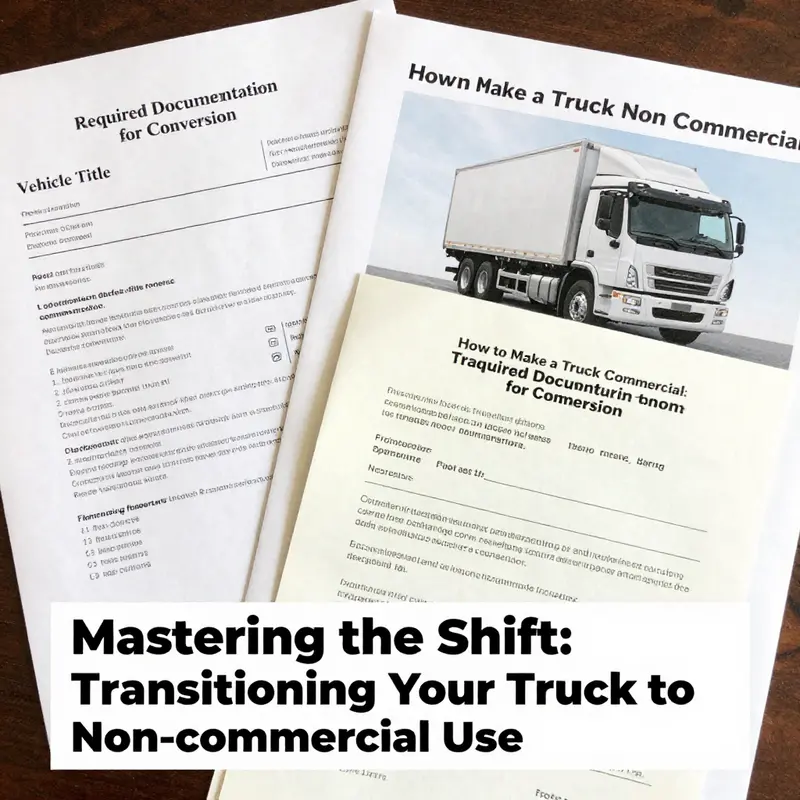
Deciding to shift a truck from commercial use to private use is more than a change of address in the paperwork. It is a redefinition of how the vehicle is taxed, insured, and governed on the road. The decision often arises when a business evolves, when a family uses a former work truck for personal projects, or when someone wants to monetize a vehicle only in a casual, nonprofit way. The shift carries practical consequences that ripple through insurance costs, parking privileges, and how you answer the question of what the vehicle is allowed to carry. In most places, the conversion follows a formal process administered by the local vehicle registration authority, with state or national variations that can alter the exact forms and checks you will face. The core logic, however, remains consistent: prove ownership, demonstrate that the vehicle is fit for private use, and remove any elements that tied the truck to commercial functions. The path starts with a clear-eyed assessment of what the truck has become and what it will be allowed to do once the change is approved. This is not a shortcut around the rules; it is a commitment to reclassifying a vehicle in a way that reflects how it will be used on a day to day basis. And it is wise to approach the process with patience, a prepared file, and a willingness to meet the standards that protect all road users. As you navigate the steps, remember that the goal is not simply a new label on a registration card. It is a formal recognition that your truck will no longer be used to haul goods for profit, and that its insurance, licensing, and inspection requirements should align with private use rather than commercial operations. The practical effect is twofold: you align the vehicle with your current needs, and you reduce the friction between the vehicle and the law whenever you operate it for personal projects, weekend tasks, or family needs. If you plan to browse the topic, you may find it helpful to consider how vehicle ownership and usage are influenced by the way a truck earns its keep. The decision to convert elevates the importance of documentation and oversight, because the paperwork must convincingly demonstrate that the vehicle is no longer configured or employed as a commercial asset. In many regions, the process requires a clean slate: no outstanding violations, no lien against the title, and a vehicle that is consistent with a private use profile. A clean history helps the authorities verify that the change is legitimate and that the vehicle, in its current form, meets safety standards appropriate for a non-commercial life on the road. The practical steps that follow are largely procedural, yet they demand careful preparation and honest representation. Start with the basics: collect proof of identity, the title, current registration, and evidence of insurance that reflects personal use. You will likely need to complete a state or provincial form that asks you to declare the new use category for the vehicle. In some jurisdictions, the form is a single page; in others, it is part of a broader vehicle services package. The key is to supply accurate information about the vehicle and about how you intend to use it going forward. If the truck has features that were added for commercial work—such as a cargo box, a lift gate, or heavy-duty signage—these details must be addressed. In several states, a removal or deactivation of commercial equipment is required or at least documented. The paperwork will ask for proof that those modifications have been removed or are no longer used for commercial purposes. It is entirely reasonable to expect a summarizing statement of what was done to revert the vehicle to a private-use configuration. The documentation you bring to the DMV or registry office should also include a record of any entitlements tied to commercial operation that might need to be terminated. For some owners, this includes canceling a commercial driving privilege, a USDOT number, or freight permits. The process of canceling these credentials should be completed through the relevant transportation authority before you finalize the vehicle use change with the DMV. When you visit the DMV, you will present the documents and submit the form. Fees are common, and the amount varies by state, sometimes by vehicle weight, sometimes by the complexity of the change. Some jurisdictions also require a recent emissions test or a safety inspection to verify that the vehicle meets private-use standards. The inspection, where required, looks at core safety elements—seat belts, brakes, lights, tires, and the VIN that must correspond with the title. The aim is to confirm that the vehicle is not only a private-use machine on paper but also in its physical condition. If the vehicle fails to meet the standards, you may need to address the issues before the change can be approved. Once approved, the DMV issues a revised title and registration that reflect non-commercial use. In some cases, a new plate is issued, especially if the old registration was tied to commercial status. The vehicle’s record is updated to show private use, and you receive new documents bearing the non-commercial designation. With the paperwork settled, you move to the insurance side of the equation. A shift from commercial to personal auto insurance is not merely a change in policy numbers; it is a recalibration of coverage that aligns with personal road use. Personal auto policies typically offer lower premiums but narrower coverage for business-related activities. You will want to discuss your intended uses with your insurer to ensure that the policy reflects personal, non-commercial use and that coverage is not inadvertently voided if you occasionally undertake casual, small-scale or nonpaid vehicle tasks that are not strictly commercial but feel like a gray area. The interplay between the vehicle’s use and the insurance policy is central to the overall cost and risk management of ownership. The steps above are straightforward in principle, but the experience of conversion can differ a lot from one place to another. Some states require a specific emissions test or a diagnostic inspection, others do not. California, as noted in the guidance, may require an emissions test and a formal cancellation of certain commercial credentials before application. Residents of other states may not face the same prerequisites, but they will encounter similar checks for safety and owner documentation. The best practice is to begin with the official guidance from the local DMV or equivalent agency and build your plan from what is required in your jurisdiction. This means checking the official website, downloading the right form, and reading any state notes about required documents, inspection, and fees. It also means preparing for a potential inspection that confirms the vehicle is not still set up for commercial operations, such as cargo-related gear or signage. If you are unsure how to begin, you can look to the broader driving and purchasing landscape to help frame your decision. For instance, when evaluating whether to purchase a vehicle for conversion, consider how the pricing and costs of ownership will change after you switch to private use. Some owners find that insurance premiums drop noticeably after the change, while others see smaller shifts because the vehicle remains a workhorse in a non-commercial niche of their life. The decision to convert, then, is not merely administrative; it is a balancing act between legal compliance, financial implications, and practical use on the road. As you gather documents, you may reflect on how to ensure you have a smooth experience at the DMV. Keep a neatly organized file with copies of the title, registration, proof of identity, and any correspondence with the insurer. It helps to have a plan for the day of your appointment: verify the hours, confirm what forms you’ll need, and bring any additional evidence that may be requested, such as a letter from an employer or a business partner indicating that commercial use has ceased or that the vehicle is no longer essential to the business’s operations. For readers who want a broader sense of how to approach vehicle decisions, consider exploring practical guidance on acquiring and repurposing trucks in the broader market. For instance, you can explore discussions on the relative advantages of different procurement routes in this space by visiting resources that compare dealer purchases with auctions for choosing your truck. This line of inquiry can help you understand how to acquire a vehicle that will later be reclassified, ensuring the purchase aligns with both budget and intended use. dealer-sales-vs-auctions-choosing-your-truck provides a lens on those decisions and can help you plan a purchase that integrates smoothly with a plan for private use after conversion. As you wrap the process, the big message is clarity and honesty with the authorities and with yourself. You are not seeking a loophole; you are seeking a legitimate change in how the vehicle is used. The result is a truck that legally matches your daily realities, avoids the friction of noncompliant operation, and sits comfortably under insurance and regulatory expectations for a private vehicle. And when the paperwork lands with the new non-commercial designation, you can focus on the road ahead—knowing your truck is aligned with your life beyond the job site. For continued guidance, refer to the official records and portals of your state or provincial DMV, and remember that the path may differ from one jurisdiction to another. It is a process rooted in accountability, not speed, and that discipline ultimately makes the road safer for everyone. External resource for authoritative guidance is the official DMV portal: https://www.dmv.ca.gov/portal/.
Stripping Commercial Licensing: A Practical Guide to Reclassifying Your Truck as Non-Commercial
Converting a truck from commercial to non-commercial use is a formal, document-driven process. It centers on changing the vehicle’s official use classification with your local vehicle registry. The steps are consistent across most regions, but details and fees vary. This chapter explains the practical sequence you’ll follow, the documents the DMV will expect, and the common pitfalls that stall a conversion.
Start by verifying the vehicle’s legal standing. The DMV will not process a classification change if the truck has outstanding tickets, unpaid fines, or active liens. Resolve all violations first. Obtain a lien release for any satisfied loan, and secure a clear title in your name. If the title isn’t in your name, you must transfer ownership before reclassification. These checks remove administrative blocks and prevent surprises during the application.
Collect the required paperwork before you visit the DMV. Bring a valid driver’s license or other proof of identity, the original vehicle title, the current registration card, and proof of insurance that meets personal-use requirements. If the truck held a commercial operating permit—such as a USDOT number or a state freight permit—you’ll need proof that it has been canceled or surrendered. Agencies that issue those permits require their own cancellation process, and the DMV often asks for the cancellation confirmation. Having these documents in hand makes the DMV visit straightforward and faster.
When your paperwork is ready, schedule a visit to your local DMV or registry office. Many jurisdictions offer online forms you can complete ahead of time. If available, fill out the “application for change of vehicle use” or equivalent form online and print it. Bring the completed form with your supporting documents. At the office, expect a clerk to review your submission for completeness and accuracy. They will check name matches, VIN numbers, and that the right boxes are filled in for the new classification.
A physical inspection is commonly required. The inspector confirms that the VIN and engine numbers match your title and registration. They will also look for signs the truck still carries commercial modifications. Examples include permanently installed cargo racks, specialized signage, heavy-duty shelving in cargo vans, lift equipment, or welded-in business fixtures. If such items remain, the DMV may reject the change until the truck is returned to a configuration consistent with private use. Removing commercial signage and any permanent business alterations before inspection reduces the risk of setback.
Emissions and safety checks may be part of the inspection packet. Some states require a smog check or safety inspection to update a vehicle’s use classification. If your state requires emissions testing, schedule it early. A failing test will prevent the registration change until repairs are completed. Plan for repair time and costs if the vehicle is older or modified in ways that affect emissions compliance.
Fees are part of the process. Expect an administrative fee for changing the registration class. Some jurisdictions add inspection charges, new plates fees, and updated title issuance costs. If the truck’s weight class changes between commercial and private registration, that may alter annual registration fees. Ask the DMV clerk for an itemized fee estimate before you finalize the application to avoid surprises.
Once approved, the DMV updates the vehicle record to reflect the non-commercial or private-use classification. You will receive an updated registration card and, in many cases, a new registration sticker. If the vehicle had commercial plates, you may be issued new plates or asked to surrender the commercial plate before receiving the new one. Keep copies of all forms and the updated registration. Store the new documents with your insurance paperwork and the title.
Insurance must be adjusted immediately. Commercial policies often cover business activities and loaded cargo tied to profit. When a vehicle’s registration switches to private use, notify your insurer and request conversion to a personal auto policy. Personal policies tend to be less expensive, but they also exclude business use. If you continue moving goods for hire after reclassification, you risk voiding coverage. Document your insurer’s confirmation of the policy change and updated premium schedule.
Understand the legal and operational consequences. A truck registered as non-commercial cannot be used for paid hauling, deliveries for hire, or transport of goods for business profit. Doing so may trigger fines, revoke insurance coverage, and require reapplication for commercial permits. If your plans change and you later need to return the truck to commercial service, plan for the reverse process: obtaining a commercial operating permit, updating the plate and registration, and likely an inspection.
Common pitfalls and how to avoid them:
- Unresolved liens or tickets: check court records and the title before applying. Secure releases and receipts.
- Active commercial permits: cancel them with the issuing agency and bring cancellation proof to the DMV.
- Physical alterations: remove permanent commercial fixtures before inspection. Temporary gear should be stored during inspection.
- VIN discrepancies: verify the title’s VIN and engine numbers match the truck. If errors exist, correct them with the DMV ahead of time.
- Emissions failures: test early and repair as needed. A failed smog test will delay reclassification.
Timeline expectations help you plan. Simple cases with clean records and no modifications can be resolved in a single DMV visit. If you need emissions testing, repairs, permit cancellations, or title transfers, expect multiple steps and possibly several weeks. Lien releases and permit cancellations from federal agencies can add more time. When time is critical, call your DMV for expedited options and to confirm the exact documents required.
Practical tips to make the process smooth: prepare a single folder with originals and copies of all documents. Make a checklist of required items before you leave home. Remove all commercial markings and visible business identifiers. If the title is missing or lists a previous owner, handle the title transfer first. If you rely on a broker or third party, provide them with notarized authorization and clear instructions on fees and deadlines.
After the change, keep the new registration and insurance documents in the truck. Retain digital backups. If you plan to sell the vehicle later, a non-commercial classification may affect resale value and buyer interest. For guidance on preparing and marketing a truck after reclassification, consider practical buying and selling resources such as this guide on how to buy and sell trucks and campers efficiently: https://mcgrathtrucks.com/buy-sell-trucks-campers-efficiently/.
Finally, always verify the exact steps with your local vehicle registration authority before you begin. Jurisdictions differ on inspection requirements, fees, and the paperwork needed to cancel commercial permits. For a widely used reference and up-to-date procedural details, consult your state DMV—for example, the California DMV maintains clear guidance on vehicle use changes at https://www.dmv.ca.gov.
Reclassifying a Workhorse: A Practical, Legal Path to Turn a Commercial Truck into Private Use at the DMV
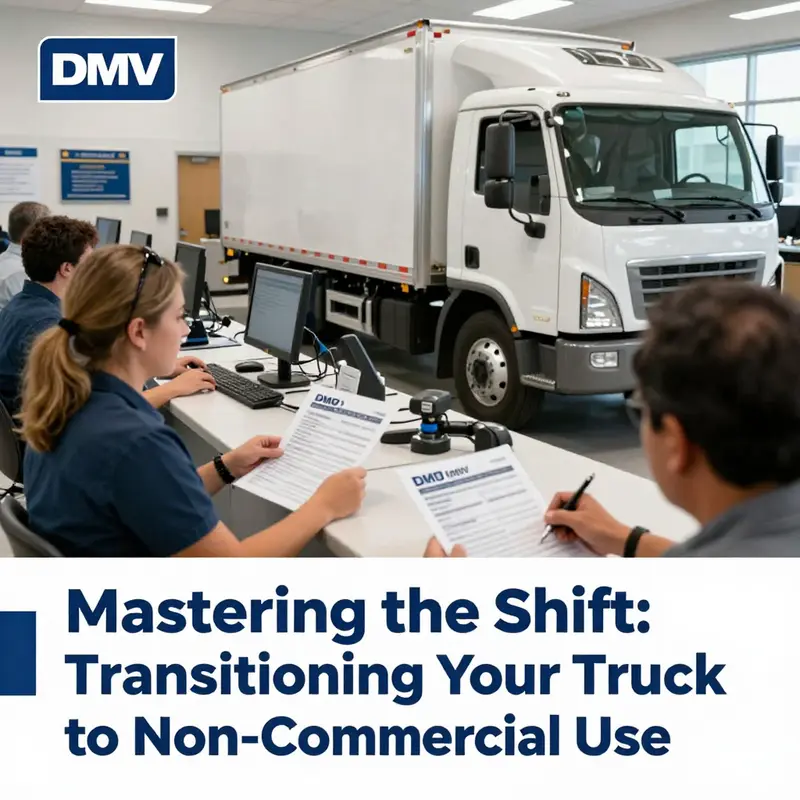
The decision to shift a truck from commercial to non-commercial use is more than a paperwork change; it is a redefinition of how the vehicle lives in your daily life and in the eyes of the law. For many owners, a truck that once hauled freight or served a business fleet becomes a personal asset for family projects, hobby builds, or long road trips. The journey to reclassify is not simply about changing a label on a registration card. It is about ensuring that every step—from the moment you clear old obligations to the moment you drive out with a new title and a new insurance posture—reflects the new relationship you have with the vehicle. The process, though it appears state-specific, unfolds along a well-trodden path that most jurisdictions recognize: clear all encumbrances, gather the right documents, cancel commercial permissions, submit the change at the DMV, satisfy any inspections, and finally reset the ownership and insurance designations to private use. Along this path, the central idea is to demonstrate that the truck’s current role is no longer that of a commercial tool but of a personal vehicle, suitable for everyday transportation rather than profit-driven activity. Throughout this chapter, the practical choreography of steps is integrated with the broader context—why the change matters, how it affects risk, and what it means for future use. A touchstone for the practical reader is the ongoing conversation in the broader trucking community, as chronicled on industry-focused outlets that discuss how vehicles transition from fleet use to personal ownership and how that transition affects everything from wear and upkeep to insurance premiums. For those seeking a quick anchor in the practical literature, the idea of a centralized process—documentation, verification, and confirmation from the registry—repeats across jurisdictions, even as the specifics shift from state to state. When approached in this way, the reclassification becomes less about an obstacle course and more about a deliberate reallocation of responsibilities and protections that align with private use.
The initial step in this journey is perhaps the most straightforward yet carries real consequences: clearing all violations and liens. It is easy to underestimate how unresolved tickets, fines, or a lingering lien against a vehicle can derail the entire reclassification effort. A vehicle with open violations is effectively tethered to its old use category, because the registry needs to confirm that the vehicle’s history is clean enough to reflect a new use case. Clearing these issues requires a patient audit of the vehicle’s record, a review of the outstanding balances, and, where necessary, a formal discharge or settlement with the relevant authorities. The act of clearing violations is not just bureaucratic housekeeping; it is a fundamental signal to the DMV that the vehicle’s record is ready to be repurposed. Once the record is clean, the path to change becomes clearer, but it still demands careful preparation of documentation. The typical package is broad and practical: a valid government-issued photo ID, the current vehicle title, the current registration, proof of liability insurance appropriate to private use, and, crucially, the documentation that proves ownership and the vehicle’s current identity on paper matches the vehicle in the driveway. In several states, the process also calls for a VIN verification form, particularly if there is any discrepancy between the physical vehicle and the records or if ownership has recently changed hands. The owner should be prepared to demonstrate ownership—whether through the title or an affixed bill of sale—and to show that payment for the transaction is ready, including any title transfer fees, registration fees, and applicable taxes. The specifics vary from one jurisdiction to another, but the underlying principle remains constant: the DMV needs to be confident that the vehicle’s narrative now aligns with private, non-commercial use.
The next phase is the paperwork itself. This is where state nuance becomes visible in a practical sense. In many regions, the official form for declaring a change in use is a formal application that the owner completes at the DMV counter or online. The form may carry a specific designation, such as an “Application for Title and/or Registration” and a subcategory for change of use to non-commercial or private use. In California, for instance, the process is tied to specific forms and, at times, to a vehicle emissions or safety inspection requirement. Beyond the form, the owner needs to assemble a robust packet of documents. A standard packet includes the driver’s license, the vehicle title, and the current registration, along with proof of ownership such as a bill of sale or an affidavit if the ownership chain is not clear. An important nuance is that some states require a VIN verification or an inspection to confirm that the vehicle’s current configuration is consistent with private-use status. If the truck has ever been equipped with commercial-specific features—special signage, cargo lifts, or heavy-duty cargo controls—they may need to be removed or at least documented as having been removed prior to the reclassification. The goal of the inspection or verification in these cases is to confirm that the vehicle now behaves, and is labeled, like a private-use vehicle rather than a commercial transport unit. The cost of such steps can vary, but the process almost always includes a fee that covers the processing, the title update, and the new registration issuance. The exact numbers depend on the state’s fee schedule and the vehicle’s value and weight class, so the owner’s budgeting should include a buffer for these administrative costs. As part of the documentation stack, it is worth noting that many people benefit from understanding how commercial licensing is handled after the change. If the truck previously carried a USDOT number or a state freight permit, those licenses must be formally canceled through the appropriate transportation authority. This cancellation is not only a regulatory requirement; it also prevents the accidental continuation of commercial-use privileges that no longer apply to the vehicle.
Submitting the application at the DMV is more than a drop-off of papers. It is an exercise in alignment—ensuring that the vehicle described on the title and in the records truly reflects the vehicle in the driveway, and that the vehicle’s status matches its intended use. The process may involve an in-person visit or an online submission, depending on the state. In some cases, a live inspection may be required to verify the physical state of the vehicle and to confirm that it no longer includes commercial adaptations. If an inspection is required, the inspector will look for evidence that the vehicle is not outfitted for freight or commercial operations; this might include confirming the absence of cargo-mounted equipment, signage, or specialized lighting that would have signified a commercial purpose. The inspection serves a double duty: it reassures the DMV about the vehicle’s current configuration and it protects the owner by documenting the vehicle’s change in status in a formal, verifiable way. Once approved, the DMV updates the vehicle’s record to reflect “non-commercial” or “private use,” issues a new registration card, and issues an updated title. In some cases, the license plate may be reissued to reflect the new category, particularly if the plate is linked to commercial use in that jurisdiction. This administrative turnover marks a tangible moment—the point at which the truck transitions from being a business tool to a personal mode of transportation.
Insurance is the next crucial hinge in the door. Private-use status brings a different risk profile and, often, a different insurance product. Owners commonly discover that personal auto insurance can offer lower premiums than commercial coverage, especially when the vehicle is used for private tasks and non-business travel. However, the policy must accurately reflect the new use. Using a vehicle designated as non-commercial under a mostly commercial policy can lead to coverage gaps or outright voidance of protection. The step requires contacting the insurance provider, informing them of the use change, and adjusting the policy to the appropriate terms for private use. This step also has downstream implications for liability, collision, and optional coverages, so the owner should discuss the new risk exposure, driving patterns, and mileage expectations with the agent. The endorsement or new policy must align with the state’s definitions of private use and the vehicle’s new status. The financial incentive is often real: insurance costs can drop as the vehicle is reclassified, but the owner must ensure that the changed coverage remains robust for personal, non-business use.
Beyond the mechanics of paperwork and fees, there are broader considerations that shape the decision to reclassify and that influence the ongoing experience of owning a non-commercial truck. First, there is the reality that you can no longer legally haul goods for profit once the status has changed. Any paid transport activity would undermine the change and could trigger penalties, insurance complications, and regulatory consequences. Second, the relationship between the vehicle’s age, its emissions profile, and the state’s rules can matter. Some states impose emissions or safety requirements that influence whether a vehicle can qualify for the private-use category, with California being a common example where emissions testing or related compliance matters can come into play. Third, the process highlights a broader truth about vehicle ownership: the legal category of use is not merely a label; it is an operating framework that changes risk, costs, and responsibilities. It changes how you maintain the vehicle, how you insure it, and how you plan for its long-term road life. Accordingly, any owner contemplating this change benefits from a clear-eyed view of the implications, and a readiness to engage with the local DMV and insurance providers in a collaborative, proactive way.
The practical cadence of the reclassification, then, is not a one-off sprint but a short journey that unfolds with careful steps, a willingness to gather the right documents, and a readiness to adjust the vehicle’s life to private use. If readers want a concise reference to the broader conversation around trucks and personal use, they can explore discussions hosted on industry blogs that cover ongoing questions about how trucks transition from commercial to personal roles and how that transition intersects with maintenance, depreciation, and lifestyle use. For further reading, see the McGrath Trucks blog, which offers practical perspectives on related topics in the trucking ecosystem: McGrath Trucks blog.
As a closing note, when you’re ready to verify the specifics for your state, consult your local DMV’s official resources. The core steps—clear encumbrances, assemble documentation, cancel commercial licenses, file the change, pass any required inspections, and update insurance—remain the backbone of the process. They translate into a coherent sequence that, with patience, results in a clean slate for private use. This chapter has traced that sequence with attention to the logic behind each step, the typical documents involved, and the consequences that flow from the change in use. For official guidance tailored to your jurisdiction, refer to your state’s DMV guidance and the related forms. As a practical reminder, the California example illustrates how a regional system translates the same concept into specific forms and checks, reinforcing that while the paperwork differs, the underlying purpose remains consistent: to align the vehicle’s status with its actual use and to ensure that both the owner and the state maintain an accurate and enforceable record of that use. For those seeking formal resources, the California DMV and similar state sites remain the primary sources of truth for the process. External reference: https://www.dmv.ca.gov
From Fleet to Family: Vehicle Inspection and Compliance When Making a Truck Non-Commercial
Vehicle inspection and compliance form the backbone of any successful conversion from commercial to private use. Changing a truck’s status at the registry is not just a paperwork task. It requires verifying the vehicle meets safety, emissions, and equipment standards for private operation. The inspection and compliance process confirms the truck no longer carries modifications, credentials, or identifiers that legally tie it to commercial activity. Preparing the vehicle, compiling the right documents, and understanding what examiners look for will speed approval and protect your insurance coverage.
Begin by confirming eligibility. Registries typically refuse requests when there are outstanding violations, unpaid fines, or active liens. Resolve these issues first. If the truck is titled to a company, have corporate authorization ready. A clear legal and financial record is the first inspection outcome; the DMV won’t proceed until the vehicle has clean standing.
Next, gather documentation. Bring the current title and registration, an up-to-date driver’s license or other owner ID, and proof of insurance appropriate for private use. Many registries require a specific application form for changing vehicle use; get that form in advance or download it from the local DMV website. If previously registered with a commercial permit—such as a USDOT number or other freight authority—bring paperwork showing those permits have been canceled. These cancellations must be official. Without them, the registry may not change the use classification.
Physically preparing the truck matters. Inspectors verify that the vehicle matches the title details and that no commercial-specific modifications remain. Remove permanent signage, company wraps, service racks, and any aftermarket cargo hardware designed for heavy freight. Interior and exterior checks will look for bolted-in shelving, fixed cargo restraints, welded platforms, or other permanent fixtures that indicate the truck was adapted for business hauling. If modifications are easily removable and leave no permanent alterations, document the removal with dated photos. This visual record helps if questions arise during the DMV review.
Emissions and safety checks are common checkpoints. Several states require a smog or emissions report before a use-change is approved. The vehicle must meet the local emissions standard for private passenger trucks. If the truck has an engine that was tuned for heavy commercial use, a shop tune may be necessary. Brake systems, steering, lights, tires, and suspension components are also examined. Inspectors ensure the vehicle is safe for personal operation and that major commercial-grade alterations do not affect passenger safety.
During inspection, expect verification of vehicle identification. Examiners will cross-check the VIN on the truck with the title, registration, and any prior commercial records. They will also note the odometer reading and may record vehicle weight class. If your vehicle’s gross vehicle weight rating (GVWR) or class exceeds a threshold that distinguishes commercial trucks from passenger vehicles in your jurisdiction, reclassification may be more complex or not possible. Some states have strict definitions based on GVWR, axle count, or body type.
Insurance is closely tied to inspection outcomes. Converting to non-commercial use typically allows you to move from a commercial policy to a personal auto policy, which often reduces premiums. However, insurers will base coverage on the vehicle’s configuration and declared use. If inspections reveal remaining commercial equipment, the insurer may refuse to convert the policy, or they may require higher premiums. Before you visit the DMV, speak to your insurer to confirm which policy documents to bring and what coverage limits the company will require after conversion.
Pay attention to license plates and registration markers. Many jurisdictions issue distinct plates or decals for commercial vehicles. When your change of use is approved, expect a new registration card and possibly new plates. Replacing commercial plates is typically part of the cost, along with a processing fee. Know the fee schedule before your visit so you can pay without delay. Some registries also allow you to retain vanity or specialized plates but will reclassify them if the plates do not denote commercial status.
Prepare for timelines and possible follow-ups. The inspection itself may be quick, but administrative processing can take days to weeks, depending on local workload and whether additional checks are required. If the registry requires further evidence—photographs, canceled permit confirmations, or a mechanical statement—you may receive an instruction notice. Respond promptly. A stalled application can leave your vehicle in limbo and affect your insurance status.
There are legal and practical consequences to keep in mind. Once reclassified, the truck cannot be used for paid hauling or commercial deliveries without reversing the process. Using a non-commercial vehicle for business activity usually voids insurance coverage and can expose you to fines. Be certain you are ready to change use before you begin. If you anticipate mixed use, discuss options with the DMV and your insurer. Some jurisdictions offer business-use endorsements that preserve certain coverages while allowing limited business activity. These nuances vary, so local guidance is essential.
Small administrative errors cause many delays. Avoid them by bringing originals, not photocopies, of titles and registrations. If ownership recently transferred, bring bill-of-sale documents and any lien release paperwork. For corporate-owned trucks, bring company authorization or board resolution. For vehicles formerly titled under a fleet account, bring paperwork that shows the vehicle has been removed from fleet status.
Practical tips smooth the path. Clean the truck thoroughly before inspection. Remove logos and adhesive residue. Secure or remove loose cargo items that might be mistaken for commercial gear. Take dated photos before and after removing equipment to support your case. Call the DMV ahead to confirm the inspection requirements for your state. Ask whether the registry requires a certified inspection station or if DMV staff will perform the verification.
Document a clear audit trail. Keep copies of the inspection report, the application, canceled permit confirmations, and any correspondence. These documents protect you if the truck’s status is questioned later. Keep proof of your insurance change and a record of the date the registry updated the vehicle’s classification.
A final practical note: emissions and equipment standards change over time. If your truck is older, confirm the truck meets current requirements before you invest in removals or paperwork. To learn how emissions rules can affect used truck values and regulation, consult resources that discuss emission impacts and compliance. For a deeper look at emissions and market implications, see the article on the “Impact of emissions on used truck prices” (https://mcgrathtrucks.com/impact-of-emissions-on-used-truck-prices/).
For the most reliable, up-to-date steps specific to your region, consult your local Department of Motor Vehicles or equivalent authority. They provide the official forms, fee schedules, and inspection checklists you’ll need to complete the conversion smoothly. A clear, prepared approach reduces delays and ensures your truck serves your needs lawfully after leaving commercial service.
External resource: https://www.dmv.org/vehicle-use-classification-change.php
Final thoughts
Converting a truck from commercial to non-commercial use is a multifaceted process that demands attention to detail and adherence to local regulations. Each step, from clearing violations to ensuring compliance through inspections, is essential for a hassle-free transition. By carefully taking these actions, fleet managers and procurement teams can optimize vehicle use, reduce costs, and maintain regulatory compliance, thereby enhancing operational efficiency. Understanding this transformation not only aids in proper fleet management but also ensures that your trucking assets are effectively utilized for non-commercial purposes.