In the fast-paced world of logistics and transportation, understanding the dynamics of commercial truck sales is crucial for trucking company owners, fleet managers, and procurement teams alike. As the backbone of supply chains across industries, commercial vehicles play a significant role not just in freight transportation but also in the overall health of the economy. Recent years have highlighted the volatility and fluctuations in the truck market, making it more important than ever to grasp various factors influencing sales, from economic changes and tariffs to emerging technologies like electric trucks.
In this article, we delve into the earnings potential for commercial truck salespeople, offering insights into what drives profitability in the industry. Readers can expect to explore key sales strategies, the impact of economic uncertainties on truck sales, and how innovation is reshaping buyer preferences. We’ll also touch upon current trends in used truck sales, ensuring that readers have a comprehensive understanding of the marketplace.
Whether you’re an established procurement team seeking to optimize your fleet acquisitions or a trucking company owner aiming to increase your bottom line, the information herein will equip you with the necessary knowledge to navigate the complexities of commercial truck sales importantly. Join us to learn about how much a commercial truck salesman can earn and the essential strategies to thrive in this competitive market.
Factors Influencing a Commercial Truck Salesman’s Salary
The earnings of a commercial truck salesman are influenced by several key factors. Understanding these elements is crucial for prospective sales professionals and trucking enterprises alike. Here are the primary factors that can impact a truck salesman’s salary:
-
Experience Level:
-
Salesmen with greater experience often command higher salaries. Typically, those with over five years in the industry see significant earnings compared to entry-level professionals. Experience not only enhances skills but also builds a network of repeat customers.
-
Geographical Location:
-
The location of the dealership plays a pivotal role in determining salary. Salespersons in high-demand regions or metropolitan areas often earn more due to increased sales volume. Areas with significant trucking and logistics industries usually provide better compensation opportunities.
-
Type of Trucks Sold:
-
Different types of trucks, such as heavy-duty, medium-duty, or specialized trucks (e.g., refrigerated units), can significantly impact earnings. Sales of premium or specialized vehicles tend to come with higher commissions due to their price points and market demand.
-
Commission Structure:
-
The commission model is a dominant factor shaping a commercial truck salesman’s income. Most dealerships employ tiered commission systems. For example:
- 1% on the first $50,000 in sales
- 2% on the next $50,000
- Up to 5% on sales exceeding $150,000
-
Additional incentives such as bonuses for top performance, customer satisfaction scores, and successful referrals also enhance total earnings. Some dealerships offer base pay ranging from $300 to $600 per week, while others are entirely commission-based.
-
Company Sales Targets and Bonuses:
-
Meeting or exceeding dealership sales targets can result in performance bonuses. Salesmen who consistently perform well may enjoy additional financial rewards, making their total earnings significantly higher.
Understanding these factors can assist fleet managers and procurement teams in making informed decisions on hiring and compensation structures to attract the best talent in the field. Learn more about economic influences on truck sales.

How Much Can a Commercial Truck Salesman Make?
Understanding the earning potential of commercial truck salesmen across various regions can significantly influence strategic hiring decisions for trucking companies and provide valuable insight for potential sales professionals. The commercial trucking industry has distinct salary ranges that reflect regional economic conditions, demand, and living costs.
Average Salaries by Region
The following table summarizes the average annual salaries of commercial truck salesmen in key regions within the United States:
| Region | Average Annual Salary (2023) |
|---|---|
| Alaska | $61,900 |
| Washington D.C. | $61,600 |
| California | $53,100 |
| Texas | $48,000 |
| Florida | $47,500 |
As depicted in the table, Alaska and Washington D.C. represent the highest average annual salaries for commercial truck salesmen at $61,900 and $61,600 respectively. In contrast, Florida and Texas have lower average salaries, making them less competitive regions for prospective sales professionals. The variance in earning potential emphasizes the importance of location when considering a career in commercial truck sales. Those in high-paying regions often benefit from greater demand and possibly higher costs of living, which influence salary structures.
Conclusion
In summary, the salary differences across regions present crucial considerations for both hiring companies and prospective truck sales professionals. Companies seeking to attract top sales talent may need to adjust their compensation packages based on regional trends. By being informed, both employers and potential employees can make data-driven decisions that align with their business strategies and career aspirations. For further information on related industry trends, you can explore our blog.
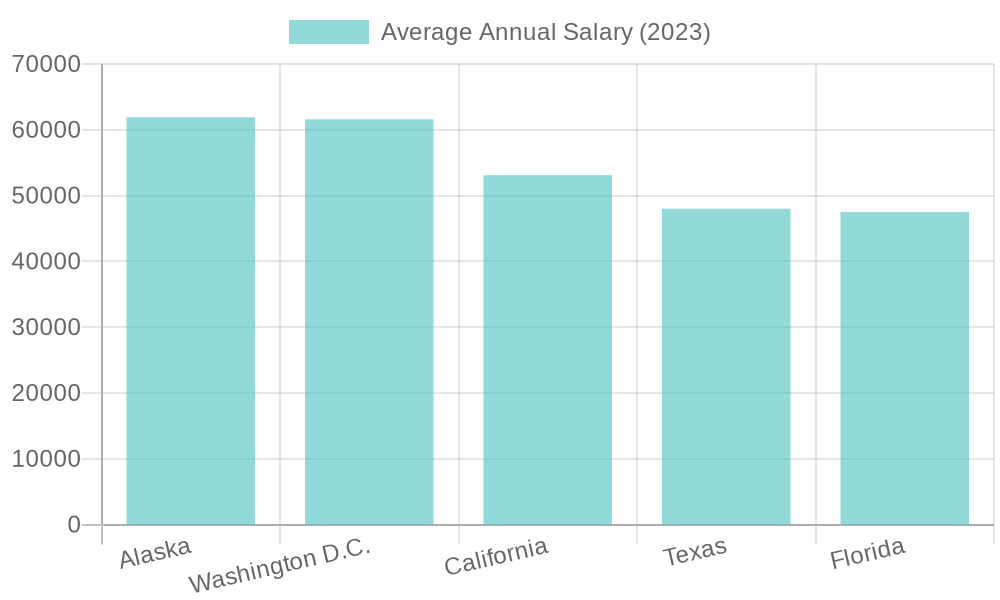
The chart above visually represents the comparative salaries of commercial truck salesmen by region, making it easier to interpret the earnings landscape in the industry.
For additional insights into the trucking market and salary impacts, visit our detailed page on navigating economic uncertainties.
Understanding Sales Commission Structures in Truck Sales
Sales commission structures play a vital role in motivating truck sales representatives, significantly impacting their earnings and the overall success of the sales team. The two primary types of commission structures within the trucking industry are flat-rate commissions and tiered commissions. Each structure brings different advantages and influences on how salespeople can maximize their income.
Flat-Rate Commissions
Flat-rate commissions are straightforward and commonly used in truck sales. Sales representatives earn a fixed percentage of each sale, typically ranging from 10% to 15% of the sale price. This method provides predictability; salespeople know exactly how much they will earn from each sale. Given that truck prices can vary significantly, this commission structure allows for a reliable income source for salespeople, particularly for volume sales.
Tiered Commissions
In contrast, tiered commissions reward sales representatives with escalating percentages based on their sales performance. For instance, a salesperson might earn 8% on sales up to $50,000, 10% on the next $50,000, and 12% on any sales exceeding $100,000. This structure encourages higher sales volumes and rewards top performers who exceed their sales targets. As such, tiered commissions can lead to significant upward earnings potential for motivated individuals.
Conclusion
Understanding these commission structures is essential for trucking companies and fleet managers looking to optimize their sales strategies. For a deeper insight into effective selling strategies, check out our blog on selling strategies. Moreover, understanding how market conditions impact sales incentives will also aid in strategic decision-making, as discussed in this article.
How Much Can a Commercial Truck Salesman Make?
The commercial truck sales industry is a dynamic sector that offers considerable earning potential for those who excel in sales. Recent studies and reports reveal a wealth of information regarding average salaries, commission structures, and bonuses that commercial truck salesmen can expect in 2023.
Average Salary Overview
According to Truckin’ Magazine, the average annual salary for commercial truck salesmen in the United States reached approximately $72,400 in 2023. This figure reflects the base earnings before any commissions or bonuses are added. Moreover, this can fluctuate significantly based on experience, geographical location, and dealer performance.
Commission Structures
The earnings for a commercial truck salesman are significantly bolstered by commission structures that can vary from dealership to dealership. The average commission per truck sold typically ranges from $800 to $1,500 depending on various factors such as:
- Vehicle model: Higher-value vehicles (like Class 8 trucks) may yield commissions at the upper end of the range.
- Sales performance: Salesmen who exceed certain sales thresholds can often negotiate higher commissions.
Bonus Opportunities
In addition to base salaries and commissions, commercial truck salesmen can also earn performance-based bonuses. These bonuses are often tied to:
- Volume targets: Dealerships may offer bonuses for reaching higher sales volumes, thus incentivizing sales performance.
- Customer satisfaction metrics: Positive customer reviews can not only enhance a salesman’s reputation but also contribute to bonus eligibility.
- Finance and Insurance products: Many dealers incentivize upselling financing options, warranties, and maintenance plans, resulting in additional earnings ranging from $200 to $500 for each related sale.
The presence of a bonus structure provides further earning potential, with top-performing salesmen able to earn upwards of $120,000 annually when combining their base salary, commissions, and bonuses. As noted by a report from the National Truck Dealers Association, the top 20% of commercial truck salesmen can exceed $105,000 in total earnings, demonstrating the lucrative nature of this profession for high achievers.
Pay Model Evaluation
The hybrid pay model, which combines hourly compensation with variable commissions, is standard in the industry. Most commercial truck salesmen can expect a base pay that falls between $20 and $30 per hour or a minimum guaranteed weekly pay of approximately $400 to $600. According to the NTDA’s 2023 compensation survey, 78% of commercial truck sales personnel operate under such a structure, enabling them to stabilize their earnings while still benefiting from the incentivized commission system.
Summary of Compensation Data
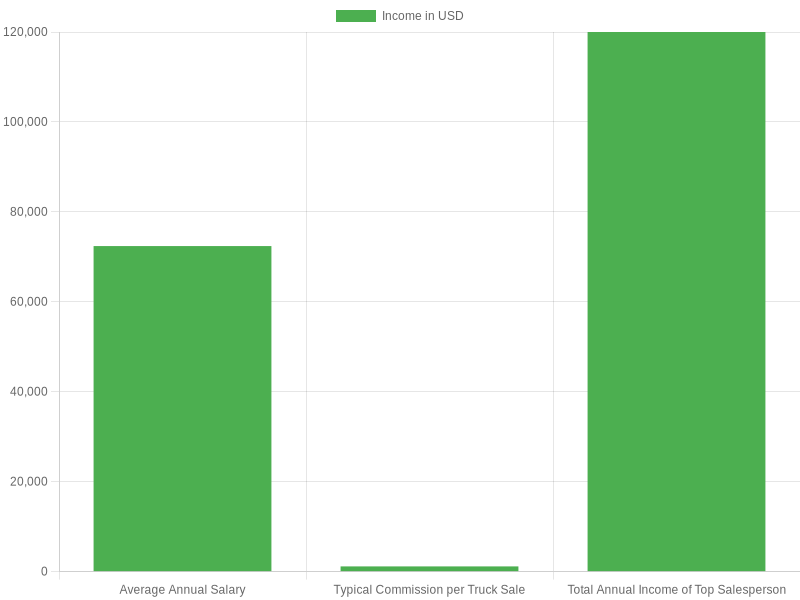
The below table summarizes the key components of compensation for commercial truck salesmen in 2023:
| Item | Amount (USD) | Source |
|---|---|---|
| Average Annual Salary | $72,400 | Truckin’ Magazine |
| Typical Commission per Truck Sale | $800 – $1,500 | National Truck Dealers Association |
| Total Annual Income of Top Salesperson | >$120,000 | SalesHacker.com |
Conclusion
A career as a commercial truck salesman offers potential for a lucrative income supported by a blend of base salary, commission, and bonuses. The varying commission opportunities based on sales performance play a critical role in a salesperson’s total income, making this an enticing field for motivated individuals.
Salary Trends of Commercial Truck Salesmen
Over the past decade, the average salary of commercial truck salesmen has exhibited a notable upward trend, reflecting increased demand for commercial vehicles in logistics and transportation sectors. According to data from multiple sources, including PayScale and Indeed, this increase is attributed to various factors, including economic growth and higher sales volumes in the freight and delivery industries.
Here’s a summary of the average salary trends from 2014 to 2024:
| Year | Base Salary (USD) | Total Earnings (USD, including commission) |
|---|---|---|
| 2014 | $50,000 | $50,000 |
| 2015 | $51,000 | $52,500 |
| 2016 | $52,000 | $54,000 |
| 2017 | $53,000 | $56,000 |
| 2018 | $54,000 | $58,000 |
| 2019 | $55,000 | $60,000 |
| 2020 | $56,000 | $61,500 |
| 2021 | $57,000 | $63,000 |
| 2022 | $58,500 | $64,000 |
| 2023 | $60,000 | $64,500 |
| 2024 | $62,000 | $65,000 |
The accompanying chart illustrates this trend visually and underscores the gradual but consistent growth in both base salaries and total earnings, including commissions, over this period.
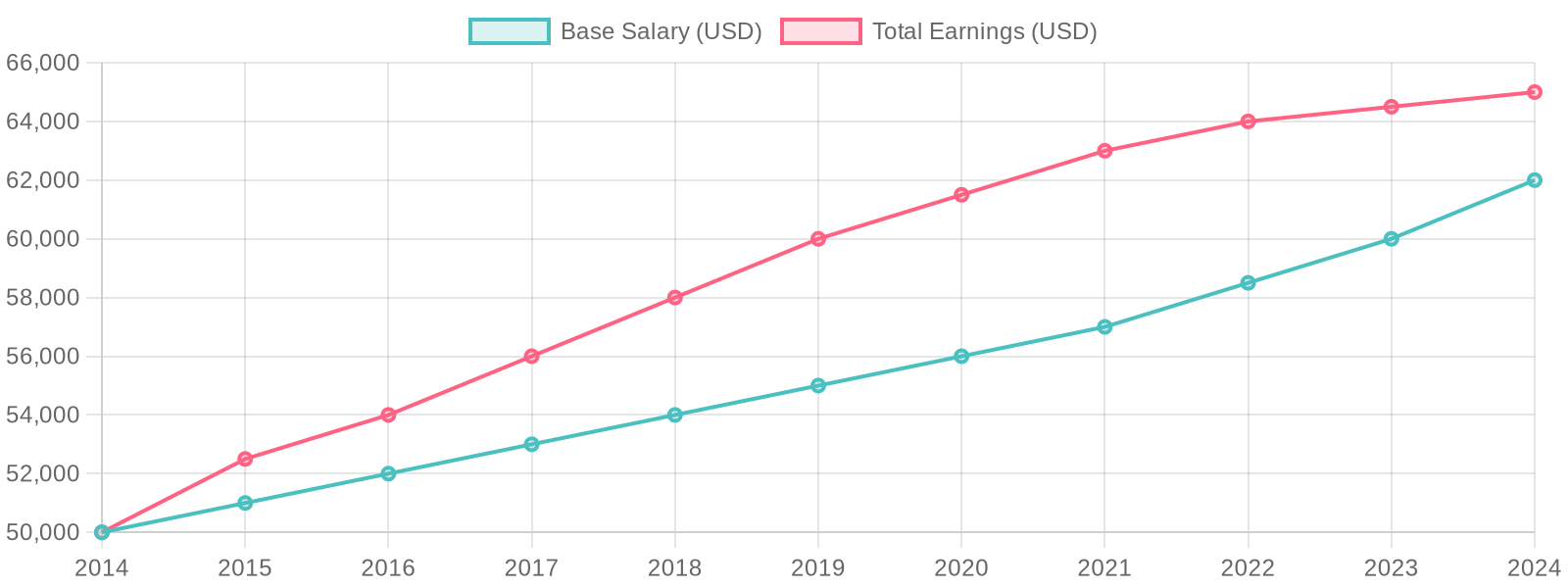
As shown in the graph, the average total earnings for truck salesmen reached approximately $65,000 by 2024, highlighting the lucrative nature of this career given the right skills and market conditions.
Benefits and Incentives for Commercial Truck Salesmen
Commercial truck salesmen often enjoy a comprehensive benefits package that goes beyond their base salary and commissions, making this career choice both attractive and sustainable. In today’s competitive environment, dealerships and manufacturers strive to attract top professionals by offering various incentives and benefits.
Health Insurance
Health insurance is a primary component of the benefits package for commercial truck salesmen. Most full-time positions come with employer-sponsored health plans that typically cover a significant portion of the premiums-often 80% to 100%. This encompasses medical, dental, and vision coverage, ensuring that sales professionals and their families have access to essential healthcare services. Given the demanding nature of the sales role, these health benefits play a crucial role in maintaining overall well-being and productivity.
Retirement Plans
Another important social benefit is the retirement plan. Many employers provide 401(k) plans with employer matching contributions, usually ranging from 3% to 5%. This not only helps sales professionals save for their retirement but also aligns them with the long-term success of the company. Some employers may offer pension plans, further strengthening the financial security for employees as they plan for retirement.
Performance Bonuses
Performance incentives are a significant aspect of a truck salesman’s compensation package. These bonuses can account for up to 30% of total earnings, depending on individual performance metrics such as quarterly sales volume, customer satisfaction rates, and successful fleet deployments. Companies often implement tiered bonus structures that reward exceptional performance with additional cash bonuses, luxury vehicles, or travel incentives, particularly during busy seasons such as Q4 or early spring.
Additional Incentives
Furthermore, many dealerships offer perks such as paid time off, flexible working hours, and opportunities for professional development, which contribute to job satisfaction and retention. Overall, the blend of competitive compensation and robust benefits positions the role of a commercial truck salesman attractively, not just for current industry professionals but also for those considering entering the field. For more insights on effective selling strategies in the commercial truck market, learn more here.
These benefits, alongside the potential for a lucrative salary, make a career in commercial truck sales highly appealing to prospective candidates.
Essential Skills for Success in Truck Sales
Success in commercial truck sales requires a unique blend of skills and characteristics that distinguish top performers from the rest. Here’s a list of essential skills and traits that successful truck salesmen possess:
- Technical Knowledge: A deep understanding of truck specifications, including engine types, fuel efficiency, maintenance costs, and compliance with regulations.
- Active Listening: The ability to listen carefully to customer needs, ensuring that the right solutions are provided for their specific requirements, whether for long-haul trucking or local deliveries.
- Interpersonal Skills: High emotional intelligence to build strong relationships with clients, addressing concerns and fostering trust throughout the sales process.
- Negotiation Proficiency: Skilled in negotiating terms and conditions, balancing price concessions with value propositions to meet both parties’ needs.
- Persistence: Resilience in the face of rejection and the determination to follow up with clients, as many sales require multiple touchpoints.
- Problem Solving: The capacity to analyze and resolve logistical and financial challenges for clients, offering tailored solutions that address their unique situations.
- Adaptability: Ability to adjust sales strategies based on market fluctuations, including the rising trend of electric trucks and changing regulations.
- Data Literacy: Skills to analyze return on investment (ROI) and total cost of ownership, ensuring clients understand the financial implications of their purchases.
These skills not only enhance sales performance but also position the salesman as a trusted advisor, capable of providing value beyond just selling trucks. Learn more about effective selling strategies.
By mastering these competencies, commercial truck salesmen can thrive in a competitive environment.
Following the insights shared throughout this article, it is evident that a career in commercial truck sales offers a robust earning potential for those in the field. The financial landscape for commercial truck salesmen shows promising dynamics, primarily driven by commission structures that reward high performance.
In 2023, average base salaries for commercial truck sales representatives ranged around $61,000 to $64,500 annually. However, these figures often serve as the foundation; top performers can earn significantly more through commissions, with some exceeding $90,000 or even reaching six figures annually. This variance highlights the competitive nature of the industry, where income is closely tied to individual sales performance and dealership incentives. Factors such as location and experience also play a crucial role in determining earning potential, with lucrative opportunities typically found in high-demand regions, such as major urban centers.
Commission structures in the industry are generally performance-driven, meaning that they can fluctuate based on the gross profit generated from each sale, manufacturer bonuses, and customer satisfaction metrics. Commission percentages can range from 1% to as much as 7% for exceptional sales, particularly for high-value or high-demand models. This demonstrates that sales excellence directly correlates with substantial financial rewards, encouraging commercial truck salesmen to maximize their sales strategies and customer engagement.
Furthermore, the ongoing trends in the trucking industry, particularly the shift towards electrification and the introduction of advanced vehicles, suggest that earnings potential might continue to grow. The demand for sustainable options, such as electric and hydrogen-powered trucks, is set to increase, thus presenting new avenues for sales opportunities and profit growth.
In conclusion, those considering a career in commercial truck sales should be optimistic about the earnings landscape, especially with the right skills, strategic knowledge, and market awareness. The financial rewards are substantial for those who commit to understanding market dynamics and excel in customer relationships. For further insights into truck selling strategies and market trends, feel free to read more about current trends in used truck sales growth or explore the impact of emissions on used truck prices.