
The significance of reliable transportation in various sectors has never been more pronounced, especially for trucking company owners, fleet managers, construction enterprises, and logistics firms. Hino box trucks, renowned for their durability and functionality, come equipped with commercial-grade axles tailored to handle the extensive demands of freight transportation. This article delves into the features of Hino box trucks and their commercial axle systems, exploring engineering innovations, practical applications, and benefits specific to industries that rely heavily on these vehicles. In subsequent chapters, we will break down Hino’s axles’ engineering principles, their applications, and how they compare to competitors’ offerings in the commercial truck market.
Understanding Box-Truck Axle Systems and Their Commercial-Grade Features
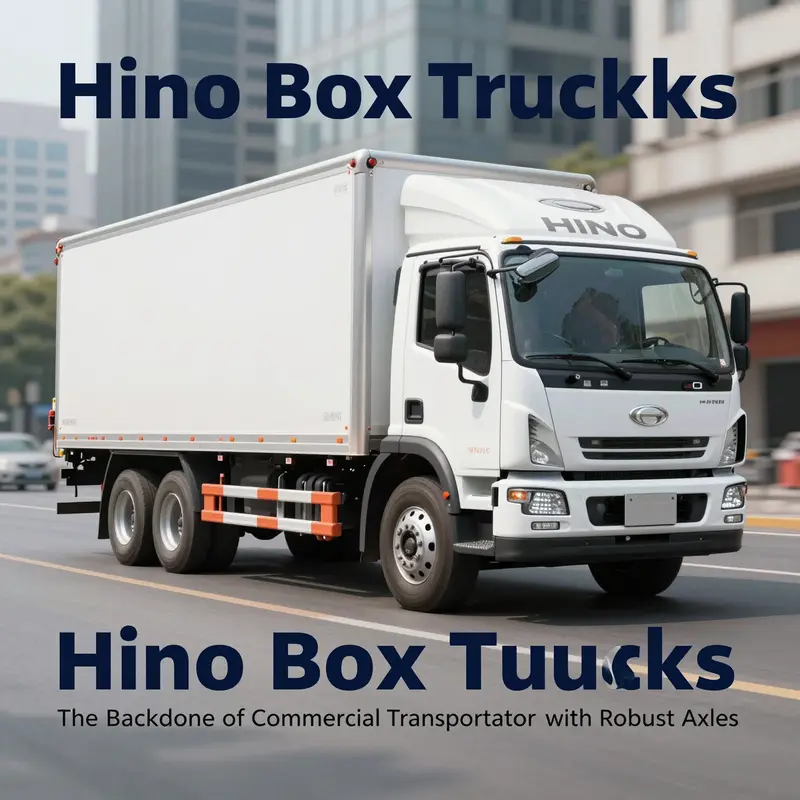
Box trucks are designed to move freight reliably, and the axle is at the center of that reliability. The front axle governs steering feel and load transfer, while the rear axle carries the payload and transmits torque to the wheels. Modern front axles use robust beam or semi-axle configurations and often rely on tapered roller bearings to reduce friction and improve load distribution. This improves steering response, tire wear, and predictable handling in urban stop-and-go service. The geometry of the front axle also influences camber and contact patch behavior as the suspension traverses road irregularities. In city driving, a well engineered front axle achieves a balance between strength and weight to support fuel efficiency without compromising safety or durability.
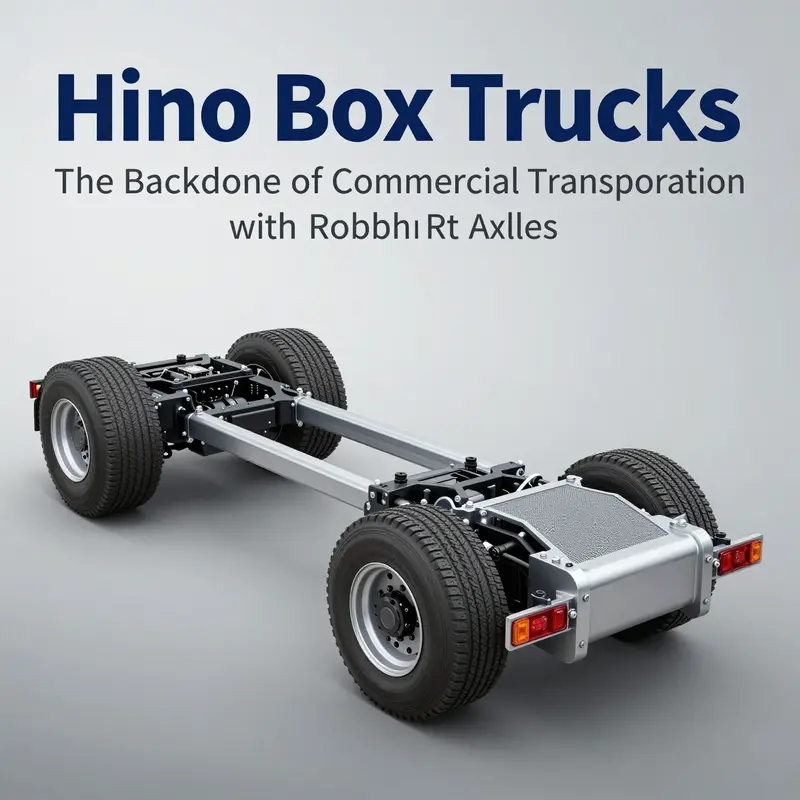
The rear axle is the workhorse in a box truck. It carries the heavy load, transmits torque to the wheels, and must endure repeated start stop cycles. Rear axles come in several configurations. A single reduction rear axle provides straightforward torque transfer and good efficiency for light to medium duty tasks. Hub-reduction designs route some of the torque through the wheel hubs themselves, which can improve torque delivery under heavy payloads and help efficiency on longer runs. For fleets that routinely haul heavy loads, hub reduction can offer real performance gains, albeit with more complex maintenance.
Another common feature is the full-floating rear design. In a full-floating arrangement, the axle shaft largely avoids direct torque transfer to the wheels, while the wheel hub bears the vehicle weight. This arrangement reduces shaft stress and can improve durability when operating at high payloads. The downside is higher maintenance complexity and cost, but for fleets with demanding duty cycles it can translate into longer axle life and more predictable traction during acceleration and braking.
Gear ratios on the rear axle further tailor performance to duty cycles. Shorter, numerically higher ratios boost off the line torque for urban starts, while longer, numerically lower ratios improve highway efficiency by keeping engine speed lower at cruising velocity. Fleets commonly choose axle options that match the expected mix of urban routes and highway legs to balance acceleration, fuel economy, and engine wear.
From a maintenance standpoint, durability hinges on bearing seals lubrication and proper alignment. Regular inspection of front bearings and seals, along with correct lubrication intervals, helps maintain steering feel and tire longevity. Rear-axle service focuses on bearing preload, seal integrity, and hub maintenance, particularly in hub-reduction designs. A well conceived maintenance plan yields lower downtime, steadier uptime, and lower total cost of ownership over the vehicle life.
In fleet planning terms, the axle choice influences safety, reliability, depreciation, and resale value just as much as payload capacity. The combination of a robust front axle with reliable bearings, a rear axle matched to the job, and the option of full-floating or hub-reduction layouts creates a system that supports predictable service across a range of weights and routes. For operators seeking official specifications and maintenance guidance, consult the manufacturer’s technical documentation and service recommendations for your specific model and duty cycle. You can start at the manufacturer’s official support resources for model-neutral guidance and updated service intervals.
null
null
A Fleet’s Reliable Heartbeat: How Commercial Axles Power Hino Box Trucks for Urban Deliveries and Regional Haulage
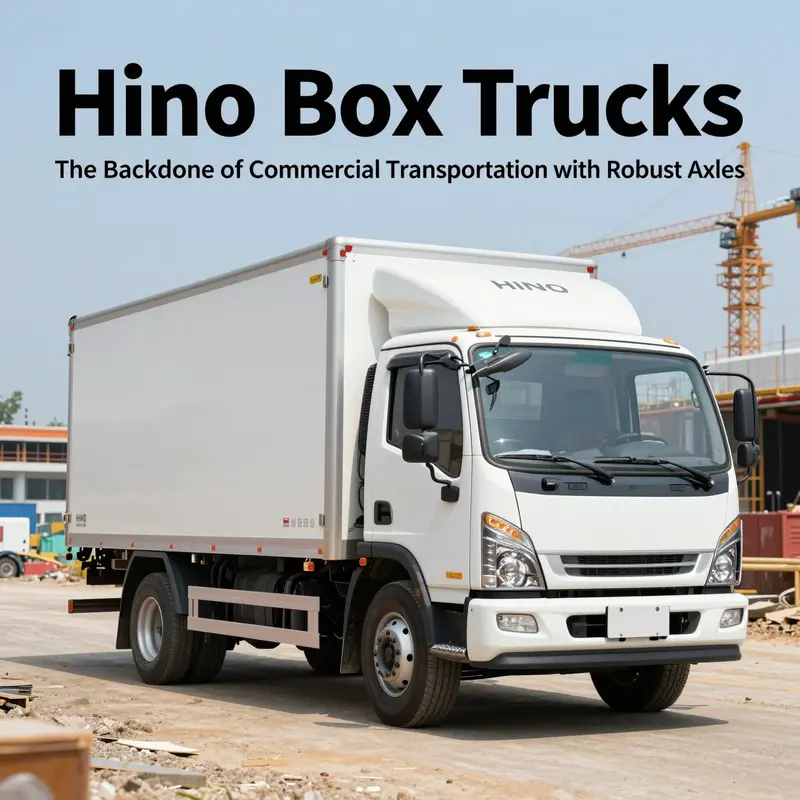
Every heavy box truck needs a backbone that can shoulder weight, absorb shocks, and keep the wheels turning through daily duty cycles. When the backbone is described as a commercial axle, it signals more than rugged steel and big gears. It signals a designed harmony between load capacity, durability, and predictable maintenance in real-world fleets. In the case of Hino box trucks, the term is not a marketing line but a practical descriptor of axles built to handle the grind of urban deliveries, regional freight runs, and even the occasional job-site challenge. These axles do more than transfer torque; they distribute weight, manage traction, and sustain performance across varied roads and climates. The result is a truck that stays productive longer, with fewer interruptions for tire wear, bearing wear, or axle fatigue. For fleet operators, that reliability translates into fewer unexpected maintenance windows, steadier service levels, and a more predictable total cost of ownership over the vehicle’s lifecycle. The axle becomes less an afterthought and more a deciding factor when evaluating a vehicle’s true operating efficiency and long-term value.
Among Hino’s box truck families, the axle arrangements reflect a clear alignment with intended duty. The medium-duty line, often configured for urban and regional delivery workloads, leans into an architecture that prioritizes payload resilience and stable handling under load. The front axle is built to tolerate frequent stops, starts, and left turns on busy streets, while the rear axle soldiers through long stretches of highway or rough job sites with heavy cargo on board. The essential idea is straightforward: a commercial-grade axle system that stays steady under pressure, returns good fuel economy, and reduces downtime through robust construction. This is the kind of engineering that fleets notice in days when every mile matters for on-time delivery and customer satisfaction.
The heart of this design philosophy is best understood by looking at the concrete axle configurations that Hino has employed across its box-truck platforms. In the traditional medium-duty range, a full-floating rear axle design stands out as a core feature. Full-floating axles separate the load path from the wheel mounting, allowing the axle shaft to turn without being directly loaded by the vehicle’s payload. This arrangement is especially helpful when heavy cargo shifts during transit or when road surfaces are uneven. It contributes to longer axle life and easier maintenance in many fleet environments because wear is more evenly distributed and parts are less prone to direct torque-induced fatigue. The front axle, by contrast, is engineered with balanced strength and precise alignment to manage steerability and tire wear across city blocks and long highway stretches alike. The axle housings are typically manufactured from high-strength steel and paired with bearings that minimize friction while preserving load distribution. The result is a platform that can support substantial payloads without sacrificing steering feel or ride quality.
Within this family, specific model lines illustrate how axle design informs operational strategy. The mid-range, commonly configured for up to ten-ton gross vehicle weight, benefits from a robust rear axle coupled to a capable diesel engine and a choice of transmissions. The powertrain options—manual and automatic in many configurations—are tuned to deliver the torque necessary for urban fetch-and-deliver cycles, where acceleration with a loaded box matters as much as steady highway efficiency. The interplay between engine torque, axle gearing, and transmission strategy shapes how efficiently a fleet can complete a route under varying payloads and traffic conditions. The axle’s role in this equation is not just to spin the wheels; it is to enable a predictable, controllable response when pulling a heavy load up a ramp, keeping the box stable during a sudden stop, and preserving tire wear across thousands of cycles.
On the other end of the spectrum, other lines in the same family showcase axial architectures tailored to heavier payloads and tougher service. The rear axle design can shift toward configurations that emphasize torque capacity and durability under frequent stops at construction sites or municipal service runs. The use of high-strength steel and precision bearings remains a constant, but the internal geometry might differ to optimize load distribution and minimize differential slip in demanding situations. In practical terms, this means a box truck can handle long routes with high cargo density, while still delivering reliable stopping power and predictable handling when navigating mixed terrains. These differences are not cosmetic; they define the vehicle’s behavior when it carries its maximum load and when it encounters an unexpected obstacle or a windy crosswind on a highway.
The engineering story grows richer when considering the lighter end of the spectrum, where single-reduction rear axles with spur gears come into play. For box trucks designed for lighter-to-medium duty—where the payload is not always at the upper end of the scale—this configuration emphasizes efficient torque transfer and simplified gearing. Spur gears are known for their robust, straightforward torque paths and ease of maintenance. In practical fleet terms, such axles keep operating costs in check while still delivering reliable performance for daily urban deliveries and shorter regional runs. The trade-off is a leaner back-end that still supports safety features, stable ride height, and dependable braking performance. It is a reminder that commercial axles are not one-size-fits-all; they are selected to balance payload, fuel economy, and durability for a given duty cycle.
When the larger, heavier-task horizon is in view, another Hino family—often associated with heavier vocational roles—employs a 6×4 configuration with a reinforced rear axle. This setup demonstrates the upper limits of the commercial-axle concept: the axle assembly is reinforced to handle substantial payloads, high torque output, and the rigors of more demanding work environments. In practice, those reinforced axles empower trucks to perform in roles such as heavy material transport, specialized construction support, or municipal fleets that require steady performance under load for extended periods. The spec sheet might reference horsepower ranges that demand robust traction and power management, with axles designed to manage that engine output without compromising reliability or safety. The takeaway is clear: even within the same brand family, the axle architecture is tuned to the job you expect the vehicle to perform, so the fleet operator can choose a configuration that aligns with its most frequent tasks.
Beyond the hardware, the axles interact with an ecosystem of subsystems that determine real-world performance. High-strength steel axles work in concert with taper roller bearings to reduce friction, distributing loads more evenly while resisting the wear that comes with stop-and-go urban driving and continuous highway cruising. This synergy improves not only durability but also fuel efficiency. Aerodynamics, a different kind of horsepower, gets a measurable boost from the way the chassis and cab are engineered around these axles. A well-integrated aerodynamic shell reduces drag, and when the drivetrain is paired with an efficient transmission and a capable engine, fuel savings accumulate over tens of thousands of miles. In urban fleets with frequent short trips and frequent stops, even a modest percentage improvement in fuel economy translates into meaningful annual savings. For regional hauls, the same improvements compound over longer distances, delivering both cost and environmental benefits that fleets track closely when evaluating total cost of ownership.
The practical benefits of commercial axles extend to the interior and the way the vehicle serves the operator. Cab configurations offered in the Hino box-truck family—Standard Cab, Wide Cab, and Crew Cab—are designed to maintain comfort and control even when the cargo is heavy and the route is long. Interior layouts, including options for hydraulic lift gates, walk-through partitions, and cargo tie-down systems, are chosen to complement axle durability. When a truck spends hours in service each day, the ability to secure cargo quickly and safely becomes part of the efficiency story. The axles’ steadiness under load helps keep the cab steady as the driver maneuvers through tight urban corridors, aligns with lift-gate operations, and supports stable braking and steering feel in crowded streets. This integrative approach—strong axles, tuned drivetrains, and practical interiors—enables a single vehicle to cover multiple vocational roles with minimal compromise.
Safety and control are integral to the design philosophy as well. Anti-lock braking systems (ABS), electronic brake distribution (EBD), and the option for lane-keeping or lane-departure warnings contribute to a safer operating envelope. In heavy urban traffic, where stopping distances shorten and the risk of cargo shift increases, the reliability of the axle system underpins confident braking and precise steering input. Four-wheel-drive configurations, available on select models, further extend the operational envelope by delivering superior traction on construction sites, winter roadways, or backroad detours. The axle and wheel package thus becomes a platform for broader capability, rather than a single-purpose technical feature.
From a maintenance perspective, durability is only part of the equation. The axle assemblies are designed for longevity with service-friendly components and accessible inspection points. Bearings, seals, differential housings, and the associated lubrication intervals are specified to minimize downtime while maximizing life. Operators appreciate the fewer, longer service intervals when the vehicle is deployed on daily routes that demand high availability. In practice, this translates to more miles logged with fewer interruptions for routine maintenance. The combination of full-floating rear axles, robust front axles, and the materials and finishes chosen for these components is a reminder that the engineering discipline behind commercial axles centers on predictable performance across a fleet’s entire lifecycle.
All of this matters most when fleets weigh the total cost of ownership against the value delivered through uptime and reliability. The commercial-axle design supports higher payloads without sacrificing handling or safety. The result is a vehicle that can adapt to diverse tasks—from urban parcel routes to regional freight runs—without requiring a different platform. In real-world operations, that adaptability often translates into simpler maintenance planning, more consistent utilization of vehicle capacity, and improved route optimization. For fleet managers, visibility into how axle design interacts with engine power, transmission choices, and chassis tuning helps in forecasting maintenance windows, fuel expenditures, and downtime. It is the kind of integrated perspective that separates a good fleet from a great one, where every asset earns its keep through resilience and predictable performance under variable workloads.
For readers curious about how these axles perform across market segments, current trends in used truck sales growth offer practical context. As fleets evaluate whether a newer, axle-ready model makes sense for upgrading their lineup, indicators such as resale value, availability of parts, and the evolving cost of maintenance come into play. Keeping an eye on the broader market helps fleets time purchases to maximize depreciation advantages and minimize total ownership costs. This market context underscores the value of a robust, commercial-grade axle: it is not only about raw capability, but also about sustained productivity across a vehicle’s life. Current trends in used truck sales growth provide a lens for assessing when an investment in a truck with proven axle architecture aligns with business needs.
The discussion would be incomplete without acknowledging external sources that illuminate the standards and applications of these axle designs. External research and manufacturer guidance reinforce what operators observe in the field: commercial axles are built to endure, to stay aligned with the vehicle’s load profile, and to maintain performance across a spectrum of road conditions. For a deeper technical dive into axle standards, properties, and applications, the resource available at the linked external site offers a detailed framework that complements fleet discipline with engineering rigor. The knowledge that the axle is designed to meet these standards adds a layer of assurance for fleet planners and operators alike, reinforcing the sense that choosing a model with commercial-grade axles is a prudent decision for businesses that rely on predictable service and a stable bottom line.
External resource: Understanding Hino Axle: Standards, Properties, and Applications — https://www.hino.com/en/technical/axle
Stacking Up the Axles: A Comparative View of Hino Box Trucks in Commercial Axle Design
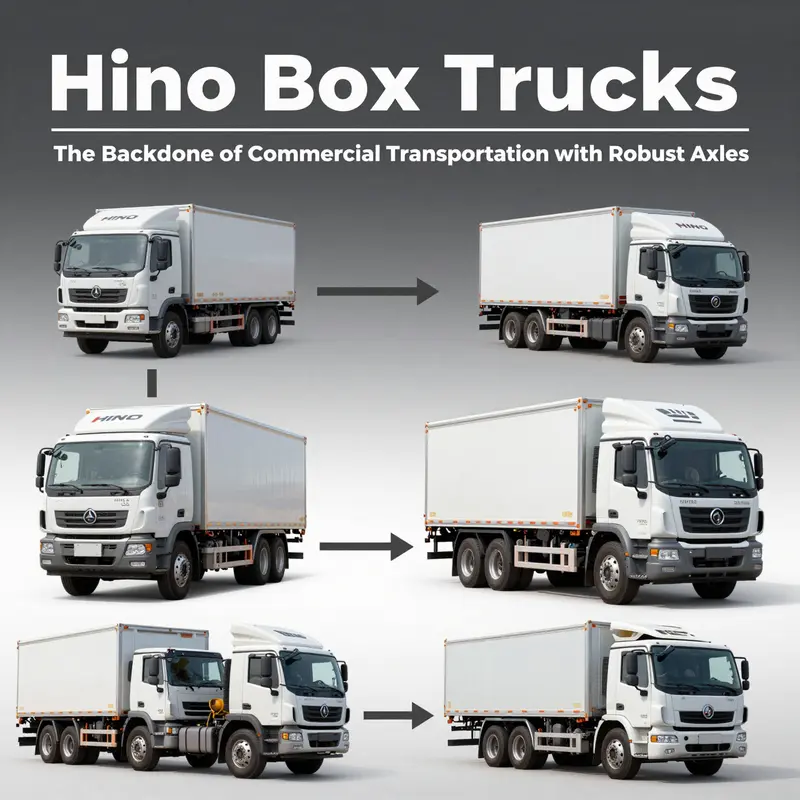
A commercial fleet lives or dies by the reliability of its core moving parts, and the axle is among the most critical. In the realm of box trucks, where short hauls, frequent starts and stops, and tight urban maneuvers define daily work, the design choices surrounding axles translate directly into payload capability, fuel efficiency, and maintenance costs. When we look at how a modern box truck handles transmission of power, load distribution, and service life, the axle becomes less a single component and more a system that orchestrates balance between strength and efficiency. In this light, the engineering approach taken by a prominent maker of medium-duty trucks highlights a deliberate philosophy: deploy commercial-grade axles that are robust enough for demanding service while also tuned to reduce rolling resistance and simplify maintenance. The result is a platform that can manage heavy payloads on timer-driven routes without sacrificing maneuverability, reliability, or total cost of ownership.
Central to this philosophy is a rear axle configuration that favors reliability and torque transfer efficiency. The backbone of this design is a single-reduction configuration that uses spur gears to move power from the drive shaft to the wheels with minimal complexity. This choice matters in urban delivery work, where torque needs to be delivered cleanly at low to mid-range RPM, and where the driver’s pedal actions translate into rapid starts from a stop. A single-reduction arrangement keeps the mechanism simple, reducing the number of moving parts that can wear or fail. It also tends to deliver favorable fuel economy when matched with the rest of the drivetrain, a factor fleets weigh heavily in today’s operating environment. In practice, the smooth engagement of a spur-gear, single-reduction setup helps the vehicle feel linear in its power delivery. There is less “jolt” as torque climbs, a usable advantage when navigating crowded sidewalks and loading docks where precision matters as much as raw pulling force.
Beyond the rear axle’s reduction ratio, the housing itself is designed to bear the brunt of payload stress without passing excessive burdens to the wheel bearings. This is accomplished through a full-floating axle concept, a hallmark of robustness for heavy payloads. In a full-floating arrangement, the axle housing carries the load from the wheels, not the axle shaft or the bearings alone. The wheel remains connected to the vehicle through the axle hub, which is supported by the housing and bearings. The practical effect is a dramatic increase in reliability when carrying substantial weights during repeated cycles in a day’s work. The stresses generated by heavy deliveries—loads that shift with every corner, every curb, every bump—are absorbed by the axle casing rather than being transmitted directly to the wheel bearings. That isolation translates to longer bearing life and reduced maintenance intervals, two factors that fleets routinely convert into meaningful life-cycle savings.
This combination—single-reduction spur gears paired with a full-floating rear axle—also supports predictable handling under heavy loads. When a operator pulls into a loading zone or swivels into a narrow alley, the vehicle’s tendency to squat or deflect under weight is mitigated by the way the axle assembly distributes load across the housing and bearings. The result is steadier tracking and more consistent tire wear across a fleet. It matters not only for the stability of a single mission but for the predictability that service planners rely on when scheduling routes and maintenance windows. In this sense, the axle design becomes a quiet driver of service level and on-time performance, even before considering the drivetrain’s other efficiency features.
The axle assembly is more than a single piece; it is a system that integrates with the rest of the chassis and powertrain to enable operational efficiency. The front axle, typically constructed from high-strength steel and fitted with taper roller bearings, plays a complementary role. It must resist steering loads while diffusing them evenly into the frame. Taper roller bearings, known for accommodating both radial and axial loads, help keep steering precise as payload changes with the truck’s trips and stops. The choice of bearing type also influences maintenance cadence. With robust bearings and a carefully matched lubrication regimen, fleets can reduce downtime spent on unscheduled repairs and keep drivers on the road where they belong. Together with the rear axle’s architecture, the front end supports a chassis platform that can perform repeatedly in urban delivery cycles, waste collection routes, and regional freight tasks where consistent performance under load is the order of the day.
In the broader context of medium-duty commercial fleets, this axle strategy sits within a wider architecture that emphasizes efficiency through integrated design. Lightweight materials, where appropriate, are balanced against the need for strength in critical load paths. The objective is not to chase maximum payload or maximum raw torque in isolation, but to harmonize several attributes—weight, strength, friction reduction, and ease of service—into a package that delivers reliable performance week after week. The axle system, in combination with an efficient torque transfer path, can contribute to meaningful fuel savings when paired with a drivetrain that minimizes parasitic losses. This is about engineering a chassis that works with the driver and the route rather than against them, a philosophy that becomes more important as fleets seek to optimize routes, reduce emissions, and improve driver comfort without sacrificing payload capability.
A closer look at the steady-state realities of commercial operation makes the practical benefits of such an axle design even clearer. Urban deliveries routinely demand multiple starts and stops, with stop-and-go traffic turning behind-the-wheel tasks into a relentless cadence. In this environment, a simple, robust rear axle with a single reduction and spur gears helps sustain efficient torque delivery without the complexity that can accompany more sophisticated multi-stage gear systems. The fewer moving parts in the drive line, the less there is to maintain and replace. For fleet managers, this translates into lower maintenance cost per mile and fewer outages that disrupt scheduled deliveries. It is a straightforward, reliability-first approach that aligns with the expectations of operators who depend on predictable service levels and consistent payload support every day.
To this engineering foundation, fleets often add the practical realities of maintenance cycles and lifecycle economics. The full-floating rear axle’s ability to absorb heavy payload variations means less stress on bearings and wheels—the components most exposed to wear in urban run cycles. When a truck routinely carries near-maximum loads through city streets, the risk of bearing premature wear goes down, along with the chance of axle housing deformation compromising alignment or tire life. The protective effect is not merely theoretical; it translates into fewer warranty claims, reduced roadside service calls, and more time when the truck is productive on the road rather than in a shop. In addition, because the rear axle housing supports the weight, the lubrication demands on the bearings can be optimized to minimize friction and heat, contributing to longer service intervals and improved fuel economy—a win for fleets chasing every possible efficiency gain.
The design choices here also reflect a broader stance on durability and total cost of ownership. When viewed against other approaches in the same segment—where some brands place greater emphasis on longevity through rugged, long-service-life architectures, and others prioritize refined ride quality and driver assistance technologies—the Hino-inspired axle philosophy occupies a pragmatic middle ground. It is not merely about outlasting a tough work day but about doing so with greater overall efficiency. The emphasis on efficiency-focused engineering is not a throwaway line; it shows up in measurable ways in fleet data—lower energy losses, reduced maintenance frequencies, and reliable payload performance across varying routes and climates. In this context, the axle is not a standalone feat of metallurgy; it is part of a cohesive design language that deliberately aligns with the operational realities of urban delivery, regional distribution, and construction-support tasks where a dependable, cost-conscious platform is essential.
What does that mean for the fleet manager deciding whether a given platform is fit for purpose? It means recognizing that the axle system is a critical variable in a chain of design decisions aimed at balancing weight, strength, and serviceability. The single-reduction spur-gear rear axle delivers efficient torque transfer in everyday duty cycles. The full-floating arrangement prevents the wheel bearings from taking the brunt of heavy payload stress, reducing wear and maintenance complexity. The front axle’s high-strength steel construction and taper roller bearings reinforce reliability during steering and cornering. Together, these elements help ensure that a box truck can perform well under fluctuating loads, navigate cluttered urban routes, and return for routine maintenance on a predictable schedule. The broader implication is that the axle system is a foundational asset for businesses seeking dependable, economical operation that can scale with demand as markets shift and fleets adjust to evolving logistics patterns.
In conversations about commercial axle design, it is common to see references to how different brands balance durability, efficiency, and driver experience. A certain class of competitors tends to emphasize rugged longevity and proven field performance, framing their axles as workhorse solutions for harsh environments and high-mileage wear. Another group tends to push for refined chassis dynamics, with an eye toward driver comfort and integrated safety features, even if that focus means some sacrifice in the strict maximization of payload efficiency. Yet another cohort highlights advanced materials and manufacturing processes that reduce weight without compromising strength, pursuing gains in fuel economy and payload efficiency that accrue over the vehicle’s life. The Hino-style approach falls firmly within the efficiency-oriented camp, while acknowledging the need for robust, serviceable components in real-world use. It is a synthesis that respects the realities of multiple missions, from urban deliveries to regional freight, and from routine maintenance to unexpected load changes.
For readers weighing the economics of a new or used box truck purchase, the axle design is a meaningful differentiator that affects the total cost of ownership. The simplicity of a single-reduction rear axle with spur gears reduces the arithmetic of maintenance schedules and part availability. The full-floating rear axle, by design, extends bearing life and reduces the likelihood of sudden, costly failures that can interrupt service. When these features are paired with durable front-end components, the total package supports longer service intervals, steadier tire wear, and lower unplanned downtime. Fleet teams that quantify the impact of these benefits often discover that a seemingly modest engineering choice yields disproportionate advantages across the vehicle’s lifecycle. In practical terms, that translates to more miles per gallon, fewer shop visits, and a more reliable tool for operators who rely on their trucks to meet tight windows and demanding cargo profiles.
As markets evolve, operators will continue to examine how axle design interacts with broader trends in fleet management. The used-truck market, in particular, has shown shifts in demand that favor platforms known for durable, cost-efficient operation. Fleets evaluating secondhand options increasingly look for trucks that can deliver sustainable performance with predictable maintenance costs. This dynamic underlines the strategic value of axle design as a differentiator beyond the showroom. It is not merely about raw capability; it is about the probability of habitually productive service, the clarity of maintenance needs, and the reliability that underpins customer satisfaction. For readers who want to explore these market dynamics further, recent analyses highlight how ongoing shifts in used-truck sales growth are shaping purchasing decisions and resale values. current trends in used-truck sales growth offers a useful lens on how buyers are prioritizing platforms with proven, economical axles that can sustain a fleet’s needs across multiple years of operation.
In sum, the axle design choices employed in modern box trucks—particularly the combination of a rear single-reduction spur-gear setup with a full-floating housing and a robust front-end assembly—represent a deliberate, efficiency-minded strategy. This approach supports steady, predictable performance across the kinds of workloads that dominate the commercial landscape: urban deliveries, regional freight, and service-support tasks that require payload flexibility and reliable, low-maintenance operation. It is a reminder that in commercial vehicle engineering, the most critical performance levers are often quiet, almost invisible to the casual observer, and yet they drive the user experience, cost of ownership, and long-term viability of a fleet. As operators weigh different platforms, the axle system remains a fundamental criterion—one that can tilt the balance toward a platform that delivers not only power, but also durability, efficiency, and confidence in the road ahead.
External resource for deeper context: For a detailed technical exploration of axle design principles, see Hino’s axle explainer, which delves into material grades, bearing configurations, and the industry best practices that inform modern commercial axles. https://www.hino.com/en/technical/axle
Final thoughts
In conclusion, Hino box trucks equipped with commercial-grade axles embody a blend of strength, durability, and reliability essential for today’s demanding freight and logistical operations. Understanding the engineering behind these axles provides insights into their capacity to handle heavy loads while ensuring safety and efficiency. The practical applications of Hino trucks across various industries underscore their value to trucking company owners, fleet managers, and procurement teams within construction and mining sectors. Moreover, a comparative analysis with other brands highlights Hino’s superior axle technology, reinforcing its standing in the commercial truck market. As industries evolve, investing in Hino trucks promises to deliver long-term benefits and operational excellence.