
In the realm of commercial trucking, the need for reliable and tailored insurance solutions is more pressing than ever, especially for trucking company owners, fleet managers, and logistics professionals. GEICO, a well-known name in the auto insurance sector, has ventured into commercial truck insurance, providing specialized offerings that cater to the unique needs of commercial fleets and operators. This article covers GEICO’s comprehensive commercial truck insurance offerings, outlines its innovative Connected Insurance program designed to promote safe driving, and evaluates the benefits of their policies for fleet owners and operators. As we delve into each chapter, we will uncover how these specialized insurance solutions can fit into your business strategy.
Steering Into the Future: How GEICO’s Connected Insurance Is Redefining Commercial Truck Coverage

GEICO has long been synonymous with reliable, approachable auto insurance for everyday drivers. Its footprint in the commercial space, particularly in trucking, marks a deliberate pivot from traditional personal lines to specialized, data-driven solutions that address the unique risks and cost structures of commercial fleets. The shift became most visible in October 2025, when GEICO announced a strategic partnership with Daimler Truck Financial Services to roll out a Connected Insurance program aimed at owners and operators of Freightliner and Western Star trucks. This collaboration signals more than a new coverage option; it embodies a broader trend toward underwriting that is driven by real-world performance data rather than roll-by-roll estimates. At the heart of the program is Detroit Connect, a telematics and remote diagnostics platform that already underpins maintenance and fleet management for many operators. GEICO’s approach is to tap into that telemetry to assess driving behavior and risk profiles in real time, and to translate those insights into meaningful premium discounts for qualified customers. What makes this initiative notable is its insistence on minimal friction: no additional hardware is required, and drivers voluntarily share telemetry data from their existing systems, creating a seamless bridge between a truck’s day-to-day operation and its insurer’s pricing model. In a market where the American Transportation Institute has highlighted insurance costs as one of the four largest expenses for transportation companies, particularly for small fleets and owner-operators, this development arrives as both a potential relief and a lever for safer, more efficient trucking.
The promise of Connected Insurance rests on the premise that real-world driving data offers a sharper, more actionable view of risk than traditional, static underwriting. In practical terms, GEICO can observe how a truck is driven across typical routes, weather conditions, and varying traffic scenarios. It can identify patterns that correlate with higher or lower accident likelihood, such as aggressive braking, excessive speeding, or idling times that waste fuel and wear the engine. Rather than pricing purely on generic risk bands, the program aims to calibrate premiums to the actual operating profile of a given vehicle or fleet. The result, for drivers who demonstrate consistent safe behavior, is a potential discount of up to 10 percent on commercial vehicle insurance premiums. This is not a shallow incentive; it is a data-informed reward that aligns the insurer’s profitability with the operator’s emphasis on safety, efficiency, and maintenance discipline.
A defining feature of GEICO’s Connected Insurance offering is that it does not require the installation of new hardware. Unlike some early telematics-based schemes that mandated black boxes or GPS trackers, this program leverages the Detroit Connect data that already exists in many Freightliner and Western Star trucks. By leaning on the vehicle’s built-in telematics, GEICO avoids the cost and logistical headaches of retrofitting fleets with additional devices. For operators, that means a lower barrier to participate and a faster path to realizing premium relief. For GEICO, it means access to a richer, ongoing stream of driving data without the overhead of managing hardware installations at scale. The combination of data access, voluntary participation, and hardware neutrality embodies a pragmatic, modern approach to commercial auto insurance that many fleets have long sought but rarely found in a single, coherent package.
From a risk-management standpoint, the Connected Insurance program represents a meaningful evolution in how underwriting can reflect actual performance rather than historical assumptions. Controlled by opt-in consent, the data-sharing arrangement ensures that drivers retain agency over what is monitored and how it is used. The real-time insights can illuminate how driving behavior translates into risk, enabling more precise pricing that can reward consistent safety and disciplined maintenance. This enhanced risk assessment is coupled with GEICO’s substantial auto insurance heritage—nearly ninety years in the business—bringing to bear a mature claims framework, a broad network of service providers, and a track record of responsive customer support. The integration of deep trucking knowledge with modern analytics positions GEICO as a credible contender for small fleets and independent operators who often feel squeezed by insurance costs and slow, opaque claims processes.
Before the industry digests the potential benefits, it is worth considering how the Connected Insurance model fits within the broader trucking ecosystem. Safety programs that leverage telematics have been growing in prominence, but adoption has historically varied by carrier size and model of operation. GEICO’s alignment with Daimler Truck Financial Services situates the program within a well-established trucking platform ecosystem. Freightliner and Western Star truck owners who already rely on Detroit Connect for vehicle health monitoring and remote diagnostics now have a straightforward path to connect with their insurer in a way that is largely invisible in the day-to-day maintenance routine. In this sense, the program does more than offer a discount; it creates a shared data-enabled operating philosophy that treats safe driving as a measurable asset rather than a vague aspirational goal. For operators navigating a landscape of fluctuating fuel costs, maintenance demands, and regulatory pressures, such a model offers a tangible, forward-looking approach to managing total cost of operation.
To understand the practical implications for fleets, it is helpful to anchor the discussion in the realities of small fleet economics. Insurance is often the fourth-largest expense for trucking companies, a weight that can constrain growth, deter investment in newer equipment, and shape decision-making about route planning and hiring. By offering up to a 10-percent discount tied to demonstrated safe driving, GEICO’s Connected Insurance program provides a direct financial lifeline for smaller operators who must balance coverage needs with cash flow constraints. The program also aligns with the expectation that insurance should be a partner in risk reduction rather than a passive transfer of risk. When premium costs respond to genuine, observed performance, operators can reinvest savings into maintenance programs, driver training, and equipment upgrades that improve reliability and uptime. Moreover, the data-centric approach fosters a feedback loop in which better driving behavior yields better pricing, which in turn incentivizes operators to pursue continuous improvement across the fleet.
The human dimension of this shift should not be overlooked. For many truck drivers and operators, the advent of connected insurance adds a layer of accountability that can feel intrusive if not managed with care. Yet the opt-in structure and the absence of extra hardware mitigate several common concerns. Trust hinges on transparent data governance: drivers must know what data is shared, how it is analyzed, and how it is used to determine discounts. Clear communication about privacy protections, data retention, and the conditions under which discounts might be adjusted is essential to avoiding misperceptions that the program is punitive or monitoring-only. When executed with explicit consent and robust safeguards, telematics-driven pricing becomes a virtuous circle rather than a creeping encroachment on autonomy.
The potential for broader industry impact is significant. If GEICO and its DaimlerDTFS partners demonstrate sustainable premium relief without compromising coverage quality or claims handling efficiency, other insurers may accelerate similar initiatives. The trucking insurance market has often suffered from fragmented pricing and uneven levels of service, particularly for small operators who rely on a single brokerage or a limited insurer panel. A scalable, data-driven program that integrates with a widely used truck platform could catalyze competitive dynamics, prompting rivals to explore analogous partnerships or to invest more aggressively in telematics-enabled underwriting. In the long term, this could raise the baseline for what “reasonable” insurance costs look like in trucking and encourage operators to adopt more disciplined fleet-management practices that reduce overall risk. For fleets contemplating this kind of coverage, it is important to examine not only the headline discount but also the broader value proposition: the timeliness of claims handling, the availability of roadside assistance, the breadth of covered perils, and the reliability of policy administration during busy seasons or after incidents.
In this evolving story, an internal narrative is worth noting: as the trucking industry endures volatility—whether from fuel price swings, regulatory changes, or supply chain disruptions—there is growing recognition that data-enabled partnerships can generate resilience. The Connected Insurance program is not a panacea, but it represents a practical, scalable model for how insurers can align pricing with actual performance while maintaining the service standards that fleets depend on. It also invites a broader conversation about how the industry measures risk, what it rewards, and how ownership of data translates into incentives for safer, more efficient operation. For operators who approach insurance as a contract with a service-first partner rather than a static monthly premium, GEICO’s approach may feel like a meaningful step toward a more collaborative, performance-based insurance experience.
For readers seeking to situate this development within the wider trucking market, consider the ongoing conversations around how small and mid-sized fleets navigate cost pressures while maintaining service quality. The linked perspectives from industry outlets and research groups emphasize the complexity of balancing price, risk, and regulatory compliance in an increasingly data-driven environment. As you weigh whether Connected Insurance represents a fit for your operation, reflect on the practical steps: confirm eligibility, understand how data will be used, review the full policy terms including liability and physical damage coverages, and plan for how discounted premiums interact with deductibles and coverage limits. It is also useful to explore how this kind of program complements other investments you may be making in fleet safety, such as driver training programs, maintenance scheduling software, and route optimization tools. Integrating these elements can magnify the benefits of a connected approach to insurance and fleet management.
In the larger context of industry knowledge and market dynamics, many operators are turning to external resources to understand how costs, risk, and technology intersect. The evolving landscape suggests that operators should not only ask whether a given insurer offers a discount, but also how the underwriting logic aligns with their operational reality. To gain broader insights into how the trucking market is adapting to economic pressures and technological advances, you can explore perspectives that discuss the implications for Canadian and US markets, including how manufacturers, maintenance ecosystems, and insurer partnerships converge to shape total cost of ownership for trucks. For example, in the broader discussion of industry trends and risk management, a related set of viewpoints highlights how economic uncertainties and policy shifts influence fleet decisions and capital investment. This context can help operators evaluate whether a program like Connected Insurance offers sustainable, long-term value beyond a one-time premium cut.
Internal link note: in the current context, operators who are evaluating the strategic implications of industry volatility and technology-enabled risk management may find value in broader market analyses. For those interested, a related exploration of trucking market dynamics and strategic responses can be found in resources that discuss navigating economic uncertainties in the Canadian and US trucking markets. Navigating economic uncertainties: key insights from the Canadian and US trucking markets.
From a practical standpoint, what should operators expect when engaging with a Connected Insurance program like GEICO’s? First, eligibility typically hinges on vehicle compatibility with the underlying telematics ecosystem, the willingness to share driving data, and a clean claims and safety history. Given that the program leverages Detroit Connect data, operators with Freightliner and Western Star fleets may see a smoother onboarding process than those with other brands. Second, the premium discount is tied to actual driving performance, which means that good driving habits—gentle acceleration, controlled braking, efficient speed management, and prudent idling—can be rewarded over time. Third, the absence of new hardware reduces upfront costs and complexity, but operators should still anticipate ongoing data exchange duties, including consent confirmations and periodic policy reviews, to ensure the terms remain aligned with current operations.
It is also valuable to consider the broader policy and claims-support implications. A robust claims process is essential when coverage relies on real-time data to inform risk assessment. Operators should assess not only premium figures but how quickly and fairly claims are adjusted after incidents, how the insurer handles third-party liability scenarios, and what the customer experience looks like during high-stress events on the road. In short, the value proposition of Connected Insurance rests not merely on potential discounts but on an end-to-end experience that aligns data-driven underwriting with reliable coverage, fast claims, and accessible, knowledgeable support when drivers and fleets need it most.
Finally, while Connected Insurance represents a forward-looking approach that many operators will welcome, it is not a universal remedy. Its benefits will vary depending on fleet size, operating patterns, and the specific routes and risks a truck faces. Operators should weigh the projected discount against the full scope of coverage, including cargo insurance, liability limits, physical damage, and any specialized endorsements that their operations require. They should also monitor how the program evolves as more fleets participate and as the data pool grows, potentially enabling even more precise underwriting and broader discounts in the future. In the near term, however, GEICO’s Connected Insurance initiative stands as a compelling example of how an established insurer can partner with a major truck platform to deliver quantifiable savings while promoting safer, more efficient trucking practices.
External resource: For official details on GEICO’s Connected Insurance program and the Daimler Truck Financial Services partnership, see the GEICO press release at https://www.geico.com/news/2025/10/daimler-truck-financial-services-geico-connected-insurance
Wired for the Open Road: Redefining Commercial Truck Coverage Through Telematics and Real-Time Risk
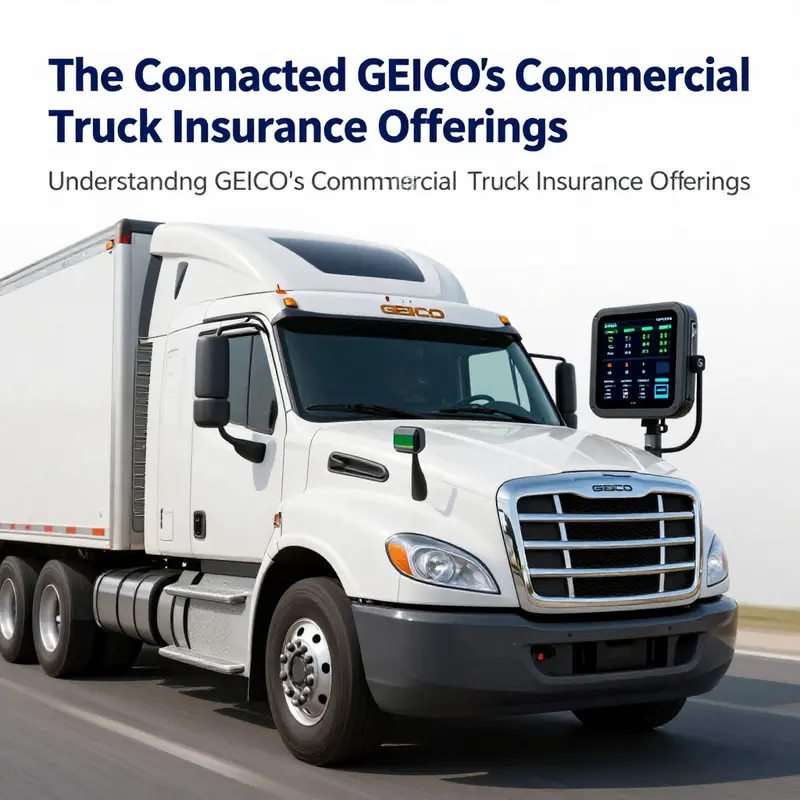
In the trucking world, insurance costs can feel like a constant drag on margins, especially for independent operators and small fleets that must balance capital with growth. The economics of moving freight aren’t just about fuel efficiency or uptime; they hinge on risk, and risk has historically been priced in broad strokes. A major insurer has begun to challenge that dynamic by reimagining how underwriters measure, price, and service commercial trucking coverage. The core idea is deceptively simple and profoundly consequential: use real-time driving behavior and vehicle health data to price risk more accurately, while actively rewarding safer operation. This is not a mere marketing pitch. It is a strategic pivot that blends decades of claims experience with the speed and granularity of modern telematics, all aimed at delivering measurable savings to operators who drive with care and discipline.
The mechanism is built to work within the digital ecosystems already embedded in today’s trucks. Instead of adding another device to the dashboard or requiring drivers to install cameras for scoring, the program taps into existing remote diagnostics and telematics streams that fleets already rely on for maintenance, routing, and performance management. Data are collected in anonymized form and translated into risk insights, which then feed underwriting decisions and premium adjustments over time. The emphasis on anonymization is not a rhetorical flourish. It is a practical safeguard that preserves the driver’s privacy while enabling a transparent link between operational behavior and pricing outcomes. In effect, risk becomes a continuum rather than a one-off, retrospective judgment. A driver who follows safe braking patterns, maintains efficient idling, and stays within sensible speed ranges can expect to see the premium implications of those patterns reflected in real time as discounts materialize.
For eligible independent operators and small fleets, the upside is tangible: discounts up to ten percent on commercial vehicle insurance premiums. The number may appear modest on the page, but it is anchored in a broader logic: when risk is understood as a function of live performance rather than a fixed category, there is real room to reward consistency, discipline, and proactive maintenance. The calculation is not purely financial. It is a signal to the market that safe operation pays, not just as a moral sentiment but as a concrete cost advantage. This aligns incentives across the fleet—drivers, managers, and owners become part of a shared program that ties everyday choices to long-run cost control. In contexts where insurance remains one of the largest fixed costs for a small carrier, such incentives can be a meaningful lever for competitiveness.
The operational architecture behind this approach relies on a close collaboration between the insurer and the financing arm of a leading truck manufacturer. The arrangement highlights a broader industry trend: risk management is increasingly a cross-disciplinary endeavor that blends insurance, asset management, and technology into a single ecosystem. The data pipeline is designed to be seamless and non-disruptive. There is no need for new hardware beyond what fleets already deploy for daily operations. The data—covering events like hard braking, rapid acceleration, speeding, and idling—are distilled into actionable risk indicators. Since the data are anonymized, operators can participate without surrendering sensitive tactical details about their routes or daily business practices. The outcome is a more nuanced, real-world perspective on risk that traditional models, which rely heavily on past claims and general classifications, could only approximate.
This shift in underwriting philosophy is not happening in a vacuum. It sits within a broader market context in which both the supply chain and road safety agendas intersect with price discipline. The American Transportation Research Institute has long highlighted insurance as a top cost pressure for carriers, especially for smaller operators who lack the scale to negotiate deeply favorable terms or absorb random shocks without affecting ongoing operations. The promise of more precise, behavior-based pricing is therefore not just a niche innovation; it is a practical response to a systemic cost challenge that shapes fleet purchase decisions, driver recruitment, and maintenance planning. When premiums move in line with actual performance, operators gain a more predictable cost structure that can be plowed back into reliability, compliance, and growth initiatives. It is a rare instance where a pricing mechanism aligns with broader performance goals rather than simply extracting more revenue from a risk pool.
The customer experience is central to this model. Insurance, in practice, should be a collaboration rather than a transaction. In this program, operators can expect streamlined claims handling and a service footprint designed to respond quickly when incidents occur, minimizing vehicle downtime and policy friction. A key design principle is that protection should translate into both financial and operational relief. When a vehicle is involved in a loss event, the claim process has to be fast, fair, and transparent. The insurer’s service model leverages its depth of experience in auto coverage, applying it to commercial trucking with a bias toward speed, accuracy, and empathy for operators who rely on dependable equipment to meet customer commitments. The financial stability that comes with being part of a large, diversified conglomerate further underpins the confidence fleets seek when they choose a coverage partner who can weather downturns and support growth cycles.
From a strategic standpoint, the Connected Insurance concept embodies several converging trends. First, the trucking industry is embracing telematics not as a novelty but as a core tool for maintenance scheduling, route optimization, and safety coaching. The data-driven approach makes it possible to correlate driving habits with maintenance needs, reducing the risk of unexpected breakdowns and the costly downtime that follows. Second, risk assessment is moving toward behavioral analytics. Underwriters can translate routine driving patterns into risk profiles that reflect operating realities, rather than relying solely on demographics or historical loss experience. Third, the business model is increasingly integrated: financing, risk, and service become a coordinated system rather than isolated silos. Packages that bundle insurance with equipment financing and maintenance planning create a tighter feedback loop between the asset and the risk pool, enabling smarter investments in newer, more efficient tractors and in driver development programs.
To place this development in practical terms, consider the day-to-day improvements a small fleet might realize. A driver’s habitual patterns—steady speeds on highway segments, steady highway speed in appropriate lanes, modest acceleration on grades—converge with timely maintenance and disciplined fuel usage. When these patterns persist, the underwriting engine recognizes a lower exposure, and the operator’s premium adjusts accordingly. The effect is not a one-time discount, but a sustained, data-informed relationship that rewards ongoing prudent operation. It is the operational embodiment of risk management, where the act of driving safely becomes a strategic input to the bottom line, not merely the outcome of a safety program.
The story is also about empowerment. Operators who may feel overwhelmed by insurance complexity can view this program as a roadmap for improvement. The feedback loop—driving behavior → risk score → premium adjustment → reinvestment in equipment and people—creates a tangible, repeatable process. Fleet managers can align coaching programs with the metrics driving discounts, turning performance targets into a shared language across the organization. In this sense, the program is not simply an underwriting reform; it is a performance system that integrates safety culture with financial discipline. It also signals a practical pathway for operators to modernize their risk management practices without compromising the core operational realities of day-to-day trucking.
Of course, no innovation comes without questions. Privacy remains a central concern whenever real-time data are collected and analyzed. The program’s emphasis on data anonymization and controlled access aims to address these worries, offering operators a sense of agency over their information. The governance framework must ensure that data are used strictly for risk assessment and pricing, with clear boundaries around data retention, sharing, and secondary uses. Operators will want confidence that the data contribute to fair pricing rather than serve as a surveillance tool that could complicate driver relations or misrepresent performance. The safeguards—transparent policies, consent mechanisms, and independent oversight—are not mere compliance boxes. They are essential to sustaining trust in a system that depends on ongoing participation from drivers, managers, and technicians who depend on accurate information to operate safely and efficiently.
From an industry-wide perspective, the potential implications extend beyond a single insurer or fleet. If the approach scales, it could push a broader ecosystem toward more standardized data-sharing practices, with mutual benefits for fleet performance and risk management. Carriers, manufacturers, and service providers could collectively push toward integrated platforms that harmonize maintenance data, driving behavior analytics, and insurance pricing. This kind of interoperability could foster more consistent benchmarking, clearer ROI for driver training programs, and faster adoption of best practices across geographies and business models. In such an environment, insurance becomes less a set of rules to dodge and more a mechanism that aligns incentives with safety outcomes and economic efficiency.
The narrative also touches on practical realities for operators beyond the math of discounts. Drivers are at the heart of any risk-reduction strategy. Their acceptance of coaching, feedback, and policy alignment matters as much as the data that supports it. A program designed with sensitive data handling and a fair, transparent framework invites drivers to participate actively in safety programs, knowing that the benefits include less downtime, steadier work schedules, and a clearer path to lower costs. For owners, the link between premium reductions and more predictable monthly expenses can free up capital for equipment upgrades, training, or even debt reduction, supporting a virtuous cycle that strengthens competitiveness in tight markets. The broader message is that this approach does not diminish the human element of trucking; it acknowledges and channels that energy into safer driving, better maintenance, and smarter investment decisions.
To readers evaluating options in commercial trucking insurance, the core takeaway is the evolution from static pricing to dynamic, performance-based pricing that leverages real-world data. A program anchored in anonymized telematics data, integrated with a robust service and financing ecosystem, signals a shift toward insurance as a partner in operational excellence rather than a passive policy. For small operators, the potential for meaningful savings is a direct invitation to engage with the data, adopt coaching and maintenance programs, and align daily practices with long-term financial goals. For larger fleets, there is a path to scale the same principles across more assets, harnessing the same data-driven discipline to stabilize costs, optimize utilization, and enhance safety culture across the organization.
This chapter’s examination of a telematics-informed insurance program does not imply that all risk can be eliminated or that every operator will qualify for discounts. It does imply that the industry is moving toward a more nuanced, fair, and scalable approach to risk that recognizes the realities of modern fleet operations. It is a move from guesswork to evidence, from retrospective assessment to ongoing learning, and from isolated price tags to integrated risk management. In the end, the question of whether a particular insurer offers commercial truck coverage that adapts to real-world performance becomes less about the existence of a product and more about the trajectory of the market. The trajectory points toward better alignment of safety, efficiency, and cost—benefits that truckers have long sought but rarely obtained at scale.
For readers who want a concrete reference point on how macro forces are shaping insurance pricing and fleet economics, consider exploring deeper analyses of how market pressures intersect with technology adoption in trucking. Navigating Economic Uncertainties: Key Insights from the Canadian and US Trucking Markets offers context on the external environment that makes this data-driven approach not just attractive but necessary for many operators. As the industry continues to iterate on data governance, driver development, and service delivery, a new equilibrium is likely to emerge—one in which premiums reflect lived experience on the road, and the partnership between insurer, manufacturer, and operator becomes a standard path to safer operation and stronger financial resilience.
In closing, the Connected Insurance concept marks a meaningful advancement in how commercial trucking can be insured in the digital era. It reframes risk in terms of lived practice and real-time performance, tying premium costs to the actual conditions under which trucks operate. It invites operators to view insurance not as a fixed expense but as a dynamic tool that, when used well, enhances safety, reliability, and profitability. The road ahead will be shaped by continued collaboration across data governance, driver training, and maintenance ecosystems, with insurers that can translate data into fair pricing and quick service standing as credible partners in a highly demanding industry. As with any transformative shift, the outcomes will vary by operator, route, and market, but the underlying trend is clear: when risk is understood in context and acted upon with precision, trucking insurance can become a catalyst for better performance rather than a blunt constraint on growth.
External resource: https://www.geico.com/news/2025/10/geico-daimler-connected-insurance/
Data in the Driver’s Seat: Evaluating GEICO’s Telematics-Driven Commercial Truck Insurance for Modern Fleets
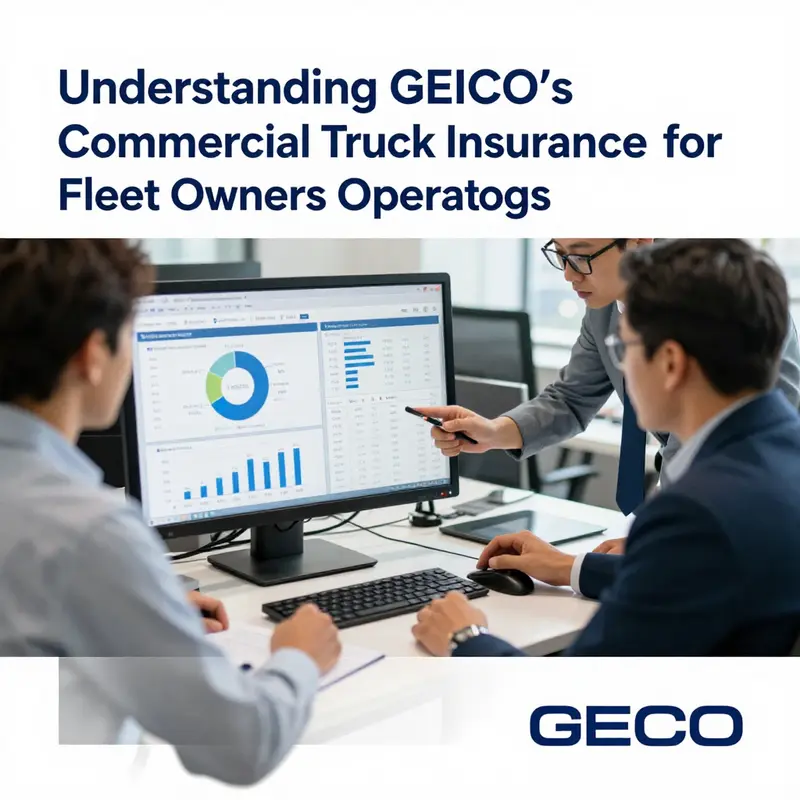
Fleet owners and operators today inhabit a landscape where risk, cost, and performance are tightly braided. Profitability rests not only on efficient dispatch, driver training, and maintenance but also on how well a fleet manages the financial shocks that come with accidents, liability, and regulatory changes. In this context, GEICO’s advance into the commercial trucking space marks a meaningful shift. The company has leveraged its long-standing auto insurance expertise and paired it with a dedicated partner in the trucking sector to offer a program that is as much about information as it is about protection. The result is a data-driven insurance model built around real-world driving data, with tangible incentives for fleets that embrace safety, efficiency, and transparency. The partnership with Daimler Truck Financial Services (DTFS) and the Detroit Connect telematics ecosystem signals an industry pivot: insurance is evolving from a retrospective risk-pool into a proactive safety and performance tool that aligns the incentives of insurers with those of operators on the road every day.
To understand the value proposition for fleet owners, it helps to start with the core mechanics of the program. At the heart is real-time data from the Detroit Connect platform, a telematics system embedded in Freightliner and Western Star trucks. Rather than rely solely on historical claims or broad demographic factors, GEICO’s approach uses live driving behavior to assess risk. This matters because a large portion of on-road incidents is driven by driver performance—speeding, hard braking, aggressive cornering, and other maneuvers that can be observed, logged, and, crucially, improved upon with the right training and feedback loop. In the GEICO-DTFS construct, safe driving becomes a driver priority, a fleet-wide practice, and a measurable element of underwriting and pricing.
One of the most compelling aspects of the program is its emphasis on accessibility and ease of adoption. A common barrier to telematics adoption among small operators or independent truckers is the perception that new devices or intrusive monitoring will complicate operations or add cost. GEICO’s model minimizes friction by relying on the Detroit Connect data that is already embedded in the trucks. There is no need for aftermarket onboard diagnostics (OBD) devices, dash cameras, or other hardware add-ons. For a fleet that has built its routines around existing hardware, the enrollment and ongoing data sharing can feel almost seamless. This simplicity lowers the barriers that often prevent smaller fleets from accessing the benefits of data-driven insurance. It also avoids the common concern that telematics will penalize rather than protect, reframing data collection as a risk reduction and cost-control tool.
From a practical perspective, the program translates into a straightforward premise: operators who demonstrate safer driving through verifiable telemetry can expect meaningful premium relief. Eligible customers can receive discounts of up to 10 percent on their commercial vehicle insurance premiums by sharing Detroit Connect data. That figure is not arbitrary; it reflects a structured approach to underwriting where reduced risk is rewarded with lower costs. For many transportation companies, insurance stands as one of the more significant operating expenses. In a sector where margins can be tight and cash flow sensitive, a 10 percent premium reduction is not mere symbolism. It translates into real dollars that can be redirected toward driver training, maintenance, or service expansion. More importantly, it signals a belief that safety and discipline on the road should be financially reinforced, not just morally encouraged.
This incentive aligns with a broader industry reality: insurance costs are among the top challenges for transportation firms, especially smaller operators. The program’s stated aim—addressing high operating costs while simultaneously elevating safety standards—speaks to a practical form of value creation. The financial calculus is clear. If a fleet can sustain a pattern of safer driving, maintenance, and fuel efficiency, the premium decline compounds across terms and renewal cycles. Over time, the compounding effect not only reduces the annual outlay for insurance but also supports a strategy of steady, predictable budgeting that is vital for small and mid-sized fleets navigating conversion cycles and the capital needs of growth.
Beyond the financial incentives, the program contributes to an enhanced risk assessment that is both granular and actionable. Telematics data enables GEICO to observe real-time driving patterns, which yields a more accurate assessment of risk than traditional underwriting models that might rely on fleet type, driver age, or accident history alone. A driver who consistently adheres to posted speeds, avoids harsh braking, and navigates curves with caution provides observable evidence of safer operation. When this behavior is aggregated across a fleet, it produces a reliable picture of operational discipline and risk exposure. In a world where insurers increasingly rely on data analytics, GEICO’s DriveEasy Pro framework, though not named as such in every briefing, embodies a move toward underwriting that reflects on-road realities. The customer experience of seeing safety data translate into lower premiums reinforces safe driving as a shared business objective rather than a mere compliance obligation.
Of course, the value equation must consider how this data is collected and used. The Detroit Connect ecosystem supplies the telemetry, and the vendor relationship with DTFS ensures that data governance, privacy, and consent are central to enrollment. From a fleet manager’s perspective, the absence of new hardware helps protect the routine workflows. Drivers do not need to adapt to new devices, nor do owners need to invest time or capital in retrofitting vehicles with third-party sensors. Instead, the data is already there, streaming as part of normal operations. The fleet personnel can focus on what matters: coaching drivers, optimizing routes, scheduling maintenance, and tracking safety performance across the quarter or year.
The dual anchor of reliability and safety is reinforced by GEICO’s broader underwriting and claims capabilities. Berkshire Hathaway’s financial strength provides a backdrop of stability and efficient claims handling, which is crucial when a fleet experiences an incident. The integration of specialized knowledge about commercial trucking with the insurer’s general expertise in auto insurance translates into a claims process that recognizes the specific needs of commercial operations. When a vehicle is involved in a good-faith incident, a fleet’s adaptability to coordinate with adjusters, repair shops, and rental arrangements is aided by a provider with a long track record in handling complex auto risks. This combination helps ensure that a claim is processed quickly, fairly, and with an awareness of the commercial context—dispatch requirements, replacement vehicles, and the continuity of service that transport businesses depend on.
For fleet owners and operators, the interplay between data-driven underwriting and service reliability translates into a holistic risk management approach. The Detroit Connect data informs both pricing and safety programs, creating an incentive loop that encourages better driver behavior, proactive maintenance, and disciplined cost control. A driver who receives coaching based on telemetry data is more likely to avoid events that could trigger a claim, which in turn protects the bottom line. The fleet manager thus gains a practical, measurable set of levers: driver performance metrics, maintenance alerts, route optimization, and an insurance premium that reflects actual operational risk rather than an abstract estimate. In this sense, the insurance program becomes a strategic tool rather than a passive payment obligation.
Yet any program that hinges on data sharing must address concerns about privacy, consent, and data governance. Fleet operators must ensure that drivers understand what data is collected, how it is used, and how it translates into rewards. Transparent communication with drivers about the link between safe driving and premium reductions is essential. Companies can frame the conversation around safety or risk management while highlighting the practical benefits—lower outlays, improved vehicle performance, and a culture of continuous improvement. When drivers see the direct connection between their daily decisions and the health of the business, engagement tends to rise. The Detroit Connect platform, by virtue of its existing integration into Freightliner and Western Star trucks, provides a familiar, industry-standard data stream. This reduces friction and increases the likelihood that drivers will participate actively in the safety program.
A broader takeaway from GEICO’s approach is the frontier it represents for commercial insurance. The shift from a historically reactive model to a proactive, data-informed system mirrors transformations already underway in other high-stakes industries, where predictive analytics have become central to decision-making. In trucking, where a fleet’s performance is a composite of maintenance cycles, driver behavior, route selection, and load management, insurance can become a partner in optimizing all these elements. By rewarding the disciplined and the safe, the program aligns financial incentives with operational best practices. It becomes less about insuring risk in a vacuum and more about supporting a value-creating risk management strategy.
As with any strategic shift, operators should conduct due diligence. They should evaluate the potential premium impact of telematics participation against the broader benefits described above. They should also consider the training and organizational changes needed to maximize safe driving outcomes. The Detroit Connect data provides a powerful lens through which to view driver performance, but its value multiplies when paired with robust coaching, continuous improvement programs, and clear safety targets. Fleets that couple data-driven insights with hands-on management practices are positioned to realize not only lower insurance costs but also reduced incident frequency, shorter repair times, and higher on-time performance. In this light, the GEICO-DTFS initiative can be read as a holistic program that integrates underwriting, driver development, and operational efficiency into a coherent strategy for fleet stability.
To put it in practical terms, small operators weighing the decision to participate should consider a few guiding questions. First, what is the baseline safety culture, and how ready is the organization to support a data-driven approach? Second, what is the track record of driver coaching and maintenance programs, and how will there be accountability for driver performance improvements? Third, how does the premium reduction compare to the cost of training resources or increased maintenance activity? These questions are not merely financial; they are about creating a resilient operating model that can withstand market volatility, regulatory changes, and the constant evolution of freight demand.
For those seeking broader context on the market dynamics confronting truck operators, there is useful context in recent industry reflections that examine how fleets navigate a landscape shaped by inflation, driver shortages, and shifting fuel and maintenance costs. See for context the discussion on Navigating Economic Uncertainties: Key Insights from the Canadian and US Trucking Markets. This resource helps frame how a data-driven insurance program could fit into a larger strategy of operational resilience and strategic cost management. Navigating Economic Uncertainties: Key Insights from the Canadian and US Trucking Markets.
The program’s strategic merit rests on the convergence of three factors: disciplined risk selection, a practical path to safer driving, and a credible mechanism to translate safety into lower costs. Operators who view insurance as a transaction may miss the larger opportunity. Those who treat it as a management tool—one that integrates with driver training, route planning, and maintenance scheduling—can create a more predictable operating environment. In this framing, GEICO’s commercial truck offering is not merely a policy; it is a component of a broader fleet optimization strategy. It provides a financial incentive for safety, a data-backed risk signal for management decisions, and a streamlined experience that respects the realities of running trucks in a competitive market.
The external reference that offers additional perspective on how insurer and trucking industry partnerships are evolving underscores a broader trend toward specialized insurance solutions tailored to commercial fleets. This trend aligns with the practical needs of operators who juggle asset management, safety compliance, and customer service. The underlying logic is straightforward: fleets that perform better on safety and reliability should be rewarded with better terms, while insurers gain a clearer view of risk and can price accordingly. In this sense, GEICO’s initiative with DTFS can be seen as part of a larger movement toward data-enabled risk management that benefits both sides of the insurance equation.
External reference: https://www.geico.com/press-releases/geico-launches-new-commercial-truck-insurance-program-with-daimler-trucks/
In sum, GEICO’s foray into commercial truck insurance, backed by a strategic partnership with Daimler Truck Financial Services, represents more than a new product line. It is a holistic approach to fleet risk management that leverages real-time data, rewards safe driving, and minimizes adoption barriers for small operators. The absence of extra hardware requirements lowers the friction barrier, while the potential for up to 10 percent premium discounts makes the economics tangible. The framework invites fleet managers to think of insurance not only as protection but as a lever for safety, efficiency, and financial stability. As the trucking industry continues to evolve—with increasing emphasis on data, safety, and collaboration between manufacturers, financiers, and insurers—this kind of integrated model offers a practical blueprint for how risk management can align with operational excellence on the road.
Final thoughts
In conclusion, GEICO’s entry into the commercial truck insurance market presents a significant option for trucking company owners, fleet managers, and logistics firms. The combination of competitive pricing, efficient claims service, and innovative programs like the Connected Insurance initiative aligns closely with the operational needs of commercial trucking enterprises. By embracing these tailored insurance solutions, businesses can enhance their risk management strategies, promote safer driving behaviors, and ultimately improve their bottom line. As the logistical landscape evolves, selecting the right insurance partner is critical—not only for compliance but also for sustainable growth.