Food trucks are no longer just mobile food vendors; they have evolved into fully equipped and compliant commercial kitchens. This transformation is especially pivotal for trucking company owners, fleet managers, and procurement teams in various sectors such as construction, mining, logistics, and freight brokerage. Understanding how food trucks meet commercial standards, enhance operational efficiency, and conform to regulatory requirements is essential for those looking to innovate in food service and catering. The subsequent chapters will delve into the commercial standards that food trucks must adhere to, operational strategies that optimize their efficiency, and the intricate regulations that govern their use as commercial kitchens.
Rolling Kitchens: How a Food Truck Becomes a Fully Compliant Commercial Kitchen on Wheels
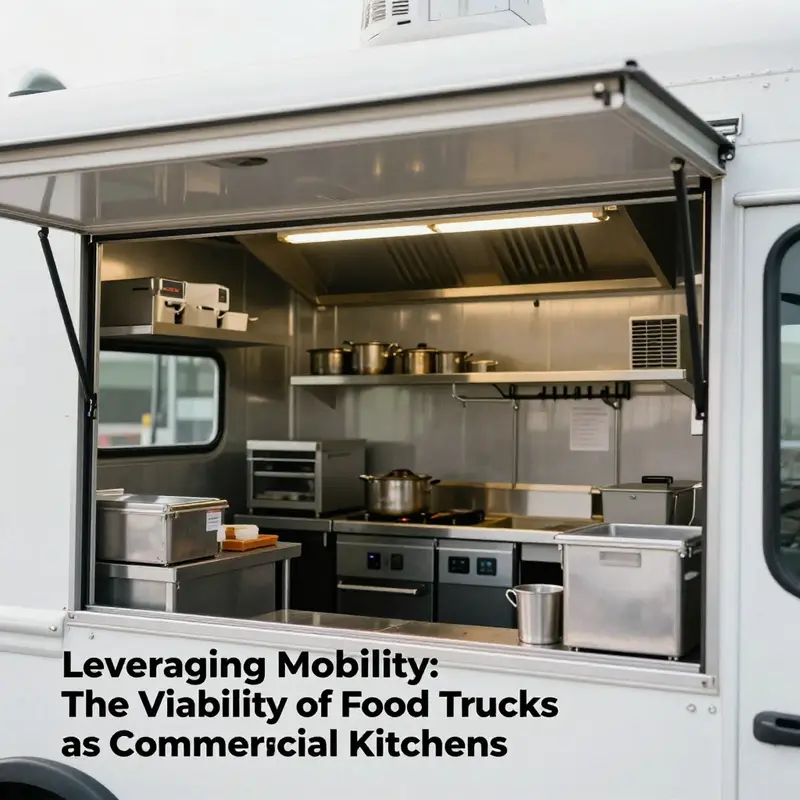
Rolling kitchens enable menus to travel, while meeting the same safety, sanitation, and regulatory standards as a brick-and-mortar facility. A mobile kitchen must feature durable, cleanable surfaces, compliant ventilation and fire suppression, reliable water and waste systems, and equipment designed for mobility. With a well-planned layout, standardized SOPs, and documented sanitation and maintenance routines, a food truck can operate as a legitimate commercial kitchen in diverse venues while protecting staff and customers.
From Street Side to Fully Functional Kitchen: Reimagining the Food Truck as a Mobile Commercial Kitchen
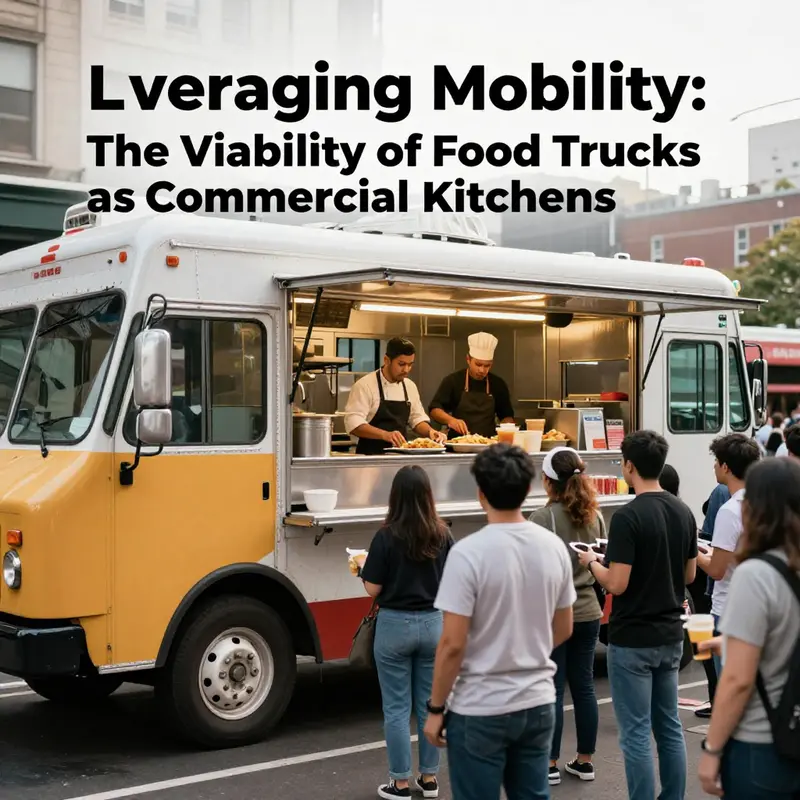
A food truck can be more than a vehicle selling meals from a curb. When it is designed and outfitted with professional-grade equipment, a truck becomes a self-contained commercial kitchen on wheels, capable of delivering the same quality, safety, and consistency as a brick-and-mortar operation—and often with greater operational flexibility. The core question—whether a food truck can be a commercial kitchen—is best answered by looking at how space is optimized, how equipment is chosen and arranged, and how systems support compliance, efficiency, and scalability. In practice, the most successful mobile kitchens treat the truck not as a merely mobile stall but as a compact, purpose-built culinary facility. That mindset shapes every decision, from layout to power sources, from sanitation routines to workforce scheduling, and from menu design to client-facing service models. The result is a living, movable restaurant that can hop between neighborhoods, campuses, festivals, and catering sites while maintaining the same professional standards expected of a stationary kitchen.
The architectural logic of a mobile kitchen begins with the layout. In a traditional restaurant, the back of the house is a well-mapped sequence: prep, cook, saucier, expo, plate, and service. In a truck, space is at a premium, but the same logic applies with even greater precision. The corridor for motion becomes a workflow corridor, and every inch of counter, cabinet, and appliance must justify itself by contributing to throughput or safety. A well-designed mobile kitchen integrates zones for raw prep, cooking, finishing, and cold storage within a rectangular, wheeled frame. It may have a compact range or griddle, a high-capacity oven, a fryer or alternative cooking method, a robust refrigeration system, a handwashing station, and a sink for sanitation. The emphasis is not merely on the presence of equipment but on how it supports a continuous, measurable flow of work from ingredient to plate. This flow is what separates a mobile kitchen from a mere portable prep area; it is the backbone of consistent quality, reliable service, and regulatory compliance across locations.
Safety and sanitation govern every choice. In a street-level kitchen, the hazards—hot surfaces, sharp tools, raw poultry, and greasy soils—move with the vehicle. The equipment must be securely anchored to withstand movement, and the floor must be designed to minimize slip hazards and facilitate quick cleaning. Handwashing stations should be accessible to staff and customers, and waste streams must be managed with clear separation of liquids and solids, proper drainage, and compliant disposal practices. All surfaces chosen for prep and cooking should resist staining and heat, while being easy to sanitize with standard cleaning agents. These considerations align with health codes that apply to fixed restaurants and extend to mobile operations. The result is a kitchen that performs not only under ideal conditions but also in the unpredictable rhythm of street commerce, where weather, foot traffic, and event schedules can alter a day’s pace in an instant.
As the industry has evolved, many operators have embraced automation as a natural partner to culinary craft. Modern 4-wheel electric food trucks, for instance, are increasingly equipped with digital tools that augment human skill rather than replace it. Automated systems can include digital ordering interfaces that streamline customer interactions, real-time inventory tracking that reduces waste, and energy management features that optimize power use across a shift. These capabilities matter in a compact space because they free staff from repetitive tasks and enable them to focus on the quality and consistency of the food itself. The efficiency gains are not merely about speed; they also reduce the cognitive load on cooks and servers, making it easier to uphold standards during peak hours or when serving at multiple events in a single week. The hybrid model—where automation handles routine checks and data collection while trained cooks apply judgment and artistry—tends to produce the best results in terms of flavor, presentation, and customer satisfaction.
The logistics of operation are different when the kitchen travels. A mobile commercial kitchen must be able to perform across diverse locations and conditions, which means more than just delivering a good product. It must be able to start clean, reach peak readiness quickly, maintain consistent temperatures, and recover gracefully if power or water supplies falter. Inventory management in a truck is a different discipline than in a storefront. Real-time tracking of perishable items helps prevent spoilage and stockouts, and it supports menu discipline—choosing dishes that travel well and reheat reliably without sacrificing texture or taste. This is especially crucial for mid-sized brands seeking predictable margins across a portfolio of events. A well-tuned mobile kitchen uses data to inform daily prep decisions, forecast demand, and plan for hospitalization in cases of supply disruption. In this way, the truck functions not just as a cooking space but as a small, data-informed business hub that can adapt its menu, pricing, and service model to changing conditions.
Service models for mobile kitchens have grown increasingly sophisticated as the capabilities of the vehicle have expanded. Some operators lean into on-site cooking and live plating, turning the truck into a stage where customers watch the chef work, which can be a powerful draw in festival or market settings. Others focus on takeout and catering, where standardized prep processes and assembly lines inside the truck ensure that meals travel well and reheat consistently for customers at varying distances from the point of production. In all cases, the aim is to deliver restaurant-quality meals with the efficiency advantages of mobility. The ability to move orders from place to place—without sacrificing consistency—creates a powerful competitive edge. The truck becomes a portable kitchen that can be positioned to optimize customer access, minimize transportation time, and meet the demands of seasonal markets or special events. This flexibility often translates into a broader ability to test new concepts, refine menus, and scale operations with lower fixed overhead than a permanent facility while preserving, rather than compromising, quality.
Equipment selection remains central to any mobile kitchen’s capacity to act as a true commercial kitchen. Commercial-grade appliances—reliable stoves, grills, ovens, fryers, refrigeration, and robust handwashing and sanitation equipment—must be chosen with regard to space constraints, energy consumption, and ventilation. The goal is to replicate the performance of a traditional kitchen within a smaller footprint and to ensure that the equipment can operate efficiently under the conditions of a moving environment. Ventilation and fire suppression again become critical, since mobile settings can present unique challenges compared with fixed locations, including variable air exchange rates and limited under-hood clearance. The right equipment configuration not only makes the truck safer but also improves consistency of outcomes, enabling a chef to execute complex dishes with confidence. This is particularly important for brands that intend to serve multiple service formats—more structured catering, pop-up markets, and long-running street concepts—where uniform quality across venues is essential to brand reputation.
The design of a mobile kitchen also has a direct bearing on staffing models. In a truck that relies heavily on automation for monitoring and replenishment, staff can be allocated to higher-value tasks: finishing, plating, quality checks, and guest engagement. In a high-volume event, the same staff can rotate through stations to maintain speed without sacrificing attention to detail. Training becomes a crucial component of efficiency: cooks learn how to navigate the compact workspace, how to operate the automated systems to their fullest potential, and how to execute rapid sanitization after back-to-back service. A well-trained crew understands how to balance workflow with the emotional center of hospitality—the human touch. The result is a kitchen that remains efficient and precise, even as demand fluctuates and the team expands to meet peak periods.
The economics of mobile kitchens are often favorable when viewed through the lens of flexibility and capital efficiency. A truck-based kitchen can reduce barriers to entry for budding culinary concepts. It lowers real estate costs, allows faster market testing, and enables operators to build a customer base before committing to a larger, fixed-site investment. When combined with scalable processes and data-driven decision making, mobile kitchens can support franchising or multi-unit growth without the same level of financial risk associated with brick-and-mortar expansion. This is not a blanket assertion that trucks replace all traditional kitchens, but rather a recognition that a well-designed mobile kitchen can deliver comparable outputs with a different financial profile. It is common for restaurateurs to use the truck as a beta platform—testing menus, refining service protocols, and building brand recognition in a way that informs future investments while protecting cash flow.
In practice, the most effective mobile kitchen operations balance the strengths of automation with the warmth, creativity, and adaptability that define culinary excellence. Automation handles repeatable processes, inventory health, and energy management so cooks can concentrate on taste, texture, and presentation. The technician in the back of the truck is as essential as the chef at the cutting board because maintenance, calibration, and troubleshooting keep the system running when orders pile up and schedules tighten. A truck that marries precision with artistry creates a stable platform for consistent product quality, reliable service, and meaningful customer experiences, even in the unpredictable tempo of street commerce. This balance—between machine precision and human craft—is what makes a food truck not just a sales point but a fully capable commercial kitchen on wheels.
As one considers this transformation, it is useful to acknowledge the broader industry trajectory. The shift toward electrification, automation, and data-enabled operations is redefining the economics and feasibility of mobile kitchens. Operators who adopt these tools early can achieve lower energy costs, more predictable maintenance needs, and improved waste management. They can also offer more transparent menus and healthier, cleaner operating profiles that align with increasingly stringent local regulations and consumer expectations. The potential for mobile kitchens to reach new markets is vast, from university campuses and corporate events to remote locations and large outdoor festivals. The careful orchestration of space, equipment, sanitation, and service with a mobile, adaptable crew provides a blueprint for what a truly mobile commercial kitchen can be. In this sense, the food truck is not merely a traveling stand but a sophisticated, compliant, and scalable kitchen that travels to where the customers are.
For operators who are exploring the frontier of mobility and food service, it is encouraging to see how technology and culinary craft can complement each other rather than compete. Digital systems, sensor-driven inventory, and energy-efficient appliances do not replace the chef’s touch; they augment it by removing friction, enabling more precise control of costs, and ensuring that every service runs with minimal waste and maximal flavor. The result is a business model that can grow with confidence, extend brand reach, and adapt to a landscape where consumer expectations and regulatory demands continue to evolve. In short, a food truck can be a commercial kitchen—one that is as capable as it is flexible, as compliant as it is creative, and as sustainable as it is profitable.
The practical upshot is that the mobile kitchen concept has matured into a robust framework for culinary entrepreneurship. Where once the truck was a novelty or a niche option for seasonal vendors, it has become a serious platform for ongoing operations, large-scale catering, and even mid-sized franchise concepts. The convergence of thoughtful design, safety-conscious engineering, and intelligent automation has turned mobility from a logistical advantage into a strategic instrument. Operators who invest in proper layout, reliable equipment, and a culture of continuous improvement can deliver consistent quality across a range of locations, expand their reach, and build durable customer relationships. The road ahead holds both challenges and opportunities, but the fundamental premise remains clear: if the kitchen is designed with purpose, a truck can be a compelling, complete, and legally compliant commercial kitchen on wheels.
In shaping this narrative, the industry is also quietly charting a course toward electrified fleets and smarter service ecosystems. Electric powertrains, remote diagnostics, and cloud-connected sensors create a feedback loop that makes mobile kitchens more predictable and easier to manage from a distance. Operators can monitor temperature, energy use, and equipment performance in real time, enabling proactive maintenance and faster adaptation to demand. This level of visibility is especially valuable for fleets that serve multiple events in a single week, where downtime can erode margins and customer trust. It also supports sustainability goals by optimizing energy draw and reducing waste, which resonates with a growing cohort of operators who see environmental stewardship as integral to their business model. The combination of practical design, rigorous sanitation, and digital oversight positions the food truck as a credible, scalable commercial kitchen platform that can meet today’s expectations for quality and accountability while retaining the freedom to explore new markets and concepts.
To ground these observations in a concrete industry perspective, consider the broader trend toward automation and electrification in mobile kitchens. While the details vary by region and by the specifics of the truck, the underlying pattern is consistent: operators who embrace automation as an aid to human talent and who design for portability without sacrificing safety are the ones who unlock the most enduring advantages. This is not merely about speed; it is about resilience, consistency, and the capability to deliver a restaurant-grade experience from a vehicle that moves with the day’s tempo rather than waiting for a fixed-address patronage. The result is a compelling proposition for entrepreneurs and established brands alike: a mobile kitchen that can service events, campuses, neighborhoods, and workplaces with a degree of reliability that rivals traditional venues. In this sense, the food truck as a commercial kitchen is not a compromise but a refined, adaptable, and scalable platform that responds to the evolving needs of modern dining.
As the industry continues to innovate, there is a clear incentive for operators to pursue a holistic approach. Education and training should accompany investments in automation and electrification. Staff must understand not only how to operate the equipment but how to interpret the data generated by digital systems, how to calibrate energy use to demand, and how to adjust workflows to maintain a warm, human hospitality experience even when the kitchen is compact and the service window busy. In this integrated model, the truck becomes a responsive micro-kitchen that can be tuned to different menus, events, and locations without sacrificing safety or quality. When executed with discipline and curiosity, the mobile kitchen fulfills a long-standing promise: the ability to bring a full, legally compliant, and consistently excellent commercial kitchen to almost any street corner or outdoor venue.
For readers who want to explore the practical implications of electrification and sophisticated automation in this space, the trend toward electric mobility and digital oversight represents a meaningful shift. It is not merely about replacing one set of tools with another; it is about rethinking the entire operating model—how space is allocated, how energy is managed, how inventory is controlled, and how staff are deployed. The result is a more resilient, scalable, and adaptable kitchen that travels with the business rather than constraining it. In this light, the question of whether a food truck can be a commercial kitchen becomes a statement of possibility rather than a point of debate: when designed with purpose, a truck is a kitchen that can function anywhere, at any scale, and under a wide range of regulatory environments.
To connect these ideas to a wider ecosystem of industry developments, note the growing relevance of electrified fleets in markets where infrastructure supports fast charging and where cold-chain reliability is paramount. The shift toward electric trucks is not just a technological upgrade; it reshapes cost structures, maintenance planning, and site requirements. For operators contemplating a mobile kitchen, the implications include quieter operation in urban settings, potential incentives on upfront equipment, and new considerations for route and schedule optimization based on charging needs and energy availability. This evolving backdrop invites a new generation of mobile culinary ventures to design kitchens that are as adaptive as they are compliant, and as connected as they are creative. In this sense, the food truck is uniquely positioned to blend the art of cooking with the science of mobility, delivering a professional kitchen experience wherever and whenever customers crave it.
As a closing reflection on the broader trajectory, the mobile kitchen represents a fusion of culinary craft and logistical ingenuity. It is a space where the chef’s touch meets the engineer’s discipline and where the business model is defined not only by the flavor of the food but by the reliability of the service, the safety of the operation, and the flexibility to reconfigure for different venues. The food truck, when properly designed, operates as a legal and practical commercial kitchen that adheres to health standards, supports scalable growth, and invites experimentation with menus and service formats. Those who approach it with a learning mindset and a commitment to continuous improvement will find that mobility amplifies opportunity rather than limiting it. In other words, a food truck can be a fully functional commercial kitchen, capable of delivering restaurant-grade experiences across diverse landscapes, all while maintaining the agility and personality that define mobile dining.
For readers who want to explore related practical insights on equipment and operations, you can find further discussions and examples in the industry resources and related content. In particular, the ongoing exploration of how electrification shapes the efficiency and footprint of mobile kitchens offers a relevant lens through which to view many concepts discussed here. Electric trucks revolutionize the Canadian market. This link highlights the broader implications of a shift toward electric mobility in the trucking ecosystem, which resonates with the ways mobile kitchens think about power management, reliability, and service continuity across locations.
External reference: For a broader industry perspective on automation and efficiency in electric mobile kitchens, see Electric Food Trucks Boost Efficiency with Automation. The article discusses how automated systems, inventory management, and digital interfaces are reshaping operational practices in mobile food operations, reinforcing the idea that a truck-based kitchen can achieve high levels of performance while maintaining the flexibility that defines mobile dining. https://www.foodbusinessnews.net/articles/2025-12-26/electric-food-trucks-boost-efficiency-with-automation
Wheels of Compliance: Transforming a Food Truck into a Fully Licensed Mobile Kitchen
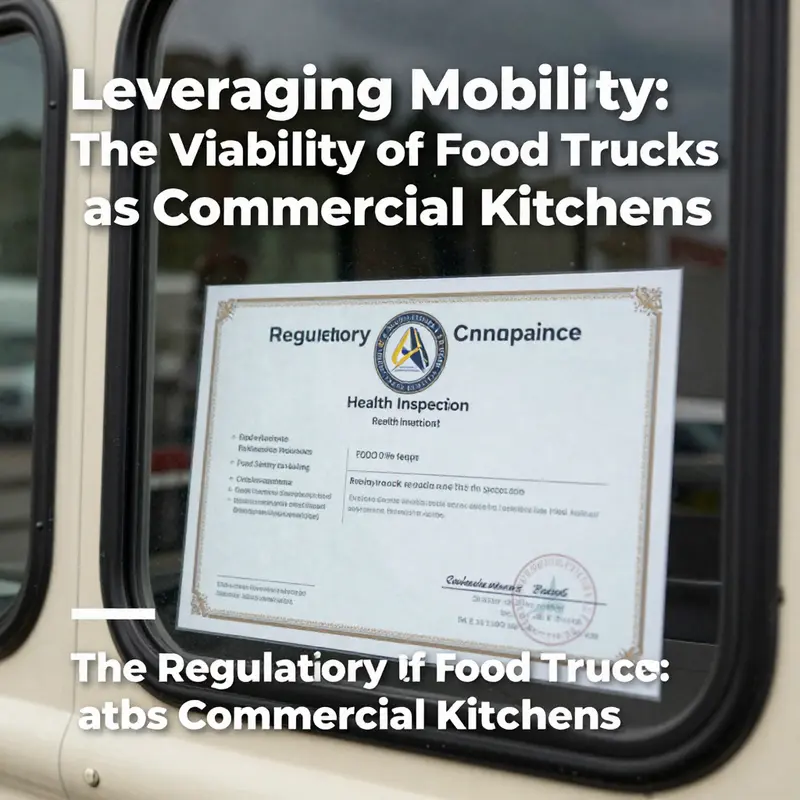
A food truck, at its core, is a compact kitchen on wheels, designed to bring culinary capability anywhere its wheels can travel. When viewed through the lens of regulatory compliance, the idea becomes a carefully choreographed balance between mobility, safety, and legality. The central question—can a food truck be a commercial kitchen—unfolds into a layered reality: a vehicle that can legally and safely prepare, cook, and serve meals under the same protective umbrella that guards diners in a brick-and-mortar restaurant. The answer is yes, but the path is paved with requirements that are both comprehensive and context-dependent. Federal guidelines lay the groundwork, while state and local authorities add textures that reflect local concerns, climates, and enforcement priorities. Taken together, the multi-layered framework is less a maze and more a map that guides operators toward sustainable, compliant practice. The FDA Food Code serves as a model for safe food handling, temperature control, cross-contamination prevention, and personal hygiene. While the code itself is not a statute in every jurisdiction, it is widely adopted—with variations—by states and municipalities as the backbone of mobile food operations. The aim is consistent: protect public health by standardizing practices that reduce risk. For operators, this means treating the vehicle not as a novelty or a temporary concession, but as a legally defined kitchen space that must meet the same standards of sanitation, food safety, and equipment reliability as a stationary restaurant. The resulting responsibility transcends culinary craft; it becomes a discipline of systems, records, and ongoing vigilance. The equipment itself is a direct reflection of compliance priorities. A fully equipped mobile kitchen features commercial-grade appliances appropriate for preparing and holding food in a way that minimizes hazards. Gas or electric stoves, grills, fryers, ovens, and robust refrigeration units are arranged with a focus on workflow, cleanliness, and guard against cross-contact. Sinks of adequate size with hot and cold water, handwashing facilities, and drainage that meets health and environmental standards are non-negotiable. These elements are not merely conveniences; they are regulatory necessities that support safe cooking, cleaning, and waste management in a compact footprint. The literature on mobile kitchens describes these vehicles as spacious, rectangular commercial spaces optimized for full kitchens and large-scale food operations. This characterization is not casual; it underscores the reality that a well-designed food truck can function as a complete kitchen, capable of serving a broad menu and handling high turnover during peak service periods. The public health logic behind this design is straightforward: a mobile kitchen must be able to separate raw and ready-to-eat foods, manage temperatures effectively, and maintain a clean environment that prevents contamination in transit as well as on-site at events or sits-down locations. A crucial piece of this logic is the concept of a permitted, inspected space that travels with you rather than a fixed building that you must leave behind at night. In practice, the compliance journey begins long before the rig hits the road. It begins with a licensing checklist: what licenses are required to operate, in which jurisdictions, and how to renew them as regulations evolve. The state level frequently augments the FDA Food Code with licensing requirements, vehicle inspection standards, and operational restrictions. Some states, for example, mandate that mobile kitchens feature certified equipment and properly sized refrigeration units, as well as handwashing stations and fire suppression systems. These requirements reflect a conclusion that the vehicle itself is part of the food safety equation. They demand that the truck be a controllable, predictable environment—one that can be trusted to maintain temperatures during transport, to withstand daily wear and tear, and to be reliably cleaned and sanitized between shifts. Local regulations often carry the most immediate impact on daily operations. Permitting processes determine where a truck may park and operate, while sanitation inspections verify ongoing compliance with health standards. Parking rules can shape a truck’s strategy, especially near sensitive locations such as schools, hospitals, or parks where noise, traffic, or safety concerns might prompt stricter oversight. Noise ordinances add another layer, reminding operators that even delicious meals must be served in a setting that respects neighboring communities. The practical implication is that success as a mobile kitchen is inseparable from a proactive approach to regulatory relationships. Operators must build and maintain an ongoing dialogue with health inspectors, fire officials, and environmental regulators to ensure that the kitchen design, equipment choices, and operating practices align with current expectations. One practical implication is recordkeeping, which bridges daily activity with accountability. Temperature logs, cleaning schedules, and inspection results form a paper trail that demonstrates due diligence and helps managers detect and address deviations before they escalate into violations. The recordkeeping habit is not merely bureaucratic; it is a core tool for quality control, safety assurance, and operational continuity. The consequences of non-compliance are real and tangible. Fines, temporary shutdowns, and in severe cases criminal charges can follow a failure to meet health, safety, or environmental standards. These outcomes emphasize that compliance is not about minimizing checks but about building a resilient operation that can withstand audits, inspections, and the unpredictable challenges of mobile service. The chapter’s core idea—treat the truck as a licensed, inspected, and auditable commercial kitchen—rests on the decision to invest in design choices that reduce risk from the outset. The kitchen’s layout should prioritize logical flow: from receiving and storage through preparation, cooking, finishing, and service, with clear separation to prevent cross-contact between allergen-containing foods and others. Sanitation planning must integrate handwashing, utensil washing, and surface cleaning into a coherent cycle that aligns with the operational tempo of service. Ventilation becomes essential when high-heat cooking is involved, ensuring that exhaust systems, filter maintenance, and fire suppression readiness do not compromise public safety or violate local codes. The water supply—usually a potable water tank connected to a handwashing sink—must be reliable, easily replenish-able, and meet the jurisdiction’s standards for backflow prevention and wastewater management. Environmentally conscious disposal practices are also central to compliance. Waste management plans should address grease disposal, recycling, and food waste in a way that prevents environmental contamination and aligns with local disposal facilities. These considerations are not ancillary details; they are integral components of a compliant operation that can be sustained over time and scaled to larger events or multiple permits. The regulatory picture is not static, and the evolving landscape can influence long-term strategy. Some regulatory communities are embracing more flexible permitting for mobile units, especially as street food and event catering continue to grow as legitimate, year-round businesses. Operators who stay ahead of changes—by engaging with health departments, attending relevant trainings, and adopting standardized operating procedures—position themselves to adapt without losing momentum. A practical approach to this ongoing education is to view compliance as a living system rather than a one-time checklist. This mindset supports continuous improvement: regular equipment maintenance, updated SOPs for food handling and cleaning, and a culture of accountability that permeates every shift. The design of a compliant mobile kitchen often becomes a competitive advantage. A truck that is easy to clean, keeps temperatures stable, and demonstrates transparent handling of food safety measures can build trust with customers and event organizers alike. This trust translates into repeat business, favorable inspections, and smoother permit processes. It also invites partnerships with caterers, venues, and organizers who require reliable, compliant service providers for large gatherings. When we consider the broader industry context, mobile kitchens occupy a unique space between entrepreneurship and public health. They represent an opportunity to deliver diverse cuisines to diverse audiences while upholding rigorous safety standards. The balance of mobility and compliance is not merely a technical achievement; it is a business model that depends on disciplined operations and proactive regulatory engagement. For operators, this means designing and operating with a compliance-first philosophy. It means choosing equipment and layouts that reduce risk, establishing SOPs that standardize critical tasks, and committing to ongoing training for staff. It means documenting every temperature, every clean sweep of surfaces, every grease trap check, and every inspection result. And it means recognizing that compliance is an ongoing conversation with regulators, customers, and the communities in which the truck travels. As the field continues to mature, the literature and practitioner communities emphasize that mobile kitchens can, and should, be treated as legitimate, regulated commercial kitchens. The emphasis on safety, sanitation, and accountability helps explain why food trucks, when properly designed and operated, can meet the same standards as stationary establishments. In the end, the ultimate measure of success lies not only in the quality of the food but in the trust that customers place in a mobile kitchen’s ability to serve safely and responsibly. For those who seek deeper, technical specifics on the composition and practical industry uses of mobile commercial kitchens—covering equipment standards, layout considerations, and performance benchmarks—the authoritative resource on this topic provides a detailed technical framework that informs practice across varied operating contexts. To connect with broader industry perspectives and practical insights, you can explore the McGrath Trucks blog, which offers a range of perspectives on mobile kitchen operations and truck design in a broader logistics and catering landscape: McGrath Trucks blog. The integration of such community knowledge can help operators translate regulatory requirements into practical, field-ready solutions that keep a mobile kitchen compliant while remaining financially viable and scalable. For ongoing, rigorous technical guidance, professionals often turn to comprehensive analyses that unpack the specifications, composition, and practical industry uses of mobile, commercial kitchen configurations. An external reference that elaborates on these dimensions—often used by researchers and practitioners to benchmark design and safety standards—offers deep technical detail about mobile kitchen configurations and their applicability to large-scale operations: https://www.sciencedirect.com/science/article/pii/S014521142300198X.
Final thoughts
The role of food trucks as mobile commercial kitchens presents an invaluable opportunity for businesses in various sectors. Not only do these vehicles meet rigorous commercial standards and enhance operational efficiencies, but they also comply with critical regulatory frameworks. This integration of mobility and functionality allows companies to explore innovative food service avenues, catering options, and operational locations. Consequently, understanding how to utilize food trucks within your operation can transform the way you serve quality meals, optimize service delivery, and ultimately drive business growth.