
For trucking company owners, fleet managers, and procurement teams in construction and mining, understanding where to access U.S. Department of Transportation (USDOT) commercial trucking regulations is paramount. With safety and compliance at the forefront of the industry, having access to the right documents and information can significantly impact operations. This guide aims to clarify the most appropriate channels to obtain the necessary USDOT resources, navigate the Federal Motor Carrier Safety Administration (FMCSA) website effectively, explore alternative tools and applications for compliance, and understand the legal implications surrounding document acquisition. Each chapter sheds light on a unique aspect of this essential topic to empower stakeholders within the trucking and logistics sectors.
Finding and Verifying Official USDOT Trucking Regulations: How to Access Print-On-Demand and Digital Downloads
There is a common misconception that there is a single physical “USDOT Commercial Trucking” document that can be downloaded or carried in a driver’s glove box. In reality, the U.S. Department of Transportation does not publish a lone, stand‑alone handout or app containing all commercial trucking rules. The official, up-to-date regulatory framework is maintained and distributed primarily through the Federal Motor Carrier Safety Administration (FMCSA) and associated government portals. For anyone trying to ensure compliance, the starting point is clarity about where the rules live, how to access them in printable formats, and how to keep those formats current as the regulations evolve.
The FMCSA holds the primary role in consolidating and presenting the regulatory text relevant to commercial motor carriers. The core body of federal trucking rules is codified in Title 49 of the Code of Federal Regulations (CFR), with Parts 380 through 699 comprising the most frequently cited provisions for carriers, drivers, and safety standards. This isn’t a manual you print once and forget; it’s a living collection that FMCSA updates as rules change. The most direct way to obtain the text is to visit FMCSA’s regulatory resources page. From there, the full CFR can be accessed in PDF format, and users can download the current versions of specific parts or the entire title as needed. The page makes clear that these PDFs reflect the most up-to-date versions, including hours-of-service rules, vehicle safety standards, driver qualifications, and hazardous materials transportation requirements. In short, the FMCSA site is the official gateway to the regulatory text you need to understand and comply with.
If your goal is to have a physical copy for routine use in the office or for reference on the road, there is a complementary but distinct pathway for print: the U.S. Government Publishing Office (GPO) offers print-on-demand services through its GovInfo platform. GovInfo is an official government source that can produce paper editions of federal regulations, statutes, and related materials. While this service involves a separate step from downloading a PDF, it provides an authentic, government-printed version you can order. This can be useful for legal counsel, auditors, or facilities that require a tangible, professionally bound edition for formal use, training rooms, or archival purposes. The GovInfo site also serves as a verifier of authenticity, ensuring that the printed text aligns with the current online edition.
A careful reader will distinguish between official regulatory content and third‑party tools. In the trucking ecosystem, there are many navigation aids and fleet-management apps that help with route planning, scheduling, and compliance reminders. These tools can be valuable for practical operations but they do not replace the regulatory text or the official sources where those rules are published. For example, third‑party platforms may help with hours-of-service tracking, vehicle inspections, or safety monitoring, but the authoritative legal requirements remain rooted in the CFR and FMCSA guidance. When you need to confirm a rule or verify an interpretation, you should return to the FMCSA site and, if necessary, consult GovInfo for a printed edition. This distinction helps prevent reliance on outdated summaries or misinterpretations that can arise from secondary sources.
Accessing the regulations is a straightforward process, but it benefits from an understanding of the content structure. Title 49 CFR is organized into parts that address different aspects of commercial trucking—ranging from motor carrier registration and safety fitness to vehicle standards and hazardous materials handling. Within these parts, you will find the clauses that spell out responsibilities for carriers, drivers, and fleets, including the rules that govern hours of service, which determine rest periods and maximum driving times; the standards that govern vehicle safety inspections and maintenance; and the qualifications and certifications required for drivers. For practitioners, it is practical to search for the topic you need (for example, “hours of service” or “driver qualification”) and then navigate to the relevant subparts. The PDFs provided by FMCSA allow you to print or annotate sections as needed, enabling teams to build reference material that aligns with current law.
For organizations maintaining compliance programs, having both a digital and a physical reference can be advantageous. A digital copy on a shared drive or compliance portal ensures that new hires and seasoned staff can quickly search for terms and check the latest text. A physical copy, ordered through GovInfo, provides a stable resource for desks, training rooms, and audits where onsite references are valued. The key is to cross-check the online edition for the most recent updates and to reprint or rebind physical copies when the online version indicates a revision date. That practice minimizes the risk of working from an obsolete edition during inspections or enforcement reviews.
Within this framework, it is also worth noting how the broader ecosystem supports understanding and applying these rules. Official materials from FMCSA come with guidance, interpretive materials, and training resources that illuminate how the rules are applied in real-world operations. These aids help bridge the gap between the letter of the law and day-to-day compliance practices on the road and in the dispatch office. While such resources are valuable, they should be treated as supplements rather than substitutes for the CFR text itself. In practice, teams often pair the authoritative CFR PDFs with FMCSA guidance documents and training modules to build a robust compliance program. A well-rounded approach reduces confusion and helps ensure that drivers, fleet managers, and operators stay aligned with current regulatory expectations.
For readers seeking broader industry context, an ongoing dialogue with road-tested perspectives can be instructional. Industry blogs and professional networks offer insights into how regulations interact with emerging practices in trucking operations, maintenance, and fleet management. To explore a broader industry perspective, you can visit the McGrath Trucks Blog, which offers commentary and practical considerations relevant to the trucking sector. This resource can complement the official materials by providing real-world interpretations, though it should not be used as a substitute for the CFR text or FMCSA guidance. If you follow this path, a good practice is to treat the blog as a companion to the official sources rather than a primary authority on regulatory requirements. McGrath Trucks Blog provides a bridge between policy and practice, helping readers translate compliance requirements into actionable steps on the ground.
The path to obtaining and verifying official USDOT trucking regulations is, in essence, a two-track journey: access the live regulatory text through FMCSA and GovInfo, and use that text as the authoritative reference, while supplementing with trusted interpretive materials as needed. This approach respects the hierarchical relationship between primary law and secondary explanations. It also supports responsible compliance practices across small fleets and large carriers alike, ensuring that operations remain aligned with federal requirements and are prepared for inspections, audits, and the evolving regulatory landscape.
As regulations evolve, the importance of consulting the right sources cannot be overstated. The FMCSA regulations page is the central hub for official content, with the CFR providing the precise language that governs the industry. When you need a printed edition for archival or formal use, GovInfo’s print-on-demand services connect you with a government-approved physical copy that mirrors the online text. Together, these channels form a reliable framework for understanding and applying commercial trucking regulations in a way that supports safe, compliant, and efficient operations on the nation’s roads.
External resource: https://www.fmcsa.dot.gov/regulations
Where to Find and Download Official USDOT Commercial Trucking Documents: Essential Sources and Practical Steps
Finding official USDOT and commercial trucking documents means going to the agencies that publish them, not looking for a single downloadable ‘physical’ package. The federal government centralizes regulatory materials across a few official sites. Those sites provide PDFs, printable forms, guidance, and interactive tools you can use to create physical copies for your records. This chapter walks through the key sources, what each publishes, and practical steps to get reliable, printable documents you can store in a binder or digital archive.
Start with the federal agencies that oversee commercial motor vehicle safety and operations. The Federal Motor Carrier Safety Administration is the primary regulator for most trucking rules. It publishes registration forms, USDOT number guidance, hours-of-service regulations, electronic logging device (ELD) references, inspection and reporting forms, and safety guidance. These materials are intended for download and printing, with many available as PDFs or web pages you can save as PDF. The U.S. Department of Transportation site also hosts vehicle safety policy documents and broader enforcement guidance. Together, these official resources are the authoritative place to download physical forms and manuals you need to maintain compliance.
When you need specific physical documents for daily operations, identify the exact item you require. Common downloads include registration forms, inspection checklists, driver qualification templates, and accident reporting forms. Each document has a clear label on the agency site. For example, registration and carrier profile updates are accessed through the registration tools and downloadable instructions. Hours-of-service rules and ELD technical specifications are published as regulatory PDFs and supporting guides. Driver medical certification and records retention guidance appear as printable forms or instructions you can follow to capture the required data.
Downloading is straightforward. Locate the correct public page on the regulator site, then choose the PDF or printable link. If a form is an online portal rather than a static PDF, use the site’s export feature. Many portals allow you to generate a PDF of completed forms. If the portal does not offer export, use your browser’s Print dialog and choose “Save as PDF.” That creates a faithful, printable copy for your carrier file. Keep a naming convention that includes date, document type, and carrier identifier. That makes audits and inspections simpler.
Not all compliance material is a single form. Some guidance is lengthy, and you will want both a printed summary and the full regulation. Download the full regulation PDF for reference, then create a concise checklist for drivers and inspectors. For example, print the relevant hours-of-service regulation pages and also provide a one-page cheat sheet drivers can carry. For inspection procedures, print the checklist that aligns with your vehicle class and attach it to the pre-trip binder.
State-level agencies matter. While federal rules cover interstate commerce and many safety standards, states publish forms and enforcement notices that affect intrastate operations. Check your state department of transportation or state police motor carrier division for state-specific permits, overweight/oversize permit applications, and inspection paperwork. State sites often provide printable permits and temporary authorization documents that must accompany the vehicle. If you operate in multiple states, maintain a folder of each state’s printable permits and rules relevant to your routes.
Authenticity and updates are critical. Only download documents from official government domains. Verify the uniform resource locator includes a government top-level domain. Federal and state sites use authoritative domains and clearly display revision or publication dates on PDFs. Keep track of those dates. When rules change, updated publications will replace older PDFs on the host site. Establish a routine review schedule for regulatory materials to capture these updates, and replace printed copies in driver binders and carrier offices promptly.
Retention and recordkeeping rules affect what you print and how long you keep it. Federal rules specify retention periods for driver qualification files, vehicle maintenance records, hours-of-service logs, and accident records. After downloading the relevant retention guidance, create a physical filing system or a secure, searchable digital archive. When you scan printed documents, ensure images are clear and file names follow your naming convention. Use timestamps or metadata to record when each file was captured. That helps during audits and inspections.
Practical printing tips reduce friction. Use durable binders and sheet protectors for driver-facing materials. Laminate frequently handled pages like emergency contact lists, inspection checklists, and permit copies. For documents that must remain on the vehicle, use weatherproof sleeves. For office records, store printed documents in labeled folders according to the retention schedule. If you maintain a digital archive alongside physical files, ensure backups exist in separate locations.
When you need additional practical advice about handling vehicles or preparing paperwork for sale or transfer, consult reputable industry resources. For guidance on efficient truck and camper transactions, and how paperwork should travel with a vehicle, see this practical article on buying and selling trucks efficiently. That resource offers operational tips that complement the official regulatory materials you download and print.
Finally, know when to call for clarification. If a form is unclear, or an online portal yields unexpected output, contact the agency’s help desk listed on the same page as the document. Record the helpdesk response and download the form again if guidance requires revisions. That phone or email trail can be important during compliance reviews. Always prefer the printed or saved copy with the latest revision date indicated on the document.
For official USDOT vehicle safety policy documents and printable compliance materials, refer directly to the USDOT vehicle safety pages. Download the forms and manuals from that official source to ensure authenticity and current content: https://www.dot.gov/vehicle-safety
No Paper Trail Required: Navigating Online USDOT and FMCSA Resources for Commercial Trucking Compliance
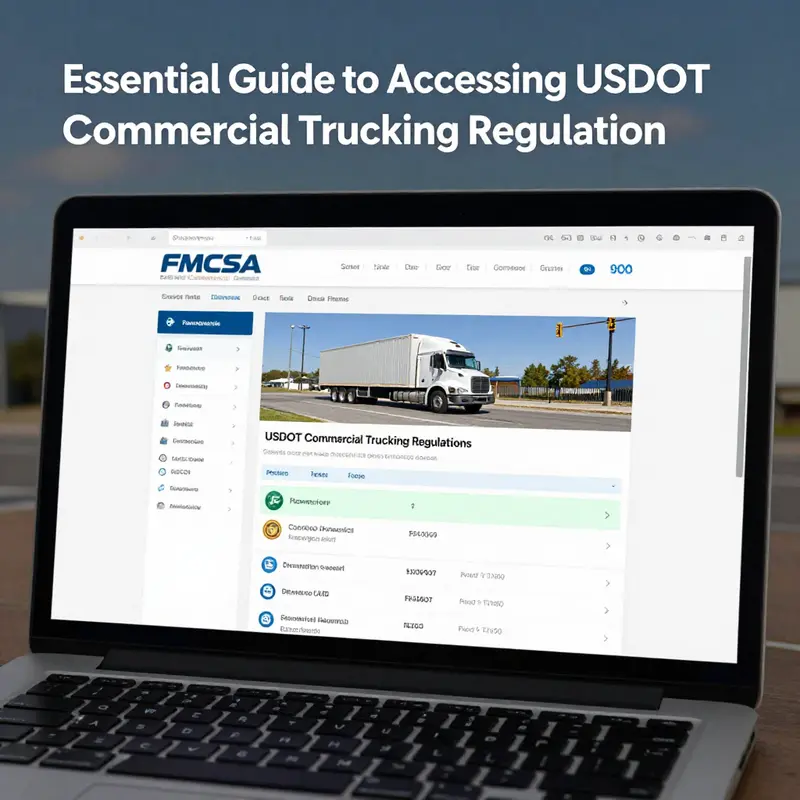
When most people start thinking about “downloading” something related to USDOT commercial trucking, the instinct is often to search for a physical document or a downloadable app. The reality, however, is more practical and far more reliable: there is no official physical handout titled USDOT Commercial Trucking that you can download, and there is no government app that replaces the long, careful study of the rules. The USDOT’s regulatory and compliance framework lives on the agency’s websites, especially through the Federal Motor Carrier Safety Administration (FMCSA). The shift from print to online does not diminish importance; it simply demands a different kind of navigation—one that emphasizes accuracy, timeliness, and a willingness to learn where and how to locate the freshest information. The core idea is straightforward: the most authoritative, up-to-date resources are online, and understanding where to find them reduces risk, aligns operations with current standards, and keeps a fleet moving with fewer surprises.
At the heart of this online ecosystem is the FMCSA website, the official hub for USDOT commercial trucking information. The homepage is designed not as a single repository of “handbooks” but as a living portal that connects carriers, drivers, shippers, and the public to the regulatory framework, safety data, and practical tools needed to stay compliant. Rather than sifting through a dense stack of papers, the engaged reader learns to use a well-structured online map: a main navigation menu that points to Regulations, Safety Data, Compliance & Enforcement, and Resources. Each section serves a distinct purpose but remains part of a single, coherent system. The Regulations area, anchored to Title 49 CFR Parts 380–399, becomes the backbone for understanding how commercial trucking is governed in everyday operations. The content is not a rumor or a summarized guidance; it is the actual regulatory text and its interpretation, updated as rules change or as new guidance is issued. This direct access helps avoid reliance on outdated summaries or third-party interpretations that might drift from the current standard.
The jump from a scan of the table of contents to real, usable form begins in the Safety and Compliance sub-systems that FMCSA presents. The SAFER System, for example, is a transparent data environment that makes safety performance data accessible to the public. In practice, SAFER functions much like a credit report for motor carriers, drivers, and hazardous materials employees. A search by USDOT number or company name reveals a carrier’s safety performance history, inspection results, and any enforcement actions that have occurred. The power of SAFER lies in its openness: it invites carriers and stakeholders to verify compliance status, plan corrective actions, and benchmark performance against peers in a way that is both accountable and traceable. Using SAFER is not about fear but about proactive risk management. It helps a fleet manager decide when a carrier might be an appropriate partner, or when additional training and process changes are needed.
Beyond the regulatory text and safety statistics, the FMCSA site also hosts a robust Training & Education section. This is where operators can find materials designed to help with hours-of-service (HOS) knowledge, safety training, and compliance education. The emphasis here is practical application. Instead of a dry read of a regulatory paragraph, you encounter webinars, downloadable guides, and links to approved training providers that translate the rules into everyday practice. The emphasis on downloadable materials, now available in digital form, acknowledges the modern need for accessible, vendor-neutral resources that drivers and operators can study at their own pace, on the road, or in a dedicated training room. The digital availability of these resources is essential because it supports continuous learning, updates, and a shared understanding across a diverse industry.
To make sense of all this information and keep it current, FMCSA’s Resources area is invaluable. It bundles guidance documents, fact sheets, checklists, and practical aids that help stakeholders stay on top of regulatory changes, compliance updates, and enforcement trends. The idea is not simply to stockpile documents but to assemble them into a navigable, user-friendly suite that supports decision-making at every level of an operation. The online format ensures that updates can be issued quickly and uniformly rather than via scattered printouts that can become obsolete in weeks.
If you are new to this landscape or you need a quick orientation, the approach is to think in layers. First, establish the regulatory foundation by consulting the Regulations area and the CFR references most relevant to your operation. Next, validate safety and compliance posture through SAFER and related data resources. Then, tap into Training & Education to build or refresh knowledge, ensuring that daily practices align with the most current standards. Finally, use the Resources toolkit to obtain practical guidance and checklists that bridge theory and daily routine. This layered approach mirrors the lifecycle of a compliant carrier: design processes around the rules, measure and monitor safety performance, educate continuously, and refine procedures as conditions and regulations evolve.
A key distinction in this landscape is how “downloads” are understood. There is no single master PDF to download and store locally for all time. Instead, the FMCSA framework emphasizes modular, up-to-date digital resources. Some materials are designed for quick reference, while others are meant for in-depth study. The hours-of-service rules, for instance, are periodically updated to reflect changes in duties, exemptions, or electronic logging device requirements. Rather than printing a new copy each year, operators can subscribe to updates, download the latest guidance as needed, and integrate changes into their driver training programs. The same logic applies to compliance manuals, inspection procedures, and safety performance data: all of these are better kept current online, where edits can be tracked and historical versions can be archived.
In practice, this online-first posture is not an impediment but an opportunity. Fleet managers who embrace the FMCSA ecosystem learn to create living documents for their organizations—digital playbooks that point to the official sections of the FMCSA site, link to SAFER data, and reference training materials as needed. This approach reduces the friction of updating a printed manual and increases the fidelity of compliance. It also aligns with the everyday realities of trucking operations, where information must be accessible anywhere, at any time, and in multiple formats. The FMCSA platform, with its clear organization and emphasis on public data, supports precisely this flexibility.
On the operational level, connecting with these resources means understanding the nuanced relationships among USDOT numbers, MC numbers, and other regulatory identifiers. USDOT numbers, the identifier for basic registration, live within the FMCSA ecosystem where a carrier can monitor registration status, renewal requirements, and related compliance obligations. The MC number, involving motor carrier classifications for interstate operations, sits alongside USDOT data in the regulatory fabric and becomes relevant as the business grows or changes service offerings. The important takeaway is that these identifiers are not papers to be collected and filed away; they are digital keys that unlock access to ongoing regulatory responsibilities. The FMCSA infrastructure is designed so that you can: initiate or update registrations online, track compliance status through SAFER, review inspection histories, and receive amendments as they occur.
The broader takeaway for readers trying to locate “where to download physical for USDOT commercial trucking” is simple: there is no single physical download to keep on hand. The authoritative, current, and comprehensive information lives online, with FMCSA as the definitive source. Use the FMCSA site as your primary compass, navigate with purpose through Regulations, Safety Data, Compliance & Enforcement, and Resources, and supplement with SAFER data to gauge safety performance. For training and education, seek out downloadable materials and webinars within the Training & Education area. If you want practical insights on how real-world fleets interpret and implement these rules, a broader industry blog can provide context, case studies, and strategic perspectives. For example, the McGrath Trucks blog offers industry viewpoints and related trucking topics, which you can access here: mcgrathtrucks.com/blog/. This kind of resource can help convert regulatory details into everyday practices, but it should never replace the official FMCSA materials when you need the precise standards and the latest enforcement guidance.
As you plan to stay compliant and informed, remember that staying current is a continuous process, not a one-time download. The FMCSA platform is designed to support ongoing education and operational adaptation, particularly as technology, vehicle configurations, and road conditions evolve. For a practical footing, consider how you structure your team’s learning and documentation: designate a regulatory steward who tracks updates, build a short internal memo whenever a notable change is published, and align your driver training with the Training & Education materials that FMCSA curates. In this way, the absence of a single “downloadable manual” becomes a strength rather than a limitation: a dynamic, transparent, and auditable system that you can trust day to day and across the lifecycle of your trucking operations.
To close the loop, the FMCSA environment also encourages ongoing engagement with official channels rather than reliance on echo-chamber summaries. When in doubt about a rule interpretation, consult the primary FMCSA text, check the SAFER data for current enforcement context, and seek guidance from FMCSA’s training resources prior to making operational changes. This disciplined approach protects safety, reduces regulatory risk, and ensures that your fleet remains aligned with the standards that govern interstate trucking. For readers who want a quick path to deeper content, the FMCSA official site remains the definitive source: https://www.fmcsa.dot.gov/. And for practical industry perspectives along the way, consider visiting the linked industry resource at mcgrathtrucks.com/blog/ for supplementary insights that complement regulatory guidance without replacing it. The blend of official online resources and industry perspectives offers a robust framework for navigating USDOT commercial trucking information with confidence and clarity.
Practical Digital Tools That Support USDOT Commercial Trucking Compliance
Carriers and drivers do not download a single “US DOT Commercial Trucking” document. Instead, they assemble a toolkit of digital solutions that together satisfy federal requirements and streamline daily operations. These tools handle mandatory tasks — logging hours, maintaining driver qualification files, managing inspections, and tracking drug and alcohol testing — while adding capabilities that reduce risk, save time, and simplify audits. This chapter explains the types of tools commonly used, how they fit into compliance workflows, and what to evaluate when choosing a solution.
Start with recordkeeping and logs. Electronic logging and telematics systems replace paper logs and provide timestamped records that support hours-of-service compliance. Beyond basic recording, robust solutions capture vehicle location, engine hours, and fault codes. That extra data can clarify discrepancies during inspections. Look for systems that export standardized reports for audits and investigations, because regulators expect clear, readable records. Integration with fleet management software ensures maintenance schedules align with recorded vehicle use.
Compliance management platforms focus on the documents and processes that underpin safe operations. These platforms centralize driver qualification files, medical certificates, training records, and insurance documents. Good systems include version control, expiration alerts, and secure storage that meets legal retention requirements. They often automate recurring tasks, such as annual reviews and license verifications, and provide audit trails that document who accessed or updated a file. For fleets, a single source of truth for compliance reduces the chance of missed renewals and inconsistent documentation.
Drug and alcohol testing programs are another regulated area that benefits from digital support. Software designed for test scheduling, chain-of-custody recording, and result reporting reduces administrative errors. These platforms should allow test coordinators to document specimen collection steps and attach laboratory reports. Automated notifications can speed response when a test returns a non-negative result. Integration with human resources and dispatcher systems helps ensure drivers under testing restrictions are not dispatched inadvertently.
Vehicle maintenance and inspection tools convert paper checklists into repeatable digital workflows. Drivers and shop technicians use mobile apps to complete pre-trip and post-trip inspections with photos and timestamps. Issues flagged during inspections can automatically generate repair orders and alert maintenance staff. A linked maintenance history provides context at roadside or during compliance reviews. For fleets that operate under safety-sensitive regulations, preserving a chain of inspection evidence helps during compliance exams.
Driver safety and training technologies extend traditional classroom instruction into continuous performance coaching. Video monitoring and telematics-based scoring provide objective measures of risky behavior. Training modules can be assigned based on observed incidents, creating a feedback loop that focuses on the most relevant improvements. When tied to a compliance system, completed trainings appear in driver files and satisfy documentation requirements.
Choosing and integrating the right tools
Selecting tools begins with a clear list of compliance needs and operational priorities. Map the processes that must meet regulatory standards and then identify features that support those processes. Key considerations include: data accuracy, exportability, secure storage, and how a solution interoperates with existing systems. APIs and common data formats enable a scalable architecture where one platform can feed another without manual entry.
Implementation planning is as important as technology selection. Rollouts should include configuration for company-specific rules, naming conventions, and access permissions. Train frontline users with short, task-focused sessions. Drivers need to know how to complete an inspection or log a defect quickly. Administrators need to know how to pull compliance reports and set expiration alerts. Include a pilot phase with a small group of users, so workflows can be refined before a broad launch.
Data governance and retention policies must match compliance timelines. Determine how long specific records must be retained and whether backups meet organizational standards. Encryption and role-based access control are essential for protecting sensitive personnel and medical information. Audit logs that record every change provide defensible evidence during investigations or litigation.
Vendor evaluation should weigh functionality against support and continuity. Ask prospective vendors about uptime guarantees, data portability, and migration assistance. Confirm the vendor’s approach to regulatory changes and product updates, since rule revisions can require rapid software adjustments. Support for mobile platforms and offline data capture is critical for drivers who operate in remote areas without reliable connectivity.
Costs and return on investment
Costs vary with features, scale, and the level of integration required. Look beyond initial subscription fees. Factor in implementation, training, and potential hardware costs. However, digital tools often reduce costs in measurable ways. Better recordkeeping lowers the risk of fines. Preventive maintenance scheduling reduces downtime and expensive repairs. Targeted driver coaching cuts fuel use and accident rates, which lowers insurance premiums.
Operational benefits often show up quickly. Automation frees administrative staff from repetitive tasks, shifting their time to proactive safety and compliance work. When audits occur, the ability to produce comprehensive, time-stamped records speeds resolution and minimizes disruption. For carriers seeking to scale, standardized digital processes make onboarding new drivers and equipment faster and more consistent.
Common pitfalls to avoid
Rushing deployment without clear workflows leads to inconsistent usage. Avoid deploying multiple overlapping systems that require duplicate entry. Standardize on a small number of interoperable platforms. Neglecting driver training is another typical pitfall. Even the best tool is ineffective without user adoption. Finally, ignore data hygiene at your peril; inaccurate or missing data undermines the whole system and creates exposure during inspections.
Integration examples and practical workflow
A practical workflow starts when a vehicle returns from a route. The driver completes a digital post-trip inspection with photos. The system creates a maintenance ticket for any flagged items and notifies the shop. The vehicle’s odometer and engine hours sync to the fleet management system, updating preventive maintenance schedules. Driver hours and event data upload to the central compliance system, which reconciles logs, updates driver qualification files, and archives the day’s records. If a roadside inspection occurs, personnel can export the required reports within minutes.
This combination of mobile capture, centralized records, and automated alerts is how digital tools effectively meet USDOT and FMCSA expectations. While no single download provides everything, a well-chosen set of interoperating tools creates a digital compliance backbone. That backbone simplifies audits, reduces risk, and supports safer, more efficient operations.
For ongoing education and market perspectives on trucking operations and equipment, visit the McGrath Trucks blog.
For official regulatory guidance and the authoritative source of compliance requirements, consult the FMCSA website: https://www.fmcsa.dot.gov
How the Law Controls Access to USDOT Medical Records and Downloadable Forms
Legal boundaries shape how commercial drivers and carriers obtain, store, and share physical examination records. The Federal Motor Carrier Safety Administration sets the requirements for medical qualification of commercial motor vehicle drivers. Those rules determine which documents exist, who may access them, and how they may be downloaded or transmitted. The practical result often surprises people: standardized forms are public, but personal medical content is strictly protected.
A commercial driver’s physical exam leads to two distinct records. One is the Medical Examiner’s Certificate, commonly called the ME Certificate. The other is the Medical Examination Report—Form MCSA-5872. The certificate confirms that a certified medical examiner found the driver qualified to operate a commercial vehicle. The report records detailed findings, including vision, hearing, blood pressure, and other health data. Regulators treat these records differently. The forms and certificates are part of regulatory compliance. The detailed exam content is protected health information.
Drivers, carriers, and safety officials can obtain the standardized forms through official channels. The federal regulator provides downloads of Form MCSA-5872 and guidance on how to complete it. It also maintains a registry of certified medical examiners. That registry allows verification of an examiner’s credentials. Official portals permit a driver or employer to verify a medical certificate’s validity or to download a blank copy of the required form. These downloads serve documentation and compliance needs.
At the same time, the contents of a completed medical report fall under health privacy law. Protected health information cannot be disclosed without consent, except in narrowly defined circumstances. Employers must obtain a driver’s written authorization before requesting or receiving the report. Medical examiners must follow privacy protocols when transmitting medical findings. Carriers that receive medical records must protect them, limit access to those with a legitimate business need, and store them securely.
Digital access adds nuance. Many medical examiners submit certification data to federal systems or to employer-controlled recordkeeping platforms. When transmissions occur electronically, the same privacy and security obligations apply. Electronic transfers must use secure methods and respect retention rules. Employers should avoid storing sensitive medical content in insecure or publicly accessible systems. The safest course is to limit storage to what the rules require and to retain records behind authenticated access controls.
Regulatory compliance includes both the ability to download required forms and the duty to safeguard medical data. Employers should download blank forms only from official sources to avoid outdated or altered versions. They should maintain copies of completed certificates per federal retention schedules. But for the detailed medical examination report, employers must document they had consent or a lawful basis for access. This distinction matters during audits and inspections.
Audits and investigations clarify the division between downloadable forms and confidential records. Safety compliance reviews often request proof of a driver’s valid ME Certificate. That certificate is routinely produced by the driver or employer. Investigators do not need full medical charts to confirm qualification. When deeper medical information becomes necessary, investigators follow legal channels. They may request records with the driver’s consent or through a summons issued under applicable law. Carriers should train safety personnel to respond to such requests appropriately.
State laws can layer additional obligations on top of federal requirements. Some states impose recordkeeping or privacy rules that differ slightly from federal standards. Carriers operating interstate must comply with both sets of rules. Local public health or licensing agencies may also have record access provisions. Where a company runs operations across states, a consistent internal policy helps prevent conflicts and protects drivers’ privacy.
Penalties for mishandling medical records are real. Violations of privacy rules can lead to civil penalties, investigation, and reputational harm. Noncompliance with FMCSA rules, such as failing to maintain required certificates or using outdated forms, can result in fines or operational restrictions. Drivers who allow unauthorized disclosure of their protected health information risk loss of privacy and potential misuse of sensitive data.
Practical steps reduce risk. First, always obtain driver authorization before requesting or storing medical reports. Use the official, current version of Form MCSA-5872 for documentation. Verify medical examiners through the federal registry before scheduling exams. Keep only the records required by regulation and remove or archive older copies according to retention rules. Limit access inside the company to personnel with clear responsibility for safety or human resources.
When offering digital downloads to drivers or managers, implement secure portals with multi-factor authentication. Avoid sending completed medical data over email or other unencrypted channels. Instead, allow drivers to retrieve their certificates directly from official portals, or provide them with secure file transfers upon written request. For carriers that handle many drivers, centralized, secure recordkeeping systems reduce the chance of accidental disclosure.
Employers should also document consent forms and audit trails. Maintain records that show when consent was obtained, who accessed the medical information, and for what purpose. Audit logs help during compliance reviews. They also demonstrate that the company acted responsibly if questions arise about data access or retention.
Training is essential. Safety managers, dispatchers, and human resources staff should understand the legal distinction between downloadable forms and protected medical data. Training should cover how to request records lawfully, how to verify examiner credentials, and how to store certificates securely. Scenario-based exercises help staff practice responding to regulatory requests and to driver inquiries about privacy.
Finally, when preparing to buy or sell vehicles or to scale operations, align documentation practices with transactional needs. Clear policies ease due diligence and vehicle transfers. For guidance about operational best practices and selling or buying vehicles efficiently, consult resources on buy and sell trucks efficiently. That resource helps link compliance to practical fleet decisions.
For authoritative forms, examiner verification, and official guidance on accessing medical documentation, consult the federal regulator’s medical examiners page. The regulator provides the current MCSA-5872 form and tools for verifying examiners and certificates. https://www.fmcsa.dot.gov/medical-examiners
Understanding the legal framework prevents confusion. Standard forms are publicly downloadable for compliance. Personal medical findings remain protected. Carriers and drivers must balance the need to document qualification with strict privacy safeguards. Following federal tools, securing consent, and adopting disciplined recordkeeping will keep operations lawful and drivers’ health information safe.
Final thoughts
In conclusion, locating the necessary physical documents for USDOT commercial trucking regulations is a vital task that all trucking stakeholders must undertake. By understanding the various resources available, effectively navigating the FMCSA website, exploring alternative tools, and recognizing the legal framework surrounding document acquisition, trucking company owners, fleet managers, and procurement teams can ensure compliance and operational efficiency. Adhering to USDOT regulations is not just a legal obligation; it is also a commitment to safety and reliability in commercial trucking operations.