
Jake brakes, commonly found in diesel commercial trucks, are not universally standard. Their deployment varies significantly across different vehicle types and operational contexts. This article provides an in-depth examination of the features associated with Jake brakes, the performance benefits in various terrains, alternative braking systems available, and the regulatory landscape that influences their use. Understanding these aspects is crucial for trucking company owners, fleet managers, construction and mining enterprise procurement teams, and logistics and freight brokerage firms to make informed decisions tailored to their operational needs. Each chapter will delve into distinct nuances surrounding Jake brakes, enabling stakeholders to navigate the complexities of their implementation effectively.
Do All Diesel Commercial Trucks Have Engine Brakes? A Practical Investigation into Engine Braking, Variants, and Fleet Realities
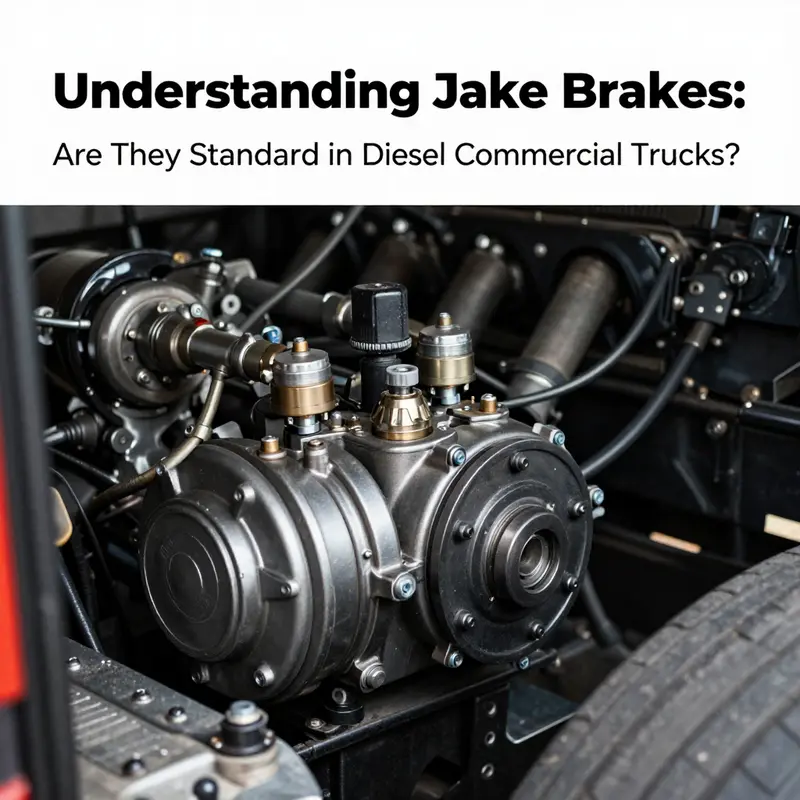
When people ask whether every diesel commercial truck has an engine brake, the instinct is to assume a universal feature—a standard line item on every heavy-duty tractor or delivery rig. The reality is more nuanced. Engine braking, often referred to in the industry as an engine brake or exhaust brake in some locales, is a highly valuable tool for control and efficiency, but it is not universal across all diesel commercial trucks. The decision to include an engine braking system rests on a mixture of technical design, intended duty cycle, terrain, regulatory environment, and the operational philosophy of the fleet. To tell the story clearly, it helps to step through how engine braking works in principle, why it is especially advantageous for certain operations, and why some trucks either omit the feature or offer alternative braking technologies instead. What emerges is a picture of a feature that is prized for its ability to extend the life of the primary friction brakes and to provide predictable deceleration in demanding scenarios, but whose presence is framed by the practical realities of how a vehicle is used and where it operates.
At its core, engine braking leverages the engine’s own compression and, in some designs, the flow of exhaust to help slow the vehicle. In many engines, when the operator engages the engine brake, the fuel supply to certain cylinders is reduced or cut, and the exhaust path is regulated to create backpressure during compression strokes. The resulting opposition to forward motion manifests as deceleration that supplements, or in some cases substitutes for, what the service brakes provide. The primary appeal is not just a sharper slowdown, but a reduction in brake wear during extended descents, repeated stops on grades, or heavy-tow conditions. By using the engine’s work to absorb part of the vehicle’s kinetic energy, service brakes stay cooler and experience less fade on long, steep slopes. The practical effect is a vehicle that can maintain safer control at lower heat levels on grades that would otherwise tax the friction braking system. For operators who see hills, mountains, or long downgrades as a routine part of the route, this capability translates into a meaningful margin of safety and a measurable extension of component life in the brake system as a whole.
That said, the presence of an engine braking capability is not a guaranteed feature on every diesel truck. Vehicle lines differ in architecture, and the inclusion of an engine brake is often tied to the vehicle’s role and expected duty cycle. Heavy-haul tractors, with their frequent descents through mountainous terrain or long, uninterrupted downgrades, tend to be the archetype for engine braking options. The most common scenarios where fleets lean into this technology involve routes that mix long hauls with variable terrain, where descents are frequent and maintaining a controlled speed is critical for safety and adhesion to grade restrictions. In these contexts, the engine brake becomes a critical partner to the service brakes, enabling the driver to maintain a steady speed without relying solely on foot-operated brakes that can overheat and fade. In other segments—such as urban distribution fleets that navigate dense traffic, frequent stop-and-go cycles, and relatively flat routes—the calculus shifts. The demand on engine braking in such duty cycles is lower, and manufacturers may deprioritize its inclusion to save on system complexity, weight, or cost. Some operators see fewer miles of steep grades and more concerns about noise and emissions, which can further influence a fleet’s decision to omit or disable engine braking in certain markets.
There is also a family of alternative braking technologies that can fulfill similar roles in heavy-duty trucks or in markets with particular regulatory constraints. Retarders, including electric and hydraulic variants, are commonly deployed to provide sustained braking force without the periodic use of conventional friction brakes. Retarders can be especially beneficial on long downgrades where continuous deceleration is needed, and they can function independently of engine configuration. Some vehicles rely primarily on these retarders for downhill control, using the engine in a more limited capacity or not at all for braking. The choice between engine braking and retarders, or a combination of both, often emerges from a fleet’s exposure to terrain, its maintenance philosophy, and the perceived durability of the electrical or hydraulic systems involved. It is also not unusual to encounter engines designed with versatile control modules that allow the operator to enable or disable engine braking depending on the driving context or local restrictions. In practice, a truck may be built with the potential for engine braking, but the feature can be turned off in markets where the sound of exhaust brakes is restricted or prohibited by local noise ordinances. In those locations, the same vehicle may rely on retarders or other braking strategies to achieve the same risk-mitigation effect without triggering nuisance or compliance concerns.
The regulatory environment itself plays a crucial role in whether a particular truck leaves the factory or makes it into a fleet’s lineup with engine braking as a standard, optional, or absent feature. In regions with strict noise controls, engine braking can be subject to limits on usage or even outright prohibitions in certain zones, particularly near residential areas or within dense city centers. When the exhaust note from the engine braking system is loud enough to cause disturbance, operators face a dilemma: benefit from increased control and reduced brake wear, or operate within the constraints of the law and community standards. In some cases, operators choose to disable engine braking in cities or on specific routes to avoid penalties or neighbor complaints, a decision that emphasizes compliance over performance on those portions of a trip. This dynamic underscores why engine braking may appear inconsistently across the broad spectrum of diesel trucks. It is not a matter of capability alone but of obligation, preference, and the lived realities of the routes trucks run every day.
From a design and manufacturing perspective, the engine brake must be integrated with other powertrain systems and control logic in a way that preserves reliability and drivability. When engineers add an engine braking system, they must ensure that the engine maps, valve timing, exhaust flow, and electronic control strategies harmonize with the transmission and drivetrain accessories. The control software often includes modes that tailor deceleration to the operator’s selections, balancing engine torque, exhaust backpressure, and throttle response. For fleets that value predictability and a simple maintenance profile, a well-integrated engine braking option can translate into reduced wear on the service brakes, lower maintenance costs over the vehicle’s life, and, potentially, lower total cost of ownership. However, the added complexity means more potential points of failure and additional maintenance considerations. The decision to equip, maintain, or disable engine braking is thus a nuanced trade-off between performance, reliability, and adherence to regional rules. Some operators may find that the long-term savings on brake wear outweigh the extra maintenance burden, while others may accept higher ongoing maintenance costs as a price for greater on-road flexibility and compliance with local restrictions.
In discussing the practical realities of engine braking, it helps to connect the technology with the realities of how fleets operate and how used-market buyers evaluate trucks. For long-time operators who routinely confront steep grades, the engine brake is a tool that makes a tangible difference in daily workflow. It provides a way to keep speeds in check on downgrades, to avoid overheating the main brakes, and to deliver controlled, predictable deceleration that aids in safe lane changes and descent management. For fleets that move lighter loads, or that run primarily in flat regions and urban corridors, the engine brake may feel like a feature with limited immediate payoff. In such contexts, buyers often weigh the incremental value against the added system cost and potential maintenance needs. The upshot is that engine braking remains a prized capability in segments where the return on investment is clearest and the operational pressures align with the strengths of engine-assisted deceleration. It is not a universal guarantee but a strategic choice that reflects the vehicle’s mission.
The market realities echo this variation as well. Fleet managers who assess used trucks look closely at how the brake system is configured and how it will perform on the routes that the vehicle is expected to serve. They consider the climate, terrain, and typical load profiles, as well as the maintenance history and the reliability of the powertrain. In this broader context, the decision to prioritize engine braking features aligns with the goal of extending the life of the service brakes, reducing downtime for brake-related maintenance, and maintaining consistent control over long downgrades. Yet the market also rewards flexibility. A truck that can be configured with engine braking when needed, or that can rely on retarders to achieve the same effect without compromising noise or emissions constraints, tends to attract buyers who confront a wide range of routes and regulatory environments. The result is a diverse landscape in which some heavy-duty rigs arrive with engine braking as a standard, others as an option, and still others without it at all. The end user is left with a practical question: which configuration best serves the fleet’s core operations, the local regulatory climate, and the expectations of drivers who must rely on predictable, controllable braking on a daily basis?
This nuanced picture is not merely theoretical. It translates into concrete decisions during vehicle selection, purchase planning, and even in how fleets educate drivers about braking practices. Understanding whether a particular truck includes an engine braking capability matters for route planning, maintenance budgeting, and safety training. Drivers who are trained to use engine braking effectively can optimize brake life and maintain safer speeds on downgrades, while those operating in regions with restrictions may need alternative strategies to ensure compliance and safety. The interplay between capability, regulation, and real-world use is why the topic remains a frequent point of discussion among fleet operators, dealers, and engineers. The broader message is simple and practical: engine braking is a powerful tool, but its presence on a diesel commercial truck is not guaranteed. It is a feature driven by the vehicle’s intended use, regulatory context, and the strategic priorities of the fleet that selects it. For some operators, it is indispensable; for others, it is dispensable or even undesirable due to noise or regulatory constraints. The fleet decision is a balance among safety, maintenance, cost, and the realities of the routes that trucks must navigate every day.
For readers navigating the practical question of how this affects buying or leasing decisions, the takeaway is that a truck’s braking toolkit should be evaluated as part of a larger picture. Consider the terrain you expect to encounter, the typical load, and how often you anticipate downhill deceleration to be a factor. Think about maintenance philosophy and the willingness to manage additional system complexity. And recognize that the market itself reflects a spectrum—from vehicles that come with engine braking as a key, value-enhancing feature to those that rely on other technologies to deliver comparable deceleration performance. The knowledge helps buyers better align their choices with operational reality, not just theoretical capability. For fleets exploring options, this alignment may also influence resale considerations. A truck configured with an engine braking option may hold appeal for buyers who must manage long grades and brake wear, while in cities or flat regions, a different setup could be equally valid if it optimizes for emissions, noise, or cost. As markets continue to evolve, the conversation about engine braking remains a reminder that what a truck can do in theory is always tested by what it must do in the real-world geography and regulatory tapestry it faces. The decision, then, is less about universal capability and more about fit—the right fit for route structure, driver comfort, regulatory compliance, and the bottom line of maintenance and reliability. For readers who want to explore broader market implications and how these features influence fleet decisions, the discussion resonates with the ongoing shifts in used-truck demand, maintenance strategies, and route planning that define today’s trucking economy. See how these trends are shaping the equipment buyers seek, particularly as they weigh long-term ownership costs against upfront equipment choices in a market that rewards practicality and resilience. External research for those seeking a more technical grounding on how engine braking is implemented and regulated across engines and markets can be found in industry documentation and official resources that describe the mechanics, control strategies, and regulatory considerations in greater depth. As always, the best path for any fleet is to match the braking toolkit to its specific routes, driver training, and maintenance capabilities, ensuring that the vehicle performs reliably where it matters most and remains compliant wherever it travels. For further technical background, see the official resource linked in the external references. External resource: https://www.cummins.com/engines/jake-brake
When Jake Brakes Matter: How Terrain and Performance Shape Engine-Brake Choices in Diesel Commercial Trucks
When Jake Brakes Matter: How Terrain and Performance Shape Engine-Brake Choices in Diesel Commercial Trucks
Not every diesel commercial truck rolls out of the factory with a Jake brake. Whether a vehicle carries one comes down to practical trade-offs between terrain, performance needs, operational cost, noise restrictions, and the alternatives available. Understanding how those factors interact helps fleet managers, owner-operators, and drivers make smarter specification and purchasing choices—and helps explain why some trucks have heavy-duty engine braking while others do not.
At its core, the engine brake is a tool for slowing a heavy vehicle without wearing the service brakes. It harnesses the engine’s internal resistance to convert kinetic energy into heat or exhaust flow instead of relying solely on friction. One widely known type opens exhaust valves at the top of the compression stroke so the engine cannot return stored energy to the crankshaft. The driver feels a pronounced slowing effect and can control downhill speed without repeated, high-temperature service brake applications. This characteristic makes engine braking particularly valuable on grades and when hauling heavy loads.
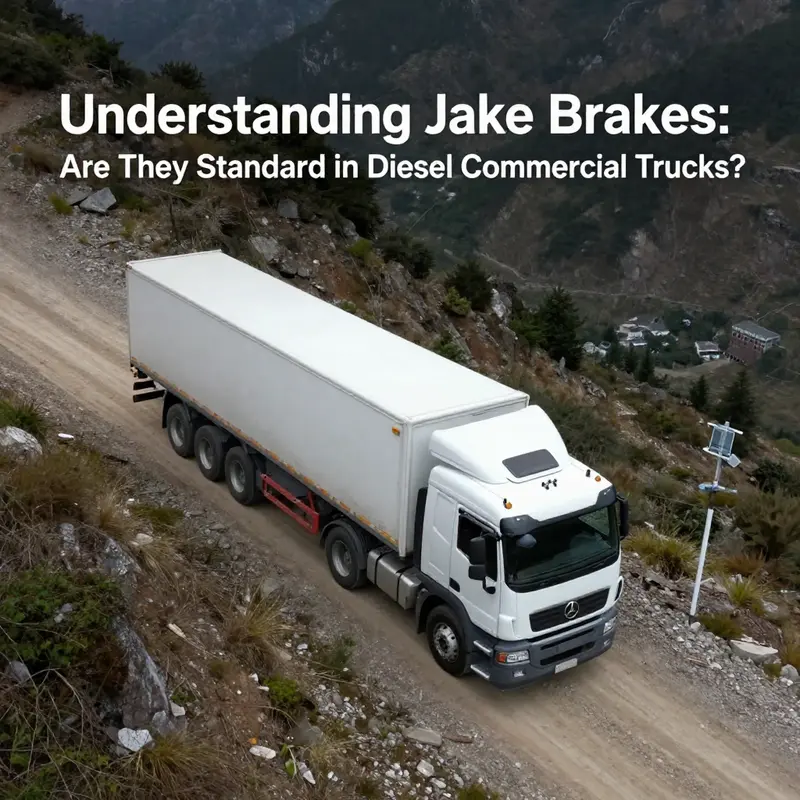
Terrain is the single most influential factor in the decision to fit a Jake brake or a comparable engine-braking system. Trucks that spend most of their miles on open highways with long, steep descents—think interstates that cross mountain ranges—gain clear safety and maintenance advantages from an engine brake. On extended downhill runs, service brakes are susceptible to fade as friction surfaces heat up. An engine brake provides continuous retarding power with little wear on brake pads and drums, reducing maintenance cycles and the risk of reduced braking performance at critical moments. For heavy haulers, logging trucks, bulk haulers, and long-haul tractors that regularly face mountainous regions, the engine brake is often a near-essential feature.
Conversely, lighter-duty vehicles and those operating exclusively in flat urban environments often do not require such a system. City delivery trucks, short-haul rigs, and vehicles that make frequent stops and starts at low speeds rely on service brakes and transmission downshifts for speed control. In many of these applications, the added complexity, weight, and potential noise of an engine brake do not deliver a commensurate return on investment. For businesses that prioritize low initial cost and simple maintenance over downhill retarding power, omitting the engine brake is a rational choice.
Noise regulations create another practical limit. The characteristic sound of mechanical engine braking—often described as a loud exhaust pop—has led municipalities to regulate or ban the use of such systems in residential and urban areas. Where quiet neighborhoods border major routes, drivers may be prohibited from using engine brakes regardless of a vehicle’s equipment. In those jurisdictions, fleet policies often mirror the law: engine brakes may be disabled or de-emphasized in route planning to avoid fines and community complaints. The presence of noise-sensitive areas along common routes will therefore influence whether a truck is specified with an engine brake or whether fleets invest in quieter retarder technologies.
Alternative retarding technologies expand the options beyond a traditional Jake brake. Electric retarders, hydraulic retarders, and transmission-based retarders provide continuous, controllable braking without the distinctive noise of an exhaust-based system. Each alternative brings its own strengths and limitations. Electric retarders are smooth and quiet and integrate well with automatic transmissions, but they add weight and may be costly to repair. Hydraulic retarders offer strong continuous braking for heavy applications but also increase system complexity and maintenance needs. Transmission-integrated retarders deliver predictable performance for many road conditions but may not provide the same maximum retarding force as an exhaust-style engine brake on long, steep descents. Fleets will weigh these trade-offs against operational priorities like vehicle uptime, maintenance budgets, and noise constraints.
Manufacturer variability means there is no one-size-fits-all rule. Engine braking systems differ in design, compatibility, and performance across engine families and truck models. Some heavy-duty engines are offered with integrated engine-brake packages as factory options; others require dealer-installed or aftermarket solutions. The choice may also depend on transmission type, axle ratios, and the brake system’s integration with electronic controls. For instance, some modern trucks combine engine braking with transmission logic and cruise control to modulate retarding force automatically, improving driver ease and fuel efficiency on rolling terrain.
Operational strategy matters as much as equipment. Fleet managers planning long-haul routes through varied topography often look beyond the presence of a single feature and instead specify a combination of systems and policies: an engine brake for steep descents, robust service brakes for urban stops, and driver training to maximize the safe use of all braking tools. Preventive maintenance programs can extend service-brake life significantly when an engine brake is used properly by reducing the heat cycles and wear that cause premature brake component failure. Conversely, a truck without an engine brake must rely on heavier service-brake maintenance, which raises lifecycle cost for certain use cases.
Driver expertise is another often-overlooked factor. Engine brakes require different techniques than service brakes. Drivers must learn when and how to modulate engine braking to avoid jerky deceleration or excessive activation in noise-restricted zones. Modern systems offer multiple levels of retarding power and electronic modulation, which can soften the learning curve, but training remains essential to maximize safety and minimize component stress. A truck with an engine brake in the hands of an untrained driver will not realize its potential benefits and may cause community friction if used improperly in noise-sensitive areas.
The purchase decision also hinges on lifecycle economics. Upfront costs for engine-brake options and alternative retarders must be balanced against long-term savings in brake maintenance and potential fuel-efficiency gains. In many heavy-duty applications, an engine brake pays for itself through extended service-brake intervals, reduced downtime, and lowered labor costs for brake servicing. For lighter applications, the payback period may be too long to justify the initial investment. Leasing strategies, resale expectations, and expected route profiles all influence whether the investment is appropriate for a given operation.
Finally, regulatory compliance and safety standards shape equipment choices. Occupational safety rules and commercial vehicle regulations often favor systems that improve vehicle control on grades. At the same time, noise ordinances can limit practical use and drive investment into quieter technologies. When specifying trucks, it is therefore important to consider both the legal environment and the practical realities of the routes the vehicle will run.
In practice, this complex mix of terrain, performance needs, noise constraints, alternative technologies, driver skill, and economic calculations explains why some diesel commercial trucks leave the factory with Jake brakes and many others do not. The presence of an engine brake signals that the truck was intended for demanding, heavy-duty service where downhill control and brake longevity were high priorities. The absence of one typically indicates a role focused on urban, light, or flat-terrain duties where the costs and implications of engine braking outweigh the benefits.
For fleets and operators deciding whether to spec or retrofit engine braking, a careful review of route profiles, load types, noise-sensitive areas, and total cost of ownership will reveal whether an engine brake is a necessity or an optional convenience. For those seeking deeper technical reference on specific engine-brake implementations and how they integrate with certain engine families, manufacturer technical documents provide performance specifications and installation guidance. For an overview of truck industry trends and advice that can help align equipment choices with market dynamics, our blog offers practical insights and market commentary.
External technical details and official specifications for one common engine-brake implementation can be found at: https://www.cummins.com/products/engine-brakes/ism-jake-brake
Internal reference and broader industry discussion are available in our roundups and equipment guides at: https://mcgrathtrucks.com/blog/
Not Every Diesel Truck Comes with Jake Brakes: The Braking Ecosystem in Modern Heavy-Duty Fleets
The question itself points to a larger truth about modern diesel trucking: braking systems are a layered, context-driven mix rather than a single feature found on every vehicle. Jake brakes, known in the industry as exhaust brakes, are valued for their ability to convert engine compression into decelerating force. They reduce wear on service brakes, improve control on long descents, and can make a demanding trip feel a little less punishing for both truck and driver. Yet the practical realities of fleets and operating environments mean that not all diesel commercial trucks come equipped with Jake brakes, and many operators deliberately design braking strategies around a broader toolbox of technologies. To understand why, it helps to look at how the braking ecosystem has evolved and how different components interact in the real world of heavy-duty transportation.
At their core, Jake brakes work by manipulating the engine’s breathing rather than directly applying the service brakes. In a traditional engine brake setup, the exhaust valves are coordinated to release compressed air from the cylinders after the piston finishes its compression stroke. The result is a noticeable deceleration torque that absorbs energy without creating heat in the wheel brakes. This can dramatically extend the life of air disc or drum brakes, reduce maintenance intervals, and provide a more controlled, steady deceleration during long grades. But the audible exhaust crackle that accompanies Jake brake operation has historically been a point of contention in urban environments and residential areas. That loud characteristic, coupled with city noise restrictions and local ordinances in some regions, has pushed fleets to rethink where Jake brakes are used and how often.
Beyond the noise issue, there is a practical consideration about the diversity of tasks fleets perform. Not every diesel truck travels mountains or towed heavy loads through winding coastlines. Light- to medium-duty heavy-vehicles, urban delivery routes, and personnel shuttle operations often do not require the same level of decreasing capability. In those contexts, engine braking may be offered as an optional capability or replaced by other means of deceleration that are better aligned with the mission profile or regulatory constraints. When a fleet operates predominantly in urban corridors or areas with strict noise rules, the absence of Jake brakes can be a conscious decision to reduce nuisance and comply with local standards, all while still maintaining acceptable braking performance through other technologies. This is a reminder that the presence of an engine brake is not a universal mark of a modern diesel truck; instead, it is one of several braking tools that can be chosen or omitted during design and procurement.
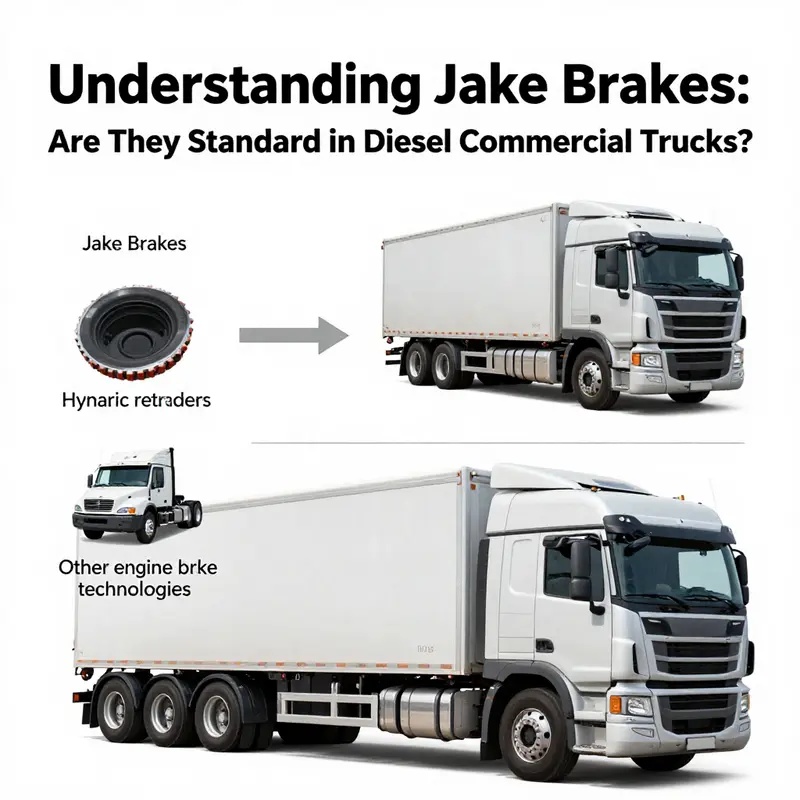
The broader braking landscape is built around redundancy and adaptation. Retarders—whether electric or hydraulic—offer a compelling complement or substitute for Jake brakes in many scenarios. These devices are integrated into the drivetrain or transmission architecture and provide continuous deceleration without relying on exhaust manipulation or on the service brakes alone. In environments where steep descents are common or brake wear poses a risk to performance, a retarder can sustain a controlled speed reduction while leaving the engine and exhaust self-contained of aggressive braking action. Retarders are especially valued in city-heavy or mountainous routes where drivers must manage long pulls or frequent descents without overheating or glazing traditional brakes. Because retarders do not produce the same exhaust noise as Jake brakes, they often become a preferred solution in regions with stringent noise restrictions or in fleets that value quiet operation in urban corridors.
Equally important is how transmission braking fits into the equation. Many fleets rely on downshifting, sometimes with automated manual transmissions, to convert engine resistance into usable deceleration. This method taps into the drivetrain’s resistance rather than exhaust or air braking alone, and skilled drivers can modulate it to achieve precise speed control on grades. In automated systems, engine braking through careful gear selection and throttle management can be a powerful partner to electronic stability controls and adaptive cruise systems, reducing the burden on the friction brakes during long descents and in variable terrain. The result is a braking strategy that leverages the strengths of the transmission and powertrain, preserving heat capacity in the service brakes for emergencies or abrupt stops while maintaining a smooth deceleration profile during steady downhill runs.
The air brake system remains the backbone of stopping power for large, heavy-duty trucks. No matter which engine braking or transmission braking methods are available, the primary stopping force—through air-actuated brakes—must be reliable and responsive. The service brakes, typically a combination of air-operated discs or drums, handle the majority of deceleration and the emergency stop function. Engine braking and retarders are layered on top of that foundation, helping to manage incremental deceleration and reduce load on the air brakes. The interplay among these systems requires careful design, disciplined maintenance, and thoughtful training for drivers. When a fleet integrates advanced electronic stability controls, adaptive cruise features, and vehicle dynamics software, braking becomes more than a mechanical action; it becomes a coordinated act guided by sensors and algorithms that modulate engine torque, transmission resistance, and brake application to maintain control on wet or icy pavement, in crosswinds, or during quick lane changes.
An emerging reality in contemporary fleets is how electronic systems influence braking behavior. Electronic stability control and adaptive cruise control can anticipate or dampen deceleration needs by adjusting speed in response to traffic, road grade, and surface conditions. These systems can work in concert with engine brakes or retarders to deliver smoother deceleration, improving passenger comfort and reducing wear. In many cases, drivers benefit from predictive slowing that preserves tire grip and minimizes skidding on slick descents. While this does not replace the mechanical decelerating forces, it reduces reliance on any single system and enables a more harmonious braking strategy across the vehicle’s drivetrain. This shift toward integrated control highlights a broader trend: braking is becoming a systems engineering challenge rather than a single feature choice.
From an operating perspective, there is a continuous tension between capability, cost, and regulatory compliance. Jake brakes can be a cost-effective solution for fleets that perform long, steady-grade runs and face high wear on service brakes. However, the need to balance noise, maintenance, and regional restrictions can tilt decisions away from Jake brakes in favor of retarders or enhanced transmission braking. Each option has procurement implications. Retarders require compatible hardware and power management, while engine braking through other manufacturers’ systems demands compatibility with the vehicle’s engine and exhaust architecture. The decision, therefore, is not simply about whether a truck can be equipped with a Jake brake; it is about how the full braking system aligns with expected routes, local laws, maintenance capabilities, and the fleet’s safety philosophy.
For readers who want to dig deeper into the spectrum of braking choices, a reference point is the way industry resources summarize Jake brakes versus retarders and their roles in daily operations. This body of knowledge helps fleets frame a plan for braking that respects both safety and practical constraints. You can explore more about how these choices are presented and debated in industry discussions, including how fleets weigh the tradeoffs in real-world operations. A reliable starting point for those looking to understand the nuance is to review insights from established industry sources that compare these approaches and explain how fleets implement them across different duty cycles. As you consider these considerations, a sense emerges that braking in heavy trucks is more a discipline of balance than a single knob to turn.
In practice, then, the absence of a Jake brake on a given truck is not evidence of a weaker or inferior unit. It may reflect a strategic choice to optimize for the route profile, noise restrictions, and the total cost of ownership. A fleet designed for urban distribution with frequent stops, mixed load weights, and a heavy emphasis on quiet operation may lean toward retarders combined with stringent speed management and precise downshifting. A long-haul operation with predictable grades and a fleet-wide emphasis on brake life extension may invest in Jake brakes as part of a larger deceleration strategy, but even there, deployment might be restricted to certain routes or time windows to comply with local regulations.
The narrative around Jake brakes versus alternatives is, ultimately, a story about adaptability. A robust braking strategy in modern trucking is not about choosing one technology but about orchestrating a family of tools that work together. The choice to equip a truck with a Jake brake becomes a design decision shaped by anticipated routes, maintenance schedules, and the acceptable level of engine noise for the communities the truck serves. The decision to lean on a retarder instead of, or in addition to, an engine brake reflects a different balance of trade-offs—one that prioritizes quiet operation, sustained deceleration, and heat management within the drivetrain. And the deployment of transmission braking, as well as advanced electronics, demonstrates how drivers and fleets can leverage the entire system to deliver safe, efficient, and predictable performance on diverse hills, grades, and road conditions.
This chapter does not pretend to offer a universal rule. It presents a landscape in which Jake brakes are a valuable capability for certain duty cycles, but not a universal requirement for every heavy-duty diesel truck. For operators and technicians, the key takeaway is heightened awareness of how different braking options can complement each other under a wide range of conditions. It is about recognizing when to lean on engine braking and when to reserve it for specific contexts, while enabling retarders and transmission braking to handle the brunt of sustained deceleration in regions where engine brake use is constrained. It also involves ongoing attention to maintenance practices, ensuring that air brakes remain responsive, retarders are properly cooled and controlled, and electronics remain calibrated to respond to terrain and load in real time. In this sense, the discussion of Jake brakes becomes a doorway to understanding how modern fleets craft resilient, adaptable braking systems that can meet the demands of both today’s roads and tomorrow’s regulations.
For readers who want a practical anchor in this subject, a useful resource that explores the comparative dynamics of Jake brakes and retarders is available in industry discussions and practitioner guides. It can offer further clarity on when to deploy one technology over another, how to optimize overall braking effectiveness, and what kind of maintenance and training supports a diversified braking strategy. If you’re seeking further reading, the McGrath Trucks blog provides ongoing discussions about truck technology and industry shifts that help contextualize these choices within real-world fleet operations. The blog can be a helpful companion as you think through how braking systems influence purchase decisions, route planning, and maintenance planning for a fleet of any size. McGrath Trucks blog.
In short, not every diesel commercial truck is equipped with a Jake brake. The braking spectrum is broader and more nuanced than a single feature set. The right approach depends on the vehicle’s role, the routes it serves, the regulatory environment, and the broader strategy for brake life, driver control, and overall safety. As fleets continue to evolve with new propulsion and control technologies, the emphasis remains on making deceleration predictable, manageable, and compliant—whether the path to that end involves engine braking, retarders, transmission braking, or a carefully orchestrated combination of all three. The goal is simple: reduce true stopping distances when necessary, protect the health of the brake system over tens or hundreds of thousands of miles, and keep drivers confidently in control on grades that demand a calm, precise slow-down rather than a sudden slam on the pedal.
External reference: For a more technical, industry-level comparison of engine braking and retarder technologies, see the detailed discussion at Fleet Owner: https://www.fleetowner.com/brakes/jake-brakes-vs-retarders-what-you-need-to-know
Not Every Engine Brake Is Equal: Navigating Regulations, Noise, and Emissions in Diesel Fleets
Engine brakes, commonly called Jake brakes, have long been a feature associated with heavy hauling. They provide extra control on long descents and can reduce service brake wear. But their availability is not universal and depends on vehicle class, engine design, and fleet policy.
Technically, a Jake brake alters the exhaust flow by using the engine as a compressor release mechanism, producing deceleration without touching the service brakes. This can improve safety on grades and in mountain routes, though it may create a distinctive audible signature in many settings.
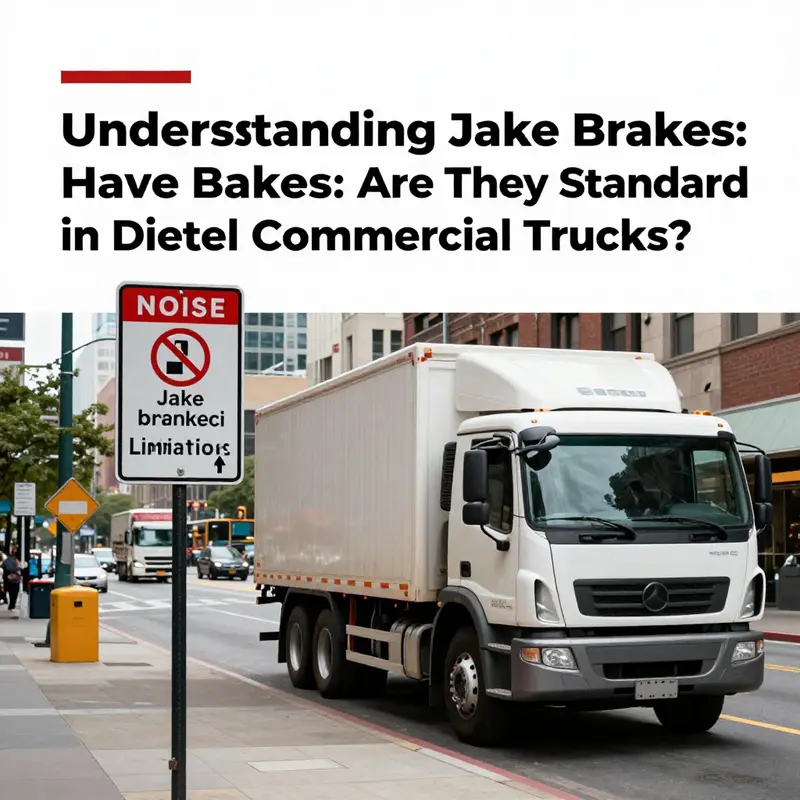
In urban and regional fleets, regulatory and noise considerations shape whether an engine brake is used and when. Some cities restrict operation during certain hours or in specific zones, effectively limiting the tool even where it exists.
Emissions controls add another layer. Modern engines with aftertreatment must harmonize with additional braking devices, and some configurations may limit braking effectiveness or require compatible exhaust systems.
Operational decisions are common: fleets balance fuel savings, brake life, maintenance, and noise exposure. Where routes include long descents through quiet zones, operators may rely on retarders or alternative braking, or place engine braking behind rules that allow it at certain times.
The takeaway is that Jake brakes are a powerful option in some contexts and a non universal feature in others, driven by geography, policy, and economics.
For readers seeking policy context, regulators emphasize safety and community soundscapes, explaining why timing and location matters for engine braking.
Final thoughts
In conclusion, while Jake brakes are an important component for enhancing performance and safety in many diesel commercial trucks, their availability is not universal. Several factors, including terrain demands, operational requirements, and regulatory frameworks, determine their presence and functionality. Fleet managers and trucking company owners must evaluate these elements critically to optimize their fleet’s performance and compliance with local laws. Understanding the full landscape surrounding Jake brakes enables stakeholders to make well-informed decisions that enhance their operational efficiency and safety.