
Navigating the financial landscape of commercial truck rentals is essential for trucking company owners, fleet managers, and logistics teams. The costs associated with renting a commercial truck can fluctuate widely due to various factors, including truck type, rental period, and location. Alongside these primary considerations, additional expenses can significantly influence the overall rental cost. Delving into these aspects not only helps businesses budget effectively but also fosters informed decision-making. This article explores three critical areas: first, understanding the factors that determine truck rental pricing; second, comparing costs over different rental durations; and finally, analyzing additional expenses that may arise. Each chapter builds a comprehensive picture of how much it truly costs to rent a commercial truck, equipping readers with the insights necessary for strategic procurement.
Breaking Down the Price: What Really Determines the Cost to Rent a Commercial Truck
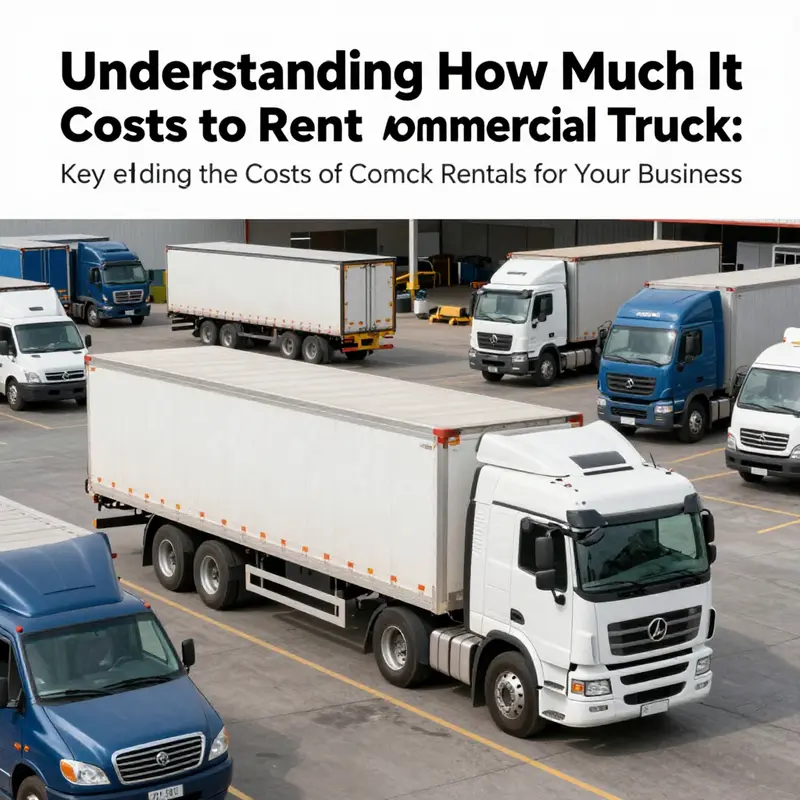
Cost Drivers and Practical Steps for Estimating Commercial Truck Rental Expenses
When you plan to rent a commercial truck, the quoted daily rate is only the beginning. A clear estimate must fold in vehicle class, rental length, mileage, insurance, fuel, and regional differences. Each factor can add up quickly, and small assumptions about miles or coverage can double a short-term bill. This chapter walks through the practical drivers of cost and shows how to build realistic budgets for short moves, weekly hauls, and month-long projects without losing sight of the fine print.
The most immediate factor is the type of vehicle. Commercial truck rental covers a wide range of machines. Small cargo vans and pickup-style work trucks sit at the low end. Box trucks, moving trucks and multi-axle freight trucks occupy the middle and upper ranges. Specialty rigs — refrigerated boxes, flatbeds, lift-gate trucks, and high-capacity tractor units — command premium rates because of complex equipment and additional regulatory burdens. Simpler trucks may rent for under a hundred dollars a day in many markets. Large box trucks and tractor-trailers commonly start above one hundred dollars and can pass several hundred dollars per day for high-capacity or specialized models. These broad ranges reflect both vehicle value and the licensing or training required to operate them.
Rental duration shapes price in two ways. First, per-day rates tend to fall as the rental window lengthens. Daily deals exist for single-day needs; weekly rates often average lower on a per-day basis. Monthly rentals compress per-day costs further and sometimes include maintenance packages. Second, duration interacts with fixed fees such as security deposits, cleaning charges, and insurance surcharges. A single-day rental absorbs those one-time charges into one short period, making the effective cost per day higher. For a week or month, those one-time fees dilute across more days, improving the effective daily price. Local examples show pickup-style rentals starting in the mid-double digits per day and sometimes dropping into the low double digits with special deals. Weekly rates can be presented as a per-day equivalent, which helps direct comparisons between short and longer terms.
Mileage allowances are a common hidden cost. Many contracts include a daily or weekly mileage cap. Exceeding that cap triggers a per-mile surcharge. Per-mile penalties vary but are frequently quoted in cents per mile. When planning a route, map expected mileage with a margin for detours, traffic, and staging. For multiple stops or unpredictable routes, prioritize quotes that include generous mileage or offer an unlimited-mileage option. Unlimited mileage is often more expensive up front, but it protects against unexpected high-mileage charges on busy routes.
Insurance and liability drive major variability. Rental providers require proof of insurance or offer coverage options at the counter. Coverage can include loss damage waiver, liability extension, and supplemental liability protection. Each option adds a daily fee. If the rental will be used for commercial hauling of valuable goods, consider higher liability limits and cargo insurance. If your business already carries commercial auto insurance, verify whether it extends to rental units and what deductibles apply. Where insurance must be purchased through the rental company, include this line item in the cost estimate. Insurance choices can move a tight daily budget into a high-cost commitment.
Location matters more than travelers often expect. Urban centers with high demand and limited fleet availability typically show higher base rates. Rural regions may offer lower daily rates but fewer vehicles and fewer specialized options. Seasonal demand also varies by region. Moving season in warmer months and harvest times in certain agricultural areas push prices upward. Fleet distribution affects one-way fees: pick-up in one city and drop-off in another can incur substantial charges if the provider must rebalance vehicles across locations. If you need flexibility for different pickup and return points, factor in one-way charges and check whether local branches waive them during promotions.
Regulatory and licensing requirements introduce both cost and preparation. Many heavy trucks require a valid commercial driving permit. Renting a vehicle that legally needs a higher license may require the renter to present qualifications and endorsements. If you lack the needed license, you will either need a driver with the proper credentials or a smaller vehicle that fits your current license class. Hiring a professional driver adds labor costs. Some companies offer driver-for-hire services at an additional daily or hourly rate, often with minimums. Be sure to record this expense in labor estimates if a driver is necessary.
Operational costs — fuel, tolls, and maintenance — are ongoing. Fuel is paid by the renter unless otherwise arranged. Fuel efficiency varies widely across truck classes. A compact cargo van may achieve double the miles per gallon of a heavy box truck. To estimate fuel costs, determine expected miles, choose a conservative fuel-efficiency figure for the chosen vehicle, and use current local fuel prices. Tolls and road charges add beyond fuel. In some regions, electronic toll transponders are integrated into rental vehicles, with fees billed back to renters plus administrative fees. Maintenance during a rental term is typically the renter’s responsibility for minor issues, while larger mechanical failures may be covered by the provider. Still, expect to be accountable for cleaning fees and damage beyond normal wear.
Penalties and incidental charges can transform a reasonable quote into a surprising invoice. Common penalties include fees for late returns, excess cleaning, damage beyond normal wear and tear, and violations of load limits. If you plan to transport heavy loads near the vehicle’s capacity, check for weight-based restrictions and liability for overloaded axles. Detailed inspection before and after rental protects both parties. Document existing damage, and obtain a written record. Ask about excess mileage and damage charge rates so you can weigh the risk of pushing limits versus choosing a larger vehicle.
Comparing renting vs. leasing requires more than a glance at monthly numbers. Short-term rental keeps capital expenses low and adds flexibility. Leasing spreads the cost of a dedicated vehicle across months or years and often reduces per-day operating costs for continuous use. Average monthly lease payments for commercial trucks vary widely, but a typical range sits one notch above long-term rental effective costs. Leasing becomes economical when the vehicle is needed consistently and predictably for many months. Renting often wins when usage is intermittent, seasonal, or highly variable. To decide, compute a break-even point. Sum the monthly lease payment, expected maintenance, insurance, and registration for leased ownership. Compare that to the monthly equivalent of rental rates including insurance, fuel, mileage fees, and any driver or permit costs. The option with lower total cost for the expected usage horizon is generally preferred.
Negotiation and timing can lower bills. Long-term contracts often qualify for discounted daily rates. If your schedule is flexible, avoid prime demand windows and explore off-peak or weekday pickups. Corporate buyers can negotiate volume discounts or preferred-pricing agreements across locations. For one-off needs, compare quotes across several local providers. Ask explicitly about bundled packages that include insurance, maintenance, and unlimited mileage for a flat rate. Some providers run promotions that waive certain fees or lower deposits when you book ahead.
Planning a realistic estimate benefits from scenario examples. A short local day job using a compact pickup-style truck might cost a base rental of under a hundred dollars, plus fuel and a small insurance add-on. A three-day urban job with moderate miles could add mileage surcharges and hourly labor for loading. A week-long regional move in a medium box truck could show a lower per-day rate but include higher fuel consumption, tolls, and possible one-way fees. A month-long rental for a dedicated project is where monthly rates and maintenance bundles begin to resemble lease economics; still, the absence of capital expenditure and the ability to return the vehicle when the job finishes often justify rental expense for finite projects.
Practical steps reduce surprises. First, define the cargo and its dimensions. Volume and weight determine the necessary vehicle class. Second, map expected routes and compute conservative mileage estimates. Third, confirm licensing and endorsements for the vehicle class. Fourth, collect multiple written quotes and compare the same line items: base rate, included mileage, daily insurance options, one-way charges, fuel policy, deposits, and damage or late fees. Fifth, inspect vehicles at pickup and document condition. Ask for a signature on the inspection report. Sixth, understand billing practices for tolls and incidental fines. Finally, record all contact details and reference numbers to streamline dispute resolution if charges arise.
For business users, an additional layer of cost control exists. Establishing standing accounts with rental companies can centralize billing and sometimes unlock negotiated savings. Fleet managers can track usage patterns and opt for bulk agreements covering seasonal spikes. If the business frequently hires vehicles, consider a short-term lease program that preserves flexibility while lowering effective per-day costs. Centralized insurance placements that extend existing policies to rented units often reduce redundant coverage purchases.
When comparing providers, focus on the whole cost, not only the headline daily rate. Ask whether fuel must be returned full and whether return fuel charges apply. Clarify whether cross-border travel is allowed and whether additional documentation or fees are required. For specialized cargo — refrigerated goods, hazardous materials, or perishable items — verify whether temperature control, placards, and additional certificates will be billed separately. For high-value shipments, review cargo insurance and consider a dedicated policy covering cargo-in-transit.
Finally, keep an eye on market signals. Regional supply shifts, regulatory changes, and fuel price volatility all influence rental rates. Monitoring market trends helps predict when to lock in long-term rentals or when short-term rentals are preferable. If your decisions depend on used-truck market behavior, consider insights on how broader industry dynamics affect availability and pricing. For a closer look at those market dynamics and how economic shifts influence commercial vehicle availability, see this review of market conditions and strategies for navigating uncertain trucking markets: navigating economic uncertainties in the Canadian and US trucking markets.
For the most reliable, location-specific pricing and availability, consult local rental listings and branch information. Local pages supply up-to-date rates and special offers, plus details on deposit levels and branch policies. For example, to check current pickup and truck rental options in a regional branch, visit this location page for live pricing and local availability: https://www.enterprise.com/en/car-rental/locations/wa/spokane.html
Stretching Your Budget: Comparing Daily, Weekly, and Monthly Commercial Truck Rental Costs
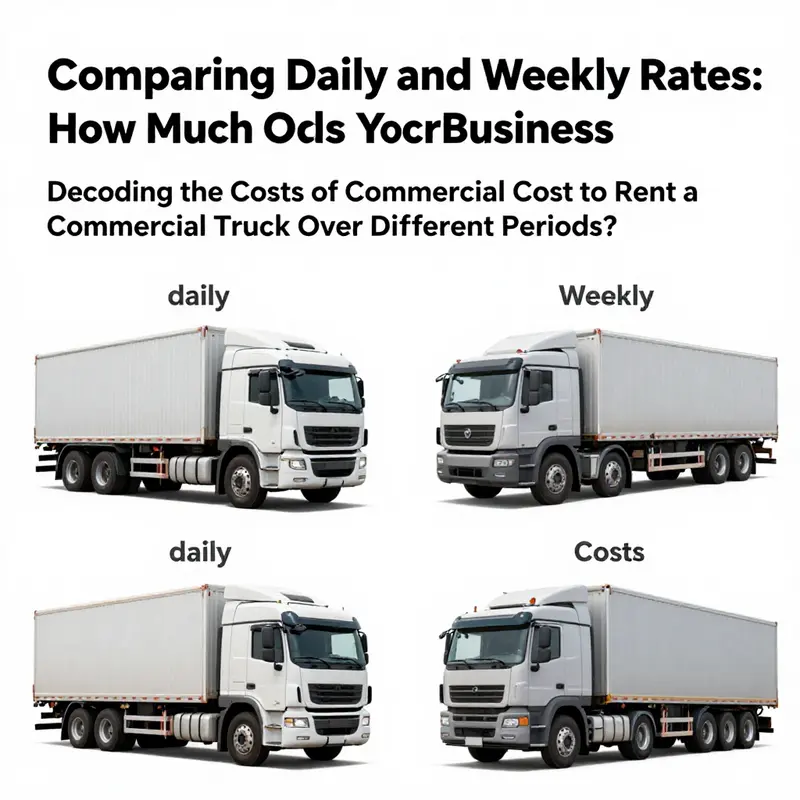
Daily vs weekly vs monthly: how rental duration changes what you pay
When deciding how much it costs to rent a commercial truck, the length of the rental is often the single biggest lever on price. Daily rates appeal for short runs and emergency needs. Weekly and monthly contracts reward commitment with progressively lower effective daily prices. Understanding how these tiers move will help you budget precisely and avoid surprise expenses.
Daily rates are simple to understand. You pay for each 24-hour period the truck is in your possession. This structure is convenient for one-off moves, last-minute deliveries, or short-term projects. Daily pricing is typically higher on a per-day basis than longer options. The logic is straightforward: rental companies price daily rentals to cover vehicle depreciation, maintenance risk, and the unpredictability of short-term availability. For businesses, daily rentals can add up quickly when repeated across days or multiple vehicles.
Weekly rates usually provide a meaningful discount compared to paying daily for seven days. Rental companies commonly package seven-day or five-business-day weeks at a lower total cost than the cumulative daily charge. The discount reflects lower administrative costs, steadier utilization of the asset, and reduced turnover. For renters, a weekly rate often reduces the effective daily price by twenty percent or more. That math matters: if a cargo van costs $120 per day, the daily cost over a week would be $840. A weekly package might drop that to $650, lowering the average daily price to roughly $93.
Monthly rentals take the savings further. When you commit to a month, you essentially promise stable revenue and predictable operating patterns. This stability lets providers offer deeper discounts. A medium cargo truck with a $200 daily rate might cost the equivalent of $150–$180 per day when rented monthly. The reduction depends on region, fleet availability, and the vehicle’s role. Heavily used, specialized trucks usually show smaller discounts. Standard, high-demand vehicles typically yield better monthly deals.
The effective cost per day is the single metric that ties these tiers together. Calculate it by dividing the total rental charge by the number of days in the rental. That figure lets you compare apples to apples across daily, weekly, and monthly offers. For budgeting, use the effective daily rate, not the headline daily rate. The latter misleads when discounts apply.
Several variables influence how large the discount will be. Geography matters. Urban centers and high-demand corridors push rates up. Rural or less competitive markets sometimes have smaller discounts because providers face higher relocation costs. Seasonal patterns also have weight. Peak shipping periods, holiday spikes, and local events can temporarily erase weekly and monthly advantages. When demand rises quickly, even long-term rates can climb.
Vehicle type plays a major role. Small cargo vans and light box trucks are cheaper per day than large freight rigs. Refrigerated units, flatbeds, and other specialized builds carry premium pricing. They require more maintenance, have specialized components, and face limited availability. Expect lower proportional discounts for specialized trucks. A standard box truck will usually show better weekly and monthly reductions than a refrigerated truck.
Mileage limits and usage policies change how savings translate into real costs. Many weekly and monthly plans include a set number of miles per day or week. Exceeding the allowance triggers per-mile charges. These penalties can erase the benefits of a lower effective daily rate. Always compare included mileage to your expected usage. If you plan heavy mileage, a daily plan with generous mileage may sometimes be cheaper than a weekly package with strict caps.
Insurance and additional fees also alter the math. Collision and liability coverages are often optional but recommended. Some rental offers bundle limited coverage into weekly or monthly packages. Others price insurance as a daily add-on. Compare total insurance costs across durations. Administrative fees, environmental surcharges, and service charges vary by provider and location. These per-rental items lower the advantage of longer leases if they are charged as flat fees rather than daily rates.
Fuel is rarely included. Fuel remains a predictable, ongoing cost that compounds with rental duration. Some providers require a full tank return. Others will refill and bill you at a marked-up rate. Fuel cards and prepaid fueling plans exist, but they change cash flow rather than total cost. Factor fuel consumption rates for the vehicle type when calculating the total cost per mile. A larger truck with lower fuel efficiency can erase daily savings through higher fuel bills.
Driver needs and permits add another layer. For commercial trucks that require specialized licensing or permits, some rentals include driver hire as an option. Hiring a driver increases total daily cost substantially. Permits and tolls remain your responsibility in most cases. Weekly and monthly rentals might simplify permit processing, but they rarely include the fees themselves. If your operation requires special permits, account for application fees and processing time in your overall schedule and budget.
Maintenance and liability exposure change with duration, too. Rental providers assume responsibility for scheduled maintenance. But renters remain liable for damage caused by misuse or accidents. Longer rentals increase exposure to mechanical issues or minor damage. Providers may enforce stricter inspection requirements on monthly contracts. Inspect vehicles carefully before accepting them, and document any preexisting damage. This practice prevents liability disputes and unexpected repair charges at return.
Downtime costs deserve attention. For a business node, downtime is loss. If a rented truck sits idle because of weather, manufacturing delays, or route changes, you still pay. Weekly and monthly agreements often favor borrowers who can plan use tightly. Daily rentals offer flexibility to align payment with actual usage. When scheduling multiple jobs, consider how downtime will affect the effective cost per productive day.
Hidden fees often tilt the scales unexpectedly. Cleaning fees for excessively dirty vehicles, late-return charges, and administrative penalties for paperwork errors can add hundreds of dollars. Many weekly and monthly rentals include free daily mileage up to a point. But hidden early-return penalties exist in some contracts. Read terms and conditions carefully. Confirm return policies for weekends and holidays, since nonstandard return times might incur additional daily charges.
Negotiation strategies vary by rental length. For daily rentals, negotiation room is smaller. Providers price daily inventory tightly. For weekly and monthly contracts, you have leverage. Ask for bundled insurance, extended mileage, or better terms on pickup and return logistics. If you book multiple trucks or commit to a recurring contract, negotiate a master rate. This arrangement locks better pricing and reduces transaction costs.
Tax treatment and account coding matter for businesses. Rentals may be subject to sales tax, environmental fees, and special vehicle taxes. Monthly rentals sometimes qualify for different accounting treatment than short-term rentals. Consult your accounting team to classify rental expenses correctly. Treat rental payments consistently across projects to track cost per mile and cost per delivery.
Effective budgeting requires a simple forecast model. Start with the base rental price for each duration. Add expected fuel, estimated mileage overage charges, and insurance. Include driver pay and permits. Add an allowance for unexpected fees. Divide total predicted expense by the estimated number of productive days or miles. That result gives a comparable daily or per-mile figure.
Use scenarios to stress-test your decision. Create a best-case scenario with minimal mileage and no incidents. Create a worst-case scenario with high mileage, late returns, and a minor damage fee. Compare the effective daily costs under each scenario. This method exposes risk and helps determine whether the lower advertised daily rate for a short-term rental is really cheaper when potential penalties occur.
Look beyond sticker price to lifecycle cost. A monthly rental may produce a lower daily rate, but it also ties up capital and increases exposure. Weekly rentals reduce this exposure while still offering savings. Daily rentals maximize flexibility but usually cost more per day. Align your choice with operational predictability. If routes and schedules are stable, longer terms are usually prudent.
Practical examples clarify the framework. A small cargo van might list at $100 per day. A weekly package could cost $600, and a monthly package $2,400. The effective daily prices are $100, $86, and $80 respectively. A medium box truck with a $200 daily rate could have weekly and monthly equivalents of $1,250 and $4,500. Those translate to $179 and $150 effective daily costs. Large freight rigs may start at $300 per day and show smaller proportional discounts, often ending around $260 per day on monthly deals.
These numbers vary by market. In regions with intense demand, discounts shrink. In slower markets, discounts widen. If your operation requires highly specialized vehicles, expect limited weekly and monthly relief. If you can substitute a more common model, you’ll likely find better long-term pricing.
Operational tactics can reduce effective cost further. Consolidate loads to reduce trips. Plan routes to minimize empty miles. Schedule returns to avoid extra days. Use off-peak seasons for longer projects when possible. Combine rental with owned fleet capacity strategically. Each tactic reduces the days or miles you pay for unnecessarily.
Billing transparency is crucial. Request a full fee breakdown before signing. Confirm whether the quoted weekly or monthly rate includes taxes, administration fees, and insurances. If certain charges are excluded, ask for typical amounts to estimate total charge reliably. Require written confirmation of any negotiated concessions.
When comparing offers, use the same assumptions across providers. Fix expected mileage, insurance choices, and return conditions. Compare the effective daily rate after adding expected extras. That method beats comparing quoted daily rates that assume different inclusions.
Finally, document lessons from each rental. Track actual miles, fuel consumption, and any extra fees. Compare them to your initial estimate. Over time, these records develop into a reliable cost model. This historic data helps you decide whether to pursue weekly or monthly rentals in the future, or whether to shift toward owning vehicles for certain tasks.
For broader industry context, consider how market forces like regulation and economic shifts affect rental pricing. For a deeper look at market dynamics across North American regions, see this analysis on navigating economic uncertainties in the Canadian and US trucking markets: insights from the Canadian and US trucking markets.
For real-time, location-specific quotes, use an online quotation tool from a reputable rental marketplace: https://www.rentalcars.com
Counting Beyond the Daily Rate: How Hidden Extras Shape the True Cost of Renting a Commercial Truck
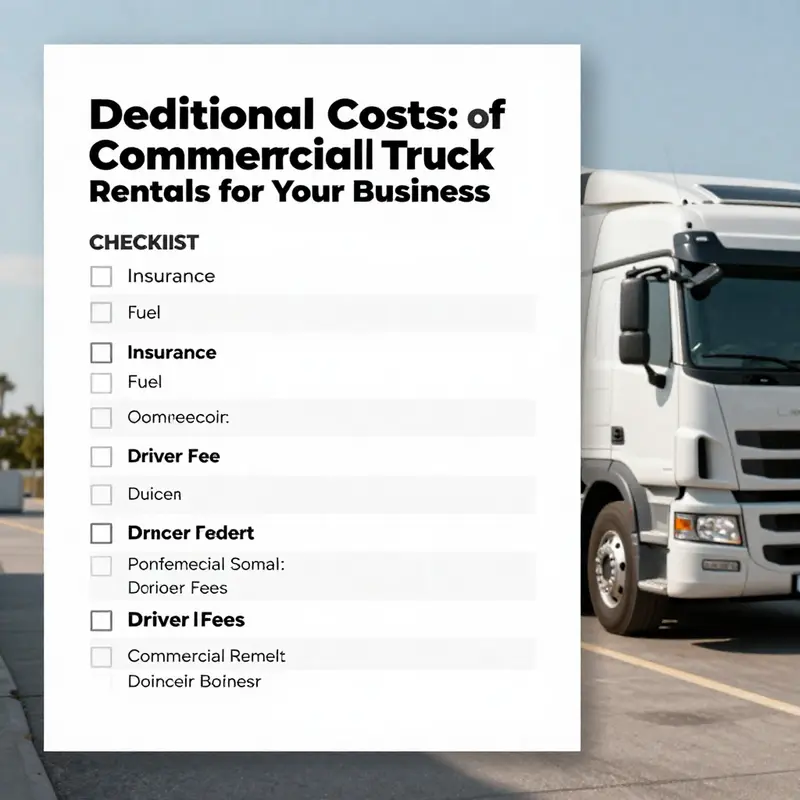
Major Additional Costs and How They Push Your Rental Bill Higher
Renting a commercial truck often begins with a neat daily or weekly number. That figure, however, is rarely the whole story. The base rate is an entry point. Additional fees and charges determine what you actually pay. Understanding those extras helps you budget, compare offers, and avoid surprises when the final invoice arrives. This chapter walks through the common add-ons, explains how they accumulate, and offers practical ways to limit their impact.
Fuel sits at the top of the list for extra expense. Most rental agreements require the vehicle to be returned with the same fuel level it had at pickup. If you fail to refill, you will be billed for refueling at a rate that often exceeds station prices. Some agencies offer a prepaid fuel option. You pay for a full tank upfront, typically at a marked-up but sometimes discounted rate compared with emergency refuel charges. If you expect to use most of the tank, the prepaid route can reduce stress and avoid high per-gallon service fees. If your route includes long-distance highway travel, calculate expected miles and fuel economy first. That calculation helps decide whether prepaid fuel or refueling personally will cost less.
Mileage charges are another predictable place fees appear. Commercial truck rentals often include a daily mileage allowance. Exceeding the limit triggers a per-mile fee that is easy to underestimate. For many truck sizes, that fee ranges between a quarter and half a dollar per mile. On a long move, that adds up fast. Suppose your allowance is 100 miles per day and your trip averages 300 miles daily. At $0.35 per extra mile, the extra charge for one day equals $70. Multiply that by several days and the extra becomes a major portion of the total. If you expect heavy mileage, request unlimited mileage options or a higher mileage cap. Those choices usually increase the base rate, but they can be cheaper than paying per-mile penalties on long hauls.
Insurance and damage protection deserve careful attention. Basic liability may be included, but it often falls short of covering collision or loss. Many renters buy daily waivers that cover damage and reduce financial exposure. These waivers commonly cost between $15 and $35 per day, depending on the vehicle size. If you rent for a long period, waiver charges can drown the base rental cost. Before accepting protection, check existing policies. Personal auto insurance and many business policies sometimes extend coverage to rental vehicles. Credit cards also occasionally offer rental protection when used to pay the rental bill. Verify what your policies cover. Declining duplicated coverage can save dozens of dollars per day.
One-time administrative fees also appear regularly. These may include a reservation fee, processing fee, or a charge for dropping the truck at a different location than pickup. Delivery or pickup service costs money when the truck must travel to your address. Administrative or documentation fees sometimes show up as a flat charge. These amounts often seem small individually. In total, they create a noticeable markup on the printed rate. Ask the provider for a full fee list before you sign. Request the total out-the-door price for the full rental period so you can compare offers fairly.
Tolls and fuel surcharges can be added later. Many companies will bill you for tolls incurred during the rental if you used their toll payment device. They add administrative fees for processing those tolls. Fuel surcharges may also apply when national or regional fuel prices spike. These surcharges are periodically adjusted and can appear as a percentage of the rental or as a per-day fee. If your route crosses multiple toll systems, estimate those charges ahead. Map toll costs on your planned route or use a toll calculator. Knowing likely tolls helps you choose a route or provider that minimizes such fees.
Driver-related charges are common for commercial rentals that include driver services. If a professional driver is required or offered, expect daily driver fees, overtime penalties for long shifts, and possibly per-mile driver mileage rates. Driver fees can be higher for specialized skills or certifications, such as hazmat endorsements or heavy-load endorsements. When budgeting, include driver pay, per diem, and rest-day rules if relevant. Also confirm whether the rental company requires you to cover driver insurance or payroll taxes.
Cleaning, refuse, and restoration fees are often overlooked. A return with significant dirt, odor, or debris can result in a cleaning fee. Spills, stains, or hazardous materials sometimes trigger deep-clean charges. If the vehicle needs restoration beyond routine cleaning, expect flat fees or hourly labor charges. Avoid these costs by inspecting the truck at pickup and noting any existing damage. Keep the vehicle reasonably clean during use and remove trash before dropping it off.
Taxes and environmental levies vary by jurisdiction. Local sales tax, vehicle rental tax, and environmental fees all increase the bottom-line cost. Some regions impose emissions-related surcharges or congestion fees. These can be significant in areas with strict environmental policies or urban congestion pricing. Factor local taxes into the estimate and compare offers from providers in nearby jurisdictions, if flexible pickup locations are possible.
Special equipment and accessory charges matter for moves involving pallets, refrigeration, or specialized cargo. Dollies, ramps, straps, tarps, lift gates, and refrigeration units often carry daily or per-rental fees. Choosing the wrong truck size to avoid accessory charges can backfire if you cannot load or secure cargo properly. Estimate needs clearly and rent necessary accessories from the start. Bundling accessories with the vehicle sometimes reduces per-item cost.
Permits, licenses, and route restrictions can add both cost and planning time. Commercial loads may require special permits for oversized cargo or heavy loads. Obtaining permits often means paying application fees, posting bonds, or arranging escort vehicles. Route restrictions for height, weight, or hazardous materials add planning complexity. If a permit or escort is needed, secure those services before the move to prevent fines or delays that increase overall cost.
Cancellation and modification fees also increase perceived cost. Many rental agreements charge for late changes or cancellations. A nonrefundable deposit is typical. Changing the pickup location, truck size, or dates can result in penalties. If your schedule is flexible, ask about refundable options or a lower penalty plan. For inflexible needs, factor cancellation risk into your planning and choose a policy that minimizes potential losses.
Hourly or overtime charges affect short-term, high-intensity work. Some rentals are priced with daily or hourly rates for loading or special usage. Exceeding agreed hours often triggers overtime. For example, a loading crew expecting two hours but needing five will generate hourly charges that escalate rapidly. Coordinate loading and unloading tightly. Know when overtime fees begin and plan labor to stay within contracted time.
Security deposits and hold amounts tie up capital. Most companies place a hold on a credit card as a security deposit. The hold can be hundreds or thousands of dollars, depending on the truck class. This hold reduces available credit temporarily. Understand the hold amount, how long the funds remain unavailable, and the company’s policy for releasing it after return.
Damage determination and dispute handling influence final cost. Inspect the truck carefully at pickup. Document existing scratches and dents in writing or with photographs. A clear pre-rental condition report reduces the risk of being billed for pre-existing damage. If you disagree with damage assessments on return, request full documentation. Keep all rental records and exchange contact details for follow-up.
Small fees illustrate a major point: extras aggregate. A modest daily waiver, the per-mile fee for exceeding mileage, a cleaning charge, and a drop-off fee can combine into a percentage of the total that eclipses the base rate. Consider two scenarios. A two-day local rental with a $100 daily rate equals $200 base. Add a $25 daily damage waiver, $15 fuel surcharge, and a $50 administrative fee. The final bill is $325, a 62.5% increase above the base. Longer rentals magnify this effect.
Smart practices reduce added cost. First, ask for a complete fee schedule before committing. Get a written estimate that includes all known extras for the intended use, mileage, and route. Second, choose the right truck size. Over-sizing wastes money; under-sizing forces multiple trips or damage risk. Third, calculate total miles and compare per-mile charges with higher-mileage packages. Fourth, verify insurance coverage from existing policies. Avoid paying twice for protection you already have. Fifth, document vehicle condition thoroughly at pickup to avoid unexpected damage claims.
Negotiate when possible. Rental firms often have standard charge structures, but they also have flexibility. For longer-term rentals, request a discounted daily rate or reduced waiver price. Ask about corporate or business pricing if your company rents frequently. Volume or repeat business often unlocks lower fees.
Plan routes to minimize tolls and congestion. Where allowed, avoid high-toll corridors. Use toll calculators to estimate costs and pick routes with lower fees. If time is flexible, schedule travel during off-peak hours to reduce urban congestion fees or hourly penalties.
Consider local providers and alternative marketplaces. Regional firms sometimes have lower fees or more flexible policies than national chains. Compare offers from multiple providers, including specialty carriers that focus on commercial truck rentals. For consistent needs, explore leasing options. Leasing converts many variable charges into predictable monthly expenses, though it requires a longer commitment.
When renting for a business, consolidate records. Keep receipts and rental contracts. Track miles, fuel, and tolls in an expense system. Clear bookkeeping helps reclaim costs where allowable and prepares for audits. Accurate records also improve negotiating power with repeat suppliers.
Finally, anticipate hidden costs unique to your cargo. Perishable goods may need refrigeration units and temperature monitoring. Hazardous materials require special permits and insurance. Heavy machinery could need dedicated loading equipment or reinforced flooring. Each of these requirements increases the complexity and final cost of the rental.
A thorough pre-rental checklist prevents most surprises. It should include estimating total miles, verifying insurance, asking for a full fee breakdown, confirming fuel policy, noting pre-existing damage, and estimating tolls. Use that checklist consistently for every rental. A disciplined approach converts uncertainty into predictable pricing.
Staying informed about market dynamics also matters. Regional fuel prices, regulatory changes, and local taxes shift over time. For deeper context on how market and regulatory forces shape truck-related costs, consult detailed industry analyses, such as discussions on navigating economic uncertainties in the Canadian and U.S. trucking markets: navigating economic uncertainties.
In sum, the extras transform a simple rental number into a complex budget. Fuel, mileage, insurance, administrative fees, tolls, driver charges, cleaning fees, permits, and taxes all matter. Each can be managed through research, negotiation, and careful planning. The true cost of renting a commercial truck depends less on the advertised daily rate and more on how well you account for and control these additional line items. When you budget with that broader view, you gain clarity, reduce surprises, and keep rental costs predictable.
https://www.enterprise.com/en/car-rental/locations/nc/raleigh.html
Final thoughts
Understanding the costs associated with renting a commercial truck is pivotal for any business relying on transportation. By analyzing the factors affecting rental prices, comparing costs over different timeframes, and recognizing the additional expenses that may arise, fleet managers and procurement teams can make informed choices. Strategic planning around these rental costs can lead to better budgeting and overall efficiency in logistics operations, ultimately impacting the company’s profitability.