The Franklin D. Roosevelt Drive (FDR Drive) in New York City, known for its scenic views along the East River, serves as a vital roadway for passenger vehicles. However, commercial trucks are strictly prohibited from using this thoroughfare. This ban stems from a combination of safety concerns, infrastructure protection, and traffic flow management. The following chapters delve into the regulations that impose these restrictions, analyze their effects on traffic dynamics, address key safety issues, and explore the role of the NYC Department of Transportation’s signage in enforcing these rules. Together, these insights provide a comprehensive understanding of why commercial trucks must steer clear of the FDR Drive.
The Final Barrier on the East River: Why Commercial Trucks Are Banned from the FDR Drive and What It Means for Modern Freight Planning
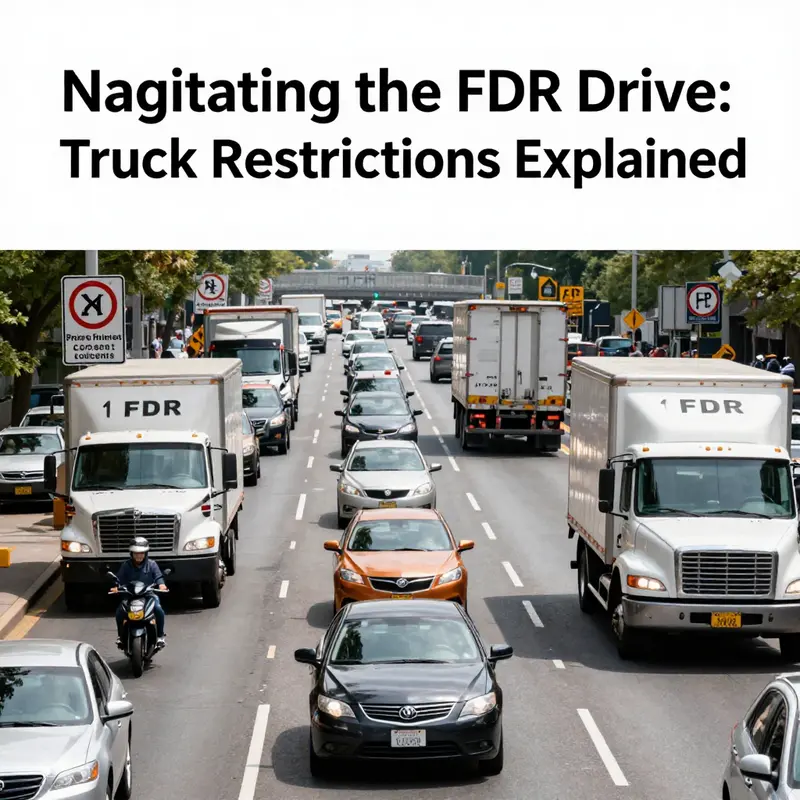
The question that often whispers through fleet planning rooms and dispatcher desks—can commercial trucks go on the FDR Drive?—has a straightforward answer in New York City: no. The Franklin D. Roosevelt East River Drive is a major arterial along Manhattan’s eastern edge, but it is fenced off from the world of heavy-duty logistics by a long-standing policy that forbids commercial vehicles from using the roadway. This prohibition is not a casual rule drafted in haste; it sits at the intersection of safety engineering, urban congestion management, and the preservation of critical infrastructure. The FDR Drive is part of a broader class of parkways designed to carry passenger vehicles with a high emphasis on preserving traffic flow for local communities and emergency access rather than serving as a commercial trucking corridor. The enforcement of this restriction is not abstract: it is reinforced by signage and pavement markings that remind drivers with the clear directive that “All Trucks Must Exit” and by the coordinated efforts of city agencies to ensure that the rule is understood and followed on a daily basis. The specific guidance is laid out by the New York City Department of Transportation (NYC DOT) with regular updates and clarifications on their official pages, ensuring that even in the fast-changing environment of urban freight, operators can rely on a stable policy when planning routes and schedules. For precise, current details, the official NYC DOT resource should be consulted as the definitive reference.
To understand why this ban exists and how it shapes the broader freight conversation, it helps to consider the multiple strands that feed into parkway restrictions. First is safety. The FDR Drive threads its way along the East River with bridges and ramps that were designed to move light to moderate volumes of passenger vehicles at relatively high speeds. A heavy truck, with its longer stopping distance, wider turning footprint, and higher center of gravity, introduces a risk profile that city engineers have determined is better managed by excluding such vehicles from this route. The potential for collisions and the severity of outcomes on a constrained, urbanized corridor are not hypothetical concerns; they are anchored in decades of crash data, urban design principles, and the operational realities of a city that must accommodate millions of trips that are both commercial and personal. When a truck navigates a tight exit ramp or negotiates a narrow shoulder on a curve along the drive, the consequences can ripple through neighboring neighborhoods and downstream infrastructure.
Second, there is the matter of congestion and reliability. The FDR Drive serves as a critical connector for residents and visitors moving between Manhattan and neighborhoods along the East River. It threads past residential blocks, schools, and parks, carrying morning commuters, weekend travelers, and emergency responders. The introduction of heavy trucks into that mix complicates lane discipline, reduces predictability, and increases the likelihood of slowdowns that cascade into surrounding arterials and tunnels. In a city that prizes tight supply chain timing, the ability to keep trucks off certain parkways helps preserve the cadence of the broader network, ensuring that freight movement remains efficient without undermining the quality of life for city residents who rely on a stable and predictable traffic environment.
Third, the enforcement and the infrastructure itself matter. The “All Trucks Must Exit” signage is not decorative; it is part of a comprehensive approach that includes pavement markings and periodic enforcement by the NYPD and DOT. This is not a rule that sits quietly in a policy manual. It is a lived rule with tangible penalties for violations and clear guidance for drivers who might accidentally traverse the wrong route. The presence of signage along the drive creates a continuous reminder that the FDR is not a general-purpose trucking corridor and that drivers must comply with the posted restrictions. The enforcement dynamic also underscores a broader principle of urban freight policy: clear rules with consistent enforcement reduce ambiguity, which in turn reduces the likelihood of costly detours, fines, or delays for carriers who operate on tight margins.
Beyond the immediate safety and congestion rationales, the restriction plays into the city’s broader strategy to protect infrastructure. Bridges and elevated segments along the East River face unique load considerations, and the heavy weight of commercial trucks can contribute to wear and tear in ways that passenger vehicles do not. While the physical bridge management ecosystem is complex, the policy decision to limit truck access to the FDR Drive is a preventive measure aimed at extending the life of critical pieces of the city’s transportation fabric. As with many regulatory choices, this one reflects a balancing act: ensuring mobility for essential freight while mitigating risk to vulnerable infrastructure and nearby communities.
For practitioners—fleet managers, dispatchers, and drivers—the practical implications are straightforward but far-reaching. The ban forces logistical planners to design routes that either bypass the FDR Drive entirely or employ alternate corridors that can absorb heavy traffic without compromising delivery windows. This often means routing trucks along other express or arterial lanes that are better suited to heavy vehicles, even if those routes involve longer distances or more complex interchanges. It also elevates the importance of real-time routing information and pre-trip planning. In a dense urban landscape, even small changes in route choice can accumulate into meaningful shifts in delivery times and fuel consumption. This is where the discipline of route planning becomes a competitive differentiator: fleets that anticipate parkway restrictions and build them into their planning algorithms can minimize late deliveries and optimize driver hours, thus preserving margins in a market that prizes reliability as much as price.
The rule also interacts with urban planning initiatives that aim to reduce the footprint of trucks in residential neighborhoods. When heavy vehicles are disincentivized from using major urban parkways, surrounding streets can bear increased traffic as detours become the norm. City planners must weigh these shifting patterns against the immediate operational needs of commerce. It is not unusual for a local street to experience increased wear or congestion when a primary corridor is restricted, which in turn can prompt additional policy responses, such as revised speed limits, improved curbside loading zones, or targeted enforcement in affected corridors. In practice, the ban on commercial trucks on the FDR Drive serves as a catalyst for a broader ecosystem of route optimization, urban traffic management, and freight policy that seeks to harmonize the needs of commerce with the lived reality of city streets.
For anyone hoping to use the FDR Drive on a routine basis, the message is emphatic and consistent: this is not a permitted route for commercial trucking. The rationale—safety, congestion control, and infrastructure protection—remains unchanged, even as the city, carriers, and policymakers continue to adapt to evolving freight patterns, changes in demand, and technological advances in fleet management. The rule is a reminder that in a city of dense, competing demands, the most reliable way to keep freight moving is not to force it through every possible corridor but to guide it toward routes that better align with the road network’s design and capacity. This principle has a direct payoff in steadier transit times, lower risk of incidents, and a cleaner operational picture for dispatch teams who manage dozens or hundreds of loads every day.
The official position, as captured on the NYC DOT’s own pages, is the most accurate source for current restrictions. Policy is subject to updates as city mobility needs evolve, and the DOT’s guidance is the best compass for operators who want to stay compliant while maintaining service levels. The channel of communication between city agencies and carriers is essential here: it ensures that the rules remain clear, consistent, and enforceable, even as new technologies—in-vehicle routing, telematics, or data-driven dispatch optimization—offer fresh ways to respond to restrictions without sacrificing efficiency. In practice, this means that a well-informed fleet will routinely verify that a route passes through designated corridors and will maintain updated knowledge of any temporary restrictions caused by construction, events, or emergencies that could alter a corridor’s status.
As readers consider the broader arc of this chapter within the article’s exploration of whether commercial trucks can traverse the FDR Drive, it is worth acknowledging the dynamic tension between regulation and operational flexibility. The FDR Drive’s restrictions do not exist in a vacuum; they are part of a living system shaped by safety data, public policy, and the realities faced by fleets that must deliver goods across a city. Operators who internalize the rule—treat it as a non-negotiable constraint—are better positioned to design resilient plans. They can anticipate detours, build redundancy into schedules, and communicate clearly with customers who rely on predictable delivery windows. This is not simply about compliance; it is about building a freight operation that respects the city’s functional boundaries while still achieving reliable performance.
For readers who want to corroborate the rule beyond memory or anecdote, the official NYC DOT resource remains the definitive guide. It provides the most current language of the restriction, sample signage, and any caveats that may apply in unusual circumstances. The broader takeaway is clear: while commercial trucks are inherently essential to city life and economic vitality, there are carefully chosen corridors where their presence is not aligned with the street network’s design or the community’s safety and quality of life priorities. The FDR Drive stands as a concrete example of that principle, a physical and regulatory barrier that shapes how freight moves in one of the busiest urban environments in the world.
In sum, while the city’s drivers and planners continue to chase efficiency, the message for fleets remains consistent: the FDR Drive is not a truck route. The discipline this demands—from route selection to schedule optimization, from load planning to customer communication—becomes part of the professional discipline of modern trucking in dense metropolitan areas. The policy’s endurance test is not simply whether a truck can technically fit on the road, but whether the entire system can absorb the consequences of that choice for safety, reliability, and community wellbeing. And as urban freight evolves, the FDR Drive restriction stands as a tangible reminder that smart routing—not sheer vehicle power—often determines whether a shipment arrives on time, intact, and in harmony with the city around it.
External resource: https://www.nyc.gov/site/dot/motorist/parkway-truck-restrictions.page
Internal reference: For broader insights on how market conditions influence trucking decisions, you can consult this resource on navigating economic uncertainties in the Canadian and US trucking markets: Navigating economic uncertainties key insights from the Canadian and US trucking markets.
Rerouting the Flow: The Complex Reality of Commercial Truck Restrictions on the FDR Drive
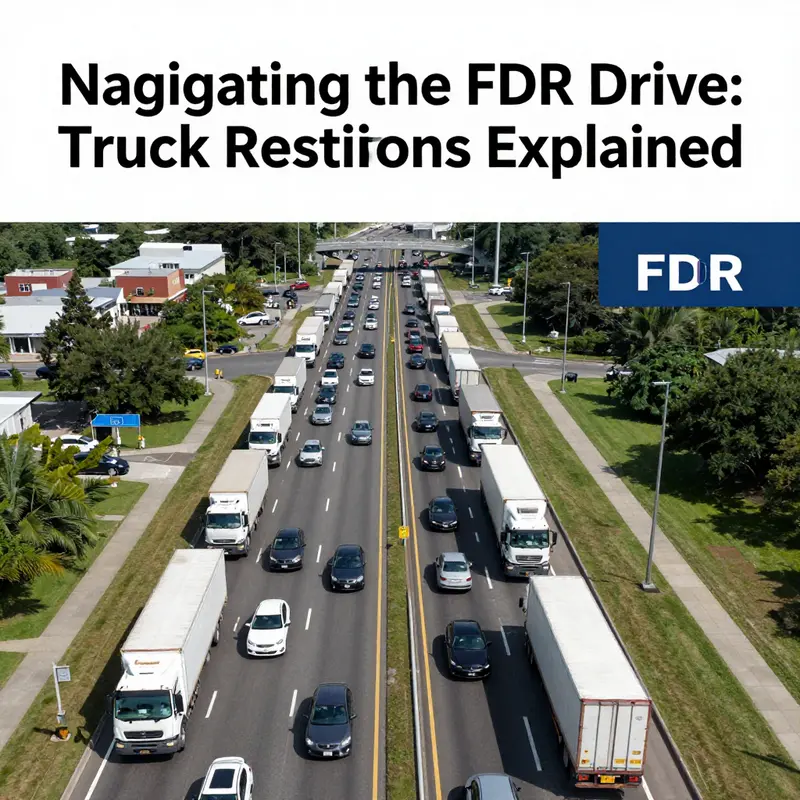
In the heart of New York City, where bridges and boulevards braid together the rhythms of daily life, the Franklin D. Roosevelt Drive sits as a continuous ribbon along the East River. It is a corridor designed for quick, steady movement, a backbone for through traffic and a lifeline for the city’s commerce. Yet this same route has a clear and unwavering restriction: commercial trucks are not allowed to traverse the FDR Drive. The policy, reinforced by conspicuous signage and pavement markings that remind drivers with the directive “All Trucks Must Exit,” sits within a broader framework of parkway truck restrictions that cities use to balance mobility, safety, and infrastructure resilience. On a map, the restriction looks straightforward, a binary yes-or-no on who can use this riverfront artery. On the ground, it unfolds as a living policy that interacts with drivers’ habits, freight schedules, and the sprawling network of nearby streets that must absorb diverted traffic. To understand the real-world implications of this prohibition, one must look beyond the rule itself and into how traffic behaves when large trucks are steered away from a major urban freeway and toward alternate routes that were never meant to shoulder their volumes.
For the city, the restriction is a safety and infrastructure strategy. Large trucks, with their different acceleration profiles, braking characteristics, and lane-changing dynamics, engage with passenger vehicles in distinct ways. Reducing these interactions on the FDR Drive—where high speeds, dense traffic, and limited shoulder space converge—can lower the probability of weightier crashes, cut friction in lane changes, and protect the road’s surface from heavy loads that accelerate wear. Yet the policy does not operate in a vacuum. It interacts with the city’s street grid, the behavior of freight operators, and the timing of freight movements that must coexist with the city’s continuous demand for mobility. The ‘All Trucks Must Exit’ cues are not simply a regulatory flag; they are a signal to freight operators and schedules that the FDR is not a feasible corridor for routine hauling. The net effect of this policy, in the aggregate, is a reallocation of trucks to other routes and a reshaping of the traffic system’s internal equilibrium.
The literature on truck-lane restrictions on urban freeways—restrictions that bar or limit heavy vehicles from certain lanes or segments—points to a set of nuanced outcomes. While the primary intent is to improve traffic flow for passenger cars by reducing interactions with slower, heavier vehicles, the impacts are not uniformly positive or negative. In some corridors, restrictions reduce congestion and improve average speeds for non-truck traffic during certain periods. In others, they push trucks onto parallel or feeder routes that are not built to absorb high-throughput freight, causing congestion to migrate rather than disappear. The evidence grows more complex when the geography of a city and the timing of demand are factored in. A 2018 study investigating the operational impacts of truck-lane restrictions on freeways highlighted how a set of performance metrics—average speed, throughput, speed differentials, and lane-changing behavior—can shift under these policies. The FDR Drive, serving a dual role for local and through traffic while also acting as a boundary for adjacent neighborhoods and waterfront developments, embodies the kind of corridor where such shifts can be observed, sometimes in contradictory ways.
On the FDR, the practical result of restricting commercial trucks is not straightforward. Some segments exhibit calmer, more predictable flows because a portion of heavy vehicles no longer participates in the mix at those points. Passenger vehicles, unburdened from the relative drag of heavier loads, can experience smoother lane transitions and steadier speeds in the same lanes that trucks previously used. Yet other segments experience the opposite. When trucks are redirected, volumes rise on nearby streets that were not originally designed to handle freight-scale loads. The consequence can be a local uptick in congestion on feeder arterials and cross streets that funnel traffic toward the riverfront or toward major crossings. These dynamics are not merely academic. They shape the lived experience of drivers who rely on the FDR as a reliable conduit for work commutes, service trips, and long-haul movements that intersect the city’s dense, time-sensitive schedules.
Enforcement and signage contribute a parallel thread to this narrative. The policy hinges on clear, consistent messaging that trucks cannot remain on the FDR and must exit at designated points. Yet, as with many urban regulatory schemes, compliance is a crucial variable. Inconsistent enforcement or ambiguous signage can undermine the intended benefits, allowing a subset of operators to treat the restriction as advisory rather than mandatory. The NYC Department of Transportation has acknowledged the importance of a well-defined truck route network to support compliance, reduce ambiguity for drivers, and ensure that the prohibition on the FDR is not a symbolic gesture but a practical constraint that informs routing decisions. The design of this network—where trucks can legally and efficiently travel—requires thoughtful mapping of corridor alternatives, including access to highways, bridges, and local streets that can carry freight without compromising safety or neighborhood quality of life.
The ripple effects travel beyond the immediate roadway. When trucks avoid the FDR, operators must adjust their routing plans, revise delivery windows, and sometimes reposition assets to align with restrictions. In urban freight planning terms, the FDR prohibition becomes a lever that can influence total transportation cost, delivery reliability, and the cadence of supply chains that pass through the city. For many freight operators, the clear takeaway is that route optimization must integrate regulatory constraints as a core input, not as a peripheral consideration. The decision to dispatch a truck along the riverfront becomes a decision about whether the marginal gains in travel time are outweighed by the risk of a regulatory breach, potential fines, or delayed deliveries caused by detours and unanticipated congestion on alternate routes.
The broader question the article investigates—can commercial trucks go on the FDR? The answer, rooted in the policy and reinforced by the observed traffic dynamics, is a firm no. The prohibition is not merely a suggestion but a legal and operational boundary that governs a significant stretch of one of the city’s most important corridors. Yet the very existence of that boundary invites examination of what it means for the city’s traffic ecosystem and for the trucking industry that must navigate urban spaces with finite road real estate. In one sense, the FDR restriction acts as a safety valve. It keeps heavy freight off a road designed for rapid capacity and minimizes conflicting flows that could escalate risk in a high-speed environment. In another sense, it shifts the burden of freight management to adjacent routes and to the timing of deliveries, pushing freight planners to optimize across a tighter set of options rather than within a free and unconstrained freeway network.
This balancing act sits at the heart of modern urban traffic management. The policy exposes the tension between maximizing throughput for all users and preserving the structural integrity of a road that is not colored by the same tolerance for heavy loads as a dedicated freight corridor might be. It is a reminder that urban mobility is not simply about moving as many vehicles as quickly as possible. It is a complex negotiation among safety, neighborhood livability, infrastructure longevity, and the economic vitality that freight brings to urban cores. In the FDR’s case, the decision to reserve the drive for non-truck traffic during most conditions signals a prioritization of passenger mobility and road preservation over the convenience of through-truck travel on that particular spine. The real-world effect is that freight operators must adapt, build in additional routing and scheduling buffers, and accept a level of complexity in planning that metropolitan drivers may not confront on every corridor they travel.
To ground these considerations in practical experience, imagine a dispatcher charting a delivery route that includes a leg along the FDR. The dispatcher must verify not only the legal status of the vehicle’s operation in the riverfront corridor but also the time of day and the density of traffic on nearby routes. If a window of time exists when truck traffic could legally approach a nearby crossing via alternate ramps or surface streets, the route might be adjusted to exploit that lull. If not, the dispatcher will likely reroute the shipment entirely or compress the schedule to avoid potential bottlenecks that could cascade into late deliveries. These decisions, though perhaps routine in the life of a fleet, illustrate how a single policy—no commercial trucks on the FDR—ripples through demand, capacity, and service levels in the urban freight market. And while some operators might find a smoother operation on the day with fewer large vehicles on the main riverfront drive, others may experience congestion on back routes that lack the same design standards, signal timing, or truck-friendly widening opportunities. The net effect is a more intricate network with higher sensitivity to peak-hour fluctuations, weather, incidents, and the adaptive behavior of countless drivers who negotiate the urban web daily.
Crucially, the story is not only about where trucks cannot go but about where they must go—and how those required paths fit with the city’s broader freight strategy. As cities pursue safer streets and longer-lasting road surfaces, the value proposition of restricted corridors grows stronger. The FDR restriction is a concrete example of how policymakers can influence traffic composition to improve safety outcomes and reduce stress on infrastructure, while simultaneously prompting the freight sector to innovate in route planning, time-based scheduling, and investment in technology for dynamic routing. The latter includes leveraging real-time traffic information, predictive models for demand surges, and closer coordination with highway authorities to ensure that truck routes are both efficient and compliant with citywide goals. In this sense, the FDR’s truck prohibition can be viewed not only as a constraint but as a catalyst for smarter, more adaptive freight operations that respect urban life as well as the essential needs of commerce.
For readers seeking a practical pathway through these complexities, it helps to view the issue as part of a larger ecosystem of urban freight policy. Freight operators who plan with the restriction in mind often find value in resources that discuss market dynamics, risk management, and strategic alignment with changing regulatory environments. A recent piece that speaks to navigating economic uncertainties within the trucking sector offers insights that can help operators recalibrate expectations, routes, and capacity planning in light of policy-induced shifts. Navigating economic uncertainties in the Canadian and US trucking markets. This kind of external reading complements the on-the-ground realities described here, providing a broader lens on how operators adapt when highway rules like the FDR prohibition intersect with broader macroeconomic trends and the evolving landscape of urban freight.
In sum, the FDR Drive’s truck restrictions reflect a deliberate design choice aimed at harmonizing the city’s safety, infrastructure, and livability goals with the imperative of moving goods. The policy is not a universal solution or a one-size-fits-all blueprint for urban freight, but it is a carefully considered instrument that reshapes traffic patterns, spreads freight movements across a more diversified network, and nudges the freight industry toward smarter routing, better scheduling, and stronger coordination with city agencies. The observed outcomes—mixed in their specifics but coherent in their direction—underscore a fundamental truth about urban transportation: constraints can drive efficiency and resilience when they are complemented by clear guidance, robust enforcement, and accessible alternatives. As cities continue to refine their truck networks, the FDR serves as a case study in how restrictions on a single corridor reverberate through the entire system, shaping not only where freight moves, but how urban roadways, drivers, and operators imagine and implement the choreography of movement that keeps a city functioning.
External resource: https://nacto.org/
Guardrails and Gateways: The Safety Logic Behind Prohibiting Commercial Trucks on the FDR Drive
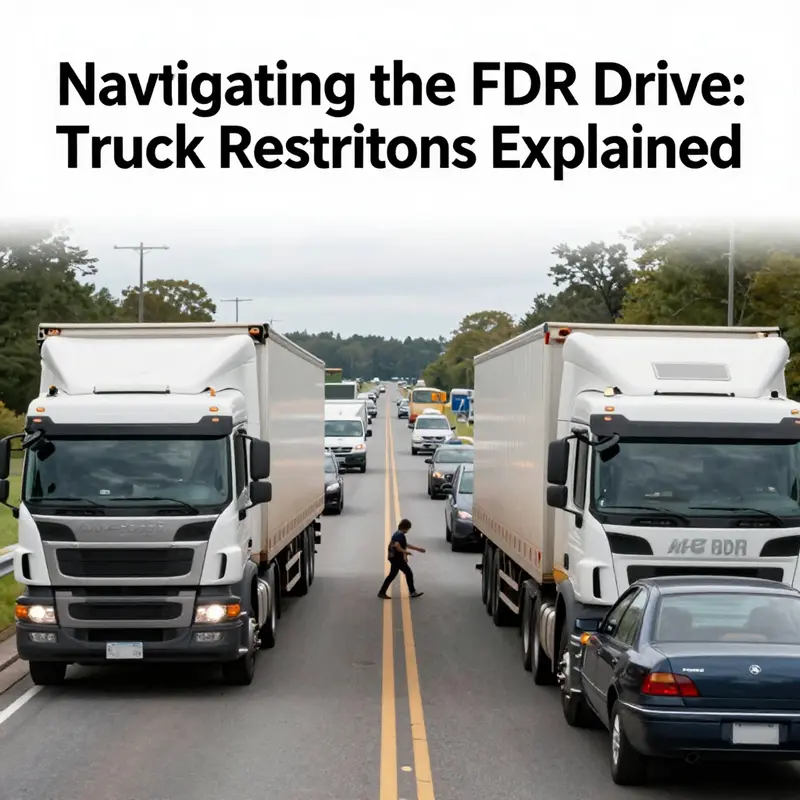
Urban riversides shape the rhythm of a city’s commerce as much as its skyline shapes its identity. The Franklin D. Roosevelt East River Drive sits at a unique intersection of function and fragility: a vital artery hugging the waterfront, delivering people and goods along a corridor that is at once scenic and unforgiving to oversized vehicles. The decision to bar commercial trucks from this stretch did not arise from a single moment of irritation or a sudden flurry of tickets. It emerged from a careful reading of what happens when power, momentum, and infrastructure meet in a dense, complex urban environment. The FDR Drive, with its traffic volumes, tunnel-like sections, and the shadow of bridges slicing overhead, presents a set of conditions where risk multiplies quickly for large, heavy vehicles. The danger is not only in the moment of a collision but in the cascade that follows: structural damage to bridges, costly closures, detours that compound congestion, and the potential for secondary accidents as drivers react to unexpected incidents. In that light, safety becomes a design principle as much as a rule of the road, and the ban on commercial trucks on this corridor reflects a deliberate choice to align policy with the realities of its geography.
The essence of the prohibition rests on a simple, stubborn fact: trucks do not always behave the way cars do when faced with the realities of urban geometry. The FDR Drive threads along the East River, a landscape punctuated by bridges and underpasses whose clearances and sightlines demand precise navigation. Large trucks, with their long wheelbases and tall profiles, can encounter clearance constraints that small delivery vans do not. Even a moment of misjudgment can set off a sequence of events with outsized consequences—from a distracted driver’s near-miss to a catastrophic bridge strike. The recurrence of incidents on or near the corridor has underscored a pattern: whenever heavy vehicles attempt to pass through sections not engineered for their dimensions, the risk to the vehicle, the infrastructure, and the traveling public intensifies. The policy response to this pattern is not punitive for freight operators. It is a risk-reduction strategy built on clear data about where and how those risks manifest and how they ripple through the city’s transit ecosystem.
To translate risk into policy, city agencies have framed the FDR Drive as a street where the costs of allowing commercial trucks are simply too high relative to the marginal benefits of permitting their access. The NYC Department of Transportation has codified this stance as parkway restrictions that include explicit prohibitions on commercial vehicle use on the FDR. The practical manifestation of that policy is visible on the roadway itself: signage that leaves little room for ambiguity. One finds “All Trucks Must Exit” markings and pavement cues designed to guide commercial operators to an alternate route well before they reach the point where the risk of a miscalculation would become an actual incident. This approach—clear, consistent, and highly visible—serves multiple purposes at once. It reduces the probability of a collision with a bridge or low-clearance structure. It streamlines incident management by eliminating the most common source of truck-related disruption. It also supports a more predictable travel experience for all road users, from commuter drivers to bicyclists and pedestrians who share the same corridor at different times and in different uses.
The enforcement dimension of this prohibition warrants careful attention. The collaboration between the NYC DOT and the NYPD is not merely about quoting a statute or issuing a ticket. It is about maintaining the integrity of a safety regime that has to function 24/7 in a city that never fully sleeps. The presence of uniformed officers, the harnessing of surveillance resources, and the ongoing education of truck operators about where they can and cannot go—all these elements are parts of a safety ecosystem. The practical effect is a behavioral one: drivers learn to plan routes that avoid the FDR Drive altogether if their commercial vehicle falls under the restricted category. The consequence of noncompliance can range from warnings to penalties, but the overarching aim remains consistent—preventing incidents before they occur and thereby preventing damage that would ripple outward, affecting other drivers and the city’s infrastructure.
The policy, however, cannot be understood in isolation from the broader urban freight landscape. The need to safeguard bridges and roadway structures sits alongside the necessity of moving goods efficiently within a dense metropolitan area. In this sense, the FDR prohibition is a precaution rooted in the recognition that some corridors are not adaptable to heavy-vehicle operation without compromising safety and reliability. It is not a reflex against freight movement but a recalibration of where and how that movement should most responsibly occur. The city has to balance the imperative of keeping freight moving with the obligation to protect critical infrastructure and the public that depends on it. This balancing act is a familiar one to any city wrestling with growth: how to accommodate rising demand for movement without inviting disproportionate risk into the everyday fabric of urban life.
From a planning perspective, the FDR Drive represents a case study in the use of physical constraints to drive policy. Bridges and overpasses, with their fixed clearances and variable traffic conditions, create a natural test bed for evaluating where heavy vehicles can travel safely. The decision to compartmentalize truck access away from the FDR is a recognition that some corridors function best as passenger-focused routes, with freight traffic redistributed to other avenues designed to accommodate larger vehicles at higher tolerances for moments of intense maneuvering. The consequence for drivers and fleet operators is a compelled rethinking of route networks. It becomes essential to map out alternative lanes, industrial belts, and parallel corridors that can absorb the volume of freight while preserving the safety of the corridor that the city has designated for a different modal emphasis.
This reframing of access is also a reminder of how policy evolves in response to observed realities. The policy announced and reinforced through signage and enforcement did not arise in a vacuum. It was codified and reinforced through a sequence of public communications and regulatory steps designed to normalize the truck restriction over time. The broader narrative of safety in urban corridors—safety for drivers, for pedestrians, for bridge structures—has long guided such decisions. The 2017 joint action by the NYC DOT and NYPD to reduce trucks on the city’s streets is a touchstone for understanding how these conversations translate into concrete changes on the ground. The official announcements framed the measure as part of a deliberate strategy to reduce truck-related incidents, recognizing that the benefits extend beyond immediate incident metrics to include improved traffic flow, less frequent roadway closures, and a more predictable environment for all road users. For readers who want to see the policy in the formal context, the official statement remains a clear snapshot of the rationale and the expected outcomes.
The impact on operators and fleets is real, though often subtle in the moment. A driver who regularly uses the FDR Drive will anticipate a detour or have already consulted a route planning tool that flags the restriction. The detour decision, while seemingly a minor adjustment, can accumulate into meaningful changes in travel time, fuel consumption, and overall route efficiency. For freight dispatchers, the constraint invites a reassessment of routing algorithms, peak-time planning, and the trade-offs between speed, reliability, and risk. In markets where freight demand is robust, fleets adapt by prioritizing routes that offer safer clearance profiles, more forgiving geometry, and the ability to meet delivery windows without the volatility introduced by last-minute detours.
The broader freight ecosystem, in turn, responds to these policy signals in observable ways. When a major urban corridor signals tighter access for heavy vehicles, shippers and operators study the downstream effects on pricing, service levels, and asset utilization. This is where industry dynamics intersect with public policy. The necessity to keep commerce moving meets the reality that some corridors simply require different kinds of vehicles or different scheduling tactics. In that sense, the FDR Drive prohibition serves as a microcosm of how cities can use regulatory levers to shape traffic patterns in ways that degrade not the value of freight movement but its resilience. It is about steering movement toward corridors that better accommodate it without sacrificing the safety of the broader network.
For readers who follow the trucking industry, the evolving landscape is not only about compliance with restrictions. It is also about perception and adaptation. The policy sends a signal: in urban settings, high-stakes infrastructure with unique architectural constraints requires a more nuanced approach to road use. This means fleets may increasingly prioritize modular, flexible equipment that can operate efficiently on routes designed for passenger vehicles. It also means a longer view of vehicle utilization, as fleets weigh the cost of specialized routing against the efficiency of standard corridors whose design better accommodates heavy loads without compromising other users. To keep pace with these changes, fleets often turn to indicators that capture how the market is responding to restrictions. One useful barometer is the evolving landscape of used-truck demand and pricing, which tends to reflect shifts in utilization patterns as operators adjust to new routing realities. For readers tracking this dimension of the industry, resources that compile and analyze such trends can provide a helpful lens. Consider, for example, the ongoing assessments of market dynamics in reports such as the Current trends in used truck sales growth. This kind of analysis illustrates how policy-driven route changes ripple through the fleet lifecycle, from asset acquisition to utilization and eventual resale.
The practical takeaway from the FDR Drive prohibition is not merely a cautionary tale about where trucks should or should not travel. It is a demonstration of how urban safety policies can cohere with infrastructure protection and public comfort. When a corridor presents a verified risk to vital structures and vulnerable users, a targeted restriction framed within a broader parkway policy becomes a rational engineering decision. The signage and pavement markings—the “All Trucks Must Exit” cues—are more than administrative badges. They are behavioral nudges designed to align human actions with a safety-first architecture of the city. They reduce the cognitive load on drivers who must make split-second decisions on arrival at a constraint, and they support law enforcement and traffic management teams in maintaining order and predictability on a busy riverfront corridor.
In the wider arc of urban planning and freight mobility, the FDR example invites reflection on how cities can preserve essential freight functions while investing in safer, more sustainable streets. If a city can direct heavy traffic away from a constrained vista like the FDR Drive, it can also invest in public communication campaigns, improved route planning tools, and infrastructure upgrades elsewhere to handle the redirected demand. The aim is not to eliminate freight movement but to relocate it to corridors engineered with larger clearances and more robust collision prevention features. It is a reminder that road space in dense urban areas is a finite resource and that its allocation requires ongoing assessment, dialogue with stakeholders, and a willingness to adjust as conditions change. The ongoing conversation about how best to harmonize commercial mobility with public safety continues to shape policy decisions, road design, and driver behavior alike.
As fleets continue to respond to these signals, readers may want to track how broader freight-market dynamics intersect with local restrictions. Shifts in demand, technology, and efficiency will influence where trucks operate and how they are deployed. For those who want a snapshot of how industry trends intersect with policy, consider looking at current industry analyses that discuss the market’s adaptation to restrictions like those on the FDR Drive; these analyses illuminate how the same forces that influence fleet decisions—cost, reliability, and safety—also shape the architecture of urban freight. And for readers who want a clear through-line connecting industry dynamics to the path of policy, the journey from restriction to resilience offers a powerful example of how cities can foster safer streets without unduly hampering essential commerce. In the end, the chapter on the FDR Drive is a chapter about learning to live with constraints, optimizing safety, and reimagining routes so that the city can move forward with confidence.
The broader takeaway is not a verdict on trucks versus pedestrians, but a maturity in urban governance: a recognition that the layout of a city’s streets, its bridges, and its riverfronts should inform how goods move through it. When the design of space implies a higher risk for oversized vehicles, policy must respond with clarity, enforcement, and alternatives that protect infrastructure and people without presenting freight operators with an existential obstacle. The FDR Drive offers a vivid illustration of this approach in action, a case where safety, engineering, and city planning converge to shape a shared, safer horizon for all who travel, work, and rely on a dependable urban freight network. The next chapters will explore how other urban centers balance similar tensions and what lessons cities can carry forward as they navigate the evolving demands of freight, safety, and sustainability.
For readers seeking to contextualize how the freight industry adapts to restrictions of this kind, industry observations and market analyses provide a useful companion to the safety narrative. See the evolving discussion around market responses in the article on Current trends in used truck sales growth, which explores how fleets recalibrate asset utilization and route planning in response to regulatory and infrastructure changes. This perspective helps connect the safety-focused policy with the commercial realities that drive fleet decisions and capital allocation.
Further reading on the official regulatory framework can be found in the public-facing policy statements released by city agencies overseeing parkway restrictions and enforcement. These documents outline the rationale behind truck restrictions on parkways like the FDR Drive and provide the formal basis for ongoing safety programs across the urban road network. For a direct look at the formal action taken to reduce trucks on the city’s streets, the NYC DOT and NYPD joint announcement offers a authoritative reference to the policy’s aims and anticipated outcomes. NYC DOT and NYPD Announcement
The Quiet Rule of the East River: How Signage, Policy, and Practice Keep Commercial Trucks Off the FDR Drive
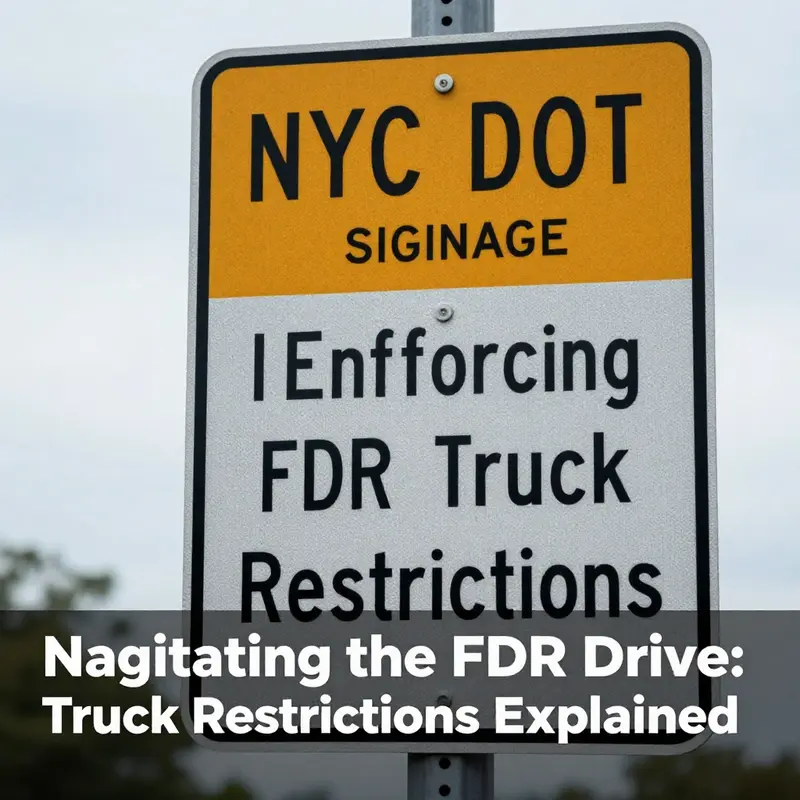
The FDR Drive, a vital artery tracing the east edge of Manhattan along the East River, sits at an unusual crossroads for urban freight. It is fast, direct, and heavily utilized by many travelers, yet it is not a highway where commercial trucks can freely roam. The question many fleet operators pose is simple in form but complex in consequence: can commercial trucks go on the FDR Drive? The answer, grounded in policy and practice, is clear: they cannot. This is not a mood or a rumor but a formal prohibition that sits at the heart of a broader approach to safety, congestion, and the integrity of critical infrastructure in New York City. The rule is not merely a line on a map; it is a lived constraint that shapes fleets, routes, and the daily rhythm of urban logistics. The mechanism by which the rule is enforced combines official rules with practical cues that guide behavior on the ground, and it relies on a deliberate partnership between the city’s transportation authorities and law enforcement to keep the traffic mix consistent with planning goals. In this chapter, we trace how signage, policy, and on-the-ground enforcement converge to manage access to the FDR Drive, why those tools were chosen, and what they mean for anyone who moves goods through New York City’s dense and dynamic streets.
The prohibition hinges on parkway restrictions that the New York City Department of Transportation (NYC DOT) has applied to the FDR Drive as part of its broader approach to truck management on parkways. The city’s logic rests on a blend of safety, traffic flow, and the long-term protection of roadways that carry high volumes of passenger traffic and vulnerable infrastructure. On the FDR, shoulder space is limited, merging and lane configurations favor vehicles with predictable accelerations and decelerations. Heavy, slow-moving trucks in such environments can create weaving patterns, abrupt braking events, and conflicts with pedestrians and cyclists that share shoulders and limited access points. The policy guides not only the drivers who must obey it but also the planners who design future changes to the corridor. It is a reminder that urban freight policy is as much about where not to go as it is about where to go. The city’s parkway restrictions page, which the NYC DOT maintains for motorists, is a clear articulation of this stance, and it serves as a reference point for carriers configuring routes, dispatchers aligning schedules, and compliance officers evaluating risk.
What many drivers notice first on approach to the FDR Drive are the visual cues: the unmistakable signs and pavement markings that declare a rule beyond a mere advisory. The NYC DOT has introduced “All Trucks Must Exit” signage at critical points along the route, paired with highly visible road markings that reinforce the message to commercial vehicle operators. These cues are not decorative; they are strategic interventions designed to deter violations before they occur. The signage acts as a cognitive anchor, a constant reminder that this stretch of roadway is not a permitted corridor for heavy freight. It is a form of environmental policy in motion, shaping behavior through visibility and immediacy rather than through paperwork alone. In practice, drivers who encounter these cues are confronted with two pathways: exit the parkway at designated interchanges or risk enforcement—an implicit, real-time decision influenced by the signage itself. The tactic reflects a broader philosophy in NYC DOT’s approach to truck restrictions: pair formal rules with everyday cues that support steady, consistent compliance across thousands of daily trips.
The role of enforcement in this framework cannot be overstated, even though signage could be interpreted as a sufficient deterrent on its own. The signage works best when it exists alongside active monitoring by law enforcement and coordinated oversight by city agencies. The NYC DOT does not control traffic law in isolation; it collaborates with the New York Police Department (NYPD) and other authorities to ensure that the rules are respected. The partnership means that violations are not merely a matter of accidental misrouting but signals of deliberate disregard that can be addressed promptly. The joint effort enhances safety by reducing the likelihood of large-truck interactions with fast-moving commuter traffic along an elevated, sometimes congested corridor. It also reduces wear and tear on the pavement and associated structures by preventing heavy loads from repeatedly traversing segments that were not designed to bear them. In this sense, the “All Trucks Must Exit” signs are more than guidance—they are part of a layered enforcement strategy that blends design, signage, and police presence into a coherent system of compliance.
To understand why this system matters for freight operators, it helps to appreciate the design and planning logic behind parkways in the city. Parkways, by design, prioritize certain types of traffic and behaviors. They often feature limited access, narrower cross-sections, and heightened pedestrian interfaces compared with arterial highways or interstates. In New York City, the result is a dual reality: routes like the FDR Drive are essential for many motions of people and goods, yet their physical and regulatory design makes them less suitable for routine heavy-truck use. As a consequence, the city has implemented restrictions that reduce conflict, improve air quality by limiting exhaust exposures in highly dense urban zones, and preserve the integrity of infrastructure that carries both high-volume passenger traffic and critical utilities. The effect, over time, is a corridor whose performance is optimized for its primary users while maintaining a predictable, safer environment for everyone else sharing the road. The signage, then, emerges as a practical instrument in a larger, strategic policy that treats urban freight as an integrated element of city life rather than as an afterthought to passenger mobility.
Fleet operators do not respond to rules in isolation. They respond to the realities of city routing, delivery windows, and the costs of using alternative routes that may be longer or slower but keep trucks within legal pathways. When a dispatcher considers a route through Manhattan, the FDR Drive becomes a checkpoint rather than an optional shortcut. The rule that commercial trucks cannot use the FDR Drive pushes operations toward other corridors and enforces a broader discipline around when, where, and how freight moves through this part of the city. The effect on fleet planning is tangible: capacity planning must account for the fact that some corridors are not open to heavy vehicles at any time, while others may be restricted during peak hours or under specific conditions. The practical consequence is an ongoing recalibration of routes and schedules, a continual balancing act between time sensitivity and regulatory compliance. This recalibration is reflected in the way fleets manage asset life cycles, maintenance windows, and the allocation of power units that suit urban environments more than long-haul runs.
In this light, one can see why the internal dynamics of the trucking industry intersect with the city’s enforcement strategy. The restrictions on the FDR Drive influence not only where trucks go but how they think about their networks. For operators seeking to optimize fleet performance, understanding the FDR rule becomes part of a broader view of urban routing and risk management. It informs decisions about where to place depots, how to schedule daytime vs. nighttime deliveries, and how to diversify routes to maintain reliability even when one corridor is closed to a significant share of vehicle classes. The decision calculus grows more complex when one considers fluctuating fuel prices, changes in vehicle technology, and evolving regulatory landscapes that also shape the economics of urban freight. In other words, the FDR rule is a lens through which the larger conversation about modern trucking—its costs, its risks, and its opportunities—plays out in a densely populated city environment.
From a narrative perspective, the signage becomes a constant in an ever-changing cityscape. It offers a reliable signal in a system where other variables—construction, seasonal traffic patterns, incidents, and policy tweaks—can create sudden shifts in routes. The attention-getting signs and the conspicuous pavement markings are designed to minimize ambiguity. They reduce the cognitive load on drivers who might otherwise misinterpret the corridor’s permissibility. They also provide a baseline for enforcement that can be observed and evaluated over time, enabling policymakers and city planners to assess whether the rule is meeting its safety and congestion objectives, and whether the signage strategy should be refined to improve compliance further. For researchers and practitioners studying urban freight, the FDR Drive stands as a case study in how a city uses a combination of policy, visible cues, and collaborative enforcement to manage a critical corridor without sacrificing the pace needed to keep commerce moving elsewhere.
Businesses facing the realities of such restrictions can find value in looking at broader market signals and how they interact with regulatory constraints. For example, fleets often evaluate urban routing as part of their asset utilization strategies. In an era when the economics of trucking are shaped by maintenance costs, fuel efficiency, and the relative depreciation of equipment, the ability to predict where a truck can operate in a given city becomes a competitive advantage. This is where the link between policy and market trends becomes meaningful. Fleet managers track the subtle shifts in demand, the timing of deliveries, and the cost implications of routing decisions. The chapter of practice we are outlining here is simply one piece of a larger puzzle. For operators monitoring these dynamics, keeping an eye on industry-wide signals such as the current trends in used-truck sales growth can yield practical insights into how capacity is evolving and how urban restrictions might influence the purchase cycle and vehicle turnover. See the discussion on trends in used-truck sales growth for a broader perspective on how fleet composition adjusts to changing corridors and regulatory environments. current trends in used-truck sales growth.
Even as signage and enforcement create a stable baseline for behavior, the city’s policy stance on truck access continues to be a live conversation. Urban planners and freight stakeholders alike examine whether the FDR Drive could accommodate more efficient freight movements without compromising safety. In such deliberations, the visible cues remain a constant reference point. They remind everyone that while policy can evolve, there is a current set of rules guiding what is possible today. The presence of signage underscores a broader principle: in a densely populated metropolis, managing space for commerce requires both formal regulation and practical communication. The natural tension between speed and safety is resolved not by eliminating trucks from the map altogether but by steering them toward routes that align with city priorities and vehicle capabilities. The FDR Drive thus serves as more than a roadway—it becomes a living example of how a city negotiates the complicated tradeoffs of urban mobility.
For readers who want to verify the official stance and explore the exact language of the restrictions, the NYC DOT’s page on Parkway Truck Restrictions provides the formal articulation of parkway policy. It is a resource that complements the on-the-ground cues discussed here and helps transport professionals align their routing practices with the city’s regulations. In practice, the rules are implemented in a way that supports safer streets and more predictable travel times for all road users. The objective is not to confine freight for its own sake but to integrate freight into a street network where the pace and safety of travel remain manageable for residents, pedestrians, cyclists, and motorists alike. As the city continues to study and refine its approach to urban freight, the FDR Drive will likely remain a benchmark for how signage, policy, and enforcement cohere to shape a corridor that is essential to the metropolitan economy yet carefully curated to serve the diverse needs of a dense urban environment. For those who navigate these waters, the message remains clear: on the FDR Drive, commercial trucks do not belong, and the signs are there to guide, remind, and protect everyone who shares the road.
External reference: For official policy details, see the NYC DOT Parkway Truck Restrictions page. https://www.nyc.gov/site/dot/motorist/parkway-truck-restrictions.page
Final thoughts
The prohibition of commercial trucks on the FDR Drive plays a crucial role in maintaining safe and efficient traffic flow in one of New York City’s busiest corridors. By understanding these restrictions, fleet managers and trucking company owners can better navigate the complexities of urban logistics. The implementation of strict enforcement measures, including signage and regulations from the NYC DOT, reflects the city’s commitment to infrastructure safety and operational efficiency. Adhering to these rules is essential not only for compliance but also for the overall smooth operation of the city’s transportation network.