
In the competitive landscape of the trucking and construction industries, the security of cargo and fleet management is paramount. Commercial truck cap locks play a crucial role in safeguarding valuable assets against theft and unauthorized access. This article delves into the importance of these lock systems, examining the available options and their pricing, the integration of security locks with advanced fleet management systems, and emerging trends that shape their technology and features. Each chapter will enhance your understanding of how commercial truck cap locks not only protect your investments but also contribute to operational efficiency.
Locking the Cap: The Hidden Security Layer Protecting Cargo, Vehicles, and Fleet Operations

The lock systems that guard commercial truck caps sit at the crossroads of security, efficiency, and fleet reliability. They are not mere hardware perched on a vehicle; they are operational safeguards that protect valuable goods, specialized tools, and the drivers who depend on steady, predictable service. In an era when cargo theft evolves alongside the speed and reach of logistics networks, a cap lock is more than a mechanical deterrent. It is a strategic element of risk management, designed to withstand the rigors of daily use on highways, backroads, and loading docks. The importance of this component grows when we consider the broader ecosystem in which modern fleets operate. Locking assemblies must perform under a spectrum of conditions—from the rain-slicked parking lot to the dust-choked desert route—while remaining user-friendly for fleets that count on quick turns and precise inventory control. The security value of cap locks is twofold: they deter opportunistic theft and they create traceable access that supports accountability and operational discipline across an entire fleet.
Theft risk is real and multifaceted. A cap lock does not exist in isolation; it is part of a broader security strategy that includes how cargo is staged, loaded, and maintained. When a truck cap is properly secured, it closes the door to unauthorized entry into the cargo space between deliveries and during pauses in service. In diverse industries, the door design itself matters. Many fleet configurations rely on dual rear swing-out doors, where the locking system must secure both doors in a synchronized fashion. A central locking mechanism that engages across the entire cap eliminates weak points—areas that a would-be thief might exploit through misalignment, gaps, or partial entry. In practice, a robust locking solution reduces the opportunity for theft by ensuring that access is either fully granted or fully denied. This binary outcome is a powerful deterrent, especially in urban delivery zones and overnight parking scenarios where the opportunity for unauthorized access is highest.
From a design perspective, lock systems for commercial cap applications emphasize a few core principles. First, they must deliver reliable performance in the face of aging hardware and frequent use. Repeating cycles—opening, closing, locking, and re-locking—test tolerances, seals, and the resistance to dust, moisture, and temperature swings. Weather resistance is not a nicety; it is a necessity. Modern cap locks incorporate seals and corrosion-resistant materials to withstand rain, snow, and road spray. The goal is to prevent water ingress that could corrode pins, bars, or latching components. The result is a system that remains smooth and predictable over the life of the vehicle, even as seals accumulate grit from long hauls and frequent stop-and-go driving. The durability expectation also extends to the external environment: harsh UV exposure, vibrations from rough roads, and the occasional impact during loading operations. A well-engineered lock system tolerates these stresses without compromising retrieval of keys, alignment of the locking pins, or the ability to secure the seams of the cap itself.
Second, the geometry of the locking mechanism matters for both security and usability. A central vertical or horizontal locking element that coordinates the closure of both doors creates a unified locking action. This configuration reduces the chance of a partial entry, such as an opening that leaves a sliver of space where a tool might gain purchase. Fleet operators value this because it translates into fewer callbacks for maintenance and fewer concerns about misaligned doors that could compromise cargo integrity. Locks designed with redundancy—such as secondary engagement points or reinforced strike plates—add resilience against forced entry attempts. While no single feature guarantees absolute protection, a thoughtfully engineered combination of lock elements raises the bar so significantly that opportunistic theft becomes a less attractive proposition.
Beyond the mechanical core, technology has begun to reshape how lock systems integrate with the rest of the truck and the fleet. Traditional, purely mechanical locks retain their place due to simplicity and proven reliability. Yet many operators now pair mechanical locks with electronic or hybrid solutions that enable remote monitoring, access control, and audit trails. In a fleet setting, this can mean real-time visibility into when a cap was opened, who authorized the opening, and where the vehicle is located at the time. The ability to log access events creates a chain of custody for cargo, which is especially valuable for high-value loads or sensitive materials. It also supports regulatory and insurance requirements that demand verifiable access history. Integrations with fleet telematics platforms can provide not only access data but also immediate alerts if an unexpected outcome occurs—such as a door left ajar after a delivery or an attempt to tamper with the lock during a stop. The practical upshot for managers is a more complete picture of risk across the logistics pipeline.
In discussing these systems, it is essential to acknowledge the operational realities of a busy fleet. Locking mechanisms must be straightforward to operate by drivers who may be pressed for time during drop-offs and pickups. A simple, intuitive key system or a user-friendly electronic interface reduces the likelihood of incorrect operation under stress. At the same time, control over key access—who possesses which keys, and how keys are tracked and revoked—becomes a core part of security governance. Fleet managers often implement policies that govern key duplication, return, and access revocation. Such governance helps prevent internal misappropriation and strengthens the overall security posture of the operation. A well-designed cap lock system thus functions not only as a physical barrier but also as an enabler of disciplined, auditable behavior within the fleet.
The maintenance implications of lock systems are another critical piece of the puzzle. In the field, maintenance needs are shaped by exposure to the elements and the relentless cadence of routes and turns. Operators must consider lubrication regimes, seal inspections, and routine checks for loosened mounting hardware. If a lock begins to stick, drivers may delay or avoid using it, inadvertently increasing risk through inconsistent use. Regular preventive maintenance routines—checking the alignment, lubricating pivot points, and inspecting seals for wear—help preserve performance and extend service life. A durable lock system minimizes downtime, a factor that translates directly into revenue protection for a fleet. When a cap lock reliably accepts a key or an electronic credential, doors seal properly, and the locking bolt engages without force, vehicles stay on schedule and cargo remains secure between stops.
In practice, the decision on selecting a cap lock system for a fleet balances several factors. Durability and weather resistance rank high for any operation that covers a wide geographic area and faces variable climates. Compatibility with existing door designs is essential, since many fleets utilize a mix of caps and doors across different vehicle types. Ease of installation and maintenance support matter, particularly for fleets that operate at scale where small efficiencies compound into meaningful cost savings. For security, the choice often hinges on whether to rely exclusively on mechanical locking or to adopt a hybrid approach that incorporates electronic features. A hybrid solution can offer the best of both worlds: the robustness and simplicity of mechanical components with the added intelligence of access logs and alerts. In the end, the most effective approach is one that integrates smoothly with the fleet’s broader security policy and operational workflows, delivering tangible protections without slowing drivers down.
Operationally, cap lock systems contribute to a broader discipline within fleet management. They support inventory accuracy by reducing unauthorized access to cargo, which in turn lowers shrinkage and improves accountability at delivery points. The accessibility of locks—how quickly a driver can secure or retrieve a cap—affects loading times and turnarounds. When a cap lock system is reliable, drivers can focus more on efficiency and accuracy in handling loads, rather than wrestling with hardware quirks. For fleet leaders, the value lies in the reduced risk of incidents that could escalate into costly claims, delays, and reputational damage. The lock becomes, in effect, a quiet guardian of process excellence, reinforcing the credibility of the operation through consistent, predictable performance across all routes and seasons.
To connect these ideas to practical, real-world cues, consider how a well-conceived cap lock strategy aligns with broader fleet security practices. It complements camera surveillance, loading dock controls, and driver training programs by adding a robust, visible layer of protection that is durable, reliable, and auditable. The ultimate aim is to create a seamless security fabric in which entry to the cargo space requires deliberate, traceable actions that match the operational tempo of daily deliveries. When that fabric is in place, managers gain confidence that the vehicle’s asset—the cargo, the tools, and the equipment inside the cap—has a persistent, enforceable line of defense, day after day, mile after mile.
For readers seeking a concrete point of reference or further exploration into how lock assemblies are discussed and deployed across the industry, the following resource offers a broader overview of lock system concepts and configurations: McGrath Trucks blog. This internal resource can provide context for how shops and fleet operators translate theory into hands-on practice, from selection criteria to on-the-ground maintenance routines. While the specifics of individual lock brands and models can vary, the underlying principles—durability, synchrony across doors, and the value of auditable access—remain consistently central to effective lock-system design and usage. In the end, the lock on a truck cap is a small component with outsized influence on security, efficiency, and risk management across the modern transportation landscape.
External references and broader industry discussions continue to evolve as manufacturers experiment with new materials, coatings, and electronic interfaces. For a comprehensive external overview of truck cap lock assemblies and related components, industry guides and specifications published in 2026 highlight how these systems are evolving to meet tougher security demands and more integrated fleet management needs. One representative resource offers insights into the configurations, installation considerations, and performance expectations of cap lock assemblies in a wide range of operational environments. External link: Understanding Truck Cap Lock Assembly on Alibaba at https://www.alibaba.com/product-detail/Understanding-Truck-Cap-Lock-Assembly_1600478938373.html?spm=a2700.details.0.0.1e5d3c33b79f11
Securing the Payload: Real Costs and Practical Choices in Commercial Truck Cap Locks
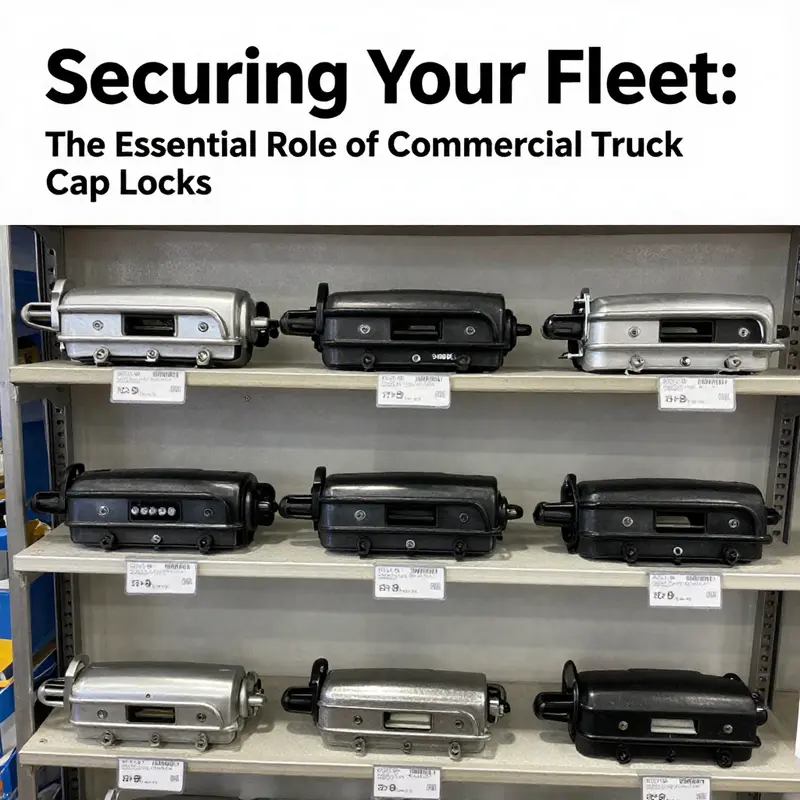
Security is more than a barrier; it is a management discipline for any fleet that treats cargo as an asset. When a truck bed is topped with a locking cap cover, the lock becomes a visible line of defense against theft, but its value goes deeper than keeping items under lock and key. The right cap lock system integrates physical protection with fleet monitoring potential, creating a chain of custody from loading to final destination. For fleets focused on reducing loss, improving asset utilization, and lowering downtime, choosing the right locking cap cover and lock cylinder is a decision that touches purchase, installation, maintenance, and even insurance considerations. The market offers a spectrum of options designed to meet professional needs, from straightforward weather resistant caps with a hardened locking mechanism to more feature rich configurations that align with broader fleet management strategies. In practical terms, this means evaluating durability, compatibility with varying truck bodies, ease of installation, and the cost of ownership over the life of the tool.
The locking cap cover system itself is built around a sturdy shell that fits over the truck bed and a lock mechanism that secures the top against weather, vibration, and opportunistic access. Among professional grade offerings, it is common to find a durable shell paired with a key operated lock and a locking handle designed to resist tampering. A frequent setup includes a T-handle lock—an arrangement that offers robust resistance to prying and weather exposure while remaining user friendly for daily use. Another hallmark of professional options is a multi key configuration, often including four keys, which facilitates fleet handoffs and shifts without forcing multiple people to share one key. The emphasis is on reliability under tough conditions: exposure to sun, rain, snow, and road spray, along with the constant vibration that accompanies heavy duty use on long haul routes and multi stop deliveries. While the visual cue of a secure cap cover is clear, the choice is ultimately about the lock’s performance over time, not just its initial appearance.
Price signals across the market reflect the balance between reliability and extra features. In broad terms, the entry point for a professional cap system tends to be in the low hundreds of dollars, with current pricing commonly seen around the mid range of roughly one hundred forty five dollars to the mid 150s, depending on the model, kit contents, and whether installation hardware is included. It is not unusual to encounter promotional reductions from higher list prices, with historical examples showing original pricing that sits well below the current level when promotions are active. For fleets evaluating cost of ownership, the line item for the cap itself is only part of the calculation; the lock durability and the quality of the mounting hardware directly influence maintenance intervals and replacement costs. A typical professional kit may incorporate a locking cap cover, a T-handle lock, and a set of keys—sometimes four—so that multiple authorized personnel can access secure cargo without creating bottlenecks during shift changes. These configurations are designed not just for security, but for operational practicality across a fleet that must keep moving with minimal interruption.
The market also presents variations that are driven by the truck model and the intended use of the cap. While precise specifications may vary, most commercial cap systems aim to accommodate a range of truck bed sizes and shapes, with design features that allow compatibility with different windows, door integrations, and roof rack options. Some higher end configurations offer additional customization, such as options for window and door sizing, integrated roof racks, and toolbox configurations that must align with the cap’s locking system. In practice, this means a fleet can tailor the security solution to its existing assets, rather than forcing a one size fits all approach. The sizing and mounting geometry are crucial because an ill fitting cap unlocks a host of downstream issues: reduced weather sealing, increased risk of corrosion at mounting points, and, most importantly, the temptation for unauthorized access if gaps or misalignment create leverage points for tampering. Fleet managers often work with suppliers to ensure a cap and lock combination aligns with vehicle make, body style, and the typical load profile. In many cases, this coordination extends beyond the cap itself to include how the locking system interacts with other vehicle security layers, such as alarms or telematics enabled access controls.
Beyond the physical barrier, some of the more advanced cap systems are beginning to intersect with vehicle management ecosystems. The most observable benefit in this domain is the potential for telemetry enabled lock status reporting, which allows fleet operators to confirm whether a cap remains locked after offloading, or to receive alerts if a cap is opened during unexpected intervals. While not all products offer this level of integration, the trend toward smarter cap solutions mirrors broader shifts in fleet management where security data becomes part of a real time operational picture. For a fleet that emphasizes asset visibility and preventive maintenance, the incremental cost of a locking cap with telemetry can be justified by reductions in loss, quicker incident resolution, and improved asset tracking.
The decision making process around cap locks is not purely technical; it also involves procurement strategy and total cost of ownership considerations. A fleet contemplating a lock upgrade will weigh the upfront price of a cap and lock kit against long term savings from theft reduction, reduced insurance premiums, and lower downtime due to cargo tampering or misplacement. In parallel, maintenance implications matter. Lock cylinders should resist rust and corrosion, and the reaction to temperature fluctuations should remain consistent. The carefree operation of a lock in extreme weather hinges on the hardware’s materials, such as corrosion resistant metals and seals that keep internal components dry and functional. Easy installation is another practical factor; many kits are designed for straightforward field installation, while others require professional mounting and alignment to ensure proper sealing and security. The installation quality itself can influence warranty coverage and long term reliability, so fleets often prefer solutions that come with clear installation instructions and robust support from the provider.
In discussions of options and pricing, it is helpful to recognize how different channels position themselves in relation to a busy fleet buyer. General marketplaces and direct to consumer sellers provide a broad spectrum of locking cap options, with a range of accessories and compatible lock types. The availability of a four key setup, as described in some professional kits, is a common feature that supports various shift patterns and access permissions across a team. The existence of a dedicated locking cylinder for commercial use, advertised to meet professional requirements, points to an emphasis on durability and predictable performance even under daily wear and tear. Similarly, the interplay between cap design and vehicle make: some cap families are marketed as adaptable to models from several manufacturers, with tunable features such as interior space for tools or weatherproof seals that prevent moisture ingress. For fleet managers, these characteristics translate into broader procurement flexibility, enabling a more tailored approach to asset protection without sacrificing compatibility or ease of use.
From an operational perspective, evaluating a cap lock system requires looking at the trade offs between ruggedness and cost, as well as the long horizon of fleet needs. If a fleet handles high value loads or operates in areas with higher theft risk, investing in a more robust cap and lock system can yield favorable risk adjusted returns. Conversely, for fleets with lower value cargo or shorter, less exposure prone routes, a simpler locking solution may provide adequate protection at a lower upfront cost. The key is to frame the purchase as a component of a broader security and asset management strategy rather than a stand alone gadget. In that framing, the lock system supports a range of operational goals: securing cargo, reducing unauthorized access, maintaining inventory integrity, and contributing to a predictable, auditable flow of goods. When combined with reliable fleet practices such as routine lock audits, secure key control, and documented access policies, the cap lock becomes a reliable, cost effective part of the fleet’s security architecture.
To connect these insights to practical decision making and ongoing education, consider that comprehensive asset management thinking benefits from cross pollination with broader fleet resources. For fleets seeking deeper guidance on efficient asset handling and purchasing strategies, a relevant resource is available through industry focused content that explores buying, selling, and optimizing truck and camper assets. This material can help fleet leaders frame cap lock investments within a larger lifecycle approach and align security investments with broader goals of utilization, uptime, and cost containment. See Buy-Sell Trucks Campers Efficiently for related guidance on asset management and purchasing considerations. See https://mcgrathtrucks.com/buy-sell-trucks-campers-efficiently/.
As this chapter moves forward, the emphasis remains on aligning cap lock choices with the realities of daily operations and the strategic aims of fleet leadership. A well chosen locking cap cover, paired with a reliable lock mechanism, supports not only the physical security of cargo but also the efficiency of workflow, the reliability of inventory, and the confidence of drivers and managers alike. The path from selection to maintenance is a careful balance of durability, fit, ease of use, and total cost. It is a path that reflects the broader principle at work across the fleet when protecting assets: security is most effective when it is seamless, unobtrusive, and integrated into the rhythm of daily logistics. The lock becomes less a friction point and more a trusted partner in safeguarding every leg of the journey, from loading dock to delivery doorway. And in that sense, the question of whether a commercial truck cap should lock is not merely yes or no; it is a measured judgment about how to translate protection into operational discipline, and how to translate that discipline into measurable value for the fleet over time.
External security planning and the design of protective measures inevitably intersect with established standards and best practices for physical security. For teams seeking broad, practitioner focused guidance on safeguarding assets in transit and in storage, external resources on physical security principles can provide a useful complement to the hands on product considerations discussed here. See the external resource for foundational guidance on security practices: https://www.nist.gov/topics/physical-security
Secure by Design: Integrating Cap Lock Security with Fleet Management for Commercial Trucks
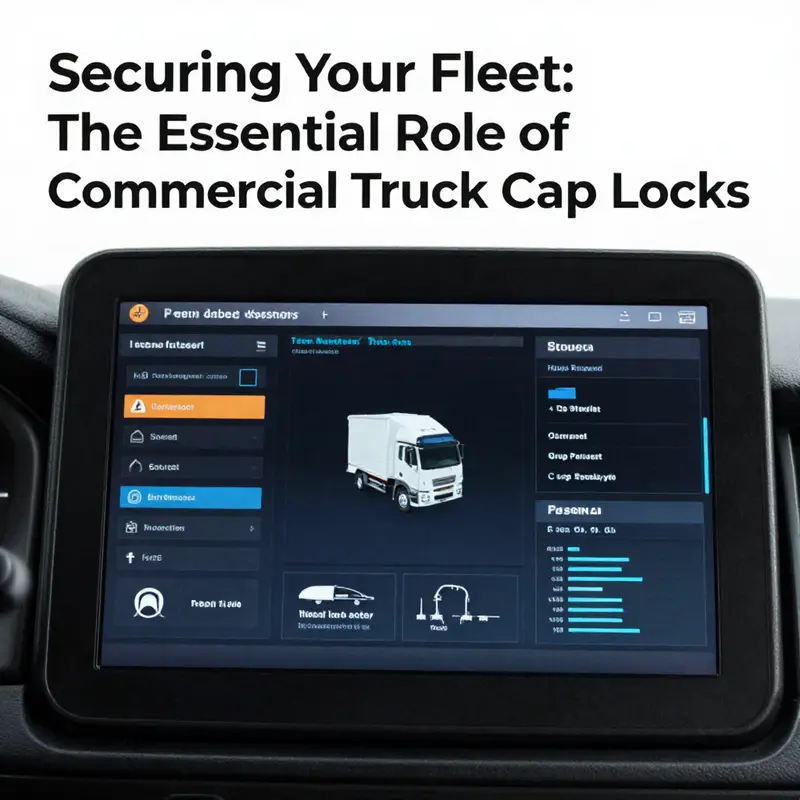
Securing the cargo area of a commercial truck is a strategic, integrated effort rather than a series of standalone locks. In modern fleets, cap lock devices feed data into a broader security and operations platform, linking physical security with GPS, telematics, and driver authentication. This holistic approach improves asset protection, driver accountability, and maintenance planning by turning a simple seal into a smart, observable event in near real time.
Real-time monitoring is at the heart of this integration. Telematics-enabled lock assemblies report lock status continuously, letting managers see whether the canopy is fully secured after a stop or during a loading window. When vehicles enter high-theft zones, the system can raise alerts or prompt remediation steps. The value lies in knowing not just the current state but when it changed and under what conditions, creating an auditable timeline that supports governance and theft reduction.
Remote locking and unlocking extend the reach of security across shifts and time zones. A central operator can secure a cap lock from a distance, respond to incidents in near real time, and adjust access policies as operations change. Remote control is a rapid response tool that reduces exposure time and enables faster containment, even without a physical site visit.
Access event logging captures who accessed the cargo area, when, and under what conditions. In fleets with multiple drivers and third-party handlers, this creates a traceable record that supports compliance, incident investigation, and loss prevention insights. Correlating lock events with GPS and vehicle telemetry enables deeper analysis of asset use and protection.
The architecture typically couples a cap lock module to the vehicle telematics gateway, with secure, authenticated communication to the fleet management platform. The platform aggregates lock data with location, speed, and driver authentication events, enabling automated workflows such as automatic re locks after a stop or security checks when entering a geofence. This cohesion reduces cognitive load for drivers and supervisors while improving decision speed and accuracy.
As fleets scale, governance, compatibility, and durability become critical. Locks must tolerate harsh environments, maintain reliability during power fluctuations, and support encrypted transmissions and secure software updates. Training for drivers and yard staff on remote locking and incident reporting ensures technology translates into tangible security gains. In short, cap lock security, when designed as part of an integrated system, helps lower cargo loss, improve accountability, and unlock actionable operational insights that inform routing, loading procedures, and maintenance planning.
For readers seeking deeper technical context, industry guidelines and manufacturer specifications provide the reference framework for durability, encryption, and interoperability between cap locks, telematics gateways, and fleet software. The goal is a scalable, secure platform in which physical security and data intelligence reinforce each other to protect assets and improve fleet uptime.
Beyond the Bolt: Smart Locks, Real-Time Security, and the Future of Commercial Truck Cap Safety
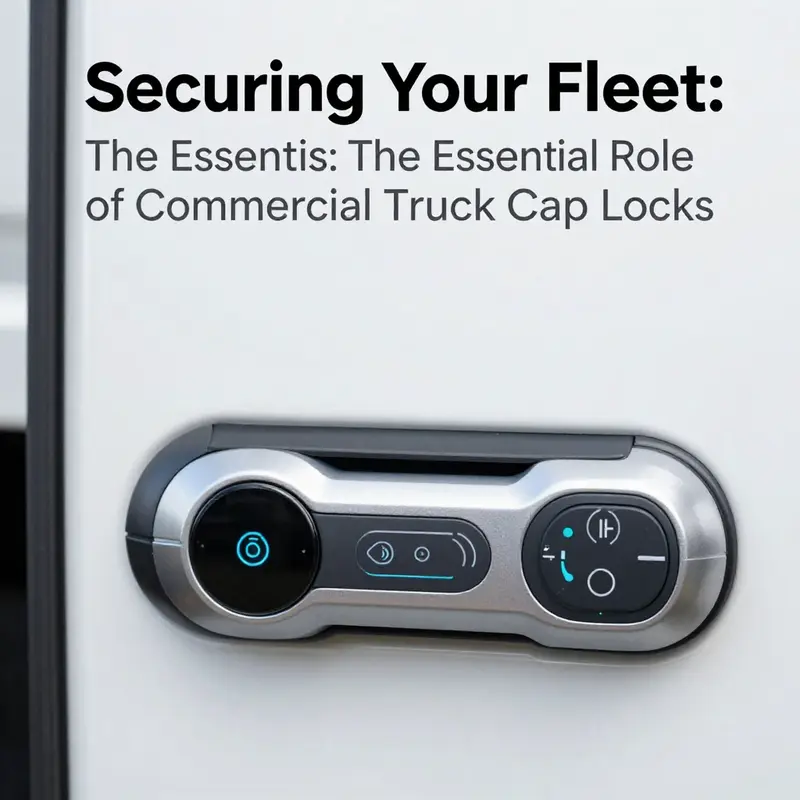
The cap on a commercial truck is more than a cover; it is a critical access point to high-value cargo and the equipment that carries it. As fleets grow larger and routes become more complex, the security of what sits behind that cap—often the most vulnerable link in the chain—receives increasing attention from operators, insurers, and security professionals alike. Today’s market signals that a quiet but powerful shift is underway: from dependable mechanical locking mechanisms to integrated, data-driven systems that blend physical security with fleet-wide visibility. The market dynamics themselves point toward this evolution. Market projections for fiberglass truck caps and their covers indicate sustained expansion, with compound annual growth rates in the low-to-mid teens and beyond over the next several years. This growth is not merely about more units on the road; it reflects a broader recognition that security features must scale with the value of the cargo, the sophistication of bad actors, and the operational demands of modern fleets. In this context, the lock on a truck cap is increasingly a component of a larger security and management architecture rather than a stand-alone device. This chapter traces how future trends in lock technology are beginning to reframe the risk calculus for fleets and how the next generation of cap locks may function—quietly, reliably, and in concert with the rest of the vehicle and its data ecosystem.
At the core of this transition is the idea that access control for a truck cap should be intelligent, traceable, and adaptable. The promise of smart locks—devices that connect, monitor, and respond—addresses a set of needs that mechanical locks cannot fully satisfy. Remote access becomes a practical reality when a fleet manager can unlock a cap for a driver in the field without a physical key exchange, or when a field technician can gain entry after a service window has closed. This capability translates into tangible operational benefits: less downtime for drivers waiting for lock overrides, faster pivots when routes change, and a reduced risk of unauthorized entry during tight delivery windows. As a result, remote locking and unlocking features are moving from niche add-ons to standard expectations in many fleets. The ability to interact with cap locks via a secure smartphone app or centralized fleet software adds a layer of control that aligns cap security with the broader digitalization of fleet management.
But remote accessibility is only a first step. Tamper detection and real-time alerts are growing in importance as a way to deter theft and to shorten the time between a security breach and a response. Modern lock systems embed sensors that monitor attempts to force entry, unexpected vibrations, or even removal of the cap assembly itself. When sensors detect anomalous activity, alerts can cascade through cloud-based platforms to designated personnel—dispatch managers, security teams, or on-call technicians—who can verify the situation and initiate appropriate actions. In practice, such a capability reduces the window of opportunity for thieves and potentially minimizes the financial impact of a security incident. The value lies not just in the moment of entry, but in the forensic trail created by timestamped events that identify who accessed the cap, when, and under what circumstances. This kind of data-driven insight dovetails with broader trends in fleet security, risk management, and compliance, turning a once-simple lock into a node in an information network.
Biometric authentication is frequently proposed as a means to personalize access while elevating security. A future-ready cap lock ecosystem could leverage fingerprint or facial recognition as a way to ensure that only authorized personnel can gain entry to the cargo space. The appeal is clear: biometrics reduces reliance on physical keys, PINs, or codes that can be shared or stolen. Yet biometric strategies must be designed with careful attention to privacy, consent, and robust fallback options. In the field, a worker may wear gloves, be outside the optimal lighting conditions, or encounter hardware failures. Therefore, any biometric approach should be paired with secure fallback credentials and adaptive authentication logic that preserves access in legitimate contexts while resisting spoofing or coercion. In practice, a hybrid approach—biometrics for high-security circumstances complemented by secure digital keys for standard operations—offers a balanced path forward.
GPS tracking integration deepens the security model in a way that aligns with the asset-tracking emphasis of modern fleets. When cap locks are tied to location data, managers gain a more complete picture of asset behavior. If a cap with a high-value payload is moved outside a pre-approved corridor, automated responses can trigger alarms, repositioning alerts to supervisors or automatically initiating a lockout procedure. This does more than deter theft; it supports rapid recovery in the event of misplacement or theft. GPS-enabled locks also enable maintenance and inventory checks to be more precise. For example, if a cap is opened at a location where no delivery is planned, the system can flag potential discrepancies in the route, prompting driver verification and reducing the risk of cargo misplacement. The intersection of access control with geolocation is a natural extension of the broader trend toward situational awareness in fleet operations, where the combination of who, what, when, and where becomes the foundation for proactive security and operational efficiency.
A more transformative idea is the use of blockchain-enabled access logs. In such a setup, every interaction with the cap lock—each unlock, lock, or failed attempt—could be recorded in an immutable ledger that is accessible to authorized parties. This would create a highly auditable trail that strengthens accountability and forensic analysis after a breach. It also supports compliance with increasingly strict supply-chain traceability requirements. While blockchain adds a layer of complexity, its value lies in providing a tamper-resistant history of access events, which can be crucial in investigations, insurance evaluations, and warranty claims. For fleets dealing with multiple stakeholders—drivers, service providers, yard personnel, and supervisors—a distributed ledger approach can reduce disputes and enhance transparency.
All of these technologies—remote access, tamper detection, biometrics, GPS integration, and blockchain-based logs—do not exist in a vacuum. They are most potent when integrated into a cohesive security strategy that sits inside broader fleet-management ecosystems. The most advanced systems are designed to play nicely with vehicle telematics, engine management interfaces, and maintenance platforms. They provide not only security but also operational intelligence. In practical terms, this means a cap lock system that can interact with the truck’s electronic control units (ECUs) and fleet software to adjust security behavior based on trip type, time of day, or cargo sensitivity. For instance, a cap that carries hazardous materials might enforce stricter access controls during specific hours or require multi-factor authentication for any unlock action. A cap on a routine delivery could permit faster entry, guided by pre-approved profiles that reflect the driver’s role and the delivery window. The broader implication is that cap locks become part of a dynamic risk management solution rather than a static safety feature.
From a procurement and maintenance perspective, the path to widespread adoption of these advanced features is shaped by cost, durability, and ease of installation. Normative expectations are rising, but so are the practical constraints. Fleets must balance upfront investment against the long-term savings that security improvements can yield: reduced theft, lower insurance premiums, faster turnaround times, and better asset utilization. Weather resistance, vibration tolerance, and battery life are not afterthoughts; they determine whether a smart lock system can survive the harsh conditions of long-haul routes, remote yards, and fluctuating climates. The most credible designs emphasize robust housings, sealed sensor arrays, and energy-efficient operation. They also offer modular upgrade paths, so fleets can begin with a core set of capabilities—remote locking, tamper alerts, and basic logging—and layer on biometric or blockchain features as the business case grows. This modularity helps mitigate risk and allows for gradual modernization that aligns with expanding cap usage across the fleet.
Alongside technical considerations, governance and security policy shape how these systems operate in practice. Access-control policies must define who can unlock or lock a cap, under what circumstances, and what audit trails are required. Role-based access control (RBAC) is a natural framework here, mapping drivers, maintenance technicians, and managers to specific capabilities within the lock ecosystem. The policy layer also covers incident response protocols: what happens when an alert is triggered, who is notified, and how access is revoked when personnel changes occur. In tandem with the policy, cybersecurity best practices become essential. Lock systems that connect to the internet or corporate networks must be safeguarded against hacking, spoofing, and software vulnerabilities. Regular software updates, secure communication protocols, and secure key management are indispensable features of a mature system. The risk of a breach is not just physical; it is digital, and the most robust solutions treat both aspects with equal seriousness.
The evolution of truck cap lock technology also needs to consider the broader trajectory of vehicle autonomy and advanced driver-assistance systems. While fully autonomous trucks remain a work in progress, the security architecture around them is already shifting. High-value assets require equally high levels of physical protection as automation and connectivity expand. In this context, cap locks are expected to integrate with autonomous-vehicle safety strategies by reinforcing the integrity of cargo and the access chain that surrounds it. The interplay between autonomous systems and cap security is not merely additive; it is synergistic. Automated access controls can reduce human error, while human oversight can address nuanced, real-world situations that automation may not anticipate. The outcome is a layered security posture that leverages technology while retaining human judgment where it matters most.
To translate these trends into a practical outlook for fleets, it is useful to envision how a typical deployment could unfold. In the first phase, fleets adopt core smart-lock features that enable remote locking/unlocking, basic tamper alerts, and standard event logging. This phase focuses on reliability, ease of installation, and compatibility with existing fleet software. In the second phase, biometric authentication or multi-factor access becomes available, accompanied by enhanced audit trails and more granular policy controls. In parallel, GPS integration and geofencing capabilities extend the security perimeter, providing real-time awareness of cap location and status. The third phase might introduce advanced cryptographic logging with blockchain-like immutability, alongside predictive maintenance alerts that anticipate battery or sensor failures before they impact security. Throughout this evolution, training and user experience are essential. Technological sophistication must be matched by clear operational guidelines and intuitive interfaces so that drivers and managers can leverage capabilities without friction.
The economics of this shift deserve careful consideration. Initial costs can be offset by savings from reduced theft, faster response times, and improved fleet utilization. Insurance providers may reward fleets that demonstrate stronger access controls and traceability with lower premiums. Yet the math is not automatic. Deployment costs depend on the scale of the fleet, the compatibility of existing cap models, and the degree of integration with current fleet-management platforms. Maintenance costs include calibration of sensors, software updates, battery replacement, and the ongoing management of access credentials. A comprehensive business case should account for these ongoing expenses, balanced against the potential offsets from loss prevention and improved operational efficiency. As with many technology investments, the value is most evident when the system is designed to scale, interoperates with other components of the fleet, and provides actionable, timely information to decision-makers.
Looking toward the horizon, one can anticipate that standards and interoperability will play a larger role in shaping how cap lock systems evolve. As more manufacturers and service providers enter the space, the need for common interfaces and secure data exchange becomes critical. Interoperability reduces the risk of vendor lock-in, enhances the ability to upgrade components without replacing entire systems, and supports the integration of cap locks with a broader security and fleet-management ecosystem. While this future brings complexity, it also promises greater resilience. For fleets, it translates into a more versatile, future-proof security platform that can adapt as new sensors, authentication methods, or data-sharing protocols emerge. In this landscape, the cap lock is less a single device and more a dynamic node in a networked system designed to protect valuable assets while enabling efficient, data-informed operations.
The social and ethical dimensions of these technologies also warrant attention. As access becomes more traceable and credentialed, questions arise about privacy, surveillance, and the potential for misuses of access data. Thoughtful governance, transparent policies, and robust security controls are essential to ensure that the benefits—reduced theft, faster recovery, and better accountability—do not come at the expense of drivers’ rights or legitimate privacy concerns. Ethical considerations must accompany technological advancements, guiding how data is collected, stored, who can access it, and how long it remains available. This balance between security and privacy is a defining challenge of modern fleet management and one that stakeholders must address as part of any robust cap-lock strategy.
In sum, the future of commercial truck cap lock technology is anchored in a simple premise: stronger protection comes from combining reliable physical mechanisms with intelligent, connected systems. Remote access, tamper detection, biometrics, location awareness, and secure, auditable logs are no longer mutually exclusive options but complementary features of a comprehensive security platform. The market signals support this direction, distinguishing forward-looking fleets that prepare for higher cargo value, more complex operations, and increasingly sophisticated risk landscapes. By investing in modular, interoperable, and scalable cap-lock solutions, fleets can achieve not only improved security but also meaningful gains in operational efficiency and data-driven decision-making. In an industry where every mile matters, the cap lock is becoming a strategic asset—quietly securing the space that holds the work, and the value, of each journey. For readers seeking further context on market trends and strategic implications, the broader market research landscape offers additional perspectives and benchmarks that illuminate how fiberglass truck caps and related covers are evolving in tandem with locking technologies. As one external resource highlights, the fiberglass truck cap market trends by type and application in China provide a useful lens for understanding how product categories expand alongside security innovations and adoption rates across regions. External resource: https://www.researchandmarkets.com/reports/598724/fiberglass-truck-cap-market-trends-by-type-and-application-china.
For ongoing insights and related discussions on fleet optimization and equipment management, you can explore the broader content available at the McGrath Trucks blog, which often reflects the practical implications of evolving technologies in the field. McGrath Trucks Blog.
Final thoughts
In summary, the significance of commercial truck cap locks cannot be overstated. These locks are not merely protective devices; they are integral to modern fleet management and operational efficiency. As security needs evolve, so too will the technologies that protect our cargo and assets. By investing in the right locking solutions and integrating them with sophisticated management systems, businesses can enhance their security posture and operational capabilities. Stay ahead of the curve by embracing advancements in lock technologies as you seek to optimize your fleet’s security and performance.