
The dynamics of wind play a crucial role in the performance of commercial trucks, particularly regarding body height. Trucking company owners, fleet managers, and procurement teams in industries such as construction and mining face the challenge of selecting vehicles that optimize efficiency and safety in diverse conditions. This article delves into how variations in body height dramatically influence wind resistance and aerodynamics, ultimately impacting fuel efficiency and vehicle stability. Each chapter meticulously examines these facets, providing insight into the implications of truck design in modern logistics and freight brokerage operations.
Rising Height, Shifting Winds: How Commercial Truck Body Proportions Recast Aerodynamics, Fuel, and Highway Stability
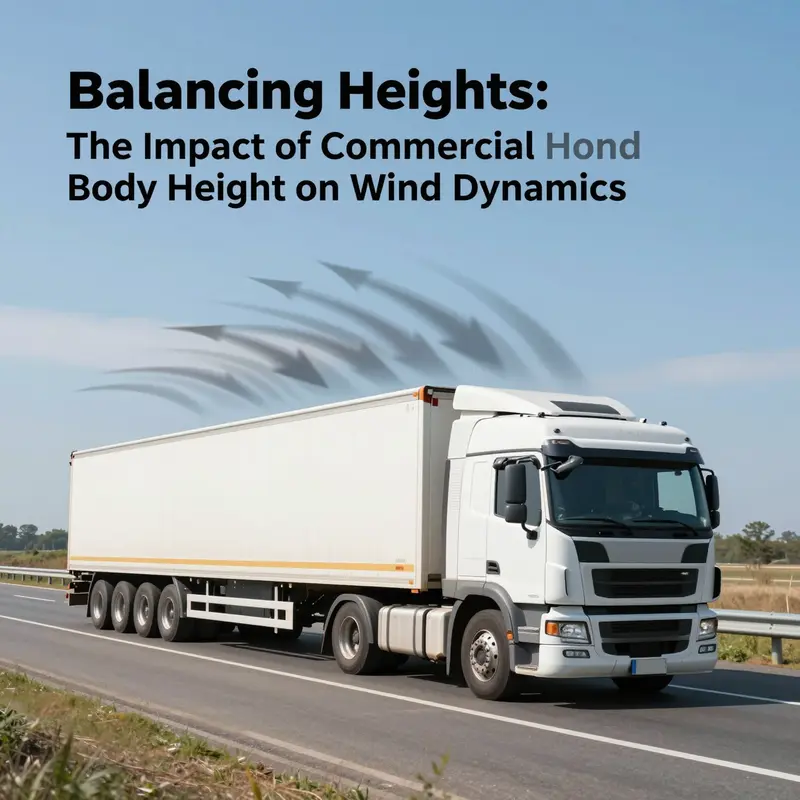
The height of a commercial truck’s body does more than shape its silhouette on the highway. It sets the stage for how the vehicle meets air, how energy is spent moving through that air, and how steady the ride remains once speeds climb past the turnpike’s 60 miles per hour. In practical terms, a taller body means a larger frontal area facing into the wind, and with it comes a steeper climb in aerodynamic drag. Aerodynamics, not mere horsepower, often determines fuel economy at highway speeds. A higher, boxier profile catches more wind, and the power needed to push that wind aside translates into fuel burn, greater wind noise inside the cab, and the potential for amplified cabin vibration during long hauls. It is a cascade: height increases drag, drag steals fuel efficiency, and efficiency losses compound as speeds rise. Yet height is not a fixed fate. It interacts with form, with devices that tame airflow, and with the physics of wake and turbulence that ripple downstream not only into a truck’s performance but into the safety of vehicles behind it.
From first principles, the relationship is straightforward. Drag on a moving body is driven by the frontal area exposed to the oncoming air and the way air separates from the surface—the flow attachment. Taller bodies present more surface area to the wind and often exhibit a bluff-body geometry where the nose and roof do not smoothly blend into the flow. This geometry encourages a more pronounced wake region behind the vehicle, where turbulent vortices form and shed. Those vortices contribute to pressure drag in addition to frictional drag along the skin. The net effect is a higher drag coefficient, and the higher the drag coefficient, the more energy the engine must expend to maintain a given speed. In long-haul operations, where fuel economy is a cornerstone of profitability, even modest changes in height can move the needle. A few inches of reduction in the effective height can translate into measurable gains in miles per gallon, especially when combined with other aerodynamic features that streamline air over and around the vehicle.
The picture becomes more nuanced when the truck’s height is viewed as a system rather than a single dimension. The cargo area, sometimes tall to accommodate bulky load profiles, adds to the overall bluffness of the body. The cab’s height interacts with the cargo’s height to shape the wake. In a conventional setup, the cab and the trailer might seem like separate components, yet the air that flows over them creates a continuous stream of interaction. The wake behind a tall configuration is not merely a lingering shadow; it is an active region of turbulence that can influence fuel economy and stability at speed. CFD studies have shown that small adjustments in body height alter wake structure, changing not only the magnitude of drag but the character of the airflow that follows. This matters for following vehicles too, because a more turbulent wake increases the risk of flow-induced instabilities trailing behind the truck and can reduce the predictability of braking and handling in windy conditions.
What makes height a particularly compelling lever is its interaction with optimization features that are now common in the field. Streamlined contours, roof fairings, and side skirts are not decorative add-ons; they are functional devices that guide airflow and encourage flow attachment. A lower-profile cab, when feasible, helps to shape the air as it travels over the vehicle rather than allowing it to break away prematurely. A trailer with a smoother roof and minimal sharp edges reduces the momentum transfer from wind into air separation. The synergy between reduced height and these features can yield drag reductions that compound across the entire vehicle’s geometry. The core objective is not simply to shrink height in isolation, but to harmonize height with a suite of aerodynamic aids. In practice, that means shaping the front to present a gentler, more aerodynamic face, gradually transitioning air toward the roof, and encouraging air to stay attached as it travels toward the trailing edge.
Deflectors and roof devices illustrate how height interacts with airflow management in meaningful ways. Integrated wind deflectors on trailer roofs are designed to manipulate the boundary between the clean air above and the disturbed air near the cargo surface. They help keep the main body’s airflow attached longer, reduce local turbulence near the roof line, and lower drag and wind-induced noise. The benefits aren’t confined to drag alone; deflectors can reduce the amount of debris and spray that would otherwise be forced toward the windshield and wipers, a factor that becomes more pronounced as the vehicle grows taller or carries a less aerodynamic shape. For operators, this translates into quieter cabs on the highway, less vibration transmitted through the frame, and a reduction in wind fatigue for the driver over multi-day trips.
The regional wind context adds another layer. In North America, wind speeds and gust characteristics vary by season and geography, and those conditions intersect with the truck’s height and its aerodynamic setup. In areas where steady crosswinds are common, a taller body with a bluff silhouette can experience larger yaw moments and increased side wind sensitivity. The stability implications are not only about keeping the truck straight at speed; they also involve the predictability of steering response and the ease with which the truck recovers after gusts. This is why optimization is not a one-step adjustment but a coordinated design choice that factors in typical routes, load profiles, and operating speeds. The takeaway is that height optimization has to marry aerodynamic design with real-world driving patterns and regional wind realities to deliver consistent gains in efficiency and safety.
CFD, or computational fluid dynamics, provides a powerful lens for examining these interactions before any physical prototype is built. Engineers can simulate air flow around different height configurations, compare wake structures, and quantify how much drag reduces when height is trimmed in conjunction with roof fairings, side skirts, or a lowered cab. The capacity to visualize flow attachment and separation helps identify where a taller shape causes pressure drag the most and where a small adjustment can produce a disproportionate payoff. These simulations are not purely academic. They inform decisions about whether a certain height reduction is worth the minimal loss in cargo volume or clearance for a given application. The modern approach blends height with aerodynamics as a whole rather than treating it as a standalone parameter.
A detailed body of work exploring this topic has surfaced in recent literature. One comprehensive study demonstrates that even modest height reductions, when paired with streamlined contours, can lead to meaningful drag reductions. The findings are consistent with the broader principle that the drag coefficient Cd can be substantially lowered when the vehicle profile is carefully sculpted to encourage streamlined flow—especially at highway speeds where drag dominates fuel consumption. The study also highlights the role of flow attachment and wake management in improving overall efficiency. For readers who want to explore this topic further, a robust resource provides a thorough CFD-based analysis of aerodynamic drag reduction in commercial vehicles. External reference: https://www.mdpi.com/2076-3478/13/9/1235.
In practical terms, fleets and operators should view height as a dynamic design variable rather than a fixed constraint. The decision to pursue a lower height must consider payload needs, clearance requirements, and road restrictions. It should also factor in the availability of aerodynamic aids that enable airflow to stay attached and lessens the burden on the engine. In other words, height optimization benefits from an integrated approach that values the geometry of the whole vehicle and the way air negotiates the space across the roof, along the sides, and over the trailing edge. The modern highway truck, therefore, can be seen as a system in which height, shape, and airflow devices collaborate to minimize energy loss while maintaining function. For readers who are evaluating configurations, it is useful to consider how height interacts with other optimization elements. When height is aligned with roof fairings and side skirts, for instance, the drag reduction can be greater than the sum of individual components because the flow remains attached over a longer distance and turbulence is attenuated more effectively.
For those toward the practical end of the spectrum, the question often becomes how to balance height with the realities of operations. If a higher body is necessary to accommodate particular payloads, then the emphasis naturally shifts to compensating aerodynamic features: integrating wind deflectors, choosing a roof form that fosters smoother air over the cargo space, and applying skirts that shield the lower sides from turbulent air. The same logic applies to cab design; a lower-profile cab can help reduce the initial momentum of the airflow as it meets the vehicle, guiding air toward a path that minimizes separation. The outcome is not simply less rough air at the cabin but a broader improvement in flow efficiency around the entire vehicle. The driver’s experience—reduced wind noise and smoother acceleration—becomes part of the value proposition, alongside the fuel economy gains that accrue from reduced drag. In the end, height becomes a lever that, when used judiciously with other aerodynamic measures, yields a tangible ripple of benefits across fuel costs, comfort, and safety.
From a communication standpoint, the industry is increasingly recognizing that height-related aerodynamics is a systems engineering problem. It is not about chasing the lowest possible height; it is about achieving an optimal height that harmonizes with airflow management devices and load profiles. It is about selecting the right combination of roof structures, deflectors, gaps, and fairings to guide air as efficiently as possible around the vehicle, even in crosswinds and gusts. It is about understanding that the wake behind a tall vehicle is a shared resource in the sense that it affects trailing traffic, and it can be shaped to reduce instability downstream. This perspective helps explain why conversations about truck design now routinely consider wind behavior in conjunction with fuel economy targets, noise reduction, and cab comfort metrics. The goal is not a single best height but a robust, region-sensitive approach that accepts height as a variable with real aerodynamics consequences.
For readers who want to explore practical implications in more depth, consider resources that discuss how to evaluate configurations and efficiency strategies. A practical entry point is a guide to buying and selling trucks and campers efficiently, which can help fleets and owner-operators compare configurations and optimize for energy performance without sacrificing usable space. This resource links to a broader discussion of how different setups influence operation costs and maintenance considerations, offering a grounded complement to the aerodynamic science described here. You can explore that discussion here: Buy-Sell Trucks Campers Efficiently.
As the highway landscape evolves, height will remain a meaningful variable in the aerodynamic toolbox. The takeaways are clear: height directly affects frontal area and drag, but its true impact unfolds only when paired with thoughtful design of the vehicle’s aerodynamics package. When height and airflow management work together, the resulting gains in fuel efficiency, reduced wind noise, and improved stability become achievable without compromising freight capabilities. The modern truck can, with careful engineering, meet the demands of tall cargo and the realities of wind-driven highway dynamics. And as CFD continues to refine our understanding of wake behavior, engineers will increasingly tailor height decisions to the varying wind climates across routes and seasons, delivering trucks that cut through air with greater grace and efficiency. For readers aiming to deepen their technical grasp, the external CFD reference above offers a rigorous lens into how small geometrical changes translate into measurable performance gains, reinforcing the central premise: height matters, but how it is managed matters even more.
Wind, Height, and the Aerodynamic Cost of Taller Truck Bodies
The air that flows around a moving cargo vehicle does not treat a truck with height in the same way it treats a lower-profile machine. Instead, the wind sees a taller frontal surface, wraps around a larger silhouette, and then creates a wake that persists well behind the vehicle. In highway conditions, where wind becomes a dominant force in fuel consumption, the height of the truck body emerges as a pivotal variable. It is not simply about more cargo space; it is about how that space changes the shape of the airflow, the drag the truck must overcome, and the subtle but consequential interactions with gusts, crosswinds, and the wake that follows a vehicle into the lanes ahead. When engineers speak of efficiency, they speak not just of engines and tires, but of every millimeter of profile that meets the air in motion. Height matters because it expands the area the wind can engage and reshapes the pressure field that forms around the vehicle as it moves. In practical terms, higher bodies tend to produce greater frontal area and more turbulent airflow, and the consequences ripple through fuel economy, noise, and stability. The relationship is not linear, but it is real and observable in real-world operations. A taller silhouette increases the energy that must be expended to maintain speed, especially as speeds climb and wind force becomes a larger fraction of the resistance the powertrain must overcome. The result is a cascade: more drag leads to more engine work, which in turn raises fuel consumption and, over time, total operating costs. The core driver is the interplay between frontal area, drag coefficient, and the flow pattern around the vehicle. The cargo body height directly enlarges the frontal cross-section that the air must negotiate. The air does not simply slide past; it accelerates, decelerates, and reattaches in complex patterns. Those patterns form a wake that can persist far behind the truck, influencing not only the truck’s own stability but also the behavior of following vehicles. The wake creates differential pressures that, under certain conditions, can amplify turbulence in the downstream flow. In other words, the height of the truck does not exist in a vacuum; it interacts with wind, road, and traffic in ways that reverberate through performance and safety.
A wealth of aerodynamic research shows that even modest changes in body height and contour can shift the overall energy budget of a vehicle. The baseline physics are straightforward: drag grows with frontal area, which grows with height for a given width. But the story becomes richer when we consider how the boundary layer—those thin layers of air hugging the truck’s surfaces—behaves along a taller perimeter. Taller bodies present more surface area and more opportunities for flow separation, where the smooth stream of air detaches from the surface and forms vortices. Those vortices create turbulence and additional pressure differentials that the engine must overcome. The cumulative effect across miles of highway travel is a measurable lift in fuel burn when the height is increased, particularly at speeds where aerodynamic drag dominates other resistance forms like rolling resistance and drivetrain friction.
CFD-based simulations have shed precise light on these dynamics, quantifying how forebody shape and height influence fuel use. In simulations that vary the forebody contour, a fairing over the forebody can yield meaningful savings. One notable result showed a calculated reduction of about 5.6 liters per hour—roughly 1.5 gallons per hour—in fuel consumption when a forebody fairing was introduced, compared to a baseline configuration. While the numbers depend on the exact geometry and operating conditions, the takeaway remains robust: even relatively small, thoughtful adjustments to the truck’s height profile and contour can deliver tangible gains in efficiency. Those gains accumulate quickly on long-haul routes, where the cumulative hours of operation multiply the effect of each marginal improvement. The implication for manufacturers and fleets is clear: optimizing height is not merely a packaging decision. It is a core design parameter with a direct link to fuel economy and to emissions performance, given that reduced drag lowers engine load and, by extension, exhaust output.
Wind does not respect the neat boundaries of a truck’s silhouette. Crosswinds and headwinds interact with the vehicle’s height in distinct ways. A taller truck presents a larger, more exposed surface to crosswinds, which creates lateral forces that can push the vehicle toward the centerline or into adjacent lanes. The driver must apply corrective steering, which adds to steering effort and required steering angle changes, especially in gusty conditions. This additional effort translates into higher rolling resistance in the sense that the tires oppose a broader range of lateral motion, and the overall handling workload increases as the wind persists. In severe crosswinds, a taller body can experience more pronounced side forces, requiring more frequent and larger steering corrections. The stability implications are not merely about comfort; they intersect with safety and with the driver’s cognitive load. In high winds, the efficiency gains from lower drag can be offset by the need to counteract wind-induced instabilities, but the net effect remains that a well-designed, aerodynamically considerate height still yields lower drag and better control than a poorly contoured taller profile.
From a practical standpoint, this means that height optimization cannot be treated as an isolated design choice. It must be part of an integrated aerodynamic strategy that includes roof lines, fairings, side skirts, and even windshield wipers and how debris interacts with the wind. Integrated wind deflectors on trailer roofs are specifically designed to manage airflow over the cargo area, reducing turbulence and drag. These deflectors smooth the wake behind the trailer, dampen wind noise inside the cab, and mitigate cabin vibration. They also help minimize debris impact on the windshield and wipers—an advantage that grows more pronounced as the truck’s height increases and the wake becomes more energetic over long distances. When the body is tall, such aerodynamic aids become proportionally more valuable, turning what could be a sizable drag penalty into a more efficient flow that keeps energy use in check and noise levels lower.
Height is not the sole determinant, though. The shape around the height—how the front of the cab and the cargo body converge, whether the roof contours are flat or curved, and whether there are underbody panels—plays a central role in determining how air attaches, detaches, and reattaches as the vehicle moves. A lower, well-contoured cab profile reduces the energy required to push air out of the way, while thoughtful extensions over the cargo area can tame the wake further back along the vehicle’s length. The research points to a broader design philosophy: lower height alone is not automatically better if it comes at the cost of shaping that creates a rough, irregular wake. Streamlined contours that deflect or smooth the air around and over the high portions of the vehicle can yield better drag numbers than a simple, blunt reduction in height. In short, the height strategy should be part of a broader aerodynamic synthesis—one that emphasizes smooth transitions and carefully considered cross-sectional profiles.
Regional wind patterns add a layer of complexity to the optimization puzzle. In North America, where wind regimes vary by season and geography, the optimal height and aerodynamic package will depend on where a fleet operates. In windy corridors, the emphasis on low-profile, aerodynamically optimized designs becomes especially critical. In regions with frequent gusts and crosswinds, side skirts and roof fairings, along with deflectors, can significantly reduce the energy cost of wind interaction. The practical upshot for fleets is that height optimization cannot be a one-size-fits-all decision. It must reflect the operating environment, route structure, and typical weather patterns encountered by drivers.
The economic rationale behind height optimization rests on a simple but powerful calculation: each improvement in drag reduction translates into lower fuel consumption, which reduces operating costs and emissions. When fleets pursue lower drag through height-aware design, they unlock a path to better miles-per-gallon without sacrificing payload. This is particularly important in an era of tightening emissions regulations and rising fuel costs. Aerodynamic improvements, even when they require an initial capital outlay for redesigned body lines or additional fairings, tend to pay back over the long term through fuel savings, engine longevity, and reduced maintenance from less aggressive engine loading. In other words, height optimization is a proven lever in the freight transport toolbox, capable of delivering measurable returns when aligned with a comprehensive aerodynamic strategy.
For readers seeking more practical perspectives and industry narratives, industry blogs offer a space to explore how operators incorporate aerodynamic considerations into day-to-day decisions. See the industry conversations on the McGrath Trucks blog mcgrathtrucks.com/blog/ for a sense of how real-world fleets balance cargo needs with aerodynamics, performance, and cost considerations. The discussion often emphasizes not only the engineering gains but also the operational workflows, maintenance planning, and route design that accompany the adoption of aerodynamic innovations. It is a reminder that aerodynamics is not a theoretical exercise but a living, breathing element of fleet management that touches planning, procurement, and daily driving.
Ultimately, the question of whether commercial truck body height affects wind is answered by the integration of height with contour and features. A taller body increases potential drag and heighten wake effects, but the impact is mitigated when paired with deliberate design choices such as forebody fairings, roof deflectors, side skirts, and optimized rooflines. The synergy of height and contour shapes not only reduces fuel consumption but also enhances stability and reduces wind-induced noise and vibration inside the cab. When these design choices are informed by robust CFD studies and validated in the field, they translate into real-world benefits: lower fuel bills, fewer emissions, and safer, more predictable handling in challenging wind conditions.
For researchers and practitioners alike, continuing to quantify the precise trade-offs between height, contour, and wind will remain a central pursuit. As simulations become more sophisticated and traffic conditions more complex, engineers will be able to tailor height profiles to specific routes and operating envelopes, balancing cargo space against aerodynamic penalties in a data-driven way. The practical implication for fleets is straightforward: invest in height-aware aerodynamics, not as a cosmetic change, but as a strategic change to how a vehicle interacts with wind. Do so with a holistic view that treats the truck as a single aerodynamic system, where each component—cab, forebody, trailer, and deflectors—plays a role in shaping the airflow that ultimately determines efficiency, stability, and success on the road.
If you’re seeking a broader sense of how these aerodynamic principles integrate into ongoing industry developments, the literature and industry discussions offer clear guidance. They emphasize that even incremental shapes and profile changes can yield meaningful improvements over a vehicle’s lifetime. The potential savings are not confined to a single route or season; they accumulate across thousands of miles and multiple trips. The balance remains clear: reduce the wind’s grip on the vehicle without sacrificing payload capacity, and you unlock a durable competitive advantage in fuel efficiency and safety. The dialogue between height and aerodynamics is ongoing, and the best outcomes will come from integrated design approaches that treat height as one of many interacting variables rather than as a stand-alone constraint.
External resource for deeper study: https://www.nrel.gov/docs/fy25osti/89401.pdf
Riding the Wind: How Truck Body Height Shapes Airflow, Stability, and Highway Safety

The height of a commercial truck’s body is more than a mere measurement for cargo clearance or ground clearance. It sits at the nexus of airflow, energy use, and on‑road safety. When engineers talk about the wind, they are really discussing a complex dance between a bluff, rectangular volume and a moving, turbulent atmosphere. In this context, height matters not just in absolute terms but in how it interacts with the wind’s gusts, crosswinds, and the wake that follows a vehicle. A taller body increases the frontal area exposed to oncoming air, and the consequences ripple through fuel economy, noise, vibration, and, most critically for operators, vehicle stability. The story of wind and height is a story of wake dynamics: how the air separates, curls into vortices behind the cab and trailer, and then reattaches or diffuses as it flows downstream. Those microscopic shifts in the wake can influence not only the truck’s own performance but also the safety of vehicles traveling in its slipstream. In many ways, height is a lever that, when pulled, shifts the balance between efficiency and control, speed and safety, accommodation of payload and the realities of highway wind exposure across different regions.
A foundational consideration is the direct link between body height and aerodynamic drag. Drag is not merely a function of shape in isolation; it scales with frontal area and the flow’s behavior around that area. Increasing height expands the lateral surface that wind can push on, enhancing lateral forces during crosswinds. Those forces translate into yawing moments—the tendency of a vehicle to rotate about its vertical axis—that can push a truck off a straight line, especially at highway speeds. The risk of loss of directional stability grows with speed and wind intensity, and for high-profile bodies, the headwinds and gusts can produce pronounced side forces. The relationship is not linear, either. Wind tunnel studies and computational fluid dynamics (CFD) simulations show that small increases in height can shift where the airflow separates from the vehicle and how large the resulting vortices become. Those shifts alter both drag and the stability margins available to the operator, changing how the truck responds to gusts and how much effort a driver must expend to maintain a straight path.
From a safety perspective, the wake behind a tall truck is more than a disturbance for the vehicle itself. The formed vortices and low-pressure regions behind the trailer tensilely tug at the trailing edge of the cab, and the overall pressure distribution along the vehicle’s sides can influence the effectiveness of stability controls, whether those are passive design features or active systems. In practical terms, a higher profile truck can experience larger yaw moments when hit by crosswinds. At high speeds, these moments magnify the risk of drifting or instigating a rollover in extreme wind corridors, a scenario that is particularly acute on exposed highways or routes with open terrain. The emphasis here is not alarmism but a call to design for resilience: create a vehicle geometry that minimizes adverse wake effects and makes stability margins more forgiving in gusty conditions.
The dynamics of height also interact with the shape and configuration of the truck’s aerodynamics. Modern design teams increasingly rely on features such as side skirts and roof fairings to modify the flow in ways that reduce turbulent wake. Side skirts help seal the gap between the trailer and the road, lowering the amount of air that rushes underneath the vehicle where it can reattach in unpredictable patterns. Roof fairings streamline the air over the top of the trailer, guiding the flow rather than letting it separate abruptly near the edge. When these devices are thoughtfully integrated with a taller body, they can compensate, at least partially, for the drag penalty and the stability risk associated with greater height. Integrated wind deflectors on trailer roofs, for instance, are designed to encourage smoother airflow over the cargo area, mitigating wake-induced turbulence and lowering drag. The result is not just a reduction in fuel burn but a decrease in wind noise within the cab and fewer vibrations felt by the driver and sleeper compartments. These improvements are particularly valuable for long‑haul operations where even modest gains compound over thousands of miles.
Yet the design tradeoffs are real. Lowering a body to shrink windward area is not a panacea; cargo clearance, ground clearance, and the practical demands of securing loads impose constraints. The art of aerodynamics in heavy trucks lies in balancing the height that is necessary for cargo handling and clearance with the aerodynamic devices that tame the wind’s effect. This balancing act extends into the cab’s form as well. An optimized cab shape, with carefully sculpted lines at the roof and edges, reduces pressure drag and helps the vehicle shed vortices more predictably. When designers couple a conservative height with smart features, there is an opportunity to achieve both safety and efficiency without sacrificing payload versatility. The role of height in this broader strategy becomes a question of regional wind environments as well. In North America, for example, wind speeds and gust patterns vary by geography, season, and even time of day. A tall truck that excels in sheltered corridors can confront harsher crosswinds on plains or along coastlines, underscoring the necessity of regionally informed design considerations and testing to ensure reliability in diverse operating contexts.
What this means for operators is a practical call to look beyond single metrics like “lower is better” or “taller is tougher.” The optimal height is one that accommodates payloads while embracing aerodynamic strategies that keep the wake manageable. It is a configuration that benefits from wind tunnel insights and CFD analyses that illuminate how the wake evolves with height and how the flow reattaches downstream. Those insights guide the placement and sizing of aerodynamic aids, the tilt and curvature of the cab, and the distribution of weight and ballast that influence the truck’s dynamic response to gusts. In this light, height becomes a design parameter that interacts with a suite of features—side skirts, roof fairings, deflectors, and even the spacing of wheels and axles—to create a system that resists wind-induced instability rather than merely tolerates it.
The narrative around height and wind also intersects with the operator’s daily realities. A higher body can bring benefits in terms of payload versatility and cargo accessibility, but the wind’s insistence on stability invites careful attention to speed management in gusty conditions, route planning that favors wind‑friendly alignments, and maintenance practices that ensure seals, deflectors, and fairings remain effective. Noise budgets, which often track the cumulative effect of wind interactions, reveal that drag reduction through aerodynamic enhancement can translate into quieter cabs and less fatigue for drivers over long shifts. In stories from the road, the difference between a truck that fights crosswinds and one that rides them with poise is often the difference between a comfortable journey and one that imposes additional stress on the driver and compromises the delivery schedule. These are not abstract considerations; they shape hours behind the wheel and the reliability of supply chains that depend on predictable, efficient long-haul operation.
The conversation about height, wind, and stability is not only about engineering constraints but also about the ongoing dialogue between design and operation. It is about how engineers translate wind tunnel findings and CFD outputs into tangible cab shapes and trailer geometries that perform well across a spectrum of real-world conditions. It is about validating those designs with field data and iterative testing, so that the theoretical gains in wake management translate into measurable improvements in fuel economy, noise reduction, and, most critically, safety margins. Industry discussions and ongoing research emphasize that even modest height adjustments, when coupled with carefully placed aerodynamic features, can yield meaningful benefits. This is why the integration of aerodynamic features—like side skirts to dampen underneathflow, roof fairings to streamline the air over the cargo area, and strategically contoured cab shapes—remains central to contemporary truck design philosophy. The aim is a harmonized solution where height serves as a component of a safety-forward, efficiency-minded system rather than a standalone specification.
To keep this discussion anchored in real-world research while acknowledging the practicalities of daily operation, designers and operators are turning to cross-disciplinary insights. Wind tunnel studies on heavy trucks have demonstrated that even small variations in geometry can shift the wake structure enough to alter drag and stability in meaningful ways. CFD studies complement these findings by exploring a wider range of operating scenarios, including gust profiles and crosswind angles that vehicles encounter on open highways. The synthesis of these insights points toward a design ethos that treats height as an opportunity to engineer stability rather than merely a constraint to be managed. In the end, the pursuit is a truck that can carry the same reliable payload across diverse wind regimes while offering a safer, quieter, more fuel-efficient ride for drivers who traverse long distances.
For readers seeking a deeper, technical immersion into how body geometry influences aerodynamic performance, a peer-reviewed study provides a rigorous grounding for these observations. The work, Wind Tunnel Experiments on Heavy Trucks: Impact of Body Geometry on Aerodynamic Performance, offers a thorough examination of wake dynamics linked to height and the practical implications for drag and stability. Access to the article is available here: https://www.sciencedirect.com/science/article/pii/S014259632200087X. Additionally, industry practitioners and researchers can explore related discussions and case studies in the broader trucking community’s discourse, including regular updates and insights on the McGrath Trucks blog: McGrath Trucks blog.
Height, Wind, and Innovation: How Taller Truck Bodies Redefine Drag and the Tech That Keeps Efficiency in Check
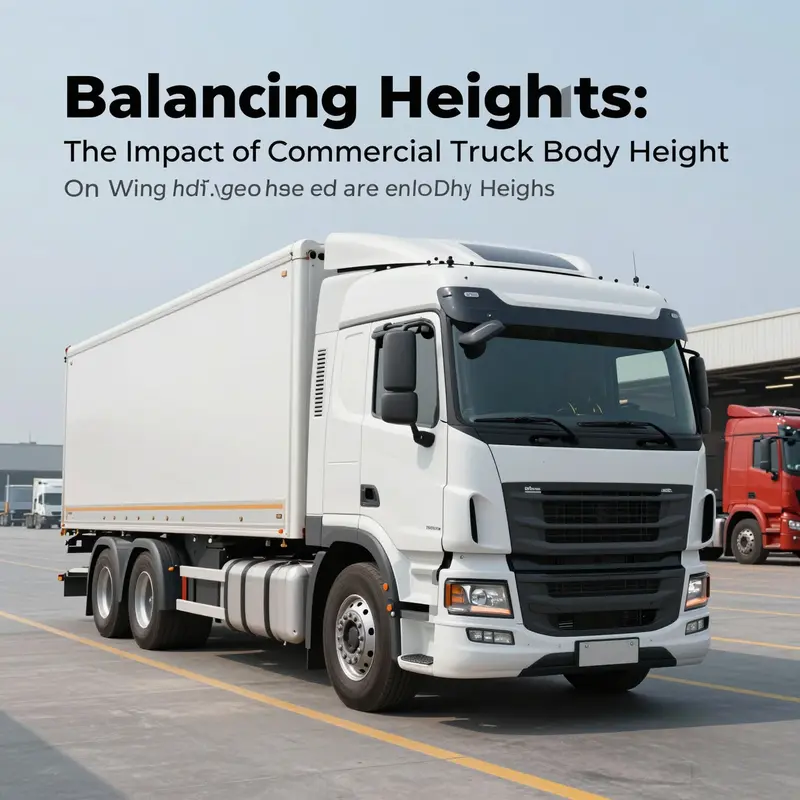
The relationship between a commercial truck’s body height and the wind it encounters is not a simple one-to-one equation. It is a dynamic interaction that governs drag, fuel economy, stability, and even the quietness inside the cab. When the vehicle carries a taller profile, the frontal area presented to oncoming air expands, and the wake that forms behind the tractor-trailer becomes more energetic and more complex. This is not just a matter of how the wind feels when you are cruising at highway speeds; it is about how the air rearranges itself around every edge of the vehicle, how it reattaches and separates along the forebody, and how that flow redefines the pressure distribution that the tires and suspension must counter. As a result, higher body heights typically mean more drag, which translates to higher fuel consumption for the same work, and more wind-induced noise and vibration that travelers hear and feel inside the cab. The physics behind this are nuanced. A taller cargo area creates a larger downstream wake with stronger shear layers, which in turn can generate fluctuating pressures that manifest as cabin rumble or gusty sways at crosswinds. These are not merely audible inconveniences; they are indicators of more workload placed on the propulsion and steering systems, and they can influence the operator’s fatigue level over long hauls. The conversation around height is not about forcing a one-size-fits-all shape. It is about integrating height with a broader aerodynamic strategy that coordinates forebody design, trailer gap management, and rolling dynamics to minimize the resistance the wind imposes while preserving payload capacity and handling. In this light, taller bodies illuminate a core truth: height matters because it alters how air negotiates its way around the vehicle, and this negotiation is best managed through deliberate, data-driven design choices rather than relying on intuition or tradition alone. A practical takeaway is that aerodynamic efficiency is rarely about a single tweak in isolation. It is about a coherent system where body height, edge shapes, and the gaps between the cab and trailer are harmonized to sustain laminar or gently turbulent flow as much as possible, especially at highway speeds where the truck spends most of its time on the road. The industry has learned that even modest height variations can ripple through the wind field. CFD studies consistently show that small increases in roof height or slight changes to the cab’s forebody can shift the wake’s structure enough to alter drag coefficients by measurable margins. This is not a theoretical exercise; it is a guide for engineers who seek to balance payload, aerodynamics, and driver comfort in real-world operations. The practical outcomes of such balance extend beyond the fuel gauge. A taller profile that is poorly managed with respect to aerodynamics introduces more wind noise into the cab, which can contribute to driver fatigue and reduced concentration on long hauls. It also raises the likelihood of increased cabin vibration, which, over thousands of miles, can influence component wear and the perceived quality of the driving experience. And yet height in itself is not a constraint that must be swallowed whole. Advances in design are enabling taller bodies to remain efficient, if the design leverages the wind rather than resisting it. Deflectors, fairings, and careful forebody shaping are part of a toolkit that aligns height with air flow rather than fighting it. Integrated wind deflectors on trailer roofs are a case in point. These devices are not merely cosmetic additions; they are aerodynamic devices that shepherd airflow over the cargo area, dampening turbulence at the roofline and reducing the low-pressure regions that often generate drag and noise. When the roof is tall, such deflectors become more valuable because they help smooth the boundary layer over a larger entablature of air, diminishing the intensity of the wake behind the trailer. Likewise, side skirts and roof fairings contribute to a streamlined silhouette that minimizes abrupt transitions in the air’s path. The effect is a quieter cabin, a more stable ride, and, crucially, a reduction in the total energy that must be supplied to overcome wind resistance. The interplay of height and wind is increasingly explored with modern computational tools. CFD has become the laboratory where designers test forebody geometry and trailer-gap configurations without the cost of building multiple prototypes. The 2025 MDPI study into truck forebody optimization is a prime example of how numerical simulations can isolate the impact of height changes on drag, enabling rapid iteration toward configurations that maximize drag reduction while preserving practical payload and clearance. What emerges from such work is not a single “best height,” but a set of height-sensitive strategies that depend on route profiles, payload, and regional wind patterns. In North America, where wind speeds vary broadly and crosswinds are a daily consideration for long-haul fleets, optimizing height and aerodynamics becomes a cornerstone of efficiency and safety. The wind does not blow evenly; gusts and density variations interact with how high the body sits in relation to the cab, how far the trailer sits behind, and how air drifts around the trailer’s edges. Real-world testing complements CFD insights by providing tangible data on how these interactions manifest in surface pressure distributions and the resulting drag forces. A notable point of reference is the parallel between on-road measurements and wind-tunnel findings from high-visibility research on passenger cars. A 2025 study compared ride height measurements with wind tunnel tests on a sedan benchmark, illustrating that even small ride height adjustments can materially affect surface pressures and, consequently, drag. The cross-pollination of those findings into heavy-truck design highlights the universal truth: height changes shift the pressure map across the vehicle’s body, and careful management of that map yields meaningful gains in efficiency and handling. The implications for fleet operators are practical and economically consequential. A taller body, when engineered with height-aware aerodynamics, does not have to compromise fuel economy or stability. The path forward, increasingly, lies in adaptive height control and rigorous aerodynamic optimization. Electronic Control Air Suspension (ECAS) systems exemplify this direction. By dynamically adjusting a truck’s ride height, ECAS can minimize the gap between the cab and trailer in ways that reduce turbulent airflow and drag. This dynamic height management is especially valuable at high highway speeds, where even small adjustments can produce disproportionate aerodynamic benefits. The MDPI findings emphasize that precision in height control is not merely a matter of keeping the truck visually level; it is about maintaining a stable attitude and minimizing large height errors that could destabilize the airflow and degrade overall efficiency. In practice, operators can leverage height control to tailor aerodynamics to varying loads, weather, and road conditions. A taller configuration on a fully loaded long-haul run might benefit from a slightly different forebody stance than the same configuration on a lighter, shorter trip. The ability to modulate height in response to real-time conditions translates to tangible gains in fuel economy and ride quality, while preserving payload capacity and maintaining safety margins. Beyond the mechanical and aerodynamic layers, there is a broader strategic narrative about how the industry responds to evolving demand for taller, more capable, yet more aerodynamically conscious trucks. The market environment, including demand, maintenance practices, and fuel prices, influences how fleets value height as part of a total cost of ownership. This is where industry insights and market dynamics intersect with engineering decisions. For readers interested in how industry shifts ripple through the fleet landscape, consider exploring Current trends in used-truck sales growth, which contextualizes how operators weigh configuration choices, including height-related aerodynamics, against depreciation, maintenance costs, and resale value. Current trends in used-truck sales growth. Keeping height in the conversation means acknowledging that travel efficiency, driver comfort, and safety are not stand-alone metrics; they are interconnected with market realities and the evolving toolkit of aerodynamic technologies that support taller bodies without paying a heavy toll at the pump. The design conversation thus moves toward an integrated approach. Forebody optimization, rooftop and trailer-edge features, and dynamic ride-height control form a triad that enables taller bodies to coexist with efficient aerodynamics. The wake behind a tall trailer is not something to be endured; it is something to be engineered. The wake’s shape, strength, and persistence influence drag, fuel burn, and even the stability margins experienced by following vehicles. CFD studies help engineers map how changes in height alter wake dynamics and then test compensating shapes and gaps to suppress adverse flow features. The practical upshot is that height is a lever, not a bottleneck. When height is used in concert with aerodynamic refinements and active height systems, the overall vehicle performance improves. Fleet operators gain not only lower operational costs but also better ride quality and reduced wind-induced stress on the cab structure. This is a reminder that the aerodynamic story of height is not about shrinking the vehicle to cut drag; it is about designing a taller vehicle that interacts with air in a controlled way, leveraging deflectors, fairings, and adaptive suspension to keep the wind working for you rather than against you. As the chapter on technology and wind challenges makes clear, the next era of heavy-truck design will increasingly rely on systems that sense and respond to wind loads in real time. The result will be trucks that, even with taller bodies, still move with surprising efficiency and predictability. For readers seeking further reading on this frontier of aerodynamics and height control, MDPI’s comprehensive study on truck aerodynamics offers a detailed technical panorama and is a valuable external reference: https://www.mdpi.com/2076-3478/12/4/258. This body of work reinforces the idea that height-aware design, brought to life through CFD, wind-tunnel validation, and adaptive suspension strategies, is not a niche pursuit but a central axis around which modern heavy-truck development rotates. In sum, height changes the wind’s behavior in meaningful ways, but modern design and control technologies equip engineers and operators to harness that behavior. Taller bodies can be efficient and stable when height is integrated into a holistic aerodynamic strategy that leverages forebody optimization, roof and edge deflectors, and intelligent suspension control. The outcome is a fleet that can carry more, travel farther, and do so with less energy wasted to wind—an outcome that aligns with the industry’s ongoing push toward safer, cleaner, and more cost-effective long-haul operations.
Final thoughts
Understanding the relationship between commercial truck body height and wind dynamics is essential for enhancing performance, safety, and efficiency. The implications extend beyond aerodynamics to encompass fuel savings and vehicle stability, which can significantly impact operational costs and safety on the road. As technological advancements continue to emerge, it is imperative for fleet managers, procurement teams, and logistics firms to remain vigilant about design choices, ensuring that every height decision maximizes both efficiency and safety in their operations.