Commercial truck body height is a fundamental yet often overlooked factor that plays a significant role in various operational aspects within the trucking industry. Its implications stretch across loading and unloading efficiency, cargo security, aerodynamic performance, and regulatory compliance. By understanding these impacts, trucking company owners, fleet managers, and procurement teams can make informed decisions that enhance operational efficiency and contribute positively to their bottom line. This article dissects how truck body height influences these critical facets, with insights drawn from industry studies and expert analyses, providing a comprehensive understanding of this essential aspect of trucking.
Low, Medium, High: How Commercial Truck Body Height Shapes Loading Speed, Safety and Operational Cost
Practical effects on loading and unloading operations
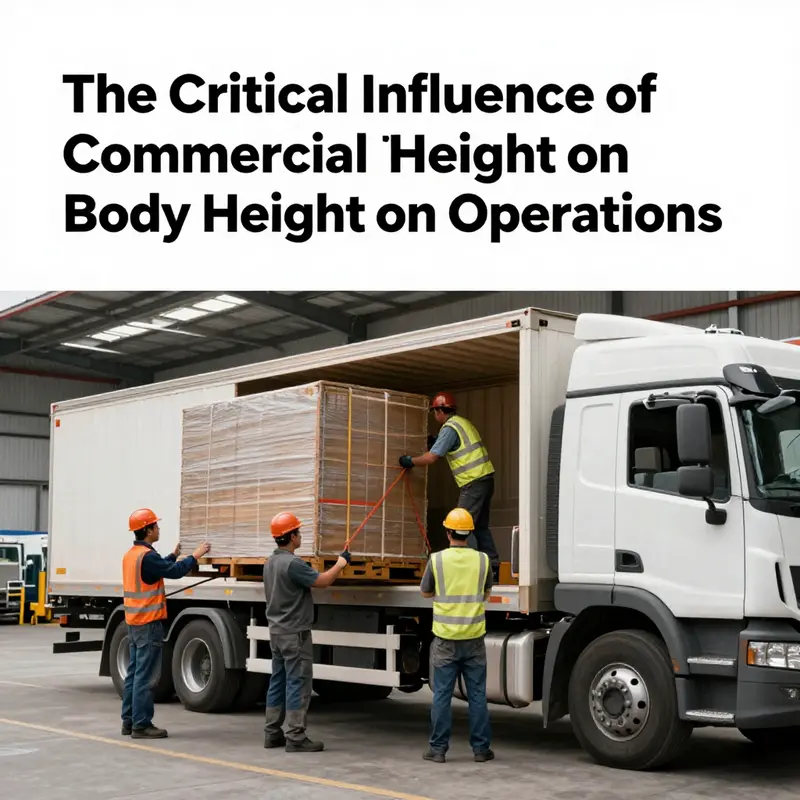
Body height is one of the simplest design choices with the broadest operational consequences. It defines the vertical gap between ground level and the cargo bed. That gap changes how people and machines move goods. It also affects pace, risk, and cost across every stop a truck makes. This chapter follows that single thread. It explains why a few inches can matter, how height interacts with equipment and people, and what pragmatic choices fleets use to balance capacity and efficiency.
When the cargo bed sits lower, workers reach, lift, and pivot with less strain. Lower beds reduce vertical travel distance for manual handling. That lowers fatigue over repeated lifts. It also shortens the time it takes to move each pallet, crate, or bag. In operations that count stops by the dozens, small time gains compound quickly. A lift that once took an extra ten seconds per pallet becomes minutes of saved time across a route. Those gains directly affect productivity and labor costs.
Higher beds create the opposite effect. They increase vertical reach and raise the body angles workers must use. Those angled postures amplify forces on the lower back during lifting. Without mechanical aids, higher beds quickly become bottlenecks. Teams may need portable ramps, tail-lift systems, or forklifts. Each added tool costs time and money. Attachments must be deployed, secured, and stored. That extra choreography increases handling time per stop.
The kind of truck body magnifies this effect. Dropside bodies, flatbeds, and open platforms are common in construction and waste work. They favor quick sideways access and fast unloading. For these roles, a lower platform can be decisive. Lower dropside heights mean workers can stand at the edge and pass loads quickly. A higher dropside height often forces crews to stage material on the ground first. That two-step transfer is time-consuming and risk-prone.
Enclosed box bodies tell a different story. They trade off accessibility for protection. A medium internal height often accommodates palletized freight and preserves weather protection. But when the whole box sits high on the chassis, the transfer from ground to dock or liftgate becomes slower. In many cases, docks and warehouse equipment match a standard dock height. If a truck body height mismatches that standard, the fleet needs special handling solutions. Loading docks are fixed infrastructure. Trucks must adapt, not the docks.
Material handling equipment changes the arithmetic. Hydraulic lifts, scissor platforms, and forklifts drastically reduce the penalties of higher beds. They make height variance manageable. But they also add capital and maintenance costs. Portable ramps are inexpensive but slower and physically demanding. Powered lifts speed loading but require maintenance and training. Fleets must weigh the frequency of high-bed stops against equipment cost. For high-frequency short-haul routes, investing in integrated lift systems often pays back quickly. For occasional tall-bed use, renting equipment or using lower-height vehicles is more efficient.
Ergonomics and safety sit at the center of the decision. Industry research ties reduced step heights and optimized workstation geometry to lower injury rates. Repetitive bending, reaching, and twisting are major risk factors. A body height that reduces these motions helps crews stay healthy. Lower injury rates mean fewer lost days, lower insurance costs, and greater staffing stability. These savings are easier to quantify than many expect. They show up in payroll, worker compensation, and retention metrics.
That said, there are limits to how low a bed can be. Extremely low bodies bring their own constraints. Very low chassis heights may not clear road debris or steep driveways. They may reduce axle travel or require ground-clearance modifications. Low beds can complicate loading of oversized or bulky machinery that requires clearance under the cargo for tilt or rotation. In other words, a design that optimizes human ergonomics may reduce flexibility for certain loads. Choosing a height is therefore a trade-off between specific cargo profiles and day-to-day handling efficiency.
New materials and engineering do make low heights more attractive. Advances in high-strength, lightweight alloys and composite panels reduce structural weight. That lets manufacturers build lower-profile beds without losing payload capacity. Integrated features like built-in rail systems, fold-down side panels, and hydraulic assist mechanisms also help. These elements streamline access while keeping the center of gravity and structural integrity within safe limits. The result is better ergonomics with fewer compromises on capacity.
Operational workflows adapt to body height too. Companies that run many short stops design their routes and loading procedures around quick access. They remove barriers, stage loads closer to the truck, and use hand trucks and pallet jacks that require minimal lift. For long-haul or less frequent stops, fleets accept a slightly slower loading cycle in exchange for higher volume capacity. Training plays a role as well. When teams are trained to use lifts, ramps, and side panels efficiently, the effective difference between a low and a high body shrinks.
Metrics help quantify these decisions. Time-per-pallet, stops-per-hour, and load-handling incidents are the critical measurements. Comparing these metrics across vehicles of different heights shows clear patterns. Lower beds typically deliver lower time-per-pallet and fewer minor handling incidents. Higher beds often show higher time per stop and a greater dependency on powered equipment. When managers track these values, the cost of height becomes visible in operating budgets, not just in anecdotes.
Designing for loading efficiency also requires attention to auxiliary elements. Step locations, handholds, and lighting are vital. A low bed with poor dock lights or awkward step placement still impedes throughput. Similarly, door types matter. Side-opening panels that lower to create a temporary work platform can convert a tall body into a low-access station. Latches and locking mechanisms must be simple to operate with gloved hands. These smaller design choices can amplify or negate the effects of ride height.
Fleet strategy often segments vehicles by role and height. Many operators maintain a mix of low-profile urban vans and higher-profile long-haul units. This segmentation allows matching body height to route characteristics. Urban fleets gain from low bodies that speed curbside deliveries. Rural or industrial fleets accept higher bodies for volume and terrain clearance. A mixed fleet reduces the need for temporary equipment and keeps each vehicle working in its optimal zone.
Cost-benefit analysis should include both direct and indirect costs. Direct costs include purchase price, fuel effects of added weight, and equipment like lifts. Indirect costs include time lost at stops, staff injuries, and the administrative burden of coordinating special equipment. In many cases, the indirect savings from faster handling and fewer injuries exceed the direct cost of a lower body. That is especially true for high-frequency, labor-intensive operations.
Implementation guidelines are practical and straightforward. First, assess the typical cargo types and stop environments. Measure the average lift height required. Second, prioritize ergonomic fits for frequent tasks. If crews repeatedly lift into a truck, err on the side of lower deck height. Third, consider integrated mechanical assists when higher beds are necessary. Fourth, test prototypes in real routes before committing to a full fleet purchase. Real-world testing exposes issues that bench specifications miss.
Training and standard operating procedures lock in the gains. Proper lifting technique, coordinated use of ramps, and regular equipment checks reduce injury risk and improve speed. Regularly audited procedures ensure that crews use available ergonomic features. Small, consistent behaviors — like staging loads to eliminate awkward reaches — compound into significant time savings.
Finally, planning must consider infrastructure compatibility. Many warehouses and urban docks have fixed heights. Measure and map those heights against truck deck elevations before assigning vehicles. If a fleet regularly visits locations with incompatible dock heights, either adjust assets or negotiate dock modifications. Making the truck adapt to fixed infrastructure tends to be more practical than retrofitting dozens of external sites.
For operators seeking deeper technical guidance and regulatory context, industry associations publish standards and best practices. These resources help align body height choices with safety and operational benchmarks. For a central industry perspective, see the American Trucking Associations for standards and guidance: https://www.trucking.org/
For practical perspectives, fleet managers and operators often share lessons learned through trade blogs and dealer insights. For a general source of fleet-related commentary and market observations, see the McGrath Trucks blog: https://mcgrathtrucks.com/blog/
Matching body height to role is not a one-time decision. It is an ongoing optimization. As routes change, cargo mixes evolve, and materials improve, fleets should re-evaluate. Regularly reviewing handling metrics ensures that height choices continue to support safety, speed, and cost-effectiveness. The right height reduces time and strain, improves throughput, and lowers hidden costs. It is a small dimension with measurable impact on daily operations.
Height as Fortification: How Commercial Truck Body Elevation Impacts Cargo Security and Theft Risk
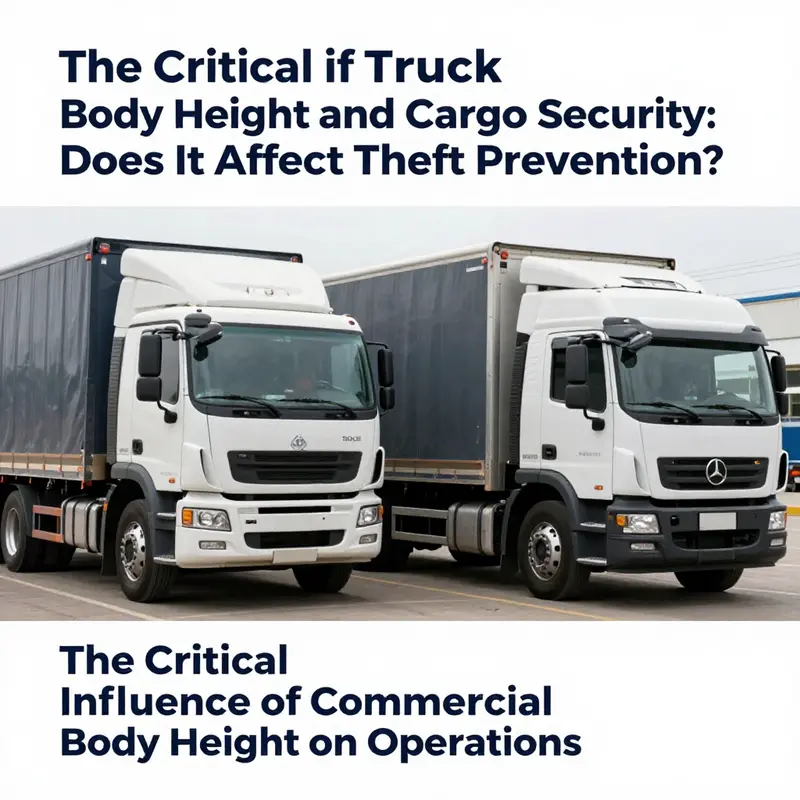
Height is often treated as a mere geometric parameter in the design of commercial trucks. Yet as this chapter makes clear, body elevation sits at a critical junction where loading practicality, weather exposure, and, crucially, security intersect. The question of whether height affects theft prevention cannot be answered in a vacuum. It depends on how height interacts with enclosure, locking systems, loading practices, and the habits of the people who handle the cargo. In practical terms, a taller cargo area can ease certain kinds of loading and staging work, especially for bulky items or tall pallets, but it also expands the open space that thieves might exploit if the vehicle’s security measures are not commensurately robust. The result is a nuanced picture in which height can serve as both ally and vulnerability, depending on how a fleet pairs it with thoughtful design elements and disciplined procedures. The broader implication echoes through the corridors of the industry: when height is chosen, it is not just about capacity or ergonomics; it is a security hatch that can either close off opportunistic access or invite it, depending on the supporting features that accompany the design.
The dynamic between height and vulnerability begins with visibility. Taller bodies extend the cargo area upward, but they also raise the baseline for visual monitoring from ground level. In urban or peri-urban deployments—where theft opportunities often arise during loading, unloading, or brief stops—this can translate into a practical blind spot. When the cargo deck sits well above eye level, security becomes highly dependent on the integrity of the surrounding enclosure and the consistency of secure loading practices. A high interior height does not automatically invite theft, but it does create a larger arena for mischief if the sides are inadequately enclosed or if fasteners, seals, and doors are not kept in rigid condition. Industry guidance has long emphasized that cargo exposure is not merely about the load itself but about how the load is secured within the body. Secure tie-downs, reliable latching systems, and robust side and rear doors all counterbalance the extra vertical space by removing convenient access points.
Lower-profile designs, by contrast, often carry inherent advantages for security. A more compact or enclosed footprint reduces the number of openings a would-be thief can exploit and concentrates attention on the doors, seals, and locking mechanisms that guard the perimeter. When a truck operates with a lower body height but a fully enclosed interior, the likelihood of opportunistic theft declines because the critical access points—the rear and side doors—are less exposed and more easily monitored and controlled. Yet even within lower profiles, security is not automatic. It hinges on the quality of door hardware, the strength of the locking system, the integrity of the seals, and the existence of auxiliary protections such as tamper-evident seals or electronic monitoring. The takeaway is not that height alone defines security, but that height shifts the balance of risk and protection across the vehicle’s entire security architecture.
A robust security approach, then, treats height as one dimension of a broader system. If a high cargo area is necessary for the cargo mix—tall equipment, stacked pallets, or oversized items—the security equation must compensate for increased exposure with stronger enclosure and more vigilant loading practices. The literature underlines a straightforward principle: cargo exposed to weather and theft requires secure tie-downs and proper loading knowledge. This is not merely a matter of keeping rain off goods; it is about ensuring that every load point is controlled, every strap or net is tensioned correctly, and every opening is locked and sealed when the vehicle is unattended. A high box or taller flatbed without these protections is more than just a vulnerability; it becomes a signal to would-be criminals that the cargo is potentially accessible with minimal effort.
Conversely, when height is minimized in service of security, the emphasis shifts to the strength and reliability of the enclosure. A lower body height paired with full enclosure and lockable doors can act as a formidable deterrent to theft. The confluence of height and enclosure matters here: a compact height with generous, lockable access points can support quicker loading and unloading while preserving a strong barrier against unauthorized access. This approach echoes a broader security philosophy across logistics: design for secure access, not merely convenient access. In practice, this means that fleets may opt for tighter tolerances around door alignment, deeper door drops, reinforced hinges, and higher quality locking hardware. It also means adopting practices that reduce exposure time—minimizing roadside dwell time, leveraging staging areas, and ensuring that the cargo remains secured from the moment the vehicle is left unattended until it is ready for the next leg.
The discussion naturally extends to the way height interacts with different cargo profiles. For tall or bulky loads, a higher interior height can streamline handling by reducing the need for insecure overhangs or awkward offloading angles. Yet tall interiors require equally tall support measures: reinforced side rails, more reliable tarping or cover systems, and a disciplined approach to securing the load so that nothing can shift and create an access point during transit. If these measures are absent, the additional vertical space becomes a liability, offering thieves more room to maneuver behind unsecured panels or under loosely fitted tarps. In this sense, height becomes a design promise that can be kept or broken depending on adherence to security protocol. For smaller, highly valuable loads, a lower, fully enclosed configuration can be more than adequate provided it is backed by high-security door systems and active monitoring. The key is to align the height with the cargo type and the typical mission profile, then complement that choice with a matched security regime.
From a practical operations perspective, height also interacts with the realities of loading and unloading workflows. A taller body requires equipment and procedures that can safely manage higher or bulkier cargo. This can influence not only the ergonomics of work but the security posture as well. The ergonomic dimension matters because when operators are fatigued, their loading practices may become inconsistent, creating security gaps inadvertently. A 2025 study on ergonomics in heavy commercial vehicles highlighted how optimizing seat height and cab access can improve operator comfort and reduce fatigue during repetitive tasks. While that study focused on operator well-being, the underlying principle applies to security: systems that are easier and safer to operate are less likely to be bypassed or rushed, reducing the chance of careless loading that leaves gaps in security. In other words, height that supports safe and controlled handling indirectly reinforces a more secure cargo enclosure.
The security calculus also involves how height interacts with monitoring and deterrence technologies. Even the best-designed enclosure cannot fully protect cargo if there is little visibility and limited deterrence. The presence of visible security features—locking mechanisms, tamper-evident seals, reinforced doors, and interior lighting—can compensate for the gaps that height introduces. In addition, modern fleets increasingly rely on supplementary measures such as sensor-based monitoring, real-time geofencing, and mobile alerts to detect tampering attempts during unloading and loading. While these technologies sit outside the physical geometry of height, they respond to the realities height creates: more space to exploit, more temptation to examine, and more time a thief has to operate if not deterred. The security strategy, therefore, must weave height, enclosure, hardware quality, and monitoring into a coherent, mutually reinforcing system.
A critical nuance concerns the regulatory and economic dimensions of height as they relate to theft risk. Body height influences not only the cargo’s exposure but the vehicle’s compliance with weight and dimension restrictions, which in turn shape route planning and stop frequency. In some jurisdictions, exceeding permitted height limits can invite fines or route restrictions, increasing operational risk and potentially pushing fleets toward riskier loading or staging areas that compromise security. From an economic standpoint, the costs of height-related security failures extend beyond direct losses. They include cargo claims, insurance premiums, and reputational damage, all of which can be triggered when a high, inadequately secured load is compromised. In short, height is not just a physical attribute. It is a driver of procedural discipline and regulatory awareness that, when managed well, lowers overall risk. When mismanaged, it magnifies exposure and elevates potential losses.
What emerges from this integrated view is a practical philosophy for fleets evaluating height choices. If the cargo mix requires tall spaces, invest in a robust security envelope—tight tolerances around doors, high-strength locking systems, secure anchoring points, and clear, disciplined loading protocols. If the mission favors low profile and maximum concealment, ensure that the enclosure is not merely present but actively protected—sealed, locked, and monitored, with procedures that minimize time spent with the cargo exposed. Height does not determine theft risk by itself; it shifts the balance and magnifies the consequences of weak security practices. The most secure configurations are those in which height, enclosure, hardware, and human habits reinforce one another, creating a system where the cargo remains protected even when the vehicle is stationary or briefly unattended.
For readers seeking a concise route into these considerations, industry discussions embedded in professional resources offer practical guidance and illustrative case studies. These discussions emphasize that cargo security hinges on a holistic approach rather than on any single feature. A height that is harmonized with enclosure quality, lock integrity, and disciplined loading procedures tends to yield the best outcomes in real-world conditions. The interplay between height and security reinforces a broader lesson about fleet design: there is no one-size-fits-all answer. The optimal height for a given operation is the height that enables efficient, safe loading while supporting a robust, enforceable security posture. It is a balancing act where the geometry of the truck body must be matched to the security architecture and the operational routines that govern how cargo is moved, stored, and protected.
In closing, height is more than a dimensional footnote. It is a design lever that influences visibility, accessibility, and the effectiveness of security measures. Taller bodies can offer ergonomic advantages for certain cargo types but require stronger, more disciplined security practices to close the loopholes that extra vertical space can create. Lower profiles, when fully enclosed and well-locked, can deliver strong theft deterrence with simpler workflows. Either way, the chapter of security in truck design is not written by height alone; it is written by the combination of height, enclosure, hardware, and the human routines that implement them. The corridor between loading dock and highway is where these choices play out, and where the most resilient security postures emerge from a deliberate synthesis of geometry and guardrails. For those seeking further discussion of practical loading ergonomics and their relation to vehicle design, academic and industry sources offer depth and context that can illuminate best practices for future fleets. See the referenced internal resource for broader context, and consult external reading on loading ergonomics for a deeper technical understanding: McGrath Trucks blog. For a deeper technical reading on ergonomics and heavy vehicle design, explore this study: https://www.sciencedirect.com/science/article/pii/S187770532500049X
The Height Factor: Cab-Trailer Geometry and Fuel Efficiency in Commercial Trucks
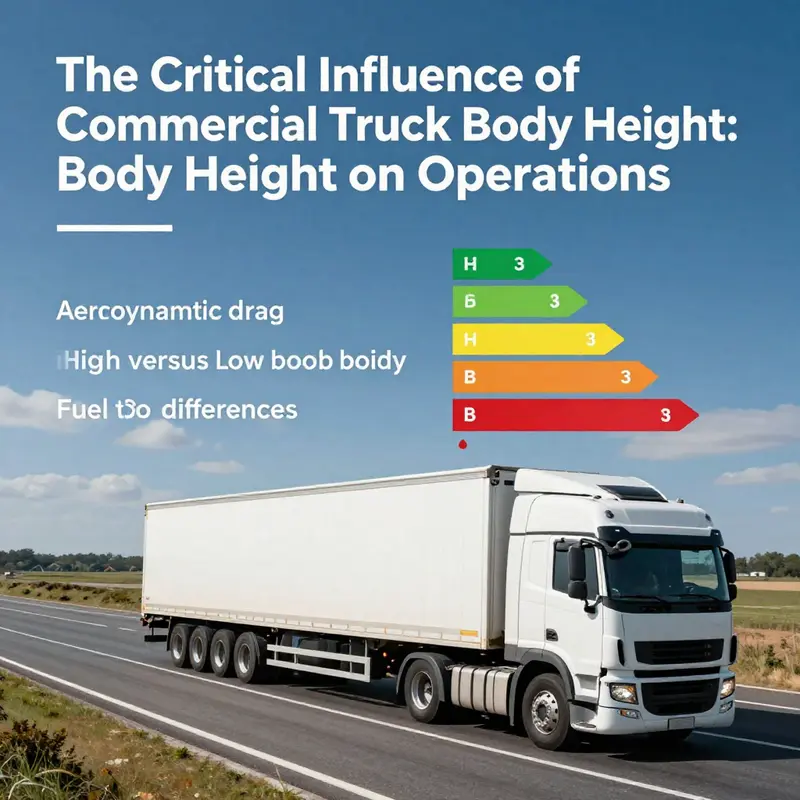
When a heavy truck slices through the air on a highway, the cab-trailer interface shapes drag and fuel use. The vertical relationship between the cab and the trailer interacts with the vehicle’s wake, so careful height differences and gaps can reduce pressure drag and improve miles per gallon. CFD and wind-tunnel studies show that even modest adjustments can yield meaningful gains, especially over long hauls where air resistance compounds. Alignment with other aerodynamic features—roof fairings, gap fairings, side skirts—tends to amplify the benefit. In practice, fleets balance cargo height, regulatory limits, and securing needs while pursuing aerodynamic optimization as part of total cost of ownership. The takeaway is that height should be treated as a design parameter within an integrated drag-reduction strategy, not a fixed constraint.
Height as Rule and Route: How Truck Body Height Regulates Compliance, Cost, and Day-to-Day Operations
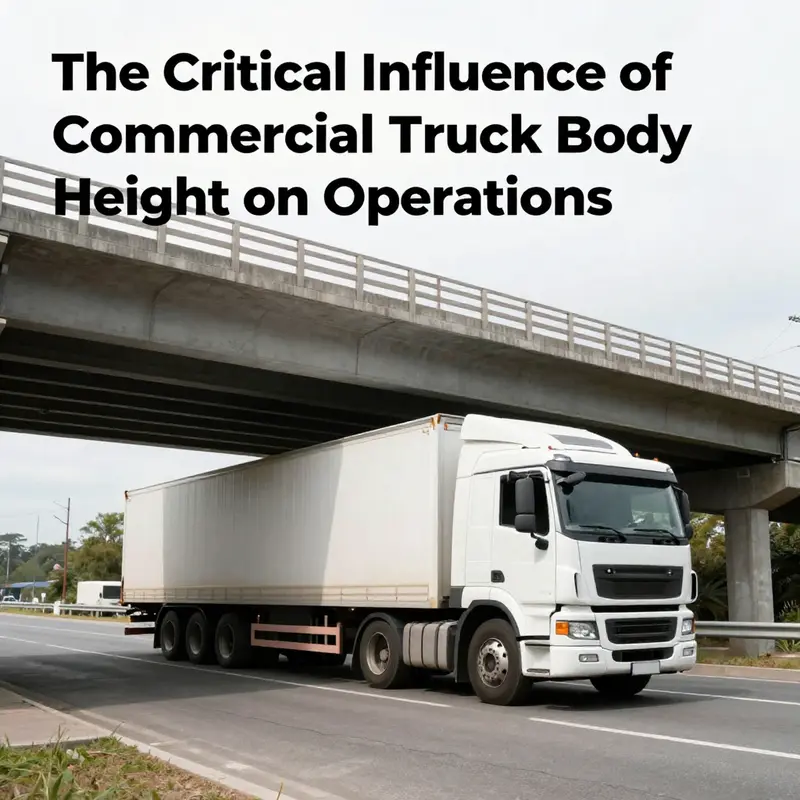
Height is more than a measurement of a truck’s cargo bed. In commercial trucking, it serves as a regulatory variable, a performance lever, and a practical constraint influencing decisions for fleets, drivers, and yard supervisors. Discussion around truck body height quickly shifts from aesthetics or capability to compliance, risk, and efficiency. The height impacts what can be carried, where it can travel, and how reliably it operates within legal guidelines.
In the United States, a commonly cited maximum cargo height is 13.5 feet, forming a benchmark because most interstate highways and many local roads are engineered with this clearance. However, regulations vary: exemptions and allowances exist depending on state and cargo type, especially for oversized equipment or specialized materials. Despite variations, all truck types must meet safety rules about load securement and distribution.
Height impacts route planning, cargo stability, and regulatory compliance. Taller loads increase risk of shifting, requiring meticulous securement per FMCSA requirements. As height increases, the load’s center of gravity changes, influencing vehicle stability. Compliance with securement standards becomes more critical with taller configurations.
State and local rules introduce complexity into maximum height limits. Some routes require permits for clearances lower than federal standards, affecting planning and risk management. This coordination prevents infrastructure damage and delays.
Truck body design reflects height considerations. A taller body can carry more or bulkier items, but with potential drawbacks involving securement space, clearance restrictions, and route access. Urban fleets may prefer lower profiles for maneuverability and safety around obstacles.
Height also interacts with GVWR and axle load planning, influencing weight distribution and fatigue on braking and suspension systems. Loading practices, unloading procedures, and customer site access are often determined by height limitations for delivery routes.
Technological tools such as telematics and real-time dimension monitoring help operators maintain legal and safe height limits. These systems detect changes in load height and alert drivers to potential issues, supporting compliance reporting.
Deciding optimal body height involves balancing the cargo profile, loading frequency, route constraints, permit needs, and operational efficiencies. Lower height can reduce aerodynamic drag and simplify urban deliveries, while taller bodies benefit certain bulky, lighter loads—requiring coordinated planning to avoid restricted corridors.
The McGrath Trucks blog offers practical commentary and scenario-based discussions on height and compliance in daily trucking operations: https://mcgrathtrucks.com/blog/. For official guidelines and updates, refer to the FMCSA portal: https://www.fmcsa.dot.gov.
Height management remains crucial as infrastructure and enforcement evolve. Resilient operators treat height as a dimension to optimize, ensuring on-time delivery, safety, and compliance.
Final thoughts
In conclusion, the height of commercial truck bodies holds significant implications for various operational elements in the trucking industry. From enhancing loading and unloading efficiencies to ensuring cargo security, affecting fuel economy through aerodynamics, and navigating regulatory landscapes, truck body height is a crucial factor that fleet managers and company owners must consider. Making informed choices regarding truck body height not only influences daily operations but also significantly impacts overall operational costs and compliance with regulations. A strategic approach to understanding and implementing the appropriate truck body height can lead to improved safety, enhanced efficiency, and higher profitability.