The capacity of commercial tanker trucks varies widely, impacting operations in various industries such as logistics, construction, and mining. This variance is crucial for trucking company owners, fleet managers, and procurement teams when making decisions about transportation methods and economic efficiency. From smaller utility trucks carrying a few thousand gallons to large-capacity transport trucks exceeding 10,000 gallons, understanding these capacities is essential. Each chapter in this article will clarify the average holding capacities of different tanker types, discuss regulatory constraints, and examine how these factors affect transportation and logistics in a commercially competitive environment.
Gallon by Gallon: A Comprehensive Look at How Much a Commercial Tanker Truck Really Holds
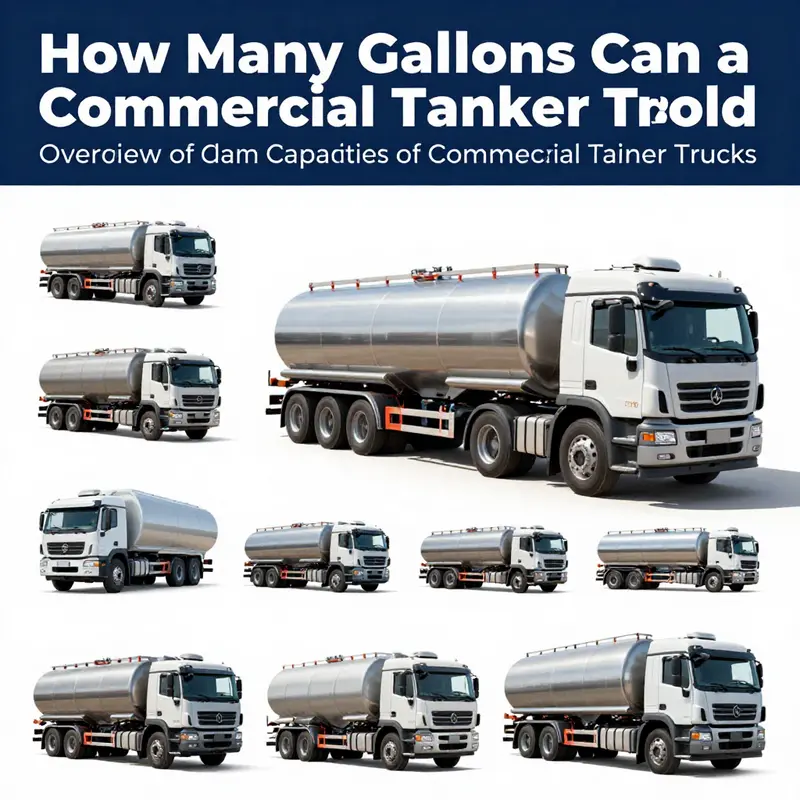
When a fleet manager asks how many gallons a commercial tanker truck can hold, the short answer is not a single number. The real figure depends on what is being hauled, where the truck travels, and how the vehicle is built to meet safety and weight rules. Across the industry, capacities span from a few thousand gallons to well over ten thousand, with exceptional configurations that push the upper end under specific regulatory allowances. In practical terms, most standard tankers designed to move common liquids such as fuels or dairy products land in a broad middle ground, while specialized cargoes and long haul operations push toward the extremes. A practical starting point for understanding capacity is to compare the typical ranges seen in the field, including the more conservative end for smaller utility trucks and the higher end for bulk transport, all while keeping weight and safety in clear view.
To ground the discussion, consider a widely cited range: 2,000 to 10,000 gallons as a baseline for many commercial tankers. This envelope reflects a spectrum of vehicle classes and job profiles. On the low end, utility and service trucks often carry 2,000 to 4,000 gallons, delivering water, chemicals, or fuel in urban environments where maneuverability and road permissions matter as much as payload. Mid-range configurations, around 3,960 gallons, are common for standard 15 cubic meter tankers. The conversion is straightforward: one cubic meter equals about 264.17 gallons, so a 15 cubic meter tank holds roughly 3,960 gallons when filled to capacity. On the high end, large-capacity transport trucks used for bulk fuel or hazardous materials can approach 10,000 gallons or more, and in some cases, specialized models exceed this figure. These numbers align with what operators see in the market and on the road, where the goal is to maximize productivity without crossing weight or regulatory boundaries.
The numbers above gain additional texture when you think about the typical cargo profiles that define different sectors. Fuel delivery, whether gasoline or diesel, often relies on tall, multi-compartment tanks designed to minimize cross-contamination and to facilitate rapid loading and unloading at distribution hubs. Dairy or food-grade liquids require additional hygiene controls and materials compatible with dairy processing standards, which can limit tank size and configuration. Chemical tankers accommodate a wide range of substances with distinct safety needs, from corrosion resistance to the necessity of segregating incompatible liquids. In each case, the capacity figure is not just about how much fluid can physically fit in a vessel; it is also about how the truck behaves under legal weight limits and how it handles the substance’s properties during transport. A widely cited operational principle is that the tank’s volume and the vehicle’s weight must coincide with the road rules that govern axle loadings and total gross vehicle weight. Even if a tank is physically large, the legal limits on weight may prevent loading it to the tank’s stated capacity.
To illustrate the weight side of the equation, it helps to look at approximate densities. Gasoline weighs about 6 pounds per gallon, while diesel weighs around 7 pounds per gallon. Water is 8.34 pounds per gallon. These figures matter because they reveal how quickly a full tank can approach or exceed the vehicle’s weight limits when you translate gallons into pounds. A roughly 5,000-gallon gasoline load carries about 30,000 pounds of liquid, while 5,000 gallons of diesel is nearer to 35,000 pounds. When you add the weight of the tank itself, the chassis, the cab, and any trailer components, the loaded vehicle must still satisfy the gross vehicle weight rating and the axle weight restrictions on the routes it travels. Fleet operators plan around these calculations because exceeding weight limits invites legal penalties, increases fuel consumption, and raises the risk of road damage or safety incidents. The upshot is that the stated tank capacity does not always translate into a full load on every route; savvy operators optimize fill levels based on the combination of product type, route, and applicable weight rules.
This is where design and regulatory frameworks intersect. Tankers are not monolithic; they are built with a range of features that influence how much they can carry effectively. One decisive factor is the presence of multiple compartments versus a single large tank. Multi-compartment designs enable a tanker to haul more than one product in a single trip, which is a time and cost saver in complex logistics. The compartments are typically segmented by baffling to control slosh and to prevent liquid shifts during acceleration, braking, and cornering. Baffles help maintain stability, protect the structure, and safeguard the unloading process at the destination. The trade-offs here are nuanced: adding compartments can increase total capacity, but it also adds weight, complexity, and cleaning requirements between cargoes. Additionally, the materials used for the tank walls must be compatible with the cargoes. A stainless steel or aluminum tank might be preferred for dairy and certain chemicals, while other liquids may require protective coatings or liners to prevent corrosion or contamination. The result is that a given vehicle model can appear to offer a certain gallon capacity on paper, but the practical usable capacity at load time is shaped by cargo compatibility, cleaning cycles, and the need to preserve product integrity.
Another layer of complexity comes from regulatory and operational realities. The United States, like many countries, employs weight-based road regulations that directly affect how full a tank can be when it leaves a loading facility. The gross vehicle weight rating, or GVWR, is a sum of the vehicle’s weight and its payload. For many tractor-trailer configurations, a common ceiling is around 80,000 pounds gross on interstate highways, though state rules can vary and some trucks are allowed higher or lower limits depending on the route, season, and vehicle configuration. If you translate this into gallons through product density, you see why many operators quote 5,000 to 10,000 gallons as typical for fuel tankers. The math is straightforward but unforgiving: heavier liquids or larger volumes push the total weight toward the limit, and any additional payload—such as incidental freight carried in the cab or the container itself—can push the vehicle over the line. In practice, a tanker built to hold 10,000 gallons of gasoline might not be legally loaded to that full capacity on every trip, especially in areas with heavier traffic, tighter bridges, or stricter enforcement.
The diversity of cargo types further shapes capacity expectations. For dairy products, which require clean-out and hygienic handling, tankers tend to be in the range of 6,000 to 8,000 gallons. The need to minimize exposure to air, to facilitate sanitation between loads, and to protect product quality constrains both volume and design choices. Chemical tankers, meanwhile, range widely—from roughly 3,000 gallons for smaller, specialized units designed to handle hazardous substances, up to 10,000 gallons or more for bulk chemical deliveries. The wide spread reflects not only differences in safety requirements and material handling but also the regulatory frameworks governing the transport of hazardous liquids. In all cases, the precise capacity is determined by the combination of the cargo’s properties, the tank’s construction, and the route’s legal restrictions. This is why a single fleet might operate a mixed fleet with several tank sizes to optimize routes, loading times, and compliance costs rather than rely on a single high-capacity solution.
Beyond the numbers and the rules, there is also a practical discipline that governs how tank capacity translates into real-world performance. The loading and unloading process is a critical operational choke point that interacts with volume. Loading efficiency depends on pump capacity, fill rate restrictions, and the efficiency of the loading facility. Unloading is influenced by the pump’s discharge rate, the ease of connecting hoses, and, once again, the network of distribution centers and refineries that shape daily schedules. In many fleets, the decision to operate a larger tank is a strategic choice tied to how often a truck can make trips between supply points. A larger tank reduces the number of trips required for the same delivery cadence, but it also slows down loading and unloading at each end and increases the likelihood of needing to curb speed or take longer routes to stay within weight limits. The result is a delicate balance between maximizing gallon-per-trip efficiency and ensuring reliability, safety, and regulatory compliance across the entire route network.
A practical takeaway for readers who are planning or evaluating tanker fleets is that capacity is best understood as a component of an integrated fleet strategy rather than as a standalone specification. When you compare two fleets, you might see one with a higher stated capacity and one with more trips but smaller loads. Each approach has merits depending on the route structure, the distribution network, and the nature of the liquids being moved. For those who want a broader sense of how tankers fit into a larger fleet strategy, consider looking at industry discussions on current trends in used truck sales growth, which can illuminate how operators balance asset utilization, depreciation, and fleet renewal cycles across a mixed fleet (Current trends in used truck sales growth). Exploring that kind of market dynamic helps frame capacity decisions within the broader context of asset management, maintenance scheduling, and investment timing.
In addition to the technical and regulatory dimensions, the capacity question also invites a historical lens. The evolution of tanker design—shaped by safety codes, material science, and the demands of rapid urbanization—has steadily expanded the practical capabilities of trucks without compromising safety. Improvements in corrosion resistance, insulation, pump technology, and unloading methods have helped operators push the envelope on usable capacity while maintaining acceptable loading and unloading times. Yet the core constraint remains the same: weight on the road. The urge to carry more fluid is always tempered by the legal and physical realities of moving heavy loads on real roads, with real traffic, and under real weather conditions. This tension between aspiration and constraint is what makes the topic of tanker capacity both technical and human. It’s a reminder that the volume that can be shipped in a single trip is not simply a factor of tank size but a function of safety, compliance, and efficient logistics planning.
For readers who seek a crisp, data-informed reference, the underlying capacity dynamics are embedded in broader vehicle capacity discussions that address how trucks operate within road networks. The relationship between volume and weight, between compartment design and unloading efficiency, and between cargo type and cleaning requirements all feed into a single, actionable narrative for fleet operators. The bottom line is that most commercial tankers used in everyday operations fall into a practical operating band of roughly 5,000 to 10,000 gallons, with smaller specialist units and larger or legally constrained configurations providing exceptions aligned to specific business needs and regulatory allowances. When evaluating a tanker for a given operation, operators weigh the cargo’s density, required hygiene standards, route geometry, and weight rules against the anticipated trip cadence to arrive at an optimal capacity that maximizes reliability and minimizes cost.
External resource and further context can be found in the national guidelines that anchor these discussions in road safety and infrastructure policy. For a regulatory perspective on vehicle capacity, you can consult the FHWA Vehicle Capacity resource, which provides a framework for understanding how capacity is interpreted within the broader context of roadway safety and efficiency: https://www.fhwa.dot.gov/infrastructure/roadway/safety/vehicle_capacity.cfm.
As fleets continue to evolve, and as markets shift with fuel prices, regulatory changes, and demand patterns, the capacity question will persist as a practical guide for decision makers. The science of weight distribution, the art of efficient loading, and the discipline of compliant routing all converge in every decision about how many gallons a tanker truck can hold. The numbers remain a guide—useful, but always understood through the lens of what the road and the law will permit on the day of operation. For operators, that translates into not just moving more fluid per mile, but moving it safely, legally, and reliably, so that every gallon carried is part of a well-planned, well-executed logistics equation.
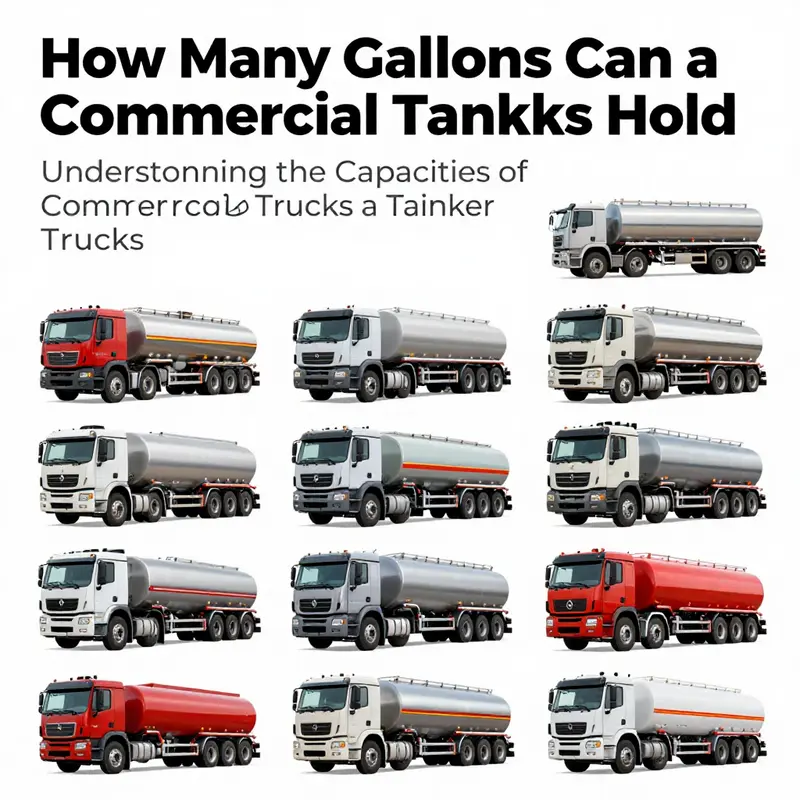
Inside the Gallon Gauge: How Tanker Truck Types Define Load Capacity
Internal link note: In discussions about fleet composition and equipment refresh cycles, readers may find value in the article on Current trends in used truck sales growth, which highlights how buyers weigh capacity against efficiency. This context helps connect the capacity realities of tanker trucks to broader market dynamics that influence what fleets invest in and how they deploy their assets. Current trends in used truck sales growth
Gallon by Gallon: Navigating Capacity, Regulation, and Real-World Limits of Commercial Tanker Trucks
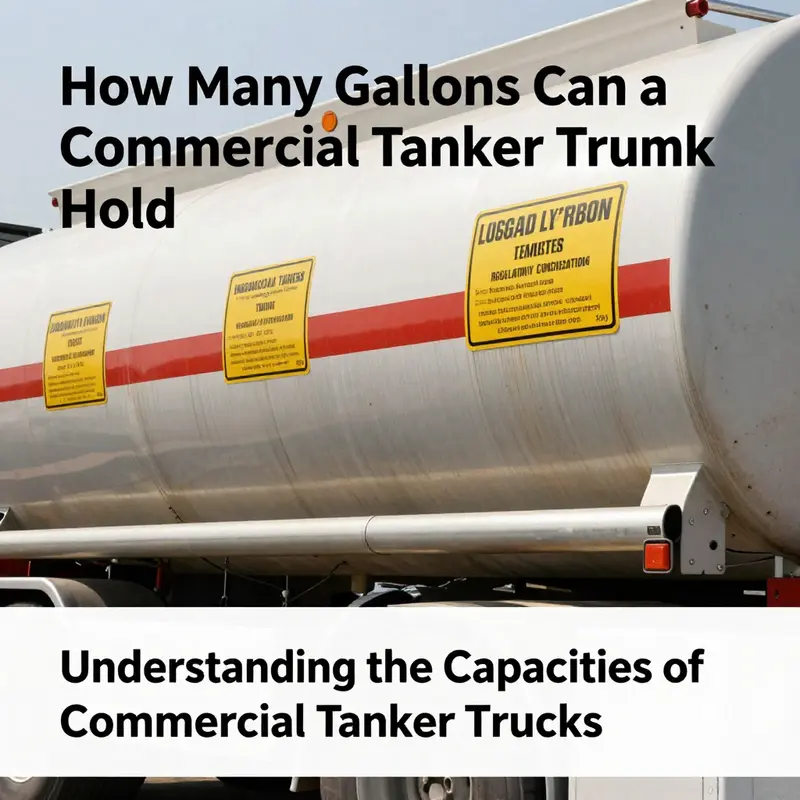
Gallon by gallon, understanding how much a commercial tanker truck can carry goes beyond a simple math problem. It is shaped by cargo type, vehicle design, road regulations, and the practical realities of moving liquids on diverse routes. At a basic level, capacity depends on tank size, but the limits are set by weight, safety, and law. In everyday practice a standard tanker might range from about 8,000 to 12,000 gallons for non hazardous liquids, with higher density products reducing the practical volume due to weight limits. Some specialized tankers can reach around 10,000 gallons or more for long haul operations, but that depends on the vehicle configuration and the regulatory framework. Density matters: water weighs about 8.34 pounds per gallon, while fuels are lighter at roughly 6 to 7 pounds per gallon, meaning two tanks with the same gallons can differ in total weight. Therefore the top payload is not just a tank capacity figure but a legally permissible load that keeps gross vehicle weight under applicable limits. State and federal rules vary, so operators plan loads to fit within weight limits, axle configurations, and routes. Access to loading and unloading facilities, along with the need for safe handling and spill prevention, also shapes what can be carried on a given trip. In short, there is no single universal number; the practical capacity is a negotiated value that reflects product type, regulatory constraints, and the day to day realities of routing and maintenance.
Sizing the Journey: How Tanker Truck Capacity Shapes Movement, Costs, and Compliance
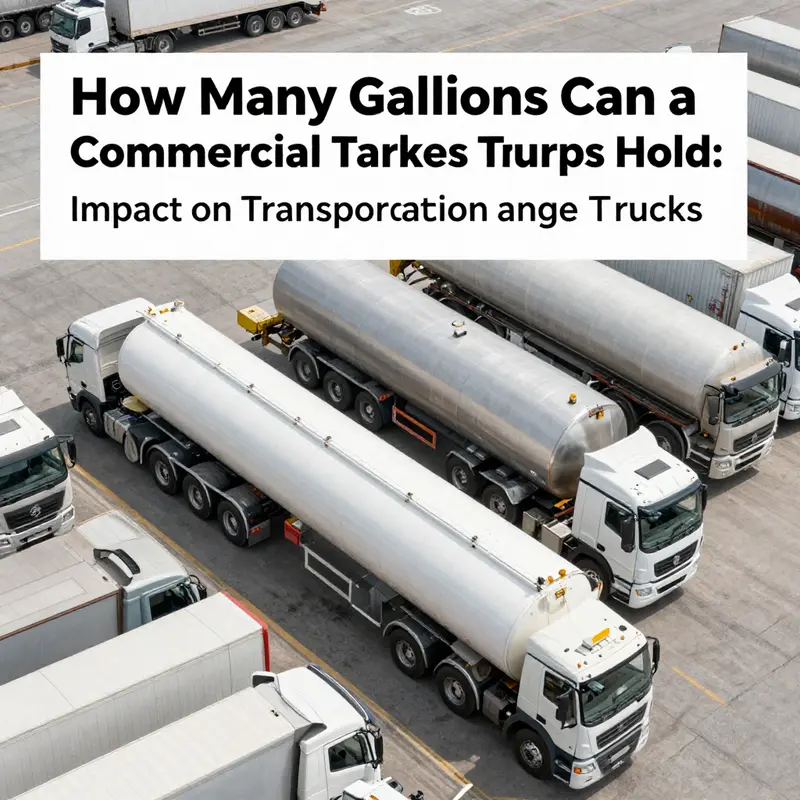
Capacity is not merely a number on a spec sheet; it is the cadence of distribution, the backbone of planning, and a constant negotiation between efficiency and safety. When we ask how many gallons a commercial tanker truck can hold, we are really asking how much water can flow through a city’s streets in a given day, how many deliveries a fleet can complete before fatigue becomes a factor, and how regulations convert a practical possibility into a responsible service. Across the industry, the answer is not one-size-fits-all. It spans a spectrum that begins with smaller service and utility units and climbs to high-capacity transports designed for bulk liquids. The dimensions of this spectrum are not just about volume; they define the economics of fuel, the geometry of routes, and the discipline of compliance that keeps crews and communities safe.
In broad terms, commercial tanker trucks are built to accommodate a wide range of liquid loads. A common takeaway from field data is that capacity varies from roughly two thousand gallons in smaller service configurations—where the tanker is optimized for urban routes or specialized deliveries—to roughly ten thousand gallons or more in bulk-haul applications. Among the most widely used platforms, a 15 cubic meter tanker truck translates to about 3,960 gallons, a figure that has value as a reference point for fleet planners and engineers who must align vehicle class with project scope. Yet that 3,960-gallon benchmark sits within a broader reality: many fleets operate in a band around five to eight thousand gallons when the cargo is fuel, petroleum products, or a broad range of chemical liquids. In practice, those mid-range tankers often reflect a balance between payload and the practical limits of road travel, including weight distribution, maneuverability, and the kind of investment a company makes in a single vehicle versus multiple smaller units.
The picture becomes even more nuanced when you examine the purpose-built, high-capacity models. For long-haul or bulk-liquid operations, capacities may exceed ten thousand gallons, with a handful of configurations reaching twelve thousand gallons or more. These capacities are not chosen in a vacuum. They are harmonized with legal weight limits, axle configurations, and the regulatory environment that governs how much a vehicle can carry safely on a given route. What this means in operation is straightforward: the same road system that supports a steady stream of deliveries must also support the mass and the momentum of a loaded tank. Any misalignment between capacity and the realities of the roadway—grades, urban congestion, or bridge restrictions—erodes the very efficiency the larger tank is designed to deliver.
That tension between capacity and practicality is at the heart of the transportation calculus. A larger tanker reduces the number of trips needed to move a fixed volume, which, in turn, improves fuel economy and lowers some per-gallon costs. The logic is compelling: fewer departures, reduced handling, and less repetitive labor in loading and unloading. But there is a counterweight. Heavier payloads have a direct influence on maneuverability and regulatory compliance. In tight urban corridors, a truck carrying a weight near the upper limit may struggle with turns, curbs, and pedestrian-heavy intersections. Weight-related restrictions can force longer detours and limit the routes available for certain loads or times of day. This imposes a strategic choice: push capacity to cut trips, or accept more trips to keep the fleet nimble and compliant.
From a planning perspective, the capacity question bleeds into the economic logic of the fleet. Fewer trips mean lower purchase and maintenance costs per gallon, as well as reduced labor requirements over the same volume transported. Conversely, the maintenance and depreciation costs of larger tankers rise per vehicle as you scale capacity. There are also risk considerations tied to payload. Heavier tanks demand more robust braking systems, more sophisticated suspension and tire management, and a higher standard for maintenance discipline. The reliability equation, then, isn’t simply about how many gallons a truck can hold; it’s about how those gallons move through a system with predictable consistency.
Regulatory considerations loom large in any discussion of capacity. Agencies that oversee road safety and commercial trucking impose limits that shape how much can be carried by a given vehicle. Axle loads, gross vehicle weight, and per-route restrictions are not abstract concerns; they determine the set of feasible routes, the time windows for travel, and the realities of scheduling. The dimensions of a safe load—how weight is distributed across axles, how it shifts with acceleration, braking, or cornering—are as important as the total gallons on board. Compliance is a dynamic constraint: it changes with changes in road infrastructure, with updates to weight limit rules, and with evolving standards for the transportation of certain liquids. For many operators, meeting these requirements means automated route planning, precise data on cargo density, and disciplined driver training so that each trip remains within the legal envelope while preserving efficiency.
In practical terms, capacity translates into a straightforward but critical metric: gallons per mile. This metric blends the cargo’s density, the vehicle’s weight, the road grade, and the driving regime into a single number that logicians and dispatchers use to judge profitability and reliability. The density of the liquid itself matters, and so do ambient conditions. Temperature fluctuations can change density and viscosity, which in turn influence flow rates during loading and off-loading. Adispatcher who understands capacity must also factor in the possibility of partial loads and multiple stops in a single route. A tanker that can carry twelve thousand gallons may not always fill to reach that maximum on every trip. If the destination profiles require shorter legs with multiple drops, a mid-range capacity or a more modular configuration could yield a smoother, more predictable run than a single, monolithic box of liquid. The poetry of capacity lies in its flexibility as much as in its volume.
The operational implications extend to the urban environment where roads meet the realities of city life. Large-volume tankers can deliver efficiency, but their weight and size influence traffic dynamics. Studies and field observations show that heavy tanker traffic can reduce average speeds and extend travel times, particularly in dense urban cores. The picture is not purely negative; the same vehicles can deliver essential services with fewer trips and lower per-delivery emissions if properly managed. The key lies in balancing scale with traffic realities, finding the right mix of capacity to match route structure, delivery windows, and local constraints. In other words, capacity becomes a tool for shaping not just how much is moved, but how smoothly movement occurs through a geographic mosaic of streets, signals, and neighborhoods.
The regulatory frame that governs tanker capacity is anchored in the duty to keep roads safe while enabling commerce. The Department of Transportation and related agencies set the macro limits on axle loads and gross vehicle weight, then rely on state and municipal authorities to implement them on the ground. Teams responsible for fleet composition must translate these rules into practical choices about tractor-semitrailer combinations, tank dimensions, and the distribution of payload across axles. It is common for operators to engage in meticulous route planning that accounts for bridge heights, pavement limitations, and height or width restrictions on certain corridors. In some cases, the design of the tank itself—such as baffle placement in multi-compartment configurations for different liquids—must align with safety requirements that govern surge, inert gas usage, or vapor pressure. These constraints make capacity not just a matter of how many gallons a tank can hold, but how those gallons can be moved with minimal risk and maximum predictability.
The decision calculus around capacity also has an important qualitative dimension: customer service and reliability. Larger loads can enable crews to visit fewer facilities more consistently, which can improve customer relationships and reduce the likelihood of missed deliveries due to scheduling gaps. On the other hand, high-capacity tanks can create a single point of failure: if a pump, hose, or valve malfunctions, the consequences can be more severe than for smaller loads because more material remains at risk during an incident and the downtime may be longer. For managers, the challenge is to design a capacity strategy that preserves the speed and reliability customers expect while maintaining the highest safety standards. It is not unusual to see fleets that employ a mix of tank sizes, with mid-range units dedicated to core routes and larger units reserved for bulk corridors where the scale justifies the investment. This blend allows operations to respond to a range of demand patterns, seasonality, and regulatory changes without sacrificing efficiency.
To anchor these considerations in practical imagination, imagine a scenario where a regional distributor must move a multi-liquid portfolio across a network of distribution centers. A five- to eight-thousand-gallon tanker can handle a broad set of demand profiles, delivering steady service with predictable loading and unloading cycles. For high-volume markets or critical supply chains, a twelve-thousand-gallon configuration might be deployed to reduce trips and stabilize service levels, provided the route structure supports such a load and the company can manage the weight constraints across the day. The cost calculus in this scenario becomes a balance: the savings from fewer trips must outweigh the incremental maintenance, insurance, and depreciation that accompany larger tanks. In some markets, the difference between a three- to four-hour cycle and a six- to seven-hour cycle can define a quarter of monthly revenue, simply because time on the road translates into capacity to meet demand, and demand, in turn, defines every dispatch decision.
For readers seeking a grounded sense of how this translates into policy and practice, regulatory resources offer a map of the terrain. DOT guidelines, axle-load restrictions, and state-specific rules shape what is possible in any given lane. The interplay between policy and practice underscores the broader point: capacity is not a standalone attribute but part of an ecosystem of safety, scheduling, and service commitments. As regulations evolve, fleets must adapt their configurations, not just to comply, but to sustain the same level of reliability and cost-effectiveness that clients depend on. This dynamic helps explain why literature on tanker capacity often emphasizes not just the raw gallons but the design philosophy that enables safe, timely, and efficient movement.
For readers who want to explore practical perspectives on capacity, the discussion in industry forums and trade publications often points back to a core idea: capacity should align with the route structure and the customer demand profile. In some cases, a fleet benefits from standardizing around a few core capacities to streamline maintenance and training, while in other cases a modular approach—where tank sections can be reconfigured or swapped—offers the flexibility to respond to shifting markets without sacrificing safety. The overarching aim remains consistent: maximize reliable service within the guardrails of safety and legality. That is the core reason why capacity planning and route design sit at the center of transportation and logistics strategies, influencing every decision from maintenance scheduling to fuel purchases and driver training.
To connect this discussion to practical learning and ongoing industry discourse, many operators turn to trusted resources that document trends and provide actionable guidance. For readers interested in further context on capacity, market dynamics, and fleet optimization, a visit to the widely consulted industry blog offers a concise synthesis of current thinking and real-world case studies. mcgrathtrucks.com/blog/ This resource frame helps situate the capacity question within broader fleet management challenges, from emissions considerations to the evolution of used-truck pricing and market cycles. It is in such conversations that the nuances of gallon capacity emerge as strategic levers rather than mere numbers on a spec sheet.
On the regulatory front, professional practice and policy are intertwined. The Federal Motor Carrier Safety Administration and related authorities provide the foundation for how capacity is translated into practice on the road. Their guidance shapes everything from the acceptable weight per axle to the training requirements for drivers who handle heavy liquids and hazardous materials. These guidelines are not only about compliance; they are about creating a predictable operating environment where capacity, fuel, maintenance, and driver performance harmonize rather than collide. Operators who internalize this perspective tend to approach capacity as a living metric—one that informs daily dispatch decisions, safety drills, and long-term fleet modernization plans. The result is a transportation system that can scale up to meet rising demand while preserving the safety and efficiency essential to modern logistics.
In closing, the capacity question remains a central thread in the story of commercial tanker transportation. The numbers—5,000 to 8,000 gallons as a typical band, up to 12,000 for specialized bulk work, and around 3,960 gallons for certain standard configurations—reflect a landscape shaped by physics, road geometry, and regulatory intent. But the deeper meaning lies in how those gallons are managed: how loads are allocated to routes, how vehicles are configured for balance and control, how maintenance and driver training reinforce safety, and how regulatory realities constrain or liberate operational choices. The most effective capacity strategy is thus not simply about loading more gallons into a tank, but about orchestrating movement in a way that maintains reliability, minimizes risk, and aligns with the practical rhythms of real-world roads. For practitioners, that means building a spectrum of tank configurations that can flex with demand, staying attuned to regulatory developments, and engaging in ongoing dialogue about best practices that keep the industry moving—safely and efficiently, mile after mile.
External resource: For regulatory context and safety standards, see the Federal Motor Carrier Safety Administration. https://www.fmcsa.dot.gov
Final thoughts
In the context of commercial transport, the capacity of tanker trucks is not just a number—it is a vital component that influences operational efficiency, regulatory compliance, and logistical planning. Understanding the specifics of what these trucks can carry—from 2,000 to over 10,000 gallons—empowers companies to optimize their fleet, reduce costs, and meet delivery demands effectively. Staying informed about regulations and advancements in tanker technologies further enhances the capability to make strategic decisions that align with operational goals.