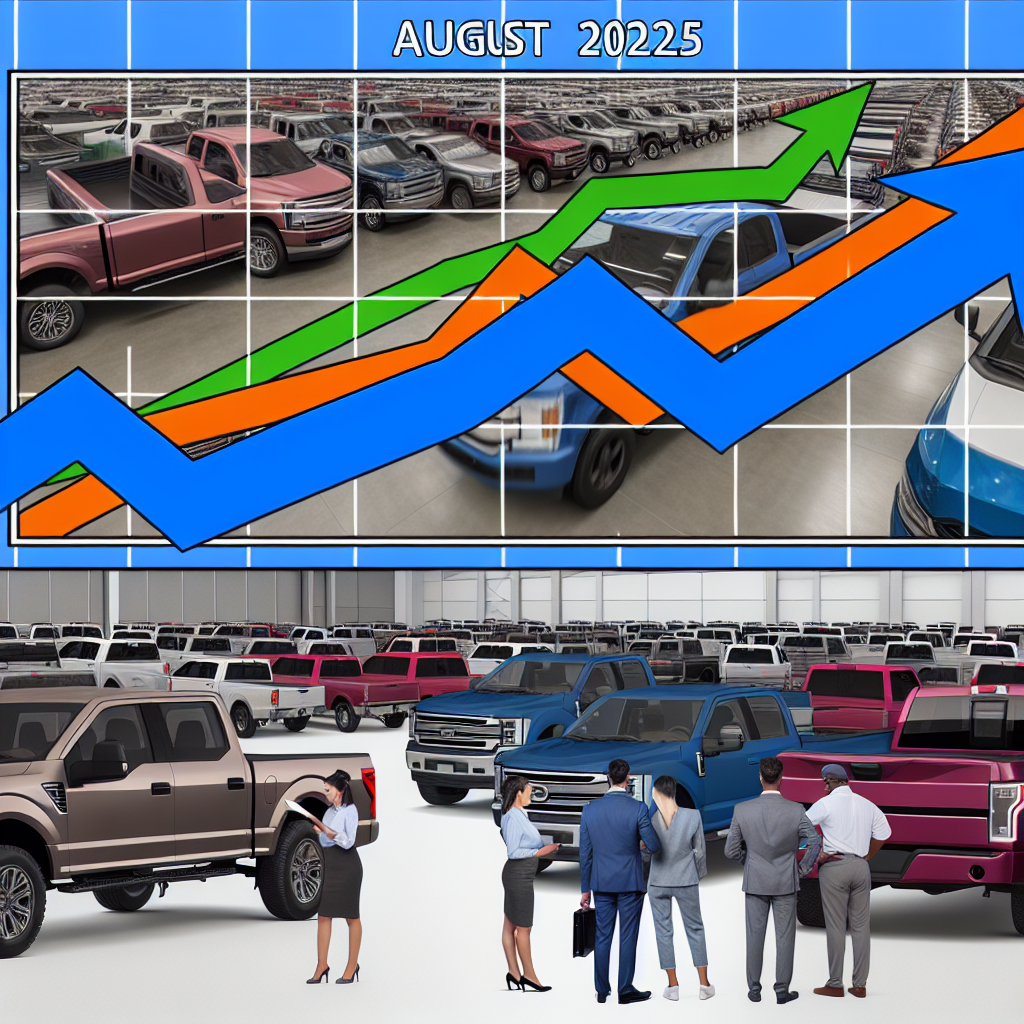
Purchasing a commercial pickup truck for personal use raises important considerations that affect everything from legal compliance to cost efficiency. In an evolving market where these vehicles serve dual purposes, understanding the regulations around use, evaluating the associated costs and benefits, and addressing practical aspects of ownership is crucial for fleet managers, procurement teams, and logistics professionals. This article will delve into the regulatory landscape, provide a cost-benefit analysis, and outline practical considerations that will help decision-makers determine whether investing in a commercial pickup truck aligns with their goals.
Riding the Line: Navigating Law, Tax, and Practicalities When Buying a Commercial-Grade Pickup for Personal Use
A long stretch of parking lots, suburban curbside chatter, and the occasional construction site glimpse the everyday reality of why someone might consider a commercial-grade pickup for personal use. The appeal is clear: this kind of truck offers substantial cargo capacity, rugged towing power, and a readiness for outdoor adventures that typical passenger vehicles often cannot match. Yet the practical appeal sits alongside a very real lattice of rules, costs, and logistical considerations that differ from buying a passenger car or a light SUV. If you live in a region where access is relatively open, and your family or business uses align with heavy-duty capability, a commercial pickup can be a smart, efficient solution. If you prize quiet, comfort, and predictable running costs for city commuting, the math may point in another direction. The heart of the matter lies in understanding how regulations, taxation, insurance, and everyday operating realities intersect with the ownership experience of a vehicle that is, by design, built for work rather than for pampered daily transport. The narrative that follows is not a simple yes or no; it is a careful map of what you need to know before you sign a purchase order for a truck that wears the badge of business use, but which you plan to use as your everyday driver and family conveyance.
In the United States, the regulatory landscape for commercial pickups sits at the intersection of federal guidance and state or local rules. Nationally, trucks can be classified as light trucks or commercial vehicles depending on their specifications, especially the Gross Vehicle Weight Rating (GVWR) and how the vehicle is registered. In practice, many individuals do use commercial pickups for personal transportation. The decision to do so is often a question of how the vehicle is classified, how it is titled, and how it is insured. A vehicle that originated as a work asset, if registered with a commercial tag or listed under a business asset, can attract different tax treatment, licensing fees, and insurance considerations than a vehicle bought and registered strictly as a private passenger car. This distinction matters because it influences not only the upfront cost of registration and ongoing fees but also the way the vehicle can be used without triggering compliance concerns. Some states, for example, may impose restrictions on using a commercial vehicle for private use if the GVWR or other specifications trigger classifications tied to business assets. It is essential to anticipate these possibilities and forecast how they would shape your day-to-day life behind the wheel.
Across the regulatory spectrum, tax implications loom large. The federal tax code has designed programs that encourage or accommodate business use of vehicles, with depreciation avenues and potential deductions that can complicate later personal use. Section 179 expensing and bonus depreciation have been popular tools for businesses to write off the cost of qualifying vehicles in the year of purchase. If a vehicle is initially acquired and claimed as a business asset, and its use later shifts toward personal purposes, the Internal Revenue Service may require depreciation deductions claimed previously to be recaptured. In plain terms, turning a business vehicle into a personal vehicle can trigger a tax liability; the amount equals the value of the depreciation write-offs that were previously taken. This is not merely an abstract calculation but a concrete financial consequence that can change the true cost of ownership over the life of the vehicle. The prudent course is to consult with a tax professional who can review your specific usage patterns, your business structure, and the timing of any conversions. They can help determine whether a change in usage should be treated as a taxable event and how best to document the shift to avoid surprises during tax season.
Equally important are the insurance considerations. Personal auto policies are typically designed for passenger vehicles and for a set of use-case assumptions that do not always align with a commercial-grade pickup. A policy designed for a private passenger car may exclude or inadequately cover the higher payloads, heavier duty, and the potential work-related wear and tear that a commercial pickup experiences. In many scenarios, insurers require a specialized policy or an endorsement that explicitly covers the vehicle for personal use while recognizing its commercial pedigree. Without appropriate coverage, a single accident could expose you to gaps in protection and the risk of unreimbursed costs that exceed the value of the vehicle. In short, you may need to secure a tailored policy or an endorsement that spans both private usage and the truck’s inherent business-grade characteristics. The cost of this coverage can be higher than traditional private auto insurance, reflecting the heavier chassis, potential for higher repair costs, and the broader scope of usage.
Another layer of reality concerns operating costs. A commercial pickup’s larger physical footprint, heavier weight, and more powerful engine combinations translate into higher fuel consumption in many conditions. In urban driving or stop-and-go traffic, the advantage of torque and payload capacity can be offset by heavier tires, a stiffer chassis, and drivetrain components that are optimized for payload rather than ride comfort. The result is a typical range where fuel consumption can be 1–3 liters per 100 kilometers higher than a comparable SUV or a light-duty pickup designed strictly for passenger use. That differential may seem small at first glance, but it compounds over the life of the vehicle, especially if your daily routes include a significant amount of city miles or frequent short trips that do not allow the engine to operate efficiently.
The ride quality and daily comfort of a commercial pickup also reflect the vehicle’s fundamental design priorities. Many trucks in this class employ chassis and suspension tuning that prioritize load stability, durability under heavy use, and predictable towing performance over the plushness of a modern passenger SUV. For drivers accustomed to the nimble, softly damped ride of a family sedan, that contrast can be noticeable in urban streets and during longer commutes. Coupled with sometimes stiffer suspensions to accommodate payload and towing loads, the overall ride can feel less refined than a passenger-focused alternative, particularly in rough pavement or after long days on the road. These are not flaws so much as trade-offs inherent in a vehicle that is built to haul, tow, and endure rough use. Understanding this helps you calibrate expectations against your actual needs, rather than letting the glories of payload and torque lure you into a longer-term mismatch between mission and daily transportation.
The regulatory narrative in the United States is further complicated by state and local rules, which can tilt toward leniency in some areas and tighter constraints in others. Some states require commercial-tagged vehicles to adhere to a separate inspection regime, with different renewal cycles or weight-based registration thresholds. In others, a commercial designation may carry extra fees or restrictions on where and how you can operate the vehicle in urban cores. The practical implication is that the value proposition of owning a commercial pickup for personal use is highly contextual. A family that frequently travels to remote locations for outdoor recreation, or a small business owner who uses the truck for weekend projects, might find value in the extra cargo space and towing stability. But if the vehicle remains parked in a dense urban core most days, the extra costs and compliance demands may erode the benefits.
Beyond the United States, the regulatory picture shifts dramatically in other regions, and the word “regulatory” then expands into the realm of public policy. In China, for example, a different but equally meaningful set of rules shapes the decision to purchase a commercial pickup for personal use. In many cases, a pickup is categorized as a commercial vehicle for regulatory purposes. This classification triggers a series of constraints that go beyond the typical private vehicle experience. A notable policy is the 15-year mandatory scrappage requirement for commercial vehicles, which imposes a fixed lifespan before a vehicle can be retired. This policy stands in sharp contrast to passenger cars, which generally do not have such a fixed horizon. The consequence is that owners must anticipate a structured replacement cycle for their commercial pickup, potentially increasing long-run ownership costs and influencing decisions about whether a vehicle is a short- or long-term asset.
In addition, China’s regime features annual inspections, a more frequent cadence than is common for private passenger vehicles in many markets. The requirement for yearly checks adds to ongoing maintenance discipline but also to the recurring administrative overhead of keeping the vehicle in compliant status. The inspection regime is itself a reminder that the vehicle’s commercial heritage carries routine obligations that can shape ownership experience. Conversely, there has been notable improvement in urban access. Although certain cities still impose entry restrictions during peak hours, especially in megacities, the share of urban areas open to pickups has grown significantly. By 2025, reports indicate that more than 90 percent of prefecture-level cities permit pickups in urban areas. This progress broadens the practical feasibility of using a commercial pickup for personal activities, particularly for families or individuals who rely on the vehicle for weekend projects, camping trips, or long-haul moves that require significant cargo and payload capabilities.
The trade-offs in China, as in the United States, hinge on balancing utility against cost and compliance. The cargo capacity advantage of a typical commercial pickup—able to accommodate far more weight than an SUV—remains compelling for those who routinely transport gear, equipment, or large items. Off-road capability, often paired with robust towing power, also resonates with outdoor enthusiasts and workers who need dependable performance in challenging environments. Yet the realities of higher operating costs, the need for annual inspections, and the potential for urban restrictions temper the allure. For families who spend substantial time in urban centers, the decision may hinge on whether the open-air practicality of a commercial pickup can be reconciled with the realities of city driving, safe parking, and the practicalities of routine maintenance.
It is helpful to step back from the immediacy of the purchase decision and consider a broader frame. The question then becomes not simply whether a commercial pickup can be owned for personal use, but whether the life lived behind the wheel aligns with the vehicle’s inherent design philosophy. If your daily rhythm includes regular trips to big-box stores with bulky purchases, frequent hauling of tools and equipment, or weekend expeditions that demand more cargo mass than a typical SUV can carry, the calculus shifts toward utility and resilience. If, on the other hand, your routine centers on efficient, low-cost commuting, long drives in heavy traffic, and comfort as a daily priority, a passenger-focused alternative may deliver happier long-run economics. The decision becomes a matter of personal priorities, regional access, and the willingness to navigate a different set of rules that accompany business-oriented vehicles.
To add a practical dimension to this exploration, consider the broader market context that shapes prices, options, and availability. While the core considerations above hold across borders, market dynamics—such as used-truck price trends, supply chain realities, and financing terms—inevitably influence the decision to buy. The vehicle’s depreciation profile, the availability of large-capacity trucks in your region, and the relative ease of obtaining a policy that suits a personal use case all converge to determine the true total cost of ownership. For readers seeking additional context on market dynamics and price trajectories, the chapter on current trends in used-truck sales growth offers useful insights into how the broader market cadence may impact your choice. current trends in used-truck sales growth
As you navigate these considerations, it is important to approach the process with a structured mindset. Start by clarifying your primary usage patterns. Do you anticipate regular heavy loads, frequent towing, or long weekend trips that justify the payload and torque of a commercial-grade platform? Or is your goal to maximize interior space for passengers while preserving some cargo flexibility? Having a clear picture of trip frequency, average load, and the kinds of items you transport helps anchor discussions with dealers, insurers, and tax professionals. Next, inventory the regulatory constraints in your locale. This means checking your state’s DMV guidance on vehicle classification, weight thresholds, and whether a commercial plate is mandated, depending on who uses the vehicle and for what purpose. If you anticipate converting the vehicle from business to personal use, plan for how depreciation recapture or adjustments may affect your tax situation. Engage a tax advisor early in the process to map out potential liabilities and to structure the purchase in a way that minimizes risk. Insurance considerations follow, requiring conversations with brokers who understand the nuances of commercial heritage and personal use. Secure a policy that covers both ordinary private driving and the higher payload realities of the truck, without exposing you to gaps in coverage during accidents or incidents. In parallel, evaluate total ownership costs, including higher fuel consumption, maintenance demands, and the potential need for specialized servicing that aligns with the vehicle’s work-oriented DNA.
The journey toward ownership, then, is less about chasing a single benefit and more about weaving together a tapestry of benefits and obligations. If your region features relatively permissive access laws and your routine benefits from the truck’s capabilities, the payoff can be substantial. You gain not only a practical tool for transport and hauling but also a vehicle that remains capable across a spectrum of weather and terrain, which is appealing to families and hobbyists alike. The costs—fuel, insurance, maintenance, and potential regulatory fees—become part of a managed budget rather than an unbridgeable obstacle, provided you approach the purchase with foresight and a clear plan for ongoing compliance. The key is to anchor the decision to your real needs rather than to the headlining features of payload, torque, or the sheer impressiveness of larger wheels. In many respects, this is a test of whether your use case values utility over comfort and daily convenience. If the answer leans toward utility while accepting the corresponding trade-offs, a commercial pickup can indeed be a smart, efficient extension of your personal mobility.
Finally, when you move from consideration to procurement, there are practical steps to smooth the path. Before committing to a purchase, verify the vehicle’s GVWR in relation to the threshold that would require commercial registration in your jurisdiction. Contact your DMV or relevant licensing authority to confirm whether the vehicle would be classified as commercial, and whether a commercial plate is required for personal use. If you intend to use the truck primarily for personal driving, document the anticipated usage pattern and discuss it with your insurance carrier to ensure the right coverage from day one. Gather your business records, if any, because the tax authorities may require documentation of any business use, even if the vehicle’s primary role will transition to personal motoring over time. Consider potential modifications or aftermarket additions that enable you to meet your cargo needs while staying within regulatory boundaries and maintaining acceptable levels of resale value. It is also prudent to anticipate the vehicle’s lifecycle costs given its scrappage cycle, maintenance demands, and the possibility of urban access changes in the years ahead.
In sum, the prospect of owning a commercial pickup for personal use is not an open invitation to disregard rules or overlook costs. It is a carefully balanced choice that blends the practicality of substantial cargo and towing capacity with the realities of insurance, taxes, and compliance. The decision should flow from a deliberate assessment of how you live with the vehicle, not just how you value its capabilities. If your daily life involves carrying large items, transporting tools for weekend projects, or venturing into wilderness areas where road-going payload matters, and your region offers relatively open access and reasonable compliance costs, then a commercial pickup can serve as a durable, versatile partner. On the other hand, if your days unfold primarily in urban traffic, where comfort, fuel economy, and predictable maintenance are paramount, a traditional passenger vehicle or a lighter-duty SUV could deliver more consistent satisfaction with fewer administrative hurdles.
External resources can provide further reassurance as you evaluate these options. For official guidance on how your region frames vehicle classifications, registration, and consumer protections, consult the national safety and transportation authority. You can explore authoritative information at https://www.nhtsa.gov/ for comprehensive guidance on vehicle definitions, safety standards, and regulatory expectations that influence ownership choices. This broader context helps ensure that your decision rests on a foundation of accurate rules and current practices rather than assumptions.
Weighing Utility Against Expense: Can a Commercial Pickup Truly Serve Personal Life?
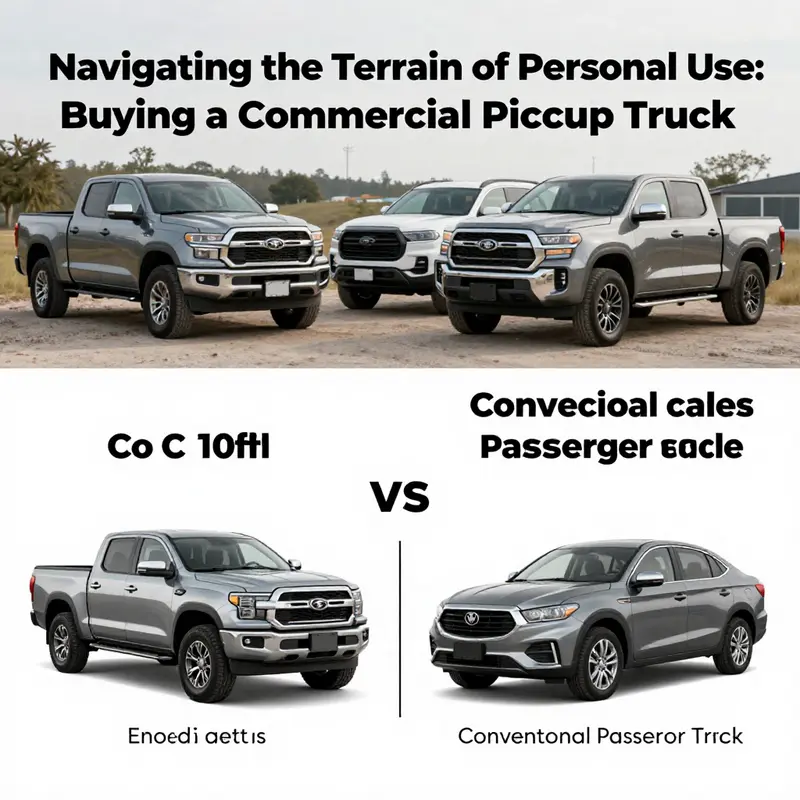
When a shopper eyes a commercial pickup with the idea of using it for personal errands, weekend projects, or family trips, the choice feels practical in one moment and puzzling in the next. The vehicle’s robust payload, sturdy frame, and towing muscle promise a level of versatility that standard passenger cars often struggle to deliver. But a commercial designation carries more than a badge; it reshapes how you pay for, operate, and live with the vehicle day to day. To understand whether a commercial pickup can genuinely serve personal life, one must trace the path from purchase to daily use, across regulatory environments, cost structures, and real-world utility. The journey is not just about up-front price or monthly payments; it is about a full accounting of how the truck fits the rhythms of your days, the places you drive, and the routine that repeats itself across seasons and years.
In the United States, a commercial pickup typically falls under classifications such as light trucks or commercial vehicles rather than passenger cars. Those categories are not merely bureaucratic labels; they influence insurance, registration, and even how a state might assess road use and tax obligations. A vehicle registered as a business asset carries implications for how you report deductions, how you insure the vehicle, and how its usage is interpreted by insurers. This reality matters more when the line between personal and business use blurs—when you drive to a job site after dropping the kids at school, when you haul a heavy load for a family project, or when you turn a weekend camping trip into a cargo mission for a tent, bikes, and mountain gear. In practice, the same truck can be a loyal family tool or a business workhorse, but the legal and financial umbrella above it will respond differently depending on how you categorize and use it. The risk here is not merely an annual tax bill; it is the possibility of higher insurance premiums, altered registration fees, or adjustments to depreciation and potential deductions that can ripple through personal finances for years.
China presents a contrasting framework that highlights the gravity of regulatory design on personal mobility. Here, many pickups are treated as commercial vehicles under the law. That designation is not cosmetic; it triggers a mandatory 15-year scrappage policy, something no private passenger car is bound to by the same strict lifecycle. It also imposes more frequent inspections—yearly checks rather than the longer 2- to 3-year intervals common for passenger cars after an initial period. And while urban access has historically been a hurdle for pickups, the landscape has shifted. By 2025, more than 90 percent of prefecture-level cities had relaxed urban-entry restrictions for pickups, a significant change that alters the practical calculus for city dwellers who need cargo capacity. Yet the scrappage policy and the inspection cadence remain notable, reliable reminders that a commercial pickup is not merely a heavier SUV. Still, many buyers in China and elsewhere value what these trucks offer: superior cargo capacity, rugged off-road capability, and robust towing power. For families or individuals who regularly transport large items—camping equipment, tools, or furniture—the utility can be compelling, even as the ongoing compliance costs and lifecycle requirements demand careful planning.
The practical advantages of a commercial pickup matter in concrete terms. A typical commercial pickup can move substantial payload—often up to about 1.2 tons—far exceeding the roughly 0.3 tons that many SUVs or light-duty crossovers can handle. This payload advantage translates directly into the ability to transport heavy or bulky items without multiple trips, a benefit that can save time and reduce wear on a lighter vehicle’s suspension. The same chassis and drivetrain strength that enable high payloads also underpin towing capacity, which is essential for trailers, boats, or larger recreational equipment. For outdoor enthusiasts, tradespeople who carry tools or materials, or families that frequently relocate or purchase sizable gear, these capabilities deliver a tangible value that shows up in fewer trips, less strain during loading, and better performance in less-than-ideal road conditions. In addition, the durability and safety systems designed to support commercial use can translate into a sense of resilience, especially on rougher backroads or long highway hauls. These attributes often create a sense of confidence that a passenger-focused vehicle, even when adequately spec’d, may not match.
But alongside these strengths come real trade-offs. The heavier weight and more powerful engines that contribute to higher payload and towing capability typically lead to greater fuel consumption, especially in urban settings where stop-and-go traffic prevails. Real-world numbers often place fuel use for commercial pickups 1 to 3 liters per 100 kilometers higher than comparable SUVs, a gap that translates into meaningful annual operating costs when trips are frequent. Ride comfort, too, can lag behind that of modern passenger vehicles. The very features that enable load-bearing stiffness and robust durability—non-load-bearing chassis design and firmer suspensions—can yield a ride that feels busier or harsher in everyday urban commuting. The same design ethos that supports heavy duty performance can therefore complicate daily city driving with a sense of stiffness and reduced ride smoothness. Insurance and maintenance costs frequently follow the same trajectory: higher baseline premiums, more comprehensive coverage options to reflect commercial classification, and maintenance regimes that demand more frequent attention or specialized servicing because of the vehicle’s heavier use profile.
The calculus becomes richer still once you add up tax and registration. In many regions, commercial-use vehicles are taxed differently, and annual registration fees can be higher than those for standard passenger vehicles. The distinction matters not only for the current year’s outlay but for planning across multiple cycles of ownership. Those who plan to use a commercial pickup as a long-term asset must also anticipate depreciation dynamics and resale value in a market that treats heavy-duty workhorses with a different sentiment than typical family sedans or compact crossovers. If the vehicle will be used for a side business or as a mobile workspace, the story changes again. A truck can become a platform for productivity—on-site work, hauling gear, and even supporting a makeshift workshop—components that might shift the cost-benefit balance in favor of ownership when those activities occur with enough frequency to justify the premium.
In the broader decision framework, a critical question emerges: what is your typical pattern of use? If your life routinely involves large-item transport, towing, or frequent outdoor trips, the incremental capacity and durability of a commercial pickup can be a practical enabler, the kind of asset that reduces logistical friction and expands opportunities for activities you already value. If, by contrast, your daily routine is dominated by city commutes, occasional weekend projects, and performance in urban settings, a non-commercial light pickup or a well-equipped SUV might offer better comfort, lower running costs, and a more predictable ownership experience with fewer regulatory entanglements.
For readers seeking a clearer compass, the practical framework often comes down to aligning three pillars: cargo and towing needs, total cost of ownership over a realistic horizon, and regulatory or urban-access realities in your home region. To gauge cargo needs, start with the simple inventory of what you move most often. Do you routinely haul heavy tools, furniture, or equipment? Are you transporting oversized camping or sports gear that would require a broad bed and strong tie-downs? Do you anticipate occasional work-related tasks that could scale in frequency? If the answer to several of these questions is yes, the utility case becomes much stronger. When you step into the TCO calculation, you should consider not only the sticker price but the full spectrum of costs: insurance premiums that reflect commercial status, maintenance regimes that may require heavier components or more frequent alignment checks, fuel costs that rise with payload and engine size, and the potential tax implications that arise from treating the vehicle as a business asset. The urban-access calculus can become the deciding factor in dense metropolitan areas where entry restrictions or parking constraints fail to be trivial for bulky, high-riding trucks. In such contexts, even a truck’s exceptional capability can be compromised by the friction of daily life, from navigating narrow streets to finding a suitable place to park. The balance among these considerations often tilts toward one conclusion for some households and toward another for others, underscoring that the question is not universal but deeply personal and place-specific.
A practical way to contextualize these considerations is to contrast the experiential benefits against the ongoing costs in a way that mirrors real-life budgeting. If a family anticipates that the truck will be used for heavy loading on a monthly basis, and the trips that demand maximum payload occur with a predictable cadence, the incremental expense—whether for fuel, insurance, or maintenance—appears more easily justifiable. If, however, the heavy loads are sporadic, and the daily drive resembles a typical urban commute, the cost gap between a commercial pickup and a capable SUV or a smaller pickup shrinks, making the more conventional option appear financially prudent and emotionally comfortable. The decision then is not a blanket verdict but a tailored decision that reflects both the cadence of your tasks and the pace of your everyday life.
Market dynamics around used and new trucks contribute another layer to the equation. For those who want to ground their plan in realistic ownership experiences, market signals matter. The used-truck segment has shown resilience and shift over time, with buyers weighing durability, maintenance histories, and resale values. To keep a finger on the pulse of these shifts, it helps to consult ongoing market analyses and trends. For readers seeking a practical glimpse into how the used-truck market is evolving, one useful avenue is to follow current trends in used-truck sales growth. This resource offers a lens on demand, pricing, and overall market momentum that can inform a thoughtful ownership decision. As always, the decision to buy should be paired with a cautious appraisal of personal finances and long-term plans, ensuring that the vehicle chosen remains a tool for living, rather than a constraint that complicates daily life.
Beyond the numbers, one can also assess the intangible benefits that some households prize. The confidence that comes with a truck built to carry heavy payloads can be formative for families that undertake frequent remodels, outdoor adventures, or mobility-intensive lifestyles. The sense of reliability offered by a vehicle that is designed to withstand tougher conditions can translate into fewer frequent replacements and a longer-term sense of security on the road. That durability—paired with the vehicle’s capacity to act as a mobile workspace or a flexible family vehicle—can reframe how you plan your days, the kinds of trips you take, and how you allocate your resources across the calendar year. Yet the intangible benefits must be weighed against the realities of operating a larger, heavier vehicle in an urban setting and against the possibility that a more conventional choice, properly configured, might deliver similar functionality with a gentler financial footprint.
The decision to use a commercial pickup for personal purposes, therefore, rests on a dynamic balance between the demands of daily life and the practicalities of owning a heavier, more capable machine. If the cargo-hauling and towing needs are consistent, if the user can accommodate higher fuel consumption and more involved maintenance, and if regulatory landscapes permit smoother access to urban areas, the case for personal use grows stronger. If the opposite holds—if driving in dense cities is the norm, if the family’s routine rarely involve heavy hauls, or if the burden of higher insurance, taxes, and upkeep would overshadow the utility—the better path may be to select a more traditional passenger-oriented vehicle or a lighter pickup designed with comfort and efficiency in mind.
In this sense, the core question becomes not whether a commercial pickup can function as a personal vehicle, but whether it improves the quality and efficiency of daily life enough to justify its distinctive costs. The answer will be different for a weekend camper who needs a rugged bed and a trailer hitch for off-road expeditions, and different for a family that needs maximum interior comfort for a long daily commute. It will also hinge on where you live. In regions where urban access for pickups is widely allowed and where fuel prices align with broad affordability, the practical advantage of cargo capability can be realized more easily. In areas with stricter urban restrictions, higher registration costs, or frequent traffic congestion, some of the truck’s advantages may be neutralized by the friction of daily use. The balance, then, rests not on a universal truth but on a personalized calculation that weighs needs, finances, and the realities of the local road network.
As you navigate this decision, a pragmatic step is to test the waters before you commit. If feasible, consider a trial period with a rental or a long-term loan that mirrors your anticipated usage. Track the trips that demand large payloads, the number of times you genuinely need to tow, and how often the vehicle sits idle in a garage while you use a smaller car for typical errands. Simultaneously, map out your total cost of ownership for the chosen path across, say, five years. Include depreciation, insurance, maintenance, fuel, taxes, and any regulatory costs tied to commercial use. In doing so, you may find that the truck’s utility is either offset by its costs or reinforced by a compelling value proposition that makes the cash outlay and ongoing expenses worthwhile.
For readers who want a broader context on how used-truck dynamics influence decision-making, the landscape is worth watching. The market has shown that resale values and demand can shift with shifts in economic conditions, fuel prices, and the public’s appetite for utility-oriented vehicles. Keeping an eye on these trends can help set expectations for future ownership costs and potential resale outcomes. In addition, it is important to align the choice with state and city regulations to avoid unintended financial or legal consequences. Some regions provide more flexibility for commercial-use vehicles in terms of ownership structure, while others impose stricter restrictions that affect license, insurance, and registration. Understanding these nuances before purchase can prevent surprises later and ensure that the vehicle serves as a reliable partner in the lives you lead, rather than a financial burden that complicates everyday routines.
Ultimately, the question of whether a commercial pickup is worth personal use is not merely about capability or cost in isolation. It is about whether the convergence of your daily tasks, your financial strategy, and your regulatory environment produces a coherent, sustainable ownership experience. If the truck consistently lowers the friction of large-item transport, simplifies weekend projects, and delivers dependable performance without creating untenable operating costs, then it becomes more than a tool. It becomes a strategic asset for the life you want to lead—one that carries you through chores, adventures, and the quiet moments when cargo and comfort collide in practical harmony. The final answer, then, hinges on your unique pattern of needs, your willingness to manage the administrative and financial realities, and your readiness to embrace a vehicle that might do more work and travel than a typical family car—but with a cost structure to match that broader scope of use. For some, that is exactly the right balance; for others, a lighter, more city-friendly option will better suit a life rooted in daily routines and local trips that don’t demand the truck’s heavier frame.
External resource: Understanding the Costs and Benefits of Using a Commercial Pickup Truck for Personal Use. https://www.consumerreports.org/vehicles/pickup-trucks/commercial-pickup-trucks-personal-use/
Using a Commercial Pickup for Personal Use: Considerations and Practicalities
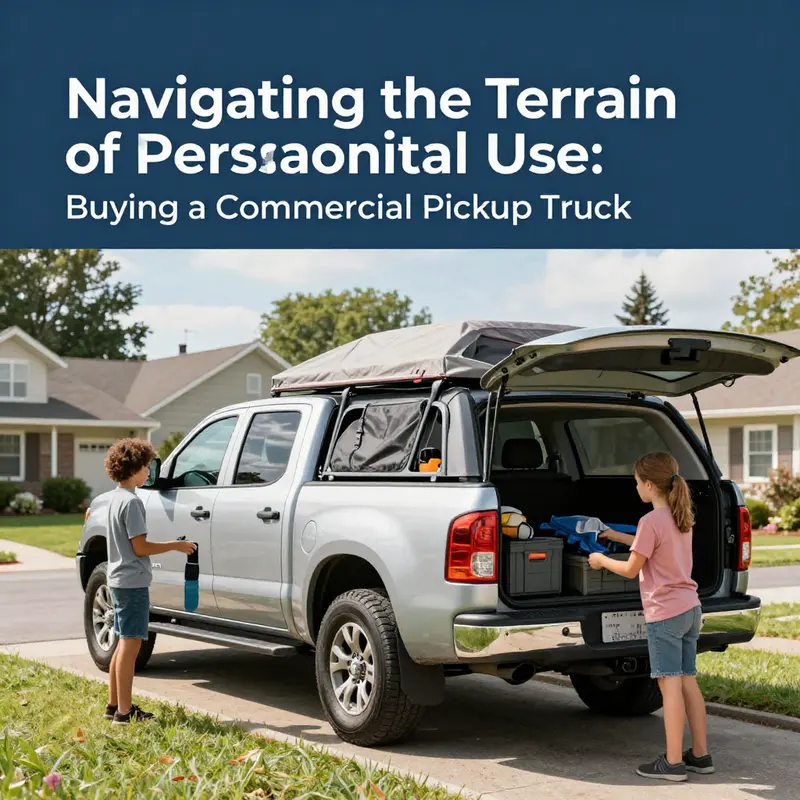
Deciding whether a commercial pickup truck fits your personal life involves balancing capability with everyday practicality. The core questions are how often you will rely on heavy payloads, towing, or frequent access in urban areas, and how local rules, insurance, and running costs will shape ownership over time. In many markets a pickup marketed as a commercial vehicle can still serve as a family car for weekend projects, commutes, and trips, but the classification may affect licensing, registration, tax treatment, and vehicle maintenance. This chapter outlines the regulatory realities, cost considerations, and day-to-day factors that influence whether a commercial pickup should be owned, rented, or simply used for occasional heavy tasks. It also provides practical steps to assess personal use, estimate total ownership costs, and choose configurations that match real-life patterns. By framing the decision around actual usage rather than brand or torque numbers, you can determine whether a workhorse chassis makes sense in a city, suburb, or rural setting.
Final thoughts
Acquiring a commercial pickup truck for personal use presents both opportunities and challenges. Fleet managers, construction procurement teams, and logistics professionals should carefully navigate the regulatory landscape while weighing the costs and benefits against their operational needs. Ultimately, understanding these factors will empower decision-makers to choose wisely regarding these versatile vehicles, ensuring that they can serve personal and professional roles effectively.