
Commercial aluminum truck caps are critical assets for trucking companies, construction enterprises, and logistics firms alike. These robust and lightweight accessories enhance vehicle functionality while ensuring cargo safety and enhancing fleet aesthetics. This article delves into the key features and functions of commercial aluminum truck caps, revealing how they address operational challenges such as fuel costs and durability. Furthermore, we will explore the prevailing market trends, the economic advantages of adopting these caps, and the latest technological innovations designed to elevate your fleet’s performance. By the end of this comprehensive guide, stakeholders will be equipped with a deeper understanding of how investing in commercial aluminum truck caps can transform their operations for improved efficacy and resilience.
Guardians of the Fleet: The Integrated Power of Commercial Aluminum Truck Caps for Efficiency, Security, and Professional Image
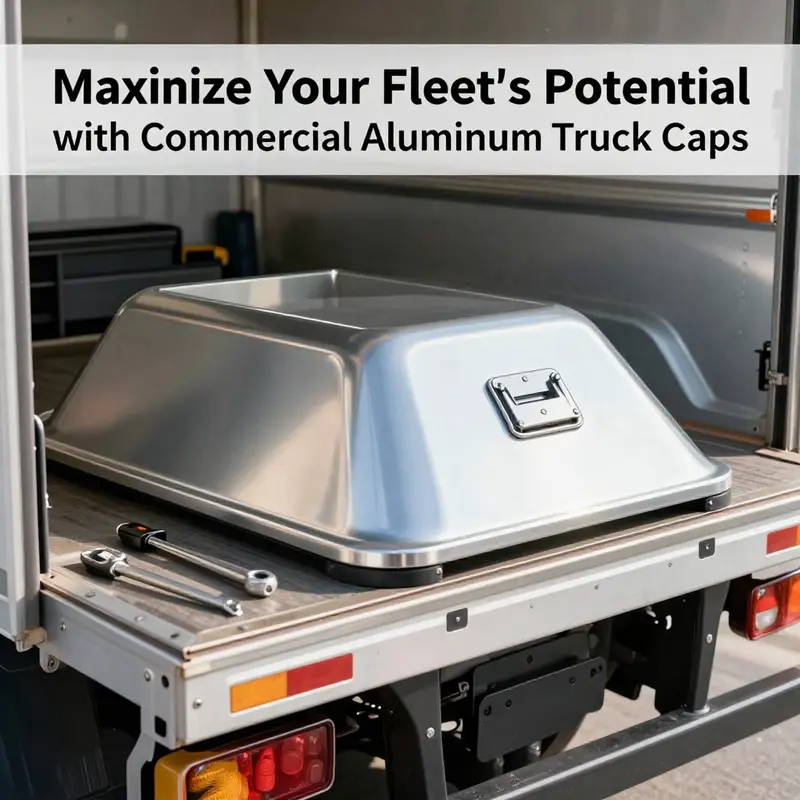
In the world of commercial transport, the last mile is won long before the delivery is completed. The vehicle is more than a means of conveyance; it is a moving workspace, a crime shield, and a statement of reliability. Commercial aluminum truck caps sit at the intersection of utility and identity, transforming plain payload areas into secure, efficient, and expandable workspaces. Far from a simple shell, these toppers are a carefully engineered response to the everyday demands of fleets, tradespeople, and municipal services. They embody the ongoing shift toward lightweight, durable, and connected components that can stretch the value of every mile driven and every piece of equipment carried. The result is a product category that is not merely about cargo protection but about turning a truck into a smarter, more capable platform for business operations.
At the heart of the appeal is the material itself. Aluminum’s strength-to-weight ratio is central to why commercial operators are turning to caps made from this metal. A lighter cap reduces overall vehicle weight compared with steel or fiberglass equivalents, which translates into better fuel efficiency and the ability to carry more tools or material without compromising performance. For fleets that rack up long-haul or heavy-duty routes, every kilogram saved on the top reduces the energy required to move that mass down the road, yielding tangible fuel savings over the life of a vehicle. More resilience against rust and weathering means less maintenance and longer service intervals, a critical consideration for vehicles exposed to rain, salt, or humid climates. This durability plays directly into the total cost of ownership, where the initial investment in a lightweight, corrosion-resistant top pays dividends through reduced downtime and reliability.
Protection and security are not afterthoughts with these caps; they are integral design criteria. The enclosed space offered by a commercial aluminum topper creates a controlled environment for tools, equipment, and sensitive materials. Locking mechanisms—whether traditional latches with padlock compatibility or more modern, keyless entry concepts—provide a strong deterrent to theft and misplaced inventory. Weatherproof seals, robust door configurations, and reinforced mounting systems work together to create a cargo compartment that shields contents from rain, snow, dust, and UV exposure. In trades such as electrical, plumbing, or landscaping, where small parts and power tools can disappear into a crack in the back of a pickup, the value of a secure, organized interior cannot be overstated. The added sense of control contributes to a calmer, more predictable workflow for crews, which in turn supports on-time service and improved customer confidence.
Aerodynamics is not a buzzword for showroom appeal; it is a real, measurable contributor to operating costs. The sleek, streamlined silhouette of an aluminum cap helps reduce wind resistance at highway speeds, a factor fleets feel as a quieter cabin and, importantly, a modest lift in overall fuel economy. The aerodynamic profile can also affect handling and stability, especially when the cap fills with equipment or becomes ventilated by air flow during travel. Fleets that log sizable numbers of miles per year often see these gains compounded across multiple vehicles, reinforcing the economic argument for a cap that looks as good as it performs. In combination with the weight savings, this aerodynamic efficiency aligns nicely with broader environmental objectives and stricter emissions standards that many regions are pursuing for commercial fleets.
Beyond protection and efficiency, the interior and ancillary features underscore the cap’s role as a practical workspace on wheels. Integrated lighting—usually LED—provides clear illumination for nighttime operations, reduce the risk of trips and mistakes when loading or retrieving tools in low-light conditions. Some models extend this utility with power management options or outlets, enabling operators to run small devices or charge batteries without returning to the cab. Interior configurations are highly customizable, with shelves, storage bins, tool organizers, and even ventilation or climate-control options. This modularity means a cap can be tailored to the specific tasks of a trade, from plumbing and electrical work to landscaping or utility maintenance. When a driver arrives on a site, the organized interior structure saves minutes that add up across a week, and a tidy, efficient interior communicates professionalism to customers and supervisors alike.
The ease of installation and broad compatibility further elevate the value proposition. Aluminum caps are typically designed to fit standard bed dimensions and to work with widely used mounting brackets installed at the factory or by authorized installers. This approach minimizes downtime during retrofits or fleet upgrades and makes it feasible for operators to equip diverse vehicle fleets with a consistent, professional top. The practical upside is straightforward: reduced labor time for installation, lower risk of fitment issues, and interchangeability across different vehicle models within a fleet. The result is a scalable solution that can grow with a business, rather than a bespoke add-on that restricts future options.
As fleets become more data-driven, the capabilities of commercial aluminum caps begin to intersect with telematics and smart vehicle technologies. Integrated sensors and IoT features—such as cargo area monitoring, temperature and humidity sensing for sensitive materials, or even door-position feedback—turn the cap from a passive enclosure into an active component of fleet management. The promise is a more complete picture of asset integrity and cargo conditions, enabling fleet managers to respond quickly to potential problems and optimize routes and loading plans. This convergence of material science and digital capability is part of a broader trend toward connected commercial vehicle components that work together to reduce risk, improve asset utilization, and support compliance with increasingly stringent performance and safety standards.
At a strategic level, the professional image conveyed by an aluminum topper matters as much as the functional benefits. A clean, modern exterior complements the service quality a business promises. It signals to customers that the company respects its equipment, cares for its cargo, and is capable of delivering reliable service under varying conditions. This perception can influence client trust, contract opportunities, and overall brand strength in competitive markets. The cap becomes part of the fleet’s story—a visible reminder of a company’s commitment to efficiency, security, and professional execution every day on the road.
The market dynamics fueling this growth are closely linked to regulatory and economic pressures. The global push toward lightweighting aligns with environmental and energy policies that reward reduced vehicle mass. For fleets constrained by fuel costs or emissions targets, aluminum caps present a practical pathway to compliance without sacrificing payload or performance. Operational costs, often the decisive factor for fleet procurement decisions, decrease over time thanks to fuel savings, reduced maintenance needs, and longer service life. The industry trend toward upgraded interiors, integrated lighting, and IoT-ready configurations makes these toppers even more appealing as a turnkey solution for trades and service fleets that demand agility and resilience.
For readers seeking a broader context to the practical implications discussed here, industry perspectives and practice-driven insights can be found in ongoing fleet-focused discussions and case-based analyses that reflect real-world experiences with upgrading to aluminum caps. As fleets evaluate options, they weigh the initial investment against long-term gains in efficiency, security, and professional presentation. The decision is rarely about a single performance metric; it is about how the cap contributes to a coherent operating model—one that pairs lightweight construction with durable protection, smart features, and adaptable interiors to support a wide range of service activities on the road.
To connect with broader hands-on guidance and practical testing ideas, fleets and technicians often turn to industry content that aggregates field-relevant observations. For example, a section of the industry blog archive offers perspectives on best practices for choosing and deploying protective toppers in commercial operations. See the resource at mcgrathtrucks.com/blog for more context on how fleets balance cost, fit, and performance when upgrading their truck tops. This kind of corroborating material helps bridge the gap between material capability and real-world workflow optimization, reinforcing the view that aluminum toppers are more than mere add-ons; they are foundational elements of a modern, efficient, and professional fleet.
External resources can supplement practical know-how with detailed specifications and case studies. For readers who want to explore the technical side or compare performance benchmarks, external references provide a deeper dive into how material selection, seal integrity, mounting options, and integrated features translate into tangible fleet advantages. Interested readers can consult technical discussions and specification sheets available from trusted industry resources.
External resource: https://www.truckcaps.com/commercial-aluminum-truck-caps
Shaped by Weight, Woven with Tech: The Evolving Role of Commercial Aluminum Truck Caps

Across the spectrum of commercial fleets, aluminum truck caps have evolved from simple cargo enclosures into high‑performance, integrated systems that affect efficiency, security, and the professional image of a fleet. Their appeal is not merely about shielding goods from rain or dust; it is about rethinking how a vehicle works as a complete platform. When a fleet manager looks at a cap, the questions now go beyond fit and finish: How light is it? How long will it last under harsh conditions? Can it talk to the truck’s electrical system or to a telematics network? The answers increasingly point back to aluminum as a material that strengthens the business case for commercial applications.
Aluminum’s hallmark—its high strength-to-weight ratio—translates into real-world benefits: lighter assemblies that preserve payload, improved fuel efficiency, and robust durability that resists corrosion and weathering. In fleets where every gallon matters, a cap that trims weight without sacrificing capacity or protection becomes a strategic asset. Integrated features such as weatherproof seals, drainage channels, and mounting points for tools and signage extend utility while simplifying maintenance and reducing downtime.
The latest designs emphasize seamless integration with the vehicle’s electrical and telematics ecosystems. Integrated wiring supports lighting, sensors, and external interfaces, while advanced sealants and gaskets resist aging under temperature swings. Modern caps can host sensors and data interfaces, enabling predictive maintenance and closer fleet oversight. Together, these capabilities turn the cap from a passive shell into an active data point that helps optimize safety, reliability, and cost of ownership.
Built to Endure: The Long-Term Toughness of Commercial Aluminum Truck Caps in Fleet Operations

In fleets that depend on daily, predictable service, durability is not a luxury; it is a mission-critical requirement. Commercial aluminum truck caps sit at the intersection of protection, efficiency, and total cost of ownership. They must withstand the exposure of rain, salt, heat, and road debris while staying secure against theft and weather intrusion. The longevity of these caps translates into fewer replacement cycles, lower maintenance interventions, and steadier uptime for drivers who rely on steady access to their tools and cargo. When a fleet makes the choice to equip vehicles with aluminum caps, the decision is not only about shielding loads but about investing in a resilient envelope that preserves value over years of demanding use. The very material science behind aluminum—its inherent resistance to corrosion, its light weight, and its strength-to-weight advantages—provides a foundation for a product designed to endure in varied climates and road conditions. Yet, durability is not a single property; it is the result of a holistic design that anticipates abuse, environmental exposure, and ongoing wear from everyday operations. In this sense, the cap becomes part of the vehicle’s protective system, working in concert with chassis, seals, and mounting hardware to resist compromise across long service lives.
A core reason aluminum caps endure is their corrosion resistance. In regions that contend with high humidity, snow, salted roads, or coastal air, rust and material degradation can erode the integrity of lesser packages. Aluminum forms a natural barrier to oxidation that remains stable for years, provided the interfaces stay well sealed and the supporting structure remains sound. This resistance is amplified when the cap is combined with reinforced mounting systems. Modern commercial designs frequently integrate steel channels or cross-bracing into the aluminum framework, creating a hybrid structure that balances rigidity with the lightweight benefits of aluminum. The result is a cap that resists flex under heavy payloads, resists denting from minor impacts, and maintains a secure fit even after long hauls over rough terrain. In practice, operators notice fewer misalignments, fewer leaks at joints, and less frequent tightening of mount points, all of which contribute to a lower risk of water intrusion during saturated weather. This structural robustness is essential because even a small breach in the sealing system can propagate moisture ingress, accelerate corrosion at anchor points, and lead to interior damage over time.
seal integrity is another pillar of longevity. High-density O-rings and compression gaskets are standard features around doors and side windows, designed to form tight, durable barriers against rain and snow. Over years of operation, a well-engineered gasket maintains its resilience, resisting hardening, extrusion, or compression set that would otherwise create gaps. When seals degrade, moisture can travel along walls and into equipment compartments, promoting corrosion in metal surfaces and mold growth in stored fabrics or electronics. The careful selection of gasket materials, combined with consistently precise door alignment, helps ensure that dampness remains outside and heat doesn’t become a hidden adversary within. A dry interior is not merely about comfort or cleanliness; it reduces the likelihood of corrosion-prone condensation on metal surfaces and preserves the life of sensitive gear kept within the cap.
Ventilation and climate control inside the cap further extend its service life. Vented roof panels and well-placed exhaust pathways prevent the buildup of heat and humidity that can accelerate material fatigue and promote condensation on cooler nights. In cold climates, vapor management is equally important, as rapid temperature changes can cause condensation cycles that stress seals and fasteners. Effective venting lowers internal humidity, which in turn diminishes corrosion risk and helps protect electrical cabling, mounts, and any integrated power systems installed for lighting or other accessories. This attention to microclimates inside the cap is often overlooked in discussions of durability, yet it is central to preventing moisture-related failures that shorten a cap’s useful life.
The exterior shell itself is designed to resist the everyday dents and scrapes of commercial use. A durable aluminum alloy, optimized for high strength while remaining light, offers strong resistance to impact without becoming brittle under temperature swings. Operators who drive on construction sites, utility routes, or snow-packed corridors know that occasional contact with debris or rough terrains is almost inevitable. A robust outer envelope mitigates the risk of localized deformation that could compromise doors, seals, or mounting points. In many designs, the exterior is augmented with protective features or geometry that deflects minor impacts away from the more sensitive joints, preserving the alignment and integrity of the locking mechanisms and weather seals.
From a lifecycle perspective, the cumulative effects of wear and environmental exposure matter more than any single event. Durable aluminum caps contribute to lower maintenance costs by reducing the frequency of part replacement, resealing, or realignment. Their resistance to rust minimizes the need for costly rust treatment or repainting, while the lightweight nature helps preserve fuel efficiency, which is a longer-term economic protection for fleets with tight margins. This combination—corrosion resistance, resilient mounting, effective sealing, and moisture control—produces a product that remains functional and reliable across many seasons and miles, a critical factor when uptime is linked to a fleet’s capacity to meet service commitments.
The conversation about durability is not purely piecemeal; the broader ecosystem of design and manufacture supports longevity. For example, reinforced mounting systems with steel channels or cross-bracing create an enduring backbone that keeps the cap anchored during rough travel or when heavy equipment is installed—situations common to service and delivery fleets. This design approach acknowledges the reality that a cap is not a standalone accessory but a component that must consistently cooperate with the truck’s chassis, harnesses, and doors. The result is a whole that performs more reliably under load, resisting loosening and misalignment that can lead to leaks or inconvenience for operators who must access their cargo quickly in adverse conditions.
For operators evaluating durability in practical terms, the question often turns to real-world outcomes: how well does the cap hold up after thousands of miles, how resistant is it to salt spray in winter cities, and how easily can maintenance crews diagnose water ingress or seal degradation before it becomes a bigger problem? Observers note that the long-term success of aluminum caps lies in a disciplined approach to design detail and material choice. The use of high-grade alloys, precision manufacturing tolerances, and thoughtful integration of sealing and venting components makes a material that is robust in the field rather than merely attractive in a showroom. Fleet managers who have seen the consequences of repeated replacements or frequent repairs understand that durability translates into stability—stable asset value, predictable maintenance budgets, and consistent service for drivers who rely on their gear to perform every day. In this light, the cap is not just a shell but a strategic instrument within a fleet’s protection and productivity toolkit.
In the broader context of industry guidance, durability and lifecycle performance are often highlighted as core reasons fleets choose aluminum caps for commercial operations. The emphasis on lightweighting, corrosion resistance, and advanced sealing aligns with the growing demand for reliable, cost-efficient solutions that meet stringent environmental and regulatory expectations. For those who wish to explore broader fleet-management implications further, a well-curated resource hub offers insights into how durable, well-integrated components contribute to total-cost-of-ownership reductions and operational reliability. For fleet managers seeking broader fleet-management insights on the McGrath Trucks Blog, you can explore practical perspectives on maintenance planning, procurement strategies, and lifecycle optimization. Fleet-management insights on the McGrath Trucks Blog.
As a practical reminder, durability is best understood through the lens of end-to-end design intent. Aluminum caps that combine corrosion-resistant alloys, reinforced mounting, robust sealing systems, vented interiors, and attention to moisture control deliver a long-term value proposition. They minimize downtime, cut maintenance interventions, and preserve cargo protection across a vehicle’s working life. This is especially important for fleets operating under double-carbon or other environmental mandates, where the cost of downtime and replacement weighs heavily in the decision calculus. The durability story is thus inseparable from the broader narrative of lightweighting, efficiency, and smart, connected vehicle components that can monitor conditions and adapt to changing workloads. In short, the long life of a commercial aluminum truck cap is a result of thoughtful materials science, meticulous engineering, and an understanding of the realities of daily fleet operations.
External resource: https://www.truckaccessoriespro.com/commercial-aluminum-truck-caps-durability-guide-2026
Weight, Payload, and Profit: The Economic Case for Aluminum Truck Caps in Commercial Fleets

Across the expansive landscape of commercial fleets, the math of efficiency is never abstract. It is a daily discipline of weight, distance, and asset utilization. Aluminum truck caps, when viewed through that lens, become more than a protective enclosure—they emerge as a disciplined investment that reshapes operating economics. The central logic is deceptively simple: lighter equipment costs less to move, and that saving compounds across every mile a fleet logs. In practice, a commercial aluminum cap translates weight reduction into more usable capacity, lower fuel burn, and longer service life. When fleets quantify these gains, the numbers align with a straightforward proposition: the initial premium for aluminum is offset by tangible, recurring savings and a higher revenue ceiling over the vehicle’s life. The truth is seldom dramatic in the moment, but it is compelling over a multi-year horizon. The narrative of weight, efficiency, and enhanced uptime drives fleet managers to consider aluminum caps not as a fleeting upgrade but as a core component of fleet strategy. For teams looking to deepen their understanding of how fleet economics unfold in real-world operations, practical perspectives are often found in industry discussions at the McGrath Trucks blog, which explores how weight management intersects with daily decision-making in trucking contexts. McGrath Trucks blog.
The most direct economic leverage comes from payload optimization. Aluminum’s inherently lower density means the cap itself weighs less than equivalent steel or even some fiberglass alternatives. In concrete terms, a typical three-ton weight reduction on a trailer is not just a nominal improvement—it enhances gross vehicle weight (GVW) flexibility. When freight rates are calculated per ton, every extra ton of cargo carried without breaching legal limits becomes incremental revenue. A study scenario framed around coal transport illustrates this clearly: if freight is priced at 70 yuan per ton, carrying an additional ton per trip is worth 70 yuan. But the leverage goes beyond a single ton. The math in one fleet-focused case showed that switching to an aluminum cap yielded an extra 217 yuan per trip from the uplift in cargo, and that seemingly modest per-trip gain accumulated to more than 84,000 yuan in additional annual profit. This is the kind of figure that changes fleet budgeting, maintenance planning, and route optimization in a single season. The implication is not that aluminum caps magically create wealth, but that their weight advantage translates into a tangible, repeatable revenue driver across the typical cadence of deliveries, errands, and service calls.
Beyond payload, fuel efficiency remains the most visible and recurring cost saver for fleets. The physics are widely acknowledged: reducing vehicle mass lowers energy required for acceleration and sustained operation. A frequently cited estimate suggests that reducing a semi-trailer’s weight by one ton can trim fuel consumption by about 0.6 liters per 100 kilometers. Scale that to a three-ton reduction, and the effect compounds over long hauls and urban routes alike. The downstream benefits extend to toll regimes in some regions, where lighter vehicles encounter lower axle-based charges. In the coal-hauler scenario, the combination of lower fuel use and reduced tolls produced a net gain of 249 yuan per trip. While the precise figures vary by route, fuel price, and regulation, the underlying principle remains consistent: every trip is a micro-einstein that translates weight savings into measurable cash flow.
The longevity of aluminum contributes to a second, equally important dimension of the business case: maintenance and downtime. Aluminum resists corrosion more effectively than many steel configurations, particularly in environments where road salt, moisture, and harsh weather are persistent factors. That resistance translates into lower maintenance costs, fewer rust-related repairs, and longer service intervals. A cap built from high-strength aluminum alloys tends to outlast paint-protected steel bodies and does not require the same protective coatings over time, further reducing upkeep costs. This durability is not merely about avoiding repairs; it also affects uptime. In fleets where time is money, longer intervals between servicing and fewer unexpected breakdowns mean more productive miles, more on-time deliveries, and improved customer satisfaction. These operational advantages are easier to monetize when viewed over several years rather than a single quarter.
End-of-life economics also favor aluminum in a way that is often underestimated. Aluminum’s recyclability is exceptionally high, and the material retains value even after many cycles. A two-ton aluminum cap, for example, can yield a substantial scrap value, often outperforming steel equivalents in terms of residual worth. The durable, recyclable nature of aluminum means that end-of-life costs are lower, and total cost of ownership is softened by the potential to recapture a meaningful portion of the original investment. This residual value helps offset upfront costs and supports a more favorable depreciation profile on fleet books. While accounting methods and regional scrap markets will influence the exact numbers, the trajectory is clear: greater scrap value contributes to a more attractive lifecycle economics profile for aluminum caps.
The payback picture is consistently highlighted in forward-looking analyses. While the upfront cost for aluminum caps can be 10–20 percent higher than steel counterparts, the combination of increased payload capacity, fuel savings, and reduced maintenance tends to compress the payback period. In the coal-hauler example, the extra profit from the aluminum cap was sufficient to recoup the higher initial investment within a little more than a year, underscoring the speed with which these benefits can accrue. The lesson is not merely about one-time gains but about sustained, decade-scale economics: the annual savings stack, the payload gains compound, and the investment becomes a strategic lever rather than a mere upgrade. This is why fleets increasingly treat aluminum caps as an integral element of equipment strategies rather than a cosmetic improvement.
In addition to these core economic drivers, there is an ecosystem of technological and design enhancements that amplify the value proposition. Modern aluminum caps can integrate smart features that help fleets monitor cargo conditions, power exterior lighting for safer nighttime operations, or provide mounting points for external tools and signage. Aerodynamic shapes, optimized sealings, and integrated wiring harnesses can further trim drag, simplify electrical installation, and reduce installation time on multiple vehicles. While these incremental features may seem peripheral at first, they reinforce the overall return on investment by reducing downtime and enabling more versatile, safer operations. This broader utility aligns with a fleet’s long-term planning, as it supports standardized tool kits, easier maintenance across a mixed-vehicle fleet, and better support for night-time service calls and emergency responses.
From a strategic standpoint, the economic case for aluminum caps sits at the intersection of fuel policy, regulatory momentum, and the evolving needs of last-mile and urban freight. Global lightweighting trends and emission targets push fleets toward lighter, more efficient configurations. The benefits are particularly pronounced for operators operating under stringent environmental regulations, where every kilogram saved translates into emissions reductions as well as cost savings. The same logic underpins the growing interest in smart, connected components onboard commercial vehicles, where the cap itself could play a role in cargo monitoring and vehicle health analytics. The broader implication is that aluminum caps are not simply protective shells; they are dynamic, value-adding components that fit within modern fleet ecosystems and help fleets meet both economic and environmental targets.
External reference: https://www.caranddriver.com/trucks/a48787783/aluminum-semi-trailer-cost-benefit-analysis/
Smart, Strong, and Seamless: Innovations Redrawing the Course of Commercial Aluminum Truck Caps
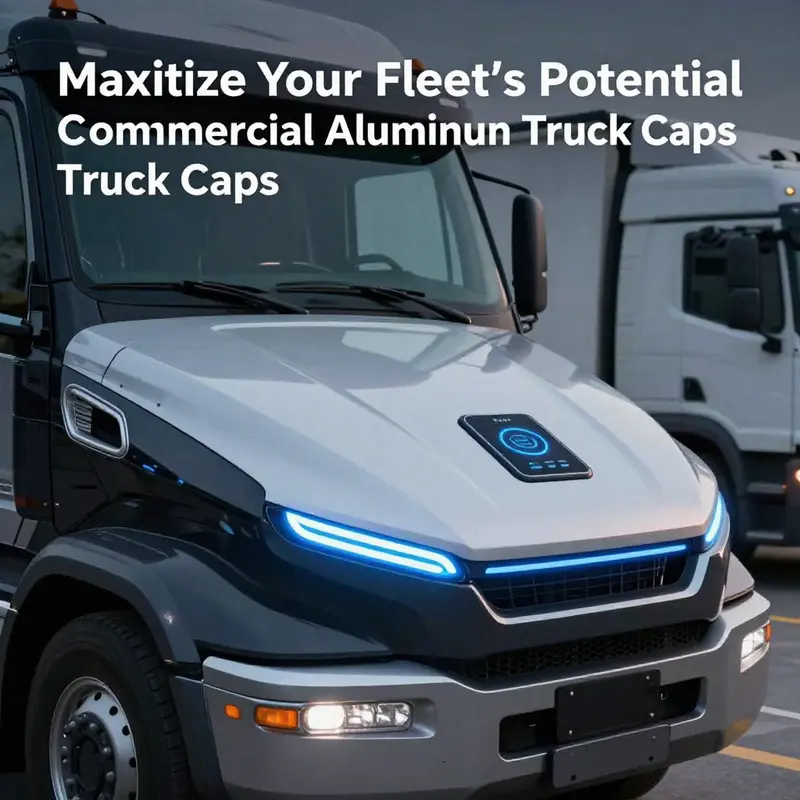
Commercial aluminum truck caps are no longer just lightweight enclosures shielding cargo. In the best-equipped fleets, they function as integrated components of a modern, green, data-informed logistics chain. This shift is not a single feature but a comprehensive reimagining of what a cap can do, how it interacts with a vehicle, and how it contributes to the bottom line. The premium that operators place on fuel economy, durability, security, and uptime is driving a wave of innovations that blend material science with digital capability. The result is a product that feels like a small modular system rather than a standalone shell, capable of adapting to varied workloads, climates, and regulatory demands.
At the core of this transformation is the emergence of smart technologies that extend the cap’s role beyond weather protection and cargo containment. Remote locking mechanisms have evolved from basic latching systems to networked controls that can be accessed from a dispatch center or a driver’s smartphone. The security benefits are tangible: fleets report fewer intrusion attempts and faster post-event verification, which reduces loss and facilitates easier incident handling. Coupled with solar-powered LED lighting, these caps illuminate access points and work zones without imposing additional load on the vehicle’s electrical system. The lighting not only aids nightly loading and unloading but also enhances on-site safety for drivers and dock personnel.
Beyond access and illumination, integrated smart sensors bring cargo and environmental awareness to the fore. Temperature, humidity, vibration, tilt, and shock data can be monitored in real time, enabling proactive decisions about handling sensitive goods. For drivers, real-time alerts about potential security breaches or unusual cargo conditions translate into faster response times and improved cargo integrity. For fleet managers, the data accumulate into actionable patterns that inform maintenance scheduling, route planning, and even insurance considerations. The notion of a cap as a passive shell is replaced with a small, intelligent hub that talks to the vehicle’s telematics and the fleet’s control tower.
The advantages of these smart features are amplified when the cap integrates with the broader vehicle ecosystem. Modern fleets are increasingly data-driven, and the cap can be a conduit for information. Integrated wiring harnesses and standardized mounting points allow for seamless addition of sensors, cameras, or external equipment. In practice, this means a single truck bed can be configured for different seasonal or client requirements without invasive retrofits. When a cap can speak the same language as the truck’s onboard computer and the fleet’s software platform, uptime, reliability, and route efficiency rise in tandem. For fleets curious about how electrification reshapes lightweight payloads, see Electric trucks revolutionize the Canadian market.
Another strand of innovation flows from advances in energy efficiency and autonomy at the component level. Solar-powered LED lighting demonstrates a practical approach to reducing customer-operating costs. By harvesting energy from sunlight, the system minimizes parasitic drain on the vehicle’s battery, which can be a crucial advantage for fleets operating long shifts or with many dock starts throughout the day. The lighting is designed not only for visibility but for longevity; high-quality LEDs paired with weather-resistant seals withstand the challenges of rain, snow, and dusty industrial environments. The result is a durable, maintenance-friendly solution that contributes to safer loading and unloading windows and to a more consistent work rhythm for drivers.
The conversation about technology would be incomplete without addressing how materials and manufacturing processes underpin these capabilities. Material science advances have yielded aluminum alloys with superior strength-to-weight ratios, enabling caps that are lighter without sacrificing durability. Lighter weight translates directly into improved fuel efficiency, a primary objective for fleets under tight emissions targets and rising fuel costs. Yet strength remains essential, especially for caps deployed on heavy-duty or long-haul operations where exposure to road debris and cargo forces is substantial. New coatings and surface treatments enhance corrosion resistance, extending the life of the cap in coastal or winter climates where salt exposure accelerates wear. These improvements also reduce maintenance intervals and draw down replacement costs, a savings calculation fleets weigh heavily when evaluating total cost of ownership.
The integration of smart features with robust materials creates a synergistic effect. A cap that is both lighter and smarter reduces not just fuel use but also the risk of damage during loading, transit, and unloading. For example, the combination of a high-strength aluminum alloy with an aerodynamically informed contour reduces drag, which complements the vehicle’s overall efficiency strategy. Aerodynamic considerations are subtle but meaningful because even small improvements in reduced drag can compound across a fleet’s entire operating profile. Together, the material and digital innovations form a system that supports tighter asset utilization, better cargo protection, and more predictable service levels for customers.
This convergence of lightweighting, durability, and intelligence aligns with broader industry shifts toward sustainable technology and intelligent mobility solutions. The push toward recyclable materials and energy-efficient design reflects a genuine commitment to reducing environmental impact while preserving or enhancing performance. At the same time, the move toward IoT-enabled components illustrates a future in which the truck cap is not merely a peripheral enclosure but a node in a connected vehicle network. The implications extend to maintenance planning, where predictive analytics can anticipate seal wear, lighting failures, or sensor drift before a problem interrupts service. In this sense, the cap becomes part of a proactive maintenance philosophy rather than a reactive afterthought.
Material science and production methods are also advancing to meet the demands of mass customization. Fleets operate across a spectrum of use cases, from urban parcel delivery to construction-site maintenance. The ability to tailor a cap to specific cargo types, climate zones, or regulatory environments without sacrificing core performance is an important differentiator. Coatings, joining techniques, and fabrication workflows are being refined to deliver consistent quality at scale, while flexible manufacturing enables rapid iteration as customer needs evolve. The result is a family of caps that share common performance ideals—lightweighting, weather protection, security, and integration—yet can be configured to deliver the precise service profile a given fleet requires.
The strategic value of these innovations becomes clearest when one considers the total cost of ownership. While the upfront price of a high-tech cap may be higher than that of a traditional shell, the long-term savings from fuel efficiency, reduced maintenance, and lower loss rates can more than compensate. For fleets weighing investment decisions, the story is about return on investment that translates into consistent uptime, stronger customer trust, and a leaner operating budget. Moreover, as regulators tighten emissions standards and sanctions around waste and downtime grow, the ability to demonstrate a data-driven, efficient, and secure cargo solution can become a non-negotiable competitive edge. The modern aluminum cap thus stands at the intersection of product design, digital capability, and fleet economics—the point where material science meets the realities of daily urban and long-haul operations.
Looking forward, the trajectory points toward even more intelligent, modular systems that can host sensors, power sources, and communications interfaces with minimal redesigns. Additive manufacturing and smarter coatings may unlock further weight savings and resilience, while continued research into corrosion resistance will push longevity even further. In practice, this means fleet operators can expect caps that not only guard cargo but actively contribute to safer, more efficient, and more transparent operations. The cap becomes a small but essential part of a larger ecosystem, one that supports rapid adaptation to changing routes, cargo types, and environmental rules. As these capabilities mature, the commercial aluminum truck cap will be less a protective shell and more a reliable, connected ally in the complex choreography of modern logistics. The broad takeaway is clear: lightweight, durable, and intelligent cap design is redefining what a cap can do—and how fleets measure value in an increasingly data-driven world.
External analysis and broader market perspectives on these trends offer additional context for readers exploring the evolution of the aluminum truck cap market. For a broader market perspective, see external analysis here: https://www.marketresearchfuture.com/reports/aluminum-truck-cap-market-2345.
Final thoughts
Commercial aluminum truck caps are significant investments for trucking companies and fleet managers that yield substantial benefits in efficiency, durability, and cost-effectiveness. By integrating these advanced solutions into your fleet, you can enhance cargo protection, reduce operational expenses, and position your company as a progressive entity in a competitive market. As trends lean towards lightweighting and technological advancements, now is the time to consider how aluminum caps can elevate your operations and ensure your fleet remains a reliable choice for service excellence.