Understanding the regulations governing commercial trucks on the New Jersey Turnpike is essential for trucking company owners, fleet managers, and logistics professionals. While commercial vehicles are allowed to traverse the entirety of the NJ Turnpike, specific restrictions must be adhered to, particularly regarding weight limits at the Delaware River Bridge and the prohibition on the Garden State Parkway. This article meticulously explores these regulations and their implications for the commercial transportation industry. Each chapter delves into different aspects of the law to provide a comprehensive understanding, ensuring that professionals in the trucking and logistics sectors can navigate these rules effectively.
Clear Roads, No Ban: Navigating Commercial Truck Access on the New Jersey Turnpike
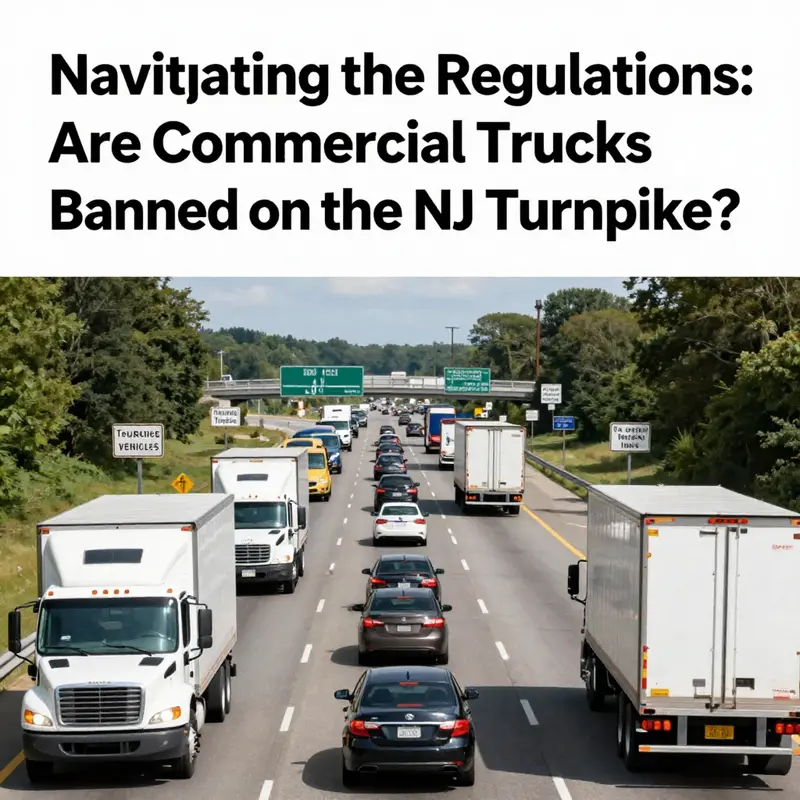
Rumors often swirl about whether commercial trucks are barred from the New Jersey Turnpike, but the reality is both simpler and more nuanced. The Turnpike remains open to freight traffic along its entire length, a pivotal artery for regional supply chains and intermodal connections. Fleet managers, owner-operators, and logistics planners rely on this continuity when mapping cross-state itineraries that hinge on predictable highway access. Yet the absence of a blanket ban does not imply unfettered movement. The Turnpike operates under a precise regulatory framework intended to safeguard infrastructure and public safety while accommodating the needs of a diverse mix of commercial vehicles. The most frequently cited constraint is not a prohibition on trucks per se, but a weight-related restriction at a single, critical nexus: the Delaware River Bridge toll plaza. Here, any vehicle or load exceeding 80,000 pounds is prohibited from exiting. That figure is codified in N.J.A.C. 19:9-1.9(b) & (c), a rule that reflects structural considerations specific to that bridge crossing rather than a statewide cap on commercial traffic. It is a common source of confusion for drivers who assume the bridge carries an across-the-board burden on heavy freight; in truth, the restriction governs the act of exiting at the toll plaza, not traversing the Turnpike itself. For fleets evaluating routes that contemplate stopping or transferring loads at the Delaware River Bridge, the weight rule means precise planning: if you anticipate an exit there, you must ensure that the final leg to the destination from the exit does not push the overall movement over the 80,000-pound threshold. The distinction matters not just for compliance, but for the reliability of schedules and the predictability of bridge traffic, both of which have ripple effects on fuel planning, driver hours, and maintenance budgeting.
That regulatory landscape is complemented by a practical urban- and highway-planning reality: the Turnpike is a major corridor that intersects with other New Jersey highways and neighboring states. The Garden State Parkway, by contrast, is a separate highway system with its own rules and restrictions, and it is not a part of the Turnpike network. This separation can be a source of misinterpretation for drivers who assume uniform policies across New Jersey’s toll roads. In day-to-day operations, this means a truck that can traverse the Turnpike freely from north to south might still encounter distinct constraints if plans involve Parkway segments, call-outs for toll facilities, or connections to other expressways that impose their own load or hazard restrictions. The practical takeaway is straightforward: consult the specific rules that apply to the Turnpike exit you intend to use, and do not extrapolate policies from one system to another without verification.
Seasonal and weather-related conditions add another layer of complexity. The core rule—no blanket ban of trucks on the Turnpike—remains in effect, but temporary restrictions can surface during severe weather. The New Jersey Department of Transportation (NJDOT) may implement travel restrictions on certain highways during winter storms to improve safety and support snow removal operations. The scope of these restrictions typically covers a subset of routes rather than the entire highway network and often includes the Garden State Parkway and major routes such as Route 440. In practice, the Turnpike itself may remain open, but heavy vehicles can encounter advisories, lane restrictions, or guidance to chain up or reduce speed in affected zones. As a result, operators should treat weather events as dynamic, with conditions that can shift on short notice. Fleet planners and drivers alike should build in flexibility for detours, revised departure times, and updated load profiles to minimize downtime during storms.
Because conditions can change rapidly and because the safety calculus evolves with accumulating weather data, the most reliable approach is to verify current conditions through official channels. Real-time updates from NJDOT and the NJ 511 traveler information service provide the latest alerts on road restrictions, closures, and any temporary prohibitions or advisories that could affect the Turnpike corridor or adjacent routes. By checking these sources before departure—and periodically during long trips—drivers can avoid last-minute surprises that would complicate delivery windows or increase operational costs. This emphasis on current information is not merely bureaucratic caution; it translates into real-world benefits for fleet efficiency, predictable service levels for customers, and reduced risk of detention or incidents on busy urban corridors.
For readers seeking a broader perspective on how current regulatory environments shape truck fleets and asset utilization, consider exploring related discussions on the evolving market dynamics of used-truck inventory and demand. These insights can illuminate how compliance costs, routing choices, and temporary restrictions influence fleet composition and capital expenditure over time. As one example of industry-adjacent context, you can explore the latest trends in used truck sales growth to understand how operators adapt to a shifting regulatory and economic landscape. https://mcgrathtrucks.com/current-trends-in-used-truck-sales-growth/
In sum, commercial trucks are not banned from the New Jersey Turnpike. They move across the length of the road with a critical, clearly defined exception at the Delaware River Bridge exit for loads over 80,000 pounds. Weather can introduce temporary restrictions on the broader highway network, including areas like the Garden State Parkway and Route 440, but such restrictions are not a permanent feature of the Turnpike itself. The best practice for anyone planning a Turnpike route with a heavy load is to stay informed through official channels and to account for the exact exit strategies and final-mile connections that will determine whether the 80,000-pound rule comes into play. In an industry where timing and reliability are everything, the difference between a smooth cross-state passage and an unplanned delay often hinges on routine checks of official updates and careful route selection that respects the bridge’s weight limitation and the potential for weather-driven adjustments. For ongoing navigation, turn-by-turn decision-making should be anchored in the latest official guidance from the New Jersey Department of Transportation and the state’s travel-information services, ensuring that every trip is as efficient and compliant as possible. And as the regulatory landscape continues to evolve, carriers that couple robust routing with timely information will maintain resilience across the Turnpike’s vital commercial lifeline.
Not Banned, But Bounded: Navigating Weight Limits and Bridge Rules for Commercial Trucks on the NJ Turnpike
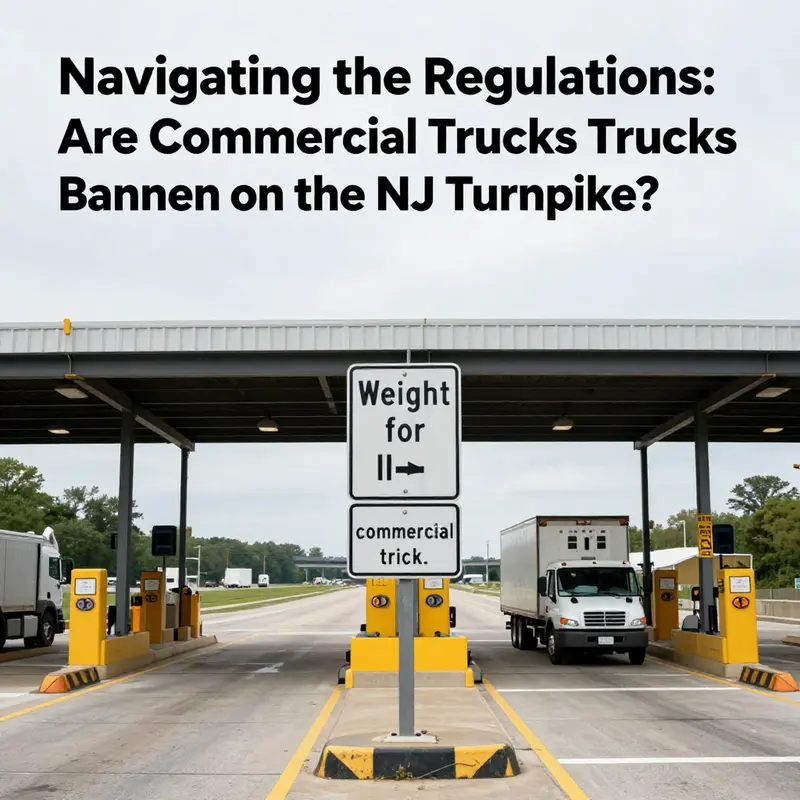
For many operators, the question of whether commercial trucks are allowed on the New Jersey Turnpike is not simply yes or no. The Turnpike is open to commercial traffic along its length, and heavy trucks move through it every day. Yet there are precise boundaries that shape routes, timing, and operating costs. The clearest example is at the Delaware River Bridge toll plaza, where a weight-based restriction interacts with typical fleet routing behavior. In summary, openness to trucks is balanced by targeted rules designed to protect infrastructure, safety, and traffic flow, especially at chokepoints linking major markets. The Turnpike demonstrates how legality and practicality can diverge in meaningful ways, reminding operators to look beyond a binary ban question when planning a cross-state move.\n\nTo begin, it is correct to say that commercial vehicles are permitted to travel the Turnpike’s full length. It is a major freight corridor; trucks must comply with federal and state rules on weight, axle loads, and dimensions. The ability to move freely supports capacity planning and on-time delivery. Planned detours add cost if needed; fleets know time is money.\n\nWhere the permission map gets more complicated is at the Delaware River Bridge toll plaza. There, the law imposes a weight restriction: vehicles or loads exceeding 80,000 pounds are not allowed to exit at the DRB toll plaza. This is not a ban on crossing the bridge, but on exiting at that plaza. The rule is codified in N.J.A.C. 19:9-1.9(b) and (c). In practice, a heavy load can cross, but if the plan calls for an exit at DRB, the load must be within the 80k limit or the driver must take an alternative exit. This matters for routing when a destination sits near the DRB; a misstep can trigger detours or delays.\n\nThe distinction underscores that toll plazas and interchanges have design-specific rules to protect infrastructure and manage congestion. The DRB is a critical crossing between NJ and PA; the weight cap helps distribute load across the span. For drivers, pre-trip planning must include weight verification before choosing an exit and dispatchers should build buffer time for deviations.\n\nAnother dimension: Garden State Parkway is not cargo-friendly; commercial vehicles are prohibited there. This concentrates freight on the Turnpike and other permitted highways, reinforcing the Turnpike’s role as the spine of regional freight. This implies drivers adapt to lane density, speed limits, ramp access, and tolling environment, which influence fuel and asset utilization.\n\nSeasonal and temporary restrictions may apply during winter weather to facilitate snow removal and safe passage. For example, certain routes may be restricted during storms; these measures are temporary and announced to prioritize safe operation. Carriers should plan routes with contingencies and understand that a standard plan may change when storms hit.\n\nTaken together, the Turnpike remains open to trucks, but with exit-specific weight limits and other state highways with restrictions. Fleets that internalize this map optimize routing, minimize dwell time, and protect equipment. They also rely on real-time information from NJDOT and toll authorities before departure.\n\nFrom fleet-management perspective, compliance is baseline; efficiency is the differentiator. If an exit detours a heavy haul, operators reallocate trailer space, adjust fuel planning, and recalibrate hours. The broader market senses how rules translate into capacity signals: if a corridor has exit restrictions, fleets may adjust asset mix or invest in weight-distribution hardware to maximize loading within the limit.\n\nFor readers involved in fleet-purchasing, asset management, or route design, these details drive day-to-day decisions, from how a driver logs a pre-trip to whether a heavy load should be split across multiple destinations. The interplay among allowed travel, exit constraints, and seasonal changes informs planning and the lifecycle of equipment.\n\nAs regulations evolve, so too will the calculations that determine optimal routes and used-truck prices. External resources from state agencies and industry insights guide this ongoing negotiation between policy and practice. The official NJDOT and DRB authorities remain the primary sources for current conditions; operators bear responsibility to verify weight compliance and planned exits before departure.\n\nIn short, commercial trucks are not banned on the NJ Turnpike; access is balanced with constraints to maintain safety and bridge integrity. The system aims to keep the corridor open for business while protecting infrastructure.
Not Banned, Not Free-For-All: The Real Rules Governing Commercial Trucks on the NJ Turnpike
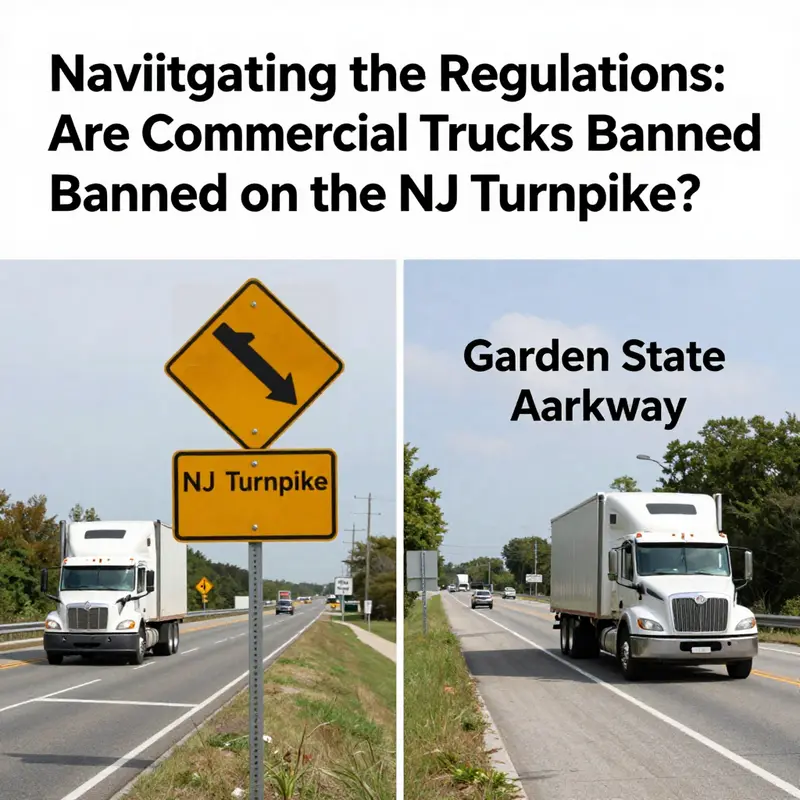
The notion that a major highway like the New Jersey Turnpike would blanket-ban commercial trucks has a certain dramatic appeal, but it doesn’t hold up under scrutiny. The NJ Turnpike is a critical artery for freight movement, a corridor that keeps supply chains flowing across metropolitan and rural landscapes alike. In practice, commercial trucks are not prohibited from traveling the Turnpike along its full length. They move with the same purpose as any other vehicle: to deliver goods, to optimize routes, and to do so safely and efficiently within the legal framework that governs heavy traffic at highway speeds. Yet the ability to travel the length of the corridor does not translate into carte blanche. There are targeted restrictions that apply under specific conditions and at particular points, designed to mitigate risk and protect all road users when the weather turns harsh or when loads exceed certain thresholds. Understanding this nuanced picture is essential for fleets planning routes, dispatching drivers, and managing compliance in a system where safety and efficiency must be balanced in real time.
At the heart of the Turnpike’s rules for heavy cargo is a clear, quantifiable constraint: weight. The exiting at the Delaware River Bridge toll plaza carries a specific prohibition for vehicles or loads exceeding 80,000 pounds. This limit is codified in the state administrative code (N.J.A.C. 19:9-1.9(b) & (c)) and serves a practical purpose. The bridge crossing is a unique structural and logistical chokepoint where the combination of load, speed, and wind gusts can translate into risk for the structure and for other travelers. For operators, the 80,000-pound threshold means careful planning around exit points. A truck carrying a heavier load cannot exit at that toll plaza, which effectively shapes routing choices and may require pre-determined detours or alternative entry/exit points around the bridge if the destination lies on the other side of the span. Importantly, this rule is not a ban on heavy trucks entirely; it is a specific constraint tied to a particular location and condition. The broader implication is that weight remains a critical variable in turnpike decision-making, even as overall access to the highway remains intact.
Beyond aggregate weight, the Turnpike exists within a broader ecosystem of New Jersey highways, and as soon as one looks at the Garden State Parkway, the emphasis on universal truck access becomes even more nuanced. The Garden State Parkway, while a separate system, is not open to the same truck traffic as the Turnpike. This distinction is crucial for fleet planners who might assume that a truck permitted on the Turnpike is automatically permitted on every major New Jersey route. The Parkway’s own set of rules, which can include restrictions on certain commercial vehicles during specific conditions, stands as a separate chapter of transportation policy. In practical terms, a company must verify the route and the current restrictions for each major corridor in use, rather than assuming blanket permissiveness across all of New Jersey’s expressways. The upshot is that operators should not think in terms of a single, uniform policy for heavy trucks across the state. Instead, they must navigate a patchwork of corridors, each with its own scale of access and its own safety considerations, particularly for routes that intersect urban centers, industrial zones, and border crossings.
Weather, of course, cannot be ignored. Severe winter conditions trigger a different set of rules designed to reduce the risk of chain-reaction accidents and multi-vehicle pileups on high-speed roadways. The NJ Department of Transportation (NJDOT) may impose temporary travel restrictions on commercial vehicles on certain routes, including stretches of the NJ Turnpike and Route 440, when forecasts predict or when snow, ice, or other hazardous conditions are present. These restrictions are not punitive measures; they are safety provisions aimed at minimizing exposure for large vehicles with higher stopping distances and limited maneuverability on slick surfaces. The decision to implement such restrictions is typically dynamic, responsive to current weather patterns, forecast models, and real-time road conditions. For fleet operators and drivers, this means staying alert to travel advisories, adjusting departure times, or choosing alternate routes when a winter storm is anticipated or in progress. The practical effect is a Turnpike that remains open to commercial traffic under normal conditions, but that has a safety valve—temporary restrictions—to reduce risk when the weather jumps from chilly to dangerous.
In parallel with the Turnpike, the Garden State Parkway mirrors this safety-first approach in its own right. While the two highways share a regional function—supporting commerce, commuting, and regional connectivity—the specifics of enforcement zones and timing can differ. The same winter weather logic applies: temporary restrictions may be imposed on both corridors to safeguard drivers and other road users. The broader principle remains consistent: these measures are designed not to black out access to commercial trucking, but to optimize safety during episodes where hazardous conditions would otherwise overwhelm the system. For the truck operator, this means maintaining a heightened awareness of weather reports, road condition updates, and official advisories, so that decisions about speed, routing, and timing can be made with confidence rather than risk.
Real-time information is a cornerstone of navigating these policies effectively. The best practice for any driver or fleet manager is to consult trusted official channels for the latest travel advisories, restrictions, and closures. The NJDOT website and the 511 New Jersey Travel Information System are the two primary sources for timely updates. They translate weather conditions, incident reports, and policy changes into actionable guidance for those behind the wheel. In practice, a well-informed driver who checks these platforms before departure—and at the start of a shift—can avoid last-minute detours, maintain schedule integrity, and reduce the likelihood of fines or stranded time on the road. The real-world value of these resources is in the steadiness they bring to daily operations, turning what could be a chaotic weather day into a predictable sequence of steps that keeps freight moving while protecting the safety of crews and the traveling public.
For readers who want to connect these regulatory insights to broader market considerations, consider how the weather-driven rules interact with the shifting dynamics of the trucking industry. Supply chains bend around capacity, demand, and the availability of compliant routes when storms close or tighten on the maps. In other words, the Turnpike’s real story is not simply about whether a truck can drive from point A to point B; it is about how fleets anticipate, adapt, and communicate in a landscape where weight limits, corridor-specific rules, and weather advisories intersect. To gain a sharper sense of how market conditions influence route planning and fleet management in the face of these realities, many readers turn to analyses that synthesize policy and economics, such as discussions on navigating economic uncertainties in trucking markets. Navigating Economic Uncertainties in Trucking Markets provides a lens on how external pressures shape decisions about equipment, routes, and timing, linking policy detail to practical, day-to-day field decisions.
In sum, the NJ Turnpike is not a banned corridor for commercial trucks, but it is a regulated one. Weight restrictions at critical points, the potential for temporary weather-based restrictions, and the existence of parallel rules on adjacent corridors all shape how fleets plan trips, allocate loads, and manage risk. The existence of these rules is a testament to the Turnpike’s central role in regional commerce: a highway designed to move goods quickly and safely, with rules that reflect the realities of heavy freight, climate variability, and the real-world complexities of large-road operations. For practitioners, the key takeaway is straightforward: stay informed, plan with contingencies, and treat the Turnpike as a resource—one that becomes most effective when navigated with up-to-date guidance and disciplined scheduling.
External resource: https://www.nj.gov/transportation/news/2025/12/27/commercial-truck-restrictions-winter-storm
No Ban, Clear Boundaries: Navigating Commercial Truck Access on the NJ Turnpike
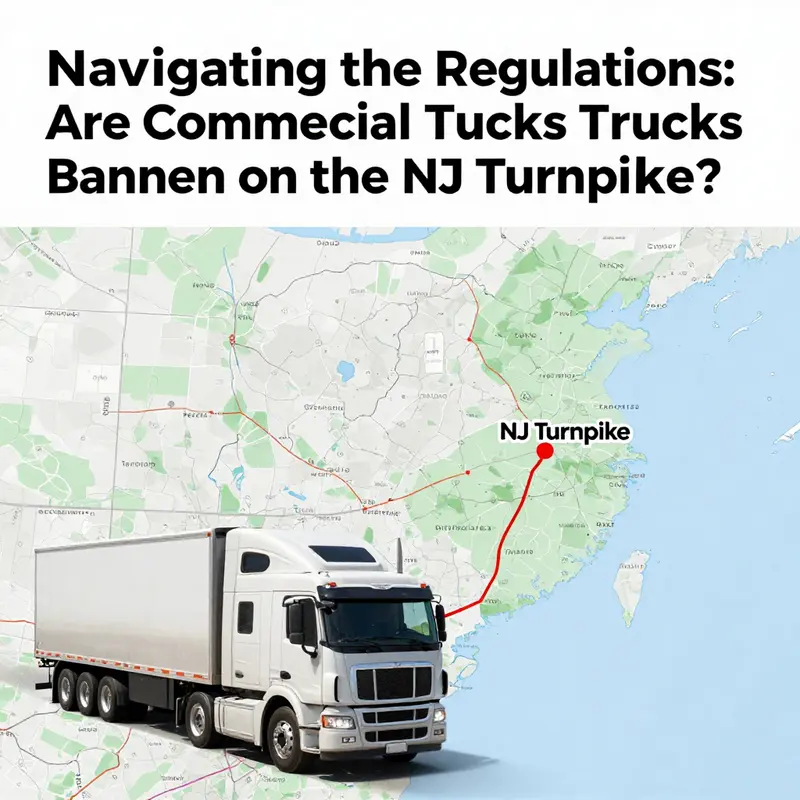
On the topic of trucking on the tri-state corridor, a common misconception is that commercial trucks are banned on the New Jersey Turnpike. The reality is that trucks are allowed on most of the Turnpike, but there are targeted restrictions to protect infrastructure and safety. With clear boundaries and good planning, carriers can navigate the Turnpike efficiently rather than avoid it entirely.
The most significant constraint is the weight based restriction near the Delaware River Bridge toll plaza. Vehicles exceeding 80,000 pounds may not exit at that toll plaza and must continue to a later exit. This rule is designed to preserve bridge integrity and maintenance needs, and it translates to practical planning: know the weight of the shipment and plan a compliant exit. Dispatchers may adjust departure times, axle configurations where permitted, or reroute to an appropriate toll plaza.
The Garden State Parkway is off limits to commercial trucks, so routing must stay on the Turnpike when moving through the region toward inland markets or coastal ports. Weather events and maintenance can introduce temporary restrictions, so operators should monitor official alerts from the NJ Department of Transportation and use real time traffic apps to anticipate detours or closures.
In short, the Turnpike is open to trucks with attention to weight limits, exit points, and temporary advisories. Staying ahead with accurate load data and current notices allows fleets to maintain schedules and minimize delays.
null
null
Final thoughts
In conclusion, the regulations surrounding commercial trucks on the New Jersey Turnpike highlight a critical intersection of transportation efficiency and public safety. Trucking company owners and fleet managers need to remain vigilant about compliance with weight restrictions at the Delaware River Bridge and be aware of their truck’s access to both the Turnpike and Garden State Parkway. Understanding these regulations not only promotes safer roads but ensures that logistics operations proceed smoothly amidst the challenges of transportation management. Knowledge of the road ahead empowers the industry toward better compliance and operational success.