
In California, the classification and registration of trucks comprise a complex system tailored to the intended use of the vehicle, distinguishing between commercial and non-commercial applications. Understanding these distinctions is vital for trucking company owners, fleet managers, and procurement teams in construction and logistics. This article aims to provide a comprehensive overview of truck registration in California, unpacking categories, and their implications. Each chapter delves into critical aspects, from the differences in registration types to the classification processes undertaken by the California DMV, ensuring that stakeholders are well-informed to navigate their responsibilities in truck usage and compliance.
Beyond the Weight: Why California Trucks Aren’t All Registered as Commercial
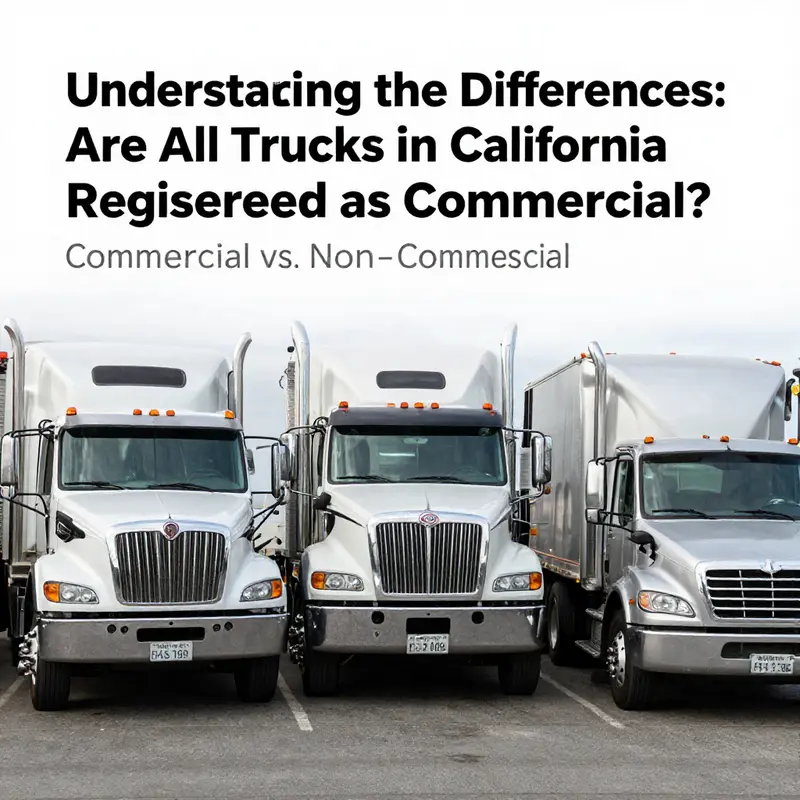
People commonly assume that California’s vast trucking landscape is uniformly regulated by a single category: commercial vehicles. In practice, that’s not the case. California law distinguishes a vehicle’s registration category not by its size alone but by how it is used. The DMV looks at the intended use, the weight of the vehicle, and whether the vehicle operates in commerce or is used for personal purposes. This distinction matters because it affects licensing, safety rules, emissions requirements, and, ultimately, the cost of ownership. The state relies on a practical framework that aligns regulatory burden with actual operation. When a pickup truck is purchased for weekend projects, it rarely triggers commercial registration; when a flatbed truck operates as part of a construction crew, it typically does. The line between these two uses rests on intention, not merely on the truck’s physical dimensions.
Understanding this nuance is essential for anyone who drives a large truck in California or plans to acquire one for business purposes. In the eyes of the DMV, a vehicle’s classification hinges on how it is put to use over the course of its ordinary life. A family hauling a trailer for a vacation may find their vehicle treated differently from a contractor moving tools and materials every workday. The practical consequence is that two vehicles that look similar on the street can bear different registration labels, each with its own set of rules, fees, and compliance obligations. In other words, size can intersect with function, but function ultimately governs the classification.
Commercial and private registrations are not just bureaucratic labels; they enact a framework that governs licensing, insurance requirements, and enforcement. For operators who work with freight, delivery routes, or service calls, the commercial designation accompanies obligations that are designed to maintain safety and reliability in public roadways. In this context, a professional fleet’s vehicles are tethered to a different regulatory regime than a privately owned truck used for hobby projects. This is not a matter of labeling for the sake of paperwork. It is a rotation of rules that align with how the vehicle is used to move goods, people, or equipment in the real economy.
To illuminate how California differentiates use from identity, consider the patterns the DMV and industry observers notice most often. A delivery van that regularly transports parcels across counties, a freight hauler moving pallets between warehouses, or a service truck that carries specialized equipment to job sites are typical examples of commercial registration. They operate as part of a business model, and their owners or operators rely on ongoing revenue streams tied to transporting cargo or providing labor. In such cases, the commercial category is not just appropriate but expected, and the associated requirements—like commercial licenses, heightened safety checks, and stricter emissions controls—become normative standards for daily operation. For readers seeking a broader industry perspective, the topic of how these distinctions shape market dynamics is discussed in depth on the McGrath Trucks blog. McGrath Trucks blog.
Yet the story does not end with a simple binary. Not all heavy vehicles are branded as commercial in California, even if their weight would seem to push them toward that category. A large pickup used primarily for personal transport, home improvement projects, or non-commercial farming activities can be registered as private or non-commercial, even when its GVWR sits well above 10,000 pounds. The critical factor remains the vehicle’s use. If the heavy pickup is not used for profit, cargo-for-hire, or any business-related activity, it may be classified as non-commercial despite its heft. The foundational principle here is purpose over potential, with the weight threshold serving as a guide rather than a hard divider. This nuance is why two trucks that appear similar to the casual observer can belong to different regulatory camps.
The question often surfaces: does a GVWR of more than 10,000 pounds automatically trigger commercial status? The straightforward answer is that weight is a powerful indicator, but it is not an absolute determinant. California’s rules acknowledge that context matters. GVWR is a common basis for applying stricter standards, but exceptions exist when the vehicle’s actual usage reveals a personal or non-business purpose. A heavy-duty pickup truck used primarily for weekend projects, drag racing on public roads, or transporting family goods may still be registered as non-commercial if its operator demonstrates that the vehicle’s function does not align with commercial activity. Conversely, a lighter truck might be registered commercially if it operates as part of a business fleet, demonstrates consistent revenue-generating activity, or is used to move goods as part of a service offering. This proportional approach helps balance regulatory rigor with the realities of how people actually use their trucks in daily life.
Meanwhile, the practical implications extend beyond registration labels. Commercial vehicles are typically subject to stricter safety inspections, emissions requirements, and vehicle-maintenance expectations. Operators may need to obtain a commercial driver’s license (CDL) for certain classes of operation, ensuring that drivers have the training and credentials appropriate to high-stakes tasks on busy roadways. These rules exist not to complicate ownership but to align the capabilities of the vehicle with the responsibilities of the operator, particularly when a vehicle routinely carries cargo, serves customers, or travels long distances for work. The ecosystem of compliance, from tire wear to brake performance and fuel efficiency, is designed to reflect the higher stakes involved in commercial transportation.
For readers who want to navigate these complexities more clearly, the DMV’s vehicle classification guidance remains the authoritative touchstone. It delineates how weight, use, and the nature of cargo influence classification and the corresponding regulatory footprint. While this chapter has drawn on general principles and practical observations, the official framework provides the precise criteria used by inspectors and registration staff across the state. This alignment between practice and policy helps explain why a vehicle’s road-daring appearance does not automatically reveal its regulatory status. A vehicle that seems to belong to the private sphere can, in fact, be treated as commercial if its daily function is tied to a business purpose, and vice versa. The interplay between use and weight shapes fees, licensing, and enforcement in meaningful ways.
In contemplating these ideas, it helps to remember that the heart of the matter is intention and application. A truck’s registration category is a reflection of how it is deployed, not merely how it looks. A single vehicle can shift its classification if the owner’s use changes—from a personal asset to a commercial tool, or the other way around. This fluidity is not a loophole but a practical acknowledgment that the regulatory system must adapt to evolving patterns of work and life. As a result, prospective buyers and current owners should assess not just the truck’s powertrain or payload but how they intend to use it over the next several years. If the activity is profit-driven, cargo-for-hire, or part of a business service, the odds tilt toward commercial registration. If the aim is personal transport or occasional labor in a non-business context, non-commercial status may be appropriate.
For those seeking a consolidating resource or a way to ground their understanding in the broader market context, it is useful to keep sight of the practical consequences of these classifications. Insurance costs, liability coverage, and the regulatory obligations tied to each category can vary. In some cases, misclassification can lead to penalties, back fees, or complications in renewal processes. The careful practitioner, whether a fleet manager, a small-business owner, or a private individual contemplating a big purchase, benefits from a clear-eyed assessment of how their vehicle will be used, how often it will carry cargo or passengers for hire, and what regulatory footprint that intent implies. These considerations help ensure that the chosen registration status aligns with both legal requirements and the owner’s operational realities.
To summarize, the California registration landscape for trucks is defined more by function than by form. A truck’s classification as commercial or non-commercial hinges on its intended use, its cargo-carrying role, and whether the operation is tied to profit or service delivery. Weight and GVWR provide important signals, but they do not override the observable purpose of the vehicle in daily life. As readers move from theory to practice, the best path is to ground decisions in the DMV’s vehicle classification guidance and to confirm specific cases with a knowledgeable registration professional. In this sense, the distinction is less about a universal rule and more about a thoughtful assessment of how a truck fits into the economic activities that keep California moving.
For further context on industry dynamics and practical implications, see the McGrath Trucks blog for related discussions about registrations, fleet management, and regulatory realities. McGrath Trucks blog.
Finally, for anyone seeking the official, state-level reference, consult the California DMV’s vehicle classification guidance to confirm how your particular vehicle and its intended use will be categorized. Official guidance: https://www.dmv.ca.gov/portal/vehicle-registration-and-title-information/vehicle-classification/.
Weight, Use, and the DMV Gate: How California Distinguishes Commercial From Private Truck Registration
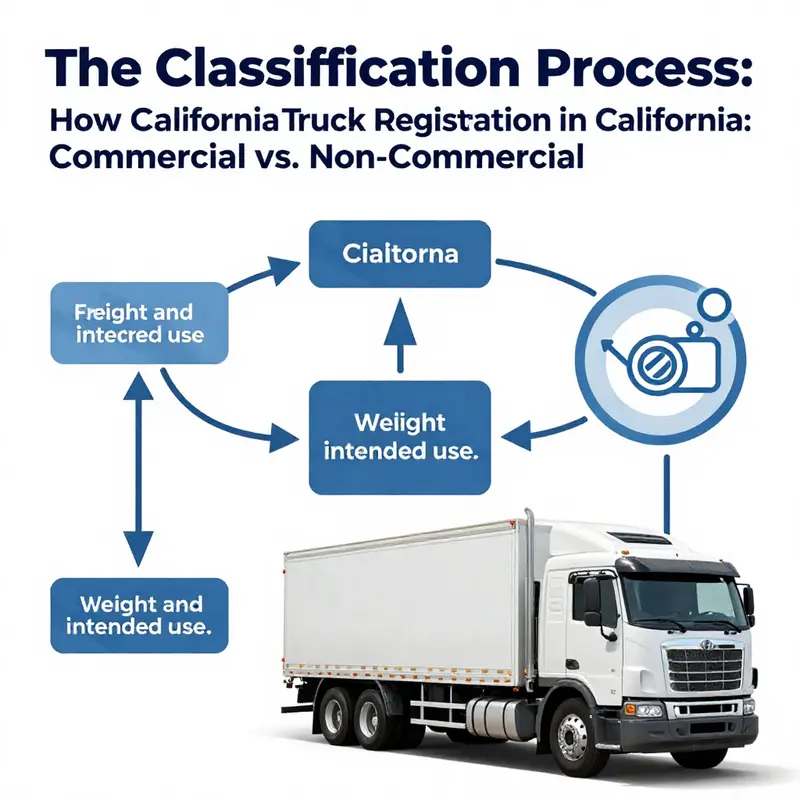
When people ask if all trucks in California are registered as commercial, the answer isn’t a simple yes or no. The state’s registration system is built to reflect how a vehicle will be used, not just what it looks like. In practice, California treats trucks as commercial or private based on a combination of weight, intended use, and the business context surrounding the vehicle. This distinction matters far beyond paperwork. It shapes registration fees, insurance requirements, road regulations, and even how fleets plan for maintenance and compliance in a state that seeks to balance commerce with safety and environmental goals.
At the heart of this system is the Gross Vehicle Weight Rating, or GVWR. This figure represents the maximum operating weight the vehicle is designed to carry, including the vehicle itself and its cargo. In California, trucks with a GVWR of 10,001 pounds or more are typically classified as commercial. That threshold is not arbitrary; it aligns with both state and federal considerations about the scale of operation, potential for carrying cargo, and the likelihood that the vehicle would be used in a business context rather than for personal travel. From there, the DMV uses a set of classes that map GVWR to size and capability, creating a consistent framework for registration and regulatory obligations.
The classification ladder generally follows a pattern that is familiar to anyone who has watched the highway evolve into a moving fleet of different workhorses. Class 1 includes lighter pickups and utility vehicles up to 10,000 pounds GVWR. As GVWR climbs, the classes widen, culminating in Class 8 for the heaviest combinations. In broad terms, the ladder looks like this: Class 1 up to 10,000 pounds, Class 2 from 10,001 to 14,000, Class 3 from 14,001 to 16,000, Class 4 from 16,001 to 19,500, Class 5 from 19,501 to 26,000, Class 6 from 26,001 to 33,000, Class 7 from 33,001 to 55,000, and Class 8 for anything over 55,000 pounds GVWR. The precise boundaries are designed to reflect practical differences in braking, handling, and safety requirements, which in turn influence registration categories and the paperwork that accompanies them.
But weight isn’t the only factor. The DMV also looks at how the vehicle is used. A flatbed service truck that a construction company relies on to haul materials and tools for daily jobs is almost certainly registered as commercial because it is integrated into a business operation and used to move cargo for hire or in support of revenue-generating work. In contrast, the same size vehicle owned by an individual for weekend projects or personal errands typically falls into the non-commercial, or private, category if it isn’t employed in business activities or vehicle-for-hire operations. The line between private and commercial use can blur in situations where someone operates a small business from home and uses a pickup for both personal and business tasks. In those cases, the DMV will assess the primary use pattern, the scale of the job, and whether the vehicle regularly participates in a business workflow that involves receiving compensation or transporting cargo for others.
The DMV’s approach also respects other regulatory layers that ride along with GVWR and use. For example, some vehicles that transport hazardous materials, or those that operate under special permits, encounter additional licensing and inspection requirements that go beyond standard registration. The Federal Motor Carrier Safety Administration, a federal body, plays a role in setting broader safety and driver qualification standards for larger commercial operations, which can influence how states classify and regulate certain trucks. The interplay between state registration rules and federal safety expectations means that a truck’s registration status can influence, and be influenced by, a owner’s compliance strategy for the wider transportation operation.
To determine registration status, the DMV relies on multiple data streams that come into play when a title is issued or amended, during inspections, and when a vehicle’s data is gathered from the manufacturer. If a truck’s weight profile or its use changes—say a private pickup begins to be used for regular delivery work—the owner is responsible for updating the registration classification accordingly. When changes are not reflected in a timely fashion, enforcement can follow, with potential penalties, fines, or even impoundment in extreme cases. This is not merely punitive; it is a mechanism to ensure that the vehicle is subject to the appropriate level of safety oversight, fuel economy standards, and fee structures that align with its real-world use on California roads.
One practical implication of the classification framework is how it shapes fleets and individual owners as they make decisions about purchases and registrations. A business owner evaluating a medium-duty truck must consider not only the upfront price but also how the GVWR and class will affect licensing, insurance, inspection cycles, and permitted uses. A personal user purchasing a large pickup for occasional heavy-duty tasks still faces the threshold question: Will this vehicle primarily be used for business, or will it remain a private asset? The answer determines not just the registration sticker on the plate frame but the long-term cost of ownership, compliance requirements, and even the opportunities available for vehicle operation, such as access to certain job sites or the ability to haul regulated cargo.
Within the broader industry conversations, the nuance that not all trucks are registered as commercial is frequently underscored by practitioners who manage fleets, evaluate used trucks, or advise customers on regulatory compliance. The reality is that a truck’s status hinges on more than its appearance or chassis; it is defined by its mission profile. A heavy-duty work truck used daily to deliver goods for hire will almost certainly bear a commercial registration, reflecting its integral role in a business operation. A similarly sized vehicle kept for personal mobility and occasional home improvement tasks will likely be registered privately, unless it is adapted into a routine business activity that moves goods or compensates the owner for services rendered. This distinction is not just administrative; it signals to insurers, lenders, and regulators the scope of risk and responsibility associated with the vehicle.
Readers looking for more detailed, practical guidance on how this classification plays out in day-to-day ownership can find industry perspectives and how-tos in the broader trucking community. For those who want to explore industry context and related considerations, the topic is explored further on the McGrath Trucks blog.
The conversation around registration status also invites reflection on how California’s approach compares with other states. While weight and use are central everywhere, the thresholds and class boundaries can vary, and some states weigh environmental and emissions considerations more heavily in determining classifications. In California, the emphasis on GVWR as a primary gateway to classification aligns with safety, accountability, and fiscal planning for both individuals and fleets. It also underscores a broader truth: the registerable identity of a truck in California is dynamic. It can shift as business needs evolve, as cargo volume grows, or as the vehicle’s engineering and ownership structure change. A private citizen who begins subcontracting minor hauling work may cross the line into commercial registration simply by the way the vehicle is used, even if the vehicle’s baseline capability remains the same.
This fluid boundary is a reminder that the state’s regulatory machinery is designed to capture real-world usage, not static labels. The DMV’s classification framework ultimately serves a dual purpose. It ensures appropriate safety oversight and accountability, and it keeps the cost of road use aligned with the vehicle’s role in commerce. For a private individual, remaining in the private category can preserve certain privileges and simplify compliance. For a business that depends on moving goods, the commercial classification unlocks the infrastructure of inspections, permits, and regulatory alignment that supports reliable, scalable operations.
In framing this topic, several practical threads emerge. First, when evaluating a vehicle purchase, buyers should anticipate how GVWR and anticipated use will shape ongoing obligations, including insurance, inspections, and potential permits. Second, current owners should periodically revisit their use patterns. If those patterns shift toward more frequent cargo transport or hiring services, it may warrant a reclassification to reflect the new operational reality and to avoid non-compliance penalties. Third, because regulatory landscapes change, it is prudent to periodically review official guidance from the state DMV and related federal bodies. Staying informed helps ensure that a vehicle’s registration status remains appropriate to its actual use and that fleets maintain alignment with safety and environmental standards over time.
For the official framework and the most up-to-date requirements, consult the DMV’s authoritative resources. Official guidance from the state DMV is available here: https://www.dmv.ca.gov/portal/dmv-details/truck-registration-and-classification
Beyond the Weight: How Use and Purpose Define Commercial Truck Registration in California
In California, the simple question ‘Are all trucks registered as commercial?’ invites a more careful answer than most people expect. The state’s registration system does not label vehicles simply by their appearance or size. Instead, it depends on how the vehicle is used and how much weight it is built to carry. The distinction matters, because it shapes registration fees, insurance requirements, driver qualifications, and even the way a vehicle can be parked or operated in dense urban streets for business purposes. This is not a matter of labels, but of practical implications for fleets and households alike.
At the heart of California’s rule is the gross vehicle weight rating, or GVWR, which is the manufacturer’s estimate of how much weight the truck can safely carry and operate with. In most cases, a truck with a GVWR of 10,001 pounds or more is treated as a commercial vehicle. That threshold covers a broad range of medium and heavy-duty trucks—from delivery vans that routinely haul packages to flatbed haulers that move construction materials, to larger service trucks that operate as mobile workshops. The emphasis is on capability and function: the vehicle is intended to transport goods or provide a trade service as part of a business activity. When that is the case, the DMV’s classification aligns with the practical use of the vehicle in the job.
But the weight line is not the whole story. A truck with a GVWR below 10,001 pounds can still be registered as commercial if it is used for business purposes or for compensation. If you operate the truck to transport people for pay, such as a shuttle or a private hire service, or if the vehicle carries hazardous materials, California’s rules push it into the commercial category regardless of its light-duty GVWR. The logic is straightforward: the vehicle’s function—whether it’s used to earn money or to move dangerous cargo—creates additional obligations, risk, and regulatory oversight that the DMV treats as commercial use. Conversely, a pickup owned by an individual who uses it only for weekend gardening, hauling personal items, or family trips will usually remain non-commercial, even if the payload grows occasionally. The line depends more on how the vehicle is used than on its appearance or even on its potential.
From a practical standpoint, this means that two trucks that look the same on the street may belong to different worlds in the DMV’s records. A contractor’s flatbed that daily carries tools and building supplies will almost certainly be registered as commercial, not only because of GVWR but because the use is tied to a business operation. A neighbor who owns a similar-sized vehicle for home improvement tasks might be registered as private, unless he or she begins to transport goods for hire or to perform paid labor with that vehicle on a regular basis. The DMV’s decision rests on documentation and intent as well as capacity. When in doubt, business owners and individual operators are advised to review the official guidance, which emphasizes the use, weight, and responsibility that come with operating a vehicle for business purposes.
Registration is more than a label. It affects costs, compliance, and safety expectations. Commercial registrations typically imply higher registration fees, and they may trigger different insurance considerations or licensing requirements for drivers. They may also entail specific maintenance standards, commercial plates, and commercial use restrictions in certain zones. For a business with a fleet, the distinction is not merely about doing the job; it defines the regulatory framework under which every trip is performed. For households that occasionally borrow a trailer or rent a truck for a move, misclassifying a vehicle can lead to penalties, back fees, or mismatched insurance coverage. California’s DMV approach is designed to minimize these mismatches by guiding users to classify vehicles according to real use, not merely by wheelbase or bed length.
The decision process is incremental and grounded in documentation. If the business uses a vehicle to move freight or passengers for compensation, the vehicle should be registered commercially. If the vehicle serves only private purposes, it should be registered accordingly. In practice, this means keeping clear records of how the vehicle is used, including logs, leases, or employer declarations that articulate the intended function. For a family-owned business, a pickup might exist as a workhorse on the job site, hauling tools, equipment, and small loads between sites. For the same family, when the truck is used to drive to a weekend market or to tow a personal trailer, the line can shift. The DMV weighs these uses to determine whether a change in registration is warranted. The process is designed to be responsive: a vehicle can transition from private to commercial status if its use expands into commercial activity, or vice versa if work ceases. This dynamic aspect is essential for owners who may undergo changes in their business model or household needs.
Registration is not a one-and-done decision; it is a conversation that evolves as life and work evolve. To navigate these decisions, it helps to approach registration as a conversation with the DMV rather than a one-time label. Start from the GVWR as a baseline, then consider whether the vehicle will or does transport people for compensation or carries hazardous materials. If those conditions apply, the commercial designation follows naturally. If not, the private registration remains appropriate. The nuance is especially important for owners of multi-use trucks, where an asset can be both a private vehicle at times and a commercial tool at others. The DMV recognizes this complexity and provides pathways to reclassify as use evolves, which can involve updating insurance, licensing, and, if necessary, vehicle inspections to reflect commercial operation.
In practice, the best approach is to be proactive. If you anticipate a shift in how a vehicle is used—for example, purchasing an extra truck to support a growing business line, or deciding to take on shipping work for hire during peak seasons—plan for the regulatory impact before the shift occurs. This often means clarifying the intended use before registration renewal and confirming the GVWR and payload capacity with the vehicle’s documentation. It also means consulting the official DMV guidance and, when necessary, seeking professional advice to avoid misclassification. Misclassification can carry penalties, back fees, or the need to retrofit or re-register the vehicle, all of which are costs that a business or a family can avoid with careful planning.
For readers seeking practical context beyond the DMV’s framework, consider how real-world decisions shape vehicle choice and registration. The choice of a truck for business purposes—as a workhorse or as a fleet vehicle—often affects not just the title and plates but the costs of operation across the vehicle’s life cycle. In this chapter, the conversation about commercial status ties directly to the broader topic of whether all trucks in California are registered as commercial. The answer is clearly no, but the truth is nuanced. A truck’s classification mirrors its role in daily life, the demands of a job site, or the rhythm of a business operation. Weight matters, use matters, and the intersection of those two factors—the use that justifies compensation, the job that requires the transport of cargo, the risk posed by hazardous materials—determines the path to registration.
As you reflect on this, you can turn to resources that frame these decisions in practical terms and illustrate how use translates into regulatory status. For a broader perspective on how truck ownership and usage intersect with regulatory expectations, the McGrath Trucks blog offers accessible discussions that connect everyday hauling decisions to policy and practice. McGrath Trucks blog.
Finally, for those who want to verify the formal criteria and stay current with any updates to California’s rules, the official source remains the California DMV. They publish the precise thresholds, definitions, and procedures for vehicle registration, including changes that may arise from new regulations or updates to the code. The central reference is the DMV’s Vehicle Registration information, which provides the authoritative guidance on GVWR thresholds, use-based classifications, and the steps required to register a vehicle correctly. External resource: https://dmv.ca.gov/portal/vehicle-registration/
In sum, the question of whether all trucks in California are registered as commercial centers on use and capacity rather than appearance. The boundary is defined by GVWR and by whether the vehicle functions as part of a business or for hire. The closer you align your registration with actual use, the more straightforward the process becomes and the easier it is to maintain compliance across the lifecycle of the truck. This alignment matters not only for regulatory compliance but for the practical realities of operating in California’s complex landscape—its highways, its heavy-haul corridors, and its diverse mix of urban and rural environments where trucks connect people to goods, services, and opportunities.
Private Hands on Public Roads: Navigating California’s Private-Use Truck Registration
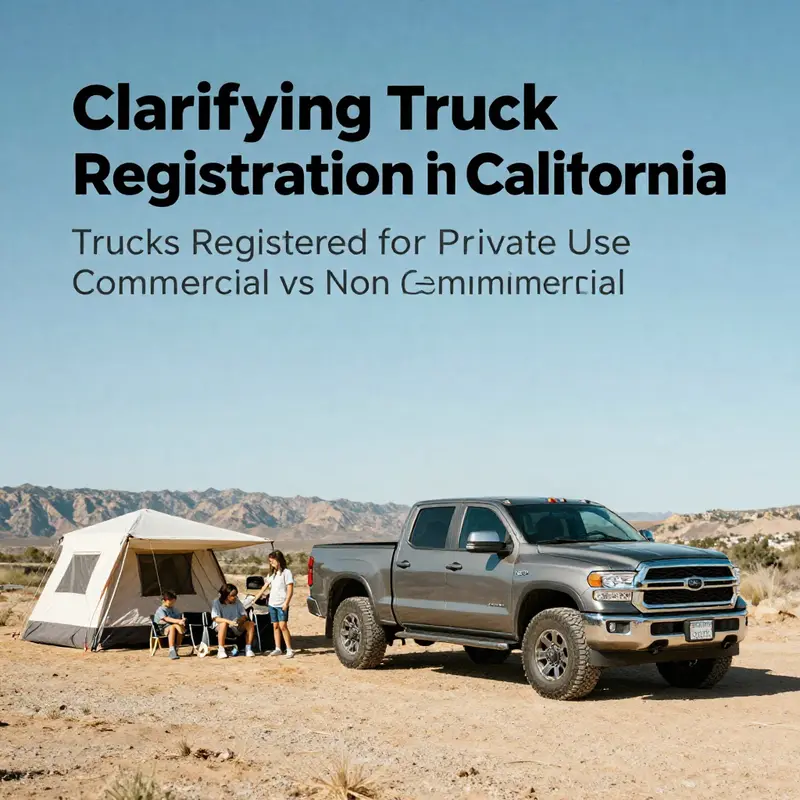
When people ask whether every truck in California must be registered as a commercial vehicle, they touch a core tension in the state’s road commerce: use, not appearance, often determines registration. The popular assumption that a truck’s size or type automatically marks it as commercial overlooks the DMV’s practical framework. In California, registration hinges on how the vehicle is used. A large pickup that serves a family’s weekend projects may sit in the driveway as a private vehicle, while a flatbed or box truck used to haul goods for hire clearly operates as commercial. The law makes room for both realities, recognizing that ownership and intent can diverge from the vehicle’s silhouette or horsepower alone. This nuance matters because it affects registration type, fees, and the duties drivers owe to the road and to the state.
Conceptually, the division is straightforward yet nuanced. A truck registered for private use is chosen when the owner’s primary purpose is personal transportation, family errands, or recreational activities. It is not intended to carry goods for hire or to operate as part of a business. Yet the line is not drawn by a single feature—weight, anticipated use, and whether cargo is compensated all feed into the DMV’s assessment. A vehicle over 10,000 pounds gross vehicle weight rating (GVWR) is more likely to be categorized as commercial, but weight alone does not seal the deal. The DMV weighs intent and function as much as mass. A private vehicle towing a trailer for occasional camping may still be private, while a similar truck performing weekly deliveries for a landscaping business would be commercial. The critical determinant, then, is not the drum of the tires or the truck’s bed size, but how the vehicle is deployed in daily life.
The practical consequences of this distinction ripple through every tax and fee connected to vehicle ownership. Private-use trucks remain subject to California’s registration and titling requirements, and they must meet emissions and safety standards just like commercial ones. What differs is the fee structure and the regulatory leash you carry. In California, registration fees for private-use vehicles are generally calculated based on weight, value, and fuel type. The vehicle’s weight acts as a proxy for road wear and maintenance costs, and higher-weight vehicles typically face proportionally larger fees. This realization upends any myth that private-use trucks are universally cheaper to register; the distinction lies in the application rather than the base label. A private-use pickup that occasionally carries heavy cargo for personal projects may still incur substantial registration costs if its weight ranking places it in a higher tier. Conversely, a lighter private-use vehicle could escape heftier charges even if it shares the same bed length with a commercial counterpart.
The question of use does not fade away when the truck leaves its driveway. If a private-use truck ever carries compensation or is used for any form of cargo-for-hire—even intermittently—the risk of reclassification rises. The DMV’s framework is designed to capture real-world behavior: a vehicle’s actual utilization matters as much as its nominal designation. A contractor who borrows their own truck to move a friend’s furniture for a fee, or a neighbor who accepts a small payment to haul equipment, can trigger commercial recognition. Once reclassified, the vehicle’s registration, taxes, and insurance obligations can shift accordingly. This possibility anchors the practical reality that private-use does not guarantee a lower cost of ownership nor a lighter regulatory burden in perpetuity. It depends on how the vehicle is employed in practice and whether any compensation enters the equation.
From a user’s perspective, this framework invites a careful accounting before committing to a vehicle’s intended use as private. It is tempting to assume that a large truck or a heavy-duty pickup will automatically fall into the private-use category because it belongs to an individual rather than a fleet. Yet it is the function—what the owner actually does with the truck—that will determine if it remains private or migrates to commercial status. For families who occasionally haul boats, ATVs, or remodel supplies, the private-use designation can hold, provided the activities stay personal and non-commercial. For day-to-day operations tied to a small business— hauling tools, carrying inventory to customers, or delivering products—the vehicle almost certainly becomes a commercial asset, and so should be registered accordingly.
This dynamic is not a purely bureaucratic exercise; it intersects with everyday budgeting, insurance, and even resale value. The costs tied to private-use registration can be unpredictable. Although private-use vehicles may avoid some fleet-related charges, they still face annual fees, inspection requirements, and potential updates to meet evolving emissions standards. The emissions landscape, increasingly strict in many jurisdictions, does not soften for private owners simply because the vehicle is used at home. In California, emissions controls apply across the board. A private-use truck that remains compliant with state standards protects not only the air but the vehicle’s long-term operability and resale prospects. In this sense, private use carries its own stewardship obligations: owners must stay aware of how alterations in use could alter registration status, and they must remain compliant with the same safety and environmental expectations that govern commercial vehicles.
The literature and guidance from official sources reinforce a practical caution: ownership documents and registration paperwork should reflect actual use. It is not enough to declare private use on a form and assume the matter is settled. The DMV examines the full picture, including how the vehicle is used, how often it is used for business tasks, and whether any revenue or compensation accompanies its operation. For individuals who drive a private-use truck to work on weekends or to shuttle children and groceries, the question remains whether any business-related tasks creep into regular use. In such scenarios, the line can blur, and the vehicle’s classification could shift if the activity changes in a meaningful way.
In this context, it is worth noting a practical tip that often appears in discussions about vehicle ownership and registration: the way a vehicle is described on official documents should align with actual use. If a private-use truck begins to serve more than personal needs, it may be wise to reassess its registration status with the DMV. This alignment can help avoid unexpected penalties or tax implications later, especially if the vehicle’s use expands to include revenue-generating activities. For readers seeking deeper strategic considerations, discussions in industry blogs frequently surface scenarios that readers find themselves facing when contemplating a change in use. A useful place to explore broader perspectives on ownership and classification can be found in the McGrath Trucks blog, which offers reflections on how buyers and owners navigate registration decisions in real life: McGrath Trucks blog.
From the standpoint of the state’s policy design, the dichotomy between private and commercial use is a recognition that roads serve both households and businesses. Private-use trucks represent a substantial portion of the daily traffic and the nation’s mobility, even as they do not contribute to freight flows in the same way as fleet vehicles. The system’s flexibility accommodates this reality, but it also imposes a disciplined approach from vehicle owners. A private-use vehicle remains a private asset as long as its use remains personal and non-commercial. The moment cargo-for-hire or compensation enters the equation, the vehicle’s tax and regulatory profile shifts accordingly. This safeguard protects both the consumer and the broader market by ensuring that vehicles contributing to commercial activity carry the appropriate responsibilities, including licensing, insurance, and emissions compliance that reflect their true function on the road.
For readers who want to verify the framework for themselves, official guidance is available from the California Department of Motor Vehicles. The DMV’s Vehicle Registration page outlines eligibility, required documents, and how to determine whether a vehicle is classified as private or commercial use. The resource emphasizes the need to align registration with actual use and to anticipate potential changes in status if the vehicle’s duties evolve. Access to this guidance provides a solid anchor for anyone navigating the complex terrain of truck registration in a state with a large fleet and a broad spectrum of road users.
In the broader arc of this article, understanding private-use registration clarifies how not all trucks in California are automatically labeled as commercial. It also illuminates how the line between private and commercial use is navigated in everyday life. The distinction matters because it shapes cost, compliance, and the road’s safety parity between households and businesses. By acknowledging the plausible reality of private-use trucks and the conditions under which their status can change, readers gain a more nuanced picture of California’s registration system. The next chapter will further connect these ideas to the practical realities of fleet management, enforcement, and the economic dynamics of trucking in the state, weaving together how classification interacts with insurance, depreciation, and the evolving regulatory landscape that frames both private owners and commercial operators on California’s highways.
External resource for official guidance: https://dmv.ca.gov/portal/dmv/detail/vr/vehicle_registration
Not All California Trucks Carry the Same Registration: How Use, Weight, and Jurisdiction Shape Registration and Roads
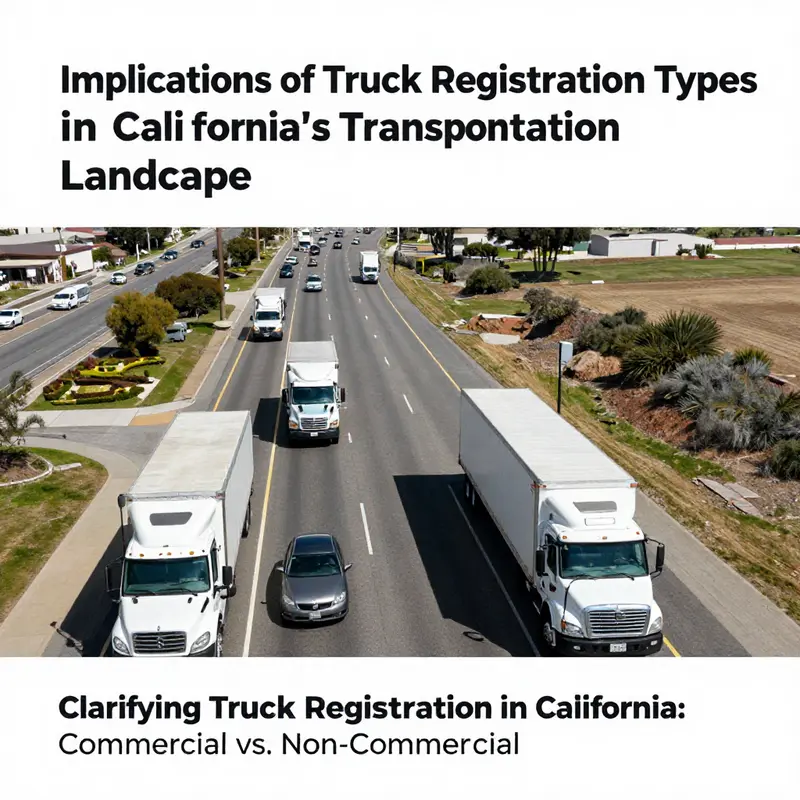
California’s roads carry a mosaic of trucks. The sight of a big rig sharing a lane with a pickup or a van is common. Yet the question that often sparks debate is not just what a truck is, but how it is used. In California, registration is not a simple label tied to a vehicle’s size. It hinges on use, purpose, and the regulatory framework that governs that use. The result is a landscape where two trucks that look alike on a street or a job site can be enrolled in very different registration categories. Understanding why requires tracing how California defines “commercial” versus “private,” and how that definition bends under weight, operations, and the jurisdiction that oversees the truck’s daily life on the road. The distinction matters beyond paperwork. It affects road funding, emissions strategies, and the everyday realities of fleets and individuals who rely on trucks for work, family life, or weekend projects.
At the heart of California’s system is a pragmatic principle: registration mirrors use, not merely form. A flatbed service truck used by a construction company to haul supplies and equipment is typically registered as commercial. That vehicle belongs to a business operation. It moves goods, supports a workforce, and participates in commerce. A similar-sized truck owned by an individual for a home improvement project or weekend camping trip, if it isn’t used for profit or cargo for hire, is often registered as private. The DMV weighs these factors—intended use, whether the vehicle carries cargo for hire, and whether it operates as part of a business fleet. This approach keeps the focus on how the vehicle participates in the economy, not just what the vehicle looks like or how big it is.
The weight of a truck also matters. In California, vehicles over certain gross vehicle weight thresholds are more likely to be classified as commercial. Weight isn’t the sole determinant, but it signals how a vehicle interacts with the state’s roads. Heavier trucks demand more robust pavements, more durable bridges, and certain operating standards. In policy terms, heavier commercial vehicles are often the target of stricter emissions rules and higher registration fees intended to offset the wear they cause on infrastructure. The logic is straightforward: larger trucks impose greater maintenance costs on the public road system, so the pricing and regulation should reflect that reality. This is not just about collecting revenue. It is about aligning incentives for safer, cleaner, and more efficient freight movement across an extensive network that spans urban corridors and rural routes alike.
California also distinguishes between interstate and intrastate operations. Interstate trucks fall within federal oversight, primarily the Federal Motor Carrier Safety Administration (FMCSA). Intrastate trucks—those operating solely within California’s borders—fall under state authorities, including the California Public Utilities Commission (CPUC) and the DMV. This dual framework can create a layered compliance burden for fleet operators. Yet it also enables California to implement environmental and safety standards that go beyond federal minimums. A notable example is California’s Advanced Clean Trucks (ACT) rule, which pushes the market toward zero-emission options over time. The regulatory mix means a fleet manager must track not just registration status, but the relevant rules at both the federal and state levels, especially when a vehicle crosses the state line.
The practical consequences for fleet planning are real. Operators must decide early on whether a vehicle will serve as part of a business fleet or be kept for personal use. A company that runs delivery routes, hauling freight for hire, or maintaining a service fleet will likely register certain trucks as commercial. Those same models, if kept for private use, might not trigger the same fees or inspections. The line between commercial and private is not just about the vehicle’s appearance; it is about the vehicle’s routine journeys, the people who rely on it for livelihood, and the role it plays in the local economy.
The interplay between registration categories and infrastructure policy is a telling indicator of California’s broader transportation strategy. Heavier commercial vehicles push more on urban and rural roads. Their presence can influence lane design, pavement technology choices, and maintenance schedules. When policy makers consider road wear and emissions, they factor in the disproportionate impact of those large, load-bearing vehicles. That influence translates into targeted emissions standards and in some cases higher fees to reflect the additional cost of maintaining a road network that supports heavy freight. The underlying rationale is pragmatic: if a truck class is used primarily for business purposes, then the regulatory regime should reflect the costs and responsibilities associated with that use. In turn, those costs help fund road improvements and cleaner technologies that reduce overall environmental impact.
Beyond the mechanics of classification, the California registration system has broad implications for logistics planning. A fleet that operates across multiple counties or states must remain mindful of how its vehicles are registered and what that implies for compliance, insurance, and inspections. Interstate operations demand FMCSA compliance, including hours-of-service regulations and vehicle safety standards that apply nationwide. Intrastate operations allow California to tailor enforcement and inspections to its own criteria, which can be more stringent in pursuit of local environmental goals or safety outcomes. This layered authority fosters a safety net that protects road users while enabling state-specific ambitions, such as accelerating the adoption of zero-emission trucks in a system historically filled with diesel-powered workhorses.
In practice, the distinction between commercial and private registration also influences how fleets price operations, manage risk, and negotiate with customers. When a truck is tagged as commercial, it signals that the vehicle is an instrument of business activity. This can affect insurance terms, fleet maintenance cycles, and the cadence of inspections. It also informs the customer base about the reliability and regulatory compliance of the service being provided. Private-use trucks, by contrast, tend to follow a different rhythm, with maintenance schedules aligned more closely with personal use and nonbusiness mileage. For owners who cross the line between private and commercial usage—such as a contractor who occasionally takes a personal trip with a service truck—the registration decision can become a balancing act, weighing the costs and benefits of keeping the vehicle in one category or another.
Policy makers are acutely aware of how these classifications shape public outcomes. Heavier, commercial trucks play a disproportionate role in greenhouse gas emissions, which justifies the ACT initiative and other California measures designed to shift the market toward cleaner options. This alignment of regulatory ambition with practical fleet needs is one of the state’s defining features. It recognizes that the road system is a common resource requiring careful stewardship while also acknowledging the vital role trucks play in commerce, construction, and daily life. In this light, registration is more than a bureaucratic formality. It is a signal about purpose, responsibility, and the long arc of environmental and infrastructure policy.
For readers seeking a practical sense of how these dynamics unfold in real-world contexts, consider exploring the broader industry conversation on the topic. The online space that hosts practitioner perspectives and up-to-date insights can provide a useful counterpoint to official summaries. See the resource at mcgrathtrucks.com/blog/ for a sense of how fleet owners translate regulatory realities into day-to-day decisions. Such perspectives can illuminate the tension between compliance, cost, and operational efficiency that drivers and managers constantly navigate.
Taken together, the California framework for truck registration—rooted in use and weight, tempered by interstate and intrastate jurisdiction, and guided by environmental and infrastructure objectives—offers a coherent, if complex, map of how a modern state manages a crucial part of its economy. The idea that “all trucks are commercial” is a misconception that overlooks the nuanced interplay of purpose, burden, and law. In California, the line between commercial and private is drawn not by a single feature but by a bundle of factors that together determine how a truck contributes to the state’s road system, how it is taxed, how it is inspected, and how it supports or slows the march toward cleaner, safer highways.
External reference for regulatory context is available here: California DMV.
Final thoughts
Understanding the distinctions between commercial and non-commercial truck registrations is essential for various stakeholders in California’s trucking industry. These classifications impact compliance, operational costs, and logistics decisions. By grasping the underlying principles governing truck registration, owners and managers can better align their vehicles with legal requirements, ultimately enhancing efficiency and minimizing liabilities. The nuances of this system underscore the importance of informed decision-making in a state where the transportation landscape is diverse and dynamic.