
Compliance with safety regulations and operational branding is crucial for commercial truck owners. Commercial trucks are mandated to display specific stickers to ensure safety, enhance visibility, and promote brand identity. This article dissects the critical stickers that should be present on every commercial truck, from DOT compliance labels necessary for regulatory adherence to reflector stickers that bolster nighttime visibility. Furthermore, it addresses the optional use of emblem and trim stickers for aesthetic enhancement and bumper stickers aimed at conveying important messages. Together, these elements create a cohesive strategy for safety, efficiency, and brand representation within the trucking industry.
DOT Labels in Plain Sight: How Compliance Stickers Safeguard Commercial Trucks
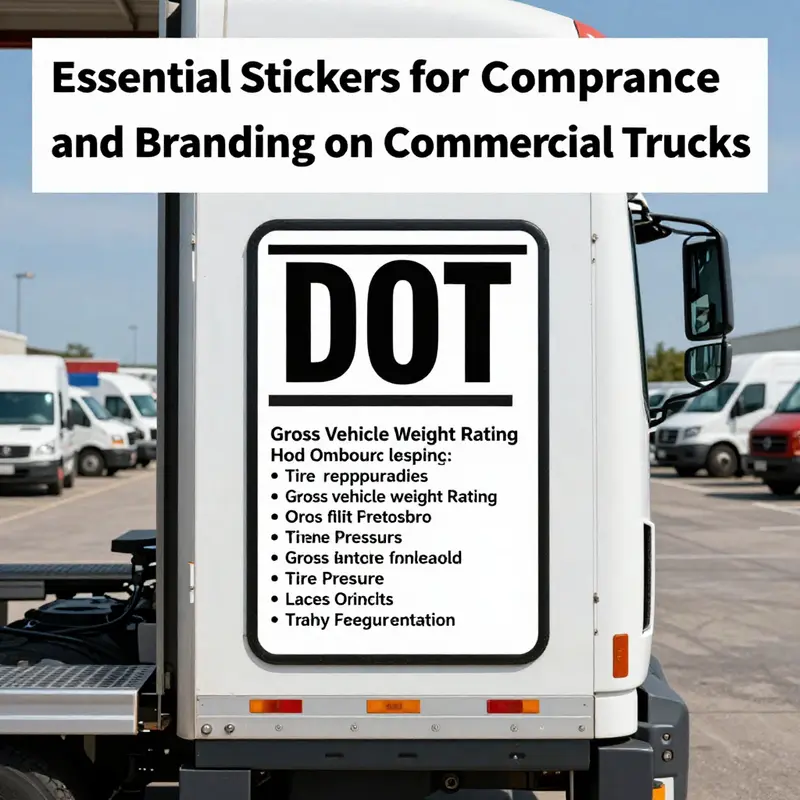
In the hulking quiet of a working yard, where engines idle and schedules tighten like a belt, the stickers on a commercial truck may seem almost incidental. Yet they are anything but decorative. DOT compliance labels are the backbone of federal safety standards that keep heavy vehicles operating within the law and, more importantly, within safe margins for other road users. These labels are not flashy, but they carry the weight of accountability. They are designed to be accessed quickly by inspectors during roadside checks, by maintenance crews during repairs, and by auditors reviewing recalls. Their presence, clarity, and integrity matter because they encode not only the vehicle’s identity but a family of safety expectations that ripple through every mile of a truck’s life. Understanding what these labels signify, where they appear, and how they endure under the harsh conditions of daily transport helps explain why the rest of the stickers on a truck—those that signal branding, environmental initiatives, or simple decoration—must always coexist with, never override, the information mandated by regulation.
At the core of the DOT labeling system lies a practical trio. First, the manufacturer’s information identifies who produced the component or assembly. This is not just a brand name; it is a traceable link to quality controls, production lots, and compliance certifications that apply to new components introduced to the fleet. Second, the model and serial numbers render each part uniquely identifiable. In a trailer, axle assembly, or tire, such numbers facilitate precise tracking. This is essential when a recall is issued, or when regulators need to confirm that the exact part in service matches the records of the part’s origin. Third, the date of manufacture anchors the component in time. It helps determine usable life, inspection intervals, and retirement schedules for tires, brakes, and structural assemblies. Taken together, these elements form a compact record that travels with the vehicle as reliably as the bumper or the axle itself, linking every maintenance action, every shipment, and every inspection to a documented lineage.
The practical value of DOT labels extends far beyond the moment of sale. They enable traceability and accountability across a complex ecosystem of parts, service facilities, and regulatory checkpoints. If a trailer is altered with newer or nonconforming components, the label becomes a documentary safeguard. Regulators can verify whether the replacement parts carried appropriate certifications and whether the overall assembly remains within safety envelopes. If a discrepancy arises—perhaps a defect in a batch of axles or tires—DOT labeling makes it feasible to identify every affected vehicle quickly. In this sense, the label serves as an audit trail that supports recalls and safety investigations. It is a quiet, persistent record-keeping tool that helps keep the fleet aligned with federal expectations, even as the fleet evolves with new equipment, different trailers, or updated configurations.
Enforcement of these requirements rests with the Federal Motor Carrier Safety Administration, an agency charged with maintaining a regulatory framework that governs everything from driver hours to vehicle components. When a label is missing, obscured, damaged, or tampered with, the consequence can be swift and tangible: fines, delays in roadside operations, or more severe outcomes if the issue signals broader noncompliance. The FMCSA guidelines outline that DOT compliance labels are not optional frills; they are integral to the way a vehicle is certified for safety and roadworthiness. This is why fleets invest in durable labeling practices, choose reliable sources for replacements, and maintain meticulous records that preserve the integrity of the label during the vehicle’s life. The enforcement emphasis is not punitive for its own sake but protective, ensuring that every vehicle that hits the highway maintains a documented, verifiable standard of safety.
As a practical matter, the labels themselves must be accessible yet unobtrusive. They are designed to be legible under typical maintenance conditions, resistant to weather, and durable enough to withstand the vibrations and temperature fluctuations characteristic of over-the-road service. Label placement matters. It is common to find labels near the vehicle’s main identification areas or on components that are unlikely to be altered without triggering a separate compliance review. Importantly, these labels should not be covered by rust, grime, or other stickers that would obscure vital information. This is a reminder that while reflectors, bumper messages, and branding stickers have their places in a vehicle’s exterior language, they should never obscure the DOT information that regulators rely on. The balance is a practical one: preserve the visibility and legibility of mandatory data, while allowing other stickers that celebrate branding or corporate responsibility to reside in appropriate spaces where they do not conflict with safety-critical markings.
For fleet managers and drivers, maintaining DOT labels means adopting a disciplined regime of inspection and documentation. Regular checks should verify that labels remain intact, legible, and securely affixed. If a label becomes damaged during maintenance or is partially missing due to a component replacement, the responsible parties must pursue an approved replacement that preserves the exact information lineage—manufacture origin, model, serial number, and date of manufacture. This disciplined approach helps avoid the risk of noncompliance discovered during a roadside inspection, an audit, or a recall inquiry. Maintaining the chain of information also means retaining documentation that demonstrates the label’s authenticity and the integrity of the component’s certification history. In the context of a recall, the label is the fastest means of isolating affected vehicles, minimizing downtime, and expediting coordinated action across fleets. It is the difference between a measured, efficient response and a costly scramble to locate the right parts after a defect has been identified.
The broader ecosystem of truck stickers includes reflectors, bumper decals for messaging, and branding elements that convey corporate identity or environmental commitments. These additional stickers perform important functions—visibility in low light, clear messaging about company initiatives, and a sense of fleet personality. However, they must not compete with or obscure the DOT labels. The safety infrastructure of a commercial vehicle relies on the clear coexistence of information: the regulatory identifiers must be easily readable, backed by meticulous recordkeeping, and supported by a labeling strategy that is resilient to routine wear and tear. In practice, this means white-on-black or high-contrast labeling choices for critical data, durable materials rated for harsh conditions, and placement that keeps the essential markings accessible to people who need them most—inspecting officers, service technicians, and fleet managers coordinating maintenance across dozens or hundreds of units.
As this topic connects to the wider article about what stickers are supposed to be on a commercial truck, the DOT labels act as the regulatory spine. They are complemented by reflective surfaces that enhance nighttime visibility, which is not just a safety preference but a design requirement in many jurisdictions. Decorative or chrome-like emblem stickers may embellish high-end or promotional vehicles, but they must never displace or cover regulatory data. Bumper stickers, when used, carry messaging about safety, environmental programs, or corporate identity, but their placement must be chosen with care to preserve the legibility and integrity of DOT markings. The discipline of sticker management—ensuring that all required labels remain visible and intact while allowing space for branding—reflects a broader principle in fleet management: compliance and branding should reinforce, not undermine, safety and accountability. In other words, the stickers together tell a complete story of a vehicle’s safety certification, its operational identity, and the corporate values that guide its use.
For readers seeking practical guidance beyond the theoretical framework, the discussion often turns to the question of where to find reliable, official information and how to integrate these practices into daily operations. A practical resource from the industry’s knowledge ecosystem, such as the McGrath Trucks blog, can offer fleet- or region-specific perspectives on labeling practices, replacement procedures, and how customers interpret compliance documentation during negotiations and maintenance cycles. While the core federal requirements are fixed by regulation, the real-world implementation varies with fleet size, operating regions, and the types of equipment in service. Reading widely helps operators calibrate their labeling strategy to their particular mix of tractors, trailers, and heavy-haul configurations, ensuring that compliance remains a live, adaptable discipline rather than a static checklist.
To conclude—though not in the formal sense of a closing remark—the DOT compliance label is a small but mighty component of a truck’s exterior that quietly anchors safety, traceability, and regulatory legitimacy. Its presence helps inspectors validate roadworthiness, supports recall workflows, and provides a transparent lineage for each vehicle part that travels across the nation’s highways. The label’s endurance under pressure, its legible presentation, and its accurate data collectively embody the alignment between a company’s operational practices and the federal standards designed to keep everyone safer on the road. In the broader spectrum of stickers on a commercial truck, it stands as the nonnegotiable core, with other stickers offering clarity, identity, and message in ways that complement rather than compete with the information that DOT compliance labels convey. For those building or maintaining a modern fleet, treating DOT labels as a strategic asset—monitored, protected, and updated as parts are replaced—can save time, reduce risk, and support smoother operations across the entire network of trucks, drivers, and customers that define today’s freight landscape. Official guidance remains essential, and for authoritative details, consult the FMCSA’s DOT compliance labeling guidelines.
External resource: https://www.fmcsa.dot.gov/regulations/compliance/vehicle-compliance/dot-compliance-labels
Reflective Beacons: Why Reflector Stickers Are a Must on Commercial Trucks

Reflective Beacons: Why Reflector Stickers Are a Must on Commercial Trucks
Reflector stickers are one of the most visible and practical safety elements on a commercial truck. They do one basic thing extremely well: make a large, often slow-moving vehicle unmistakable to other road users when light hits it. That simple function carries outsized benefits. It reduces the risk of collisions, lowers liability for operators, and keeps vehicles on the right side of inspection standards. For fleet managers, owner-operators, and drivers, understanding how reflector stickers work, where they belong, and how to maintain them is an operational necessity—not an optional cosmetic choice.
At the heart of a reflector sticker’s value is its retroreflective technology. Unlike ordinary paint or decals that scatter light, retroreflective materials send light back toward its source. This trait is what allows a truck’s outline to jump out at a driver whose headlights sweep across it. Commercial retroreflective materials use micro-prism arrays or glass beads embedded in a durable film to produce intense, concentrated reflection. The result is not a faint glint but a clear, readable outline of the vehicle from hundreds of feet away in low light or poor weather.
Size and weight give commercial trucks advantages in capacity but create visibility challenges. Their height and length form blind zones and unusual silhouettes that can conceal taillights or other cues drivers normally use to judge distance and movement. Reflector stickers solve part of the problem by creating a continuous, high-contrast pattern along a truck’s sides and rear. This pattern communicates the vehicle’s presence, direction, and overall dimensions in an instant. For older rigs with aging lighting systems or in conditions where electrical lights are obscured—snow, fog, heavy rain, mud—reflector stickers remain effective because they do not rely on the vehicle’s power system.
Placement matters as much as material. Regulatory authorities and best-practice guides recommend placing reflective tape and stickers along the lower edge of side panels and across the rear of trailers to outline the vehicle’s maximum envelope. On flatbeds, the lower side margins are the right placement because they align with the sightlines of following drivers and produce a continuous, motion-suggesting stripe. On box trailers and tankers, a combination of horizontal strips and corner markers defines both length and height. Proper positioning creates a coherent silhouette rather than isolated reflective dots, which are less helpful at judging the vehicle’s orientation or movement.
Installation technique affects long-term performance. Reflective films require a clean, dry surface and careful application to avoid bubbles and edges that lift. Many durable films are pressure-sensitive and bond strongly when applied without wrinkles. A poor installation traps moisture or creates seams that peel under vibration. Over time, grime, abrasion, and UV exposure will reduce effectiveness; correct initial adhesion and edge sealing delay that decline. Routine inspections during daily walkarounds should include a quick visual check of all reflective surfaces: look for delamination, fading, scratches, or sections missing from impact or cleaning. Those small checks prevent a gradual loss of conspicuity that can otherwise go unnoticed until an inspection failure or an incident.
Reflective stickers are not only practical but required in many jurisdictions. Standards and vehicle safety codes set minimum coverage areas, color requirements, and material performance benchmarks to ensure predictability across fleets. One well‑known standard mandates conspicuity on large vehicles so other drivers can consistently recognize a truck’s outline. The consequence of noncompliance ranges from fines and failed inspections to, in severe cases, liability exposure in the event of a crash. For fleets that operate across state or international lines, meeting the most stringent applicable standard is a safer, simpler strategy than trying to adapt to multiple rule sets during transit.
Beyond regulatory compliance, reflective stickers play an outsized role when hazardous loads are present. Trucks carrying flammable, explosive, or toxic cargo present elevated risks; higher conspicuity reduces the likelihood of secondary collisions that can trigger catastrophic outcomes. For these vehicles, reflective materials are often combined with specific placarding and marking systems to ensure that the presence of hazardous cargo is both visible and unambiguous. A reflector alone does not replace placards, but it does make the vehicle more noticeable before a following driver has time to parse the hazard label.
Maintenance and lifecycle planning for reflector stickers should be integrated into fleet management practices. Reflective films are resilient but not permanent. UV degradation, road salt, pressure washing, and physical impacts shorten useful life. A replacement schedule tied to mileage, age, or visible wear keeps performance predictable. Recordkeeping that notes when reflective elements were installed, inspected, and replaced helps during audits and claims. When purchasing aftermarket materials, prioritize durability metrics such as retroreflective coefficient, UV resistance, and adhesive performance over cosmetic claims. Choosing higher-quality materials may cost more up front, but it reduces replacement frequency and preserves the fleet’s safety profile.
Installation choices also intersect with branding and aesthetics. Many fleets balance corporate identity against safety requirements by incorporating logos or colors around reflective areas while leaving the required strips intact and unobscured. Decorative chrome emblems and trim can add visual appeal but should never cover or interfere with reflector placement. Practical decisions—such as avoiding placement of removable bumper stickers over regulatory tape—preserve both appearance and compliance. When customization is necessary, consulting regulatory guidance avoids costly rework.
Training drivers and maintenance staff to recognize reflector issues is another underappreciated factor. Drivers should be able to assess the integrity of conspicuity markings during pre-trip inspections and report problems before they escalate. Maintenance personnel need simple, consistent procedures for cleaning and replacing reflective strips to avoid ham-handed repairs that reduce retroreflective performance. Clear responsibilities and quick response loops—where a flagged defect triggers a prioritized service request—keep the fleet operating within safe and legal parameters.
Finally, consider the broader value proposition. Reflector stickers are inexpensive compared with the equipment they protect and the liability they mitigate. Their presence contributes to accident prevention, reduces downtime from incident investigations, and protects reputations. For buyers and sellers in the used-truck market, well-maintained reflective markings can signal thorough upkeep and attention to safety—factors that influence valuation and buyer confidence. For fleet managers, reflector stickers represent a small operational investment that returns through lower risk exposure and regulatory peace of mind. For more general guidance on maintaining vehicles and how upkeep impacts resale and operational choices, the McGrath Trucks blog provides practical fleet management insights.
Standards and best practices evolve, but the basic role of reflector stickers remains constant: they are a passive, reliable, and effective way to make large vehicles visible. When properly selected, placed, and maintained, reflector stickers act as a silent safety partner on every trip. They do not replace lighting, signage, or safe driving practices, but they multiply the effectiveness of those systems by ensuring the truck is seen early and clearly. Treating reflector stickers as central to a truck’s safety equipment rather than an afterthought aligns maintenance priorities with outcomes: fewer crashes, fewer citations, and a stronger safety record for the fleet.
External reference: for detail on one internationally recognized regulation covering vehicle safety technical conditions, refer to the Motor Vehicle Safety Technical Conditions standard (GB7258-2004): https://www.chinesestandard.net/PDF.aspx/GB7258-2004
Internal resource: see the McGrath Trucks blog for further fleet maintenance and resale considerations: https://mcgrathtrucks.com/blog/
Emblems and Trim: Strategic Branding Stickers for a Compliant Commercial Truck

Emblems and Trim: Strategic Branding Stickers for a Compliant Commercial Truck
Branding a commercial truck with emblem and trim stickers is about more than looks. It is a strategic decision that balances marketing, fleet identity, upkeep, and legal compliance. These decorative decals turn each vehicle into a mobile billboard. They also reflect the care a company takes with its equipment. Done well, they raise recognition and trust. Done poorly, they obscure required markings, reduce safety, or shorten a vehicle’s cosmetic lifespan.
A thoughtful approach begins with purpose. Decide what the decals should achieve. Do they simply display a company name? Do they need to show regulatory identifiers, such as a USDOT or MC number? Will vehicles operate in diverse climates and face daily wear? Clarifying intent directs material selection, sizing, and placement. For example, a compact emblem on a sleeper cab requires different choices than a full-side logo meant to be read from highways.
Beyond purpose lies placement. Regulatory stickers and reflective tape are mandatory in many jurisdictions. Emblem and trim stickers must never conceal those elements. Position logos so they complement, not compete with, essential labels. Common safe zones include the door panel below the window line, the hood, or the rear doors if reflective markings remain visible. When applying larger graphics, respect required white space around DOT numbers and safety placards. This prevents regulatory conflicts during inspections.
Material choice defines longevity. Commercial trucks face sun, salt, road grime, and stone chips. Choose vinyl engineered for heavy-duty use. The best options resist water, UV fade, cracking, and peeling. High-performance adhesives ensure the decal stays adhered through temperature cycles and wash cycles. For chrome or metallic trim looks, select vinyl with a mirrored finish designed for vehicle use. These finishes offer the visual pop of chrome while avoiding the weight and corrosion issues of metal trim.
Finish and color decisions affect legibility and perception. High-contrast combinations maintain readability at distance. Reflective inks are not substitutes for required reflective tape, but they can improve logo visibility at night. Avoid overly thin fonts and fine lines. They break down quickly on textured surfaces and under harsh conditions. Use vector artwork at print-ready resolution. That preserves crisp edges when graphics are scaled for large panels.
Adhesive selection must match painted surfaces. Some older paint systems or powder coats react poorly to aggressive adhesives. Test samples on representative panels. Choose adhesives that allow removal without damaging the underlying paint. Removability is crucial for leased trucks, resale, or repaint cycles. For fleets that update branding frequently, consider removable or reworkable adhesives to save on future bodywork costs.
Installation technique matters as much as material choice. Professional application minimizes bubbles, misalignment, and premature edge lift. Installers use heat guns and squeegees to conform graphics to curves. They also perform edge-sealing if a truck faces heavy wash or pressure cleaning. For in-house installations, train staff on surface preparation. Clean surfaces with a solvent that removes oils and residues. Allow the surface to dry fully. Lay out decals using alignment marks and measure twice. Apply slowly and smooth progressively to reduce trapped air.
Maintenance planning preserves the investment. Establish washing protocols that avoid harsh solvents. Recommend low-pressure washes when possible, and keep automatic brushes soft. Inspect edges quarterly. Small lifts are easier to repair early. Replace decals that exhibit significant fading or adhesion failure. For fleets, maintain records of decal batches, installation dates, and installers. That helps enforce consistent appearance and supports warranty claims when material defects appear.
Design guidelines should steer consistency across the fleet. Create templates that specify minimum logo size, clear space, and color codes. Include placement diagrams for each truck model in the fleet. These templates ensure brand elements scale proportionately across cabs, tractors, and trailers. Consistency boosts recognition and projects professional standards. If the fleet operates multiple vehicle classes, tailor each template to the vehicle’s architecture. A trailer side will need a different layout than a sleeper door.
Durability choices also influence cost. Premium vinyl and professional installation increase upfront cost. They also reduce rework and extend the lifespan of branding. Consider total cost of ownership rather than sticker price. Cheaper materials can delaminate and require replacement, increasing long-term spending. Factor in removal costs and the potential for paint damage when calculating lifecycle expenses.
Visual impact goes beyond a single sticker. Trim pieces and chrome-look accents add depth. When combined with a clean, consistent palette, emblems enhance perceived value. They also attract attention in congested urban areas. Avoid clutter. Too many badges and variations dilute the message and create a patchwork appearance. A focused identity with a few high-quality elements reads clearly from a distance.
Regulatory considerations remain central. Markings like USDOT and MC numbers must meet placement and size rules. Ensure branding does not conflict with placards, load-limit labels, or inspection stickers. If operating across state lines, verify any local nuances in marking requirements. In many cases, USDOT numbers must appear on both sides of the power unit. Position emblems so they do not obstruct required text, reflective tape, or safety devices. When in doubt, consult the authority responsible for commercial vehicle enforcement.
When branding intersects with operational needs, consider functionality. Reflective trim can enhance nighttime visibility without violating regulations. Apply reflective elements in a way that complements mandatory conspicuity tape. Branded reflective panels can be used on rear doors where allowed. Any reflective branding must avoid creating false signals for other drivers. Keep reflective surfaces uniform and within allowable patterns.
Climate and environment affect choices. Fleets in coastal regions should prioritize salt spray resistance. Those in sunny locales should select high UV-resistant inks. Cold-weather fleets need adhesives that remain flexible in freezing conditions. In regions with frequent road salt use, edge lifting is a common issue. Apply protective clear films over high-wear zones to extend life.
Fleet scalability demands a repeatable process. Create a playbook that includes artwork specs, approved vendors, installation procedures, and quality checks. Standardize ordering to prevent variations in color or material. Maintain an approved vendor list with performance benchmarks. Track contractor performance through periodic audits and sample testing.
Removal and repainting are part of the life cycle. Use heat and a proper removal adhesive when stripping graphics. Avoid scraping, which damages paint. Following removal, clean residue thoroughly and inspect for paint damage. For resale or auction, clean decals early to evaluate any underlying paint issues. This reduces surprises during vehicle disposition.
Finally, consider public perception. Clean, well-maintained branding signals reliability. It aids recruitment and builds customer confidence. Balancing aesthetics with compliance yields a brand that is visible and legally sound. When planning a fleet branding program, involve operations, safety, and compliance teams early. Their input prevents costly rework and keeps the fleet both recognizable and inspection-ready.
For practical resources and customizable options, view a range of decal choices available via an external custom decal marketplace: https://www.amazon.com/s?k=custom+truck+decals+with+company+name+USDOT+MC+number. For broader industry perspectives and fleet market trends, consult the McGrath Trucks blog for context on used truck markets and fleet management strategies: McGrath Trucks blog.
Mobile Messages: How Bumper Stickers Inform and Build Brands on Commercial Trucks
Mobile Messages: How Bumper Stickers Inform and Build Brands on Commercial Trucks
Bumper stickers on commercial trucks play a dual role: they communicate useful information and they extend a company’s visual identity into public spaces. When applied thoughtfully, these small decals turn every route into a deliberate touchpoint with customers, regulators, and other road users. The key is balancing creativity with compliance. Priority must always rest with mandatory DOT and safety labels. Bumper stickers should add clarity, not clutter, and should never obscure required markings.
Start with material and placement decisions. Commercial trucks face sunlight, rain, salt, wind, and road debris. Choose durable vinyl with UV inhibitors and strong pressure-sensitive adhesives. These materials resist fading and lifting for years. Laminates further protect ink and provide abrasion resistance. For placement, designers favor the rear bumper or lower rear door. Those spots maximize visibility to following drivers and pedestrians. Avoid obstructing reflectors, lights, license plates, or DOT compliance labels. Also consider routine maintenance access, so decals can be removed without damaging panels.
Think about legibility before anything else. Most viewers see a truck for only a few seconds while driving. That means type must be large and contrast must be high. Use simple, bold typefaces and short messages. For messages longer than a few words, consider switching to a QR code that links to a mobile landing page. Use high-contrast color pairs, like dark on light or light on dark. Keep decorative elements minimal. A single icon or mini-logo can guide recognition without drowning the text.
Content choices fall into several useful categories. First, functional information explains what the truck does. Phrases such as service specialties, equipment types, or delivery options clarify expectations. A single-line note like “Refrigerated Transport” signals capability. Other functional items include emergency contact numbers or instructions for first responders. Second, safety-related messages reinforce a company’s culture. Short, visible pledges—”Safety First” or “This Vehicle Stops Often”—help reduce risky passing maneuvers. Third, branding content increases recall. A consistent color ribbon, tagline, or compact logo version strengthens identity across a fleet.
Customizability is a major advantage for fleet operators. Print-on-demand services let companies tailor messages to regions, seasons, or campaigns. For example, a logistics firm can run a short-term sticker promoting same-day service in urban areas. Localized stickers can include regional phone numbers and offerings. Because stickers are relatively low-cost, testing different messages across a subset of vehicles is feasible. Track engagement through vanity phone numbers, unique web URLs, or QR codes to measure which messages generate leads.
Integration with a broader brand system makes bumper stickers more effective. Align stickers with trailer wraps, driver uniforms, and digital outreach to create a coherent identity. Consistency in typography, palette, and tone builds trust. Fleets are moving billboards; inconsistent visuals can confuse potential clients. A deliberate visual hierarchy helps. Place the primary identity element first, the key service message next, and any regulatory or contact details last. This order respects how drivers scan a rear surface and makes critical information stand out.
There are legal and operational boundaries to observe. Many jurisdictions require that certain markings, such as DOT numbers or weight and placard information, remain unobstructed. Bumper stickers must never hide reflectors, required safety placards, lights, or license plates. Some fleets layer marketing decals on removable panels, allowing regulators to inspect underlying labels without peeling adhesives. Consult fleet compliance managers before any widespread rollout to avoid fines and operational delays.
Durability is not just about surviving weather. It also means staying affixed through wash cycles and fleet yard abrasion. Invest in professional-grade films and certified laminates. Proper surface preparation is essential during installation. Clean and dry the surface, then allow a cure period before subjecting the decal to pressure washing. Establish replacement schedules to refresh faded or peeling stickers and maintain a professional fleet appearance.
Placement must respect vehicle geometry and usage patterns. Rear doors and bumpers get the most consistent sightlines. On roll-up door trailers, stickers should avoid seams where the material folds. On articulated rigs, consider the relative motion between cab and trailer. Placement on mudflaps or lower skirts may receive less attention and can degrade quicker due to road spray. If stickers are applied near exhaust outlets, select materials rated for higher temperatures.
When designing messaging, keep tone and length tight. Short declarative phrases work best. Avoid industry jargon that the general public will not recognize. If the goal is lead generation, include one clear call to action. Use a phone number formatted for mobile dialing or a short, easy-to-type URL. Where appropriate, QR codes can bridge the short space on a bumper sticker and a longer landing page. Ensure codes are sized and contrasted for reliable scanning from a safe distance.
Bumper stickers are also part of risk management. Messages that suggest speed or risky behavior can backfire. Avoid superlatives or claims that could be misinterpreted in an accident investigation. Safety messages are safer when framed positively and factually. Use phrases that reinforce predictable behavior instead of promos implying urgency or recklessness.
Environmental considerations matter too. Some adhesives and films resist eco-friendly disposal. Choose materials with recyclable face films or adhesives designed for minimal residue upon removal. This reduces long-term maintenance costs and aligns with corporate sustainability commitments. Removing old decals can be labor-intensive, so plan for this across the asset’s lifecycle. A clean-removal policy speeds resale and preparation for transfers.
Measuring the impact of bumper stickers is straightforward with the right KPIs. Monitor inbound calls tied to sticker-specific numbers, track visits to short URLs, and measure engagement from scanned QR codes. GPS-enabled telematics can show where trucks delivered the most impressions. Combine those data points with localized marketing efforts to hone messaging. Small, iterative tests across a controlled subgroup of vehicles usually yield the best learning.
Cost-effectiveness is why fleets continue to rely on bumper stickers. Upfront costs are low compared to full vehicle wraps. Stickers can be produced and deployed quickly. They are ideal for pilots, seasonal promotions, or time-limited service announcements. Because they are removable, fleets can update messages without long-term commitments. When stickers are part of a larger visual strategy, they deliver exceptional value per mile.
Finally, plan for maintenance and governance. Create a decal policy that outlines permitted messages, color palettes, and installation standards. Train shop staff in surface preparation and correct application methods. Maintain a central asset register to track which vehicles carry which messages. This reduces the risk of inconsistent deployment and protects compliance with regulations.
For further practical examples of durable and weather-resistant stickers used in the industry, see this product listing that illustrates typical materials and designs: https://www.amazon.com/Trucker-Bumper-Stickers-Truck-Drivers-5-Inch/dp/B0CQKZ3VJH
Learn more about how decals and visual identity fit into broader fleet practices via the McGrath Trucks blog: McGrath Trucks blog.
By treating bumper stickers as strategic communication tools, fleets convert routine miles into marketing and safety opportunities. They remain effective because they are visible, affordable, and flexible. When designed, installed, and maintained with purpose, bumper stickers enhance clarity, reinforce brand trust, and support the mandatory safety markings that keep commercial trucks compliant and predictable on the road.
Final thoughts
Incorporating the correct stickers on commercial trucks is fundamental for regulatory compliance, safety, and brand visibility. The presence of DOT compliance labels ensures adherence to essential safety regulations, while reflector stickers play a crucial role in enhancing nighttime visibility to prevent accidents. Meanwhile, emblem and trim stickers serve to amplify brand presence, and bumper stickers can effectively convey both safety messages and marketing messages. By adhering to these guidelines, trucking companies and fleet managers can ensure robust operations that meet regulatory expectations while projecting a professional brand image.