Annual maintenance is not just a regulatory requirement for commercial trucks; it’s a strategic necessity that directly impacts safety, reliability, and operational efficiency. For trucking company owners, fleet managers, and procurement teams in construction and logistics, understanding which components to routinely inspect and replace can avert costly repairs and potential downtime. This guide provides critical insights into the annual changes required for engine oil, brake components, and air filters, enhancing the understanding of their importance for consistent truck performance.
Annual Engine Oil and Filter Strategy for Heavy-Duty Trucking
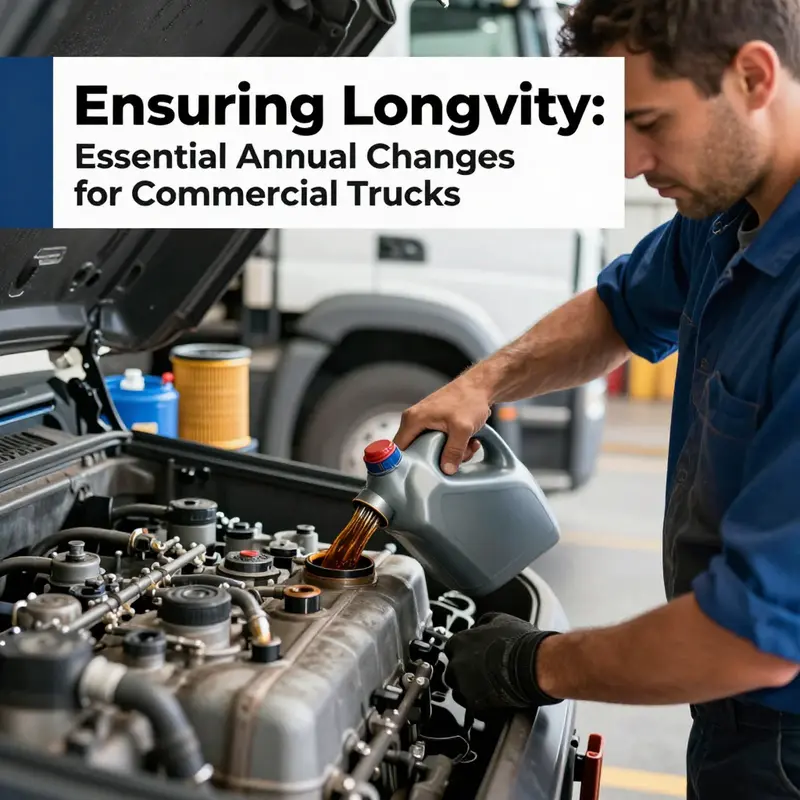
In heavy‑duty trucking, regular engine oil changes are a cornerstone of reliability. Oil protects the engine by lubricating moving parts, carrying away heat and contaminants, and helping maintain fuel efficiency. An annual oil and filter change aligns maintenance with fleet operating realities, balancing cost, downtime, and risk of wear.\n\nMost diesel engines in regional or long‑haul service are designed for oil change intervals that range from 10,000 to 15,000 miles under typical conditions, or once per year, whichever comes first. In severe service—dusty environments, extreme temperatures, heavy towing, or stop‑and‑go urban duty—the interval can tighten to roughly 5,000 to 7,500 miles. The exact interval should reflect OEM guidance, engine design, and the fleet’s duty cycle.\n\nSelecting the right oil matters. Synthetic or synthetic‑blend oils resist oxidation and maintain viscosity across temperature extremes, which supports engine protection in harsh climates and when engines experience rapid power demands. The oil filter should be replaced at every oil change to prevent reintroduction of contaminants and to preserve filtration efficiency.\n\nThe oil change procedure is straightforward but critical: fully drain the old oil, replace the filter with a correctly torqued new unit, refill to the specified level, and verify oil pressure and leaks after startup. Record the oil type, viscosity, filter part number, mileage, and service date to support warranties, compliance, and future maintenance planning.\n\nIntegrate oil changes with other routine maintenance and keep a fleet‑level calendar. Where possible, schedule during other planned shop visits to minimize downtime and labor costs. Consider oil analysis as a data‑driven extension to the program; even without analysis, annual changes provide a robust foundation for engine health, reliability, and regulatory compliance.
Beyond the Stop: An Essential Annual Brake Maintenance Guide for Commercial Trucks
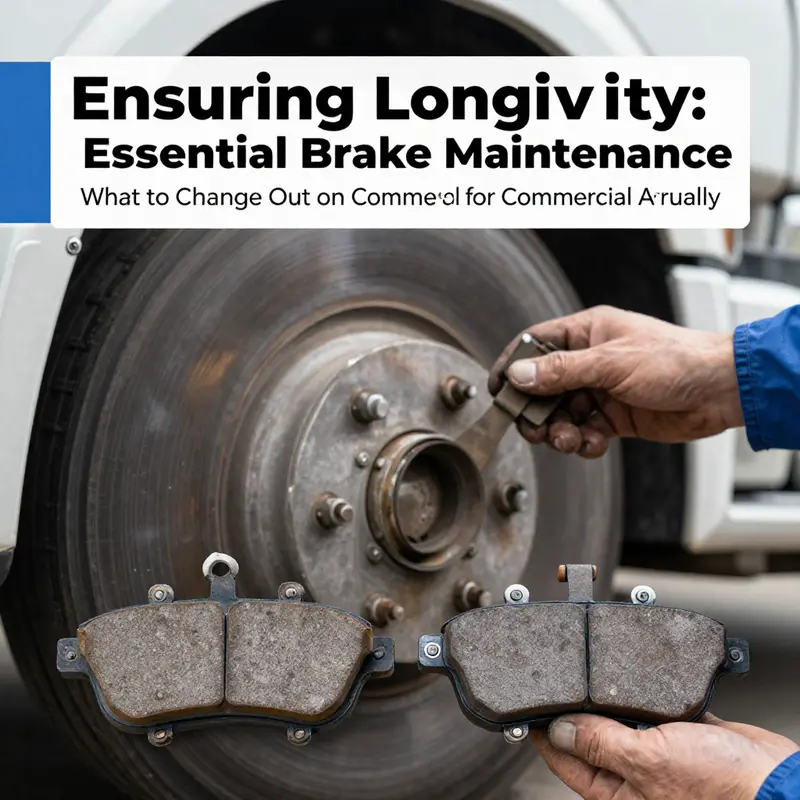
Brakes are the sentinel system on a commercial truck, a lifeline that translates driver intent into safety on every mile. In the drumbeat of fleet maintenance, the annual brake service stands apart as a high-stakes moment when the condition of every component is read not just in isolation but as part of a larger system that governs stopping power, stability, and uptime. This annual ritual is more than a checklist; it is a disciplined way to map wear, anticipate failures, and keep the fleet compliant with regulatory expectations while safeguarding drivers and cargo. When the brakes are healthy, a truck can perform with confidence across a spectrum of conditions—hills that demand efficient deceleration, crowded loading docks that require precise stopping, and long highway stretches where predictable brake response preserves both fuel economy and tire life. When brakes are not, the consequences cascade into poor stopping distances, unexpected downtime, tire scrubs, overheated components, and an elevated risk profile for every road user. The aim of an annual brake service is to tilt the balance toward reliability, not merely to react when a noise or vibration becomes noticeable or a light on the dash signals a problem.
To understand what must be examined and what should be changed out during this annual cycle, it helps to view brakes as a layered assembly, not as a single part with a short life. The core wear items—pads or shoes, rotors or drums, and the hydraulic and, if applicable, air brake subsystems—each tell a portion of the story. The brake pads and linings wear with use, thinning under the load of a heavy vehicle that carries freight over long miles and through varying terrain. The rotors or drums carry the imprint of heat and friction; they can warp, wear unevenly, or score from debris that sneaks into the braking interface. The hydraulic portion holds the fluid that transmits force from the pedal to the wheel cylinders or calipers, and the fluid itself can degrade, become contaminated, or fail to perform if leaks and air ingress undermine the system. In air brake setups, which remain common on larger trucks and many regional operations, moisture and leaks in the reservoir and lines can compromise performance or lead to freezing in cold weather, turning a reliable system into a liability at a moment when confidence is paramount. Finally, the mechanical and hydraulic interactions must be calibrated, as brake clearances and slack adjusters determine how quickly and smoothly a brake applies with pedal movement and how consistently the brakes respond across the axles. Each of these elements carries a set of manufacturer-based tolerances and DOT-inspection expectations, and the annual service is the moment to verify that those thresholds are not just theoretical but actively maintained in serviceable condition.
The first and most visible barometer of brake health is the pads and shoes. Worn linings gradually erode stopping power, but the danger lies in the moment they dip below a critical thickness. The threshold is not universal for every vehicle; it depends on the manufacturer’s specification, the weight class of the truck, and the type of service it performs. In many common heavy‑duty applications, the practical guideline hovers around a minimum of roughly three to four millimeters. When a technician measures below that band, the prudent course is replacement. The decision is rarely driven by a single measurement; rather, it rests on a pattern of wear across wheels, the consistency of pad thickness, and the drum or rotor condition. If wear is even and the rest of the braking system shows no leakage or contamination, pad replacement paired with a thorough inspection of rotors or drums is a straightforward path to restoring stopping power. If the pads reveal uneven wear, it can be a red flag signaling misalignment, caliper drag, or a compromised hydraulic system—issues that demand immediate attention because they can exacerbate wear on rotors, drums, and supporting hardware. Replacing pads while the rotors or drums remain within spec is prudent; however, if rotor or drum wear is excessive or if resurfacing would remove material beyond the manufacturer’s limits, rotor or drum replacement becomes the safer and more cost-effective choice in the long run. The annual inspection thus becomes a decision-making junction: how to balance immediate performance restoration with the long-term integrity and service life of the entire braking assembly.
Rotors and drums are the other half of the friction equation. They bear the direct imprint of friction heat, and repeated heating and cooling cycles can invite warping, scoring, or uneven wear that translates into pulsing or pulsating brake feel and uneven braking performance. In a comprehensive annual check, technicians scrutinize the surface for vertical scoring, grooves that harbor debris, and lateral warping that manifests as a brake pedal that pulses or a steering wheel shudders under braking. Surface wear might be amenable to resurfacing if it remains within the manufacturer’s tolerances, but even resurfacing is not a universal remedy; it must be weighed against the residual thickness after resurfacing, the heat-dissipation characteristics of the rotor, and whether a new rotor would better preserve pedal feel and braking efficiency under heavy loads. If a rotor or drum shows deep scoring, heat cracks, or any sign of structural compromise, replacement is the safer course. The decision flow here is guided by the service life expectations of the fleet, the operating profile of the vehicle, and the availability of the parts to minimize downtime.
The hydraulic system commands the next layer of attention. Brake fluid quality and level are indicators of system health, yet many operators overlook how quickly fluid degrades under heat, moisture ingress, and contamination. Inside the reservoirs, moisture-laden fluid can boil at high temperatures, forming vapor pockets that compress and cause soft pedal feel or reduced braking efficiency. The annual service is the moment to verify fluid levels, check for leaks along the lines and connections, and assess fluid condition—often by color and moisture content tests. When fluid appears dark or contaminated, a full fluid replacement or bleeding procedure may be warranted to purge air and contaminants from the lines. A careful hydraulic check should also survey the integrity of calipers, wheel cylinders, and the seals that prevent leakage. Any sign of seepage or loss of pressure can progressively undermine stopping power, particularly under sustained heavy braking, a common requirement in freight and distribution operations with long downhill grades or frequent deceleration events.
Air brake systems introduce another layer of complexity that is particularly unforgiving in cold climates and in fleets with substantial daily miles. Draining moisture from air reservoirs is not a one-and-done operation but a regular practice that must be intensified in winter or in highly humid environments. Moisture in an air system can freeze, block lines, or compromise the actuator function, especially when multiple channels operate in tandem to apply brakes on more than one axle. In addition to moisture management, the condition of air lines, fittings, and quick-connects deserves scrutiny for cracks, leaks, or misalignment that can erode braking efficiency. The annual check is the right time to perform a thorough inspection of air hoses and connections, verify the integrity of the air-brake chambers, and confirm that the system’s slack adjusters and pushrods function smoothly. The calibration of the air brakes, particularly the end-to-end clearance in each channel, affects not only how aggressively brakes engage but also how evenly the braking force is distributed among axles. A miscalibrated or degraded air brake system can lead to uneven wear on pads and drums, increased stopping distances, and unpredictable pedal feel—outcomes that directly conflict with the safety and reliability mandates that fleets strive to uphold.
The adjustment of brake clearances and the health of slack adjusters complete the brake’s annual health portrait. Slack adjusters rebalance the mechanical play added by wear, ensuring that the actual applied brake pressure corresponds to the driver’s input at the pedal. If slack adjusters are out of tolerance, the vehicle may exhibit uneven brake application across wheels or a delayed response, both of which degrade stopping performance under load. The annual service therefore includes a precise evaluation of brake clearance across each wheel, verifying that adjustments bring the system back within the manufacturer’s specifications. Where necessary, technicians recalibrate and test, paying careful attention to any signs of stuck or seized adjusters that can mimic the symptoms of more serious hydraulic or pneumatic faults. This is not a cosmetic improvement; it is a functional safeguard that ensures consistent brake response, reduces rotor and pad wear asymmetry, and helps prevent adverse dynamic behaviors during braking, such as pulling to one side under heavy deceleration.
The practical implications of these checks extend far beyond immediate repair numbers. When a fleet adopts a consistent annual brake program, the value is manifested in smoother service intervals, less unplanned downtime, and greater predictability in maintenance budgeting. A well-executed brake service enhances safety by maintaining the integrity of the friction interface, reducing the risk of brake fade or failure during critical stopping scenarios. It also preserves the life of ancillary components—the rotors, drums, and hubs are less likely to experience uneven wear that can lead to vibration and further systemic stress. And because brakes interact with the tires, suspension, and steering in the vehicle’s dynamic envelope, maintaining braking performance positively influences tire life and ride quality as well. The cost of proactive maintenance is consistently lower than the price of emergency repairs, not to mention the intangible value of driver confidence and customer reliability when freight arrives on schedule.
In practice, a robust annual brake plan blends inspection with data-driven decision-making. Technicians document pad thickness, rotor wear patterns, and hydraulic pressures, then compare these observations with the vehicle’s typical duty cycle and the fleet’s historical wear rates. If a pattern emerges—say, a particular axle wearing pads faster due to heavier loads or more aggressive braking in urban routes—the maintenance plan can adjust to reflect a targeted approach, such as prioritizing that axle for rotor or caliper inspections or scheduling more frequent inspections during peak seasons. A proactive fleet manager may also exploit condition-based maintenance signals, using indicators like brake temperature readings, pedal travel, and response time metrics collected during routine testing to anticipate next-year service needs. When such data are used in concert with the annual service, the result is not just a pass/fail outcome but a dynamic plan that minimizes surprise failures and aligns with the broader maintenance strategy.
The FMCSA’s guidelines and the prevailing industry standards set the backdrop for these practices. They emphasize that brake systems must be inspected, maintained, and repaired in a manner that ensures continued safe operation and compliance with regulatory expectations. The annual service becomes a formal checkpoint where internal procedures align with external requirements, where the vehicle’s braking system is not just operating within acceptable limits but is demonstrably maintained to those limits. The result is a fleet that can stand up to routine DOT inspections with confidence, because the brakes—the system most directly tied to road safety—are renewed and verified through a disciplined, data-informed process. For operators and technicians seeking practical guidance on the regulatory expectations and inspection procedures that govern brake maintenance, the official guidance provides a framework that complements the hands-on expertise developed in daily shop work. As you integrate these checks into your annual schedule, you reinforce a safety-first culture across maintenance teams and operations managers alike, a culture that recognizes how a disciplined approach to brakes manifests in every mile traveled and every load delivered.
To support this practice, many fleets turn to the knowledge embedded in fleet maintenance resources, including industry blogs and technical write-ups that translate complex measurements into actionable steps. For those looking to deepen their understanding of how a broad maintenance program can be structured around an annual brake service, the McGrath Trucks Blog provides a concise repository of practical perspectives and experiential guidance that can help inform shop planning and preventive maintenance workflows. McGrath Trucks Blog offers insights that align well with the mindset of proactive maintenance, helping managers translate a set of component checks into a cohesive maintenance strategy that keeps brakes reliable and compliant. This internal resource, used judiciously, supports the decision-making process and helps ensure that the brake maintenance conversation remains grounded in real-world practice.
In closing, the annual brake maintenance cycle should be viewed as a critical investment in safety, reliability, and regulatory readiness. It is an opportunity to verify every layer of the braking system, to replace worn components before they fail, and to adjust the system so that it responds predictably under the heavier demands of commercial operation. It is not a one-off ritual but a disciplined, ongoing process that informs the broader maintenance plan. When executed with attention to pad and rotor wear, hydraulic integrity, air system health, and precise clearance adjustments, the annual brake service becomes a cornerstone of a well-managed fleet. The drivers who rely on this equipment for safe, efficient transportation deserve nothing less, and the operators who bear the cost of downtime and repairs deserve a system that minimizes those disruptions. The brakes, after all, are the most visible link between vehicle performance and road safety, and the annual care they receive signals a lasting commitment to keeping each mile traveled as safe as possible. For fleets committed to this discipline, the payoff is measured not only in compliance and uptime but in the trust of drivers, shippers, and communities that count on reliable, responsible trucking.
External resource for official guidelines: https://www.fmcsa.dot.gov/regulations/vehicle-inspection-and-maintenance
Breathing Easy on the Road: The Case for Annual Air and Cabin Filter Replacement in Commercial Fleets
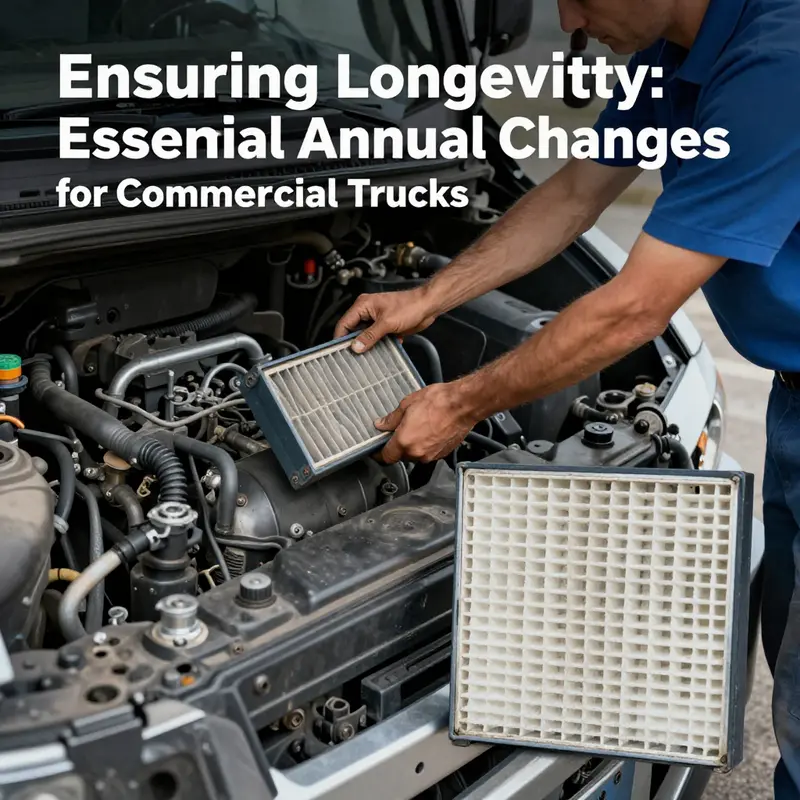
Every truck operator knows that preventive maintenance isn’t just a checklist item; it is the quiet engine of uptime, driver safety, and cost efficiency. Among the items that routinely make or break that uptime, the air filter and the cabin filter often fly under the radar. Yet the consequences of neglect can ripple through an entire fleet: reduced engine performance, higher fuel burn, uncomfortable and unhealthy cab environments, and avoidable downtime during peak load periods. The choice to replace these filters annually is not simply a recommendation wrapped in a maintenance calendar; it is a strategic decision that aligns with safety, compliance, and the practical realities of daily operations on diverse roadways and through shifting seasons. In this chapter, we will trace the logic behind annual air and cabin filter replacement, connect it to engine health and driver well-being, and show how fleets can integrate this service into a seamless, low-disruption routine that pays dividends in reliability and comfort alike.
The engine lives in a dusty world. Even in urban corridors, rural backroads, or long-haul corridors crossing dry regions, air finds its way into the intake system. The air filter’s job is straightforward in theory: it traps dust, dirt, and particles before they reach the cylinders. In practice, though, a clogged or dirty air filter is a signal that the engine is straining to breathe. When intake air is restricted, the engine must compensate by injecting more fuel to maintain power, a pattern that erodes fuel economy and can blunt acceleration when the truck is already fully loaded. In extreme cases, unfiltered particles can contribute to wear on the piston rings, cylinders, and valves, accelerating component fatigue over time. Regular, annual inspection and replacement create a clean air passage that helps preserve the intended air-to-fuel ratio and the engine’s designed performance envelope. The annual replacement also serves as a reliable touchpoint for fleets to audit intake cleanliness across multiple units in the same service window. With modern filtration materials, many filters are designed to capture a broad spectrum of particulates while resisting the rapid clog that accompanies sustained dusty conditions. When viewed through the lens of fleet productivity, the annual change becomes a straightforward hedge against the performance drift that a dirty air filter invites.
The cabin environment deserves equal attention. The cabin filter sits at the front line of the driver’s daily exposure to airborne irritants, pollens, smoke, and urban exhaust. For drivers who spend long hours behind the wheel, the quality of air inside the cab directly affects alertness, comfort, and long-term health. A clean cabin filter reduces the load on the vehicle’s HVAC (heating, ventilation, and air conditioning) system, which in turn helps maintain steady cabin temperature and airflow. When the cabin is blocked, occupants experience reduced airflow, a tendency for the HVAC to run longer cycles, and in some cases, a perception of stuffiness or poor air quality that can be distracting or fatigue-inducing. The ease of driving is subtly improved when the interior air is pleasant and consistent. This is especially important in fleets that operate in environments with high pollen counts, urban pollution, or seasonal smoke events. In such contexts, a cabin filter becomes more than a maintenance item; it becomes a contributor to driver health and focus, two assets that translate into safer operation and fewer fatigue-related events.
A growing consensus in the field emphasizes that annual replacement for both air and cabin filters is a prudent baseline, with the option for more frequent changes when conditions demand it. In dusty environments, such as desert routes, rural gravel lanes, or construction corridors near active sites, dust can accumulate rapidly. In those settings, a high-efficiency air filter may still reach its designed performance threshold after a year, but the interior air quality demands more vigil. For drivers in heavily polluted or urban areas, or for fleets operating in tropical or coastal climates where humidity and airborne contaminants can vary, annual replacement provides a predictable standard that reduces the risk of performance drag and unsafe conditions. Implementing annual changes creates a cadence that fleet managers can plan around, aligning filter maintenance with other critical service windows to minimize schedule disruption and to maximize the likelihood that every truck leaves the shop with a clean intake path and a fresh cabin environment.
The principle behind annual replacement is reinforced by the protective role of activated carbon in cabin filtration. A high-performance cabin filter with activated carbon is designed to capture a broad array of contaminants, including odors and volatile compounds, as well as fine particulates. The value of activated carbon becomes particularly evident when the fleet operates in metro areas with diesel exhaust, in coastal environments where salt and humidity can accelerate corrosive processes, or during seasonal transitions when pollen counts surge. The filter’s ability to trap small particles—down to sizes measured in microns—contributes to a noticeable improvement in interior air quality. When a driver reports relief from headaches, throat irritation, or eye irritation after an annual filter change, that qualitative benefit translates into measurable outcomes: fewer sick days, better focus, and more consistent driver performance over long hauls.
From a maintenance planning perspective, annual replacement offers clear advantages. It provides a discrete, repeatable task that can be slotted into routine service intervals without requiring specialized equipment or a premium maintenance window. It creates a predictable expenditure line in the budget and reduces the risk of unplanned downtime caused by a sudden cabin filter failure or an engine air intake restriction. For fleets aiming to optimize uptime, the predictability of an annual filter change can be the difference between an on-time delivery and a costly delay. In practical terms, technicians can perform these changes during other planned service activities, such as oil changes or tire maintenance, leveraging existing lift time and shop labor to keep additional downtime to a minimum.
The maintenance narrative also benefits from a broader perspective on vehicle health. An annual air and cabin filter replacement dovetails with the broader objective of protecting the engine’s intake system and the HVAC pathway from microbial growth, fouling, and the slow creep of particulate matter. When these filters are changed on schedule, the risk of dust recirculation into the cabin is reduced, and the HVAC system encounters fewer obstructions to airflow. This translates into cooler, more consistent climate control in the cab, which can help reduce driver fatigue during long shifts and extreme weather periods. Moreover, the reliability of the HVAC system itself is enhanced, because the filters operate as a first line of defense against debris that can cause premature wear on blower motors, housings, and ducts. Although a single filter change might seem routine, the downstream effect on comfort, health, and equipment longevity is meaningful across a fleet’s total cost of ownership.
In terms of communication and culture within a fleet, establishing a clear standard for annual air and cabin filter replacement communicates to drivers that their health and safety are valued. It also sets expectations for maintenance discipline and reliability. A well-communicated policy helps align driver behavior with maintenance windows. When drivers know that the filters will be refreshed at a predictable cadence, they can report issues that arise between service visits with greater clarity: for example, a sudden drop in cabin air quality, unusual odors, or persistent moisture in the HVAC pathway. These reports can then be treated as early warning signs rather than as isolated complaints, enabling technicians to respond with targeted checks that prevent escalation to more disruptive problems. The human factors here matter. A driver who experiences better air quality and a more comfortable cabin is likely to perform at a higher level over a longer period, contributing to safer operations and more consistent delivery performance across the network.
From an environmental and regulatory vantage point, the annual replacement policy aligns with compliance and best-practice stewardship. Clean air filters help ensure that the engine operates as designed, which, in turn, supports efficient combustion and reduced emission variability related to restricted air intake. While this is not a substitute for broader emissions management strategies, it is a foundational component that helps keep engines within their target specifications. The cabin filter, while primarily an interior air component, also intersects with occupant health standards and workplace safety expectations for commercial driving. In regulated environments where air quality and occupational health standards are evaluated, maintaining clean cabin filters is a straightforward practice that demonstrates a commitment to operator welfare.
In practice, the annual replacement decision should be paired with sensible inspection criteria. A technician might start with a visual check: is the filter visibly darkened or saturated with dust? Is there a sign of heavy debris buildup along the filter’s surface? In some cases, a simple breath test for odors in the cab can indicate whether the cabin filter needs replacement sooner rather than later. For the air filter, certain signatures—reduced airflow, a noticeable increase in engine intake noise, or a drop in performance under load—may signal that the filter has reached the end of its useful life ahead of the next mileage-based service. The key is to treat annual replacement as the baseline and to elevate the frequency when field conditions demand it. For a fleet that runs in a particularly dusty corridor or in a climate with strong air particulates, the shop can schedule a mid-year check to ensure the filter is performing as expected and to avoid an unplanned service interruption that could affect a high-demand route.
To bring these ideas into a practical frame, consider how one might coordinate filter replacement within a broader maintenance calendar. The annual change can be slotted into a mid-year or end-of-year service window, depending on how the fleet plans dry-dock downtime or the availability of a preferred maintenance facility. This approach minimizes the need for extra ramp time and allows technicians to leverage existing diagnostic routines. For operators who track maintenance through a centralized software system, an alert can be set a few weeks ahead of the scheduled date, prompting fleet managers to confirm the stock of filters and to arrange for any accessory components, such as new gaskets or seals, that may be involved in some filter housings. The goal is a streamlined process in which the filters are replaced, the HVAC system is tested for proper airflow, and the vehicle goes back into service with a clean intake path and a fresh cabin environment.
From a customer-facing perspective, the value of annual air and cabin filter replacement is subtle, yet significant. It contributes to smoother and more reliable service, especially for fleets that pride themselves on minimizing downtime and delivering on tight schedules. It also supports the brand promise of maintaining a fleet in top condition, not only in terms of mechanical integrity but also in the safety and well-being of the people who operate these machines daily. A well-maintained cabin atmosphere reduces the potential for driver fatigue and enhances concentration, both of which are critical when navigating the unpredictable demands of open highways and urban corridors alike. When a fleet can point to a disciplined, science-based approach to maintenance—one that includes a disciplined annual air and cabin filter replacement—the credibility of the operation grows with customers who rely on punctual deliveries and on-time service.
For fleet managers who want to deepen the impact of this practice, consider pairing the filter replacement with driver education. A brief note to drivers explaining why clean filters matter—how they influence engine efficiency, interior air quality, and overall vehicle reliability—can reinforce adherence to the schedule. A simple checklist at the service bay that confirms the air and cabin filters have been replaced, the HVAC system has passed a basic airflow test, and the interior air quality is satisfactory can close the loop between maintenance and daily operation. The objective is not to complicate the process but to ensure that every replacement is purposeful and measurable. In the end, the annual air and cabin filter replacement is about more than a service item; it is a foundational practice that sustains engine health, driver welfare, and fleet performance across the board.
If readers want a practical starting point, begin with a simple rule: replace the engine air filter and the cabin filter at least once a year, with adjustments for exposure to dust and pollution. Document the rationale for any deviation from the baseline and use that data to fine-tune future schedules. The cadence should be stable enough to enable reliable planning, yet flexible enough to accommodate the realities of a diversified route map and seasonal changes. As the fleet grows older and accumulates more miles, the value of keeping intake and interior air pathways clean only increases. The air we breathe inside a vehicle matters not just to comfort, but to performance, safety, and the longevity of the machine itself. This is particularly true in commercial contexts where the costs of unexpected downtime are magnified by per-day losses in revenue and the disruption to logistics pipelines. In this light, annual air and cabin filter replacement is not a luxury; it is a strategic investment in reliability, health, and the efficiency of the operation.
For operators seeking additional guidance or case studies on filter maintenance, further reading and community discussions can provide practical insights. A concise resource from industry discussions consolidates practical steps and real-world observations about annual air and cabin filter replacement in commercial fleets. To learn more about how fleets implement this practice and to see how it interacts with broader maintenance strategies, you can explore the dedicated discussion and insights available at the McGrath Trucks blog. This source offers a fleet-centric perspective that complements the engineering rationale outlined here and helps translate theory into day-to-day action. See the following link for more context: McGrath Trucks blog.
As an external reference that underscores the technical rationale and performance implications of air and cabin filtration in commercial trucks, the Motorcar guide on air and cabin filters provides additional depth into the replacement cadence, filtration efficiency, and maintenance considerations. This external resource reinforces the practical guidance discussed here and can serve as a corroborating technical reference for fleet maintenance teams seeking to align policy with current best practices. External resource: https://www.motorcar.com/air-cabin-filters-for-commercial-trucks-annual-replacement-guide
Final thoughts
Maintaining commercial trucks goes beyond mere compliance; it is a proactive approach to ensuring safety, efficiency, and performance. By committing to annual changes such as engine oil and filter replacements, meticulous brake maintenance, and timely air filter updates, fleet operators can significantly extend the life of their vehicles while minimizing unexpected breakdowns. Such diligence not only preserves asset value but also fosters a safer environment for drivers and the public alike.