
In the realm of commercial trucking, the ability to customize your vehicle to meet specific operational needs can significantly enhance productivity and efficiency. Whether you’re managing a fleet of trucks for logistics or outfitting vehicles for construction, understanding how to build a proprietary truck mount is vital for your business’s success. This guide will systematically walk you through the essential phases of constructing a mount, from defining its purpose to choosing the right vehicle, designing the mount, ensuring compliance, and integrating advanced functionalities. Each chapter contributes unique insights into the overall process, equipping you with the knowledge needed to make informed decisions that align with industry standards and operational goals.
null
null
Foundation First: Selecting the Right Base Vehicle for a Durable Commercial Truck Mount
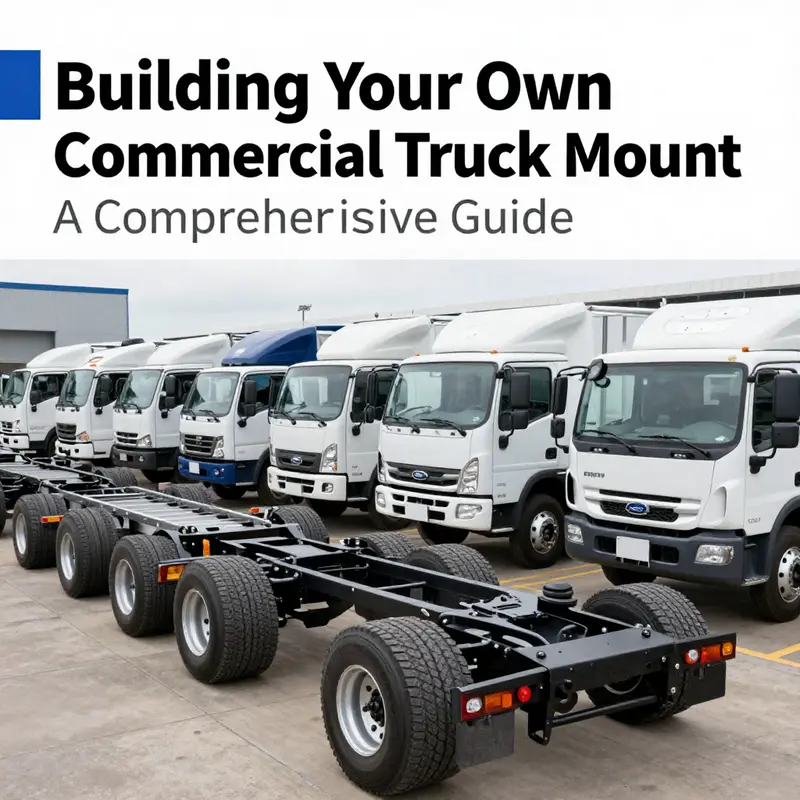
Choosing the base vehicle for a commercial truck mount is a defining step that shapes safety, efficiency, and longevity. The chassis you select sets the boundaries for every subsequent decision about strength, reliability, and maintenance. With the right foundation, the mounting system can be evaluated in terms of real world stresses, drive conditions, and long term service life. The goal is a platform that can endure daily duty, tolerate vibration and temperature changes, and still perform after thousands of miles. When you start with foundation first, you reduce the risk of costly compromises later on.
Beyond payload, focus on a handful of critical attributes. First is the overall payload headroom after accounting for the mounted deck and equipment, fuel, fluids, and crew. It is not enough to think in terms of cab weight; the true test is how much remains for the mount and its infrastructure while keeping a sensible reserve for dynamic loads. A practical approach is to define a target combined load that includes the vehicle unladen weight, the mounted equipment, and a margin for peak demand. With that target, you can compare chassis options not only on rating but on how well the frame, suspension, and driveline sustain that load with predictable performance and uptime.
The chassis itself should tell a structural story. A robust base will have a reinforced frame with strong cross members, adequate rail height, and a suspension system designed to dampen live vibration rather than transmit it to the mounted hardware. The frame rails must resist deflection under load, and the spacing and geometry of the rails influence how you attach brackets and reinforcement plates. A well planned layout minimizes stress at corners and joints where fatigue often begins. If a longer wheelbase is needed, assess the impact on turning radius, braking, and tire load distribution because these factors affect maintenance, fuel use, and risk in service.
Electrical readiness is another pillar. The base chassis should provide a solid electrical backbone: sufficient alternator capacity, a reliable battery bank, and clean grounding paths that won’t be overwhelmed by mounted systems. In practice this means thicker wiring, protected harnesses, and routing that avoids heat sources and pinch points. It also means leaving headroom for upgrades so a mid life rewire is not required. Early collaboration with qualified electricians helps balance load, minimize voltage drop, and protect electronics from vibration and moisture.
Space, accessibility, and serviceability matter as well. The base vehicle should offer enough porch space along the frame to mount the deck and its fasteners without blocking access to fittings, wiring, or the underside of the body. Plan for future changes such as refrigeration units or storage compartments. A clear line of sight for the operator and smooth interaction between cab and mounted equipment support safer, more efficient operations. Wheelbase and frame width influence overall footprint, turning capability, and how the mount integrates with the vehicle.
In practice, fleets blend practical experience with data. Look for rugged durability and predictable return on investment. Modularity can be a decisive advantage: a base that supports different deck configurations without a full redesign. This saves time during deployment and reduces lead times for future upgrades, while preserving underlying chassis strength. With this approach, you can swap bodies or re tune mounting hardware with confidence that the chassis remains sound. This continuity between platform robustness, electrical readiness, spatial planning, and upgrade potential distinguishes a durable mount from a short lived solution.
A structured decision process helps translate requirements into a chassis specification. Define your target combined load, identify candidate base vehicles, compare frames and suspensions, and consult a professional fabricator early to translate operational needs into a safe, compliant design. This focus on foundation reduces the likelihood of retrofits, shortens timelines, and improves ongoing maintenance predictability. The result is a base vehicle that supports reliable, safe, and efficient operation for the life of the fleet.
Engineering the Backbone: Designing a Safe, Modular Mount for a Commercial Truck
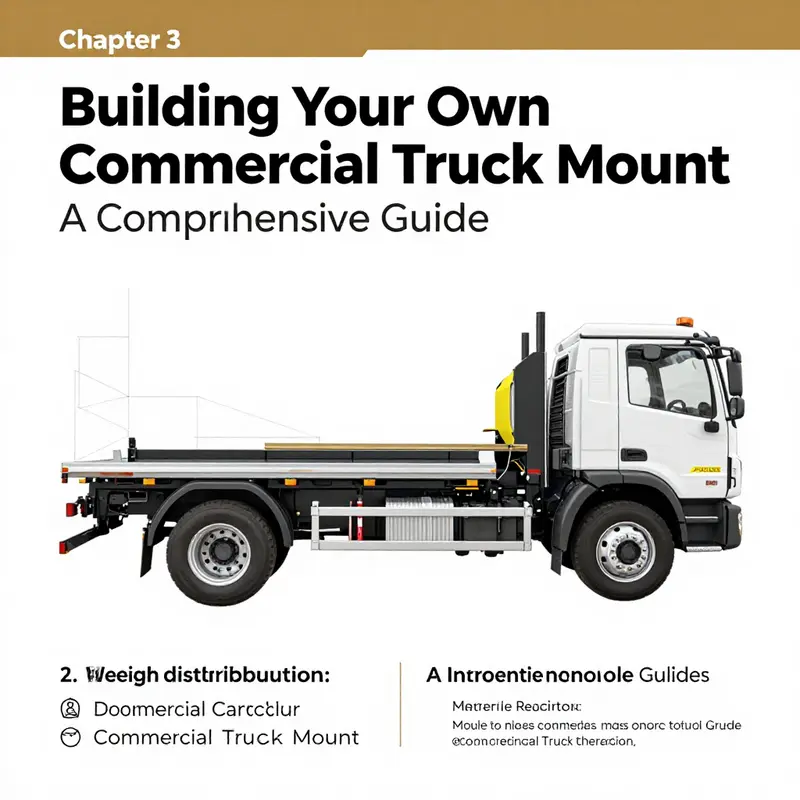
The mount is not merely a box bolted to a frame; it is the backbone of a commercial truck’s transformation, connecting weight, structure, and purpose into one coherent system. When you design this backbone with care, you unlock safer operation, longer service life, and fewer unplanned downtimes. A successful mount does more than support the equipment; it controls how that equipment interacts with every kilometer of road, every gust of wind, and every jolt from uneven pavement. The chapter ahead walks through the core thinking that stays constant across different use cases, while leaving room for the variations that arise from different mounting tasks.
At the heart of any mount is a structural problem: how to resist forces that push, twist, and shake the system. The design must account for static loads—the weight of the mounted item—and dynamic loads: vibrations, accelerations, decelerations, and lateral shocks that come with road irregularities. Engineers run load-path analyses to ensure every element transfers forces where the frame can bear them, without creating weak points. Materials selection matters as well. High-strength steel alloys are common for their durability under repeated loading, but weight penalties must be weighed against performance. Aluminum alloys or even composite materials can reduce weight, yet they introduce different failure modes and inspection needs. Regardless of material, corrosion resistance is essential, especially on exposed surfaces and mounting points that see weather and road spray. Fatigue behavior under cyclic loading drives many choices, so every joint is treated as a potential site for crack initiation and propagation. The result should be a mount that remains stiff under load and tolerant of routine service procedures, rather than a fragile configuration that invites micro-motions and fasteners loosening over time.
Integration with the vehicle’s chassis is the second pillar of sound design. The mount must become a part of the frame rails or side members, not a temporary add-on. Precise attachment points are selected to transfer loads directly into the strongest sections of the truck’s skeleton. This requires careful alignment with existing mounting patterns and sometimes custom fabrication to match the target model’s geometry. Attachment methods—bolts, welds, or clamps—are chosen to minimize stress concentrations, dispersing load evenly along what is effectively a long, continuous path rather than concentrating it at a few fasteners. A well-integrated mount respects the chassis’ original design goals: not just to carry weight, but to preserve handling, braking performance, and ride quality. In practice, that means planning for service access to the mount’s hardware, painting or coating to resist corrosion, and ensuring that the installation does not obstruct critical components such as fuel lines, electrical harnesses, or cooling paths. The outcome is a unified system where the mount becomes a predictable, traceable part of the vehicle’s mechanical envelope rather than a bolt-on afterthought.
In modern commercial contexts, modularity stands as a practical design philosophy. A modular mount uses standardized components—brackets, beams, and connectors—that can be assembled in a variety of configurations. This approach yields several advantages: rapid deployment when needs change, straightforward expansion as cargo or tools grow, simpler maintenance because damaged pieces can be swapped without rewriting the entire design, and lean inventory because a compact set of parts covers many configurations. The modular approach also supports future upgrades, such as adding new utility lines, protective enclosures, or additional securing points without major rework. Designers often draw on the same logic used in modular platforms in other industries, where predictable interfaces enable quick, error-free assembly. If you want to see how this mindset translates into real-world practice, the McGrathTrucks blog provides practical perspectives on conversions and safety considerations that bridge theory and fieldwork. McGrathTrucks Blog.
Ergonomics matter in both design and operation. An accessible mount reduces maintenance time and minimizes the risk of injury when technicians adjust or inspect hardware. Components should be placed to allow safe work without crawling over heavy parts or contorted postures. Teach points—lifting lugs or handles—help crews move components safely. Consideration for service doors, access panels, and clearances around the operator’s seat ensures the mounted system does not intrude on daily use. In addition, the geometry of the mount should avoid sharp edges and pinch points, and fasteners should be sized so technicians can reach them with standard tools. All these decisions feed into a system that survives daily abuse and still remains legible to future inspectors who verify fit and function.
Compliance and safety standards guide every serious mount design. Across regions, authorities set guidelines for materials, load testing procedures, and safety factors. Designers must think about the full envelope: maximum vehicle width, lighting and reflectors if a trailer is involved, and the routing of electrical and data cables to prevent interference and fire hazards. Properly designed mounts also include securely fastened fasteners, anti-vibration mounts to prevent unwanted movement, and verified restraint systems for cargo. A mount that fails these checks undermines safety, increases maintenance costs, and jeopardizes operation in the field. This is why the process often begins with a formal design review, followed by simulation and then real-world testing under controlled conditions. The aim is to produce a mount that remains safe under normal traffic, as well as exceptional events like potholes, sudden braking, or cornering loads. A robust safety-forward ethos reduces downtime and protects the people who rely on the vehicle every day.
Beyond the structural skeleton, many mounts host functional components. Hydraulic lifts or winches may be added to handle heavy equipment, refrigeration units may keep perishables at the correct temperature, and lockable cabinets or secure compartments can protect tools and spares. Electrical systems—outlets, lighting, battery backups—extend the utility but also raise the complexity of the build. When these features are included, certification from qualified electricians and plumbers becomes essential. In other words, the integration of utilities is not a DIY task but a specialized workstream that aligns with the vehicle’s electrical architecture and safety codes. The goal is a seamless integration where every new function has a defined power source, protective protection, and a clear fail-safe should a fault occur.
Given the stakes, professional installation is non-negotiable. A licensed mechanic with experience in heavy vehicles, supported by a structural engineer when the design includes complex loads or unusual configurations, offers the scrutiny needed to validate the mounting’s integrity. A final inspection by a certified vehicle inspector confirms that the system complies with applicable standards and that no safety-critical clearance or routing issues remain. Even seemingly minor modifications can ripple through the vehicle’s dynamics and compliance picture. The cost of professional oversight is far outweighed by the long-term savings from reduced downtime, less wear, and diminished risk of failure.
With a mount that blends strength, modularity, and safety, fleets gain a flexible platform that can adapt to shifting tasks without becoming a numeric ledger of bespoke, one-off builds. The real power lies in aligning the design with how the truck will be used, in ensuring maintenance remains manageable, and in recognizing that the cost of early, careful design pays back in reliability and uptime. For readers seeking routes into practical, field-tested perspectives, the McGrathTrucks blog offers accessible commentary and case studies that illuminate the gap between theory and practice. Finally, for deeper standards and engineering guidelines, industry resources such as SAE International provide rigorous frameworks that underpin every compliant automotive structure. See https://www.sae.org for more.
Chapter 4: Designing a Safe, Compliant Heartbeat for Your Commercial Truck Mount
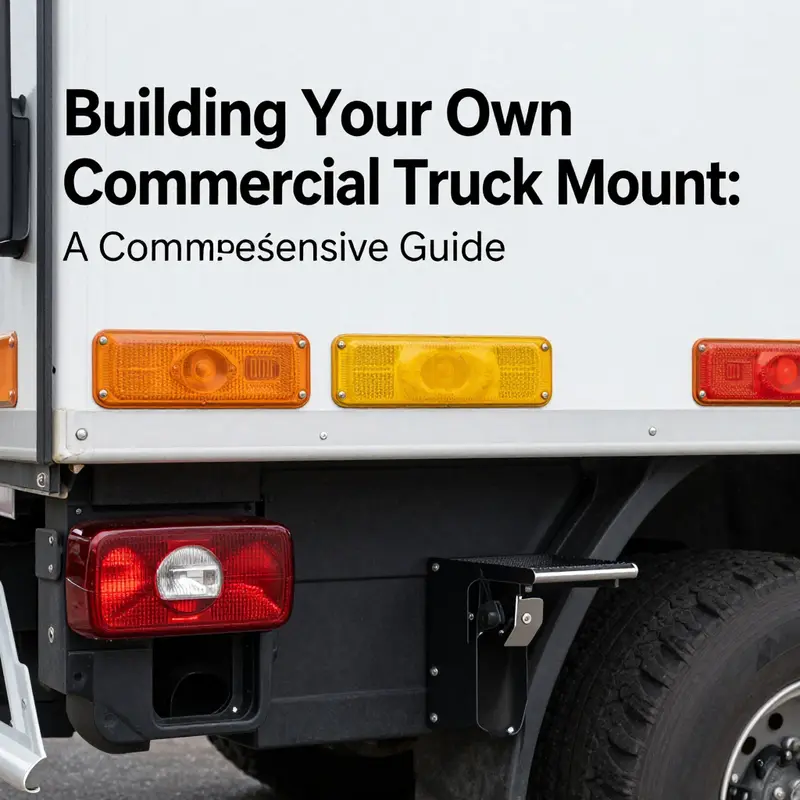
A commercial truck mount is more than a bundle of steel and wiring; it is a living system that must harmonize safety, legality, and efficiency with the demands of everyday work. When you design the mount, you are not merely choosing a bed or a carrier. You are shaping how a fleet moves through urban corridors, how quickly it can load and unload, and how reliably it can protect people and cargo under the stresses of road and weather. The chapter you’re reading asks you to see safety and compliance as foundational design criteria, not afterthought add-ons. In practical terms, this means scenario planning that anticipates weight distribution, vibration, and load securement, as well as an upright commitment to regulatory alignment across the vehicle’s life cycle. It means recognizing that a modern truck mount must partner with intelligent systems that guide drivers, inform operators, and defend your fleet from costly downtime and regulatory risk. This is a narrative about making those partnerships real in the metal and wiring of the mount itself, so the truck remains a dependable tool rather than a liability.
At the heart of this approach is the recognition that safety and compliance are inseparable from performance. A purpose-built commercial navigation platform, for example, can transform safety by steering a vehicle away from routes that would overtax height or weight limits, or that intersect with narrow urban corridors where a miscalculation could end in a bridge strike or a blocked delivery. Real-time routing becomes an essential component of a mount’s value, not a separate add-on. When a fleet can automatically factor the mount’s actual load profile, expected travel times, and restricted road segments into every trip, the route itself becomes a safety feature. The broader implication is clear: the more intelligent the routing and vehicle data ecosystem, the less room there is for human error on the road. The industry recognizes this shift, emphasizing that reliable, durable builds paired with smart routing reduce downtime, extend component life, and protect the fleet’s bottom line. For operators who are building or upgrading a mount, this is a persuasive case for integrating safety-forward technologies from the outset. If you want a practical primer on how broader industry discussions converge with mount design, the McGrath Trucks blog offers accessible explorations that connect regulation, safety culture, and everyday maintenance in a way that informs decisions early in the process. McGrath Trucks blog
Beyond routing, the human factors of safety must shape the mount’s architecture. Driver distraction is a leading cause of incidents, so any integrated navigation or telematics interface should strive for clarity and minimal cognitive load. A unified driver app that blends navigation with Hours of Service (HOS) tracking can centralize critical tasks, but the design must prioritize legibility, straightforward controls, and consistent updates. When the human-machine interface is well conceived, it turns complex compliance requirements into intuitive daily practice rather than a maze of paperwork and screens. In jurisdictions across the United States and Europe, regulators are increasingly attentive to how digital systems influence behavior on the road. The intent is to promote safer driving practices while ensuring data integrity for audits and compliance reviews. That means engineers must think about cybersecurity, software update management, and data governance as part of the mount’s safety envelope, not as separate IT concerns.
The structural backbone of a safe mount is equally deliberate. Weight distribution, robust mounting points along the chassis rails, and strategic reinforcement of corners and joints are not cosmetic or optional choices; they are essential elements that determine how the vehicle tracks, stops, and withstands vibration and impact. To protect the chassis and the payload, engineers often specify high-strength materials such as stainless steel, aluminum alloys, or treated steel that resist corrosion while still providing favorable strength-to-weight characteristics. The practical takeaway is simple: the mounting system must tolerate long service life under varying temperatures, road conditions, and cargo configurations. The design should also contemplate load securement features that accommodate a range of cargo shapes and sizes, from rigid enclosures to flexible containers, with easily accessible tie-downs and lockable compartments. It is tempting to borrow lightweight, off-the-shelf hardware for speed, but the durability demands of a commercial truck mount call for engineering-grade fasteners and anti-vibration mounts that stay effective after thousands of miles.
To translate these principles into a compliant, road-ready product, you will want to integrate a few core safety systems from the start. Lighting and reflectors, compliant with local and national regulations, are not cosmetic accessories; they are critical for visibility during loading, unloading, and nighttime operation. If your design includes a trailer body or an auxiliary system, you must ensure braking, signaling, and stability controls meet the applicable standards. This is where the regulatory landscape becomes a design driver. Understanding DOT and FMCSA expectations in the U.S.—and corresponding European standards—helps you align your build with what inspectors will look for during inspections and audits. It is not enough to assemble a mount and hope for the best; long-term success depends on a clear safety case that documents how each feature supports safe operation, how the system behaves under fault conditions, and how maintenance can verify continued compliance.
Safety and compliance also extend to the integration of optional functional components. Hydraulics, refrigeration, locking systems, and independent power provisions are common additions that can dramatically alter the risk profile if not properly engineered. When hydraulics or other heavy systems are included, certified electricians and qualified technicians should perform the installation. The aim is to prevent leaks, mis-wiring, or interference with essential vehicle systems such as steering, braking, or transmission controls. Even seemingly small choices—like the type of vibration isolation or the routing of electrical cables—can influence the longevity of the mount and the safety of surrounding equipment. The overarching discipline is professional rigor: plan, document, test, and verify at every stage.
The path to compliance is not a one-time hurdle but a continuous discipline. A mount that enters service with a clean compliance package must still be maintained with regular inspections, and fleets should implement a routine that checks for signs of wear, corrosion, or fatigue in the mounting structure, fasteners, and reinforcement points. As regulations evolve, updates to software and hardware must be managed through controlled channels, with validation testing before deployment to vehicles. This approach protects not only the driver and the cargo but also the fleet’s warranty commitments and insurance coverage. It also supports safer, more predictable maintenance windows, since a well-documented system reduces surprises during inspections and vehicle downtime can be minimized.
Because safety and compliance are deeply technical, the collaboration between design teams, fleet managers, and certified installers cannot be overstated. The most successful builds occur when engineers, fabricators, and compliance specialists speak a common language and commit to transparency about assumptions, calculations, and testing results. You will often find that the most robust mounts emerge from iterative prototyping, where engineers simulate load paths, verify mounting points, and validate who bears what portion of the stress during aggressive driving or off-road conditions. This disciplined approach benefits the fleet from a safety standpoint and enhances uptime and reliability, making the investment worthwhile from a total-cost-of-ownership perspective.
In closing, the real value of integrating safety and compliance features into your commercial truck mount lies in turning regulatory expectations into competitive advantage. A mount that responsibly incorporates advanced routing logic, driver-focused interfaces, structural resilience, and auditable compliance is better protected against costly incidents and regulatory fines. It also creates a safer work environment, with drivers who feel supported by technology rather than overwhelmed by it. This is the architectural mindset that separates merely functional builds from enduring systems that keep fleets moving reliably through changing rules, tightening safety standards, and evolving traffic conditions. For readers who want to deepen their understanding of how industry norms shape practical decisions, explore industry materials and case studies that bridge policy with everyday engineering practice. Remember that a well-planned design, validated by professionals, is the best insurance against future compliance challenges and unexpected downtime. The journey from concept to road-ready safety is continuous and collaborative.
For a broader perspective on how industry developments shape navigation, safety, and compliance in commercial transport, see the external resource linked below. It offers context on how navigation platforms and regulatory expectations intersect with the practical realities of fleet operations and vehicle modifications: https://www.samsara.com/blog/samsara-commercial-navigation-launch
null
null
Final thoughts
Building a commercial truck mount is complex but rewarding, necessitating strategic planning and expertise to ensure safety, compliance, and functionality. Each phase—from defining the mount’s purpose to selecting the appropriate base vehicle, designing the structure, ensuring adherence to safety regulations, and incorporating necessary components—contributes critical insights that foster operational success. With proper preparation and engagement with industry experts, you can create a durable mount tailored to your specific requirements, ultimately enhancing your trucking operations.