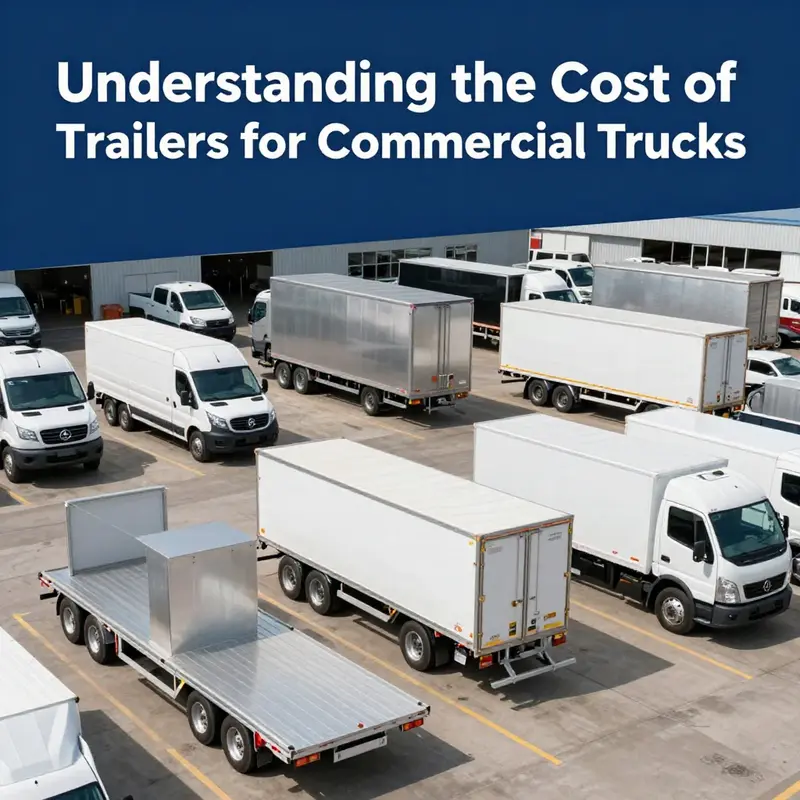
The investment in trailers is a crucial element for trucking companies, fleet managers, and logistics firms. Understanding how much a trailer for a commercial truck costs is essential for making informed procurement decisions. This article examines the financial landscape of trailer purchases, emphasizing the differences between new and used trailers, the factors that influence costs, and the current market trends. Each chapter offers insights that empower stakeholders to navigate the complexities of trailer investments effectively.
Balancing Upfront Price with Long-Term Value: A Comprehensive Cost Analysis of New Trailers for Commercial Trucks
When fleets pose the question of how much a trailer for a commercial truck costs, they are really asking about a spectrum. The answer rests not just on the sticker price but on how that trailer performs over time, how it wears, and how it fits into regulatory and operational realities. A trailer is more than a storage box behind the truck; it is a moving part of a logistics system, a capital asset that must earn its keep in fuel savings, uptime, and resale value. The cost picture, therefore, begins with the upfront price and extends to a careful accounting of maintenance, efficiency, risk, and depreciation. The numbers in play are not a single fixed tag but a lattice of choices driven by trailer type, size, materials, and whether the unit is new or used. From the outset, buyers encounter a broad range. New trailers typically fall between roughly fifteen thousand and sixty thousand dollars, with the spread widening as options, configurations, and performance features multiply. A basic 48-foot dry van, for example, may start around the lower end of that range, while a high-end, customized dry van with enhanced aerodynamics, suspension, or load-specific capabilities can surpass thirty thousand dollars. Specialized trailers such as reefers, which require sophisticated mechanical systems for temperature control, or flatbeds built to unusual specifications, tend to sit near or beyond the upper end of the spectrum. The arithmetic is straightforward in form, but the implications are nuanced in practice. A well-placed investment in a trailer that is tuned to a fleet’s typical loads, routes, and maintenance rhythms can yield meaningful savings in fuel, downtime, and resale value over the asset’s life. Conversely, selecting a trailer with mismatched specifications or unnecessary features can erode the return on investment and extend payback periods. The contrast is more than a matter of cost and benefit; it is a question of risk management and strategic alignment with fleet performance goals. Even at the entry price, fleets must assess how a trailer’s design choices affect operating costs. The most economical option in purchase price may not be the most economical choice over a three-, five-, or seven-year horizon if it triggers higher maintenance expenditures or reduced fuel efficiency. To navigate this, many fleets rely on total cost of ownership calculations that integrate the upfront price with maintenance, fuel, tires, insurance, downtime, and depreciation. Those calculations reveal a truth about modern trailer economics: the total cost of ownership (TCO) for truck trailers is generally manageable, particularly when the trailer type and features are aligned with the mission of the fleet. The low-to-moderate TCO relative to other heavy equipment is not a universal guarantee, however. It depends on how the trailer is used, the quality of maintenance, and the degree to which the fleet leverages lightweight materials, superior suspension systems, or aerodynamic designs. A fleet that operates high-mileage routes with long payloads may realize greater fuel savings and reduced downtime from better aerodynamics or weight-optimized configurations, while a fleet running shorter hops with heavy loads may see different rotation and maintenance costs. In this context, the initial purchase price is just the opening move in a longer negotiation with cost and value. Beyond the sticker price, maintenance sets the rhythm of a trailer’s life. Ongoing upkeep ranges from routine inspections of air lines, brakes, lighting, and refrigeration (when applicable) to more involved overhauls as the trailer ages. Maintenance costs grow with usage and with the complexity of the trailer’s systems. A simple box trailer may require fewer annual touchpoints than a high-spec model that includes advanced suspension, multi-axle configurations, or temperature control. But even simple trailers demand attention: tires wear out and must be replaced, and tire choices can influence fuel economy, ride quality, and safety. Tire life hinges on load factors, road conditions, and maintenance discipline. The cost of tires is not trivial; their performance affects rolling resistance and traction, which in turn influence fuel use and uptime. Insurance premiums mirror a trailer’s value, type, and exposure. A higher-value trailer or one used in riskier lines of work can elevate premiums, while well-maintained equipment and robust driver training can mitigate risk and reduce insurance costs over time. Depreciation—the gradual loss of value over time—plays a pivotal role in the economics of ownership. Trailers tend to depreciate at a rate that reflects market demand, brand reputation, condition, and remaining useful life. Depreciation shapes resale value and the book value of the asset, which in turn influences financing terms and tax treatment. Taken together, the initial price and these ongoing costs create a landscape in which a trailer’s true affordability is not a single number but a projection. This is where industry insights and market intelligence matter. Market data often indicate that total ownership costs for trailers, while highly variable, can be surprisingly favorable when matched to a fleet’s operating profile and when preventive maintenance is prioritized. For a modern fleet, the cost story is not only about saving fuel; it includes reducing downtime through reliable airstream, suspension, and braking systems; selecting tires with predictable wear; and ensuring the trailer remains in service as much as possible. A well-structured benefit-cost analysis helps fleets quantify long-term savings from improved fuel economy and reduced downtime against upfront investment. Such analyses also consider regulatory compliance, including evolving emissions standards, which can influence the design and material choices of trailers. Lightweight construction, advanced suspensions, and integration with engines and aerodynamics can contribute to fuel savings and compliance readiness. The picture is not static. Prices and costs shift with macroeconomic conditions, regulatory changes, and evolving technology. A recent glance at market intelligence suggests that, on balance, the total cost of ownership for trailers remains a practical hurdle but not an insurmountable one for fleets that plan, price, and maintain strategically. For fleets evaluating new trailers, the path to clarity often leads through comparisons across several factors: the type of trailer, its size and payload capacity, the materials and construction quality, and the alignment of these elements with the fleet’s operational footprint. Dry vans, reefers, and flatbeds each present distinct cost and maintenance profiles. Dry vans—simple, robust, and versatile—offer lower upfront complexity and generally lower maintenance demand, but even with dry vans there are meaningful choices concerning wall thickness, floor material, and door seals that influence long-term reliability and resale value. Reefers bring additional complexity and higher upfront costs due to temperature control equipment, insulation quality, and refrigerant handling. These added systems contribute to maintenance and potential downtime but can unlock revenue by enabling temperature-sensitive loads. Flatbeds, with their configurable configurations and sometimes higher weight, can require specialized maintenance practices and more frequent inspections of fasteners and structural integrity. Size and configuration further complicate the calculus. A 40-foot trailer, a 48-foot trailer, or an even longer option may alter not only the purchase price but also licensing, insurance, maneuverability, and highway wear. Larger trailers can carry more payload, potentially spreading fixed costs over greater tonnage, but they may incur higher fuel consumption and maintenance demands in certain conditions. Materials used in the trailer’s construction—steel versus aluminum, for instance—also influence both weight and durability. Aluminum, while generally more expensive upfront, tends to reduce weight and improve fuel economy over time. Steel, though heavier, can offer durability in some environments and potentially lower initial costs. Aerodynamic design stands out as a lever in the cost equation. Smooth side panels, efficient doors, and careful underbody shaping reduce drag, which directly affects fuel consumption. For fleets that log long distances across high-speed corridors, those small percentage gains in fuel efficiency can translate into meaningful annual savings. Conversely, a trailer built for specialized service, with extra insulation, storage features, or rear-door configurations, may carry higher initial and maintenance costs but deliver niche value that justifies the investment. It is here that a practical, data-driven approach becomes indispensable. The decision-making process benefits from benchmarking against online marketplaces and local dealerships that specialize in commercial trailers. These channels provide a window into current market prices, including how new trailers are priced across types and configurations. In addition to price, fleets should consider financing terms, warranty coverage, and the availability of parts and service networks. The price of admission, in other words, is not just the tag on the trailer’s nose but the reliability, uptime, and service ecosystem that surround it. When contemplating the broader market, it is useful to acknowledge the interplay between market conditions and cost behavior. Economic uncertainty, fuel price volatility, and shifts in demand for freight services can influence both the price of new trailers and the cost of ownership over time. To get a clearer sense of such dynamics, fleets frequently consult industry analyses and expert commentary on market trends. For readers exploring these dynamics, a relevant discussion can be found in thoughtful explorations of economic uncertainties within the trucking sector, such as this piece: Navigating Economic Uncertainties: Key Insights from the Canadian and US Trucking Markets. It offers context for how macro conditions can shape decisions about trailer investments and fleet composition. You can read more here: Navigating Economic Uncertainties: Key Insights from the Canadian and US Trucking Markets.
As part of a broader cost analysis, fleets should also consider the role of data and decision support tools. Modern fleets increasingly rely on analytics to estimate maintenance intervals, predict component wear, and optimize tire purchase cycles. The goal is to align the trailer’s lifecycle with actual operating patterns, rather than relying on generic maintenance calendars. A data-informed approach helps ensure that every mile traveled with a new trailer contributes to value rather than cost. The cost story, then, moves beyond the base price and into a disciplined practice of asset management. It calls for clear expectations about maintenance windows, fuel economy targets, and depreciation schedules. It asks for a disciplined approach to insurance, risk mitigation, and uptime, recognizing that the trailer’s performance is inseparable from the driver, the route, and the payload. In the end, the true cost of a new trailer is a function of the alignment between the trailer’s design and the fleet’s mission. When this alignment is strong, new trailers can deliver a reliable baseline of performance, with predictable maintenance costs and favorable resale potential. When it is weak, the same asset can become a drag on cash flow and a source of avoidable downtime. The choice, then, is not simply about choosing a price tag but about selecting a configuration that harmonizes with the fleet’s routes, loads, and maintenance discipline. For teams seeking deeper, structured guidance, focusing on a holistic TCO framework helps quantify tradeoffs across the lifecycle and supports investment decisions that endure beyond a single fiscal year. External resources provide added depth for those who want a more formal treatment of TCO in trailers. For a comprehensive external analysis of total ownership costs for truck trailers, see the resource from Fleet Owner: Cost Analysis of Truck Trailers. External resource: Fleet Owner – Cost Analysis of Truck Trailers.
For readers seeking additional context or local market specifics, consider exploring industry discussions and buyer guides through relevant fleet and trucking resources. These sources can offer practical insights into financing options, depreciation treatment, and the interplay between trailer choice and regulatory compliance. If you’re planning to examine a potential trailer purchase in a broader regional frame, you may find value in market snapshots and price benchmarks that reflect current supply, demand, and regulatory landscapes. As you gather data, you may also wish to explore how recent regulatory developments influence trailer design considerations. In particular, the potential impact of emissions standards and related technology on weight, aerodynamics, and material choices can inform a more nuanced TCO analysis. Taken together, the elements of cost—initial price, maintenance, fuel efficiency, tires, insurance, and depreciation—form a cohesive framework for evaluating new trailers in a way that aligns with a fleet’s strategic priorities. The best approach integrates market intelligence, operational data, and a disciplined appraisal of risk and return. For readers who want a structured, data-rich treatment, the integration of such considerations with a clear decision framework can illuminate the path from purchase to performance and, ultimately, to sustainable profitability. In this sense, the choice of a new trailer is a decision that echoes across the fleet’s finances, operations, and compliance posture, shaping reliability, efficiency, and resilience for miles to come.
Value on the Move: Weighing Used versus New Trailers for Commercial Trucks
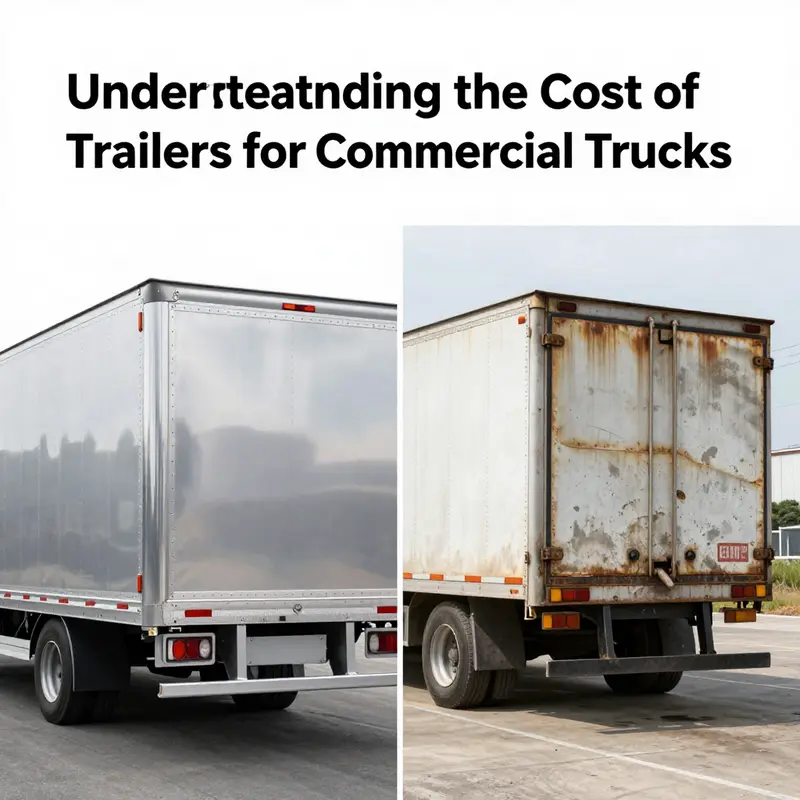
Choosing a trailer for a commercial fleet sits at the crossroads of capability, reliability, and capital. It is a decision that shapes how a business moves goods, how often equipment is on the road, and how money flows through the balance sheet over years of service. The cost of trailers varies far more than some buyers expect, because the trailer is not a single-purpose asset. It is an integrated platform that carries your product, protects it from the elements, integrates with your loading and unloading cycles, and accepts the wear and tear of daily dispatch. The type of trailer—whether it is a dry van, a flatbed, or a refrigerated unit—sets a rough baseline for price, but the rest of the equation unfolds through size, material quality, configuration, and whether the unit is new, used, or refurbished. In practice, fleets juggle these variables to align asset life with utilization patterns, financing options, and maintenance programs. The numbers are instructive, but the choices require a nuanced view that looks at total cost of ownership as much as the sticker price.
When the topic turns to price, the spectrum is broad. New trailers typically roam the high end of the spectrum, commonly ranging from about fifteen thousand dollars to sixty thousand dollars or more depending on the configuration and features. A basic 48-foot dry van might hover near the lower end of that range, while a high-end, custom-built dry van with enhanced aerodynamics, reinforced floors, or advanced seal systems can push well beyond thirty thousand dollars. Specialized trailers, such as reefers that require precise temperature control or flatbeds with heavy-duty configurations, are generally found toward the upper reaches of the price scale. On the other hand, used trailers offer a different kind of appeal. A well-maintained, older dry van can be priced in the range of seven thousand to fifteen thousand dollars, with the price climbing for units that are newer, have lower mileage, or come from trusted brands. The math is straightforward in principle: a used unit can deliver the required capacity at a fraction of the upfront cost, but it comes with tradeoffs in terms of remaining life, warranty coverage, and potential early maintenance needs.
The decision between new and used trailers, then, is a comparison of upfront cash needs against lifecycle performance. The fewer moving parts a fleet can financially manage upfront, the more likely it is to consider a used or refurbished option. Yet it would be a mistake to view the choice through a single lens. The longer a fleet keeps a trailer and the more demanding the use pattern, the more important it becomes to examine residual value, maintenance costs, and the reliability profile of the trailer given its age. For some operators, the objective is a low first-cost entry that allows more trucks or more miles in the early years. For others, the aim is a near-zero risk of downtime and a uniform maintenance approach, even if the upfront price is higher. The reality is that a blended approach often yields the best balance: fleets may purchase newer used units with lower mileage or select refurbished trailers that have been upgraded and tested to near-new standards.
A central nuance in this pricing landscape is the refurbishment process itself. Used trailers frequently enter refurbishment pipelines that aim to restore them to a condition close to new while holding down costs. In many cases, refurbishment occurs in manufacturing hubs where suppliers oversee every stage of the build and reconditioning cycle. This vertically integrated model covers design updates, sourcing of components, refurbishment work, testing procedures, and final inspection. In these workflows, critical systems—plumbing, gas lines, and electrical wiring—are updated as needed to meet current safety and operational standards. The result is a unit that performs with a reliability profile comparable to a newer model, at a fraction of the price. The cost advantage can be substantial, and it becomes a compelling proposition for fleets that need to maximize asset utilization without bloating capital outlays.
The refurbishment model also unlocks customization options that can be particularly valuable to operators with specialized loads or unique loading dock configurations. Because refurbishments can be tailored, fleets can request feature updates that align with their operational reality, such as enhanced door seals for higher moisture risks, upgraded lighting for night-time operations, or reinforced floor materials for heavy freight. These updates help close the gap between a used trailer and its newer peers in practical daily use. A unit refurbished with modern components and a refreshed control system offers a predictable maintenance footprint and fewer unplanned downtimes, which is the lifeblood of an efficient fleet.
Beyond the physical unit itself, the purchase decision in many fleets is also impacted by the broader logistics and supply chain environment. When the refurbishment and distribution ecosystem is well organized, it can deliver significant value: faster lead times, predictable delivery schedules, and lower transportation costs in the downstream chain. In practice, buyers in regions across Europe, Southeast Asia, and North America can benefit from such networks because they enable quicker reintegration of refurbished trailers into service and reduce the risk of supply delays. The network effect is real: the ability to quickly move a refurbished trailer from the point of refurbishment to the fleet’s yard means less idle time and a quicker return on investment. This is one reason why refurbished units, despite their age, can carry a strong value proposition for fleets with tight dispatch windows or limited capital access.
Market insights across the small- to medium-sized fleet landscape often point to the tangible savings from choosing a high-quality used or refurbished trailer. The math of capital expenditure matters, but so does the rhythm of cash flow. A lower upfront price can free working capital for other essential equipment or for reserves that cover maintenance and unexpected downtime. Fleet managers weigh the risk of incurring higher maintenance costs against the value of keeping more equipment on the road with the same budget. In many cases, the savings achieved through a well-executed used or refurbished strategy more than compensate for the potential extra maintenance, provided that the refurbishment is thorough and the unit is well maintained post-purchase. This dynamic is particularly compelling in markets where financing conditions are tight, or where price volatility in new equipment makes the year-one depreciation hit less predictable.
Of course, the decision is not merely financial. Operational risk and reliability are critical factors. Newer units bring the benefit of longer warranties and the assurance of the latest engineering improvements, including energy efficiency, safer materials, and better diagnostics. For some fleets, those advantages translate into lower total repair spending over the first several years of ownership and a more stable maintenance budget. Yet for many fleets, a refurbished unit that has been upgraded with modern components and thoroughly tested can deliver comparable reliability with a smaller price tag. The key is in the due diligence: a thorough inspection, a clear maintenance history, and a documented refurbishment protocol that includes testing across critical systems such as the braking, electrical, and climate-control subsystems.
From a strategic standpoint, the choice between new and used aligns with broader asset management practices. Operators who rely on predictable uptime and uniform maintenance costs may gravitate toward newer trailers or heavily refurbished units with documented warranties. Operators who prioritize rapid fleet expansion or who operate in markets with thinner margins may prefer the capital-efficient path of used or refurbished trailers. In either case, the decision benefits from a disciplined approach to lifecycle cost analysis. This means not only comparing sticker prices but also modeling depreciation, maintenance spend, downtime costs, and resale value at known intervals. A trailer, after all, remains productive in the fleet long after the initial purchase decision has been settled. Its contribution to service levels, fuel efficiency through updated aerodynamics, and compatibility with dock infrastructure can all influence the total cost of ownership just as much as its price tag.
An important caveat for buyers considering refurbished units is the potential for variability in quality. Because refurbishment pipelines involve multiple steps and often multiple suppliers, there can be variation in the depth and quality of work performed. Prospective purchasers should seek transparent documentation of the refurbishment process, including the scope of upgrades, the testing protocols, and the qualifications of technicians. A well-documented refurbishment with verifiable testing results reduces the risk of hidden issues that could erode the cost advantages over time. This emphasis on quality is not merely about avoiding failure; it is about ensuring that the unit contributes to uptime, predictable scheduling, and a stable maintenance program. In practical terms, this means requesting service histories, inspection reports, and, where possible, third-party validation of the refurbishment work. When such documentation is available and credible, a used or refurbished trailer can deliver performance that closely tracks the needs of a busy dispatch cycle.
Pricing remains a moving target, influenced by macroeconomic conditions, fuel costs, interest rates, and the overall health of the trucking market. While it is tempting to anchor decisions strictly to upfront numbers, savvy operators treat price as a data point in a larger risk-adjusted optimization. They compare not only the immediate cash outlay but also the expected maintenance curve, the reliability of the unit in high-demand seasons, and the resale potential after a few years of service. The result is a more resilient procurement strategy that accommodates fluctuations in the market while maintaining service levels for customers and shippers. For teams building or refining a fleet plan, this means incorporating scenario analysis into budgeting and procurement milestones. A scenario where used trailers dominate early expansion might be paired with a parallel plan to upgrade a subset of units with new or near-new models as utilization grows and capital becomes available. This phased approach can help balance the thrill of low initial costs with the discipline of long-term reliability.
To those who want to glance at current market dynamics quickly, it is worth noting that price points alone do not tell the whole story. The value proposition of a trailer is a function of how well it integrates with a fleet’s loading profiles, route structures, and maintenance regime. Fleets that operate in climates with extreme temperatures, those that haul heavy loads, or those that rely on precise temperature control must weigh the performance guarantees of a newer unit against the cost savings of refurbished equipment. The right answer, in the end, is the one that aligns with a fleet’s risk tolerance, cash flow profile, and the predictability of its maintenance ecosystem. The best practices in this space emphasize due diligence, clear refurbishment standards, and a thoughtful approach to lifecycle planning that keeps a fleet agile even as market prices swing.
For readers seeking more concrete price signals, there is value in examining current listings and market data. While the landscape shifts with supply chain conditions and regional demand, a disciplined review of used-trailer inventories can reveal price bands, average mileages, and the kinds of upgrades that prove most cost-effective in practice. In addition to numerical price comparisons, buyers should map each option to their operational realities: the typical load profile, the expected annual mileage, the loading/unloading cadence, and the maintenance windows available to the fleet. A unit that aligns well with these realities may deliver more value over the life of the asset than a newer model that sits idle more often or incurs higher insurance costs because of its higher value.
To explore the pricing landscape further, consult online marketplaces and dealer inventories that specialize in commercial trailers. These channels provide a practical sense of what buyers can expect at different price points and how refurbished units are priced relative to new ones. However, it is essential to approach listings with a critical eye: verify the unit’s condition, request a service history, and if possible, arrange an on-site inspection or use a trusted third party to assess the trailer’s structural integrity and mechanical systems. The goal is to translate headline prices into a robust understanding of what the asset will deliver in daily operation and how it will affect the fleet’s bottom line over its first several years of service.
For readers who want a broader context on price stability and market dynamics, there is useful analysis that complements this chapter. See the linked analysis on used-truck price stability and insights for 2025, which offers a broader perspective on how depreciation and resale values trend in the current environment. This resource provides context that helps fleets calibrate expectations for both new and refurbished trailers and supports a more informed budgeting process. Used truck prices stability—key insights for 2025.
In sum, the decision between new and used trailers is not simply a matter of cutting costs today. It is about balancing upfront cash outlay with the reliability, maintenance needs, and resale potential that accumulate over years of service. The refurbishment ecosystem provides a credible path to reliable, near-new performance without paying the premium for a new unit. It offers customization that can tailor a trailer to a fleet’s loading patterns and environmental challenges. Yet it requires disciplined due diligence to ensure that the refurbished asset delivers the expected value over its life. By carefully weighing cost, quality, and lifecycle performance, fleet operators can choose a path that sustains productivity, protects margins, and keeps goods moving efficiently.
External resource: https://www.ebay.com/sch/i.html?_nkw=used+truck+trailers
Weighing the Ledger: Why Trailer Prices for Commercial Trucks Move With Type, Materials, and Market Forces
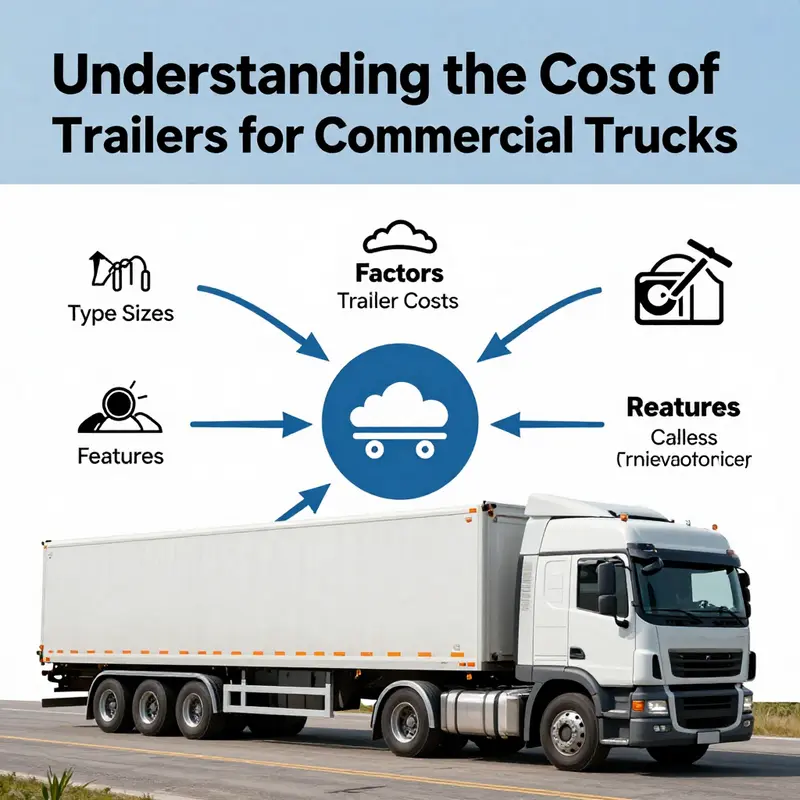
The cost of a trailer for a commercial truck sits at the intersection of engineering choices, operating needs, and the state of the broader market. When business owners or fleet managers begin to size up a trailer purchase, they often start with a gut instinct about the sticker price. Yet the sticker price is just the surface. Beneath it lies a structured set of decisions about what the trailer will do, where it will operate, and how often it will be on the road. The price spectrum is wide enough to cover everything from a basic used dry van to a customized, purpose-built unit designed for a precise cargo profile. The numbers cited by industry observers reflect that reality: new trailers typically begin around the mid-teens and can climb well past sixty thousand dollars, especially when specialized features or configurations are involved. A common, practical benchmark is a 48-foot dry van, which often starts near fifteen thousand dollars in the market, though a well-equipped or lightly used unit can alter that baseline dramatically. For buyers seeking a longer horizon of reliability and performance, the price can rise to thirty thousand or more when high-end build quality or advanced options are included. The range broadens even further for specialized trailers. Reefers, with insulation, refrigeration equipment, and precise climate control, push the ceiling higher. Flatbeds and other configurations tailored to specific cargoes carry their own premium because they must meet unique load-carrying requirements and attachment standards. The picture becomes even more complex when considering the used-trailer market, where price points respond to age, condition, mileage, and brand reputation. An older, well-maintained dry van can land in a safer, more predictable price band, but it may still require ongoing maintenance or component replacements that offset savings at purchase. In contrast, newer used models or trailers with improved features can command a higher price even within the used market. The practical takeaway is simple: there is no one fixed price for a trailer. The price is a function of the trailer’s role, the elements of construction, and the buyer’s willingness to invest in long-term value and reliability. To interpret price signals accurately, buyers should move beyond the sticker price and consider the total cost of ownership, which includes maintenance, fuel efficiency, and potential resale value. This approach aligns with how fleets routinely evaluate equipment purchases and upgrades. For buyers who want to anchor their understanding in current market realities, it helps to consult multiple sources—online marketplaces, local dealerships, and fleet-management professionals—to see how price bands evolve with supply and demand. The practical act of price comparison becomes a strategic exercise: not merely asking how much a trailer costs, but how much a trailer costs relative to what it delivers over time in payload capacity, durability, and total cost of operation. In this light, the question shifts from “What is this trailer worth today?” to “What will this trailer be worth over its service life, given the loads it will carry and the miles it will travel?” Those are the questions that drive cost-benefit decisions rather than relying on a single price point. As buyers map their options, it is useful to anchor the conversation in a few concrete dimensions—type, material, and features—that consistently influence price across brands and markets. The decision to opt for a dry van versus a reefer, for example, is not only about the cargo but also about performance characteristics, insulation quality, and the energy footprint of the trailer over its life. Refrigerated trailers require a cooling system, which adds not just to the upfront cost but also to ongoing energy consumption, repairs, and potential downtime. The trade-off becomes a question of whether the higher purchase price and the energy costs are justified by the cargo that demands temperature control. Similarly, choosing a flatbed with specialized configurations might be driven by the need to handle oversized or uniquely strapped loads. A flatbed’s frame, tie-down points, and optional accessories can push price upward, but they also unlock the ability to secure the right payload securely and efficiently. In these cases, the cost calculus extends beyond purchase price into how quickly the trailer can be loaded, unloaded, and transported with minimal downtime. The construction materials themselves are a central hinge on price. Steel trailers are durable and typically less expensive upfront, but their greater weight contributes to higher fuel consumption and potentially higher maintenance costs. Aluminum trailers carry a premium price, yet their lighter weight translates into better fuel efficiency and a longer service life in some operating environments. The fuel-efficiency dividend from aluminum can be meaningful for fleets that log heavy mileage, where even fractional gains in miles per gallon accrue substantial savings over the years. Material choices also influence corrosion resistance, payload limits, and inspection costs. Those factors collectively shape not only the initial investment but also the long-term financial performance of the trailer. Adding to the mix are the specialized features that many buyers now expect as standard or near-standard. Electronic braking systems, which provide precise, stable stopping performance, add to upfront costs but can reduce wear on tires and brakes, potentially lowering maintenance expenses. GPS tracking and telematics compatibility offer fleet visibility, route optimization, and asset security. Tire Pressure Monitoring Systems help maintain tire health and can translate into safer operations and lower tire-related downtime. These features, while valuable, represent incremental price increases that are justified by the operational gains they deliver over time. Buyers who place a premium on reliability and resale value may gravitate toward well-known brands or established manufacturers with demonstrated support networks. The premium associated with brand reputation often reflects perceived reliability, consistent quality, and stronger resale potential. In markets where financing is a meaningful channel, the cost conversation also includes financing terms, insurance, and depreciation. Buyers may find that appealing financing arrangements, longer loan terms, or favorable insurance rates can affect the effective price of ownership. In effects like this, a trailer’s price is connected to broader economic conditions, including interest rates, lender risk appetites, and insurance market dynamics. Market demand itself moves price in visible, sometimes sudden, ways. When freight volumes surge or capacity tightens, prices can lift quickly. Conversely, a flood of new inventory or a softening freight market can compress prices and create buyer-friendly conditions. The price rhythm is not perfectly predictable, but the general pattern is intuitive: high demand with constrained supply tends to push prices up, while abundant supply and weak demand pull prices down. Material costs contribute an additional layer of fluctuation. Steel and aluminum prices can swing in response to global supply chains, tariffs, and the cost of raw inputs. These shifts are not isolated from other components of the trailer’s price. A spike in steel prices, for instance, can ripple through to higher labor costs and longer lead times, especially for manufacturers that rely on integrated production lines. The web of regulatory requirements also folds into price. Compliance with Department of Transportation standards, emission controls when applicable, and various safety regulations all require engineering attention and quality assurance. For some buyers, meeting regulatory requirements is non-negotiable; for others, it is a factor that shapes lead times, design choices, and the final price. The regulatory dimension can also influence resale value, because units that meet or exceed standards are generally more attractive to buyers who want a smooth, forward-looking lifecycle. In sum, the price of a trailer for a commercial truck is a composite signal. It reflects the cargo profile, the environment in which the trailer will operate, and the strategic priorities of the buyer. A fleet that prioritizes durability and low maintenance over years of heavy use may accept a higher upfront investment in premium materials and features, recognizing the long-term cost savings tied to reliability. A fleet with narrower loads and shorter duty cycles might opt for a leaner configuration, balancing initial cost with the need to maximize payload per mile and minimize fixed costs. For readers who want to bring this into sharper focus, it helps to anchor the discussion in practical scenarios and price ranges. If a business needs a basic, reliable, entry-level dry van for standardized consumer goods, a price point in the mid-range of the new market can be a reasonable starting reference. If the operation emphasizes temperature-controlled shipments within a climate-sensitive supply chain, the cost is likely to be higher due to insulation quality, refrigeration equipment, and energy management systems. If the business carries oversized or specialized loads, the choice of a flatbed or a customized trailer will drive the price upward while delivering payload-specific benefits. The decision framework you adopt should be aligned with your work patterns, maintenance capacity, and the level of risk you are prepared to manage. A critical step is to translate the sticker price into a structured cost proposition over the trailer’s expected lifespan. That means planning for maintenance intervals, part replacement, potential repairs, and the possibility of upgrades to keep pace with evolving regulations or payload demands. It also means considering resale value and the speed with which you can recoup investment through usage and market demand when it comes time to upgrade. The broader takeaway is that there isn’t a single, universal number that defines trailer pricing. Instead, buyers should view the price as a package—an envelope containing initial cost, ongoing operating expenses, and the anticipated return on investment. The challenge for buyers is to balance the immediate cash layout with the longer-term efficiency and reliability that a well-matched trailer can deliver. To navigate this landscape, it is useful to tap into industry resources and communities where professionals discuss real-world experiences with different trailer types and configurations. For readers seeking a curated starting point, a visit to the broader industry blog hub can provide ongoing context and practical insights. See mcgrathtrucks.com/blog/ for discussions that touch on the economics of truck and trailer assets, as well as market shifts and purchasing strategies. For broader regulatory and standards context, credible industry bodies and trade associations offer guidelines and policy updates that help frame cost considerations within a legal and safety framework. While no external resource can replace a careful, data-driven evaluation tailored to your operation, these references help illuminate how the pricing dynamics described above play out across markets and time. Ultimately, the price you pay for a trailer should reflect both the cargo you move and the miles you plan to cover. The right choice aligns upfront investment with operating efficiency, reliability, and the ability to adapt to changing freight demands. The result is not merely a price tag but a total-cost-of-ownership equation that supports sustainable, predictable transportation outcomes for your business. External factors—market demand, material costs, and regulatory requirements—will continue to shape prices. But the core decision remains anchored in how well the trailer fits the duty cycle it will perform and how well it supports your drivers, maintenance teams, and bottom line. For readers who want to deepen their understanding of the pricing landscape and to consider practical pathways for negotiating and purchasing, the industry context remains a valuable compass point. External resource: https://www.trucking.org
Reading the Market Pulse: Trailer Pricing for Commercial Trucks
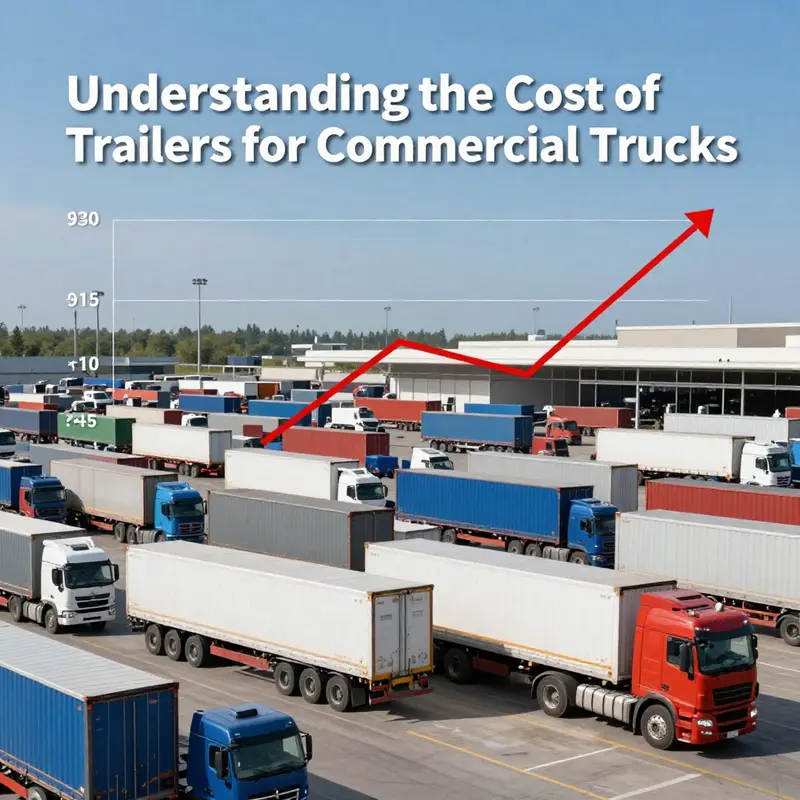
Prices for commercial truck trailers change with demand, materials, and technology. This chapter explains how buyers evaluate value in a market shaped by logistics needs, regulatory pressures, and the push for efficiency. It covers how trailer type and size, raw material costs, and optional technologies like telematics and weight sensing influence sticker prices, as well as regional differences, financing terms, and lifecycle costs. By examining these factors, readers can understand why a basic dry van may carry a far different price than a specialized reefer or flatbed, and how future shifts in materials, wear-and-tear, and regulation could affect both upfront cost and total cost of ownership over a trailer’s life.
Final thoughts
In conclusion, the cost of trailers for commercial trucks is influenced by a variety of factors, ranging from whether they are new or used to market demand and specifications. Understanding these elements can aid trucking company owners, fleet managers, procurement teams, and logistic synergies in making informed decisions that optimize expenditure. Staying updated with current market trends can also lead to strategic planning, ensuring a fleet that meets operational demands without overspending.