
Navigating the complexities of truck registration in New York State can be daunting, especially when determining whether a truck requires commercial plates. The state’s regulations are nuanced, encompassing weight classifications, intended use, and specific registration requirements. For trucking company owners and fleet managers, as well as procurement teams in construction and logistics sectors, understanding these distinctions is vital to compliance. The following chapters explore the weight-based classification for commercial plates, the use-based requirements for commercial trucks, and the registration processes involved. By delving into these areas, readers will gain a comprehensive understanding of the key factors that inform their plate registration decisions.
Weight as the Gatekeeper: Navigating NYS Commercial Plate Rules for Trucks
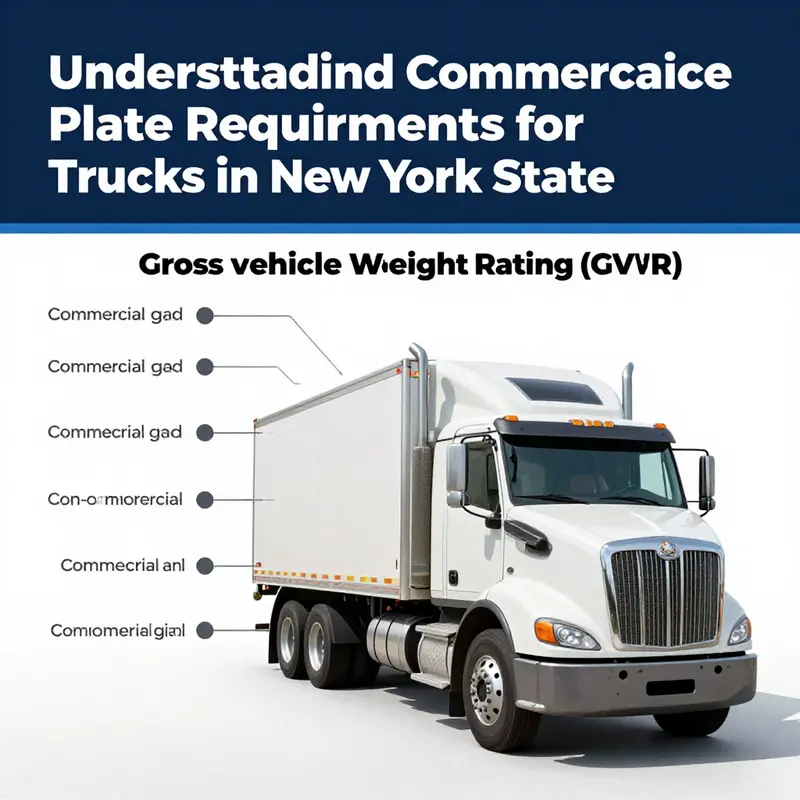
In New York State, the question of whether a truck needs commercial plates is rarely answered by a single threshold alone. Weight, the way the vehicle is used, and how the vehicle is registered all weave together to determine the proper classification. The starting point, and often the most decisive, is the vehicle’s gross vehicle weight rating, or GVWR. This rating, stamped by the manufacturer, represents the maximum operating weight the vehicle is designed to handle, including the vehicle itself, fuel, payload, and passengers. For anyone trying to decide if they should register a truck as a commercial vehicle, GVWR acts as a gatekeeper, not a mere suggestion. If the GVWR reaches or exceeds a little over ten thousand pounds, specifically 10,001 pounds or more, the state’s framework shifts toward a commercial classification. In that circumstance, the vehicle is typically required to display commercial plates, and it becomes subject to the accompanying regulations, fees, and uses that accompany commercial designation. The logic is practical: heavier vehicles cause more wear and tear, interact with traffic differently, and have a larger potential impact on road infrastructure. The system is designed to reflect those realities. Yet the threshold is not the entire story, because use matters too. A truck may have a GVWR just under the 10,001-pound line and still fall under a commercial designation if it is used for business purposes. A small pickup that regularly hauls tools to a job site, or a step van used by a courier service, can be considered a commercial vehicle even though its GVWR sits below the threshold. The key is not only the weight on the scale but the intended activity behind the wheel. In practical terms, this means the decision rests on a combination of weight and use, with the DMV looking to classify the vehicle in a way that aligns with the way it operates on public roads. The nuance matters because the classification cascades into taxes, permits, and the kind of plates that will be issued. If a vehicle is deemed commercial, it will typically require commercial plates and registration that reflect that status. The process is undertaken through the New York State Department of Motor Vehicles (DMV), and it is not purely a matter of guessing. It involves verifying weight specifications, assessing the vehicle’s role in business operations, and sometimes meeting additional administrative requirements. For a practical sense of how this plays out, consider the situation of a contractor who owns a pickup truck used to collect materials from suppliers and to transport small equipment to job sites. If the GVWR is below 10,001 pounds but the truck is used regularly in the course of business to move goods or equipment, the vehicle can fall under a commercial classification. In that case, the vehicle would be expected to carry commercial plates, and the operator would be subject to the related regulatory framework. Conversely, a personal passenger car or a small van used purely for family travel or non-commercial purposes would likely remain in the passenger class, provided its GVWR remains under the heavy threshold and its use stays non-commercial. The boundary lines can blur, which is why the DMV emphasizes verification and documentation. The DMV’s website serves as the central resource for the precise rules, the downloadable forms, and the online tools that help determine correct classification. The exact classification affects more than just the plate color or numbering. It impacts the kind of license plate, the eligible fees, and, in some cases, the tax obligations tied to vehicle use. For heavy trucks, the implications go even further. A vehicle with a GVWR of 18,000 pounds or more is classified as a heavy commercial vehicle for certain purposes. In addition to commercial plates, such trucks may be required to obtain a Highway Use Tax Permit from the New York State Department of Transportation (NYSDOT). This permit is a prerequisite for specific hauling activities and special permits. In other words, the weight category drives a set of regulatory obligations that may include tax obligations, permit requirements, and special routing or operating conditions. The logic behind these rules is not simply punitive; it is designed to ensure safety, infrastructure sustainability, and predictable operations for both fleets and the public. Heavier vehicles deliver greater load and impact on roads, and the policy framework reflects that reality by adjusting classifications, fees, and permits accordingly. The weight-based structure also interacts with how vehicles are registered and what documentation is needed to complete that registration. When a vehicle crosses from a passenger-class registration into a commercial-class registration, the DMV will typically require proof of ownership, valid insurance, and, for operators who drive across state lines, a USDOT number. The USDOT number, when required, is part of federal safety and compliance oversight; it signals that the operator complies with interstate commerce rules and the broader regulatory environment that governs commercial trucking beyond state borders. In addition to the standard commercial plates, NYS offers special plates tailored to certain industries or uses. Vehicles involved in construction, waste hauling, or specialized freight services may be eligible for plates that reflect the specific nature of their work. In these cases, the plates do more than designate a vehicle’s business use; they help the state track and regulate particular classes of operations that carry unique responsibilities, such as environmental protections, safety standards, and transport limitations. Determining the correct classification, therefore, begins with a clear understanding of GVWR, then a careful assessment of how the vehicle is used in business activities. If the GVWR is high, the default assumption tends to be commercial, but the use-based nuance can still complicate the picture. If the vehicle is used to perform hire work, for deliveries, or to support business operations in a way that involves transporting goods or equipment for commercial purposes, the commercial classification will likely apply, even if the GVWR sits just below the threshold. The DMV’s guidance tools are designed to help navigate these gray areas. They provide checklists and forms that help owners determine the correct category and avoid misclassification, which can carry penalties and fines. Relying on a precise classification is more than administrative pedantry; it directly affects what you pay, what permits you may need, and how you can legally use the vehicle. For many operators, this is also about fleet management decisions. The classification can influence whether a vehicle is operated under standard insurance terms or requires more specialized coverage. It can affect how depreciation is calculated for tax purposes, and it can shape a company’s compliance program, including record-keeping for maintenance, inspections, and operations that involve cross-border transport. In this context, it can be helpful to view the topic through the lens of ongoing fleet management. When a truck is correctly categorized, it serves as a reliable data point that informs budgeting, scheduling, and risk assessment. Conversely, misclassification can lead to penalties, retroactive fees, or even coverage gaps that complicate legal compliance. For readers who want to dig deeper into classification criteria and the toolsets that NYS provides, the DMV’s vehicle classification page is the definitive source for up-to-date rules, forms, and contact information. It is important to verify the classification before registering a vehicle, as the specifics can evolve and vary based on vehicle type, weight, and intended use. A practical step is to connect with a local DMV office or consult the DMV online resources to determine the proper class before committing to a registration. If you’re looking for broader practical context and reader-friendly explanations that align with how operators are thinking about these decisions, you can visit our blog for related discussions on fleet choices, regulatory considerations, and practical steps for truck ownership and operation. While that resource is not a substitute for official guidance, it can provide helpful context and some real‑world scenarios to illustrate how weight and use intersect in everyday decisions. Finally, the decision on whether to pursue commercial plates is not made in isolation. It interacts with the operational realities of the business, including whether the vehicle will be used to move goods, carry passengers in a commercial service, or perform tasks that require a robust liability and safety framework. For operators who cross state lines, the interplay between state and federal requirements becomes even more critical. A USDOT number, when applicable, signals compliance with federal reporting, safety, and insurance standards, and it can affect how the vehicle is insured, how it is inspected, and how paperwork is managed during interstate haulage. In short, the weight threshold matters, but it is the combination of weight and use that ultimately determines the right registration category in New York. This decision affects costs, regulatory obligations, and the administrative steps you must complete to keep your operation compliant and efficient. To navigate these complexities, begin with a careful measurement of GVWR, assess how the truck will be used in day-to-day business, and consult official resources to confirm the correct classification before you register. The DMV’s guidance and tools, complemented by industry-facing explanations, provide a practical roadmap for making the right choice the first time. For truck owners and fleet operators who want a broader exploration of related regulatory and market considerations, the content in our blog can offer additional perspectives on how these classifications influence fleet strategy, maintenance planning, and long-term costs. External reference: https://dmv.ny.gov/vehicle-classification
Weight, Use, and the Plate Question: Navigating Use-Based Commercial Plate Requirements for Trucks in New York State
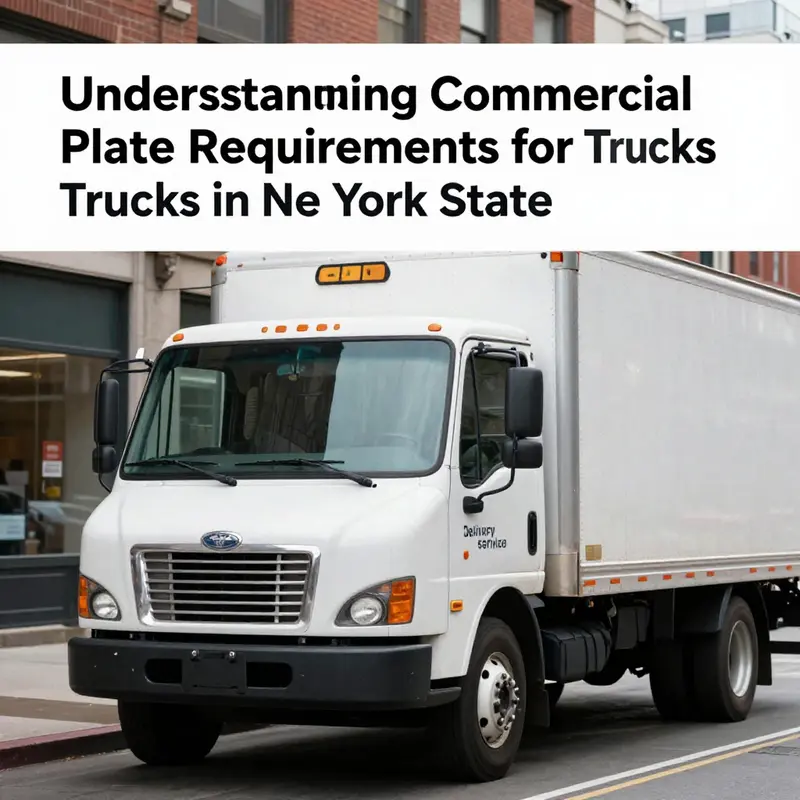
When you own a truck in New York, the question of whether you need commercial plates often boils down to more than the vehicle’s sticker price or how you intend to use it. In New York State, the road to a plate that correctly reflects your truck’s status weaves together two broad threads: weight-based classification and use-based classification. The intersection of these threads determines whether you register a vehicle as commercial, what kind of plates you receive, and what taxes or fees may apply. Understanding this is not a one-off decision. It’s a careful alignment of the truck’s GVWR, the actual daily purposes it serves, and the regulatory expectations that come with operating a vehicle in commerce within the state and beyond its borders. This is the core of use-based commercial plate requirements for trucks in New York, a topic that sits at the heart of legal operation, financial planning, and practical fleet management for any business with a transportation footprint.
From the outset, the weight metric provides a practical dividing line. If a truck bears a gross vehicle weight rating (GVWR) of 10,001 pounds or more, the vehicle is typically classified as commercial. That threshold is not arbitrary; it’s tied to how much the state expects a vehicle of that size to contribute to commerce, to road wear, and to the regulatory duties that come with moving goods on public highways. A truck at or above this GVWR generally requires commercial plates, and with those plates comes a bundle of responsibilities: higher insurance considerations, potentially different registration fees, and the expectation that the vehicle’s use aligns with commercial activity. The moment a GVWR crosses the 10,001-pound line, the door to commercial registration often swings open, and with that door comes a set of duties that aim to ensure the vehicle is properly identified as a business asset rather than a private conveyance.
But weight alone does not tell the whole story. New York’s approach recognizes that a truck’s use can warrant commercial treatment even when the GVWR sits below 10,001 pounds. In practice, this means a smaller truck or van can still be treated as a commercial vehicle if it is used primarily for business purposes. For example, a delivery vehicle owned by a company and used to transport goods for hire, or a business fleet vehicle dedicated to service calls, can trigger the need for commercial plates despite a GVWR under the threshold. The logic is straightforward on the surface: if the vehicle is used in the course of business—whether to move products, deliver services, or support commercial operations—it’s serving a commerce-driven function that the state seeks to regulate more closely. Practically speaking, this distinction matters because it shapes registration type, tax obligations, and compliance checks during roadside interactions.
The use-based approach invites further nuance. The reality of modern fleets often means a vehicle divides its life between personal and business use, or its business use is periodic rather than constant. In such cases, the DMV and related agencies look at the vehicle’s predominant use, the pattern of utilization, and the tasks performed. If the business use clearly dominates—regular deliveries, scheduled service routes, or fleet-wide transportation services—the vehicle may be treated as commercial for registration purposes. Conversely, if the vehicle is used primarily for personal transportation, even if it occasionally assists with business tasks, it might be more appropriate to register it as non-commercial. The distinction is not merely semantic, because commercial registration often carries regulatory considerations that are binding when the vehicle operates on public roadways, including the need to maintain commercial insurance levels and to meet potential reporting requirements when operations cross state lines.
This is where the practical dimension of use-based classification becomes most evident. For a small business that relies on a light-duty truck for daily deliveries, the decision hinges on how integral the vehicle is to the business model. A truck used consistently to haul goods between the shop and customers, or to support on-site operations at job sites, tends toward commercial classification. A vehicle used occasionally for a side project or weekend jobs may pose a more ambiguous case, requiring careful documentation and, at times, a conversation with the DMV about the vehicle’s primary function. The DMV’s assessments are designed to prevent misclassification, which can trigger audits, penalties, or retroactive plate changes. In short, the use-based route demands an honest appraisal of how the truck serves the enterprise, a clear record of operations, and a readiness to adjust registration as business needs evolve.
Registration in New York for commercial vehicles is rooted in the DMV’s framework, but it’s not a solitary process. It involves a set of concrete steps and a compilation of essential documents that verify ownership, insurance, and the vehicle’s role in commerce. When you register a vehicle as commercial, you’re signaling to the state—and to other road users—that this machine is a tool of the business, subject to the tax and regulatory regime that accompanies commercial transportation. This regime includes the obligation to maintain appropriate insurance coverage, to furnish proof of ownership, and to provide any additional documentation that may be required for interstate operations. In some situations, you may also need a USDOT number if your fleet crosses state lines, reflecting federal requirements for commercial motor carriers. The intersections between state and federal rules add a layer of complexity, but they are navigable with careful planning, accurate record-keeping, and proactive compliance.
Beyond the standard commercial plates, New York offers a spectrum of specialized plates tailored to specific operations. For trucks involved in construction, waste hauling, or other freight services with distinctive regulatory footprints, the state provides plates designed to reflect the vehicle’s particular function. These specialty plates acknowledge that different business models carry different regulatory responsibilities. While they share the underlying requirement of correct registration and compliance, the plate designations help public authorities identify the vehicle’s role at a glance. The practical implication is that certain operations may incur specialized registration requirements or taxes, reflecting the unique demands of those industries. If your fleet includes vehicles dedicated to a specialized service, it’s worth exploring these options with the DMV to determine whether a specialty plate aligns with your operation and whether any accompanying regulatory or tax considerations apply.
Alongside the weight and use criteria, New York also recognizes vehicles that operate in a regulated taxi or commercial transport environment. For registrants seeking plates for vehicles used to provide transportation services within New York City or other regulated markets, there are designations that tie directly into the city’s transportation authority framework. In these contexts, a specific vehicle use tax may apply, administered by the city’s taxi and limousine commission (TLC). The tax structure is designed to fund infrastructure, enforcement, and regulatory oversight for urban transportation activity. This elaborates the tax landscape for commercial use, reminding operators that not all commercial plates are identical in their fiscal obligations. The presence of a city-level tax underscores the need to understand the exact nature of your operation—whether it is long-haul freight, regional delivery, or passenger-hauling services—before selecting the plate type that will govern your vehicle’s life on the road.
As you navigate these choices, there is an important procedural path to follow. Commercial plates are issued through the New York State Department of Motor Vehicles (DMV). The process typically requires registration as a commercial vehicle and documentation that proves ownership, insurance, and, for some operations, a federal or interstate component. If you are operating across state lines or are building a fleet that serves a broader geography, you may need to secure a USDOT number as part of your regulatory compliance. The application and documentation burdens reflect the state’s emphasis on accountability in commercial vehicle operation, ensuring that vehicles moving goods and people on public highways are properly identified, insured, and monitored for compliance with safety and transportation standards. The DMV’s role is not limited to paperwork; it’s about establishing an auditable trail that demonstrates the vehicle’s commercial status, the owner’s business identity, and the vehicle’s ongoing compliance with the relevant statutes and regulations.
In parallel with the registration track, consideration should be given to how the vehicle is used in daily operations. If your work involves transporting goods for hire, delivering products on behalf of a business, or otherwise engaging in commercial activity that relies on the truck, commercial plates are a practical and often necessary fit. If, however, the vehicle serves personal needs or occasional business tasks without forming a sustained, revenue-generating pattern, regular passenger plates might still be appropriate. This decision is not merely about compliance; it also affects insurance structures, potential tax liabilities, and even the ease with which a vehicle can be insured for commercial purposes. A misalignment—registering a vehicle as non-commercial when it functions primarily as a business tool—can lead to questions in audits, complicated insurance scenarios, and penalties if authorities determine that the vehicle’s use resembles commercial activity more closely than the registration suggests.
For businesses that want to maintain a clear, compliant path, the DMV and the broader regulatory ecosystem encourage documentation and transparency. A practical approach is to maintain a contemporaneous log of how the vehicle is used—miles driven for business, frequency of deliveries, and the nature of the goods or services transported. This log can serve as a useful reference if your use pattern changes, such as when a project expands, routes shift, or the company adds new service offerings. If you anticipate a change in how the vehicle is used, consider preemptively updating the registration classification to reflect the new reality. This reduces the risk of disputes with inspectors or the DMV and supports seamless operations across different jurisdictions that may require different plate categories or tax treatments.
From a strategic perspective, the choice of plate type can intersect with broader fleet management goals. If a business is planning to scale, invest in a fleet of trucks, or expand into new service lines, the move toward commercial plate status can align with the broader governance framework the company wants to adopt. In this sense, the plate decision becomes part of a larger administrative and financial strategy rather than a standalone regulatory checkbox. To ensure you make an informed decision, stay updated with the DMV’s guidance and consider consulting with a transportation compliance advisor who can translate the rules into practical steps tailored to your fleet’s size, routes, and revenue model. The DMV website provides authoritative guidance and is the best source for the official requirements, forms, and any changes to the statutes that may affect your registration choices. When in doubt, review the process through official channels and initiate conversations with your local DMV office to confirm the classification that best fits your operation.
For readers seeking broader context that complements this regulatory perspective, consider exploring industry insights that discuss how market conditions influence trucking operations and the regulatory environments they navigate. You can read about practical considerations for fleets navigating economic uncertainties in the trucking sector here: Navigating Economic Uncertainties: Key Insights from the Canadian and U.S. Trucking Markets. This resource offers a broader look at how operators adapt to changing conditions, and while it isn’t a substitute for DMV guidance, it provides a useful backdrop for thinking about how use, weight, and registration decisions fit into the broader operations of a trucking business.
In synthesis, the question Do you need commercial plates for a truck in New York State? is answered by a careful alignment of weight and use. A GVWR of 10,001 pounds or more almost always signals commercial registration. A GVWR under that threshold does not automatically exclude commercial plates if the vehicle is used primarily for business purposes. The decision is not static; it’s a function of how the vehicle is used, the pattern of operations, and the regulatory expectations that come with commercial activity. The registration process, the possibility of transporter plates, and the special considerations for taxi or city-regulated operations all play into the final choice. And, crucially, the path to compliance is as important as the destination: maintain proper documentation, ensure insurance coverage aligns with the vehicle’s use, and stay connected with the DMV for updates that could affect classification and fees. For businesses that operate across jurisdictions, the additional layer of interstate considerations, including potential USDOT registration, further underscores the need to plan ahead and keep records robust and up-to-date.
As you chart the path for your fleet, remember that the DMV’s registration framework is designed to facilitate safe, accountable commercial transportation on public roads. It supports not only the vehicle owner but also other road users who rely on predictable, well-regulated vehicles moving goods and people through the state’s cities and countryside. The process can seem intricate at times, but it becomes manageable when you approach it as a clear set of decisions about how your trucks serve the business, how they will be taxed, and how you will demonstrate compliance in daily operations. If you are ready to take the next step, connect with the DMV’s resources, prepare your ownership and insurance documentation, and map out whether your operation falls into weight-based, use-based, or a combination of categories. Your planning today helps ensure that your trucks are on the road, legally and efficiently, tomorrow.
External resource for further guidance on official transporter registrations: https://dmv.ny.gov/transporters
Registration, Paperwork, and Plates: Navigating New York’s Commercial Vehicle Requirements for Trucks
In New York State, the question do you need commercial plates for a truck hinges on a careful reading of weight, use, and how the vehicle is registered. The path to compliant plates is a short journey when you understand the criteria, but it becomes a longer detour if you skip steps or misread the rules. The practical reality is that many truck operators confront a simple threshold and assume that weight alone determines the need for commercial plates. Yet the state treats commercial plates as a function of both how heavy the vehicle is and what it is used to do. The result is a framework that rewards preparedness with clarity and can save a business from costly mistakes, penalties, and delays in operating legally. In this chapter, we explore the deeper logic behind registration and documentation, moving from the general rule to the nuances that often determine the final decision. The aim is to equip fleet owners, owner-operators, and small business owners with a grounded, practical understanding that aligns with the realities of daily trucking in New York.
At the outset, weight-based classification gives a straightforward starting point. A truck with a gross vehicle weight rating, or GVWR, of 10,001 pounds or more is typically treated as a commercial vehicle. That threshold is not arbitrary; it maps to the vehicle’s potential for commercial use, the scale of its operations, and the associated responsibilities on the road. When GVWR crosses that line, the state expects commercial plates, reflecting the higher level of regulatory oversight that accompanies vehicles designed to move goods for hire, or to serve a business model that treats transportation as a core function rather than a hobby or occasional job. The logic is simple in its surface: bigger capability, bigger accountability. But what happens when the vehicle weighs less than 10,001 pounds? The default impulse might be to assume regular, passenger-style plates will suffice. In practice, weight alone does not settle the question. If the truck is used for business purposes—delivering goods, transporting tools and materials for a service operation, or supporting a company’s day-to-day commerce—the commercial plates question reopens. The use case can transform a seemingly ordinary pickup or small flatbed into a commercial vehicle in the eyes of the DMV. This distinction matters because it keeps the door open for commercial plate requirements even for lighter trucks if the business function justifies it.
To appreciate the full picture, it helps to hold in view the registration framework within New York State. The New York State Department of Motor Vehicles, or DMV, is the central authority for registering commercial vehicles. The process is not simply a matter of stamping a label on the plate; it involves formal registration as a commercial vehicle and, in many cases, documentation that confirms the vehicle’s role in a business operation. The DMV’s framework is designed to ensure that commercial vehicles are properly registered, insured, and taxed for their commercial function. Among the key elements is the Vehicle Use Tax, a component in many commercial vehicle registrations that helps fund road maintenance and related infrastructure. Proof of this tax payment, or a clearance indicating that it has been properly accounted for, is part of the paperwork necessary to obtain or renew commercial plates. The tax status is not a punitive measure; rather, it is a pragmatic acknowledgment that commercial use consumes road resources at a different scale than private, non-commercial travel.
Within this framework, there are situations that extend beyond the generic weight-and-use rule. Some vehicles carry special plates or require oversight by specialized regulatory bodies. In New York City, for example, certain vehicles fall under the purview of the Taxi and Limousine Commission, or TLC. Specifically for vehicles flagged as taxis or luxury limousines, the registration is overseen directly by the TLC, and the vehicle uses may trigger additional obligations, such as vehicle use tax payments tied to TLC operations. Those with TLC-regulated plates will find the registration and documentation process integrated with city-specific requirements, which means additional steps, additional proofs, and a unique tax and fee structure. The point for the broader trucking audience is not to conflate city-specific regulatory regimes with state-level requirements, but to recognize that certain commercial operations still require alignment with a regulatory body beyond the DMV to ensure compliance across jurisdictions and service types.
The documentation bundle for commercial plates is both broad and precise. Vehicle ownership proof is fundamental; the DMV expects to see a title or other acceptable proof of ownership and a valid New York registration for the vehicle in question. Insurance documentation is equally critical, with evidence of adequate liability coverage consistent with the vehicle’s GVWR and its intended use. In many cases, the insurance document must reflect the business purpose of the vehicle and the identity of the insured party, whether it is a sole proprietor or a business entity. The business context matters because it anchors the vehicle in a commercial framework that aligns with regulatory expectations for operation on public roads. For operators who transport goods across state lines, there is often a separate, parallel obligation to obtain and display a USDOT number. This federal identifier is not a DMV credential, but it becomes a practical necessity when the vehicle functions in interstate commerce. It signals to federal regulators that the operator engages in cross-border transport and is subject to federal safety and compliance regimes. The alignment between state registration and federal identifiers is a central theme for those who plan to scale operations beyond a single state.
Another dimension of the documentation puzzle concerns renewal timelines and the mechanics of maintaining valid credentials. The DMV expects that registrations stay current, and there are operational rules that can frustrate a straight path to new plates if the existing registration is close to expiration. A commonly encountered constraint is that a registration cannot be renewed or a new plate issued if the current registration is set to expire within a certain window, sometimes referenced as a critical period before the expiration date. In practice, this means planning ahead is essential. If a registration is nearing its expiration, operators should not delay until the last moment. The DMV’s processes can involve fingerprints of paperwork, inspections, and in some cases, updated proof of insurance or ownership documents. A thoughtful timeline reduces the risk of delays that would leave a vehicle immobilized or operate in violation of licensing requirements.
Beyond the standard documents, there are practical considerations that can influence the exact path to a commercial plate. One such consideration is the condition of the plate itself. If a plate has been damaged, faded, or cracked as a result of daily use, it may require replacement. In such cases, the DMV will issue a new registration certificate and a replacement license plate, often called an Excelsior plate, a term that reflects New York’s long-standing plate tradition. The process of replacement is typically straightforward but again depends on having valid ownership and insurance records and a registration that is still active. The takeaway is simple: damaged plates are not a reason to delay replacement; rather, they are a prompt to update the vehicle’s official credentials so that the vehicle remains legally identifiable and roadworthy in the eyes of law enforcement and the DMV alike.
The chain of steps to obtain or update commercial plates is most effective when built on a disciplined sequence. It starts with a clear determination of whether the GVWR meets the weight threshold for commercial classification. It continues with a careful assessment of how the vehicle is used on a daily basis. If the use is commercial, even with a lighter GVWR, the operator proceeds to file a commercial vehicle registration with the DMV and to prepare the supporting documents described above. The next stage is to assemble proof of ownership, proof of insurance, and the business context that clarifies the vehicle’s primary function. For cross-state operations, the applicant adds the USDOT number, aligning state registration with federal compliance. The operator then completes the DMV forms, submits the documents through the authorized channels, and awaits the DMV’s decision, recognizing that processing times can vary by county and by the complexity of the case. Throughout this process, the official DMV website serves as the single most reliable source of up-to-date guidance on forms, codes, fees, and online services. It is worth noting that the DMV’s official portal is the authoritative source for the most current registration category codes, fee schedules, and step-by-step service guides, a reminder that policy details can shift and require timely verification.
Efficiency in this landscape often hinges on anticipating the most common points of friction. For instance, a small business owner who operates a delivery fleet might assume that only vehicles above the GVWR threshold require commercial plates. The reality is that if a delivery van or similar vehicle serves a routine business function—carrying goods for hire, transporting equipment to jobsites, or supporting a service operation with a transportation element—the commercial plate classification should be evaluated carefully. This evaluation should be anchored in both the vehicle’s labeling and the actual business practice, because regulators look at both the stated use and the practical application of the vehicle in the field. The moment a vehicle is being used for business purposes, it becomes reasonable to reexamine its registration category, its insurance posture, and the possible need for a USDOT identifier should interstate traveling be part of its routine. In short, use-based considerations can override, or at least recalibrate, the weight-based threshold in determining whether commercial plates are necessary.
The broader regulatory backdrop emphasizes that the process is designed not merely to collect fees but to promote safety, accountability, and proper tax treatment for commercial operations. The documentation and registration steps reflect this broader objective. A business owner who approaches the process with a notebook of facts—GVWR, typical routes, miles per year, whether the vehicle operates within city limits or across state lines, and the expected insurance coverage—will find the path to compliance smoother. In practice, this means keeping precise records, aligning your business’s legal structure with the vehicle’s use, and maintaining a proactive posture toward renewals and updates. If the vehicle’s use evolves—say, the business expands into long-haul transport or adds cross-border deliveries—the operator should revisit the registration category and related requirements to ensure continued compliance. The DMV is not a static regulator; it is a living system that reflects how vehicles are used in the economy. Being attuned to that dynamism is part of responsible fleet management.
For those who want a practical touchstone as they navigate this terrain, a good starting point is to consult a reputable source that translates regulatory language into actionable steps. In this regard, the truck operating community often benefits from industry-focused perspectives that synthesize weight classifications, use cases, and the mechanics of the registration process. As discussed in industry commentary hosted on the McGrath Trucks blog, a clear emphasis on documentation and timing can help avoid the most common bottlenecks when securing commercial plates. This resource offers a concise reminder that the process is manageable when approached with a plan: verify GVWR, document business use, prepare ownership and insurance proofs, and then coordinate with the DMV to align the vehicle with the correct registration category. The exact steps can vary by county and by the vehicle’s profile, so it is wise to consult the DMV site for the latest forms, codes, and fee structures, as well as any program-specific nuances that might apply to specialized operations such as construction, waste hauling, or other regulated freight services. The practical upshot is that the route to compliant plates is navigable, but only when grounded in up-to-date information and a disciplined preparation strategy.
In the end, legality and efficiency hinge on how clearly you define the vehicle’s role in your business and how faithfully you document that role with the DMV. It is not enough to know that a GVWR places a truck on a threshold; you must also demonstrate how the vehicle is used on a day-to-day basis. The DMV’s requirements, the TLC’s city-specific oversight in certain cases, and the federal dimensions of interstate commerce all converge on a single outcome: accurate classification, proper documentation, and timely registration. The cost of neglect is real, ranging from delays in obtaining plates to penalties for improper use classifications. The payoff for diligence is not simply compliance; it is the confidence that a well-documented vehicle is operating on solid legal ground, with the necessary protections and credits that come with proper registration. In the long run, this not only reduces risk but can streamline operations, allowing fleets to focus on service quality, reliability, and growth rather than bureaucratic detours. For anyone contemplating the path to commercial plates in New York State, the core message remains stable: start with the facts—the GVWR and the actual business use—then align them with the DMV’s current rules, gather the required documents, and proceed with the process in a timely, organized fashion. And when questions arise, rely on official guidance from the NYS DMV as your north star for accuracy and currency, rather than informal interpretations that may lag behind policy updates. For ongoing insights into industry trends that can inform your planning, consider following the broader trucking community discussions and expert analyses available on the McGrath Trucks blog, which distills practical considerations into actionable steps you can apply to your own registration journey. McGrath Trucks blog
External resource: For the most authoritative guidance and the latest forms, fees, and procedural details, consult the New York State DMV website at https://www.dmv.ny.gov
Final thoughts
Understanding the regulations regarding commercial plate requirements is crucial for trucking company owners, fleet managers, and procurement teams in sectors like construction and logistics. By carefully considering both weight-based and use-based classifications, as well as adhering to the registration requirements, businesses can ensure compliance and avoid penalties. Each chapter has highlighted the critical distinctions that should guide your registration process, enabling you to operate your fleet smoothly and legally in New York State.