The pickup truck advertising landscape is more than mere promotion; it is a sophisticated interplay of technology, economic strategies, and environmental consciousness. As industries such as trucking, construction, and logistics become increasingly competitive, procurement teams and fleet managers look for vehicles that not only meet operational needs but also align with their corporate values. This article delves into how pickup truck commercials are tailored for this discerning audience. Each chapter will dissect the role of advertising, highlight technological advancements, explore economic implications, analyze social trends, and underscore the importance of environmental messaging in driving consumer choices—ultimately revealing how these elements converge to influence key decision-makers in the commercial vehicle sector.
How Pickup Truck Commercials Build Identity, Desire, and Market Advantage
Advertising for pickup trucks shapes more than sales figures; it builds a shared identity. Commercials do not simply list towing numbers or bed lengths. They construct a world in which a truck is a tool, a status symbol, and a companion. The camera lingers on a sunrise over a worksite, a family loading gear for a weekend trip, or a driver threading a truck through rough terrain. These images and sounds work together to signal reliability, capability, and character, turning metal and engineering into a promise about how a buyer will live and be seen.
Companies selling pickups use storytelling to merge utility with lifestyle. Ads place the truck at the center of everyday competence—someone depends on it to finish their job, to haul what matters, or to protect loved ones. That narrative invites viewers to imagine themselves as dependable, capable, and in control. At the same time, the stories often widen the truck’s appeal by nodding to family life, leisure, and social status. The result is a vehicle that answers practical needs and conveys identity. When an advertisement shows a truck towing a trailer across a long highway while a playlist plays and sun hits chrome, it sells freedom, not just horsepower.
Targeting is precise and layered. Marketers craft messages that reach distinct segments simultaneously. There is the pragmatic owner who prioritizes payload and durability, the urban professional seeking a bold aesthetic and comfort features, and the environmentally conscious early adopter curious about electrification. Advertising channels match these profiles. Television spots and sports sponsorships aim for broad, passionate audiences who value tradition and performance. Social media campaigns and influencer partnerships engage younger, tech-focused buyers with quick, visually arresting content. On-the-ground placements—such as advertising near parking lots and commercial districts—capture attention at moments when people are making purchase decisions or evaluating lifestyle choices. This blend allows brands to reinforce reliability while signaling innovation.
Emotional appeal is central. A well-made commercial uses music, pacing, and visual cues to create desire. Cinematography that emphasizes wide-open landscapes suggests liberation. Close-ups of hands on a steering wheel indicate craftsmanship and control. Sound design transforms an engine rumble into a heartbeat. These techniques rely on a basic psychological move: they associate the truck with aspirational feelings. Surveys show that perceptions about attractiveness and status often hinge on the vehicle someone drives. Advertisers exploit that by making the truck an extension of personality. A pickup becomes shorthand for strength, competence, or adventure, depending on the chosen tone.
Advertising also functions as education. In markets with a few dominant firms offering similar core capabilities, informing consumers about meaningful differences matters. Commercials explain new technology, safety systems, and ownership advantages in digestible ways. For trucks that integrate advanced driver assistance, battery technology, or smart charging, advertising translates technical claims into everyday benefits: less noise, faster acceleration, lower operating costs, and peace of mind. When ads compare powertrains or show the convenience of mobile charging features, they demystify change. This educational role helps accelerate acceptance of innovations that might otherwise seem risky.
Electrification has become a defining theme. As battery-powered pickups enter the market, commercials have shifted tone. They celebrate instant torque and quiet operation while reframing concerns about range through demonstrations of intelligent charging and practical use cases. Rather than purely selling environmental virtue, these adverts emphasize improved performance and lower total cost of ownership alongside emissions reductions. Such messaging targets not only eco-minded buyers but also technology enthusiasts who value novel engineering and connected features. By showing electric pickups towing trailers or hauling loads, advertisers aim to dissolve doubts and show that electrified trucks can serve traditional roles without compromise.
Competition sharpens creativity. In an oligopolistic marketplace where several firms vie for similar buyers, advertising becomes the battleground for preference. Brands highlight unique combinations of capability, comfort, and technology to stand out. Some ads lean into heritage and toughness; others emphasize innovation and digital integration. A vehicle with a futuristic design can dominate headlines and force rivals to respond, even before deliveries begin. This media buzz—amplified by social platforms and earned coverage—extends a campaign’s reach far beyond its production budget. In that sense, advertising not only sells products; it shapes the entire competitive landscape.
Placement and medium matter as much as message. Large televised spots still deliver broad impressions, especially when tied to sporting events. Social platforms offer targeted, repeatable exposure with interactive elements. Sponsorships and event activations embed the truck in cultural moments and local communities. Outdoor and location-based ads capture attention where potential buyers spend time, such as retail centers and trade shows. A successful campaign orchestrates these channels so that each touchpoint reinforces a central narrative: the truck as dependable, desirable, and relevant to the customer’s life.
Measurement and adaptation close the loop. Modern campaigns rely on data to refine creative direction and media spend. Engagement metrics, test drives, and conversion rates reveal which themes resonate. If imagery of family outings yields stronger consideration among suburban buyers, future creative will emphasize that angle. If demonstrations of towing and payload drive purchases among tradespeople, ads will double down on durability. This iterative approach allows advertisers to balance emotional storytelling with hard performance metrics, optimizing for both brand equity and sales outcomes.
Beyond immediate sales, advertising builds long-term brand equity. A pickup’s cultural standing evolves through repeated exposure to consistent themes. Over time, symbols and associations harden into expectations—this brand equals toughness, that one equals cutting-edge tech. Those expectations shape purchase decisions, trade-in values, and even the secondary market. For businesses selling or trading vehicles, understanding how advertisements influence long-term perceptions is crucial to pricing and inventory strategies. Advertisers therefore aim to craft messages that not only persuade in the moment but also strengthen the brand’s reputation over years.
Advertising for pickup trucks is a strategic craft. It blends lifestyle narrative, targeted placement, product education, and competitive positioning into campaigns that move both hearts and wallets. By turning mechanical attributes into stories about identity and capability, advertisers make trucks feel indispensable. That same storytelling steers market competition and accelerates innovation adoption. To follow the shifting landscape of pickup advertising—and how it reshapes consumer choices—see this discussion on electric truck market shifts for a regional perspective: https://mcgrathtrucks.com/electric-trucks-revolutionize-canadian-market/.
For further context on consumer perceptions and industry trends, the Cars resource offers broad market insights and surveys that inform how ads are conceived and received: https://www.cars.com/
How Technology Sells the Pickup: From Driver-Assist to Electrification
How Technology Sells the Pickup: From Driver-Assist to Electrification
Pickup truck commercials have shifted from pure displays of raw power to careful demonstrations of integrated intelligence. Rather than simply showing a vehicle hauling a load, modern spots weave technology into the story as the reason the truck can do more, safely and efficiently. Advertisers present innovations as practical problem-solvers for both work and life, using cinematic scenes and concise demonstrations to make complex features instantly understandable. The result is a clear message: this truck is not only built tough, it is built smart.
A central focus in these ads is advanced driver-assistance systems, or ADAS. Adaptive cruise control, lane-keeping assist, blind-spot monitoring, and automatic emergency braking are framed as essential tools that reduce stress and enhance safety. Commercials often stage highway drives with real-time overlays or calm voiceovers explaining how these systems step in when human attention falters. The devices are rarely shown as gimmicks. Instead, they are presented as co-pilots that let drivers remain productive or connected while reducing risk. The visual language is deliberate: steady camera work, minimal cuts, and confident narration create an aura of reliability. When a truck automatically brakes to avoid a collision, the sequence is shot slowly and confidently. Viewers see the action, understand the benefit, and feel reassured.
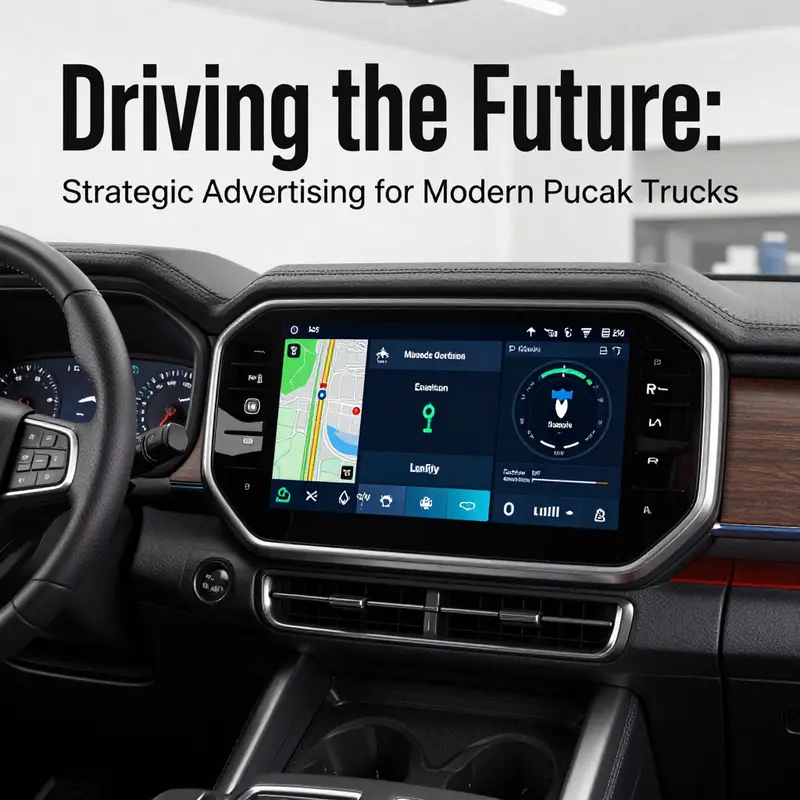
Infotainment and cockpit technology receive similarly careful attention. Large touchscreens, clean user interfaces, and rapid smartphone integration are highlighted to show that the truck can be the modern nerve center of daily life. These scenes are both aspirational and practical: a foreman can route teams, a family can stream navigation, and a camper can check weather without leaving the cab. Voice-activated controls are used as plot devices in commercials. A driver commands the system, the hands remain on the wheel, and the story moves forward. This visual shorthand communicates convenience without heavy exposition.
Connectivity features extend the narrative beyond the cab. Remote start, geofencing, vehicle health reports, and over-the-air updates are shown as tools that save time and reduce surprises. Advertisements dramatize these functions through relatable scenarios: a worker warming a truck remotely at dawn, a fleet manager receiving diagnostic alerts while on site, or a parent locating a vehicle using a phone app. These moments create the impression that owning the truck means staying connected to what matters. Smart charging and home energy integration for electric models are visualized with simple metaphors: a plug, an app progress bar, and a confident driver planning a day without range anxiety. The storytelling reinforces that technology supports daily routines rather than complicating them.
Electric and hybrid powertrains are a major narrative thread. Commercials no longer treat electrification as a niche attribute. Instead, they highlight immediate, relatable benefits: quieter acceleration, lower operating cost, and the ability to power tools at a job site. Emphasis is placed on real-world outcomes. Hands-on scenes show a generator function powering lights or tools, or a long, quiet drive with swift throttle response when merging onto a highway. Marketers use visual contrasts—an electric truck starting silently next to a noisy idling vehicle—to create an emotional reaction. This helps translate technical specs into sensory experiences viewers remember.
Performance is reframed through technology rather than raw displacement numbers. Instead of listing torque, commercials illustrate towing and payload through controlled demonstrations. Trailer sway mitigation, integrated trailer brake control, and intelligent power delivery are shown in action. These sequences often occur in practical contexts: a family loading a camper, a contractor hooking up a heavy trailer, or an off-road team navigating tricky terrain while using vehicle modes tuned by sensors and software. The emphasis is on how electronic systems extend human capacity and protect investments.
Audio and visual design in these ads reinforce the technological message. Soundscapes are crafted to match the innovation on screen: electric pickups are paired with lower-frequency, futuristic synthesizers that underscore quiet power. Trucks with advanced ADAS are accompanied by calm, measured voices. Graphics—clean, minimal, and data-driven—slide across the screen to explain capabilities without overloading viewers. Augmented-reality navigation and heads-up displays are depicted with crisp overlays that feel intuitive. These design choices make technology feel accessible and desirable, rather than intimidating.
Credibility is an important layer. Authenticity is achieved through practical demonstrations, third-party testing scenes, and testimonials from real users. Commercials increasingly show worksite footage and real driver reactions. Mechanics and fleet operators are shown relying on telematics and diagnostic tools, reinforcing that the tech is robust enough for professional use. Testimonial-style vignettes, when used sparingly, add social proof. The narrative avoids technical jargon; instead, it focuses on outcomes: lower downtime, more jobs completed per day, and fewer maintenance surprises.
Comparison and proof strategies are common. Ads frame new technology as an advantage over traditional setups, often using side-by-side scenarios. Quiet acceleration, reduced maintenance intervals, and instant torque become visually measurable benefits. These comparisons are crafted carefully to avoid bleak technical deep-dives. Instead, they use quick, memorable contrasts—one truck idling and consuming fuel, another charging silently and powering a worksite—to make a persuasive case for change.
The role of software and upgrades is emphasized as a new axis of value. Over-the-air updates are shown as futureproofing measures, allowing vehicles to gain features after purchase. This idea shifts the truck from a static product to a living platform. Commercials hint at evolving capabilities: improved towing algorithms, new connectivity apps, or enhanced driver-assist calibration. For buyers, the message is clear: the truck can get better over time, reducing the urgency to chase the latest model year for incremental improvements.
Advertising also tailors the technological narrative to distinct audiences. For the functionality-first buyer, commercials showcase productivity features like in-bed power outlets, integrated ramps, and tool-laden storage solutions controlled by apps. For tech-savvy consumers, demonstrations focus on seamless phone integration, advanced navigation, and smart-home compatibility. For environmentally minded viewers, the emphasis is on emissions reductions, regenerative braking benefits, and lower long-term operating costs. Each spot carefully calibrates the same underlying technologies to speak to different motivations without fragmenting the brand message.
Finally, commercials often hint at a broader ecosystem. Partnerships with charging networks, software platforms, and fleet management services are subtly referenced to suggest support beyond the vehicle. This positions the truck as part of a larger, connected world where data, energy, and services converge. For those wanting deeper context about how technology is being integrated into modern pickup trucks, a concise industry resource expands on these trends: https://www.cars.com/.
To explore market shifts and electrification narratives applied regionally, see the discussion on electric pickups in the Canadian market at “electric trucks revolutionize Canadian market” (https://mcgrathtrucks.com/electric-trucks-revolutionize-canadian-market/).
How Pickup Truck Commercials Drive Sales, Stabilize Demand, and Shift Market Economics
Advertising for pickup trucks does more than announce new models. It shapes perceptions of value, manages risk in buyers’ minds, and can move entire segments of the market. When marketers present a pickup as rugged, reliable, and capable, they are not only selling utility. They are selling a financial proposition: the idea that this vehicle will solve work problems, lower downtime, and protect resale value. That proposition matters for individual buyers and fleet managers alike. It also matters to regional economies where pickup sales ripple into financing, insurance, parts, and service sectors.
Commercial narratives emphasize practical attributes that matter in purchasing decisions. Towing capacity, payload, fuel economy, and durability are recurring themes. When these features are dramatized in a thirty-second spot—hauling a heavy trailer up a steep grade, navigating a muddy construction site, or transporting a family across rough terrain—the ad translates abstract specifications into real-world outcomes. For business customers, the outcome is financial: fewer service interruptions, more productive hours, and predictable operating costs. For personal buyers, the outcome can be lifestyle flexibility and lower long-term expense. Reinforcing such outcomes repeatedly builds familiarity and trust, which in turn eases the leap from interest to purchase.
Strong brand messaging amplifies existing advantages. Brands that consistently communicate durability and performance anchor buyer expectations. When a manufacturer links its image with longevity and resale strength, buyers infer lower total cost of ownership. That inference often outweighs short-term sticker price concerns. Consequently, advertising can preserve demand during periods when buyers might otherwise postpone large purchases. For example, when economic indicators wobble, campaigns that stress long-term value and financing support tend to keep showroom traffic steady. In that way, commercials act as a demand stabilizer rather than just a sales accelerator.
The economic sensitivity of pickup sales to broader conditions is a key dynamic advertisers monitor. Fuel prices, interest rates, and consumer confidence shape purchase timing and model choice. When oil prices rise, demand for less efficient vehicles can decline. Advertising that highlights fuel-saving technology, hybrid options, or the economics of hauling and towing can blunt that effect. Similarly, in regions experiencing improved macroeconomic conditions, targeted campaigns help convert cautious consideration into transactions. Dealers and regional distributors often complement national ads with localized messages about financing specials and service support. These layered campaigns create a coherent purchase pathway from awareness to sale.
Case studies in market resilience show the payoff of persistent advertising. Flagship pickup lines that have been top sellers for decades did not reach that status by accident. Sustained marketing investment keeps those vehicles top-of-mind across buyer segments. During downturns, companies that maintained advertising budgets found it easier to recover. Their brands retained visibility and trust while competitors paused messaging. That advantage translates into market share gains when conditions normalize. Thus commercial investment functions as a defensive economic tool as much as a growth tactic.
Emerging trends now add complexity to the advertising-sales relationship. Electrification introduces new selling points—quiet operation, rapid acceleration, lower operating costs, and reduced emissions. These attributes reshape the narrative from pure utility to technology and future-readiness. When electric pickups are showcased, ads juxtapose traditional toughness with modern efficiency. That comparison helps bridge skepticism among conventional truck buyers. Marketing that demonstrates comparable towing capability and greater efficiency can convert early adopters and mainstream buyers alike. As manufacturers expand electric offerings, their commercials become a testing ground for public acceptance of new drivetrains.
Beyond technology, regional developments alter how ads translate into sales. In some markets, improving interest rates and macroeconomic stability are expected to lift vehicle purchases substantially in the coming years. Advertising timed to these recoveries can amplify the rebound. Local distributors and dealer networks play a pivotal role. They tailor messages to regional buyer needs while leveraging national brand equity. Integrating broad campaigns with regional tactics produces higher conversion rates than either approach alone. For deeper insights on navigating these conditions, see the dealer-focused analysis on navigating economic uncertainties and market shifts.
Pricing and policy also intersect with advertising outcomes. Tariffs, taxation, and emissions regulations feed into commercials indirectly. When regulatory changes increase costs, advertisers may pivot to emphasize features that justify higher prices. When incentives or rebates lower out-of-pocket expense, campaigns highlight immediate affordability. In either case, the messaging frames the economic argument for buyers. A well-crafted ad explains why a higher upfront cost can be offset by long-run savings or enhanced capability. That framing shapes purchase intent, especially among buyers sensitive to total cost of ownership.
Advertising can also shift the competitive landscape through comparison and demonstration. Advertisers often contrast new models with conventional competitors on noise, acceleration, and operating costs. These comparisons help demystify newer technologies and give consumers concrete metrics to weigh. When ads show a truck outperforming a rival in a head-to-head scenario, the implicit message is that the marketed vehicle offers superior value. Such positioning can erode competitors’ price premiums or force them to respond with feature or price adjustments. Over time, this competitive pressure influences the entire category’s pricing and feature sets.
The multiplier effect of pickup truck advertising extends into secondary markets. Used truck prices, financing markets, and parts suppliers respond to shifts in new-vehicle demand. When advertising successfully sustains new sales, it supplies a steady stream of trade-ins to the used market. That flow stabilizes used prices and supports ancillary businesses. Conversely, a sudden slump in advertising and sales can dry up trade-ins, squeeze used inventory, and increase volatility in pricing. Dealers who integrate commercial messaging with used-vehicle merchandising are better positioned to manage inventory cycles and maintain margins.
Finally, the role of sponsorship and cultural placement in commercials should not be overlooked. Sports event sponsorships, digital influencer partnerships, and branded content extend reach beyond traditional ad slots. These placements position pickups not only as tools but as lifestyle symbols. That symbolic value feeds back into economic decisions. Buyers who see a truck associated with reliability and aspirational activities are likelier to justify the purchase as both functional and emotional investment.
For a broader look at how commodity costs affect auto demand and buying behavior, consult this analysis of oil prices and the auto industry: https://www.investopedia.com/articles/economics/102415/how-oil-prices-impact-auto-industry.asp
How Social Shifts Shape Pickup Truck Commercials: Sustainability, Lifestyle, and Digital Storytelling
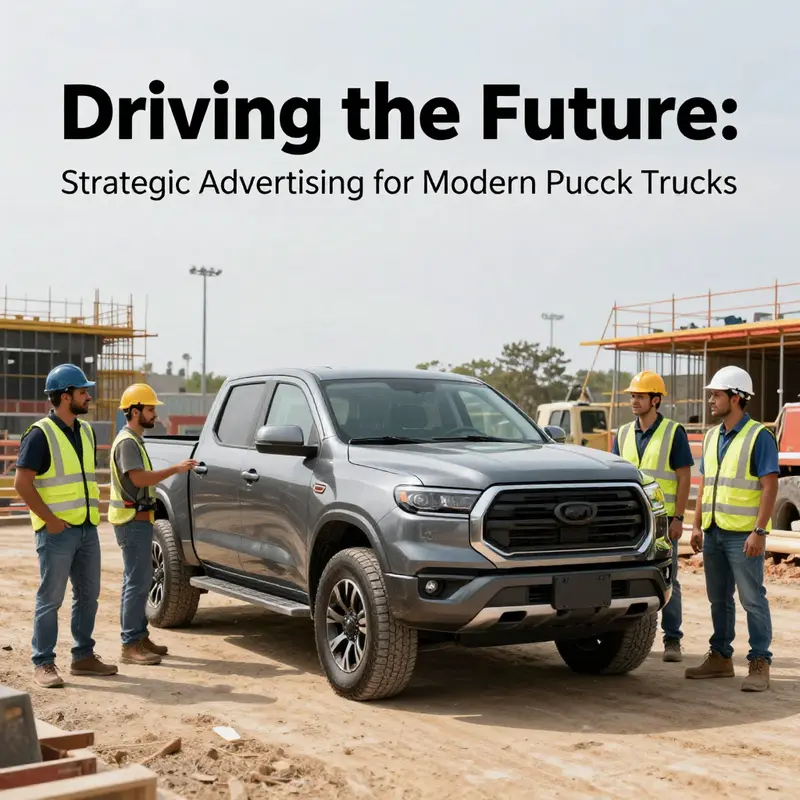
How social shifts shape pickup truck commercials: sustainability, lifestyle, and digital storytelling
Advertising for pickup trucks no longer rests solely on payload and horsepower. Commercials now translate broader social changes into visual stories that reshape what these vehicles mean to buyers. From concerns about the planet to the blending of work and play, and from urban migration to the rise of social platforms, modern campaigns present trucks as symbols of capability, identity, and values. This chapter weaves those forces into a single narrative, showing how advertisers craft commercials that speak to shifting priorities while still selling ruggedness.
Sustainability has moved from niche to headline. Where once efficiency was a technical footnote, many commercials now foreground environmental themes. Ads do not simply state fuel ratings any more. They show quieter driving, cleaner air, and families arriving at a lakeside campsite without the smoke and clatter associated with older vehicles. Visual contrasts are common: a dawn shot with soft exhaustless acceleration, followed by a sweeping landscape unmarred by pollution. Narratives emphasize responsible ownership, long-term savings, and reduced resource use. Stories are told not just through facts, but through lifestyle choices. Viewers are invited to imagine weekend adventures that leave lighter traces, or workdays that run on cleaner energy. This framing broadens pickup appeal, linking utility to stewardship.
The electrification angle also changes how commercials dramatize performance. Instead of raw noise, ads highlight instantaneous torque and silent acceleration. This rewrites classic pickup tropes for a new generation. Rather than equating power with engine roar, commercials equate it with seamless responsiveness and modern tech. They stress long range and intelligent charging solutions, but always show those benefits in everyday terms. A driver plugs in at a remote farm, then uses the vehicle as a power source for tools. Another sequence shows a suburban homeowner charging overnight and enjoying reduced operating costs. The storytelling carefully connects sustainability with solvable, relatable advantages rather than abstract ideals.
At the same time, the definition of what a truck is for has expanded. Advertisements now depict trucks as the hub of diverse lives. Scenes mix hauling with leisure, and professional function with personal expression. A single commercial might open on a worksite, then cut to a family loading bicycles for a weekend trip. The vehicle becomes a canvas for identity, signaling independence, adaptability, and taste. This fusion speaks especially to younger buyers who expect multi-use vehicles. Ads show trucks navigating urban streets, not just rural backroads. They depict compact maneuvering, clever storage solutions, and lifestyle accessories that emphasize weekend hobbies. The message is clear: modern pickups serve as both tools and lifestyle statements.
This blending of work and life impacts visual style and narrative voice. Ads increasingly favor human-scale scenes over spectacle. Instead of only dramatic off-road sequences, commercials include candid moments: a parent securing a child’s bike, a pair of friends swapping tools at sunrise, a craftsworker powering equipment at a customer’s driveway. These scenes humanize capability and make it aspirational in a domestic context. They also reduce the distance between viewer and product, making ownership feel attainable and relevant to everyday routines.
Digital media has rewritten the rules for storytelling and distribution. Traditional TV spots remain important, but social platforms shape tone, pacing, and content diversity. Short-form videos emphasize punchy moments: a silent sprint from stoplight to highway, a quick showcase of a storage system, or a five-second reveal of a tailgate feature. Longer content, hosted on streaming channels and owned pages, dives deeper into real-world use cases and owner stories. This split allows brands to capture both impulse attention and considered evaluation.
Influencer partnerships and user-generated content play a central role in credibility. When an enthusiast shares a real towing test or a family documents a weekend trip, viewers see proof, not just polished advertising. Brands amplify these authentic voices, turning customers into collaborators. This participatory model builds trust while extending campaign reach. Viral moments are not left to chance either. Creative teams design hooks and interactive challenges intended to be shared, remixed, and discussed. The goal is emotional resonance plus measurable engagement.
Demographic shifts, especially urbanization, force practical rethinking. Trucks have to be shown fitting into dense neighborhoods, tight parking, and multi-use garages. Commercials highlight maneuverability, technology that eases urban driving, and features that reduce emissions. The visual language shifts accordingly: clean streets at dusk, efficient parking, and scenes where a truck threads through city life without drawing disruptive attention. This normalization makes trucks feel suitable for city dwellers who value flexibility and modernity.
Ad messaging also adapts to changing household structures. Smaller households, dual-income families, and people who blend freelance work with hobbies need vehicles that do many things. Commercials underline modular interiors, adaptable bed solutions, and integrated tech for remote work. The narrative positions the pickup as a platform for productivity and leisure, showing how it supports a side business, a home renovation, and a weekend escape in the same week.
Social trends also influence tone and aesthetics. Whereas classic truck advertising often used hypermasculine imagery, modern commercials embrace inclusivity and broader definitions of toughness. Strength is shown through reliability, resilience, and competence, not domination. Diverse casts, varied lifestyles, and gender-neutral scenes signal a conscious appeal to wider audiences. The result is advertising that feels modern, emotionally intelligent, and more reflective of society.
Measurement and analytics shape creative decisions behind the scenes. Data on engagement, sentiment, and conversion guide which storylines are amplified. Short-form tests reveal which visuals prompt shares. Long-form metrics show which narratives drive showroom visits. This feedback loop means commercials evolve quickly. Successful motifs spread across platforms; unsuccessful ones are retired or tweaked.
Finally, regulatory and economic contexts color creative choices. Emission standards and incentives influence how sustainability claims are framed. Incentives and charging infrastructure affect which scenes feel plausible. Advisors ensure claims about efficiency and range are defensible, while creative teams translate technical details into clear, trust-building stories.
Taken together, these trends produce commercials that are more layered and socially attuned than ever. They blend aspiration with practicality, celebrate technology without losing the truck’s core identity, and use new distribution channels to build ongoing conversations. Ads now invite viewers to imagine a pickup that fits modern life—one that tows, hauls, and expresses values—while helping the viewer see themselves behind the wheel.
For more on how electrification is reshaping regional markets and consumer expectations, see the piece on electric trucks revolutionizing the Canadian market.
External research exploring how social media advertising affects sustainable purchase intentions can be found here: https://www.mdpi.com/2071-1050/17/16/6849
Quiet Power, Open Horizons: Environmental Storytelling in Electric Pickup Truck Advertisements

In the evolving world of pickup truck advertising, the environmental message barely hides behind bravado about torque and trailering capacity. It arrives as a deliberate counterpoint to the roar of internal combustion engines, a shift in how power is defined and pictured. The visual language of these campaigns frequently frames electric pickup trucks not only as tools for hard work but as ambassadors for cleaner air, quieter streets, and a more sustainable way of moving people and goods. The discourse does not pretend that zero emissions solve every problem; instead it invites viewers to imagine a future where the same steel and battery chemistry that enable rugged capability also reduce the footprint of daily transport. Green attributes are packaged with the same clarity once reserved for horsepower curves and towing specs, and that pairing is what makes the environmental message feel integral rather than optional in the broader world of pickup advertising.
What makes environmental storytelling in this space particularly effective is its tactile insistence on realism. Advertisers frequently ground the promise of zero emissions in concrete realities: long-range battery life that allows a weekend out of town without a mind-numbing sense of range anxiety, fast charging that reduces downtime and keeps a schedule intact, and intelligent charging features that integrate with the rhythms of a modern household or a busy work site. The narrative voice often emphasizes not just the ability to move people but to do so while reducing the emissions associated with everyday tasks, from carpooling to long-haul payloads. This is more than a campaign theme; it is a reframing of what it means to own a pickup in the 21st century. The same vehicle that can haul a heavy load can also contribute to cleaner city air and a quieter neighborhood, and the campaign makes that linkage explicit without appearing preachy. The viewer is invited to see performance and responsibility as a single continuum rather than a trade-off.
There is a purposeful alignment of imagery with the message. Scenes place electric pickups against sweeping natural backdrops—mountains, forests, and coastlines—interspersed with clean, orderly urban settings. The landscapes are not mere scenery; they are benchmarks for what a sustainable future can look like in everyday life. In the same breath, the ads depict families and friends enjoying outdoor activities, which signals that environmental stewardship is not a niche concern but a family value. The implication is that choosing an electric pickup is a choice that harmonizes work obligations, recreational life, and environmental responsibility. The cadence of the visuals moves from the quiet of a silent, steady glide through a city early in the morning to the robust, controlled power of the vehicle when needed for work tasks, towing, or a rugged off-road excursion. The contrast is deliberate: the silence of electric propulsion, when appropriate, combined with the unmistakable certainty of performance when it matters most.
This narrative approach—coupling zero-emission performance with everyday practicality—also reframes the industry’s broader conversation about cost and maintenance. Advertisers frequently foreground not only the environmental benefits but also the economic ones: reduced fuel expenditure, fewer interior engine maintenance requirements, predictable running costs, and the potential for smarter home charging that leverages off-peak electricity rates. The messaging acknowledges scrutiny from critics who worry that electric trucks may come with higher upfront costs and limited charging infrastructure; in response, the commercials emphasize total cost of ownership, the reliability of regenerative braking in demanding work scenarios, and the resilience of the vehicle when subjected to extreme weather conditions or extended work days. The result is a more balanced portrayal that respects practical concerns while still elevating the environmental narrative.
There is a careful, almost philosophical, tension between the need for rugged capability and the appeal of ecological responsibility. The ads do not downplay the traditional attributes associated with pickups—towing capacity, payload, and off-road prowess—but they recast those attributes in a way that feels compatible with sustainability. For instance, a powerful acceleration profile is shown in conjunction with a narration about zero tailpipe emissions, so the sense of speed and efficiency coexist rather than compete. The same frame that captures the pull of a camper trailer or a heavy-duty job site also holds a scene of a quiet, suburban driveway where a homeowner plugs the vehicle in for overnight charging, reinforcing the sense that environmental care can be seamlessly integrated into daily routines. In this sense, the commercial becomes a blueprint for a lifestyle: efficient, capable, and mindful of a shared environment.
In exploring how environmental messaging is crafted, it is worth noting the strategic role of voiceover and soundtrack. The sonic texture tends to favor calm, confident tones that communicate assurance rather than urgency. The music choices often lean toward acoustic or minimally electronic arrangements that reinforce the idea of a modern, responsible technology without overwhelming the listener with hype. The voiceover, while technical enough to explain long-range charging and fast charging capabilities, avoids jargon that could alienate non-expert viewers. The goal is inclusivity: to speak to environmentally conscious consumers and tech enthusiasts alike without alienating traditional buyers who still value durability and reliability. This balance is key because environmental messaging, when executed well, can broaden the audience for pickup trucks rather than narrow it.
Another layer of the environmental narrative is the practical integration with energy systems. Advertisers now frequently highlight features like home charging, smart grids, and the potential for vehicle-to-grid compatibility, even if not every model currently offers full bi-directional charging. The implication is that the vehicle is part of a broader energy ecosystem. This is not merely a convenience feature; it aligns with a growing cultural emphasis on resilience and independence—imagining a scenario where the vehicle plays a role in energy security at the household level or on work sites. Such framing positions the electric pickup not only as a tool for daily tasks but as a technologically integrated component of sustainable living. In this way, the environmental message is not an add-on; it is woven into the core value proposition of the vehicle.
Industry observers have also begun to highlight how these campaigns could influence public perception of city planning and environmental policy. By normalizing electric pickups in urban and suburban spaces, advertisers help shape expectations around charging infrastructure, noise reduction, and the viability of electrified fleets for business operations. The social dimension is implicit but potent: if a broad segment of the population begins to see these vehicles as practical and desirable, support for related infrastructure and incentives may follow. The commercials, in effect, become a form of soft advocacy, indirectly contributing to policy conversations about electrification, air quality, and smart city planning. This is not a political stance so much as a cultural one, where advertising nudges consumer choice in directions that align with broader environmental goals.
The environmental storytelling in electric pickup advertisements also reflects a global dialogue about sustainability in the automotive sector. Even as the campaigns emphasize domestic markets, the messaging resonates with a universal audience that values clean air, quiet streets, and fewer barriers to enjoying outdoor life. This resonance is enhanced by the inclusion of practical demonstrations—long-range testing, efficient charging routines, and real-world scenarios such as family trips or job-site runs—that translate technical advantages into tangible benefits. Advertisers understand that performance alone does not guarantee adoption; the story must connect with the day-to-day realities of viewers, whether they are a weekend warrior chasing a trailhead or a small business owner balancing costs with customer expectations. The result is a cohesive narrative that treats environmental responsibility not as a marketing niche but as an essential aspect of modern mobility.
For further insight into how environmental marketing is applied in the automotive sector, particularly with electric vehicles, refer to this authoritative source: Electric advertising vans for a green message | Alkè.
As the market continues to evolve, the role of environmental messaging in pickup truck advertising will likely grow more sophisticated. Marketers will refine how they depict battery technology, charging networks, and lifecycle sustainability while continuing to foreground the everyday practicality that attracts a broad audience. The narrative will increasingly reflect a world where quiet, efficient power is not the exception but the expectation, where off-road adventures, urban commutes, and family gatherings all occur within a framework of environmental stewardship. In this future, the commercial becomes more than a sales pitch; it becomes a shared vision of mobility that respects the planet without compromising on the features that make pickups indispensable. The reader may also explore related industry perspectives through analyses on how electric trucks are reshaping consumer expectations and market dynamics, including regional market developments and trends in electrification across North America.
Internal link reference: electric trucks revolutionize the Canadian market. This phrasing captures a broader industry trend while anchoring the discussion to regional dynamics and market responses that influence advertising choices and consumer reception. electric trucks revolutionize the Canadian market.
Final thoughts
The advertising landscape for pickup trucks is a testament to the evolving priorities of contemporary consumers. As businesses increasingly emphasize efficiency, innovation, and sustainability, understanding how commercials convey these values becomes crucial for decision-makers involved in fleet management and procurement. From leveraging cutting-edge technology to addressing environmental concerns, the strategic messages embedded in pickup truck commercials play a pivotal role in shaping purchasing behaviors in the commercial vehicle sector. As industry leaders continue to navigate this complex landscape, the integration of thoughtful advertising strategies will be essential in aligning product offerings with market demands.