Navigating the complexities of vehicle availability on Commercial Truck Trader.com necessitates an understanding of several underlying factors. Despite the platform’s prominence in the realm of commercial trucks, users often face challenges in locating specific types of vehicles—particularly cars. This article provides a comprehensive exploration of why cars are notably absent from the listings on this dedicated site, focusing on four key reasons: platform specialization, data latency and outdated listings, search filter settings, and technical issues alongside content availability. By delving into each of these chapters, trucking company owners, fleet managers, procurement teams, and logistics firms can better grasp the limitations of their searches and optimize their vehicle acquisition strategies.
Platform Specialization and Market Realities: Why Cars Vanish on a Heavy-Duty Vehicle Marketplace

When a reader searches for cars with an expectation built from everyday browsing, they often encounter a surprisingly focused landscape on certain marketplaces. On a site dedicated to heavy-duty trucking, the absence of passenger cars is not an oversight but a structural choice. The chapter that follows this terrain is not a lament about missing listings but a careful map of why a so-called “car search” won’t reliably yield results on a platform that is purpose-built for commercial trucks, tractors, and other large freight assets. The raison d’être of the site is clear: it surfaces inventory that matters to fleets, owner-operators, and dealers who buy and sell big rigs, not sedans or compact cars. This distinction matters not only for the practical user experience but also for the broader economics of the market. The platform’s specialization shapes how data are gathered, presented, and acted upon by buyers who have specific needs, such as payload capacity, axle configurations, or regional service networks, rather than the broad spectrum of consumer vehicle features that drive passenger-car marketplaces.
To a first-time visitor with a single search for “cars,” the result can feel confounding. Yet the absence of passenger cars is not a bug but a boundary condition. Listings flow from dealers, fleets, and private sellers whose inventories are tuned to the needs of commercial operations. A dealer who stocks semis and tractors is unlikely to maintain a catalog of everyday passenger cars with the same cadence or metadata. The platform’s architecture—its categories, its search facets, its feed logic—echoes this specialization. If you are looking for a car, you will probably find a better match on a site that publishes passenger vehicles alongside light-duty trucks. If you stay within the heavy-truck universe, however, the listings you encounter are more actionable because they align with what fleets actually consider essential when upgrading or maintaining a rolling asset. The absence of cars, in other words, reflects a deliberate market segmentation that reduces noise and enhances relevance for buyers who need high-torque engines, robust chassis frames, and proven uptime—features that define a heavy-duty marketplace.
Beyond the obvious product focus, the inventory dynamics on this kind of platform are shaped by real-world data flows and the timing of listings. Inventory is not static; it is a moving target driven by dealer feeds, fleet disposals, and private sellers who manage dozens of vehicles at a time. Listings arrive, change status, or vanish as trucks are sold, leased, or moved to other channels. Because the site relies on dealer and private-seller submissions, there can be a lag between a vehicle being listed in a seller’s own system and it appearing on the buyer-facing search results. In some cases, a vehicle marked as “sold” remains visible for a period because different databases and indices are not perfectly synchronized in real time. This latency can frustrate a shopper who expects perfect, instantaneous accuracy, especially in a market where timing is everything—the moment a fleet decides to exit a particular asset, there may be a rush to reprice and re-market elsewhere.
Another layer of complexity comes from the search filters themselves. The platform offers a structured set of criteria—year, make, model, mileage, location, condition, and drivetrain. These filters are powerful when used thoughtfully but can become barriers if the user’s targets are unusually narrow. For example, seeking a very recent model in a tight radius can produce few or no results, even when similar units exist slightly outside the geographic boundary. A broader year range, a larger search area, or a willingness to accept slightly higher mileage can open a larger pool of candidates. In practice, buyers who treat the search as exploratory tend to discover opportunities they would miss with rigid constraints. The platform also supports status-based filters like “New,” “Used,” or “Certified Pre-Owned,” which helps buyers differentiate purchase paths in a compact, truck-focused catalog. The careful application of these filters is as important as the decision to search at all.
Then there is the digital backbone that underpins any marketplace. Technical hiccups—temporary server outages, database hiccups, or caching delays—can disrupt results or slow loading times. While no platform is immune to these issues, the way a site handles them can influence user perception. A momentary error or a stale search index can lead to a user seeing no results when fresh listings exist just a click away. In the background, the site’s data pipelines strive to balance freshness with stability, an ongoing trade-off that can affect the appearance of inventory in real time. If an issue persists, a quick check of the site’s status page or a note from customer support can clarify whether the problem is systemic or localized to a user’s region or device.
The content reality of any specialized marketplace also hinges on market rhythms and demand patterns. The availability of heavy-duty inventory is not uniform across the year or across regions. Economic conditions, fuel prices, and industry cycles influence the pace at which fleets decide to refresh or dispose of equipment. When fuel costs are high or when economic uncertainty tempers debt capacity, fleets may delay asset turnover, reducing visible supply. Conversely, periods of expansion or rising freight demand can spur an uptick in listings as operators seek to scale capacity. In these swings, the number of active listings and the composition of the inventory can shift noticeably by region and by vehicle class. The effect is a marketplace that feels quieter or louder not because of a platform misstep but because supply and demand are moving in a way that rewards patience and strategic searching.
For buyers who arrive with an objective beyond mere browsing, the chapter of navigation becomes practical. The best approach is to align the search with the platform’s core strengths. Confirm you are in the correct vehicle category, not a general car portal. Expand the geographic net if needed, and experiment with year ranges and mileage thresholds until a meaningful cohort appears. Use the status filters to distinguish new from used and to identify certified options if those categories are relevant to your procurement policy. Setting up alerts can provide a steady stream of fresh listings that meet evolving criteria, turning a sporadic check into a proactive sourcing habit. And when the process stalls, a quick consult of the Help Center or direct outreach to customer support can illuminate whether there is a temporary platform issue or a broader market trend affecting inventory.
**The narrative of platform specialization, data latency, and market dynamics is not merely academic. It translates into practical tactics for buyers who insist on reliability and time efficiency. By embracing the site’s boundaries and leveraging its strengths, a buyer can turn a potential dead end into a targeted search that yields meaningful opportunities. In doing so, one learns to speak the language of heavy-duty procurement: catalogs built around tractors and high-capacity tires, not compact sedans; feeds designed for fleets and dealers, not consumer inventories; and a search experience calibrated for uptime, not novelty. It is a reminder that the most effective online marketplaces are not neutral repositories but purposeful ecosystems that reflect the realities of the markets they serve. For readers seeking a more general framework on how dealers and fleets optimize listings and leverage digital channels, the following resource offers broader perspectives on the strategies that underlie successful buying and selling in this sector: McGrath Trucks blog.
Of course, if you want to widen the lens beyond a single platform, cross-referencing multiple markets can also be illuminating. A prudent buyer treats any one portal as one data point in a broader homework process. Checking regional dealer inventories, auction listings, and even rental fleets can provide a more complete picture of what is available and at what price. The aim is not to find a perfectly matching unit in a single search but to triangulate opportunities across sources, then act quickly when the right match appears. In practice, this means compiling a flexible specification sheet—the essential attributes a truck must have—and using it to compare disparate listings on different platforms. The discipline of cross-referencing reduces the risk of missing a suitable asset simply because a single site did not surface it in time.
For readers who want a concrete path forward, consider a workflow that begins with prioritizing category accuracy, followed by deliberate filter-tempering, and then the setting of proactive alerts. If the search still yields sparse results, widen the geography, adjust the model year window, and re-evaluate the required drivetrain configuration. These steps are modest in execution but powerful in effect because they work with the site’s design rather than against it. In a market where listings come and go with speed, a prepared buyer who can navigate the boundaries of a specialized marketplace is better positioned to seize opportunities when they emerge. And if you want to explore related ideas about market dynamics, fleet utilization, and used-truck pricing, you can explore a range of topics in the linked blog resource for additional context and practical tips.
External resource: https://www.commercialtrucktrader.com
Latency as the Silent Dealer: Understanding Real-Time Inventory in Commercial Truck Marketplaces
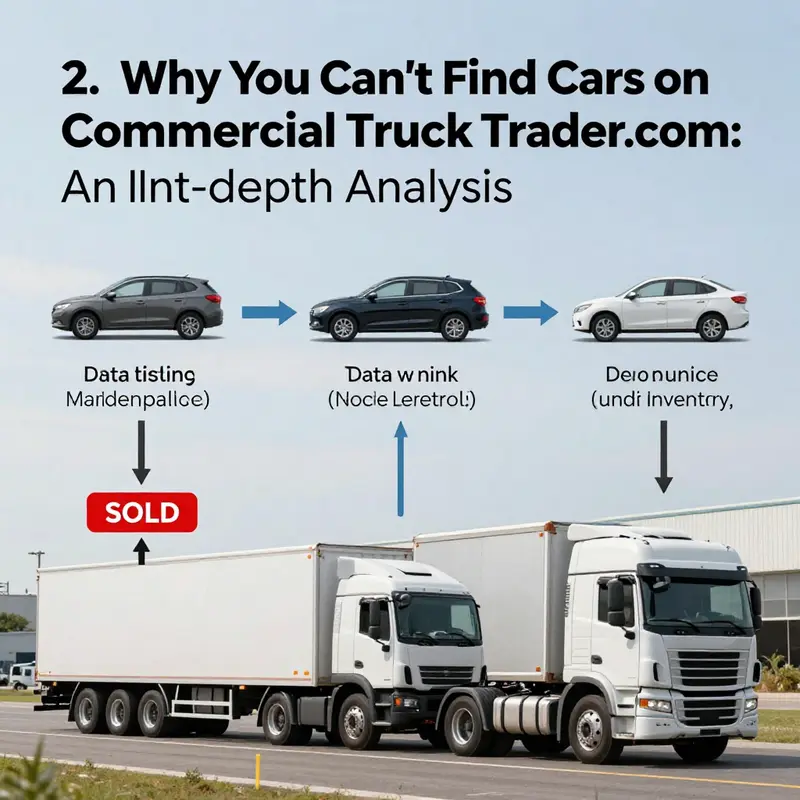
Data latency in niche marketplaces is not a minor detail but a defining characteristic of how inventory appears to buyers. Listings migrate from seller systems through feeds, into the platform’s processing pipeline, into the search index, and finally into caches that accelerate responses. Each stage introduces subtle delays that can leave a truck appearing available when it’s already spoken for, or show a recently sold unit as if it were current. The effect is a moving target rather than a perfectly synchronized feed, particularly when dealer networks refresh at different cadences.
Understanding this flow helps buyers set expectations and strategize searches: widen filters, anticipate slight location or price drift, and verify critical statuses directly with sellers when timing matters. For sellers and platform operators, the practical challenge is to tune polling frequencies, optimize validation and cache invalidation, and communicate freshness indicators so buyers can gauge how current a listing is. When latency is acknowledged rather than hidden, trust improves and negotiations can proceed more smoothly.
The overarching takeaway is that real-time inventory in distributed markets is an ecosystem of trade-offs: speed, accuracy, and scale must be balanced, and buyers who approach the process with patience and verification tend to navigate more effectively.
null

null
When the Niche Marketplace Falls Quiet: Technical Hurdles and Content Gaps in Finding Trucks on a Commercial Vehicle Platform
On a platform tuned to a single kind of inventory, silence around another can feel like a bug in the system. This chapter looks at why a user may not see cars or passenger vehicles on a site built for heavy duty use. The distinction is not merely semantic; it reveals how the marketplace is designed, where data flows, and how buyers should approach a search that can seem paradoxical. By unpacking the interplay between platform focus, data mechanics, and market realities, we can learn to read a quiet search page as a map of the catalog and its constraints rather than a failure of the market. The investigation starts with the core purpose of the site: it is a specialized conduit for commercial trucks, tractors, and other freight carrying equipment. When viewed through that lens, the absence of passenger cars becomes comprehensible, and the path to effective searching becomes clearer. The design choice makes sense for dealers who curate fleets and for buyers who seek reliable specifications, pricing, and photos for fleet decisions. Yet for someone who arrives with a broad intention to shop across vehicle classes, the same design can feel limiting, and that feeling deserves careful explanation rather than quick judgment.
Beyond the explicit focus, data shape plays a decisive role in what appears on the screen. Listings originate from dealers and private sellers who publish inventory through different back end systems, websites, and dealer management platforms. There can be a lag between when a vehicle becomes available in a seller’s database and when that opportunity shows up in the search results. Conversely, once a listing is marked sold or removed from the seller’s feed, it may linger in the public index for a short period. This delay and partial synchronization are not unique to one site; they are a consequence of multi channel distribution and the reality that software integrations operate on varying cadences. The practical takeaway is that a new listing may exist, but not yet be visible, or a once visible listing may no longer be current. In either case, a buyer who expects a perfect real time view may be disappointed, yet the underlying inventory is not necessarily gone, simply in a state of transition.
The search interface compounds these dynamics. Filters define the scope but also constrain it. A user might set a very narrow year window, a precise location, or a specific model name, and then wonder why no results appear. In truth, the catalog may hold similar vehicles elsewhere, just outside the chosen parameters. This is not a flaw in the engine so much as a reminder that search is a negotiation between what the user wants and what the data actually reflect. When the filters are too restrictive, the engine yields a quiet results page; when they are too broad, the results may overwhelm, obscuring the most relevant options. A moment of flexibility—expanding the year range, widening the geographic radius, or allowing a broader category—often reveals listings that were there all along, simply outside the initial frame. The signaling logic behind the filters is designed to help fleets find suitable equipment quickly, not to trap casual shoppers in a sparse grid of matches.
Technical stability also matters. A large catalog site depends on a chain of systems that must perform in concert. Server outages, database migrations, or sudden spikes in traffic can temporarily degrade the user experience, producing slow loading pages or incomplete search results. When such interruptions occur, they can resemble a content problem even though the inventory is intact. The prudent response is to perform simple checks: verify the status of the site, clear local caches, and attempt access from a different device or network. These steps distinguish user side hiccups from genuine system wide events. If a problem persists, a quick consultation with the site’s status communications or customer support can confirm whether the issue lies with maintenance windows or an outage. In most cases, the user can resume a productive search after the technical dust settles, but the experience reinforces the idea that the catalog is a dynamic reflection of the present market rather than a static archive.
Content availability itself can create a perception of scarcity that is not always reflective of demand. The market for heavy duty and specialized freight equipment experiences fluctuations, driven by fleet replacement cycles, regional demand shifts, and the emergence of new configurations. Some vehicle types are plentiful in certain regions or seasons, while others are truly rare or custom built. A buyer seeking a particular configuration that is uncommon may encounter long gaps in listings, even as similar assets circulate in other channels. This reality underscores the importance of timing and geographic flexibility. Rather than assuming that a missing model indicates a permanently empty category, patients and persistence can yield opportunities as inventories turn over.
Another layer of nuance comes from the taxonomy and description language used in listings. The platform is designed to present information that aligns with commercial truck buyers, who care about payload capacity, gross vehicle weight rating, drive configuration, and fleet compatibility. When a vehicle category is outside that taxonomy, the search seams become misaligned and a user may conclude the site has no content for them. This does not imply a defect in the site; it signals a mismatch between user expectations and the catalog’s defined scope. A more precise mental model: the site excels at a particular class of buyers and vehicles, and while the absence of passenger cars may be glaring to some, it is an intentional alignment with market needs. In this sense, the user is invited to adjust expectations and to refine the search strategy to fit the catalog’s strengths rather than attempting to force a universal shopping experience.
For readers who want a practical framework, a disciplined approach to searching in this space can yield better results without abandoning the site. Begin with a clear understanding of the category scope, confirming that the search is indeed targeting commercial trucks rather than passenger automobiles. Then, audit the filters with a mind toward discovery rather than precision alone. If results are sparse, relax criteria incrementally and observe how the inventory responds. A short pause to check for new postings can be more productive than a continuous, narrow search, particularly in markets with shorter listing lifespans. This is not a critique of the platform but a reminder that inventory is fluid and that search tactics must adapt accordingly.
The broader ecosystem supports this approach. In practice, buyers often blend portal searches with dealer outreach, inspection trips, and an examination of cross posted listings across multiple channels. This multi channel strategy heightens exposure to available assets and helps validate whether a given listing is representative of the market. It also reflects a broader truth about complex asset markets: no single source captures all options, and a prudent buyer triangulates data across several touchpoints. While some readers may feel that the truck oriented site does not serve every need, the combined workflow—portal use, dealer collaboration, and cross platform scanning—often yields a structure that is more reliable and responsive to market dynamics than any one source alone.
In this context, the value of a focused resource becomes clearer. The catalog is not empty by accident but by design, and its strengths lie in delivering detailed truck oriented listings that include photos, specifications, and pricing tailored to fleet buyers. When the page seems quiet, the quiet is a signal of alignment with a market segment and a reminder to recalibrate expectations. The quiet may also indicate that the asset a buyer seeks is rare or regionally concentrated, a fact that invites a more nuanced search plan rather than a rush to judgment about the platform itself.
To anchor these observations in a practical frame, consider a brief pointer toward complementary insights that address search discipline and market understanding. For readers who want to see how an organization approaches search and evaluation in a broader trucking context, the McGrath Trucks blog offers a concise, hands on perspective on searching, filtering, and pricing within the industry. This resource acts as a practical complement to the suggestions here, providing real world language and tactics that sellers and buyers use in listings and negotiations. You can explore it here: McGrath Trucks blog.
Ultimately, the absence of passenger cars on a site dedicated to heavy equipment is not a paradox but a window into how the marketplace is structured and how buyers should plan their search tactics. A clear sense of scope, a flexible approach to filters, an awareness of data latency, and a willingness to expand sources all contribute to a more effective search experience. As the market evolves, buyers who learn to read the catalog as a living inventory—one that reflects current supply cycles, regional variations, and dealer posting rhythms—will navigate with more confidence. The chapter emphasizes patience and strategy over impatience and desperation, recognizing that the right asset may appear when the search is appropriately aligned with the catalog’s strengths. For broader context, refer to the official site for current inventory dynamics and status updates. External reference: https://www.commercialtrucktrader.com
Final thoughts
Understanding why cars are not available on Commercial Truck Trader.com allows professionals in trucking and logistics to maneuver their searches more effectively. The platform’s specialization, combined with potential data processing delays and search parameters, can significantly impact visibility. By acknowledging these factors, stakeholders can optimize their vehicle searches and anticipate the technical aspects that may hinder the process. This strategic insight supports informed decision-making in vehicle procurement and fleet management, ensuring that efforts align with existing marketplace conditions.