
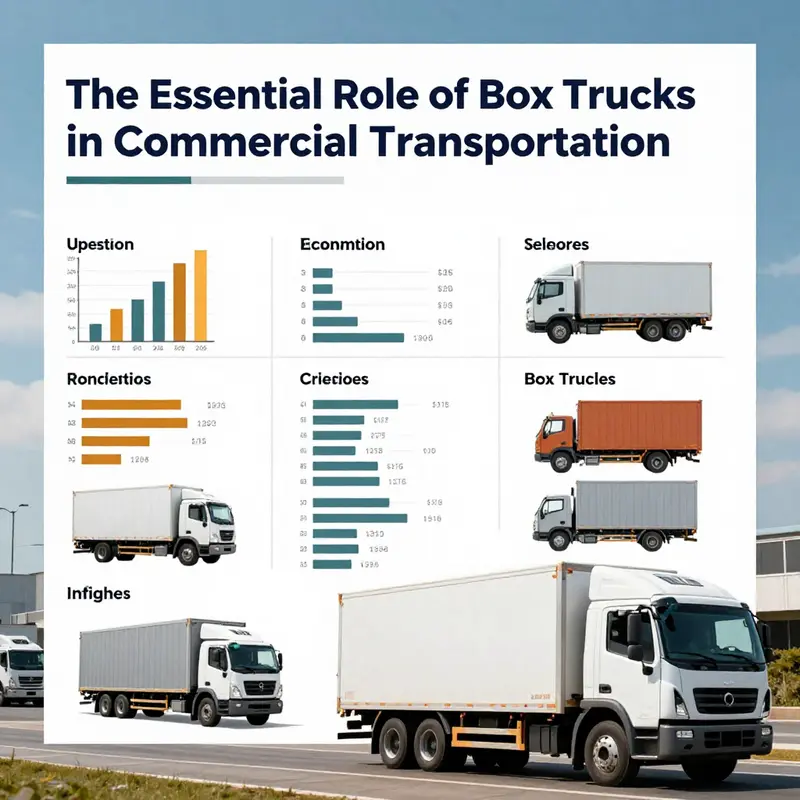
Box trucks serve a crucial role in the logistics and transportation sectors, enabling businesses to efficiently transport goods across various distances. Their unique design, characterized by a fully enclosed cargo area, makes them vastly different from traditional vehicles, emphasizing their classification as commercial vehicles. This classification not only aligns with regulatory standards but also underlines their application in diverse industries, including logistics, construction, and freight brokerage. Each chapter of this article will delve deeply into the factors that establish box trucks as vital commercial vehicles, from regulatory frameworks to economic impact, thereby equipping trucking company owners, fleet managers, and procurement teams with the knowledge needed to optimize their operations.
Box Trucks on the Business Road: Why Classification Shapes Compliance, Cost, and Cargo
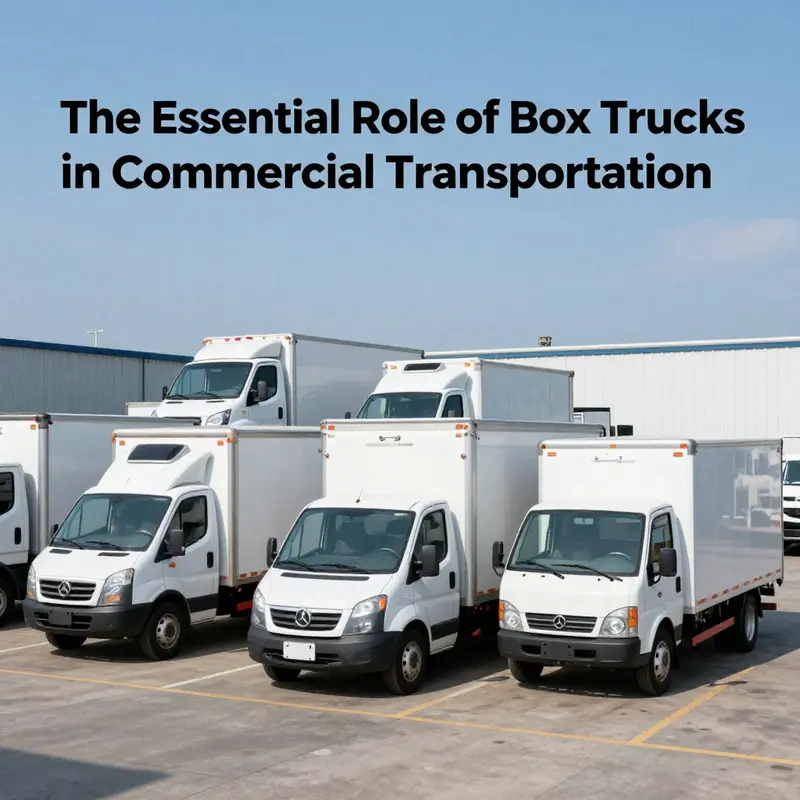
When people ask whether a box truck is a commercial vehicle, they are really asking how society and law view the vehicle when it carries goods rather than people. A box truck, sometimes called a box van or cargo van, is designed first and foremost for moving freight. The rigid, enclosed cargo area sets it apart from passenger cars and many open-bed trucks. In practice, fleets rely on these vehicles to move goods for retailers, couriers, moving services, and specialized operations like food distribution. This functional orientation is the lens through which classification is determined. In regulatory parlance, a vehicle is considered commercial if its primary function is to enable business activities that produce revenue through the movement or handling of goods. The difference is not merely about size or horsepower; it is about intent, use, and the economic role the vehicle plays in commerce.
Structural and weight-based criteria also shape the classification. The GVW threshold is a practical line of distinction. Box trucks typically carry heavy loads in a fully enclosed space, and this payload adds up quickly. In many regulatory contexts, box trucks begin within a weight band that begins around 10,000 pounds GVW, which is well beyond what most private passenger vehicles carry. This baseline pushes operators into the realm of commercial vehicle definitions and triggers licensing, insurance, and safety requirements that are tailored to cargo movement rather than personal mobility. The DMV and federal agencies align on a shared logic: vehicles used for business, especially those that haul goods for profit, are treated as commercial to ensure consistent standards across the fleet landscape. This alignment reduces ambiguity for carriers, insurers, and law enforcement when the vehicle crosses state lines or participates in interstate commerce.
The design is a key signal. A box truck combines a rigid cargo box with a chassis that can be configured for a variety of freight tasks. The cargo box protects goods from weather, theft, and accidental damage, while the vehicle’s structure supports heavy payloads and frequent stops. This architecture is purpose-built for business operations rather than the personal transport of family and friends. Even when a box truck carries only a modest number of passengers in the cab, the emphasis remains on cargo capacity and stable, predictable handling under fatigue and long hours on the road. The result is a vehicle whose core value proposition is the efficient execution of commercial tasks: loading, protecting, delivering, and returning with minimal downtime. The more a vehicle exists to move tangible products through a supply chain, the more clearly it fits the commercial mold.
Weight informs licensing and safety responsibilities in a concrete way. In many regions, GVW matters more than engine size. Box trucks commonly sit in a category above simple passenger vehicles: a range that starts around ten thousand pounds GVW and climbs into the heavy-transport arena as payload and vehicle length grow. Operators must consider whether the trip is a local delivery, a regional haul, or a longer-haul movement that justifies a heavier platform. The licensing threshold associated with higher GVWs can require a commercial driver’s license or additional endorsements, and even when a CDL is not technically mandated for a lighter box truck, operators face more stringent training, hours-of-service rules, and stricter maintenance schedules. That regulatory gravity is not punitive for its own sake; it exists to promote safety, especially in environments where multiple commercial vehicles share roadways, interact with pedestrians, and stop frequently at warehouses, stores, or loading docks.
Engine choices mirror the same commercial calculus. Lighter-duty box trucks, with GVWs closer to the 10,000-pound baseline, are frequently powered by gasoline engines. They serve routes inside city cores, where ease of maintenance and low up-front costs matter. Heavier configurations, common in long-haul or heavy freight operations, tend toward diesel power for efficiency, torque, and durability across extended duty cycles. The engine type carries implications beyond fuel economy. It intersects with emissions standards, maintenance regimes, and resale value. Fleets must weigh the trade-offs between fuel consumption, engine life, and maintenance complexity when deciding how to spec a box truck for a given market or a particular contract. As fleets modernize, some also explore hybrid or electric configurations, which adds another layer to classification because powertrain choices can affect the truck’s perceived role, eligibility for incentives, and even insurance considerations.
Scale matters too, and the spectrum from small to large box trucks shapes who uses them and how. Small box trucks, often under 5 tons, proliferate in last-mile delivery, retail redistribution, and small business operations that require nimble, city-friendly tools. Medium and large boxes, exceeding 5 tons, step into regional distribution centers, freight lanes, and specialized services such as cold chain and equipment transportation. The same vehicle can be reconfigured for different needs: shelving for pallets, secure cargo compartments, refrigeration units, or standard dry van arrangements. In each scenario, the box truck’s full enclosure, predictable dimensions, and cargo-focused ergonomics define its appeal for commercial customers. The commercial mindset is visible in the way these vehicles are managed: regular maintenance, scheduled inspections, and fleets designed to maximize uptime while minimizing the risk of cargo loss or vehicle downtime during busy seasons.
Regulatory frameworks codify these practical realities. The U.S. Department of Transportation and the Federal Motor Carrier Safety Administration lay out rules that connect vehicle classification with licensing, insurance, and safety obligations. Because box trucks are used to transport goods for profit, they fall squarely within the ambit of these rules, even if a particular unit seems modest in size. The classification triggers mandatory registration, proof of insurance, and compliance with safety programs tailored to commercial operations. For carriers, that means disciplined maintenance logs, pre-trip inspections, and post-incident reporting that align with fleet risk management. The interplay between the vehicle’s purpose and the law is not arcane trivia; it affects day-to-day decisions about driver training, hours of service, and the risk profile a business assumes when it signs a contract to deliver perishable goods, electronics, or industrial equipment.
Beyond the legal definitions, the cost of ownership and the realities of fleet economics reinforce why box trucks are categorized as commercial vehicles. Insurance premiums, accident and cargo coverage, and registration fees tend to reflect the risk and duty of a vehicle that operates in a business context rather than as a personal conveyance. Tax considerations, depreciation schedules, and eligibility for fleet discounts are all tied to the vehicle’s classification. For businesses, the ability to forecast maintenance, fuel use, and replacement cycles is central to budgeting and contract negotiations. A high GVW often means larger tires, more robust brakes, and heavier cooling and electrical systems, all of which contribute to higher total cost of ownership but also to greater productivity in return for that investment. The precise calculus will depend on the route mix, cargo types, and contractual obligations with customers and freight partners.
As markets evolve, the role of box trucks in commercial logistics continues to expand, even as the tools around them change. Refrigerated box bodies and insulated cargo spaces illustrate how the basic class can adapt to new demands in the food supply chain and in e-commerce delivery, where speed and reliability are at a premium. Electric delivery vans and box trucks are another trend reshaping fleets, offering cleaner operation in urban corridors and new incentives from policymakers and manufacturers alike. The shift toward electrification does not erase the fundamental commercial purpose; it reframes it. In practice, the classification remains anchored in function—moving goods with predictability, safety, and efficiency—while the technology around the vehicle evolves. This evolution influences risk management, residual values, and the total cost of ownership in ways that matter to fleet managers tracking down contract opportunities or negotiating with customers who demand green credentials.
For practitioners who want to explore practical implications and market perspectives, the conversation should stay grounded in how vehicles are used. A box truck is not merely a larger car; it is a tool designed to move tangible value across the supply chain. The line between personal transport and commercial operation narrows when a vehicle consistently serves a business purpose, follows routes, adheres to delivery windows, and participates in regulated flows of commerce. When a fleet evaluates acquisitions, upgrades, or replacements, the decision will hinge on expected payload, duty cycle, and the regulatory case that accompanies higher GVWs. The result is a choice that balances reliability and cost, aligning vehicle capability with customer expectations and contract realities. For readers who want to dig deeper into how market forces shape truck availability and pricing, a handy resource is the industry blog maintained by a leading dealer network, which offers insights on trends, prices, used-truck inventory, and strategic buying. mcgrathtrucks.com/blog. In addition, federal guidance provides the framework that underpins these practical considerations, linking vehicle weights and operation to safety and accountability. See the federal On Highway data for more details: FHWA On Highway Resource.
Beyond the Box: The Regulatory Case for Classifying Box Trucks as Commercial Vehicles
A box truck can look like a simple work tool—a tall, enclosed cargo area mounted on a sturdy chassis. Yet its status as a commercial vehicle is not a matter of appearance alone. In the realm of traffic law and fleet management, the decisive questions focus on purpose, capacity, and how the vehicle is used to move goods or provide services for profit. The central framework comes from the U.S. Department of Transportation and the agency that enforces its rules, because these regulations tie a vehicle’s classification to its function in commerce. When a box truck is used to carry goods for a business, to perform freight tasks, or to support commercial operations, it is typically treated as a commercial motor vehicle. This is true across a range of sizes and configurations, from compact 3–5 ton units used for last‑mile deliveries to larger, weightier rigs that serve regional distribution networks. The heart of the matter is not merely the cargo box but the way the vehicle is designed, weighted, and deployed in the service of business activity.
A practical way to understand the regulatory logic is to start with the concept of the Gross Combination Weight Rating, or GCWR. If a box truck and any attached trailer together bear more weight than 10,000 pounds, the combined vehicle is classified as a commercial motor vehicle (CMV). Weight thresholds matter because they reflect a vehicle’s potential impact on highway safety, road wear, and the scale of operations in which it participates. This is not a hypothetical line in the sand; it is a concrete criterion used to determine which vehicles fall under the FMCSA’s safety regulations. The GCWR rule recognizes that the danger and risk profile of a vehicle increases when a heavy truck pulls a trailer, and it responds by placing heavier compliance demands on operators and fleets that cross that threshold. For smaller box trucks that never pull a trailer, the same weight limit may still be reached by the truck alone, and when that happens, the CMV designation applies based on the vehicle’s actual design and use.
Alongside weight, the design and capacity of the cab matter as well. If a box truck is designed or has the actual capacity to seat more than nine people, including the driver, it automatically falls under commercial motor vehicle regulations regardless of its weight. This rule acknowledges that a passenger-dominant vehicle used for business or shuttle-like services performs a different kind of work than a purely private passenger car. When a vehicle is configured to transport more than nine occupants, the regulatory focus shifts to driver qualifications, hours of service, and vehicle safety standards intended to manage the risks of carrying a larger crew. Even if the payload is modest, a box truck meant for staff transport or employee shuttle duties can become a CMV by virtue of its seating capacity alone.
Hazardous materials transportation adds another layer of complexity. If a box truck is used to haul hazardous materials as defined by the DOT, its regulatory obligations intensify even if the vehicle’s weight remains under the 10,000-pound threshold. Hazmat transport pulls the vehicle into specific compliance regimes designed to address the unique risks of handling flammable, toxic, or otherwise dangerous substances. The presence of hazardous cargo shifts the vehicle’s profile from a routine commercial mover to a regulated carrier that must implement heightened safety protocols, training, and incident response measures. This rule reflects a precautionary approach: the potential consequences of mishandling hazmat are substantial enough to warrant stricter oversight.
Finally, the vehicle’s actual use anchors its classification. A box truck that is employed for commercial purposes—whether it is used to deliver goods, perform services for paying customers, or support business operations rather than personal use—almost inevitably falls within the commercial category. The FMCSA regulations describe this practical criterion as designating CMVs based on the vehicle’s intended and actual use in the course of business. This means a truck that might be light enough to avoid some regulatory burdens could nevertheless become a CMV if it is regularly engaged in business activity, carrying commercial freight, or participating in revenue-generating operations. The interplay of use, weight, and capacity ensures that the classification is not arbitrary but grounded in how the vehicle actually functions in commerce.
This framework has tangible implications for fleets of all sizes. A small box truck in a courier fleet, for example, is commonly used to move parcels or goods for retailers and customers. Even if the vehicle’s scale seems modest, the combination of its freight function and the commercial purpose of the operation can place it squarely within CMV boundaries. Medium and large box trucks—those in the 5–10 ton range and beyond—are frequently employed for regional distribution, freight hauling, and cross‑state deliveries. Their heavier bodies and higher payloads expand the scope of the necessary safety and compliance measures. Specialized versions, such as refrigerated box trucks or electric delivery configurations, illustrate how the same basic CMV framework accommodates a variety of mission profiles within the commercial sector. The core principle remains the same: the vehicle is a commercial asset when its primary use is to move goods or provide paid services.
From a policy perspective, these rules function to standardize expectations across a diverse fleet landscape. For fleet managers, the classification affects hiring, training, recordkeeping, and risk management. Operators must consider not only the mechanical characteristics of the truck but also how, where, and for whom the vehicle is deployed. The FMCSA’s regulatory architecture, detailed in the FMCSR, is designed to ensure that commercial operators meet baseline safety standards, maintain appropriate documentation, and implement procedures that protect both workers and the traveling public. This is not simply a matter of compliance for compliance’s sake; it is about aligning operation design with public safety goals and with the realities of modern logistics where box trucks play a central role.
As these standards demonstrate, the box itself is only part of the equation. A 3–5 ton box truck used for local parcel delivery can be a CMV if it regularly carries goods to customers on a for‑hire basis. A larger, heavier box truck serving regional shipments operates under a broader set of rules that reflect its higher risk and impact on highway traffic. A refrigerated unit, tasked with preserving perishable cargo, introduces additional considerations about temperature control, inspection routines, and maintenance requirements. An electric delivery box truck introduces questions about charging infrastructure, battery safety, and environmental compliance, all within the same overarching commercial framework. In every case, the regulatory verdict rests on the function: the vehicle is a commercial vehicle because its operation serves business activity and financial exchange.
For readers pondering where a specific truck fits within this framework, the reference points are straightforward. Consider GCWR to assess whether the combination of vehicle and trailer surpasses the 10,000‑pound threshold. Evaluate seating capacity to determine if nine or more occupants triggers CMV status. Examine the cargo to see if hazardous materials are involved, which would escalate regulatory obligations. Finally, reflect on how the vehicle is used in practice—whether it moves goods, serves paying customers, or supports business operations rather than personal needs. Each of these factors contributes to the decision, and together they form a reliable map for classifying box trucks within commercial transportation rules.
For practitioners who want a tangible cross‑check, a quick consult of industry discussions and regulatory explanations can provide context and nuance. The broader literature on trucking and fleet management often notes how these definitions shape decisions about insurance, licensing, and maintenance programs. In practice, fleets frequently revisit classification decisions when they acquire new equipment or modify existing operations. A box truck may transition from private to commercial use, or from light to heavy duty, as its role in the business evolves. The consequences of such shifts permeate driver qualifications, hours‑of‑service planning, vehicle inspections, and safety program design. Therefore, the discussion about whether a box truck is a commercial vehicle is not a one‑time label; it is a living aspect of how a business organizes its transportation activities.
For readers who want to explore further background on how the trucking community discusses these topics, the broader industry conversation is archived online. See the blog for perspectives on trends, regulation, and practice in the trucking ecosystem: https://mcgrathtrucks.com/blog/ . While the blog is not a substitute for the regulatory text, it provides a useful lens on how practitioners interpret, apply, and adapt to these standards in daily operations. This chapter aligns with that practical orientation by connecting regulatory criteria to the real‑world decision points that fleets face when they decide how to deploy a box truck in a commercial setting. In the end, the question is not just about gear or numbers; it is about purpose, responsibility, and the framework that keeps commerce moving safely on public roads.
External resource: For official regulatory detail, see FMCSA Regulations (https://www.fmcsa.dot.gov/regulations).
Box Trucks in the Commercial Fabric: How Design, Regulation, and Market Dynamics Shape Modern Transportation
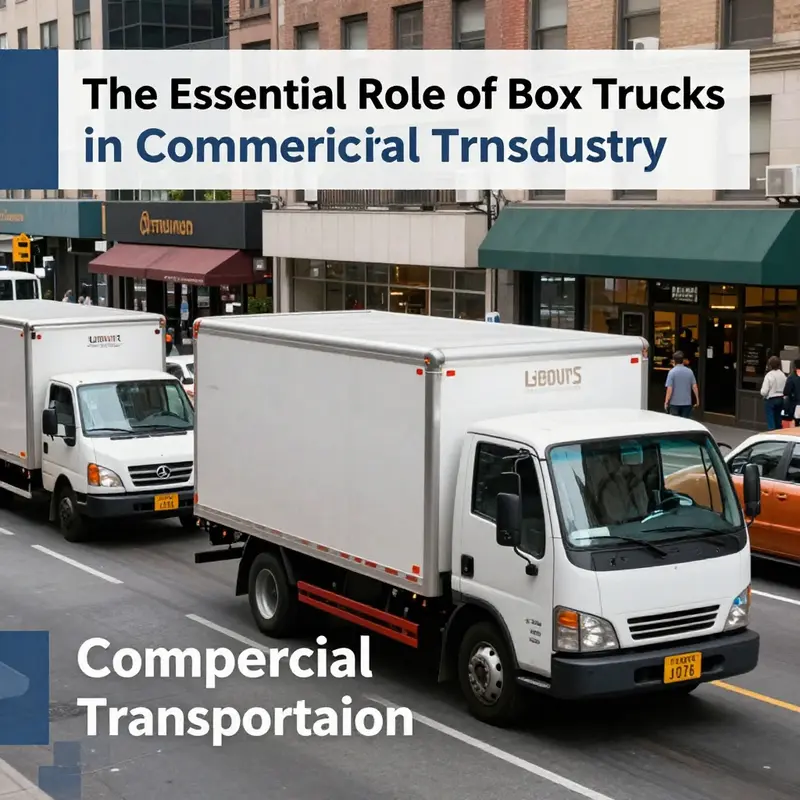
A box truck is more than a box on wheels; it is a purpose-built tool for moving goods in the economy’s everyday heartbeat. Its fully enclosed cargo area and rigid, squared-off geometry are not aesthetic choices but functional ones. They protect goods from weather, theft, and the jostle of road travel, preserving product integrity from dispatch to delivery. This combination of protection and predictable handling makes the box truck instantly recognizable as a commercial vehicle. In practical terms, that designation follows from use: a vehicle whose primary purpose is to carry freight or equipment for profit, whether it operates in last-mile delivery for a retailer, supports regional freight movement for a manufacturer, or helps families and businesses relocate during a move. This linkage between function and form is why, across major classification systems and regulatory frameworks, box trucks sit squarely in the commercial vehicle category. The consequence of that classification extends beyond a label; it governs licensing, insurance, emissions standards, and road-use considerations that shape how fleets are built and operated.
The cargo area itself is a narrative of purpose. An enclosed space makes it possible to transport a broad spectrum of items that vary in temperature sensitivity, fragility, or value. Food products that require temperature control, pharmaceuticals, electronics, and even florals demand environmental consistency and physical security. When the cargo is sensitive—perishable, high-value, or easily damaged—the box truck’s box-like enclosure becomes a logistical necessity, not merely a protective feature. The design reduces external exposure, minimizes theft risk, and helps maintain a consistent transit environment. These traits, in turn, help manufacturers, distributors, and retailers deliver on service-level commitments without sacrificing cargo integrity. The same logic applies to parcels and freight that must arrive in pristine condition for customer satisfaction or regulatory compliance. The box truck thus serves as a bridge between manufacturing and consumer delivery, a precise instrument for maintaining quality across the supply chain.
Beyond protection, the box truck is prized for versatility in urban and suburban landscapes. Not every delivery location offers a dock or a ramp, and not every city street can accommodate oversized freight movers. Box trucks rise to these constraints with a blend of accessibility and practicality. The lever that amplifies this adaptability is the hydraulic lift gate. A lift gate eliminates manual handling for heavy or awkward loads, allowing a single operator to stage goods with greater speed and safety. This capability reduces labor costs and minimizes the risk of injury, a factor that is especially meaningful for small and mid-sized businesses that may not have extensive warehouse infrastructure. When fleets need to scale up to meet peak seasons or project-based work, the lift gate becomes a force multiplier, enabling efficient asset utilization without committing to additional capital expenditures for warehousing or forklift fleets.
The market offers a spectrum of box truck configurations designed to align with different operational needs. Small box trucks, typically in the 3–5 ton range, are the fleet workhorses for last-mile delivery, city distribution, and service industries that require nimble maneuverability and reliable cargo protection without the footprint of larger rigs. Medium and large box trucks, often in the 5–10 ton range and above, support regional distribution and more demanding freight tasks, where payload capacity and drive-line strength have a direct bearing on route planning and fuel management. Specialized variants—refrigerated box trucks and electric delivery configurations among them—underscore how the same basic chassis can be adapted to sectors with stringent climate requirements or emissions considerations. These adaptations are not cosmetic; they reflect the evolving needs of food logistics, pharmaceutical supply chains, and fast-growing e-commerce networks that demand both speed and compliance.
Another facet of the box truck’s broad appeal is the financial flexibility it affords. In a market where capital budgets must be allocated with care, a scalable mix of ownership models—ranging from outright purchase to flexible leasing and short-term rental—helps fleets adjust to seasonal demand, regional market shifts, and project-based work. The capacity to add or retire units dynamically reduces idle time and lowers total cost of ownership. This flexibility is especially valuable for startups testing market entry strategies or for established firms expanding into new service lines without committing to a large, fixed asset base. The economics of box trucks—lower upfront costs relative to larger tractor-trailers, predictable maintenance, and the ability to match capacity to demand—have long made them attractive as an accessible on-ramp to professional trucking and logistics.
The transportation ecosystem where box trucks operate is broad and interconnected. They support just-in-time delivery models, a pillar of modern manufacturing and retail, and they enable rapid last-mile distribution that fuels e-commerce growth. In this context, the role of box trucks extends beyond moving goods; they enable business models built on speed, reliability, and regional resilience. This is why their performance can be used as a barometer for broader economic activity. The health of freight volumes, fuel costs, and regulatory changes can all influence how fleets size and utilize box trucks. Analysts and investors often watch industry indicators, including the Dow Jones Transportation Average, as a proxy for the demand for freight services and the broader economy’s momentum.
Where the discussion becomes particularly practical is in the everyday realities of loading and unloading. The box truck’s enclosed space, while protective, has a limit to side access. This constraint can influence how a fleet designs its operations, from warehouse provisioning to on-street loading practices. Managers may prioritize routes and customer settings that minimize lengthy curbside handling or that maximize the use of lift gates and dock facilities. The trade-off often turns on efficiency versus reach: box trucks excel in secure, weather-protected deliveries and in navigating urban cores where dock space is scarce, but they may prove less efficient for oversized or irregularly shaped cargo that would fit more seamlessly into a larger trailer. Operators continuously balance these trade-offs, tuning fleet mixes to match customer demand, service-level commitments, and the realities of the urban landscape.
The corporate and regulatory framework surrounding box trucks also shapes how they are deployed. Because they are classified as commercial vehicles, they inherit the responsibilities and incentives attached to business use. Licensing, insurance requirements, and emissions standards are calibrated to reflect their role in commerce and their impact on road safety and air quality. The push toward sustainable logistics has brought additional considerations: the appeal of alternative propulsion, driver training for safer and more efficient operation, and technologies that improve route optimization and fuel management. In sectors with strict temperature or sanitation standards, like food and pharmaceutical supply chains, compliance becomes a core component of the vehicle’s value proposition. These layers of regulation and policy influence procurement choices, fleet renewal cycles, and the timing of capital expenditure.
From an investor and industry perspective, the vitality of box trucks within the transportation suite is tied to their utilization rates, maintenance costs, and adaptability to new business models. When fleets demonstrate high utilization, the asset class signals robust demand for reliable delivery capacity, a sign of healthy retail and manufacturing momentum. Conversely, a decline in utilization can reveal shifts in consumer behavior, inventory strategies, or macroeconomic headwinds. The sector’s sensitivity to fuel prices, regulatory changes, and broader market conditions means that box trucks are not just machines; they are instruments of economic activity, reflecting how goods move from producer to consumer in real time. This dynamic makes the box truck an essential lens through which to view the evolving logistics landscape, where speed, protection, and cost-efficiency converge to meet the expectations of a marketplace that values pace and precision.
For readers curious about how fleet composition evolves with demand, a real-time sense of market dynamics can be gained by exploring current trends in used-truck sales growth. This internal signal helps illustrate how operators recalibrate their assets in response to price, depreciation, and financing conditions. See current trends in used-truck sales growth for a sense of how the secondary market influences new-purchase decisions and overall fleet strategy. The link provides a practical example of how the economic environment shapes the decision to expand, refresh, or retire box-truck assets, reinforcing the idea that these vehicles are deeply interwoven with both business strategy and policy environments.
In sum, the box truck embodies a practical convergence of protection, versatility, and cost-conscious adaptability that makes it indispensable in modern commerce. Its design and use are a direct response to the needs of a rapidly changing logistics world—where reliable delivery, flexible capacity, and efficient operation determine which businesses can meet customer expectations and which will fall behind. The box truck’s status as a commercial vehicle is not merely a matter of terminology; it is a recognition of its centrality to the flow of goods and to the economic resilience that underpins everyday life. As fleets continue to optimize for speed, sustainability, and service levels, the box truck will remain a steadfast workhorse at the heart of the supply chain, quietly powering the transactions that connect producers with shoppers, hospitals with patients, and brands with the markets they serve. For readers who want to situate this discussion within a broader economic frame, understanding the transportation sector as a whole offers useful context: see Understanding the Transportation Sector: Investment Opportunities. https://www.investopedia.com/articles/stocks/101615/investment-opportunities-transportation-sector.asp
Box Trucks on the Front Lines of Commerce: Design, Regulation, and Real-World Use
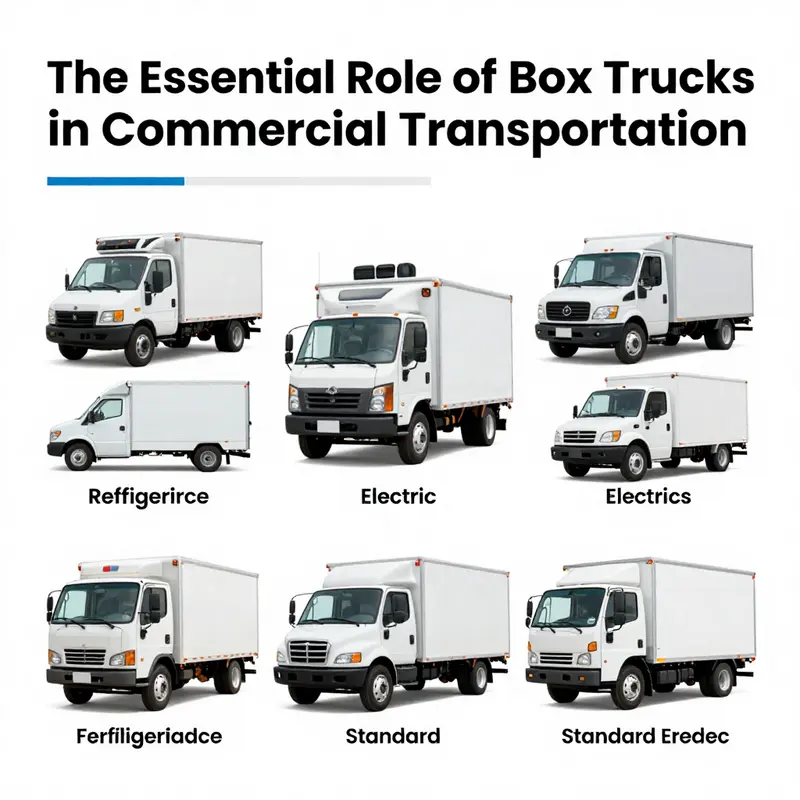
Is a box truck a commercial vehicle? The answer rests on what the vehicle is built to do and the role it plays in everyday business. A box truck, with its enclosed cargo hold and rigid, box-like silhouette, is designed to move goods. That design intention is inseparable from its status as a commercial asset. In practical terms, the box truck exists to support commerce: local deliveries, regional freight movement, moving services, and the transport of equipment and materials for profit. This functional purpose places it squarely in the realm of commercial vehicles, a category that spans a spectrum from small service vans to large freight haulers. Regulatory definitions, fleet economics, and day-to-day operating realities all align around the same core truth: when a vehicle is used to move goods for business, it is a commercial vehicle.
The variations among box trucks are not merely about size; they are about how cargo is protected, cooled, and loaded, because those features determine which tasks the truck can undertake with reliability and efficiency. Standard box trucks, typically ranging from 12 to 26 feet in length, balance cargo space with maneuverability in tight urban environments. Their payload capacities—commonly in the eight-thousand-to-fifteen-thousand-pound range—make them versatile for last-mile deliveries, small business freight, and moving services. The practical impact of this balance is felt in everyday operations: a vehicle large enough to haul substantial loads, yet compact enough to dock at crowded loading bays and navigate busy streets without the fuel and manpower demands of a bigger tractor-trailer.
When the cargo requires protection from weather or temperature swings, insulated box trucks come into play. Insulation reduces thermal exchange and helps stabilize the interior climate, a feature that matters for perishable foods, pharmaceuticals, and even sensitive floriculture products. Modern insulation materials are a triumph of lightweight engineering, yielding improved fuel efficiency without sacrificing thermal performance. The ability to maintain a steady environment during transit translates into longer shelf life for goods and more consistent quality for customers, which in turn supports trust and repeat business for logistics providers and retailers alike.
A more specialized subset of insulated trucks is the refrigerated box truck, often referred to as a reefer. These vehicles carry integrated cooling equipment that maintains precise temperatures—typically in the mid-30s Fahrenheit for beverages and dairy, and slightly higher or lower for other product categories. Reefers are essential for maintaining product integrity across regional distributions, especially for items with strict quality standards. The crafts of temperature control and load management come together in reefers to enable timely delivery of goods that would otherwise spoil or degrade during transport. This capability expands the potential service map for small and mid-sized distributors, enabling them to reach markets that demand consistent cold-chain performance without the overhead of larger, dedicated refrigerated fleets.
Although standard and climate-controlled variants are the backbone of many operations, box trucks also accommodate a range of specialized configurations for particular industries. Some fleets deploy insulated or refrigerated units for medical supplies and vaccines, where even small excursions from target temperatures can have outsized consequences. Other fleets adapt the box to support food service operations: mobile kitchens, regional catering, or on-site procurement logistics. In beverage distribution, the ability to keep products at the correct temperature during intercity hops helps preserve flavor, carbonation, and overall product quality. These applications highlight a larger theme: the box truck’s value is not simply in moving volume but in preserving value from dock to doorstep.
The chapter’s focus on variation also reveals a broader strategic message for managers and fleet operators. The decision to deploy standard, insulated, or refrigerated boxes is not a single-issue choice; it is a configuration strategy that must align with cargo mix, service commitments, and regulatory requirements. A standard box truck may excel in urban delivery routes with tight loading docks and predictable dwell times. A refrigerated box truck may be warranted for a regional cold-chain network that promises strict quality control and compliance with health and safety standards. Insulated boxes occupy a space in between, offering climate stability for goods that benefit from reduced thermal stress but do not demand active cooling. In all cases, the chassis and body design of a box truck provides a flexible platform that can be tailored with interior layout changes, door configurations, and load-securement features to optimize loading efficiency, cargo protection, and driver ergonomics.
From a business perspective, the box truck represents a pragmatic entry point into professional logistics. It offers a predictable total cost of ownership, a robust resale market in many regions, and a wide network of maintenance and repair channels. For companies contemplating growth or diversification, the box truck provides a scalable solution that can adapt to new routes, new customers, and evolving service levels without the capital and complexity of larger commercial equipment. The economics of a box truck become clearer when comparing it to heavier, less maneuverable equipment or to smaller passenger vans repurposed for freight. In many markets, the box truck’s balance of capacity, flexibility, and operating efficiency creates a sweet spot that supports steady, profitable service expansion while keeping operating risk balanced with revenue opportunities.
The regulatory dimension of box trucks reinforces their commercial identity. Because these vehicles are used to transport goods for business purposes, fleets must contend with licensing requirements, vehicle inspections, and safety standards that reflect their role in commerce. In the United States, CDL considerations often hinge on gross vehicle weight rating (GVWR), with a threshold around 26,000 pounds for where commercial driver licensing becomes necessary. Even when a CDL is not required, the commercial status drives practice: routine preventive maintenance, cargo securement procedures, and driver training to minimize incidents and liability. In practice, many operations implement formal safety programs that address load restraint, dock safety, and proper temperature monitoring for insulated and refrigerated units. The box truck’s enclosed cargo space amplifies the importance of secure loading and reliable seals; a door that doesn’t seal properly or a load that shifts during transit can undermine both product quality and safety.
The box truck’s place in the broader fleet ecosystem is not that of a solitary tool but of a flexible node that blends with other assets. It shares the road with larger tractor-trailers, smaller cargo vans, and specialty vehicles, yet its combination of mass, protection, and maneuverability makes it uniquely suited for tasks that require dependable inland reach coupled with cargo security. The vehicle’s performance characteristics—stable handling, predictable braking, and fuel efficiency for its class—contribute to reliable service across diverse routes and conditions. These traits, taken together, explain why the box truck remains a preferred platform for many operations that must combine speed, protection, and controllable cost. In an era where logistics must balance service quality with environmental and regulatory constraints, the box truck offers a resilient, adaptable path forward.
For readers seeking practical context beyond theory, there is value in reviewing industry perspectives housed in accessible resources such as the McGrath Trucks blog, which can help connect the concepts discussed here with real-world decisions about fleet composition, maintenance planning, and market shifts. the McGrath Trucks blog.
While the core function of the box truck stays constant—protecting and transporting goods—the methods and tools that support it continue to evolve. Environmental considerations push fleets to seek better fuel efficiency and to explore electrified or hybrid powertrains for mid-size commercial vehicles. Innovations in insulation materials, refrigeration performance, and smart monitoring technologies expand the capability of these vehicles to perform reliably under tighter service guarantees and longer operating hours. The box truck thus remains a dynamic, adaptable platform, capable of absorbing policy changes and technology advances without losing its essential purpose: to move goods securely, efficiently, and predictably from origin to destination.
For a deeper, more technical exploration of insulation and material standards, readers can consult established industry guides such as the external source linked here: https://www.fleetowner.com/transportation/insulated-box-trucks-types-material-standards-and-common-industrial-uses. The guide provides context for how insulation performance, weight considerations, and maintenance interact with overall fleet performance and customer satisfaction.
null
null
Final thoughts
Box trucks are integral to the commercial transport landscape, seamlessly merging functionality with regulatory compliance. As this article has demonstrated, their classification under commercial vehicles is not only supported by industry standards but also reinforced by their diverse applications in logistics, freight, and specialized deliveries. Understanding the full scope of their utility can empower fleet managers, logistics providers, and procurement teams to make informed choices for their operations, optimizing efficiency and cost. By recognizing the impactful role that box trucks have, businesses can better address their transportation needs and adapt to evolving market demands.