The longevity and reliability of commercial truck tractors can often lead owners and fleet managers to consider models from several decades past. While these vehicles, such as the 1993 commercial truck tractor, can represent significant investment potential, they come with their own set of complexities. Particularly, understanding the requirements for a valid driver’s license, ensuring vehicle safety and maintenance, and adhering to emissions regulations is crucial for effective operation. This article explores these critical factors to guide trucking company owners, fleet managers, construction procurement teams, and logistics firms in making informed decisions about operating older truck models.
null
null
Old Steel, Modern Standards: Safely Operating a 1993 Commercial Truck Tractor
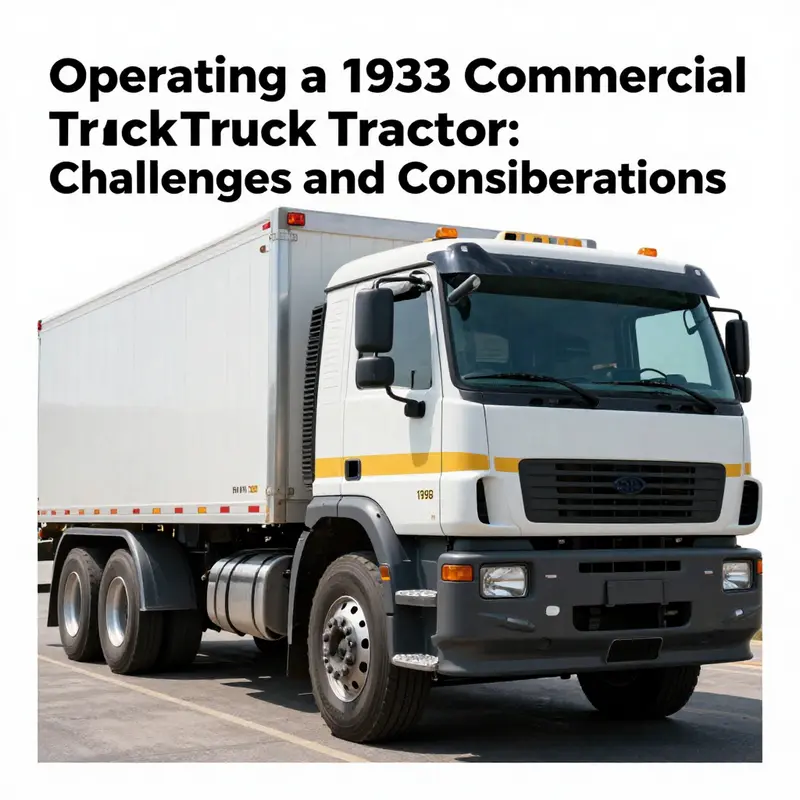
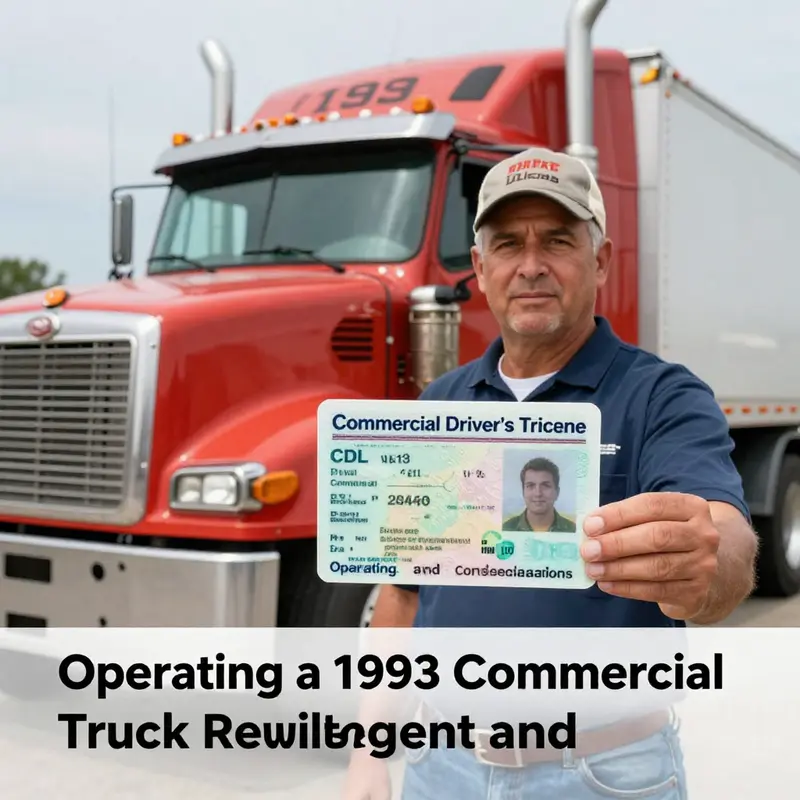
A 1993 commercial truck tractor carries the aura of a bygone era of raw power and straightforward mechanical design. Yet today, operating such a machine requires more than a licensed driver’s confidence; it demands disciplined maintenance, rigorous adherence to safety protocols, and a clear understanding of evolving regulations. The aim is not to romanticize the past but to bridge it with today’s expectations for reliability, safety, and compliance. In this light, the act of operating a vintage heavy-duty tractor becomes a careful, ongoing partnership between the vehicle’s enduring framework and the driver who respects its limits. The starting point is a valid Commercial Driver’s License with the appropriate endorsements for the vehicle and the cargo you intend to haul. A Class B or the appropriate CDL category is typically necessary for a tractor-trailer configuration of this era, but the key is not the label alone. The endorsement must reflect the type of operation, whether it is property, general freight, hazmat, or other specialized loads. Without this credential, the road becomes a legal risk and a safety hazard for others on the highway. The driver’s license is the gateway to lawful operation, and beyond that gateway sits a landscape of mechanical readiness and regulatory compliance that must be navigated with care.
Age introduces a double-edged reality. On one hand, a 1993 tractor represents a proven, straightforward design with components that, when well maintained, can perform dependable work. On the other hand, those same components have endured decades of heat, vibration, and cyclical loading, which erode tolerances and raise the probability of failure if maintenance lapses occur. The vehicle’s reliability hinges on a proactive maintenance discipline that treats every inspection as a preventative measure rather than a reaction to a breakdown. Central to that discipline is the daily, meticulous pre-trip and post-trip inspection, followed by a structured, long-term maintenance schedule. The vehicle’s condition must pass the periodic safety inspections mandated by the jurisdiction, and that means brakes, tires, lights, steering, suspension, and the engine system must all be in excellent working order. The reality is that with vintage equipment, the margin for error narrows. Small issues can cascade into larger faults if left unchecked, leading to sudden road service calls, costly downtime, and, more importantly, safety risks for the driver and other road users.
To illuminate the path forward, the maintenance discipline must anchor itself to the official guidance that defined the era’s service expectations. The definitive approach comes from the OEM maintenance and lubrication manual that applied to 1993-era heavy-duty tractors. This manual lays out the routine checks, lubrication intervals, and troubleshooting procedures that technicians used to keep these machines in service. Following those factory specifications is crucial because they reflect the original design tolerances and the materials used by the engineers who built the engine, the transmission, the axles, and the hydraulic assemblies. The manual is not a mere reference; it is a practical operating framework. For instance, routine lubrication and systematic inspections of critical components—such as the braking system, the cooling circuit, the fuel system, and the electrical harnesses—are described in stepwise detail. When the maintenance tasks are performed exactly as described, the likelihood of early wear, misalignment, or part failure diminishes, and the machine remains aligned with the safety standards of its time while still delivering predictable performance on today’s roads.
Internal engine and transmission repairs demand even greater diligence. When seals and rings are replaced, the guidance from the era’s manuals emphasizes treating them as a matched assembly. A proper fit and consistent wear pattern between the seal and ring are essential, because mismatches can lead to leaks, inefficiencies, or dysfunction of the crankcase or valve train. This principle—matched parts, verified wear, and precise installation—extends beyond the engine to the drivetrain’s other critical interfaces. For example, structural and mechanical components such as return mechanism halves and their related fittings must be inspected for cracks or fatigue. A cracked or damaged component can propagate a misalignment that harms the entire drivetrain, increasing the risk of sudden failure under load. The maintenance philosophy from the period stresses accuracy and attention to the smallest tolerances because these trucks were built with a level of ruggedness that invites long service when treated with respect and discipline.
To ground these practices in a broad context without nostalgia, it helps to acknowledge that analogous standards exist in other heavy-duty platforms from the same era. Contemporary repair manuals for similar models emphasize the same safeguards: genuine or equivalent quality parts, adherence to official procedures, and the need to track wear at interfaces that bear the brunt of long-haul operation. The overarching takeaway is clear: when dealing with a 1993 tractor, maintenance is a continuous, traceable process. A once-a-year overhaul cannot substitute for a calendar of frequent checks, and a single missed adjustment can cascade into a longer, costlier repair cycle. The reliability of the vehicle, its safety on the road, and its ability to meet today’s environmental and traffic regulations depend on such unwavering attention to detail.
Emissions and environmental regulations form another essential axis of this discussion. Tractors manufactured before certain dates may fail to meet current emissions standards, and several jurisdictions have introduced restrictions or prohibitions on operating older diesel-powered vehicles in specific zones or at certain times. The driver and fleet operator must verify whether the 1993 build date triggers any local or regional prohibitions or additional compliance requirements. This is not a theoretical concern: it translates into real-world decisions about where the vehicle can operate, the routes that should be planned, and the potential need for retrofits or alternative equipment to maintain compliance. Checking with the local department of motor vehicles and the relevant environmental agencies is a practical step in formulating a viable operations plan. The conversation around emissions is not about denying the vehicle its place in a fleet, but about integrating the machine into a broader framework of environmental responsibility and community health. In some markets, operators with older equipment mitigate risk by implementing idle reduction strategies, ensuring the engine is maintained to minimize smoke and fuel consumption, and prioritizing routes that minimize exposure to sensitive air quality zones.
Insurance and registration introduce another, often underappreciated curveball. Vintage or antique classification for a commercial truck can complicate the insurance landscape. Providers may require specialized policies, higher premiums, or additional safety features to qualify for coverage. Registration can vary widely by state or country, and some jurisdictions impose restrictions on operation hours, weight limits, or permissible cargo types for older vehicles. In practice, the operator must budget not only for the baseline insurance and registration costs but also for potential premiums tied to higher risk profiles, cumulative mileage, or the need for more frequent safety inspections. The economics of operating a 1993 tractor hinge on balancing affordability with reliability. A rigorous maintenance program, a proactive safety culture, and a willingness to adjust the business model to match regulatory realities and insurer expectations are all part of the equation.
The practical takeaway for anyone considering operation of a 1993 tractor is that legality and safety rest on a triad: a valid CDL with appropriate endorsements, uncompromising maintenance and inspection discipline, and a due diligence process around emissions, insurance, and registration. The maintenance discipline should be narrated by a formal, repeatable process rather than impromptu checks. A driver who logs each inspection, notes corrective actions, and tracks component wear creates a reliable operational history that supports safer driving and better asset management. The OEM guidance provides the skeleton of this process, while the daily discipline and the willingness to adapt to today’s regulatory context bring it to life.
As you reflect on this balance, it is useful to consider how to manage parts and maintenance in a way that preserves long-term reliability. The replacement of internal engine components or transmission elements, when necessary, should follow the principle of matched assemblies and wear checks. The same care should be taken with critical structural components and their supporting hardware. The goal is not to chase a flawless, “new-old-stock” ideal but to sustain a known good state that respects the vehicle’s engineering and the operator’s responsibilities. This is why a robust parts strategy matters: using genuine or equivalent quality parts ensures compatibility with the machine’s tolerances and materials, reducing the risk of premature failure due to substandard replacements. In the end, the machine’s longevity is less about magic fixes and more about consistent adherence to factory standards, meticulous inspection routines, and a disciplined approach to repairs.
From a practical standpoint, the maintenance program begins with a comprehensive baseline assessment. A qualified technician would review the braking system for pad wear and hydraulic integrity, inspect tires for tread depth and sidewall damage, evaluate lighting and signaling, and verify fluid levels across the cooling, lubrication, fuel, and hydraulic systems. The baseline is then translated into a maintenance calendar that incorporates routine lubrication, filter changes, and performance testing of critical subsystems. The OEM manual and the contemporary repair literature advise the use of exact procedures for every task, including torque specifications, sequence of disassembly and reassembly, and the use of prescribed lubricants and sealants. The aim is to establish a documented, auditable record of all maintenance actions, an essential safeguard in the event of regulatory review, insurance inquiries, or a future sale.
The decision to operate a 1993 tractor, however, should also be anchored in a careful risk assessment. The older the vehicle, the more a single failure could impact a route, a schedule, or a customer commitment. The driver’s judgment must be tuned to the possibility of a roadside event, a fault in the braking system under heavy load, or a tire blowout on a rural highway. These are not hypothetical; they are everyday realities in heavy-duty transport. Preparedness then becomes a matter of planning: carrying suitable repair tools, a well-stocked spare parts kit, and access to trained technicians who understand vintage mechanical systems. The aim is not to eliminate risk but to reduce it to a manageable level through proactive maintenance and prudent routing. The OEM manuals and the parallel manuals used for similar heavy-duty platforms emphasize this approach—treat the truck as a high-demand asset that rewards disciplined care and informed operating choices.
As you navigate the decision-making landscape, you might also consider resources that discuss how to acquire a vintage truck without compromising your business needs. For example, a guide that compares dealer purchases versus auctions can offer practical insights into the risk-reward calculus of owning a 1993-era tractor. Such a resource helps frame expectations around vehicle condition, pricing, and the level of post-purchase maintenance you should anticipate. This line of inquiry complements the maintenance discipline by aligning the asset with your operational requirements and financial planning, ensuring you do not overextend on a project that requires more care than you can responsibly provide. Choosing your truck through dealer sales vs auctions.
In a broader sense, the landscape for vintage heavy-duty trucks is influenced by environmental and regulatory trends that can shift quickly. Keeping abreast of local laws, including emissions standards, idle restrictions, and route-specific prohibitions, is integral to a sustainable operation. It is not enough to keep the truck road-ready; the operation must stay compliant and adaptable. Regular dialogue with the DMV or environmental authorities, and participation in industry-focused safety and maintenance communities, can help the owner anticipate regulatory changes before they interrupt service. The maintenance framework, therefore, becomes a living system—one that evolves with new rules and new expectations for safety and environmental stewardship.
The recommended path for someone who wants to operate a 1993 tractor with confidence begins with a clear safety and maintenance foundation. Start with a full, formal inspection using the OEM-era maintenance manual as your primary reference. Validate all critical systems with precise measurements, torque checks, and lubrication schedules. Confirm the truck’s emissions status and identify any region-specific restrictions before entering service. If the vehicle passes those tests with a healthy margin, back your operation with appropriate insurance and a reliable registration arrangement that reflects the vehicle’s vintage status and your planned use. Beyond the vehicle, ensure your own readiness through ongoing training focused on truck safety practices, crash avoidance, and emergency procedures. The goal is to create a stable operating environment where the truck and the driver can work together with predictable outcomes.
To support ongoing learning and safety, remember that the official technical support resources for vintage commercial vehicles remain a valuable reference. These resources preserve legacy service information, provide technical bulletins, and offer expert guidance on maintaining performance while respecting the constraints of older machinery. Access to these materials helps sustain the safety, reliability, and performance of a 1993 tractor long into its service life. External reference: the OEM manufacturer’s official technical support site is a reliable place to verify procedures, torque specifications, and maintenance advisories that align with factory standards. https://www.mack.com/support.
The bottom line is that operating a 1993 commercial truck tractor is entirely feasible with the right framework. It requires a valid CDL with the correct endorsements, a rigorous maintenance program anchored in original-era guidance, a vigilant eye on emissions and regulatory compliance, and a practical approach to insurance and registration. The chapter’s core message remains simple: treat the truck as a legacy asset that demands today’s standards in every check, every replacement, and every route chosen. With disciplined maintenance, informed decision-making about purchase and operation, and access to authoritative maintenance and troubleshooting resources, a 1993 tractor can deliver reliable service while aligning with the safety and environmental expectations of the modern road. As you consider moving forward, keep in mind the broader context of the used-truck market and the policy trends that shape access to affordable, well-maintained equipment. Balancing the historical reliability of the machine with the demands of today’s regulatory and safety landscape will position you to make a decision that honors both the past and the road ahead.
Old Iron, New Rules: Navigating Emissions and Compliance for a 1993 Commercial Truck Tractor
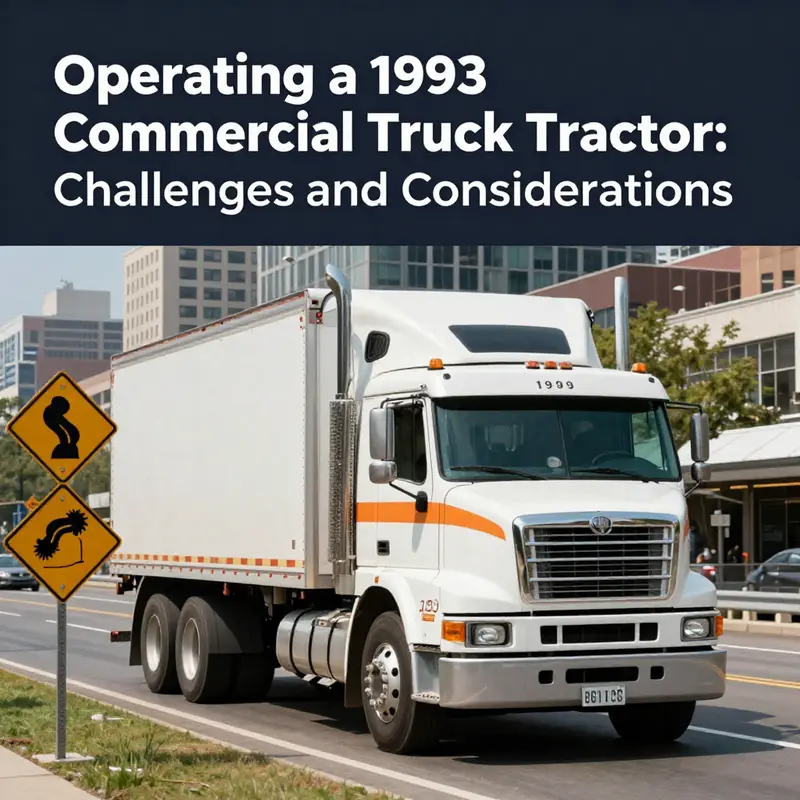
The 1993 commercial truck tractor stands as a stubborn link to a different era of road transport. Its steel frame, torque-rich engine, and the characteristic rumble of an older diesel can feel like a nostalgic reminder of long-haul miles traveled with less regulatory friction. Yet the road world has changed, and the rules that govern emission, safety, and reliability now form a dense fabric that can be difficult to untangle for anyone who relies on vintage powertrains to earn a living. In practical terms, operating a 1993 tractor today requires more than a valid driver’s license and a steady supply of diesel. It demands a clear-eyed assessment of emissions compliance, environmental zones, and the financial arithmetic of maintenance, insurance, and registration. The chapter that follows threads these threads together—showing how the regulatory environment has evolved, why older trucks are increasingly challenged to stay in service, and what it means for a driver, a fleet, or an individual owner who wants to keep the wheel turning without courting risk or ruin.
Emissions regulation has evolved from industry-accepted norms into a system of enforceable standards that explicitly tie performance to pollution outcomes. Trucks from the early 1990s were built to meet pre-2004 EPA emission standards, a regime that now reads as quaint in comparison to today’s limits. The difference is not merely a number on a chart; it is a fundamental shift in what counts as acceptable air quality, what counts as a feasible operating cost, and what counts as an enforceable limit in the places where trucks must pass through. In broad terms, the modern heavy-duty framework relies on innovative control technologies—diesel particulate filters (DPF), selective catalytic reduction (SCR), and advanced fuel-injection strategies—that aggressively reduce soot, oxides of nitrogen, and other pollutants. A 1993 model, by contrast, would typically lack these post-2004 technologies or would require extensive, often impractical retrofits to meet current standards.
This is not merely a matter of compliance paperwork. It is a question of whether the vehicle can physically meet the environmental constraints that cities and states now impose. Some jurisdictions have established low-emission zones and outright bans that preclude older diesel trucks from certain corridors or urban centers on certain days or at certain times. Even where a truck can operate, the penalties for alarmingly high emissions can be steep, including fines or removal from service until the vehicle meets required conditions. The regulatory ladder is not uniform; it rises at the national level, with broad standards that set expectations, and then descends into state and local levels that translate those expectations into tangible restrictions. For someone who owns or operates a 1993 tractor, the practical takeaway is that the vehicle’s age translates into a higher probability of encountering a constraint somewhere along the route—whether in the form of a prohibited access zone, more stringent inspection regimes, or necessitated retrofits that may not be cost-effective.
The environmental rationale behind these shifts is straightforward enough. Modern diesel engines, when paired with DPFs and SCR systems, trap particulate matter and chemically reduce nitrogen oxides before exhaust enters the atmosphere. The result is cleaner air, a healthier urban environment, and a path toward meeting long-term climate goals. Those goals have strong policy backing in many regions, including extensive EPA oversight in the United States and corresponding programs across Europe and other parts of the world. Even though retroactive rules rarely—if ever—mandate retrofitting old vehicles to any specific standard, the cumulative effect of ongoing updates is a de facto tightening of the operating landscape for vintage equipment. The consequence is not simply compliance risk but also the reality that operating costs rise as fuel efficiency declines and maintenance becomes more elaborate and expensive. The conversation around whether to keep a 1993 tractor in service thus naturally migrates from a mechanical evaluation to a broader assessment of environmental responsibility, regulatory risk, and long-term economic viability.
One obvious dimension of this assessment is maintenance. The mechanical heart of a 1993 tractor is hardy in its design but older in its needs. Parts availability can shrink with each passing year, and the pool of technicians who are comfortable diagnosing and repairing a decades-old engine or transmission can narrow as well. When a component fails—whether it is a fuel-injection pump, a turbocharger, or a brake system that relies on older hydraulics—the path to repair grows more circuitous. Shops may need to source rare parts from specialty suppliers, or they may attempt adaptations that risk performance and safety. The concern is compounded by the requirements of inspection regimes that focus not only on mechanical integrity but also on emissions-related components. Brakes, tires, lights, and the engine itself must be in excellent working order. A vehicle that can pass a standard DOT inspection in one state could face a different calculus in another state, depending on how strictly it interprets maintenance requirements or emissions components that may no longer be supported by the market.
To the driver who relies on a 1993 tractor for daily operation, the maintenance story becomes a balancing act. You must allocate time and money to keep the truck roadworthy while also acknowledging that some costs may grow faster than the revenue it can generate. The economics of this choice are not simply about fuel efficiency. They hinge on a broader cost structure that includes insurance, registration, and the potential for penalties if the vehicle is found noncompliant in a city, county, or state that has tightened its rules. Insurance, in particular, can present a subtler barrier. It is common for insurers to require specialized policies for antique or vintage commercial vehicles, with premium schedules that reflect higher risk or uncertain long-term value. The registration process can also prove burdensome, as authorities may impose restrictions or require periodic demonstrations of compliance with environmental and safety standards that are not a concern for newer fleets. These layers of administration, while necessary for public safety and environmental protection, add to the total cost of ownership and thus influence the decision to operate a 1993 tractor at all.
The narrative around emissions, however, should not be read as a cautionary tale that ends with obsolescence. It is a framework for informed decision making. A driver who still wants to operate a 1993 tractor can do so, but the conditions under which such operation is feasible are changing. For some routes, in some regions, there may be limited windows of opportunity where exemptions exist or where the vehicle can operate under certain time-of-day or zone-based allowances. In other cases, the vehicle may be restricted to rural or non-urban segments where emissions constraints are less stringent or where enforcement is less aggressive. The critical task is to map the jurisdictional terrain ahead of time, anticipate the compliance costs, and weigh them against the potential revenue and flexibility that the older equipment provides. This is not a purely theoretical exercise. It translates into practical steps, from confirming that the truck’s engine, exhaust system, and fuel system are in optimal condition to conducting a candid analysis of how often and where the vehicle can legally operate without triggering penalties or unsafe conditions.
Understanding the regulatory landscape also means recognizing the broader economic shifts that shape the fleets of the future. There is a broad push toward zero-emission transportation, driven by policy mandates in some regions and market demand in others. The pace of this transition varies, but the direction is clear: there is rising investment in electric and hydrogen-powered alternatives, new chassis and powertrains designed to meet stricter standards, and a growing ecosystem around the procurement, maintenance, and support of modern, compliant vehicles. While this trend does not erase the value of older equipment outright, it does redefine its role. In the long term, the residual value of a 1993 tractor is likely to hinge on the combination of condition, historical usage, geographic flexibility, and the degree to which a buyer is willing to accept the ongoing compliance and cost challenges. For a seller, this is not merely about tying a price to the mechanical condition but about presenting a complete story of how the vehicle has been maintained, how emissions-related components have fared over time, and what constraints a potential buyer would face in continuing operation.
In the meantime, the anchor for any realistic assessment remains the practical requirements of certification and operation. A valid CDL with the correct endorsements is essential. This is not merely about driving; it is about the legal authority to haul specific types of cargo and to operate in specialized environments. The truck itself must pass safety inspections and, crucially, must be poised to comply with emissions-related expectations—whether that means demonstrating that the exhaust system operates within permitted limits, that the engine is in good tune, or that any retrofits, if legally permissible and economically justifiable, have been implemented to a standard that the regulatory body accepts. Even when operating in a jurisdiction that does not ban older models outright, the driver must be prepared for more rigorous inspections, more frequent checks, and a higher baseline of safety and maintenance discipline.
This is where the economic calculus becomes central. The older the truck, the tighter the margin between maintenance costs and income. The fuel economy of a 1993 tractor is unlikely to rival that of modern heavy-duty trucks, which means higher operating costs per mile. The maintenance cost per mile can also rise as components become scarce and specialized technicians command premiums for expertise in aging systems. Insurance premiums, as mentioned earlier, may reflect the higher risk profile associated with older mechanical design and the potential for emissions-related noncompliance. Registration and potential fees or administrative hurdles add to the ongoing cost of ownership. Against this backdrop, the market value of a 1993 tractor is often not simply a function of its mechanical condition but also a function of how easy it is to operate within the evolving regulatory framework. For a prospective buyer or a dealer, there is a strong incentive to consider the broader market dynamics that emissions policy exerts on older equipment. Existing literature and market analyses suggest a persistent pressure on the price of older, high-emission assets as regions expand LEZs and tighten compliance expectations. For a deeper read on how emissions considerations are shaping used-truck pricing, see the discussion on the emissions-to-price linkage in the used-truck market.
Impact of Emissions on Used Truck Prices
Beyond the economics, there is a social and environmental aspect to consider. The responsibility of operating a heavy-duty vehicle with an older emissions profile sits at the intersection of individual livelihood and community welfare. Truck drivers and fleet operators who choose to run vintage tractors often argue that these assets deliver reliable service in the right hands, particularly in markets where demand remains robust and upfit costs for modern equipment can be prohibitive. But the broader policy landscape is designed to ensure that the cumulative impact of old, high-pollution trucks does not undermine air quality or public health. This duality—practical utility on one side and environmental accountability on the other—colors every staffing decision, route planning, and insurance negotiation. It invites a careful, transparent conversation about the true cost of keeping an old machine on the road and about the alternative configurations that might keep the business viable while aligning with environmental and safety standards. Those alternatives often include investing in a newer, compliant used truck that has already absorbed the shock of passing through emission controls and safety inspections, or leasing a newer model that offers better fuel efficiency, longer service intervals, and a lower risk of downtime. Either path helps to mitigate the friction between an aging asset and the demands of contemporary regulation, especially in a market where policy signals are steadily tilting toward cleaner, more efficient propulsion systems.
As with any long-term capital and operational decision, success hinges on information and timing. The information must be accurate about regulatory expectations, the state of the vehicle, and the true cost of ownership. Timing matters because the regulatory environment can tighten with little notice through rule updates, new zone designs, or shifts in enforcement priorities. A driver who plans today for a possible upgrade within the next year has a better chance of aligning with available incentives, financing, and a smoother ownership transition than someone who acts only after a closure notice or a penalty appears on a docket. That is why ongoing education, meticulous record-keeping, and proactive maintenance planning are not luxuries for owners of a 1993 tractor—they are prerequisites for staying on the road at all. When a vehicle has decades of road service behind it, the best possible practice is to document every maintenance action, every parts replacement, every inspection, and every modification with specificity. The narrative this documentation creates can be the difference between a truck that remains legally operable and one that becomes a liability.
In this context, the decision to operate or retire a 1993 tractor cannot be resolved by a single factor alone. It is a synthesis of regulatory risk, safety and maintenance readiness, total cost of ownership, and the strategic outlook of the business or the driver’s personal circumstances. For some operators, the appeal of a familiar cab, the mental map of the routes, and the steady availability of parts will keep the tractor in service for another season or two, albeit with a careful eye on emissions compliance and the possibility of restrictions. For others, the smart play will be to migrate to a newer, more efficient model that can meaningfully reduce fuel consumption, lower downtime, and simplify the complexity of compliance. Either path requires honest benchmarking against real-world routes, load profiles, and operating environments. It also requires talking with authorities, insurers, and maintenance partners who can provide a grounded reading of the current regulatory climate and the practicalities of keeping a vintage unit legally and financially sustainable on today’s roads.
The end result, for most readers, is not a dramatic verdict about whether a 1993 tractor can or cannot operate. It is a careful, disciplined framework for evaluating the ongoing viability of that asset in a world where rules keep getting stricter and the options for compliance keep expanding. The chapter’s aim is to illuminate the interplay between emissions policy, fleet economics, and the practical realities of old-school trucking. It is a reminder that a vintage powerhouse can still compete under the right conditions, but those conditions are contingent on a clear plan, transparent budgeting, and a willingness to adapt as the road ahead continues to be reshaped by environmental concerns, technological progress, and shifting public expectations. In short, the question is not only whether a 1993 tractor can operate within the letter of the law, but whether it can do so in a way that is sustainable, predictable, and aligned with the trajectory of the industry as a whole.
For readers who want to situate this discussion within a broader market context, the literature on emissions and pricing provides additional insight into how environmental regulation nudges the value proposition of older equipment. It is instructive to review how emission costs flow through the supply chain, how used-truck prices respond to tightening standards, and how buyers weigh vintage powertrains against the cost and risk of retrofits or replacements. The shifting balance between maintenance intensity and downtime risk versus purchase price is a persistent theme that emerges across multiple markets, reinforcing the idea that the decision to operate a 1993 tractor is as much about strategic positioning as it is about mechanical capability. As policies continue to evolve, the most resilient operators will be those who continuously align their asset base with current and anticipated standards, while preserving the flexibility to adapt their routes, financing, and maintenance practices when the regulatory climate shifts again. This is not a call to abandon legacy machines; it is a call to approach them with a structured mindset that respects both the power of the technology and the responsibilities that come with driving in a world that increasingly prizes clean air, road safety, and predictable operation.
External resources provide further context for how these policies play out in practice. For a detailed overview of current emissions standards and how they influence heavy-duty vehicle operation, review the official guidance from the U.S. Environmental Protection Agency on Heavy-Duty Vehicle Emissions: https://www.epa.gov/vehicles-and-fuels/heavy-duty-vehicle-emissions. This material anchors the regulatory narrative in concrete metrics and regulatory expectations that operators should understand as they assess the viability of their 1993 tractor in today’s environment. The broader point remains clear: while an older truck may still be mechanically sound, its ability to operate on modern terms depends on a comprehensive, forward-looking assessment that integrates regulatory compliance, maintenance reality, and market dynamics into a coherent plan for the road ahead.
Final thoughts
Operating a 1993 commercial truck tractor is achievable with the right precautions and knowledge. Valid driver’s licenses, adherence to rigorous safety and maintenance protocols, and compliance with emissions regulations are paramount for securing operational legality and safety. As the trucking and logistics industries continue to evolve, understanding how to navigate the complexities of using legacy vehicles remains vital for fleet managers and procurement teams. By prioritizing these factors, businesses can realize the benefits of incorporating classic models while ensuring their operations meet modern standards.