In the intricate world of commercial truck repair, experience emerges as a linchpin for operational success. With the ongoing evolution of vehicle technology, modern trucks have transformed from straightforward mechanical structures to complex electronic ecosystems. This technological complexity mandates a deeper comprehension that only seasoned technicians possess. Chapter by chapter, we will explore how experience influences key aspects of truck repair—from navigating advanced systems and enabling rapid diagnoses to addressing unpredictable issues in older vehicles. Additionally, we will delve into how an experienced workforce ensures safety and reliability and maximizes operational efficiency, ultimately supporting trucking company owners, fleet managers, and procurement teams in making informed, resourceful decisions pertaining to their fleets.
Experience as Compass in a Data-Driven Landscape: Navigating Modern Commercial Truck Repair
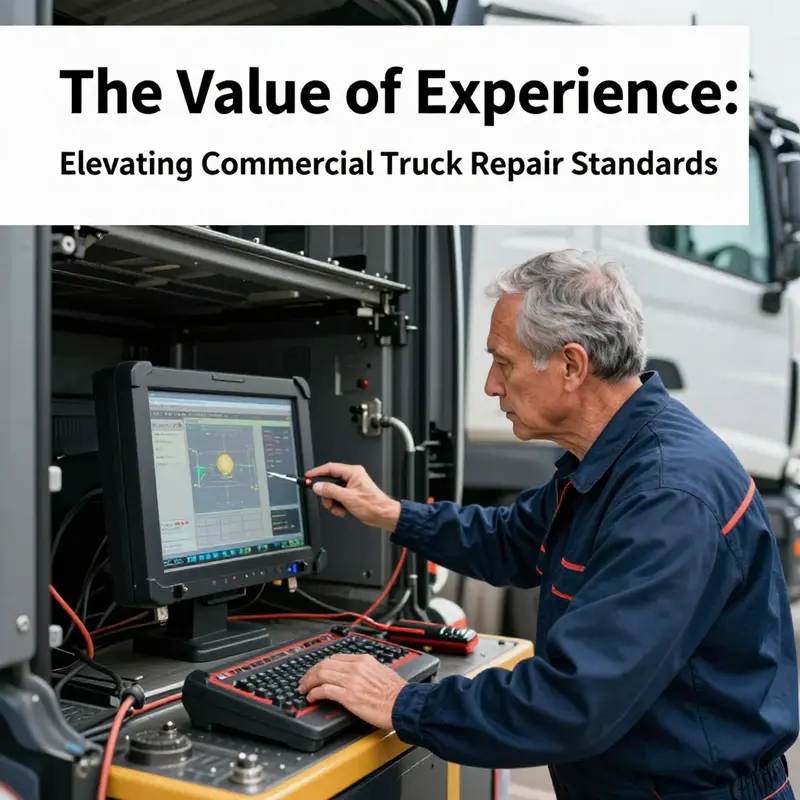
In the world of commercial truck repair, knowledge now lives beyond the toolbox. It rests in technicians who can sift through dashboards of data, interpret fault codes, and translate digital signals into safe, roadworthy hardware. The modern truck is a moving data center, where electronics, engine management software, exhaust after-treatment, and safety systems work together to meet performance, efficiency, and regulatory demands.
Experience acts as a compass that turns raw signals into actionable work. It allows technicians to recognize patterns, anticipate failures before they fully materialize, and craft repair plans that respect torque specifications and process safety. The shift from purely mechanical troubleshooting to diagnosing electronically controlled assemblies is not a single gain but a maturation of judgment that grows with every mile of service and every diagnostic readout.
As systems become more interconnected, those who have seen many trucks under many operating conditions understand how elements such as fuel delivery, exhaust after-treatment, and brake control interact. They know what a scanner can reveal and, crucially, what it cannot tell without context built from experience and fleet history.
Experience also shapes how technicians communicate and collaborate. Seasoned workers translate complex diagnostics into clear, actionable language for fleet managers and technicians alike. They help teams plan maintenance windows, prioritize repairs, and document lessons learned so the next technician can benefit from past work.
Taken together, experience and modern tools create a reliable workflow. Diagnostic software, data logs, and repair procedures provide signals, while experience provides the interpretive framework that turns signals into decisions that are safe, effective, and repeatable.
Those who invest in experience accelerate uptime for fleets by reducing guesswork and shortening diagnostic cycles. They learn to triage quickly, apply the right tests, and verify results with confidence before the vehicle returns to service.
Finally, a culture that blends continuous learning with practical field work ensures that knowledge does not erode. By mentoring younger technicians, sharing patterns, and documenting outcomes, an experienced shop builds resilience that keeps trucks on the road in an era of increasing electrical complexity.
The Silent Edge: How Experience Powers Quick, Precise Diagnoses in Modern Commercial Truck Repair
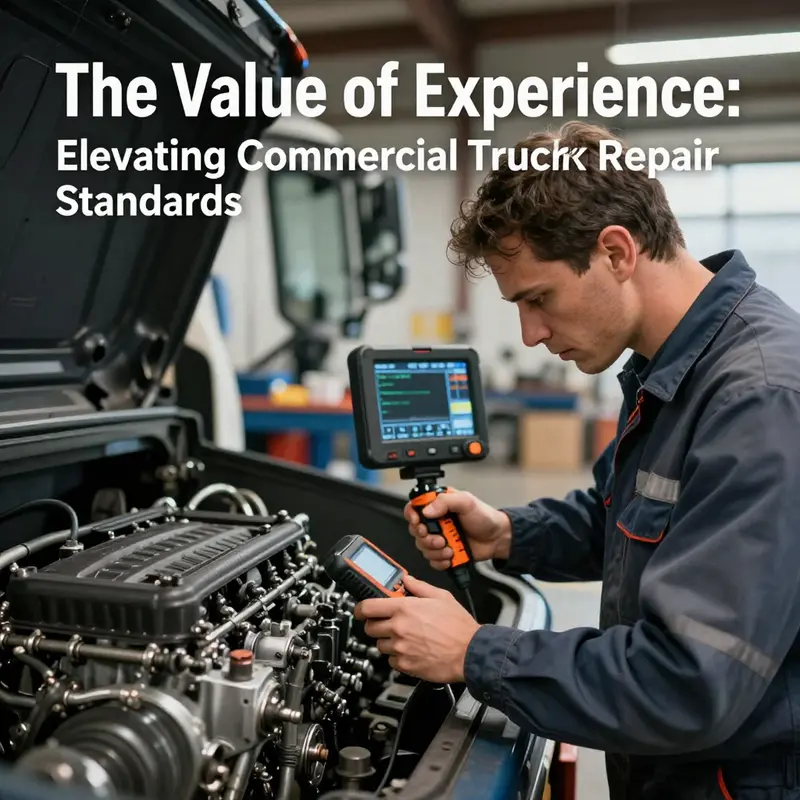
Modern commercial trucks are not mere mechanical engines; they are complex ecosystems where hardware, software, and real-time data converge to keep freight moving. In this environment, experience acts as a refined lens that clarifies noisy signals, frames ambiguous symptoms, and guides decisive action under pressure. A veteran technician brings more than skill with a wrench; they bring a stored library of past cases, a practiced instinct for where to look first, and a disciplined method for turning data into a clear diagnosis. The diagnostic tool is indispensable, but its usefulness hinges on the operator who reads the numbers, weighs the context, and asks the right questions in the right order. In busy repair bays and on long-haul fleets alike, experience transforms a potential hour-long search into a focused sequence that yields answers and keeps the line of work moving forward rather than stalling on one stubborn fault.
The heart of the matter lies in the extraordinary complexity of today’s trucks. Modern propulsion and chassis systems weave together diesel engines, advanced fuel delivery, selective catalytic reduction and particulate filters, and a web of electronic control units. Fault codes generated by onboard diagnostics are valuable signposts, yet they are rarely single-source explanations. They point toward a subsystem, but the real story often involves how multiple components interact under load, temperature changes, and evolving software states. A technician with years of hands-on experience has learned to read those states not as isolated data points but as chapters in a larger narrative. They know which measurements matter most for a given symptom, how sensor readings should trend during a road test, and when a warning light sequence should prompt a deeper dive into one particular subsystem instead of a broad, time-consuming sweep.
The most valuable skill is pattern recognition born of exposure to thousands of scenarios across makes and configurations. A seasoned technician has encountered enough instances where a certain fault code clusters with a set of symptoms to recognize the likely culprit at once. This isn’t guesswork; it’s an efficient distillation of probability, reinforced by the technician’s memory of how similar problems presented themselves and how they ultimately behaved under test. When a truck shows reduced power alongside specific changes in exhaust or fuel-system signals, the diagnostician with experience will initiate a targeted inspection path that filters out distractions and converges on a precise fault. The result is a diagnosis that can be trusted and a repair plan that minimizes downtime. In this workflow, data from diagnostic scanners is not a replacement for judgment but the raw material that judgment refines.
Experience also proves invaluable when the fleet relies on older platforms that retain a surprising amount of variability. Wear, field modifications, and parts no longer manufactured can yield idiosyncratic behavior. A veteran technician carries a mental map of where trouble tends to arise within a given engine family or across a particular drive-train architecture. They know which components are most prone to failure under certain duty cycles, how degraded seals or aging wiring can distort sensor signals, and which fault combinations should trigger a direct inspection of likely hotspots. This capability to adapt to nonstandard configurations—without compromising safety or reliability—stems from years of hands-on practice and the humility to test hypotheses against real-world outcomes.
Safety and reliability sit at the core of every diagnostic decision. In commercial trucking, a shortcut in diagnosis can propagate after the repair, with consequences that extend beyond the vehicle. Experienced technicians internalize the importance of correctness, verifying that repairs align with established procedures, torque specifications, and connection integrity. They test systems after service, observe the response to functional checks, and confirm that the vehicle behaves predictably under load and through standard operating cycles. This diligence is not merely about preventing breakdowns; it’s about ensuring that safety-critical systems—brakes, steering, and suspension—perform as designed when it matters most. The reassurance a fleet operator receives from a well-executed repair comes from repeated validation that the job was done right, not merely completed.
Efficiency emerges from a deliberate command of tools and a well-honed workflow rather than from rushed activity. Experienced technicians balance speed with accuracy by prioritizing data points that yield the most insight for a given symptom. They translate real-time sensor data into a story about system health and then cross-check that narrative against historical patterns stored in manuals and service literature. Ongoing education strengthens this capability. Certification programs, manufacturer training, and cross-training across engine families keep practitioners current as electronic control modules, advanced driver-assistance features, and hybrid powertrains evolve. The learning never stops, because the diagnostic landscape itself is in constant motion. When new control strategies or fresh software updates appear, the seasoned technician is positioned to understand and apply them without sacrificing diagnostic clarity.
This approach to diagnosis is a dialogue with the vehicle rather than a one-sided search. A skilled technician begins with the symptom as described by the driver or observed during inspection. They verify basic conditions—fuel status, battery health, and system readiness—and then consult the diagnostic interface to pull fault codes. But they do not stop there. They interpret the codes in context, examine clusters, and assess sequence patterns that illuminate the underlying fault rather than a superficial glitch. If a driver reports sluggish acceleration, the veteran will correlate codes related to the fuel-delivery pathway with live data showing injector pulse stability, air-fuel ratio, and turbocharger response. They then narrow the field to a small set of likely causes and proceed with targeted inspections, functional tests, and precise component replacements. The outcome is a repair that is both rapid and reliable, reducing the risk of repeating the same fault and extending vehicle uptime.
The implications of this expertise extend beyond the individual repair. In fleets, diagnostic speed and accuracy translate into measurable outcomes: less downtime, higher utilization of every asset, and clearer communication with maintenance and operations teams. When a technician can present a concise diagnosis backed by data and a tested plan, the fleet manager can decide with confidence whether to repair, replace, or reroute a vehicle for the shortest possible disruption. The payoff is not simply a fixed repair window but a ripple effect that improves scheduling, maintenance planning, and ultimately service levels to customers who depend on timely deliveries. In this sense, experience compounds value across the entire operation.
Practical connections to industry conversation further illuminate this reality. For readers seeking real-world perspectives on how technicians stay ahead in a fast-changing landscape, practical discussions are often distilled in industry forums and blogs. The conversations there emphasize how technicians adapt to evolving fleets and how training and experience intersect to improve outcomes. McGrath Trucks blog offers a window into these practices, highlighting how experience informs decisions, training, and collaboration in busy repair environments.
Ultimately, the story of quick and precise diagnoses is not a modernization paradox but a synthesis. Modern diagnostic tools empower technicians with unprecedented data, but the data’s value rests on the ability to interpret it with judgment honed by years of hands-on work. The most effective diagnosticians blend quantitative signals with qualitative insight—what the numbers show and what the vehicle is telling you through performance, noise, and behavior under load. When this blend is achieved, a truck can be returned to service swiftly and with a level of assurance that would be unlikely from a novice approach. The road to reliability is paved not only with software and scanners but with the quiet confidence that only experience can provide.
For readers seeking a deeper dive into diagnostic thinking and the knowledge base that sustains expert troubleshooting, an external resource offers guidelines on how to structure diagnostic reasoning, interpret data, and commit to ongoing professional development. https://www.ase.com
Experience as the Diagnostic Engine in Truck Repair

Experience in truck repair is more than a record of years; it is a living diagnostic engine that translates data, symptoms, and history into reliable fixes. In fleets that still rely on aging tractors, the technician’s senses—sound, feel, and timing—often spot trouble before a code appears. The modern truck may present a flood of fault codes, but a veteran mechanic knows that codes alone rarely tell the full story; they are starting points. By listening to the engine under load, noting how the idle shifts, how the exhaust note changes, and how the drivetrain responds to throttle and gear changes, the tech builds a mental map of likely causes. When parts are worn, or when a nonstandard issue arises, experience guides the search: test a plausible cause, cross-check with related systems, and then widen the net instead of rushing to a single conclusion. The craft remains disciplined: isolate the symptom, verify with measurements, and confirm the fix across the entire system to ensure the repair holds under real-world conditions and variable loads. Safety also enters the equation: a fix that seems correct in the shop must withstand vibration, temperature swings, and road-induced stresses; experience ensures procedures, torque specs, and sequencing are followed to maintain integrity. In short, experience is the practical engine behind every successful diagnosis, balancing intuition with data, tradition with technology, and the stubborn realities of aging fleets with the promise of reliable, predictable performance.
Experience on the Line: Safeguarding Reliability and Safety in Commercial Truck Repair
Rollings bigger than myth, today’s commercial trucks are not just metal with wheels; they are densely woven ecosystems of mechanical components and electronic intelligence. Every repair is a test of how well a technician reads both the long arc of wear and the fleeting signals of fault codes that stream from diagnostic interfaces. Experience, in this sense, is not merely a badge earned by years in the shop. It is the practical wisdom that translates complex data into action that keeps fleets moving and people safe. Modern trucks demand more than muscle; they demand a recognition of how systems interact under pressure, how data hides in plain sight, and how a repair plan must balance speed with uncompromising standards of safety and durability.
A veteran technician develops an instinct for where a problem likely lives, not from guesswork but from a history of encountering patterns that recur across models, ages, and configurations. Senior technicians describe a shift from purely mechanical intuition to an integrated competence: diagnosing by reading the signals of an engine control unit, interpreting the cascade of sensor data, and correlating it with how the vehicle behaves on the road. This depth of understanding is essential when the diagnosis depends on interpreting subtle variations in sounds, temperatures, and warning indicators that only come from repeated exposure to similar system interactions. In practice, that accumulation of experience becomes a diagnostic superpower—enabling fast, accurate root-cause analysis rather than a sequence of educated guesses.
The cost of downtime for a commercial fleet is not only financial; it is a risk to safety, reliability, and customer trust. Experience shortens the path from problem to solution by shaping the technician’s mental model. An experienced mechanic can quickly separate plausible root causes from red herrings by prioritizing issues with the highest likelihood of causing the observed symptom. They know which system interactions to test first, how to interpret fault codes in context, and when to push a diagnostic further rather than settling for the first plausible explanation. This capacity for accurate, efficient diagnosis is especially valuable when the fleet operates with aging equipment that presents irregular, sometimes contradictory signals. In such cases, the difference between a quick fix and a costly misdiagnosis often hinges on the technician’s ability to connect data to the actual failure mode.
Beyond diagnosing the obvious, experience equips technicians for the unpredictable. A vast portion of the modern repair frontier involves older trucks that have not simply aged but evolved through wear, modifications, or parts that are no longer manufactured. Experienced professionals learn to spot the subtle cues that signal a developing problem—an uneven vibration that hints at a worn driveshaft, a lingering diesel odor that points toward an exhaust after-treatment issue, or a slight misalignment that could indicate a compromised wheel end. They know which components are most likely to fail in specific models or under certain operating conditions, and they are adept at improvising safe, temporary remedies that preserve roadworthiness while arranging proper replacements. This kind of adaptive troubleshooting is a practical discipline born from years of real-world exposure to the quirks of fleets.
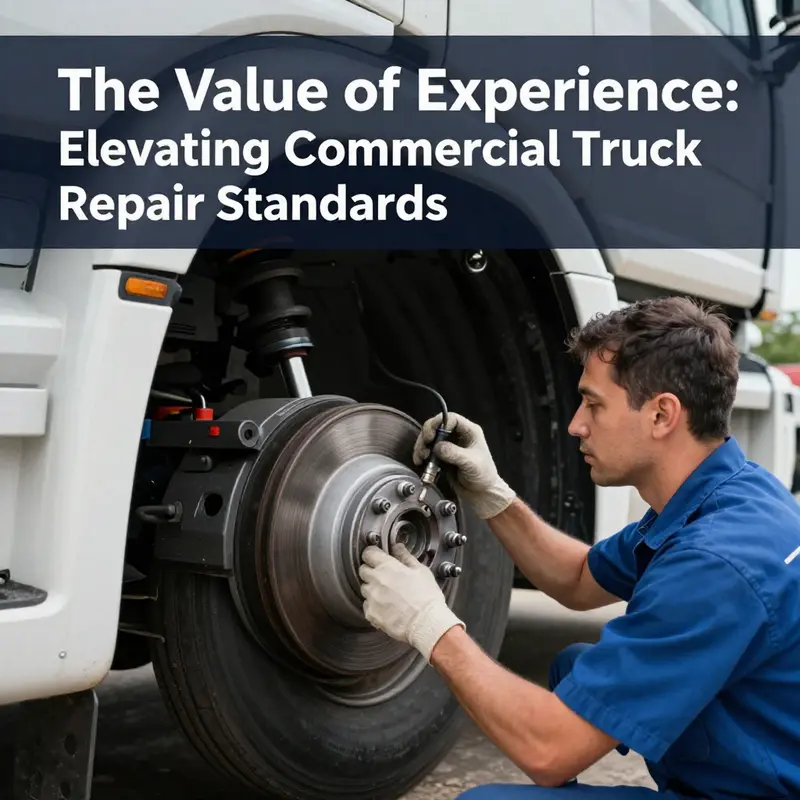
Yet the most tangible domain where experience proves its worth is safety. The consequences of a faulty repair extend beyond the vehicle to the environment, operators, and other road users. Experienced technicians understand the gravity of safety-critical systems such as brakes, steering, and suspension, and they approach each repair with a commitment to correctness, not expediency alone. They are meticulous about procedure and torque specifications, double-checking fasteners, clearances, and sequencing. They recognize that a rushed job on a critical system can produce a failure mode that emerges only after miles of operation, sometimes with catastrophic results. This emphasis on correct practice underlines a fundamental truth: safety in repair is not a byproduct of skill; it is the direct product of disciplined, experienced practice.
Parallel to this emphasis on correctness is efficiency—the ability to use tools and processes to achieve safer, reliable outcomes quickly. Modern diagnostics provide powerful data streams, but it takes experience to translate those streams into a coherent repair plan that minimizes downtime without compromising safety. Experienced technicians streamline workflows by applying standardized procedures that have proven effective across dozens of prior jobs. They know when to deploy a diagnostic scanner, how to interpret its readouts in the context of the entire vehicle system, and when to step back to reassess a fault that does not fit the usual pattern. This efficiency is not about cutting corners; it is about recognizing when a streamlined, disciplined process delivers the same level of safety and reliability in a shorter window—an outcome that matters for fleets facing tight maintenance windows and high utilization.
A clear example of how experience manifests in practice concerns tyre maintenance and the pivotal role of protective gear designed to make tyre service safer. In the realm of heavy-truck tyres, the hazard is not merely a deflated component but the potential energy released during a blowout. The use of a purpose-built tyre inflation cage is a critical safety measure that protects mechanics and nearby personnel from serious injury or worse. The cage itself is only part of the solution; its effectiveness depends on proper selection, correct setup, and the technician’s familiarity with the process. An experienced technician does not treat the cage as a mere enclosure. They understand how to secure a tyre within the cage, to inspect for rim wear and damage, and to manage the interaction of the tyre with high-pressure air in a way that contains energy safely. They also know how to assess the suitability of a particular cage for a given operation, whether it’s a lightweight model for roadside fixes or a heavy-duty unit for a high-volume shop. The most robust cages, built from thick-gauge steel or reinforced alloys, offer maximum protection, but only if the operator is trained to use them correctly and consistently. In this sense, experience directly translates into safer practice and more reliable repairs.
This link between experience and safety extends to the decision about which cage to deploy. The right cage depends on the tyre size, the typical workload, and the environment in which repairs occur. An experienced tech will weigh factors such as ease of access, stability of the wheel position inside the cage, and the potential for rim or tyre debris to cause secondary hazards. They will also integrate safety checks into the workflow, ensuring that the tyre is properly secured, that all personnel are clear of the immediate work area, and that the sequence of inflation and deflation follows a tested protocol. In other words, expertise does not merely reduce risk; it makes the risk management itself an integral part of the repair routine. The outcome is a repair that is safer, more durable, and less prone to a reoccurrence of the same issue.
The capability to leverage safety devices and structured processes feeds into another critical advantage of experience: the efficient use of knowledge across teams. Experienced technicians share learned best practices with apprentices and junior staff, shaping a culture of safety and reliability that extends beyond a single job. This transfer of tacit knowledge—how to read the weight of a mounting, when to suspect a creased rim, where a corrosion pattern points to a structural fatigue—nurtures a workforce capable of handling both routine maintenance and extraordinary diagnostic puzzles. In fleets that value uptime, this culture reduces rework, shortens diagnosis cycles, and raises the baseline level of service quality.
The practical implications of this philosophy for fleets are clear. Investments in lasting safety are not only about buying the right equipment; they are about cultivating a workforce that uses that equipment with disciplined judgment. When an experienced technician leads a repair project, the team benefits from faster, more accurate problem solving and a consistent, safety-forward approach to each task. This is how experience becomes a strategic asset—lowering downtime, extending component life, and preserving roadworthiness over the vehicle’s life cycle. It also deepens the fleet’s confidence in the shop as a reliable partner, one that respects the human element of maintenance as much as the mechanical one.
For readers seeking a broader view of how experience informs repair philosophy and fleet strategy, consider the ongoing conversation available in the industry blog. It provides practical perspectives on safety, workflow optimization, and the evolving landscape of repair operations, reinforcing the point that expertise is the backbone of dependable service. mcgrathtrucks.com/blog/
Ultimately, the narrative around experience in commercial truck repair is not about romanticizing years on the floor. It is about recognizing that the most critical repairs hinge on a clinician-like, data-informed intuition—one that only comes from repeated engagement with the full spectrum of truck systems, from diesel-injection architectures to the intricacies of modern after-treatment, from the subtle cues of wheel-end wear to the exacting demands of tyre safety. In this light, experience becomes the bridge between raw diagnostic capability and truly reliable roadworthiness. It is the quiet force that transforms advanced tools from mere instruments into trusted partners in safety, efficiency, and continuity of service. The cost of neglecting that experience—whether through undertrained staff or rushed, safety-compromising repairs—presents a risk far greater than a single maintenance bill. It is the risk of compromising lives, the environment, and the essential flow of goods that keep economies moving. The lesson is not abstract: experience matters because it makes the complex predictable enough to be managed, the dangerous areas avoidable, and every repair a step toward a safer and more dependable fleet.
External resource: https://www.osha.gov/training/ergonomics/tire-inflation-safety
Experience as the Compass: Precision, Tools, and Standards in Commercial Truck Repair
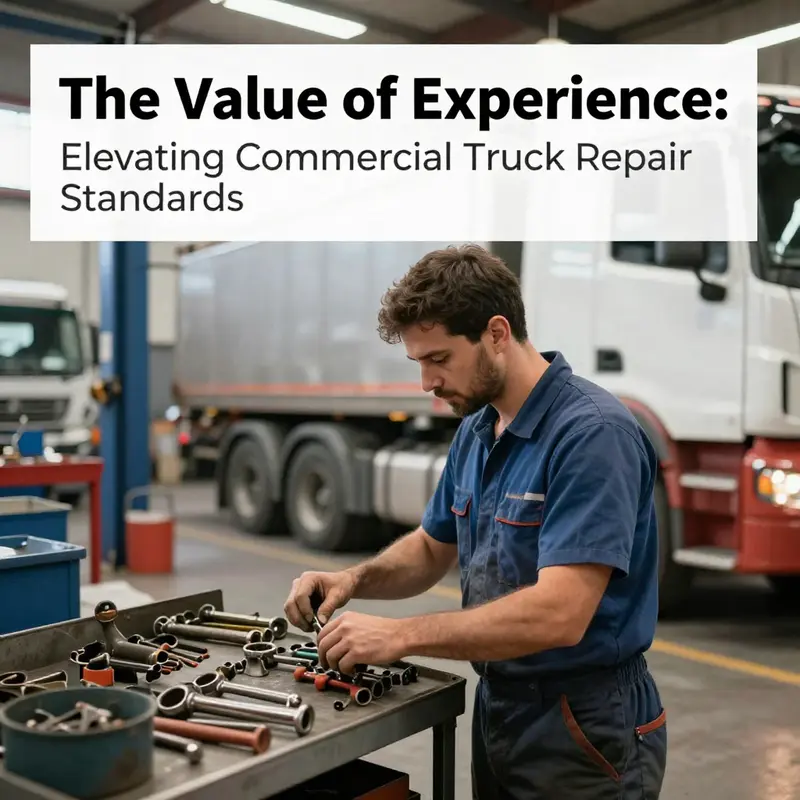
In the realm of commercial truck repair, experience acts as a compass guiding technicians through a landscape that has grown far more intricate than the era of simple mechanical fixes. Modern trucks are moving laboratories on wheels, where diesel fuel technology, emissions control, and electronic networks weave together with traditional hydraulics and drivetrains. The diagnostic playlists technicians must read are no longer limited to listening for a knock or feeling for excessive play; they involve interpreting data streams from electronic control units, sensor matrices, and aftertreatment systems. As one senior technician, Wu Gong, puts it, “In the past, we emphasized experience in mechanical problems. Now, truck repair requires a deeper understanding of how assemblies work, proficiency with diagnostic tools, and practical, hands-on intuition.” That synthesis—practical hands-on work plus the ability to parse complex data and contextual clues—distinguishes a seasoned technician from a novice. Experience becomes the bridge between raw diagnostics and reliable repairs, ensuring that observed fault codes translate into correct and lasting fixes rather than temporary guesses that merely chase symptoms.
Accurate and efficient diagnosis is perhaps the most tangible payoff of seasoned practice. A veteran technician can quickly narrow the field by recognizing patterns and correlating symptoms with known failure modes across years of service. The process is not about guessing but about logical analysis driven by data and experience. Subtle signals—the way a particular sound repeats under load, the smell of burnt insulating material after a fault cycle, the way a dashboard warning interacts with other system alerts—can reveal the root cause more reliably than time-consuming trial-and-error methods. In fleet operations where downtime translates into dollars, reducing diagnostic time matters as much as reducing the final repair time. The most effective repair programs tend to be those where experienced teams can identify the true culprit fast, thereby minimizing vehicle off-road time and preserving schedule integrity.
Experience also matters when the truck’s history is complicated. Many fleets rely on older models that accumulate wear, aftermarket modifications, or parts no longer manufactured. In that environment, a repair plan cannot be a one-size-fits-all template. Experienced technicians bring a mental catalog of how particular models tend to fail under certain conditions, which components are most likely to degrade first, and how to work around parts obsolescence. They know when to check the fuel injectors on a specific engine family, or when to interrogate the EGR valve due to a known interaction with a certain exhaust after-treatment setup. This adaptability reduces the risk of overlooking a hidden issue and enables engineers to improvise reliable, field-tested solutions when standard replacements are not available. The result is not merely a fix, but a repair that respects the vehicle’s age, its prior maintenance, and its mission profile.
Safety and reliability sit at the heart of every repair decision, and experience amplifies a technician’s ability to uphold these standards. The consequences of a faulty repair on a commercial truck can be severe, affecting not only the vehicle’s performance but also the safety of the driver and others on the road, as well as environmental stewardship. An experienced technician understands the critical nature of brake systems, steering geometry, suspension integrity, and the integrity of mounting hardware, torque specifications, and fastener sequences. They know that a misapplied torque, a misinterpreted spec, or a rushed reassembly can ripple into unsafe operation. This awareness drives a disciplined approach to repair, where proper procedures are followed, verification checks are conducted, and documentation is thorough. In practice, experience translates into more robust work orders, better quality control, and a lower probability of costly call-backs. It is not only about fixing what is broken; it is about restoring the vehicle to a known, safe state and preserving its reliability across thousands of miles of service.
The integration of advanced tools into daily workflows further underlines why experience remains indispensable. Modern diagnostic instruments, alignment jigs, and engineering-grade measurement devices are powerful, but they demand seasoned judgment to be used effectively. An adept technician can select the right tool for the job, calibrate it correctly, and interpret its readouts in the context of the truck’s overall system architecture. They can separate noise from signal, identify whether a fault originates at the source or is a symptom of another issue, and determine when to replace a part versus when to rework a connection or update a control strategy. The ability to maneuver through a toolbox with confidence minimizes the risk of tool-related errors and accelerates the repair process. In practice, this means faster throughput, reduced human error, and a more predictable repair outcome across a fleet.
Beyond diagnostic prowess, experienced technicians excel at applying standardized processes without sacrificing attention to the unique demands of each job. The best shops blend the reliability of standardized workflows with the pragmatism born of long experience. They use tools and procedures that handle common tasks efficiently—such as post-assembly service routines for rear axles, gear replacement sequences, and driveline diagnostics—while staying flexible enough to adapt when a particular model or duty cycle demands a customized approach. The ability to follow a proven sequence while still recognizing when a deviation is warranted is a hallmark of expertise. Consider the level of specificity required for high-stress components like planetary gear sets or ring gears; a mechanic who has done dozens of these services will instinctively select the correct depth settings and alignment parameters, ensuring proper backlash, mesh, and load distribution. Tools designed for these tasks, including planetary gear depth setting devices and precision ring gear micrometers, are engineered to withstand high installation forces and to be compatible with standard axle brands used across the industry. In this sense, experience becomes a multiplier for the toolset: it amplifies precision, reduces installation errors, and upholds safety standards across complex assemblies.
The Chinese-language details from practitioner reports illuminate a critical dimension of this competency: the intimate familiarity with both the tools and the standards that govern real-world repair. When a technician works with gear trains or driveline subassemblies, they are not merely following a manual; they are applying a practiced sense of how components fatigue, how tolerances interact under load, and how material properties influence repair strategy. This means selecting the right materials for a body repair, understanding the differences in metal properties, and choosing methods that preserve structural integrity while avoiding overcorrection. In short, experienced hands translate knowledge about materials and standards into repairs that endure. Such depth of understanding is what allows a shop to avoid over-restoration in some areas while maintaining critical strength and alignment in others, ultimately optimizing resource use and cost efficiency for fleets that demand high uptime.
This is where the concept of efficiency ceases to be a simple metric of speed. Efficiency in commercial truck repair is a holistic outcome: faster diagnostics, precise tool usage, adherence to world-class standards, and a workflow that emphasizes safety and reliability. When these elements align, the repair process respects the vehicle’s mission, the driver’s schedule, and the fleet’s total cost of ownership. The most effective repair operations are those where seasoned technicians draw upon a deep understanding of system interactions—how diesel injection, exhaust after-treatment, and electronic control units talk to one another—and translate that understanding into decisive, correct actions. They can anticipate where failures will recur on certain models, plan preventive interventions, and structure the repair path to keep the vehicle on the road longer with fewer unplanned stops.
For readers exploring how such expertise translates into real-world outcomes, it is useful to connect the broader strategic context. Fleets that invest in experienced technicians and formalized, tool-supported workflows tend to experience reduced downtime and more predictable maintenance costs. The long-term payoff is not just a single repaired truck but a fleet that maintains schedule integrity, preserves driver productivity, and sustains service quality across fluctuating market conditions. In this sense, experience is not a nostalgic ideal but a concrete business asset—the human capital that makes sophisticated tooling and standardized processes genuinely effective. It is the quiet force that turns data into insight, and insight into dependable performance on every mile of the road. For problems where the cause is elusive or the parts are aging, experience provides the cognitive framework and manual dexterity to navigate uncertainty with confidence, aligning maintenance practices with the realities of daily operations.
In the broader narrative of the industry, one can see how this blend of seasoned judgment and modern tooling informs better decision-making at the fleet level. Maintenance managers who recognize the value of experienced technicians are more likely to invest in ongoing training, standardized repair workflows, and robust tool inventories. They also tend to cultivate a culture that prioritizes safety, precise torqueing, correct reassembly practices, and meticulous documentation. Such a culture creates a chain of accountability—from the technician who applies a protocol with discernment to the supervisor who enforces quality control and minimizes repeat visits. The synergy between experience, tools, and standards thus emerges as a practical strategy for maximizing uptime, ensuring roadworthiness, and safeguarding the fleet’s economic footing in an era of ever-evolving technology and regulation.
As readers consider the practical implications, a closer look at a few concrete practices can illustrate the point without breaking the narrative flow. When performing rear-axle service, for example, experienced technicians routinely rely on precise gear depth tools and ring gear micrometers to achieve the exact backlash and alignment that the job requires. These tools are designed to withstand installation forces and to remain compatible with common axle brands such as Meritor and Dana, which helps standardize work across diverse fleets. The same principle applies to sheet-metal repair during body work: seasoned hands select materials and methods that maintain structural integrity, avoid overfilling or under-filling, and preserve the aesthetics and strength of the repaired surface. In both cases, the outcome hinges on an ability to pair deep material knowledge with hands-on skill and to implement standardized processes that reduce variability.
For readers seeking a broader reference on how tool compatibility and standard guidance shape the repair workflow, consider exploring industry resources that outline product specifications and technical support guidance. This chapter’s focus on the value of experience in using tools and processes is, in part, about translating theory into practice. It is about making the most of what modern diagnostics offer while acknowledging that the human element—the seasoned technician—remains essential to bringing the system-level understanding to bear on each unique repair scenario. The result is a repair culture that is both precise and resilient, capable of delivering safety, reliability, and efficiency in equal measure. To extend the discussion beyond a single shop, researchers and practitioners can consult external documentation and supplier guidance to corroborate best practices and ensure compatibility across a broad range of components and applications.
External resource: Meritor’s official site provides product specifications, application guidelines, and technical documentation that can support the integration of standardized tools and procedures into repair workflows. https://www.meritor.com/
Internal resource for further reading on market dynamics and maintenance strategy can be found at one of the industry-focused fleet blogs: Navigating Economic Uncertainties in Trucking Markets.
Final thoughts
In the realm of commercial truck repair, the value of experience cannot be overstated. It forms the backbone of effective diagnostics, the strength behind reliable repairs, and the assurance of safety within the transport industry. As the landscape of trucking continues to evolve with technological advancements, the need for skilled technicians will remain paramount, safeguarding both fleet integrity and operational efficiency. Trucking company owners, fleet managers, and procurement teams should prioritize experience in their hiring and training processes, as it ultimately translates to reduced downtime, increased safety, and cost-effectiveness. Investing in experienced technicians equates to investing in the future of your fleet.