
Navigating the complexities of commercial truck registration in Texas is essential for trucking company owners, fleet managers, and logistics professionals. Understanding the specific regulations that govern commercial vehicle registration ensures compliance and fosters operational efficiency. This article will delve into essential aspects such as the fundamental rules surrounding registration, how to effectively navigate the Texas Department of Public Safety (DPS) website, and the critical documentation and requirements needed for a successful registration process. Each chapter provides crucial insights that culminate in a holistic understanding of Texas’s commercial truck registration landscape, empowering relevant stakeholders with the knowledge they need.
Where Texas Rules Live: A Practical Guide to Commercial Truck Registration and Official Resources
When a trucking operation expands in Texas, registration is the gatekeeper to lawful, efficient service. The official rules are published on state agency sites and aligned with federal safety standards. The most reliable starting point is the official pages from the Texas Department of Public Safety (DPS) and the Texas Department of Motor Vehicles (TxDMV), with FMCSA guidance providing the federal baseline. Read the requirements carefully, gather documents, and plan steps before you register.
Key sources in Texas include: DPS – Commercial Vehicle Registration page; TxDMV – Commercial Vehicle Registration framework; FMCSA – USDOT number and driver-qualification rules; TVIP – Texas Vehicle Inspection Program.
Thresholds: A vehicle with gross vehicle weight rating (GVWR) of 26,001 pounds or more is generally treated as commercial for Texas registration; any vehicle designed to transport 16 or more passengers is also commercial.
Process steps: determine classification; gather proof of ownership (title or other acceptable evidence); secure proof of liability insurance meeting Texas minimums; identify the correct registration form; submit online or in person; pay applicable fees.
Interstate considerations: If you move goods across state lines, you will also need FMCSA compliance, including applying for a USDOT number, maintaining driver qualification files, ensuring medical certification for CDL drivers, and keeping maintenance and inspection records. The Texas Vehicle Inspection Program (TVIP) provides ongoing safety verification for vehicles operating in Texas.
Practical plan: create a simple document pack with ownership proof, insurance, and driver credentials; for fleets, map out multi-vehicle registrations and coordinate with fleet managers to streamline submissions.
Official references and next steps: rely on the DPS, TxDMV, and FMCSA portals as the authoritative sources for registration workflows, classifications, and safety requirements, and consult them directly when starting or expanding a fleet.
Navigating Texas DPS Commercial Vehicle Registration: A Practical Guide
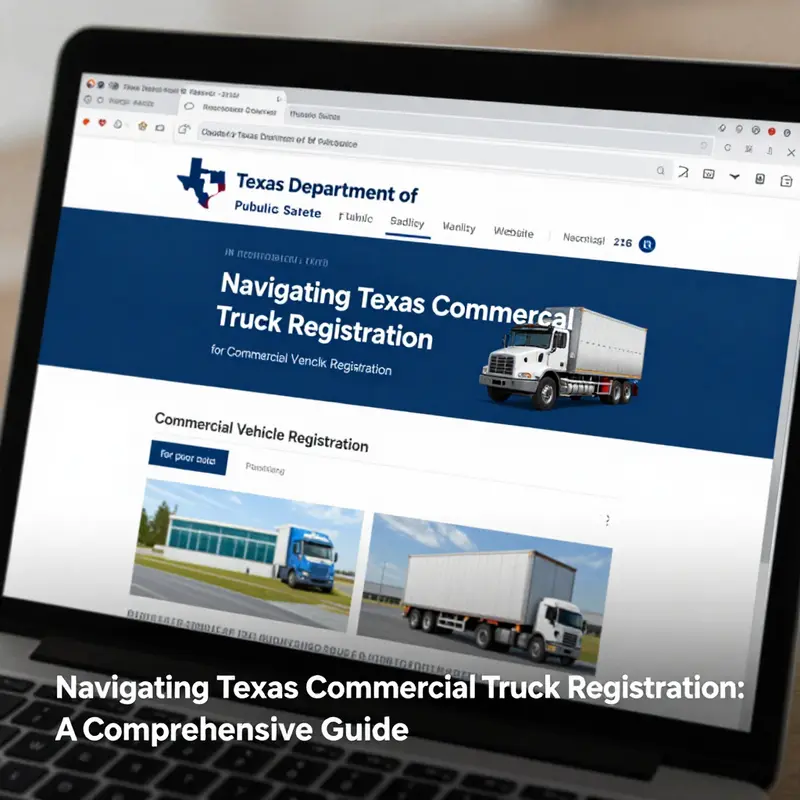
Finding the rules for commercial truck registration in Texas is best approached by using the Texas Department of Public Safety DPS Motor Vehicle Division as the central hub. The official Commercial Vehicle Registration page on the DPS site provides the current requirements forms and procedures for both intrastate and interstate operations. Start at the DPS home page and navigate to the vehicle services or commercial vehicle registration section to locate the authoritative guidance that translates federal expectations into state practice and keeps pace with any updates to weight classifications safety inspection rules and permits.\n\nKey decisions include whether the operation is interstate or intrastate, since that distinction affects required documentation and the regulatory framework. Typical core documents include the VIN, proof of ownership such as a title, and proof of insurance meeting Texas minimums for commercial fleets. If the vehicle operates across state lines you may also need your USDOT number and MC number, as well as information about weight class and axle configuration. Weight classifications influence both fees and regulatory scope and may affect inspection requirements.\n\nThe process may involve online submission for routine registrations or an in-person visit to a local DPS office for complex ownership structures or title issues. The DPS materials emphasize clear instructions submission steps forms and contact information. Special permits for oversize or overweight configurations or unique service needs can sometimes be required, and the DPS pages point to the application steps and terms for these permits.\n\nTo prepare, assemble documents such as VIN proof, title or lease documents, proof of insurance, company information, and any federal numbers if applicable. Keep fleet details weight and axle information, and any safety device data on hand. After submission, monitor status through the DPS portal and contact DPS support if you need help. The overarching takeaway is to start with solid documentation verify weight and safety expectations decide interstate versus intrastate, and rely on the official DPS resources for forms and fees. Staying current with the DPS materials helps avoid delays and penalties as rules evolve. For current details, visit the official page: https://www.dps.texas.gov/mvd/vehicle-registration/commercial-vehicle-registration
Navigating Texas Commercial Truck Registration: VIN Verifications, Emissions, and the Paper Trail
Registering a commercial truck in Texas is more than a single form filed at the counter; it is a carefully choreographed process designed to ensure that every vehicle on Texas roads meets safety, environmental, and legal standards. In practice, the state’s approach combines verifiable identity, environmental compliance, and a clear trail of ownership and insurance documentation. The core regulatory touch points are the VIN verification, the emissions testing regime in specific metropolitan regions, and a defined bundle of paperwork that sits at the intersection of state and federal requirements. While the exact steps can vary slightly depending on the vehicle’s use, whether it operates intrastate or interstate, and the vehicle’s age and emissions profile, the sequence remains steady enough to guide fleets and owner-operators through a smoothly managed registration cycle. The most authoritative overview is housed on the Texas Department of Public Safety’s Motor Vehicle Division page devoted to commercial vehicle registration. That page concisely outlines what must be inspected, which records must accompany an application, and how to prepare for fees and forms so that registration proceeds without unnecessary delay. This is the backbone resource that informs every other source a fleet owner might consult in planning a registration project, and it is where you should begin when you map out a truck’s regulatory path in Texas. As you parse the requirements, it is helpful to imagine the process as a sequence of checks that align with the practical realities of operating a commercial fleet—inspections, tests, and carefully gathered documentation that together certify a vehicle’s readiness to drive on public highways. The task, honestly, is not so much about chasing a single requirement as it is about assembling a complete, compliant record that can travel with the vehicle from one DMV office to the next, and, in some cases, across state lines if the truck is engaged in interstate commerce. The emphasis on documentation mirrors the broader regulatory philosophy: identity, accountability, and traceability. A thorough approach reduces the risk of registration denial and minimizes the time your fleet spends off the road readying for a legal trip. To keep the narrative grounded in practical steps, consider the most common sequence that Texas buyers and operators follow, then layer in the optional or scenario-specific considerations. The first item on the list is the VIN inspection. The vehicle’s identity must be verified, and the VIN must correspond exactly to the information shown on the title. This verification is carried out by a licensed Texas peace officer or an authorized inspector, a designation that ensures the inspection carries the weight of official scrutiny. For many operators, the VIN inspection is a straightforward appointment with a local police department, which often offers the service at little or no cost, especially when scheduled in advance. The option to bring the truck to a mobile inspection service is increasingly common and can be a real time saver for fleets that manage multiple units or operate in remote locations. The value of the VIN verification rests on accuracy: a mismatch between the VIN and the title, or discrepancies in the vehicle’s recorded specifications, can trigger delays or even denial of registration. In short, the VIN check is not a bureaucratic hurdle but a guardrail that preserves the integrity of the title and the ownership record. Beyond VIN verification, another critical element of Texas commercial truck registration is emissions testing, which is specifically targeted to metropolitan or ozone non-attainment zones. Texas has designated areas where the state requires periodic emissions checks to ensure that heavy-duty trucks contribute to air quality goals rather than undermining them. The routine in these zones is clear: commercial trucks subject to the rule must pass an emissions test at regular intervals—typically every 12 months. The scope of the test is comprehensive, evaluating the tailpipe emissions and the vehicle’s onboard diagnostics system to verify compliance with air quality standards. The rule is introduced to address the environmental impact of heavy-duty vehicles and aligns with both state and federal environmental objectives. It is worth noting that the emissions requirement applies predominantly to gasoline-powered commercial trucks manufactured in model year 1996 or newer. This threshold means that even older fleets may be exempt from certain checks, while most modern trucks bear the test as part of their compliance obligations. For fleets that operate across city boundaries, this testing cadence can interact with federal inspection or maintenance programs that serve the fleet’s broader regulatory footprint. The result is a registration landscape that rewards consistent maintenance and proactive compliance, rather than one that catches operators by surprise at the renewal window. The documentation package that accompanies the VIN inspection and emissions test is multifaceted but follows a consistent logic: it demonstrates proof of ownership, confirms the vehicle’s insurance status, and provides the essential registrations and fees necessary to complete the process. The cornerstone documents include a valid bill of sale or title that establishes ownership, along with proof of insurance that meets Texas’s minimum liability requirements. Completing the Application for Title and/or Registration, commonly known by its form number, ensures the administrative record has the right names, addresses, and vehicle details aligned with the ownership and insurance proofs. Finally, the appropriate fees—covering both registration and title aspects—must be remitted to finalize the transaction. While these are the canonical items, the practical path through the process can be influenced by the nuances of a given vehicle’s status—whether it is a new title in a transfer from another state, a late-model year added to a fleet, or a vehicle with a complex financing arrangement that requires lien documentation. In all such cases, ensuring the alignment of names, titles, VINs, and insurance information is essential to avoid back-and-forth with the registrar. The broader regulatory framework also matters—the Texas registration system exists within a federal context that governs interstate commerce and safety standards. For operators whose trucks cross state lines, the combination of state registration and federal compliance becomes particularly salient. Weight classifications, for example, may influence how a vehicle is registered and what kinds of endorsements or permits might be required if the vehicle operates under certain hauling arrangements. While the precise weight thresholds and classifications are part of a more technical nexus of rules, the practical takeaway is straightforward: maintain a registration posture that anticipates how the truck will be used, where it will travel, and what regulations will apply when it enters other states or jurisdictions. With all these considerations in view, the importance of preparation cannot be overstated. A well-organized file that contains the title or bill of sale, a current insurance card or certificate, a completed Form 130-U, and the receipts or confirmations from the VIN inspection and emissions test will streamline the process at the DMV office. The process can be expedited further if an operator pre-fills as much information as possible on Form 130-U and ensures that the exact legal name of the owner mirrors the name on the title and on the insurance policy. Delays often arise when there is a misalignment among these core identifiers, or when documentation is missing or incomplete. In addition, timing is a subtle but important factor. Inspections and tests have windows of validity; if you attempt to register a vehicle simply because you have the title, but you do not yet have a valid emissions test or a verified VIN, you risk starting a sequence that ends in a temporary hold or a denial. Planning ahead—scheduling inspections, gathering ownership documents, and ensuring insurance coverage is in force for the exact vehicle in question—reduces the risk of holdups and helps ensure a smoother registration experience. It is also useful to recognize where to turn for the most precise, up-to-date guidance. The official state sources are the authoritative point of reference, and indeed, while DPS MVD pages provide the core instructions, other state agencies such as the TxDMV offer complementary information related to vehicle titles and registrations. When a fleet manager wants the most reliable procedural map, a quick check of these state resources is time well spent. For operators who are looking for broader context and additional practical insights, the scholarly and industry-focused commentary found in experienced fleet blogs can offer perspective on common pitfalls, workflow optimizations, and the implications of regulatory changes on used-truck operations and fleet planning. As one example of such ongoing discourse, you can explore the broader industry discussions at the McGrathtrucks blog, which offers informative discussions about fleet operations, vehicle acquisition, and regulatory navigation across markets. Access it here: McGrathtrucks.com/blog. The tone across responsible coverage emphasizes diligence and predictability in how teams prepare for registration windows, reflecting a shared understanding that the administrative side of trucking is not merely a formality but a critical part of risk management and operational continuity. In practice, the registration task is rarely a one-off event. For fleets that maintain multiple trucks, it is wise to establish a standard operating procedure that mirrors the state requirements: keep VIN verification up to date across the fleet, ensure that emissions testing records are current for trucks operating in zones under the regulatory mandate, and maintain a centralized repository for title documents, insurance certificates, and Form 130-U signatures. This approach pays dividends when vehicles are due for renewal, when ownership changes hands, or when a vehicle must be re-registered after repairs or modifications that affect the title or the vehicle’s weight classification. The logic is simple but powerful: a disciplined document management discipline reduces friction, shortens renewal cycles, and keeps the fleet moving. As you navigate the process, you should keep in mind the expected touchpoints with state agencies and the practical realities you will encounter at the registration counter. VIN inspections rarely require more than a few minutes, provided the vehicle’s documentation is in order and the inspection site has an appointment slot available. Emissions testing, while routine, benefits from a well-timed schedule so that test results are ready by the time you submit the registration application. The paperwork—title or bill of sale, proof of insurance, Form 130-U, and the fee schedule—completes the package, allowing the registrar to issue or update the title and registration. The Texas MVD and DPS pages offer the exact details on acceptable forms, the current fee structure, and where to obtain or verify the required documents. If you want to verify or refresh your understanding of the official steps, you can consult the state’s commercial vehicle registration resource and the broader DMV information that supports vehicle registration more generally. In the broader narrative of operating a Texas-based trucking business, a clear registration path supports both compliance and reliability. The regulatory scorecard is not simply about avoiding penalties; it is about creating a predictable operational baseline that your drivers can rely on, month after month, year after year. It is this frame of reference that helps fleets manage risk, schedule maintenance cycles, and plan capital expenditures with confidence. The more disciplined you are about the intake of accurate information and the more proactive you are about maintaining documentation, the less you will encounter friction during renewal periods or when your truck is inspected by authorities. The practical upshot is a smoother, more transparent process that reduces delays and minimizes downtime. In the end, Texas registration reflects a balance between rigorous oversight and practical administration. It recognizes the needs of commercial operations to stay on the road while upholding important public interest concerns—safety, accountability, and environmental stewardship. When you couple the procedural clarity of the VIN inspection and emissions test with the systematic collection of ownership and insurance documentation, you have a robust framework that serves both industry and the public good. For those seeking the most current procedural specifics, the state’s official resources remain the best starting point, and they are complemented by practitioner-based guidance that helps fleets implement the rule set in real-world operations. External resources provide the authoritative baseline, but the day-to-day experience of coordinating inspections, tests, and paperwork is where the practical expertise of fleet managers shines. If you are mapping out a registration calendar for a mixed fleet with miles across urban corridors and rural routes, you will appreciate how the Texas process translates into a predictable cadence—one that recognizes the legitimate needs of commercial operators while maintaining the state’s commitment to safety and environmental health. External resource: https://www.dps.texas.gov/mvd/vehicle-registration/commercial-vehicle-registration
Final thoughts
In summary, understanding Texas’s specific rules and procedures for commercial truck registration is vital for ensuring compliance and operational efficiency within the trucking and logistics industries. By grasping the key concepts discussed in each chapter—from foundational knowledge of registration regulations to utilizing the Texas DPS website and assembling required documentation—industry professionals can navigate the complexities of commercial vehicle registration with confidence. This knowledge not only aids in legal compliance but also streamlines processes, enhancing the overall performance of trucking operations.