
The advent of Electronic Logging Devices (ELDs) has revolutionized the way commercial truck drivers manage their hours of service. As mandated by the Federal Motor Carrier Safety Administration (FMCSA), these devices are now integral for maintaining compliance, ensuring safety, and enhancing operational efficiency within the trucking industry. This article explores the essential compliance requirements, applicable exemptions, the safety improvements attributable to ELDs, the economic implications of their use, and the technological advancements that facilitate their operation. Each chapter will provide a comprehensive understanding of how ELDs impact truck drivers and the companies that manage them in today’s regulatory landscape.
Riding by the Meter: How ELD Mandates Reshape Safety, Scheduling, and the Modern Trucking Landscape
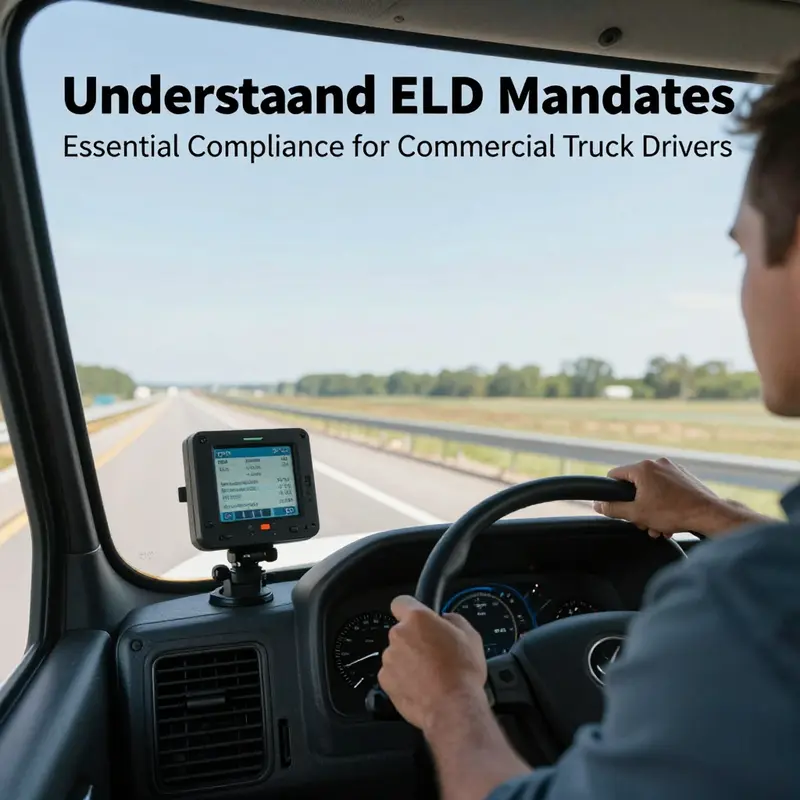
In closing, the ELD mandate is central to the modern trucking narrative because it binds safety, compliance, and operational discipline in a single, everyday practice. The rules are not static, and exemptions exist to accommodate diverse business models; yet the overarching aim remains clear: ensure accurate, verifiable logging of duty status to reduce fatigue-related risk and improve road safety. The transformation is not instantaneous, and it is not uniform across every operator, but the trajectory is evident. Carriers that embrace ELDs as a strategic resource—by investing in high-quality devices, building robust training, and integrating logs with dispatch and planning tools—tend to realize better utilization of available driving hours, smoother inspections, and stronger safety performance. In the context of a rapidly evolving industry, where capacity constraints, driver shortages, and competitive pressures all shape decision-making, the ELD framework offers a standardized, auditable basis for accountability and continuous improvement. The result is a trucking sector that can respond more predictably to market demands while safeguarding the well-being of the drivers who keep the supply chain moving. For a deeper dive into the regulatory particulars, refer to the official FMCSA materials that govern ELD specifications, data transfer protocols, and inspection procedures. External resource: FMCSA ELD Regulations
Understanding ELD Exemptions for Commercial Trucking
The ELD rule includes a set of exemptions that recognize real-world operations. These carve-outs balance safety goals with practical mobility. This chapter highlights the main exemptions and how they influence compliance.
Short-haul exemption: drivers operating within 150 air-miles of their work reporting location and able to return within 12 hours may operate without an ELD. This is designed for local or regional work where full electronic logging would be unnecessary and burdensome.
Pre-2000 model year exemption: vehicles manufactured before the 2000 model year are not required to use an ELD. This reflects compatibility considerations and the realities of older equipment, while encouraging modernization where feasible.
Eight-day exemption: drivers may log hours manually for no more than eight days in any 30-day period if they maintain accurate Records of Duty Status (RODS) during those days. Proper documentation remains essential.
Agricultural operations exemption: vehicles used primarily for transporting agricultural commodities may qualify when farming activities predominate. This supports seasonal and regional farming needs while preserving accountability.
These exemptions are not a free pass. They require careful eligibility assessment, precise recordkeeping, and adherence to FMCSA guidance. When used appropriately, exemptions can help preserve service continuity without compromising safety.
Mandates that Move the Needle: Safety, Efficiency, and the ELD-Driven Transformation of Commercial Trucking
When the Federal Motor Carrier Safety Administration sharpened the rules around Hours of Service, it did more than require new equipment. It set in motion a shift in how commercial trucking operates at the line level and in the strategic decisions that shape fleets. Electronic Logging Devices, or ELDs, became the backbone of a safety-first framework designed to remove guesswork from driving hours, standardize rest periods, and create a reliable stream of data that can be used to manage risk across an entire operation. The mandate targets drivers who operate interstate and are required to maintain records of duty status, ensuring that what happens on the road is recorded with precision rather than left to memory or estimation. The rule’s fully enforceable status since December 2017 signaled a clear commitment: the time a vehicle spends behind the wheel must be documented, verifiable, and accessible to regulators, carriers, and safety teams alike. This framework is not simply about compliance; it is about building a safer road environment by removing incentives for fatigue and encouraging disciplined schedules that respect drivers’ rest needs and the realities of long-haul logistics.
Yet the transformation is not merely bureaucratic. It unfolds in the cab, in the data streams that join the vehicle to the back office, and in the daily routines of drivers who suddenly navigate a more transparent, accountable operating model. The aim is straightforward on the surface—accurate logging that reduces fatigue-related risk—but the ripple effects extend far beyond justice and legality. When a fleet can trust its driving hours data, planners gain a clearer view of workload distribution, rest compliance, and the pacing of trips. With that clarity comes a broader capacity to optimize routes, schedules, and maintenance windows in a way that keeps drivers safer while improving delivery reliability. In this sense, ELDs are not just a compliance technology; they are a safety and efficiency cockpit that informs every decision from dispatch to maintenance.
The exemptions built into the rule acknowledge that there are legitimate, real-world exceptions to every ideal, especially in regional logistics and in operations that remain tightly bound to base locations or specific vehicle vintages. Vehicles manufactured before 2000, for instance, can still log with paper records under certain conditions, preserving operational continuity for older fleets or niche segments. Likewise, some short-haul operations, returning to base within 150 air miles daily, may fall outside the ELD mandate. These provisions acknowledge the complexity of trucking work and the diversity of fleets, ensuring that the safety imperative of ELDs does not become a rigid constraint that stifles legitimate business activity. Nonetheless, for the majority of interstate operations, ELDs have become a standard part of the driver’s toolkit, a shared language that aligns safety expectations with operational feasibility.
Within this broader policy landscape, the practical impact of ELDs reveals itself in the cadence of daily work. The logs produced by ELDs are designed to be tamper-resistant and auditable, a feature that shifts the narrative from “how many hours did I claim to drive?” to “how many hours did I actually drive, and when did I rest?” For drivers, the clock becomes less of a trap and more of a guide, pointing toward healthier driving patterns and more predictable rest opportunities. For fleet managers, the benefits extend into risk management and cost control. The visibility gained from ELD data makes it possible to spot fatigue indicators, identify patterns of workload spikes, and intervene before a marginal hour of sleep translates into a fatigue-related incident. In this way, the safety benefits are inseparable from the economic realities of trucking—reduced driver fatigue, fewer near-misses, and better use of hours that matter for both safety and productivity.
A compelling case study that helps translate these abstractions into lived experience comes from Savage Fleet Operations. What began as a regulatory push quickly matured into a strategic initiative focused on performance and safety. The deployment of ELDs in Savage’s fleet did not stop at simple compliance; it opened a pathway to better performance management across the operation. The company embraced the data and used it to refine how work was allocated, how routes were sequenced, and how driver support was delivered. The story illustrates a key truth about mandatory technology in trucking: when adopted thoughtfully, ELDs can elevate a fleet’s capability rather than simply enforce compliance.
An important dimension of Savage’s approach was the careful integration of smart technology into the cab environment. The move toward tablets inside the truck—from a safety and data integrity standpoint—recognized early that the device itself must be managed as a business tool rather than a personal device. The objective was twofold: meet the letter of the law and curb potential data overuse that could drive unnecessary costs. This emphasis on controlled, business-only use aligns with the safety imperative, ensuring that drivers stay focused on the road and that the technology supports safe driving rather than becoming a distraction. It is a reminder that the value of ELDs lies not just in the data they collect but in how that data is filtered, prioritized, and acted upon within the broader safety system of the fleet.
Central to Savage’s experience was how centralized management of applications enabled fleet supervisors to govern what drivers could access and when. The system’s governance reduced the risk of unsafe app usage and helped ensure that the devices served as reliable logging and safety tools, not portable entertainment hubs. Tyler Snarr, the mobile equipment manager at Savage, emphasized that the primary objective was to maximize value while deploying ELDs across the majority of vehicles. This balancing act—between broad coverage and smart usage—highlighted a core advantage of the ELD era: the data infrastructure becomes a platform for continuous improvement rather than a one-off compliance checkbox. When drivers are supported by a platform that knows how to allocate time, assess workloads, and provide timely guidance, it becomes possible to transform fatigue risk into actionable safety steps and to raise the baseline for what constitutes safe, efficient operation on the road.
The outcomes Savage pursued through this technology-enabled approach speak to broader industry gains. With reliable hours-of-service data, fleets can more accurately align rest periods with individual driver needs, improving adherence to mandated rest while reducing the likelihood of fatigue-induced errors. The same data streams support better situational awareness on the road, where drivers benefit from clearer expectations about pace, breaks, and the sequence of responsibilities during a given shift. In turn, such improvements contribute to fewer fatigue-related incidents, which are among the most consequential safety risks in long-haul trucking. Beyond safety metrics, the operational discipline enabled by ELDs translates into smoother dispatch processes, more predictable workloads, and a more responsive maintenance cycle that can catch wear and tear before it disrupts service. Taken together, these effects demonstrate how the ELD mandate, when implemented with a focus on safety and operational excellence, can yield a safer road environment and a more resilient trucking operation.
For readers seeking a deeper regulatory perspective, the FMCSA provides explicit guidance on ELD eligibility and exemptions, underscoring the alignment between legal requirements and practical safety outcomes. This official framework helps fleets navigate the nuances of compliance, identify exemptions where appropriate, and reinforce the alignment of safety goals with everyday operations. For those exploring industry discussions and broader implications, the McGrath Trucks Blog offers further context and lived insights into the evolving safety and efficiency landscape shaped by ELDs. McGrath Trucks Blog
As the trucking industry continues to integrate ELDs more deeply into daily practice, the conversation shifts from ticking boxes to leveraging data for continuous safety improvements. Fleets like Savage’s illustrate how a thoughtful implementation can turn a regulatory requirement into a strategic advantage. The core lesson is clear: when ELDs are paired with disciplined governance, driver support, and a clear focus on safety outcomes, they redefine what is possible in terms of risk management, operational reliability, and driver well-being. The road ahead for commercial trucking, fortified by data-driven safety practices, points toward a sector where compliance and excellence reinforce each other, contributing to safer highways and more resilient supply chains. For those seeking the official regulatory touchstone that anchors this progress, consult the FMCSA ELD Eligibility guidance for the most current rules and exemptions.
External resource: FMCSA ELD Eligibility guidance can be found at https://www.fmcsa.dot.gov/eligibility.
Driving by the Clock: How ELD Mandates Reshape Costs, Careers, and the Cargo Chain
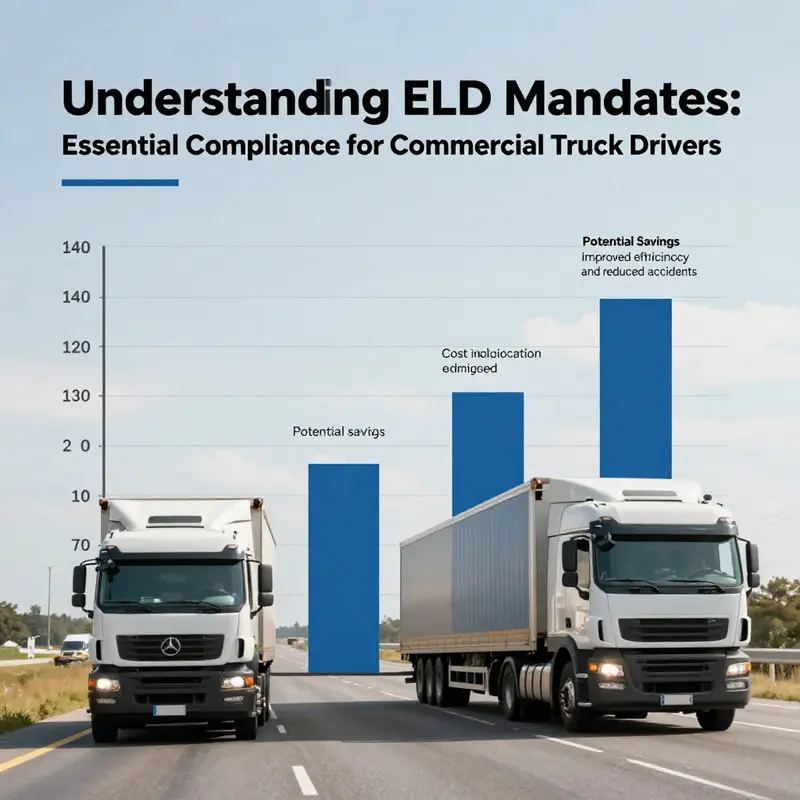
When the FMCSA rolled out the Electronic Logging Device (ELD) mandate, the aim reached beyond mere record-keeping. It sought to recalibrate the economics of long-haul trucking, where minutes and miles translate into dollars and detours into delays. The transition from paper logs to digital timekeeping did more than improve accuracy; it altered how drivers chart routes, how carriers assign loads, and how shippers synchronize the flow of goods across the corridor. The mandate, fully enforceable since December 2017, created a framework in which hours of service are tracked with a precision that leaves little room for manual adjustments and almost no opportunity for drift. That precision, in turn, reframed incentives across the entire ecosystem of trucking, from the individual driver to the transcontinental supply chain. As with any tectonic shift, the real story lies not only in compliance but in the economic ripple effects that follow.For individual drivers, ELDs sharpen accountability and reinforce safety. With driving time, on-duty time, and rest periods logged automatically, drivers face a clearer, more enforceable boundary between work and rest. The consequence is a tightening of schedules that can reduce fatigue-related risk but also compress earnings opportunities. Before ELDs, many drivers could push the envelope—stretch a day to pick up an extra load, detour onto an extra run, or chase a higher rate by extending duty hours. The digital log removes some of that flexibility and converts what used to be discretionary risk into a more predictable, but sometimes more constrained, income stream. This shift can feel like a trade-off: greater safety and steadier health over the possibility of occasional higher earnings built on looser adherence to the clock. The long view, however, often weighs in favor of healthier crews and lower health costs tied to fatigue, an outcome that starts to show up in insurance premiums, fleet maintenance scheduling, and predictable rest patterns that support longer careers.From a financial perspective, the impact on drivers is nuanced. Some report a tilt toward fewer miles driven per shift because the clock becomes a more rigid constraint, particularly on routes with lots of waiting times or backhauls where the next load is not readily available. Others discover that ELDs help them plan more efficient trips, eliminating wasted time spent reconciling handwritten notes at the end of a day. The net effect on earnings is not monolithic; it depends on the freight market, the driver’s route network, and how well dispatchers align loads with the new timing realities. In this environment, earning stability often improves even as peak daily pay may shrink for some drivers who used to maximize miles with inconsistent schedules. The change in work patterns can also influence retirement planning, health insurance costs, and the way drivers evaluate opportunities that balance pay with personal time. The broader consequence is a workforce that may experience slower but steadier income growth, a shift many long-haul operators have learned to navigate by adjusting load boards, optimizing rest stops, and prioritizing routes with reliable backhauls.Carriers faced a different blend of costs and benefits. The upfront investment in ELD hardware, software licenses, data plans, and training represented a clear ongoing expense. Fleet owners and independent operators alike spent time and capital to ensure compatibility with FMCSA-qualified devices, to train drivers and verify data integrity, and to integrate ELDs with existing dispatch and accounting systems. Yet the operational payoff often justified the price tag. Real-time visibility into driver hours reduces the risk of hours-of-service violations and the penalties that can follow. It also tightens compliance with regulations, which lowers audit risk and potential fines. Beyond compliance, ELDs contribute to operational efficiency by enabling better scheduling, more accurate ETAs, and improved cooperation with customers who rely on predictable delivery windows. The ability to monitor hours across an entire fleet creates a level of oversight that was difficult to achieve with paper logs. Carriers can spread workloads more evenly, reducing the need for last-minute relief crews and minimizing the idle time that eats into margins. In this way, the technology becomes a tool for both risk management and productivity, turning what might seem like a cost center into a driver of reliability and profitability.The broad economic implications deserve equal attention. The elimination of log manipulation associated with paper-based systems introduces a more standard measure of productivity and utilization across fleets. That standardization reshapes competitive dynamics, reducing the advantage once enjoyed by drivers who could stretch their hours or adjust logs to maximize yield. With the clock now inescapable, carriers and drivers alike have to optimize within clear boundaries, which encourages more data-driven decisions—route planning, maintenance cycles, and rest-stop optimization—anchored by verifiable time data. On a macro level, this clarity improves supply chain forecasting. Shippers and logistics providers gain confidence in schedules, leading to better capacity planning, more reliable loading windows, and a downstream effect on inventory levels and customer service. The cumulative effect is a supply chain that can move more smoothly, with fewer delays caused by fatigue-driven incidents or uncertain reporting, and a traceable, auditable record of hours and performance that aligns with safety goals and regulatory expectations.The discourse around ELDs also recognizes the exemptions that shape their real-world impact. For example, drivers of vehicles manufactured before 2000 can continue using paper logs, and certain short-haul operations may be exempt if they meet specific criteria, such as returning to base within 150 air miles daily. These exemptions are not mere footnotes; they create pockets of flexibility in an otherwise rigid system. They also influence which segments of the trucking industry experience the most pronounced economic effects. Private fleets with predictable lanes may reap efficiency gains more quickly, while owner-operators on irregular routes may feel the pinch of tighter schedules more acutely. The existence of exemptions underlines a practical truth: policy design interacts with daily business realities, shaping how the broader mandate translates into concrete costs, opportunities, and adjustments. In that sense, the ELD mandate functions as a continuous negotiation between regulatory ambition and field-level pragmatism, a negotiation that drivers and carriers navigate through the balance of safety, earnings, and service reliability. The discussion about ELDs and economics is not purely domestic in its implications. The reliability of time-stamped driving data improves the transparency and predictability of freight movements on a global stage, supporting better cross-border synchronization and smoother inland logistics. As data flows become more precise, the industry can invest in analytics that optimize capacity, anticipate bottlenecks, and align maintenance with actual wear rather than estimated usage. That shift reduces waste and helps reduce emissions where trucks idle unnecessarily. In a broader sense, ELDs contribute to a more disciplined, data-informed trucking ecosystem that can respond more quickly to demand fluctuations, weather disruptions, and regulatory changes. The end result for the economy is a system that can move freight with greater reliability, enabling manufacturers, retailers, and consumers to experience fewer delays and more predictable costs over time. For readers seeking additional perspectives on the broader implications and how industry peers discuss these shifts, the McGrath Trucks blog offers ongoing coverage and analysis of trucking economics in practice, including the evolving balance between safety mandates and earnings potential. McGrath Trucks blog becomes a useful touchpoint for understanding how fleets adapt to policy-driven changes while maintaining service quality.Looking outward, scholars and policymakers continue to refine the conversation about ELDs and economic outcomes. The available peer-reviewed research highlights a nuanced picture: safety gains are accompanied by important economic trade-offs, most notably in earnings dynamics and time-management strategies. These findings underscore the need for ongoing evaluation as the industry learns to optimize within the regulatory framework. For readers who want to explore the empirical dimensions of these issues more deeply, a comprehensive study offers detailed analysis of the ELD economy and its effects on behavior, safety, and productivity. External reference: https://www.ncbi.nlm.nih.gov/pmc/articles/PMC9358647/.
Mandatory by Design: How ELDs Reshape Safety, Compliance, and the Modern Trucking Landscape
Since the late 2010s, the highway has become a corridor not only of moving freight but of data. The electronic logging device mandate from the FMCSA marked a turning point for the trucking industry. Most commercial drivers who operate interstate and who fall under hours-of-service regulations are now required to log their driving time with an FMCSA qualified ELD. The change replaced paper logs that could be flawed, lost, or manipulated with relative ease, and it introduced a standard approach to recording duty status that is tamper resistant and auditable. For drivers and fleets alike, the mandate is more than paperwork. It is a framework for how time, equipment use, and route decisions are coordinated in real time, with safety at the center of every mile. This doesn’t only mean compliance on a routine basis; it reframes the daily rhythm of a driver who must balance delivery windows, rest breaks, and increasingly complex routing decisions against predictable, data driven feedback.
Not all drivers fall under every aspect of the rule. For example, vehicles manufactured before 2000 can continue using paper logs, and certain short haul operations may qualify for an exemption if the route returns to base within 150 air miles daily. The goal of these carve outs is practical: recognize that some operations are tightly bounded by geography and time while still keeping the broader safety objective intact. Yet even within these exemptions, the overarching logic remains clear. ELDs are designed to standardize the way hours are tracked, reduce the potential for fatigue related errors, and provide a clear, auditable record that can be reviewed by inspectors and fleet managers alike.
From a safety perspective, the shift to electronic logs matters most because it reduces ambiguity. Paper logs have long been vulnerable to rounding, omissions, or intentional misreporting. An ELD connects to a vehicle’s engine, automatically recording when the vehicle is in motion, when it is stopped, and how long it has been operating. It also captures movement data and location, creating a dataset that is difficult to dispute without a corresponding mechanical record. The result is a system where rest periods, driving windows, and off-duty time are less open to interpretation. For investigators and safety auditors, this clarity translates into more reliable enforcement of hours-of-service rules and, crucially, a more predictable availability of rested drivers on the highway.
Yet the value of ELDs reaches far beyond compliance checks. Modern fleets increasingly treat ELDs as gateways to broader telematics ecosystems. Integrated platforms pull in real time data about engine status, vehicle movement, and location, weaving them into dashboards that help managers understand how a network of trucks is behaving across a region or a country. This connectivity enables route optimization that respects legal driving limits while also seizing opportunities to reduce dwell time at docks, minimize empty miles, and smooth out loads across the day. Maintenance alerts can flag abnormal engine behavior before a roadside problem becomes a costly breakdown, and driver performance analytics can highlight hard braking events, excessive idling, or deviation from planned routes. The overarching result is not just safer driving but smarter logistics that translate into more reliable service and better utilization of assets.
As the industry moves toward electrification, the role of ELDs grows even more essential. The electrified fleet presents new data streams—battery health indicators, charging schedules, energy usage patterns, and thermal management metrics—that must be observed and coordinated with the same discipline applied to hours of service. An ELD powered telematics system can integrate with battery management systems to align charging with driving schedules, ensuring that drivers reach charging opportunities with minimal downtime and with enough state of charge to complete critical legs of a trip. In this context, the ELD is not a mere logbook but a backbone for energy-aware routing and maintenance planning. It becomes a central platform for managing the rise of zero-emission trucks, where every mile is a data point that informs efficiency, reliability, and cost.
The horizon beyond today’s fleet operations is already taking shape through opportunities in artificial intelligence, predictive analytics, and vehicle-to-everything communication. As data from ELDs and telematics mix with AI, fleets can anticipate maintenance needs, forecast demand, and optimize driver rosters in ways that reduce fatigue while preserving service levels. Predictive models can suggest adjustments to schedules that keep drivers within legal driving windows while avoiding the bottlenecks that pressurize on-time delivery. Vehicle-to-everything communication promises smoother information flow between trucks, traffic signals, and supply chain partners, creating a more resilient network that can adapt to disruptions with less ripple effect. All of these advances reinforce a simple truth: ELDs are no longer a siloed regulatory tool but a strategic asset that helps fleets operate more safely, efficiently, and sustainably.
There is another, more human dimension to this transition. The shift from paper to digital logging changed the daily experience of the driver. The clarity of data reduces the ambiguity that once surrounded hours and rest, but it also raises questions about privacy, data ownership, and the potential for over surveillance. Fleets must navigate these concerns by balancing the benefits of data driven safety with the legitimate expectations drivers have about how their information is used. Effective governance around data access, retention, and sharing becomes as important as the technology itself. Training plays a critical role here. When drivers understand how the data is used to improve both safety and efficiency, trust follows. And when managers know how to interpret the data correctly, they can avoid unintended penalties or punitive measures that hamper morale and retention.
The narrative around ELDs is not a static one. It continues to evolve as regulators issue clarifications and as technology providers refine the ways data is captured, secured, and leveraged. The result is a dynamic ecosystem in which compliance and innovation reinforce each other. For operators seeking practical guidance on what this means for day to day operations, the most valuable lessons come from observing how data informs decision making in real time. A driver who can see, in near real time, the impact of a slight detour on hours left for the day will think differently about the route, the pace, and the choice of a stop. A fleet manager who understands the predictive maintenance signals can prevent a breakdown on a cross country leg and instead schedule a maintenance window at a convenient yard. This is how the ELD mandate morphs into a framework that elevates performance across safety, reliability, and cost.
Within this evolving framework, industry voices share practical insights that help translate policy into practice. For broader perspectives on how these changes ripple through the day to day realities of trucking, the McGrath Trucks blog offers nuanced reflections on industry shifts and operator experiences. McGrath Trucks blog.
The regulatory thread remains anchored by official guidance. While exemptions exist, the core obligation stands: drivers subject to HOS rules must log their time with an FMCSA qualified ELD, and fleets must ensure devices are properly installed, calibrated, and maintained. The FMCSA maintains a central information resource to help carriers and drivers understand the specifics, updates, and compliance steps. For those who want to explore authoritative regulatory details, the FMCSA ELD Information page provides a thorough overview and the latest requirements.
As the trucking world strides toward a future where electric fleets become more commonplace and where digital ecosystems optimize every link in the supply chain, the ELD remains a foundational element. It binds regulatory intent with practical execution, turning a complex set of rules into a transparent, auditable, and continually improving system. The journey from compliance to strategic advantage is not automatic; it requires thoughtful integration, ongoing training, and a governance framework that respects both safety objectives and the realities of daily operation. When those conditions are met, ELDs do more than document hours—they illuminate a path toward safer roads, efficient operations, and a more resilient trucking sector for years to come.
For authoritative information on regulatory details and implementation, refer to the FMCSA ELD Information page.
Final thoughts
The implementation of Electronic Logging Devices has become a cornerstone of compliance within the trucking industry. While the mandatory nature of ELDs has introduced new challenges, it has also fostered significant improvements in safety and efficiency. By understanding the compliance requirements, available exemptions, and the economic and technological implications of ELDs, trucking companies and fleet managers can navigate the evolving landscape of regulations effectively. This knowledge not only aids in compliance but also enhances operational strategies for greater success and safety in commercial trucking.