
Dump trucks serve as vital components in various industries, including construction and mining, where they facilitate the transportation of loose materials like sand and gravel. This article delves into the classification of dump trucks as commercial vehicles, exploring their unique features and regulatory frameworks that define their operational use. The first chapter will clarify the classifications that identify dump trucks as commercial vehicles, while the second will discuss their functional designs and implications for commercial utilization in the logistics and construction sectors. Finally, the third chapter will outline the regulatory environment governing these vehicles, emphasizing their importance to industry compliance and operational efficiency.
Dump Trucks as Commercial Vehicles: A Practical Classification
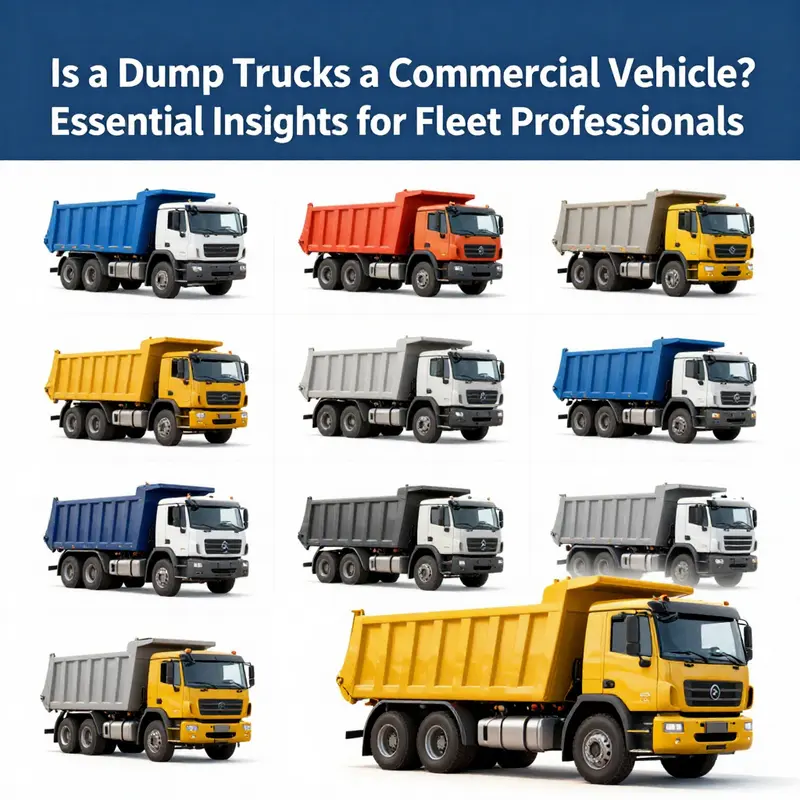
A dump truck is not just a large tool for moving earth; it is an instrument of commerce with regulatory meaning. The classification as a commercial vehicle emerges from how it is used, who pays for it, and the risk frameworks that surround it. In practice, dump trucks move goods and materials on behalf of a business, and their operation is organized around fleets, maintenance schedules, and compliance regimes rather than personal transport.
From a design standpoint, the defining feature is a hydraulic bed that raises to unload payloads such as soil, rock, sand, or debris. This capability marks a separation from consumer vehicles and signals a purpose-built utility for industry. The same features—payload capacity, stability, braking, and robustness—are what regulatory bodies consider when defining licensing and insurance requirements. A vehicle that regularly hauls heavy loads within a business operation typically falls under commercial classifications, with corresponding CDL rules, inspection regimes, and safety obligations.
The practical implications extend to licensing, insurance, procurement, and capital planning. Commercial fleets seek predictable uptime, standardized maintenance, and traceable safety records. Regulators arrange a framework that aligns vehicle capability with accountability: stricter driver qualifications, tighter hours-of-service controls, and higher insurance scrutiny for higher risk equipment. In this way, the dump truck sits at the confluence of industrial activity and public policy. The classification is not merely about weight or appearance; it is about how the vehicle is used to move goods for compensation and how society governs that activity to reduce risk and improve efficiency.
Dump Trucks on the Business Road: Defining Commercial Vehicle Status Through Design, Duty, and Demand
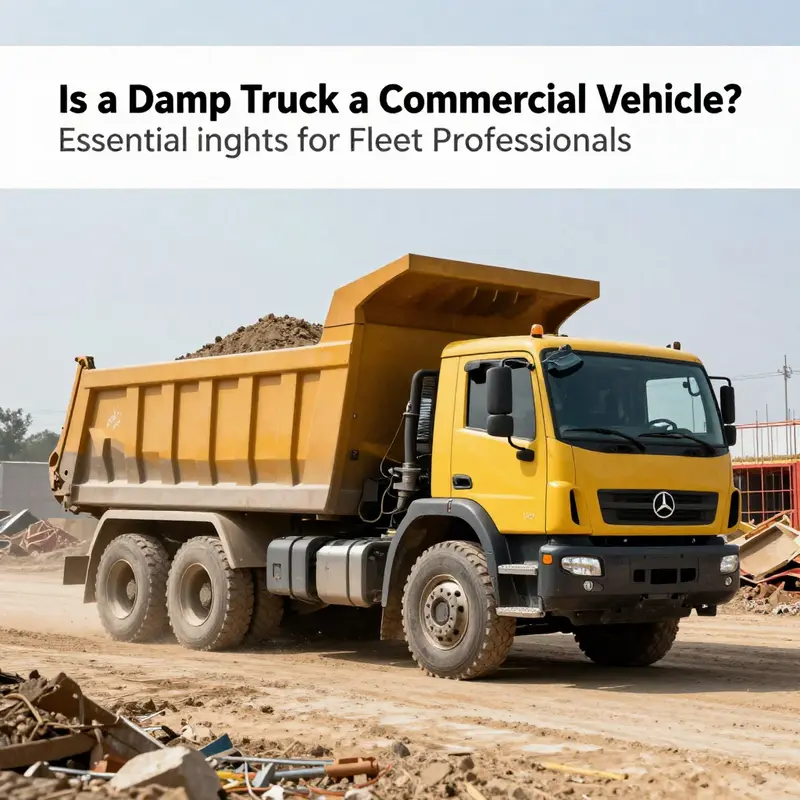
A dump truck is more than a heavy machine with a tilting bed; it is a dependable instrument of the commercial economy, bred for the steady movement of bulk materials from excavation sites to processing yards or disposal points. The question of whether a dump truck qualifies as a commercial vehicle rests on a blend of purpose, ownership, and regulatory context. In many jurisdictions, including the United States and the European Union, the line between personal and commercial transportation is not drawn by vehicle size alone, but by how the vehicle is used in business activity. Dump trucks are almost universally owned or operated by construction firms, mining outfits, municipal departments, or waste management teams. They haul sand, gravel, dirt, demolition debris, ore, and similar loads that are fundamental inputs into infrastructure and development. Their function is inseparable from the work they enable; without them, projects stall, supply chains strain, and urban and rural improvements lose tempo. This practical reality underpins the regulatory framework that governs them. The United States Department of Transportation and equivalent regulatory bodies in other regions set the boundaries for licensing, weight classifications, maintenance standards, and safety expectations. Those boundaries are not mere paperwork; they shape how fleets are staffed, insured, and inspected, and they influence the financial calculus of ownership, including depreciation, maintenance budgeting, and the cost of downtime. In short, the classification of a dump truck as a commercial vehicle is not a cosmetic label but a reflection of its role as a business instrument. This perspective helps explain why thousands of dumps operate within fleets every day, performing high‑demand tasks with reliability, efficiency, and an emphasis on safety. For readers seeking a broader, practitioner‑oriented view of how equipment types intersect with market dynamics, the following resource offers a concise, industry‑driven orientation. https://mcgrathtrucks.com/blog/. Although the landscape evolves with technology and policy, the core logic remains: dump trucks are designed to support commercial activity, and that alignment with business purpose anchors their classification and deployment. It is this alignment that guides not only how the trucks are engineered but also how they are managed on the job site and on the road. The interplay of design, usage, and regulation becomes a coherent story when we examine the mechanics that make these vehicles work and the environments in which they operate. The bed, the hoist, the chassis, and the powertrain are not merely components; they are the toolkit that enables a constant, planned flow of materials across industries that drive economic momentum. The hydraulic hoist, in particular, is the heart of the dump truck’s distinct capability. It raises the open‑box bed in a controlled sequence, allowing gravity to unload the contents quickly at the desired location. This mechanism, paired with the bed geometry and material choice, determines how efficiently a dump truck can cycle between loading and unloading on a typical shift. In a busy construction zone, where time and safety intersect, the speed of unloading translates directly into productivity. The bed itself is not a generic container but a purpose built structure with varying geometry, thickness, and lining to suit different materials. Wet or abrasive loads require different interior surfaces to minimize wear and tear, while lighter, nonabrasive materials may permit a different profile that emphasizes payload mass and fuel efficiency. By combining the hydraulic lift with a robust chassis and engine, the dump truck becomes a versatile performer capable of negotiating steep ramps, uneven ground, and confined spaces. The push and pull of power and balance become a dance of mechanical engineering, operator skill, and site conditions. The result is a vehicle that is not simply transporting cargo but delivering a predictable, repeatable process on projects that span roadways, mines, and waste facilities. The open‑box bed, which is the signature feature of the class, is designed to be emptied by gravity in a controlled manner, with dumping directions typically rearward or, in specialized configurations, to the side. This capability reduces the need for additional equipment to move loads from the truck to a stockpile, thereby streamlining operations and limiting site clutter. The design choices embedded in the chassis, hydraulic system, and dump body collectively determine how a dump truck handles payloads of varying density and particle characteristics. Heavier, denser materials demand strong suspension, a rigid frame, and a tire setup that favors traction and stability over long, continuous runs. Lighter loads, on the other hand, may reward lower rolling resistance and a chassis optimized for fuel efficiency without sacrificing safety margins. The interplay of these design decisions has a direct impact on how commercial fleets plan utilization, maintenance intervals, and replacement cycles. The broad spectrum of configurations reflects the diversity of commercial needs. Some fleets rely on double‑axle dump trucks for mid‑size projects, delivering 10 to 16 tons of payload as a baseline capability. These models find steady use in municipal hauling, road construction, and small to medium development sites where maneuverability and turn‑around time are critical. For larger scale operations, triple‑axle configurations increase payload capacity and enable longer hauls between trips, a crucial advantage at open‑pit or quarry sites where cycle time becomes a decisive factor in project economics. Quarry dump trucks, which can handle enormous volumes, illustrate how capacity translates into reduced trip frequency and, consequently, lower handling costs and less traffic disruption on site. In such settings, payloads may range from 40 to 60 cubic meters, with weight depending on material density. The most specialized designs extend into urban and confined spaces, where controlled uplift or dual‑direction tipping helps manage unloading in tight streets or industrial yards. In these situations, precision in dumping reduces the risk of material spillage, property damage, or neighbor disturbance, while still maintaining the pace required by a busy site. Even within the same family of vehicles, small adjustments in bed geometry, liner material, and hydraulic stroke can drastically alter performance profiles. A conscientious fleet manager will match dump body geometry to the expected material mix, balancing durability, unloading speed, and lifecycle costs. Beyond the bed itself, the broader ecosystem surrounding the dump truck—engine torque characteristics, transmission gearing, and drivetrain layout—plays a decisive role in how reliably a truck handles heavy loads at low speeds and across varied terrain. The emphasis on torque at low revs reflects real‑world conditions: the need to push stiff loads up ramps, through rough ground, and across obstacles without compromising control or consuming prohibitive fuel. Operators, too, must adapt. Training, experience, and site knowledge are essential for safe operation, particularly in environments where pedestrian traffic, overhead hazards, and changing ground conditions add layers of risk. A well‑trained operator can minimize dumping inaccuracies, reduce rollovers, and maintain clearer sightlines in congested work zones. This is why the commercial designation extends beyond vehicle mechanics into human factors, safety protocols, and organizational practices that ensure consistent performance over time. The evolution of dump truck design is not merely about bigger engines or heavier frames; it is about smarter use of materials, refined hydraulics, and improved safety features that advance productivity without compromising reliability. Lightweight structural concepts, for instance, aim to reduce energy consumption while preserving strength, a balance that translates into lower operating costs and a smaller environmental footprint. In mining and heavy‑duty contexts, there is ongoing attention to durability, corrosion resistance, and ease of maintenance, given the demanding exposure to abrasive materials, dusty atmospheres, and extreme temperatures. These concerns are not abstract; they translate into service schedules, spare parts planning, and the availability of skilled technicians. The commercial value of these investments shows up not only in uptime and throughput but also in the ability to forecast maintenance windows with minimal disruption to production plans. The practical reality is that dump trucks exist at the intersection of engineering, logistics, and policy. They are designed to endure, to perform, and to integrate into fleets that must balance capital expenditure with operating expenditure. This balance underpins decisions on whether to deploy a compact, nimble unit for localized work or to invest in a massive quarry hauler that delivers mass with fewer trips. The chapters that follow build on this foundation by expanding the lens outward to the broader market context, including how evolving regulatory landscapes, emerging technologies, and shifting demand patterns shape the lifecycle of dump trucks within commercial ecosystems. If you seek further detail on market structure and equipment types that influence how fleets frame their buying and selling strategies, a practical overview is available through the resource linked in this chapter. https://mcgrathtrucks.com/blog/. This anchor helps readers connect the functional realities described here with broader industry themes, such as fleet composition, maintenance planning, and the commercial calculus that governs investment in heavy equipment. The design and use of dump trucks remain anchored in their status as commercial vehicles because their core purpose is to move material for business outcomes. They serve during the planning, execution, and closure phases of projects, contributing to timelines, budgets, and the ability to transform raw earth into the built environment. This is not merely about moving payload from point A to point B; it is about moving projects forward, keeping work sites productive, and maintaining safety and environmental standards as part of everyday practice. As infrastructure needs grow and projects become more complex, the dump truck will continue to be a central instrument in the commercial playbook. The technology will evolve toward more efficient propulsion, more durable beds, and smarter controls, all while the fundamental requirement remains unchanged: a tool that can reliably haul, unload, and return to work, enabling the continuous flow of materials that underpin modern economies. External reference for deeper technical context and performance considerations can be found at https://www.madisonhill.com/dump-trucks-guide
Steering Compliance: How Laws Shape Dump Trucks as Commercial Workhorses on the Modern Road
Dump trucks sit at a crucial intersection of utility and regulation. They are designed to move heavy, loose materials from the worksite to processing or disposal locations, and their very purpose—continuous, commercial use—places them squarely within the realm of commercial vehicles. The regulatory framework that governs these machines does more than set boundaries; it shapes every facet of a dump truck’s lifecycle, from manufacturing and type approval to day-to-day operation and long-term accountability. The chapter that follows ties these threads together, showing how safety, weight, emissions, and operational standards cohere into a system that, in practice, governs not only what a dump truck can do, but what it must do to remain on the road. It is a story of alignment: how engineering choices meet legal expectations, how driver qualifications reflect the demands of the job, and how local nuances translate broad national and international rules into real, day-to-day restrictions on the ground. Above all, it is a reminder that the dump truck’s status as a commercial vehicle is not an incidental label but a functional designation with substantial consequences for safety, economics, and the broader fabric of the road transport ecosystem.
A dump truck’s classification as a commercial vehicle hinges on its intended use rather than its appearance. The mere fact of moving materials for a business, on a schedule and for compensation, triggers a framework of rules designed to ensure predictability, accountability, and risk management. In the United States, the Federal Motor Carrier Safety Administration (FMCSA) governs the relevant landscape through the Federal Motor Carrier Safety Regulations (FMCSRs). These regulations, rather than prescribing the exact technical specifications for every truck, set the minimum standards for who may operate a commercial vehicle, under what conditions, and with what level of maintenance and oversight. The emphasis is twofold: safeguarding public safety and ensuring that commercial operations can be monitored and audited. The compliance loaf is broad and continuous, extending from driver qualifications to hours of service, from vehicle maintenance to the proper handling of hazardous materials when the job calls for it. In practice, this means a dump truck operator must hold a valid commercial driver’s license appropriate to the vehicle category, adhere to regulated duty cycles, and maintain the vehicle in a state that makes it roadworthy at all times.
Across the Atlantic, the European Union frames its regulatory approach through directives that harmonize safety and environmental standards across member states. The EU’s approach emphasizes vehicle type approval, ensuring that trucks meet a suite of safety and environmental criteria before they can be placed on the market. Emissions standards, such as Euro 6, shape the design choices that manufacturers must consider to satisfy regulatory expectations and to remain competitive within the EU market. Regular technical inspections, analogous to the periodic MOT in the United Kingdom, create ongoing checkpoints that diesel, electric, and other propulsion configurations must clear to continue operations. The European framework demonstrates how regulatory regimes can push the pace of improvement in emissions control and safety technologies, often translating into higher upfront costs for manufacturers but potentially lower long-term exposure to penalties and downtime for operators.
The regulatory conversation thus travels from the macro to the micro: from the broad definitions that determine what counts as a commercial vehicle to the highly specific, local constraints that can alter a truck’s routes, permissible routes, and even operating hours. Local jurisdictions frequently tailor national or regional rules to reflect road quality, traffic patterns, and environmental priorities. Weight limits on certain roads, axle configuration requirements, and the emergence of environmental zones in urban centers illustrate how the same dump truck may face different expectations depending on where it travels. In some cities, for example, diesel-powered dump trucks may encounter restrictions during peak hours or requirements for dust suppression systems when transporting loose materials like sand or gravel. Such measures are not merely bureaucratic friction; they are practical responses to the immediate concerns of air quality, noise, and road wear, which in turn influence the scheduling, routing, and even the equipment choices of contractors.
The practical consequences of these regulatory structures are profound. Approved vehicle types, weight limits, and axle configurations determine what fleets can deploy on any given job; hours-of-service rules govern how long a driver can operate before rest, influencing crew planning, project timelines, and the economics of bid pricing. The maintenance standards embedded in FMCSRs, and their EU counterparts, ensure that brake systems, hydraulics, tires, and the hoist mechanism—the heart of a dump truck’s unloading capability—remain reliable under the repeated stress of lifting and dumping loads. The maintenance requirement is not a static checklist but a living discipline that requires continuous attention, documentation, and timely interventions. A maintenance lapse can lead to disqualification from service, escalating safety risk and threatening project deadlines. The consequences of noncompliance are layered: penalties, insurance implications, and, crucially, the real-world cost of downtime when a truck is sidelined for inspection or repair.
Fundamental to the compliance narrative is the driver. The FMCSA framework stresses driver qualifications, including the necessity of holding the appropriate commercial driver’s license (CDL) class and endorsement, if hazardous materials are part of the load, and the ability to demonstrate safe operation under varied conditions. The training and credentialing requirements are designed to ensure that operators do not merely know how to drive a heavy vehicle, but that they understand the chain of responsibility that accompanies commercial work. They must navigate shifts in scheduling, regulatory limits on daily driving time, and the discipline required to conduct pre-trip inspections and post-trip reports. The human factor thus emerges as a central element in a system built to prevent fatigue, minimize human error, and maintain a transparent record of compliance events. In environments where hazardous materials might be involved, the regulatory regime becomes even more stringent, reflecting the heightened risk profile of such operations.
The regulatory framework also interacts with a broader set of environmental imperatives. In the EU, Euro 6 emissions standards push manufacturers toward cleaner engines or alternative propulsion technologies, while in other regions the emphasis may focus more narrowly on avoiding excessive noise or local air pollution. These environmental dimensions are not optional luxuries; they can shape the market viability of a dump truck model, influence residual values, and drive the decision to invest in newer equipment or retrofit emissions-control technologies. Even when a fleet operates on a shared highway system rather than in a dense urban core, environmental considerations are a factor that negotiates the balance between operational efficiency and compliance costs. The legal obligations thus become incentives for innovation and capital expenditure, with compliance serving as a long-term investment in operational stability rather than a mere compliance expense.
In practice, the regulatory landscape is neither a rigid cage nor a simple set of rules. It is a living ecosystem that responds to changes in technology, industry structure, and public policy priorities. For example, the rise of more stringent inspections and telematics-based enforcement can encourage fleets to adopt proactive maintenance regimes and data-driven scheduling. Fleets may leverage on-board data to demonstrate adherence to hours-of-service or to optimize routes to reduce fuel consumption and emissions. The integration of digital tools with regulatory requirements creates an ecosystem where compliance information becomes a driver of efficiency rather than a barrier to operation. This synergy underscores a fundamental truth about dump trucks as commercial vehicles: success in the field requires more than mechanical competency; it requires an organized, auditable system that continuously aligns with evolving rules.
One practical way to appreciate the regulatory dynamics at work is to consider the lifecycle of a typical dump truck on a project that spans multiple regulatory jurisdictions. At the outset, the vehicle must meet type-approval or equivalent qualification standards to be legally operated in the target market. The operator must obtain the appropriate CDL with any necessary endorsements, and the company must implement a maintenance program that satisfies FMCSA standards in the United States or the relevant regional regulations elsewhere. As the truck moves between sites—perhaps crossing state lines in a federal system or traversing cross-border corridors—the operator relies on local restrictions to plan routes, schedule rest periods, and accommodate any city-imposed environmental restrictions. The vehicle’s emission profile becomes a live consideration if the job involves urban corridors or zones with stricter air-quality mandates. The loading and unloading operations must be conducted with appropriate safeguards and procedures to minimize dispersion of particulates and to ensure on-site safety for workers and bystanders. In the event of an accident or a roadside check, the vehicle’s compliance documentation, maintenance logs, and driver credentials are the primary artifacts that determine the outcome of enforcement actions.
The narrative of compliance, then, is a story about consistency and documentation as much as about capabilities. A dump truck that operates with a robust, well-maintained hydraulic system, sound braking, and tires with proper tread patterns is a truck that can meet the functional demands of the job, but it is the accompanying paperwork—the inspection checklists, the maintenance records, the driver logs, the route approvals—that proves the truck is a dependable and accountable asset. This reality often influences the market for used trucks as well. Operators and fleet managers weigh not only the performance of the vehicle but also the cost of verifying ongoing compliance and the risk of regulatory surprises. Discussions about these dynamics frequently surface in industry outlets and expert commentary, such as those found in the broader trucking press and blogs, where practitioners share experiences and strategies for navigating regulatory complexities. For readers seeking a practical viewpoint anchored in market realities, the McGrath Trucks Blog offers perspectives on how regulatory costs and compliance considerations intersect with fleet management and pricing strategies. McGrath Trucks Blog.
Beyond the immediate operational sphere, the regulatory framework also interacts with broader infrastructure and policy considerations. Governments digitize and centralize regulatory information to improve accessibility and to standardize enforcement across jurisdictions. This standardization helps reduce the friction experienced by fleets that operate in multiple regions and increases the predictability of compliance costs. At the same time, it invites ongoing dialogue among policymakers, manufacturers, carriers, and drivers about the balance between safety, environmental objectives, and economic efficiency. The result is a dynamic policy environment in which dump trucks evolve in response to technical improvements, shifting market demands, and the imperatives of public welfare. Operators, in turn, must stay attuned to regulatory amendments, which may arrive as updates to hours-of-service rules, adjustments in emissions thresholds, or changes in vehicle inspection procedures.
To tie these strands together, consider how the regulatory framework underpins the role of the dump truck as a commercial workhorse. The truck’s ability to provide predictable service hinges on a stable environment in which operators can plan, execute, and document their activities without facing unwelcome regulatory surprises. Compliance creates trust among project owners, insurers, and the public, enabling smoother operations, fewer disruptions, and a safer, more transparent road network. It is a complex system, but it is precisely this complexity that keeps the dump truck aligned with the broad aims of commercial transport: moving goods efficiently, safely, and with accountability that stretches from the truck’s cab to the end of its journey. For readers who wish to explore formal regulatory resources directly, the Federal Motor Carrier Safety Administration’s official site offers a comprehensive portal to the rules that govern commercial motor vehicles in the United States: https://www.fmcsa.dot.gov. This external reference provides the authoritative framework that informs, underpins, and sometimes challenges the practical realities discussed above.
In sum, the regulatory framework around dump trucks as commercial vehicles is not a static backdrop but a live system that shapes the design, use, and management of these indispensable machines. It compels attention to safety, enforces discipline in maintenance and operation, advances environmental objectives, and negotiates the delicate balance between efficient service delivery and the legitimate needs of public safety. The chapter’s aim has been to illuminate how these rules come to life on the ground—how they influence what a dump truck can do, how it must be operated, and how fleets prepare for the inevitable questions that arise from regulators, clients, and the roads themselves. The narrative of regulation, in other words, is the story of how a practical, workaday vehicle becomes a trusted, regulated element of a broader economic system that depends on predictable, responsible, and safe transportation of materials essential to construction, mining, waste management, and countless related sectors. As markets continue to evolve and technologies advance, the regulatory framework will likely continue to adapt, maintaining the essential balance between safety and productivity that defines the modern road.
Final thoughts
Understanding the classification of dump trucks as commercial vehicles is essential for trucking company owners, procurement teams, and fleet managers. Their design facilitates specialized utility for commercial tasks while adhering to a stringent regulatory framework that ensures safety and efficiency in operations. By recognizing their commercial status, businesses can better leverage dump trucks to enhance productivity in construction, logistics, and beyond.