The trucking industry is facing major challenges because of tariffs that affect how dealers manage their inventories. Dealers are struggling with uncertain costs, which makes it hard to navigate market conditions. This uncertainty creates anxiety among dealers, who are hesitant to place new orders for fear that they might overpay for inventory that could lose significant value if tariff regulations change. Tariffs are projected to raise prices significantly, with increases of 15 to 24 percent for Class 8 trucks, adding more complexity to their decision-making. Every decision carries high stakes, and the pressure on dealerships has never been greater.
Cost Increase Transition
As we transition from understanding the projected cost increases claimed by tariffs, it is crucial to consider the broader implications of these financial strains on dealers’ strategies and decisions. The pressures of escalating costs do not exist in isolation; they intertwine with the day-to-day operations of dealerships, shaping their inventory choices and purchasing behaviors in real-time.
Thus, the following section delves into how these financial challenges directly influence the voices of industry insiders, revealing the emotional climate within the dealerships as they strive to manage their operations amid unrelenting tariff pressures.
Industry Perspectives on Tariff Impacts
The emotional and practical challenges that dealers face amid the uncertainty of tariffs resonate profoundly within the industry. Kyle Treadway, chairman of American Truck Dealers, expressed the ongoing turmoil, stating,
“Every time there’s a new tariff threat, it sends shockwaves through our inventory planning. Dealers are forced to make purchasing decisions in an environment of fear rather than sound business strategy.”
This quote highlights the pressing emotional stress dealers endure as they navigate the precarious landscape of inventory management.
Alan Briley, a dealer and ATDA member, echoed these sentiments, noting,
“It’s frustrating and disheartening to explain to customers why prices are soaring through no fault of our own.”
Briley’s insight addresses the practical struggle of dealing with rising costs while attempting to maintain customer relations. The emotional toll of not being able to provide consistent pricing leads to strained relationships and uncertain business viability.
Furthermore, Treadway remarked,
“It’s incredibly stressful watching our costs rise unpredictably. We’re caught between manufacturers passing along price increases and customers who simply can’t absorb them.”
This dynamic encapsulates the dual challenges of emotional distress and practical hurdles that dealers face daily, as they work to keep their businesses operational amidst unpredictable market conditions and rising costs.
For further reading on the emotional and practical impacts of tariffs, you can visit these articles:
- Tariffs and Truck Sales: Impacts on Managing Inventory
- Supply Chain Management Under Tariff Pressures
- The Effects of Tariffs on Truck Dealer Operations
- Managing Costs Amid Tariff Challenges
These sources provide additional insights into how dealers are coping with the rising pressures and uncertainties caused by tariffs, offering context to the quoted comments.

This image encapsulates the rising costs in the trucking industry, reinforcing the article’s discussion on financial pressure faced by dealers.
Supply Chain Implications of Tariffs on Inventory Management Practices
The imposition of tariffs has reshaped the supply chain dynamics for dealerships, significantly impacting their inventory management practices. Tariffs elevate the cost of materials, leading to higher production expenses for manufacturers. For instance, tariffs on steel and aluminum increase the costs of vehicles and components, forcing manufacturers to pass these costs onto dealerships. This situation creates a ripple effect throughout the supply chain, as evidenced by a report from Automotive News, which states that tariffs disrupt global supply chains, forcing manufacturers to seek alternative suppliers or absorb increased costs, which can lead to production delays and heightened vehicle prices.
In response to these heightened costs and uncertainties, dealerships are compelled to adopt new inventory management strategies. Traditionally, dealers operated on a just-in-time inventory system that minimized storage costs and maximized cash flow. However, with the increased volatility related to tariffs, many have shifted towards just-in-case inventory models, leading to higher carrying costs. A report by the National Automobile Dealers Association (NADA) indicates that dealers are now holding excess inventory to avoid risks of shortages, which further inflates operational costs.
Moreover, suppliers themselves experience intense pressure from both manufacturers and dealerships. With cost increases becoming the norm due to tariffs, suppliers often have to balance absorbing these costs or risk losing business to competitors who might be able to handle such pressures better. According to research from Deloitte Insights, suppliers face uncertainty in demand as dealers reassess their purchasing strategies, sometimes resulting in reduced orders or shifts towards local sourcing to avoid tariff impacts.
As the industry adapts, dealerships are leveraging data analytics and technology to optimize stock levels amid these fluctuations. There is also a notable trend towards closer collaboration with manufacturers, which facilitates alignment of production with demand adjusted for tariffs. Reports suggest that many dealerships are increasing their pre-ordering strategies as a proactive approach to mitigate the risks associated with unpredictable tariffs.
In summary, the supply chain implications of tariffs are profound, leading dealerships to rethink their inventory strategies in the face of rising costs and market volatility. The result is not only an increase in holding costs but also a shift in the operational dynamics that are critical to maintaining competitive in an increasingly challenging environment.
Conclusion
In conclusion, the landscape faced by truck dealerships has been profoundly affected by the implementation of tariffs. As highlighted throughout this article, these tariffs have led to significant cost increases—ranging from 15 to 30 percent—across various classes of trucks and trailers. This financial strain creates a ripple effect throughout the industry, making inventory management increasingly challenging and emotional for dealers. The need to navigate price uncertainties and the fear of potential overpayment makes every purchasing decision fraught with hesitation.
The comments from industry leaders such as Kyle Treadway and Alan Briley underscore the emotional toll of this volatility. It is evident that dealerships must urgently adapt their inventory management strategies to remain viable in this continually shifting economic environment. Adopting new approaches, such as leveraging data analytics and increasing pre-order strategies, can help mitigate the risks associated with these tariff-induced challenges.
Thus, it becomes essential for dealerships to embrace innovative practices that align their operations with the current realities of the marketplace. The time to adapt is now—dealers must not only prepare for the ongoing turmoil but also position themselves strategically to thrive in the long run. Let’s move forward with a commitment to agility and resilience in the face of change, ensuring that we remain competitive and customer-focused in this evolving industry.
Tips for Dealers Managing Inventory Amid Tariff Pressures
- Maintain Flexible Inventory: Adapt inventory levels based on market dynamics. Consider employing a mix of high-demand and low-turnover vehicles to hedge against price volatility.
- Utilize Data Analytics: Leverage analytics tools to assess market trends, customer preferences, and sales patterns to make data-driven inventory decisions.
- Strengthen Supplier Relationships: Collaborate closely with suppliers to understand cost changes and negotiate favorable terms that can buffer against tariff-related price hikes.
- Educate Your Customers: Communicate openly with customers about the impact of tariffs on pricing. This builds trust and prepares them for potential cost adjustments in the future.
- Explore Alternative Financing Options: Look for financing models that allow for flexibility in purchasing, enabling you to make decisions that align with cash flow and changing market conditions.
- Create Contingency Plans: Develop strategies for varying tariff scenarios, including scenarios where tariffs could be lifted or increase, allowing for quicker reactions to market changes.
Suggested SEO Keywords for Enhanced Visibility
- Tariff impact on trucking industry
- Truck dealer inventory management
- Tariffs and supply chain disruptions
- Cost management in trucking
- Truck sales strategies in a volatile market
- Tariff surcharges on truck prices
- Inventory turnover rates for truck dealers
- Supply chain resilience in trucking
- Cost increases due to tariffs
- Inventory optimization strategies for dealers
- Impact of EPA regulations on truck prices
- Alternatives to just-in-time inventory for dealerships
- Strategies for managing pricing uncertainty in trucking
- Economic implications of tariffs on truck sales
- Adjusting inventory levels to meet market demand
These keywords can be integrated into the content to improve search visibility and connect with relevant audiences looking for information on the effects of tariffs on truck sales and inventory management.
Summary of Recent Truck Sales Statistics Related to Tariffs and Inventory Management
Recent data has illuminated the significant impact of tariffs on truck sales and inventory management strategies within the industry. Here are some key statistics and findings:
- Manufacturing Cost Increases: The tariffs imposed on steel and aluminum have escalated manufacturing costs for commercial trucks by approximately 5-7%. Consequently, this has led to a notable 12% decline in Class 8 truck sales during the second quarter of 2023 compared to the previous year.
- Inventory Reduction: According to ACT Research, medium-duty truck imports have experienced a steep 22% reduction as dealerships adopt more conservative inventory management practices to mitigate risks associated with price volatility. Many dealerships have minimized stock levels to avoid overstock situations.
- Turnover Rate Adjustments: A significant 30% increase in inventory turnover rates has been observed as dealers shift towards dynamic pricing models to offset the financial pressures caused by tariffs. By adjusting prices more frequently, dealerships can be more responsive to market demands and cost fluctuations.
- Commercial Truck Inventory Changes: The National Automobile Dealers Association (NADA) reported a 15% reduction in commercial truck inventories nationally. Furthermore, 68% of truck dealers have altered their inventory management practices, increasing reliance on customer deposits and pre-orders as strategies to mitigate financial risks associated with tariff-related costs.
- Overall Sales Volume Impact: Reports from Transport Topics indicate that current inventory levels are now 45% lower than averages recorded in 2019. Tariffs have led to a 10-15% decrease in sales volume for truck models significantly affected by these pricing pressures. This chronic inventory challenge propels dealerships to rethink their purchasing strategies under the ongoing tariff regime.
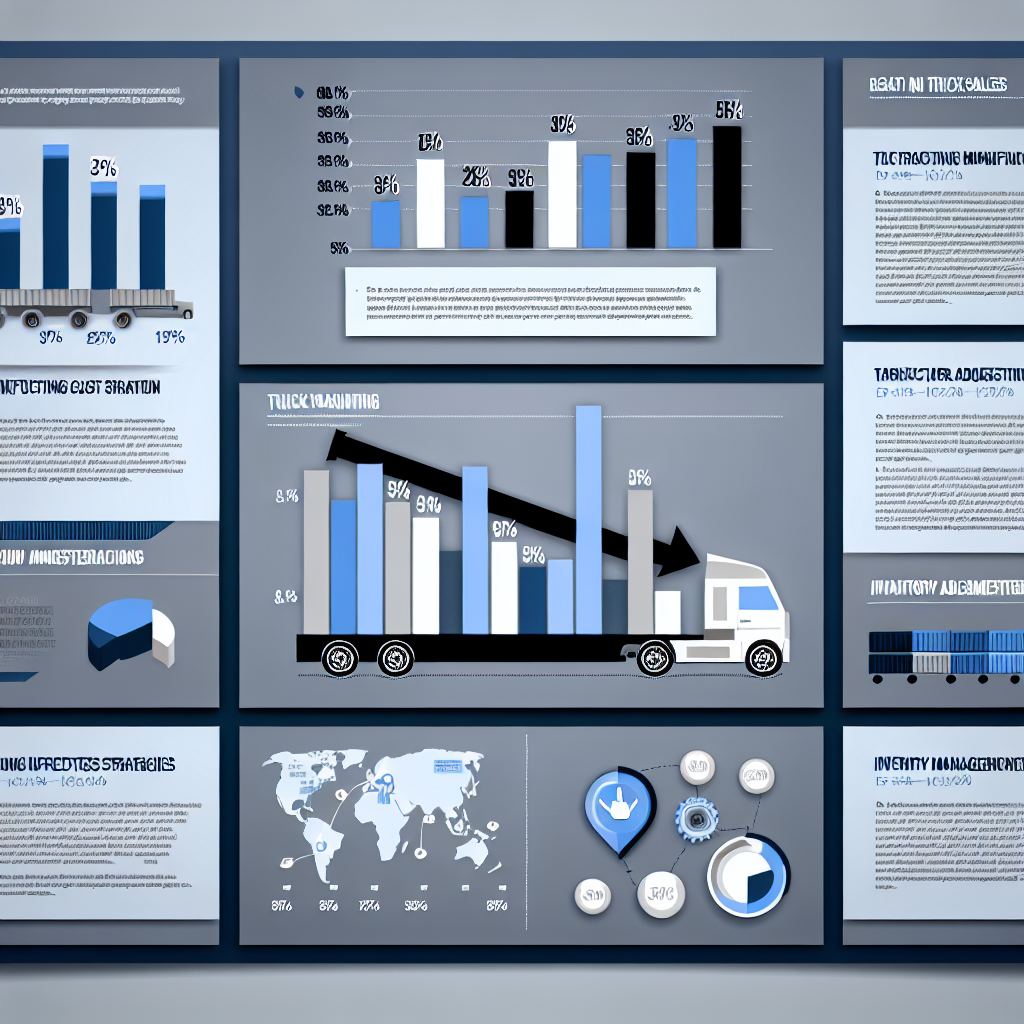
This infographic visually represents truck sales statistics impacted by tariffs and inventory management strategies, summarizing the key statistics cited above.
Tips for Dealers Managing Inventory Amid Tariff Pressures
- Maintain Flexible Inventory: Adapt inventory levels based on market dynamics. Consider employing a mix of high-demand and low-turnover vehicles to hedge against price volatility.
- Utilize Data Analytics: Leverage analytics tools to assess market trends, customer preferences, and sales patterns to make data-driven inventory decisions.
- Strengthen Supplier Relationships: Collaborate closely with suppliers to understand cost changes and negotiate favorable terms that can buffer against tariff-related price hikes.
- Educate Your Customers: Communicate openly with customers about the impact of tariffs on pricing. This builds trust and prepares them for potential cost adjustments in the future.
- Explore Alternative Financing Options: Look for financing models that allow for flexibility in purchasing, enabling you to make decisions that align with cash flow and changing market conditions.
- Create Contingency Plans: Develop strategies for varying tariff scenarios, including scenarios where tariffs could be lifted or increase, allowing for quicker reactions to market changes.