
The classification of vehicles in New Hampshire, particularly the designation of ‘350 trucks’ as commercial vehicles, is crucial for trucking company owners, fleet managers, and logistics teams. This designation not only influences operational strategies but also dictates adherence to specific regulations and compliance requirements. In this article, we will delve into the regulatory framework of commercial vehicles, exploring the significance of Gross Vehicle Weight Rating (GVWR), how 350 trucks compare to other classifications, the standards for operations, and the implications for commercial driving licenses. Each chapter will provide essential insights to help stakeholders navigate the complexities of managing and operating these heavy-duty vehicles effectively.
Weight Beyond Watts: Why a 350-Truck Stays a Commercial Vehicle in New Hampshire
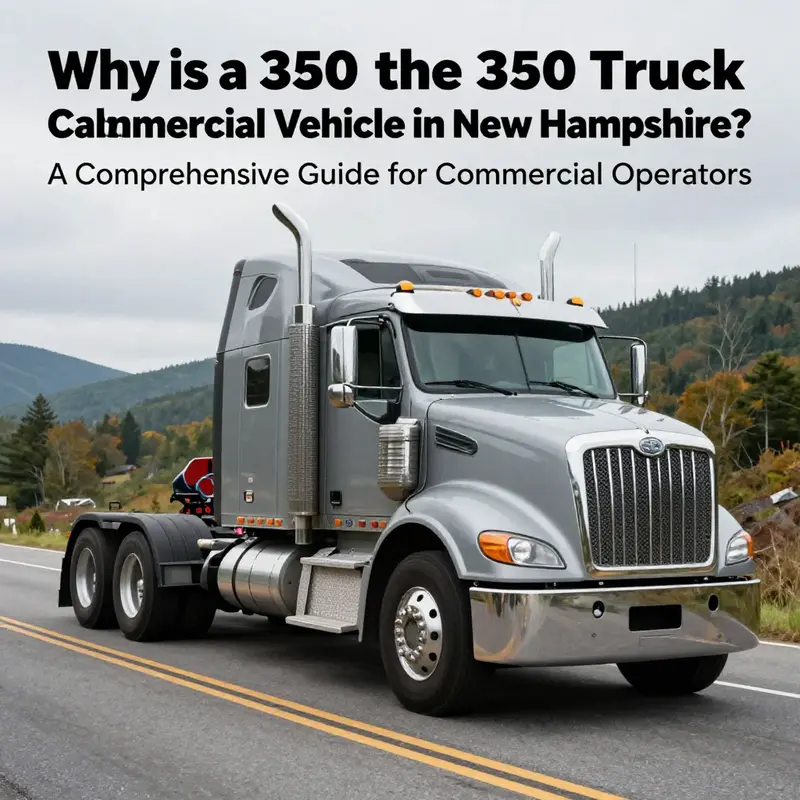
When people hear the term “350 truck,” they often imagine the roar of a high-horsepower engine. In New Hampshire, however, the crucial factor deciding whether a vehicle is a commercial one is not the engine’s power but its weight. The state, aligned with federal guidance administered by the FMCSA, classifies a vehicle as a commercial motor vehicle (CMV) when its gross vehicle weight rating, or GVWR, is 10,001 pounds or more. In practical terms, that threshold turns many heavy-duty pickups into commercial tools of the trade because these machines are designed to haul substantial loads even if their engines aren’t the loudest in the fleet. The distinction matters not only for legal labels but for the daily realities of licensing, safety, and operations that weave through the miles traveled across and within New Hampshire. In this chapter, we explore how weight, not horsepower, becomes the decisive metric that places a “350 truck” squarely in the realm of commercial regulation, and what that means for drivers, carriers, and the communities they serve.
GVWR is a rating that appears on the vehicle’s certification label and is set by the manufacturer based on the vehicle’s structure, axle capacities, braking systems, and overall design. It tells the world, and more importantly the enforcement and regulatory systems, how much weight the vehicle is prepared to bear safely in standard operation. A vehicle with a GVWR of 10,001 pounds or more can carry enough cargo to move from a personal-use tool into a commerce-enabling asset. In regulatory terms, this is the line that separates non-commercial passenger vehicles from CMVs used for business purposes. The practical impact is that a driver operating a CMV is entering a different legal ecosystem, one that assumes a higher level of responsibility and discipline on the road. The threshold is not a ceiling on capability; it is a doorway into stricter oversight designed to safeguard roads, cargo, and people.
In many cases, what looks like a standard pickup with a robust bed and a heavy frame still qualifies as a CMV because its GVWR surpasses the 10,001-pound mark when loaded. Think of the broad categories that commonly meet or exceed this limit: large delivery vans that routinely move goods to stores, heavy-duty cargo trucks designed for long-haul or regional freight, and specialized work trucks that carry equipment or materials. Even when a vehicle’s horsepower sits at a certain level, the essential question regulators ask is, how much can this machine legally and safely carry? If the answer pushes past the weight threshold, the vehicle becomes a workhorse of commerce under both state and federal rules. This is the logic behind the emphasis on GVWR rather than engine displacement alone.
New Hampshire’s approach is practical and participatory. The state’s motor vehicle division and safety agencies adopt FMCSA standards to create a predictable framework for drivers, fleets, and law enforcement. When a vehicle qualifies as a CMV because of its GVWR, the operator must typically observe licensing and safety regimes designed for commercial operations. The operator may need a Commercial Driver’s License (CDL) to drive the vehicle, depending on how it is used and the type of cargo moved. Interstate movement—traversing from one state to another—triggers federal hours-of-service rules, mandatory vehicle inspections, and stricter maintenance standards, all aimed at reducing fatigue-related risk and ensuring the roadworthiness of heavy vehicles. Intrastate operation within New Hampshire still adheres to robust safety and registration requirements, and many jurisdictions extend the spirit of CMV rules to protect communities in local contexts too. The point is not to burden drivers with paperwork for paperwork’s sake, but to align vehicle capabilities with accountability.
This framework matters because a “350” vehicle is often integral to the everyday logistics of commerce—whether it’s moving construction materials to a site, delivering heavy equipment to a shop, or transporting bulk goods between facilities. The GVWR distinction directly informs the licensing path for operators, the training necessary to operate safely, and the routine that ensures equipment is roadworthy on a consistent basis. A driver who handles a CMV under federal rules must navigate the hours-of-service expectations when operating in interstate commerce, and the vehicle itself must undergo regular inspections to identify issues before they become hazards. The safety culture is built around pre-trip checks, periodic maintenance, and compliance with weight, tire, braking, and lighting standards that help prevent accidents and protect lives on busy NH roads.
In case there is any ambiguity about the line between horsepower and weight, it’s helpful to separate two ideas: capability and regulatory status. A vehicle might have a high-output engine and still be a light-duty machine by weight, or a heavy frame with a moderate engine may carry a cargo load that crosses the GVWR threshold. The classification hinges on the rating assigned by the manufacturer and the weight the vehicle is approved to carry, not merely how fast it can travel. This is a critical point for fleet operators and private owners alike: if your operation relies on a vehicle that meets or exceeds 10,001 pounds GVWR, you are stepping into the commercial universe with obligations that extend beyond ordinary personal-use ownership. You’ll encounter CDL requirements for drivers, standard or enhanced safety inspections, and potential federal hours-of-service rules for interstate work. Cementing this understanding helps explain why many communities in New Hampshire experience a steady flow of heavy trucks that are not merely about raw power but about net weight supported by the law.
For readers who want to connect this regulatory landscape with market realities, it helps to consider how weight-based classifications intersect with trends in the trucking industry. While horsepower can attract attention and signal capability, weight determines regulatory status, and regulatory status shapes the economics of operation. Fleets invest in training, compliance programs, and maintenance regimes because the ramifications of misclassification can be costly—ranging from fines and out-of-service orders to insurance implications and liability concerns. The dynamic is further intensified when vehicles operate across state lines, where federal rules apply and enforcement is consistent with national safety objectives. Within New Hampshire, the state’s alignment with FMCSA guidance ensures a standardized approach that supports safe transport of goods, fair competition among carriers, and predictable safety standards for drivers who move through busy corridors, rural byways, and industrial zones alike.
Those navigating this space often seek practical understanding of what a “350 truck” means for their day-to-day operations. The answer rests on GVWR as the defining lever, the weight that speaks louder than the horsepower number on a spec sheet. If you’re evaluating a vehicle for business use in New Hampshire, a careful look at the GVWR—and any loaded weight projections you anticipate in typical service—will reveal whether the vehicle falls under CMV rules. This is not merely about compliance, but about aligning operations with a safety framework that protects workers, families, and infrastructure as goods move through the state. To explore how market dynamics influence decisions about buying and owning heavy trucks, see the latest insights on used truck sales growth, which can shed light on the broader context of vehicle availability, pricing, and fleet planning in a weight-conscious regulatory environment.
External resource and further reading: https://www.fmcsa.dot.gov/
Internal link for related reading: current trends in used truck sales growth
Weight Above All: GVWR’s Central Role in Classifying the 350-Truck as a Commercial Vehicle in New Hampshire

In New Hampshire, a truck labeled as a “350” carries, in everyday talk, implications of power and capability. Yet the regulatory truth that matters for licensing, routing, and road safety is not the engine’s horsepower but the vehicle’s weight. The defining threshold is the Gross Vehicle Weight Rating, or GVWR, which demarcates when a vehicle becomes a commercial motor vehicle (CMV) under state and federal rules. When a heavy-duty truck pushes past 10,001 pounds GVWR, it steps into a world governed by additional qualifications, inspections, and responsibilities. This distinction reframes the conversation about a 350 truck from “how hard can it pull” to “how much weight can it legally carry and safely manage,” and it anchors the practical realities fleets face in New Hampshire and beyond. The chapter that follows does not ask you to choose sides between horsepower and GVWR; it explains why the scale—literally the scale on the door jamb—decides whether a vehicle is treated as a CMV and what that designation means on the road, at the dock, and in the dispatch office.
To understand why GVWR holds such sway, imagine a Sinotruk HOWO or a comparable heavy-duty rig described in many fleets as a 350-truck. In the abstract sense of power alone, a 350-horsepower engine might suggest a certain capability. But in New Hampshire, and across most of the United States, the label that triggers CMV status is not the engine’s power, but the GVWR. GVWR is not a dynamic number that shifts with load; it is a manufacturer-stated ceiling that includes the weight of the vehicle itself, fuel, passengers, and maximum cargo. When a commercial vehicle’s GVWR hits 10,001 pounds or more, the vehicle meets the threshold for CMV regulation. This is where state authority converges with federal oversight, because NMV rules beget federal rules under the FMCSA umbrella. The practical upshot is that a heavy truck—whether it is a long-haul tractor-trailer, a large freight carrier, or a heavy construction mixer—must comply with CMV standards if its GVWR exceeds that limit, and this compliance shapes just about every facet of operation: licensing, hours of service, and maintenance, among others.
The state’s role, channeling federal intent, begins with the DMV’s classification framework. The New Hampshire Department of Motor Vehicles (NH DMV) uses GVWR as the primary determinant of CMV status, aligning state practice with FMCSA regulations that apply to CMVs nationwide. This alignment ensures uniformity in areas such as driver qualification, hours-of-service (HOS) rules, and vehicle maintenance requirements. In practical terms, drivers who operate CMVs in New Hampshire must hold a Commercial Driver’s License (CDL) appropriate to the vehicle type, comply with HOS limitations that govern rest breaks and driving time, and participate in regular inspections and safety checks. The CMV designation also expands the scope of required documentation, including vehicle registration specifics and inspection records, which inspectors at the state line or at a fleet yard may review to verify ongoing compliance.
GVWR’s significance extends beyond licensing mandates. It is a safety barometer that signals the mechanical and operational demands placed on the vehicle. A GVWR well above 10,000 pounds implies more substantial braking requirements, higher tire and axle loads, and a greater need for robust maintenance practices. The brake system, steering geometry, suspension, and even the truck cab’s ergonomics must be capable of supporting heavier loads and longer duty cycles without compromising safety. Bridge formulas, axle weights, and route restrictions further complicate the calculus for CMVs. Operators must consider these factors when planning trips, choosing profiles for shipments, and scheduling maintenance. In short, GVWR is the safety anchor that ties together the vehicle’s construction, the driver’s responsibilities, and the road’s obligations to all users.
The practical consequences of CMV status touch nearly every routine decision a fleet makes. Vehicle selection becomes a balancing act: a truck with a high GVWR might meet a business need for raw payload but imposes stricter regulatory burdens and potential downtime for inspections. Conversely, a lighter vehicle could be easier to deploy across a wider range of routes but may fall short on payload and efficiency for specific trades. The important point is that horsepower alone cannot redefine a vehicle’s regulatory class. The same 350-horsepower rig could be a CMV or fall outside CMV status depending on its GVWR. This distinction matters for fleets sourcing equipment, because the weight category triggers licensing requirements, route planning constraints, and compliance costs. A useful, practical illustration here is the example of well-known heavy-duty trucks with substantial mass—vehicles designed for long-haul freight or heavy construction—whose GVWRs place them firmly inside CMV territory. The result is a regulatory framework that prioritizes weight, stability, and safety over raw engine output.
Within the NH DMV’s governance, the process of verification matters. Operators are expected to identify a vehicle’s GVWR as listed on the manufacturer’s certification label, typically located on the driver’s side door jamb. This label is not decorative; it provides a legally relevant number that confirms CMV status for that specific vehicle configuration. If an operator misreads or misclassifies a vehicle’s GVWR, the consequences can be significant: fines, legal liabilities, or even a suspension of operating authority. The cost of misclassification can ripple outward into insurance premiums, contract eligibility, and fleet scheduling. Given these high stakes, accurate GVWR verification becomes a routine habit for fleet maintenance teams, procurement specialists, and drivers alike, especially when vehicles move between states where regulations may have subtle differences yet rely on the same GVWR threshold.
The broader ecosystem of compliance also includes annual inspections for CMVs engaged in interstate commerce and registration requirements that reflect the vehicle’s weight class. In addition to state-specific rules, federal FMCSA standards shape the baseline expectations around driver qualifications and vehicle maintenance, resulting in a harmonized regulatory landscape intended to reduce risk and promote uniform safety practices across state lines. Operators find that the most effective way to navigate this landscape is through proactive planning—knowing the GVWR of each vehicle in their roster, aligning driver credentials with vehicle type, and maintaining rigorous inspection and maintenance cycles. As a practical matter, the choice of vehicles in a fleet becomes a governance decision as much as a performance decision. A 350-horsepower engine may catch the eye, but the GVWR tells the true story of whether that truck is going to be treated as a CMV on New Hampshire’s roads and under FMCSA oversight.
For readers who want to explore how dealers frame truck purchases in light of weight and regulatory considerations, there is value in seeing how industry minds weigh the trade-offs between payload, weight limits, and acquisition strategies. A detailed discussion on dealer perspectives on buying options, balancing auction versus direct purchase, and the implications for weight and compliance can be found here: Dealer sales vs auctions: choosing your truck.
In sum, the 350-truck’s status as a CMV in New Hampshire hinges on GVWR, not horsepower, and that distinction channels a comprehensive framework of licensing, hours of service, maintenance, and safety standards that govern every mile it travels. The GVWR figure—stamped on the door jamb label and reinforced by the vehicle’s construction and axle configuration—becomes the gatekeeper of regulatory responsibility. This is why the weight threshold holds such a central place in the state’s approach to commercial vehicles. It is not merely a bureaucratic boundary; it is a practical instrument that protects drivers, other road users, and the continuity of a fleet’s operations. For those who want to go deeper into state resources, the official NH DMV portal provides further guidance and verifications such as GVWR checks and CMV classifications. External resources: https://www.dmv.nh.gov
Weight Thresholds, Not Just Power: Why a 350-Truck Counts as a Commercial Vehicle in New Hampshire

In New Hampshire, the business of moving goods, people, and materials is regulated by weight as much as by speed or route. The governing logic is straightforward: a commercial vehicle is defined by its potential impact on infrastructure and public safety, which is largely a function of weight. The state aligns with federal guidelines that set a specific gross vehicle weight rating, or GVWR, as the pivotal threshold. In practical terms, any vehicle with a GVWR of 10,001 pounds or more is classified as a commercial motor vehicle, or CMV. This means a heavy-duty truck used for freight, construction, or long-haul transport falls under CMV rules, regardless of how many horsepower its engine produces. The key factor is the machine’s mass and the consequences that come with hauling heavy loads, not a driver’s desire to accelerate quickly or impress a client with power alone. The distinction matters because it triggers a chain of regulatory requirements designed to safeguard roads, bridges, and other travelers.
This regulatory emphasis helps clarify a common misconception. In casual conversation, a vehicle described as a 350 truck might evoke the notion of a powerful engine or a high-performance silhouette. Yet in the eyes of New Hampshire regulators, a 350-truck label buys entry into the world of CMVs only if the machine’s weight crosses the GVWR threshold. The federal guideline that NH DMV uses is intended to standardize what counts as a heavy truck across states, creating consistent expectations for licensing, hours of service, and inspection routines. The practical effect is that vehicles which are mass-heavy—such as many heavy-duty freight carriers, large vocational trucks, and long-haul tractors—will invariably be treated as commercial by the state. This is not a matter of branding; it is a matter of capability and consequence on public roads.
To understand the scope of this classification, it helps to map the broader system of vehicle classes that NH DMV uses, which mirrors the federal framework. Light-duty vehicles, with GVWR up to 3,500 pounds, sit in the lower end of the spectrum and are generally outside CMV rules. Beyond that mark, the federal system segments heavier equipment into Classes 3 through 8, with Class 3 among the lighter heavy-duty options and Class 8 representing the heaviest construction, freight, and tractor-trailer configurations. In New Hampshire, a vehicle that qualifies as CMV typically corresponds to Classes 3 through 8. The practical implication is that a driver operating a Class 3–8 vehicle must meet the standard commercial licensing requirements and comply with the FMCSA hours-of-service rules. The division is not purely academic; it translates into real duties, such as driver qualification, vehicle inspection, and recordkeeping that occur before a vehicle even sails onto the highway.
Within this framework, the concept of a 350-truck becomes a weight-based benchmark. While some contexts may reference engines with 350 horsepower, the regulatory focus remains fixed on the GVWR rather than engine output. A heavy-duty vehicle that weighs in the tens of thousands of pounds and is intended for freight transport or heavy service clearly sits in the CMV category. Even when a vehicle operates in urban settings or on shorter routes, its weight influences braking performance, tire wear, bridge and road wear, and the risk calculus that motor carriers must manage. That is why the NH DMV and the FMCSA emphasize weight, maintenance, and operating practices as the primary levers of safety and reliability.
The practical consequences of crossing the CMV threshold are clear. Operators of these machines must hold a Commercial Driver’s License, and in New Hampshire the CDL requirements apply to vehicles classified in Classes 3 through 8. The need for a CDL is tied to the vehicle’s size, its potential hazard profile, and the responsibility of the driver to operate heavy-duty equipment safely. In addition to licensing, operators must observe hours-of-service limits that govern how long a driver may stay behind the wheel in a given period. These rules are not mere formalities; they address fatigue factors that could degrade judgment, reaction time, and overall safety on high-speed roadways. Regular vehicle inspections, meaningful maintenance programs, and proper recordkeeping accompany the licensing framework, creating a holistic safety net around heavy trucks that traverse New Hampshire.
Beyond the driver, the vehicle itself is subject to inspection regimes and registration considerations that scale with weight. Heavier vehicles pay closer attention to inspection schedules, safety equipment requirements, and road-use fees. The state’s approach recognizes the infrastructure impact heavier fleets have and the cost to public assets when large vehicles operate on limited-capacity corridors. Hence, the CMV designation is not a badge of prestige but a signal for heightened regulatory scrutiny and accountability. While this may add layers of compliance for operators, it also helps standardize expectations for maintenance, driver training, and performance on the road. In practice, a company that deploys a fleet of heavy vehicles must design its operations around a shared framework of safety, compliance, and efficiency that benefits customers, drivers, and the broader traveling public alike.
From a market perspective, the relationship between weight-based classifications and regulatory expectations helps explain why certain heavy-duty trucks remain central to freight networks. The demand for reliable, scalable transport capacity keeps fleets investing in high-capacity vehicles, even as the regulatory environment mandates prudent practices around licensing, duty hours, and inspections. The mathematics of weight and responsibility converge, shaping both the supply side—vehicles designed to haul large payloads—and the demand side—customers who rely on predictable, compliant deliveries. For readers following market dynamics, the weight-centric view of CMV status highlights why certain heavy trucks dominate the logistics landscape, even when competing narratives emphasize fuel efficiency or technology advances. In this light, a 350-truck label becomes a concise shorthand for a wide set of regulatory responsibilities and a reliable model of performance that supports complex, weight-sensitive freight tasks.
As you explore how New Hampshire treats these machines, consider how the conversations around licensing, safety, and road use intersect with market realities. The chapter on how weight translates into regulatory status dovetails with discussions about fleet composition, vehicle lifecycles, and the incentives that guide capital decisions for carriers. If you are involved in planning a fleet upgrade or evaluating compliance costs, the weight-first approach offers a clear framework for prioritizing safety investments, driver training, and maintenance programs. For those seeking more precise regulatory guidance, the official NH DMV portal provides authoritative details on licensing, registration, and vehicle classifications. See https://www.dmv.nh.gov for the state’s official guidance.
For readers curious about how market shifts affect fleet purchasing and retirement decisions, the landscape of heavy-truck acquisition and disposition continues to evolve. Market signals and regulatory expectations interact in ways that shape price, availability, and the timing of equipment refreshes. A practical takeaway is that weight-based CMV status not only determines legal obligations but also influences the return profile of a truck over its life cycle. When companies assess whether to buy, lease, or sell a given heavy-duty asset, they weigh regulatory compliance costs against reliability, downtime, and the ability to meet service commitments. In this context, the conversation about a 350-truck becomes a conversation about risk, capacity, and the predictable constraints that come with moving goods in a weight-conscious state.
For those who want to dig deeper into how market trends connect to regulatory realities, a look at industry analyses shows a growing interest in heavy-duty capacity and the ways fleets optimize for uptime and compliance. The discussion about the weight threshold and CMV status is not just a regulatory sidebar; it is a lens through which to view fleet strategy, capital planning, and the continued importance of compliance in modern trucking networks. A practical takeaway is that weight, safety, and efficiency are intertwined levers that carriers must manage in every decision about equipment and operations. The regulatory framework in New Hampshire, anchored in GVWR thresholds and Class 3–8 designations, remains a steady reference point as the market evolves. Internal discussion and external regulatory updates together help stakeholders align their practices with the expectations of the road and the regulator.
Internal link: current trends in used truck sales growth
External resource: For official regulatory guidance, see the New Hampshire DMV site at https://www.dmv.nh.gov.
Weight as the Gatekeeper: How the 350-Truck Is Carved into New Hampshire’s Commercial Vehicle Landscape
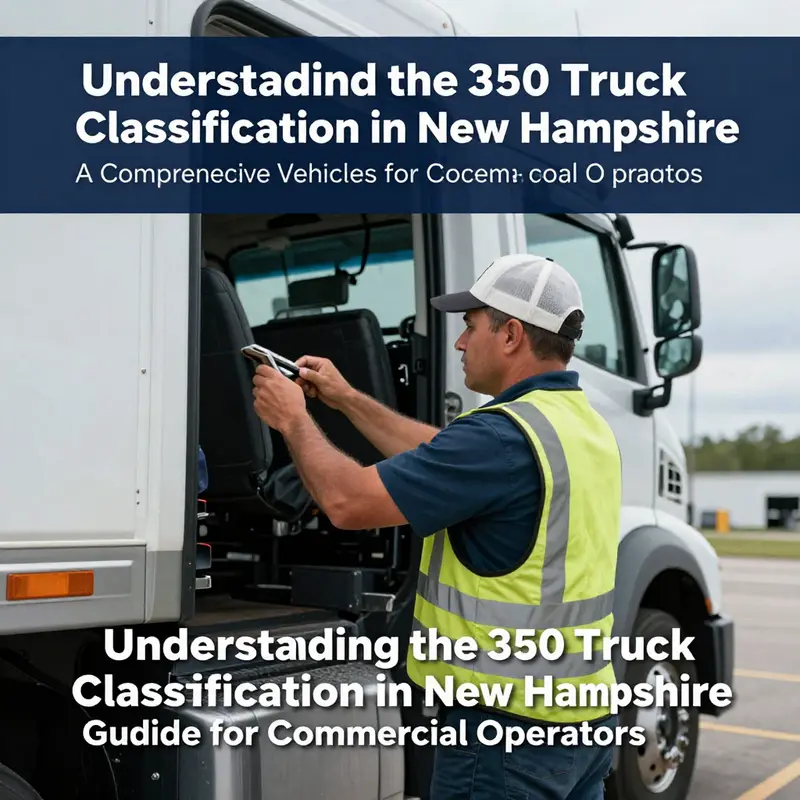
When a driver in New Hampshire climbs into a vehicle that people casually label a “350 truck,” the conversation around it quickly shifts from horsepower to weight. The reason is simple and relentlessly practical: commercial status in this state is defined first by size, not by how fast a engine can churn fuel or how many gears a transmission holds. In the public eye a 350 might evoke power and performance, but in the regulatory sense its identity as a commercial vehicle hinges on a weight threshold that places it squarely under the watch of state and federal authorities. This distinction matters because the classification triggers a bundle of responsibilities—licensing, hours of service, inspections, and safety standards—that govern how the vehicle is operated on public roads. In New Hampshire, the logic is weight-based: a truck becomes a CMV, a commercial motor vehicle, when its gross vehicle weight rating crosses a defined line. That line, in practical terms, sits at a GVWR of 10,001 pounds. This threshold is not arbitrary or quaint; it is the mechanism through which the state aligns itself with federal expectations and ensures that heavier, more complex vehicles contributing to interstate commerce are subject to oversight designed to reduce road risk and improve safety outcomes for all road users. The word “350” thus becomes a shorthand for a type of vehicle whose true identity is defined by mass, endurance, and the broader responsibilities that mass entails on shared roadways.
From a regulatory standpoint, the NH DMV treats a 350-truck as a commercial vehicle because its weight pushes it into the tier where heavier-duty equipment and professional operation become the norm. The practical implication is that the vehicle’s operator is likely moving goods across towns, states, and sometimes across the continent. Even if the engine is capable of prodigious horsepower, the weight determines what the driver must carry in terms of credentials and compliance. A heavy hauler like a Class 8 semi-truck, a large freight carrier, or a heavy mixer truck is typically well beyond the basic passenger or light-truck category. In the case of the Sinotruk HOWO family and similar heavy-duty machines, the scale is decisive: many such vehicles easily exceed 31 tons, translating into tens of thousands of pounds on the highway. When you are dealing with that kind of mass, the state’s move to label the vehicle as a CMV is not merely bureaucratic—it reflects a framework designed to manage the physics of the road, the demands of long-haul logistics, and the safety calculus that comes with moving substantial loads.
The weight-centric approach aligns with the broader federal landscape overseen by the Federal Motor Carrier Safety Administration, or FMCSA. Under FMCSA rules, commercial operations that involve interstate commerce face uniform expectations: a Commercial Driver’s License (CDL) appropriate to the vehicle’s class, endorsements for hazardous materials or tankers when applicable, and a duty roster that obligates drivers to comply with hours-of-service limitations, route restrictions, and rigorous vehicle inspections. New Hampshire’s enforcement mirrors this structure, while also weaving in state-specific dimensions—road-geometry, bridge weight limits, and local permitting processes—that can differ from neighboring jurisdictions. In the NH setting, compliance becomes a shared project among the driver, the carrier, and the regulator. The end result is a system designed to prevent fatigue, reduce preventable failures, and safeguard the infrastructure on which these heavy machines operate daily. The driver must hold the correct CDL class for the vehicle they operate, and often must maintain endorsements that reflect the goods hauled or the method of operation. The carrier, in turn, must maintain a safety profile that FMCSA’s Compliance, Safety, Accountability (CSA) program monitors. The interplay of CDL requirements and ongoing safety oversight keeps the system from becoming a simple registration exercise; it becomes a continuous practice of stewardship over tens of thousands of pounds of moving weight.
Weight and dimension limits form another cornerstone of the operational equation. New Hampshire imposes specific constraints on how much weight a CMV may carry or how long its unloaded footprint may be on state highways. These rules exist not to micromanage trucking for its own sake but to protect pavement life, bridge integrity, and the overall efficiency of traffic flow. A 350-truck that weighs in at or above the 10,001-pound threshold is thus not just a larger vehicle; it is a vehicle that operates under a different set of public-safety and infrastructure considerations. When such a vehicle crosses state lines, it enters a regime where federal hours-of-service standards apply, ensuring drivers rest adequately between shifts and that fatigue does not undermine safety. The driver’s work-rest cycle is not a luxury but a design choice meant to preserve alertness and reaction times over long stretches behind the wheel. The result is a blended regulatory landscape where the NH DMV and FMCSA together shape how a 350-truck can be used, when it must stop, and how it must be maintained to stay on the road.
Maintenance and inspection practices complete the regulatory picture. For commercial vehicles, pre-trip and post-trip inspections are not mere routine checks; they are essential safeguards that can reveal hidden vulnerabilities—worn brakes, tire wear, lighting issues, or signaling problems—that could otherwise escalate into dangerous roadside events. Regular inspections, often coupled with annual safety inspections, keep the fleet in a condition that supports reliable operation and safe sharing of the highway with other vehicles. The emphasis on maintenance status is a practical acknowledgement that the heavier a vehicle is, the more critical it becomes to ensure that every component functions correctly. The CSA framework reinforces this emphasis by providing a safety-performance lens through which carriers are evaluated. A high-risk profile in CSA terms can affect insurance costs, compliance efforts, and even eligibility for certain routes or job types. In short, the weight of the vehicle translates into a broader obligation to maintain the highest possible safety standard from the moment the engine turns over until the vehicle leaves the road.
All of these pieces—the CDL requirements, the inspections, the hours-of-service constraints, and the weight-and-dimension limits—converge in a single practical truth: a 350-truck in New Hampshire is a commercial vehicle not because it is inherently complex or dangerous, but because it represents a meaningful mass parcel that travels through an economy built on trucking. The classification unlocks a chain of responsibilities designed to harmonize efficiency with safety, so that a heavy-duty asset can perform its essential function without compromising road safety or road wear. For operators, that means a disciplined approach to licensing, a rigorous routine of vehicle upkeep, and a careful plan for hours and routes that respects both state and federal expectations. It means recognizing that the term “350” is less a statement about power and more a description of the physics and responsibility that accompany the movement of substantial freight through a state whose terrain and infrastructure demand mindful governance. Those principles harmonize on the highway when a driver, a dispatcher, and a regulator work in concert, each guided by the weight of the vehicle and the weight of the duty entrusted to commercial operation on public roads. For readers seeking a broader sense of how the trucking community navigates licensing, compliance, and practical practice in a real-world setting, the McGrath Trucks blog offers context on licensing and compliance strategies that mirror these NH realities. McGrath Trucks blog.
For those who want to connect the practicalities described here to policy and national regulations, further reading on official hours-of-service details can be found through the FMCSA resource at https://www.fmcsa.dot.gov/regulations/hours-service. This external reference complements the state-focused framework discussed above by illustrating how nationwide standards inform state enforcement and daily driving routines, ensuring that even heavy vehicles traveling through rural towns like those in New Hampshire do so with predictability, safety, and accountability.
Weight at the Wheel: Why a 350-Truck Is a Commercial Vehicle in New Hampshire

In New Hampshire, the phrase 350-truck is weight-driven, not horsepower-driven. The state’s regulatory framework treats a vehicle as commercial primarily because of its gross vehicle weight rating, or GVWR. A vehicle with GVWR above 10,000 pounds falls into the commercial motor vehicle category. Heavier trucks used for long-haul freight, construction, or municipal work enter the CMV arena because of weight, not engine horsepower alone.
The practical implication is straightforward: a truck weighing tens of thousands of pounds is a CMV. A Class 8 tractor-trailer can easily exceed 62,000 pounds GVWR, and when GVWR crosses 10,001 pounds, CDL requirements and FMCSA regulations apply. Licensing, inspections, and safety standards are then triggered, shaping routes, maintenance, and driver assignments according to weight class.
A common source of confusion is the term 350 when describing a truck. In NH’s regulatory reality the decisive factor is weight. A heavy vehicle with a GVWR around 31 tons (roughly 62,000 pounds) sits squarely in CMV territory, regardless of whether its engine produces 350 horsepower. The licensing, insurance, and inspection routines depend on GVWR, not horsepower.
From a regulatory standpoint, New Hampshire follows federal definitions for CMVs. The GVWR threshold provides a consistent rulebook across states. The need for a CDL is tied to size and weight rather than truck cosmetic details. CMV drivers must hold a CDL with the appropriate endorsements, medical certification, and periodic inspections, plus FMCSA hours-of-service rules.
Axle-weight limits further refine how heavy trucks move on NH roads. NH sets maximums such as single axles up to 22,400 pounds, tandem axles up to 18,000 pounds per axle, and tridem configurations up to 54,000 pounds total. These limits reflect a balance between vehicle design, road wear, and freight efficiency. Heavier configurations require appropriate braking, tires, suspension, and maintenance.
In practice, the term 350 truck should be read in light of the bigger picture of commercial operation. Weight, not horsepower, determines CDL requirements, inspection cadence, and regulatory obligations the operator must meet. A high-horsepower truck that weighs CMV thresholds becomes subject to the same standards as the largest trucking operations in the state.
If you want more detail on licensing and classification, consult the New Hampshire Department of Motor Vehicles CDL information and the FMCSA hours-of-service and safety standards. Weight defines CMV status and cascades into licensing, compliance, and operational reality. For official guidance, see the FMCSA site: https://www.fmcsa.dot.gov/
Final thoughts
The classification of 350 trucks as commercial vehicles in New Hampshire embodies a complex interplay between regulatory compliance, safety, and operational efficiency. Fleet managers and trucking company owners must stay informed about GVWR regulations and the implications of operating such vehicles to ensure adherence to both state and federal laws. By understanding these regulations and their impact on driver licensing and operational standards, businesses can maintain compliance and enhance their logistics operations.